Results by title
22291 books match the query 'Social Science' and 356 start with u
Union Representation Elections
Law and RealityJulius Getman
Russell Sage Foundation, 1976

Union Solidarity
The Internal Cohesion of a Labor UnionArnold M. Rose
University of Minnesota Press, 1952
Union Solidarity was first published in 1952. Minnesota Archive Editions uses digital technology to make long-unavailable books once again accessible, and are published unaltered from the original University of Minnesota Press editions.
A realistic knowledge of basic attitudes held by labor union members is essential to all who are concerned with social and industrial relations. Labor leaders, employers, public relations counselors, sociologists, and psychologists will find this book useful because it demonstrates how to obtain and evaluate authentic data regarding the factors which contribute to or detract from the solidarity which is manifested by organized workers. As a systematic study of the way in which a worker relates himself to his union, based upon the measurement of workers reactions, Dr. Rose's report presents a new type of research in industrial sociology.
This socio-psychological study of the membership of a large union local throws light on such fundamental questions as how union members feel toward their leaders, what the members' attitudes toward their fellow unionists are, and to what extent loyalty to a union affects loyalty to an employer.
For his significant study, Dr. Rose chose the membership of Teamsters Local 688, the largest union local in St. Louis, as his subject. The study had the complete backing of the union. A survey of other available studies shows that the attitudes and problems examined are characteristic of the great majority of unions and their members.
Important findings of the study reveal how union leaders can educate their members toward specific viewpoints, what kinds of union activity and achievement are most responsible for a union's internal strength, and how criticism of a union on the part of its members can be compatible with basic loyalty to the union.
Union by Law
Filipino American Labor Activists, Rights Radicalism, and Racial CapitalismMichael W. McCann with George I. Lovell
University of Chicago Press, 2020
Union by Law analyzes the broader social and legal history of Filipino American workers’ rights-based struggles, culminating in the devastating landmark Supreme Court ruling, Wards Cove Packing Co. v. Atonio (1989). Organized chronologically, the book begins with the US invasion of the Philippines and the imposition of colonial rule at the dawn of the twentieth century. The narrative then follows the migration of Filipino workers to the United States, where they mobilized for many decades within and against the injustices of American racial capitalist empire that the Wards Cove majority willfully ignored in rejecting their longstanding claims. This racial innocence in turn rationalized judicial reconstruction of official civil rights law in ways that significantly increased the obstacles for all workers seeking remedies for institutionalized racism and sexism. A reclamation of a long legacy of racial capitalist domination over Filipinos and other low-wage or unpaid migrant workers, Union by Law also tells a story of noble aspirational struggles for human rights over several generations and of the many ways that law was mobilized both to enforce and to challenge race, class, and gender hierarchy at work.
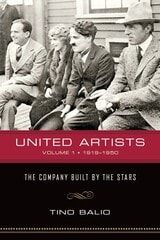
United Artists, Volume 1, 1919–1950
The Company Built by the StarsTino Balio
University of Wisconsin Press, 2009
This edition is updated with a new introduction by Balio that places in relief UA’s operations for those readers who may be unfamiliar with film industry practices and adds new perspective to the company’s place within Hollywood.

United Artists, Volume 2, 1951–1978
The Company That Changed the Film IndustryTino Balio
University of Wisconsin Press, 2009
This edition includes an expanded introduction that examines the history of United Artists from 1978 to 2008, as well as an account of Arthur Krim’s attempt to mirror UA’s success at Orion Pictures from 1978 to 1991.
United States-Latin American Relations, 1800-1850
The Formative GenerationsT. Ray Shurbutt
University of Alabama Press, 1991
Relations between the United States and the countries of Latin America have been characterized by misunderstandings based on language and culture, a lack of sustained commitment on the part of the United States, and, in some cases, incompetent diplomats. During the era when many of the Latin American countries discarded the yoke of colonial status, the young United States attempted to define itself culturally, economically, constitutionally, geographically, and diplomatically. As Latin American emerged from the crucible of revolution and international power politics, it was affected by—and in varying degrees affected—the United States and its desired position of leadership in the Western Hemisphere.
To make sense of these relationships, this volume concentrates on Central America, Peru, Colombia, Argentina, Brazil, Chile, and Mexico. Describing the particular paths taken by each of the formation of relations with the United States, Shurbutt and his colleagues focus on the American diplomatic community and its effectiveness in tense political situations.
Contributors in addition to the editor include Lawrence A. Clayton, Paul B. Goodwin, Eugene R. Huck, Phil Brian Johnson, Edward H. Moseley, Wesley P. Newton, Charles S. Stansifer, and Robert Kim Stevens.
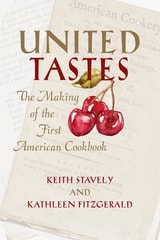
United Tastes
The Making of the First American CookbookKeith Stavely
University of Massachusetts Press, 2017
Winner of the 2017 Bruce Fraser Award from the Association for the Study of Connecticut History
The Library of Congress has designated American Cookery (1796) by Amelia Simmons one of the eighty-eight “Books That Shaped America.” Its recognition as “the first American cookbook” has attracted an enthusiastic modern audience of historians, food journalists, and general readers, yet until now American Cookery has not received the sustained scholarly attention it deserves. Keith Stavely and Kathleen Fitzgerald's United Tastes fills this gap by providing a detailed examination of the social circumstances and culinary tradition that produced this American classic.
Situating American Cookery within the post-Revolutionary effort to develop a distinct national identity, Stavely and Fitzgerald demonstrate the book's significance in cultural as well as culinary terms. Ultimately the separation between these categories dissolves as the authors show that the formation of “taste,” in matters of food as well as other material expressions, was essential to building a consensus on what it was to be American. United Tastes explores multiple histories—of food, cookbooks, printing, material and literary culture, and region—to illuminate the meaning and affirm the importance of America's first cookbook.
United by AIDS
An Anthology on Art in Response to HIV/AIDSEdited by Raphael Gygax and Heike Munder
Scheidegger and Spiess, 2019
United by AIDS sheds light on the multifaceted and complex interrelation between art and HIV/AIDS from the 1980s to the present. Published to accompany an exhibition at Zurich’s Migros Museum of Contemporary Art, it looks at the blurred lines between art production and HIV/AIDS activism and showcases artists who played—and still play—leading roles in this discourse. Alongside fifty illustrations of important works, including many in color, the book includes brief texts on the featured artists and essays by Douglas Crimp, Alexander García Düttmann, Raphael Gygax, Elsa Himmer, Ted Kerr, Elisabeth Lebovici, and Nurja Ritter.
Universal Citizenship
Latina/o Studies at the Limits of IdentityBy R. Andrés Guzmán
University of Texas Press, 2019
Recently, many critics have questioned the idea of universal citizenship by pointing to the racial, class, and gendered exclusions on which the notion of universality rests. Rather than jettison the idea of universal citizenship, however, R. Andrés Guzmán builds on these critiques to reaffirm it especially within the fields of Latina/o and ethnic studies. Beyond conceptualizing citizenship as an outcome of recognition and admittance by the nation-state—in a negotiation for the right to have rights—he asserts that, insofar as universal citizenship entails a forceful entrance into the political from the latter’s foundational exclusions, it emerges at the limits of legality and illegality via a process that exceeds identitarian capture.
Drawing on Lacanian psychoanalysis and philosopher Alain Badiou’s notion of “generic politics,” Guzmán advances his argument through close analyses of various literary, cultural, and legal texts that foreground contention over the limits of political belonging. These include the French Revolution, responses to Arizona’s H.B. 2281, the 2006 immigrant rights protests in the United States, the writings of Oscar “Zeta” Acosta, Frantz Fanon’s account of Algeria’s anticolonial struggle, and more. In each case, Guzmán traces the advent of the “citizen” as a collective subject made up of anyone who seeks to radically transform the organizational coordinates of the place in which she or he lives.

Universal Coverage of Long-Term Care in the United States
Can We Get There from Here?Douglas A. Wolfe
Russell Sage Foundation, 2013
Universal Emancipation
Race beyond BadiouElisabeth Paquette
University of Minnesota Press, 2020
A vital and timely contribution to the growing scholarship on the political thought of Alain Badiou
Is inattention to questions of race more than just incidental to Alain Badiou’s philosophical system? Universal Emancipation reveals a crucial weakness in the approach to (in)difference in political life of this increasingly influential French thinker. With white nationalist movements on the rise, the tensions between commitments to universal principles and attention to difference and identity are even more pressing.
Elisabeth Paquette’s powerful critical analysis demonstrates that Badiou’s theory of emancipation fails to account for racial and racialized subjects, thus attenuating its utility in thinking about freedom and justice. The crux of the argument relies on a distinction he makes between culture and politics, whereby freedom only pertains to the political and not the cultural. The implications of this distinction become evident when she turns to two examples within Badiou’s theory: the Négritude movement and the Haitian Revolution. According to Badiou’s 2017 book Black, while Négritude is an important cultural movement, it cannot be considered a political movement because Négritude writers and artists were too focused on particularities such as racial identity. Paquette argues that Badiou’s discussion of Négritude mirrors that of Jean-Paul Sartre in his 1948 essay “Black Orpheus” that has been critiqued by leading critical race theorists. Second, prominent Badiou scholar Nick Nesbitt claims that the Haitian Revolution could only be considered political if its adherents had shifted their focus away from race. However, Paquette argues that not only was race a central feature of this revolution but also that the revolution ought to be understood as a political emancipation movement.
Paquette also moves beyond Badiou, drawing on the groundbreaking work of Sylvia Wynter to offer an alternative framework for emancipation. She juxtaposes Badiou’s use of universality as indifference to difference with Wynter’s pluri-conceptual theory of emancipation, emphasizing solidarity over indifference. Paquette then develops her view of a pluri-conceptual theory of emancipation, wherein particular identities, such as race, need not be subtracted from a theory of emancipation.
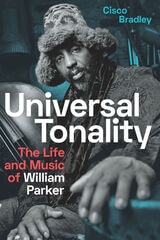
Universal Tonality
The Life and Music of William ParkerCisco Bradley
Duke University Press, 2021
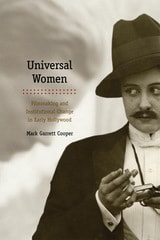
Universal Women
Filmmaking and Institutional Change in Early HollywoodMark Garrett Cooper
University of Illinois Press, 2010
A Choice Outstanding Academic Title, 2011.
Between 1912 and 1919, the Universal Film Manufacturing Company credited eleven women with directing at least 170 films, but by the mid-1920s all of these directors had left Universal and only one still worked in the film industry at all. Two generations of cinema historians have either overlooked or been stymied by the mystery of why Universal first systematically supported and promoted women directors and then abruptly reversed that policy.
In this trailblazing study, Mark Garrett Cooper approaches the phenomenon as a case study in how corporate movie studios interpret and act on institutional culture in deciding what it means to work as a man or woman. In focusing on issues of institutional change, Cooper challenges interpretations that explain women's exile from the film industry as the inevitable result of a transhistorical sexism or as an effect of a broadly cultural revision of gendered work roles. Drawing on a range of historical and sociological approaches to studying corporate institutions, Cooper examines the relationship between institutional organization and aesthetic conventions during the formative years when women filmmakers such as Ruth Ann Baldwin, Cleo Madison, Ruth Stonehouse, Elise Jane Wilson, and Ida May Park directed films for Universal.
Universalism without Uniformity
Explorations in Mind and CultureEdited by Julia L. Cassaniti and Usha Menon
University of Chicago Press, 2017
The contributors to Universalism without Uniformity offer tools for bridging silos that have historically separated anthropology’s attention to culture and psychology’s interest in universal mental processes. Throughout, they seek to answer intricate yet fundamental questions about why we are motivated to find meaning in everything around us and, in turn, how we constitute the cultural worlds we inhabit through our intentional involvement in them. Laying bare entrenched disciplinary blind spots, this book offers a trove of insights on issues such as morality, emotional functioning, and conceptions of the self across cultures. Filled with impeccable empirical research coupled with broadly applicable theoretical reflections on taking psychological diversity seriously, Universalism without Uniformity breaks new ground in the study of mind and culture.
Universities and Indian Country
Case Studies in Tribal-Driven ResearchEdited by Dennis K. Norman and Joseph P. Kalt
University of Arizona Press, 2015
Building on the Harvard Project on American Indian Economic Development’s experience with more than 120 nation-building projects over two decades, Universities and Indian Country posits that the tenets of nation building can provide a strategy for expanding and diversifying universities’ perspectives of knowledge in a multicultural world, while also producing results that are requested by and useful to Native communities.
This groundbreaking volume extends the dialogue begun by the Harvard project, providing another venue for the sharing of knowledge and information. The projects presented address a wide range of topics, including the regulation of genetic research, human resource development, tribal fund-raising, development of tribal museums, and freedom of the press in Indian Country.
Universities and Indian Country’s focus on the concerns and questions of Native communities themselves, provides insight not only into how projects came together, but also into what significance they have to the tribal partners. This compilation is a valuable resource for any student, professional, or community member concerned with issues of nation building and self-determination.
Universities and Reflexive Modernity
Institutional Ambiguities and Unintended ConsequencesLazar Vlasceanu
Central European University Press, 2010
A book about the challenges and uncertainties facing today's university, a chronicle of recent and current changes in higher education in the world. There are many questions today that are sufficiently open to doubt and profoundly related to new developments, to justify our starting new enquiries, here and now, by looking freshly and more closely at the actual configurations and at their historical grounds, for providing the new standard account of the university today.
Vlasceanu discusses the inherent contradiction between academia on the one hand, and expectations and regulations of the market on the other. Analyses demographic and other statistical characteristics of today's higher education. Examines the financial basis of universities in various countries, and describes current governance models. Finally the author sets up a new typology of universities.
Unjustly Dishonored
An African American Division in World War IRobert H. Ferrell
University of Missouri Press, 2026
Unknowing and the Everyday
Sufism and Knowledge in IranSeema Golestaneh
Duke University Press, 2023
Unknown Tongues
Black Women's Political Activism in the Antebellum Era, 1830-1860Gayle T. Tate
Michigan State University Press, 2003
Unknown Tongues examines the social and economic factors of northern industrialization, social reform, and black nationalism, all of which undergirded black women’s political consciousness during the decades before the American Civil War. The linkages between black women’s roles in the “culture of resistance” in slave communities and their transformations in the urban market economy fueled the development of black women’s political consciousness. As community activists and then as abolitionists, black urban women organized and protested against slavery, racism, sexism, and its attendant ills. Driven by market forces of nascent capitalism, black women created broad- based protest responses to the white power structure. Unknown Tongues explores the material realities that underpinned black women’s political development as well as the transformative stages of their political consciousness and activity.
Unleaded
How Changing Our Gasoline Changed EverythingCarrie Nielsen
Rutgers University Press, 2021
Unleaded tells the story of how crusading scientists and activists convinced the U.S. government to ban lead additives in gasoline. It also reveals how, for nearly fifty years, scientific experts paid by the oil and mining industries abused their authority to convince the public that leaded gasoline was perfectly harmless.
Combining environmental history, sociology, and neuroscience, Carrie Nielsen explores how lead exposure affects the developing brains of children and is linked to social problems including academic failure, teen pregnancies, and violent crime. She also shows how, even after the nationwide outrage over Flint’s polluted water, many poor and minority communities and communities of color across the United States still have dangerously high lead levels. Unleaded vividly depicts the importance of sound science and strong environmental regulations to protect our nation’s most vulnerable populations.
Unlearning Eugenics
Sexuality, Reproduction, and Disability in Post-Nazi EuropeDagmar Herzog
University of Wisconsin Press, 2020
Bringing together the latest findings in Holocaust studies, the history of religion, and the history of sexuality in postwar—and now also postcommunist—Europe, Unlearning Eugenics shows how central the controversies over sexuality, reproduction, and disability have been to broader processes of secularization and religious renewal. Herzog also restores to the historical record a revelatory array of activists: from Catholic and Protestant theologians who defended abortion rights in the 1960s–70s to historians in the 1980s–90s who uncovered the long-suppressed connections between the mass murder of the disabled and the Holocaust of European Jewry; from feminists involved in the militant "cripple movement" of the 1980s to lawyers working for right-wing NGOs in the 2000s; and from a handful of pioneers in the 1940s–60s committed to living in intentional community with individuals with cognitive disability to present-day disability self-advocates.
Unlearning the City
Infrastructure in a New Optical FieldSwati Chattopadhyay
University of Minnesota Press, 2012
Cities are more than concrete and steel infrastructure. But modern urban theory does not have the language to describe and debate the vital component of urban life that is lived on the streets of cities and towns. Swati Chattopadhyay has written a nuanced argument for a new vocabulary of the city in Unlearning the City, proposing a way of analyzing the materiality of the urban that captures the ever-changing element of human experience.
Urban life is intrinsically messy and usually refuses to conform to the rigid views laid down in much of urban studies theory. Chattopadhyay looks at urban life in India with a fresh perspective that incorporates the everyday and the unstructured. As the first to apply the theories of subalternity for an understanding of urban history, Chattopadhyay provides an in-depth study of vehicular art, street cricket, political wall writing, and religious festivities that link the visual and spatial attributes of these popular cultural forms with the imagination and practices of urban life. She contends that these practices have a direct impact on the configuration and knowledge of public space, and the political potential of the people inhabiting cities.
Unlearning the City uses the popular culture of Indian cities to question the dominant conception of urban infrastructure and encourage a conceptual realignment in how the city is seen, discussed, and even experienced.
Unlearning the Hush
Oral Histories of Black Female Educators in Mississippi in the Civil Rights EraMarlee S. Bunch Foreword by Christopher M. Span
University of Illinois Press, 2025
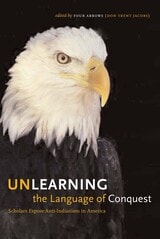
Unlearning the Language of Conquest
Scholars Expose Anti-Indianism in AmericaEdited by Four Arrows (Don Trent Jacobs)
University of Texas Press, 2006
Responding to anti-Indianism in America, the wide-ranging perspectives culled in Unlearning the Language of Conquest present a provocative account of the contemporary hegemony still at work today, whether conscious or unconscious. Four Arrows has gathered a rich collection of voices and topics, including:
- Waziyatawin Angela Cavender Wilson's "Burning Down the House: Laura Ingalls Wilder and American Colonialism," which probes the mentality of hatred woven within the pages of this iconographic children's literature.
- Vine Deloria's "Conquest Masquerading as Law," examining the effect of anti-Indian prejudice on decisions in U.S. federal law.
- David N. Gibb's "The Question of Whitewashing in American History and Social Science," featuring a candid discussion of the spurious relationship between sources of academic funding and the types of research allowed or discouraged.
- Barbara Alice Mann's "Where Are Your Women? Missing in Action," displaying the exclusion of Native American women in curricula that purport to illuminate the history of Indigenous Peoples.
Bringing to light crucial information and perspectives on an aspect of humanity that pervades not only U.S. history but also current sustainability, sociology, and the ability to craft accurate understandings of the population as a whole, Unlearning the Language of Conquest yields a liberating new lexis for realistic dialogues.
Unlearning
Rethinking Poetics, Pandemics, and the Politics of KnowledgeCharles L. Briggs
Utah State University Press, 2021
Eschewing narrow Eurocentric modes of explanation and research foci, Briggs brings together colonialism, health, media, and psychoanalysis to rethink classic work on poetics and performance that revolutionized linguistic anthropology, folkloristics, media studies, communication, and other fields. Beginning with a candid memoir that credits the mentors whose disconcerting insights prompted him to upend existing scholarly approaches, Briggs combines his childhood experiences in New Mexico with his work in graduate school, his ethnography in Venezuela working with Indigenous peoples, and his contemporary work—which is heavily weighted in medical folklore.
Unlearning offers students, emerging scholars, and veteran researchers alike a guide for turning ethnographic objects into provocations for transforming time-worn theories and objects of analysis into sources of scholarly creativity, deep personal engagement, and efforts to confront unconscionable racial inequities. It will be of significant interest to folklorists, anthropologists, and social theorists and will stimulate conversations across these disciplines.
Unlimited Intimacy
Reflections on the Subculture of BarebackingTim Dean
University of Chicago Press, 2009
Barebacking—when gay men deliberately abandon condoms and embrace unprotected sex—has incited a great deal of shock, outrage, anger, and even disgust, but very little contemplation. Purposely flying in the face of decades of safe-sex campaigning and HIV/AIDS awareness initiatives, barebacking is unquestionably radical behavior, behavior that most people would rather condemn than understand. Thus the time is ripe for Unlimited Intimacy, Tim Dean’s riveting investigation into barebacking and the distinctive subculture that has grown around it.
Audacious and undeniably provocative, Dean’s profoundly reflective account is neither a manifesto nor an apology; instead, it is a searching analysis that tests the very limits of the study of sex in the twenty-first century. Dean’s extensive research into the subculture provides a tour of the scene’s bars, sex clubs, and Web sites; offers an explicit but sophisticated analysis of its pornography; and documents his own personal experiences in the culture. But ultimately, it is HIV that animates the controversy around barebacking, and Unlimited Intimacy explores how barebackers think about transmitting the virus—especially the idea that deliberately sharing it establishes a new network of kinship among the infected. According to Dean, intimacy makes us vulnerable, exposes us to emotional risk, and forces us to drop our psychological barriers. As a committed experiment in intimacy without limits—one that makes those metaphors of intimacy quite literal—barebacking thus says a great deal about how intimacy works.
Written with a fierce intelligence and uncompromising nerve, Unlimited Intimacy will prove to be a milestone in our understanding of sexual behavior.

Unlimited Love
Altruism, Compassion, and ServiceStephen G. Post
Templeton Press, 2003
What if we could prove that love heals mental illness and is vital to successful therapeutic outcomes in all areas of health care? What if we could prove that people who live more for others than for self have greater psychological well-being?
Unlocking Learning
International Perspectives on Education in PrisonEdited by Justin McDevitt and Mneesha Gellman
Brandeis University Press, 2024
Countries around the world have disparate experiences with education in prison. For decades, the United States has been locked in a pattern of exceptionally high mass incarceration. Though education has proven to be an impactful intervention, its role and the level of support it receives vary widely. As a result, effective opportunities for incarcerated people to reroute their lives during and after incarceration remain diffuse and inefficient. This volume highlights unique contributions from the field of education in prison globally. In this volume, academics and practitioners highlight new approaches and interesting findings from carceral interventions across twelve countries. From a college degree-granting program in Mexico to educational best practices in Norway and Belgium that support successful reentry, innovations in education are being developed in prison spaces around the world. As contributors from many countries share their insights about providing effective educational programs to incarcerated people, the United States can learn from the models and struggles beyond its borders.
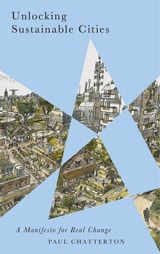
Unlocking Sustainable Cities
A Manifesto for Real ChangePaul Chatterton
Pluto Press, 2018
Across the world, people are implementing promising new practices—from transforming abandoned public spaces and setting up community co-operatives, to rewilding urban nature and powering up civic energy. Paul Chatterton explores how these grassroots experiments harness the creative power of the collective to transform our city systems, from transportation, energy, and economy, to community, democracy, and nature. Imagining radical alternatives—such as car-free, post-carbon, “bio cities”—this is a toolkit for realizing a better urban future.

Unloose My Heart
A Personal Reckoning with the Twisted Roots of My Southern Family TreeMarcia Edwina Herman-Giddens
University of Alabama Press, 2023
A deeply personal memoir that unearths a family history of racism, slaveholding, and trauma as well as love and sparks of delight.
Marcia Herman’s family moved to Birmingham in 1946, when she was five years old, and settled in the steel-making city dense with smog and a rigid apartheid system. Marcia, a shy only child, struggled to fit in and understand this world, shadowed as it was by her mother’s proud antebellum heritage. In 1966, weary of Alabama’s toxic culture, Marcia and her young family left Birmingham and built a life in North Carolina.
Later in life, Herman-Giddens resumed a search to find out what she did not know about her family history. Unloose My Heart interweaves the story of her youth and coming of age in Birmingham during the Civil Rights Movement together with this quest to understand exactly who and what her maternal ancestors were and her obligations as a white woman within a broader sense of American family.
More than a memoir set against the backdrop of Jim Crow and the civil rights struggle, this is the work of a woman of conscience writing in the twenty-first century. Haunted by the past, Unloose My Heart is a journey of exploration and discovery, full of angst, sorrow, and yearning. Unearthing her forebears’ centuries-long embrace of plantation slavery, Herman-Giddens dug deeply to parse the arrogance and cruelty necessary to be a slaveholder and the trauma and fear that ripple out in its wake. All this forced her to scrutinize the impact of this legacy in her life, as well as her debt to the enslaved people who suffered and were exploited at her ancestors’ hands. But she also discovers lost connections, new cousins and friends, unexpected joys, and, eventually, a measure of peace in the process. With heartbreak, moments of grace, and an enduring sense of love, Unloose My Heart shines a light in the darkness and provides a model for a heartfelt reckoning with American history.

Unmaking Russia’s Abortion Culture
Family Planning and the Struggle for a Liberal BiopoliticsMichele Rivkin-Fish
Vanderbilt University Press, 2024
Honorable Mention, Davis Center Book Prize in Political and Social Studies, Association for Slavic, East European, and Eurasian Studies, 2025
Honorable Mention, Women’s Forum Book Prize, British Association for Slavonic and East European Studies, 2024
As the predominant form of birth control in Soviet society, abortion reflected key paradoxes of state socialism: women held formal equality but lacked basic needs such as contraceptives. With market reforms, Russians enjoyed new access to Western contraceptives and new pressures to postpone childbearing until economically self-sufficient. But habits of family planning did not emerge automatically—they required extensive physician retraining, public education, and cultural transformation. In Unmaking Russia’s Abortion Culture, author Michele Rivkin-Fish examines the creative strategies of Russians who promoted family planning in place of routine abortion. Rather than emphasizing individual rights, they explained family planning’s benefits to the nation—its potential to strengthen families and prevent the secondary sterility that resulted when women underwent repeat, poor-quality abortions. Still, fierce debates about abortion and contraceptives erupted as declining fertility was framed as threatening Russia’s demographic sovereignty.
Although Russian family planners embraced a culturally meaningful liberalism that would rationalize public policy and reenchant relations, nationalist opponents cast family planning as suspicious for its association with the individualistic, “child-free” West. This book tells the story of how Russian family planners developed culturally salient frameworks to promote the acceptability of contraceptives and help end routine abortion. It also documents how nationalist campaigns for higher fertility denounced family planning and ultimately dismantled its institutions. By tracing these processes, Unmaking Russia’s Abortion Culture demonstrates the central importance of reproductive politics in the struggle for liberalizing social change that preceded Russia’s 2022 descent into war, repression, and global marginalization.
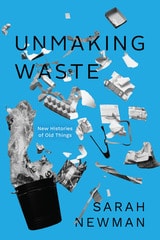
Unmaking Waste
New Histories of Old ThingsSarah Newman
University of Chicago Press, 2023
Garbage is often assumed to be an inevitable part and problem of human existence. But when did people actually come to think of things as “trash”—as becoming worthless over time or through use, as having an end?
Unmaking Waste tackles these questions through a long-term, cross-cultural approach. Drawing on archaeological finds, historical documents, and ethnographic observations to examine Europe, the United States, and Central America from prehistory to the present, Sarah Newman traces how different ideas about waste took shape in different times and places. Newman examines what people consider to be “waste” and how they interact with it, as well as what happens when different perceptions of trash come into conflict. Conceptions of waste have shaped forms of reuse and renewal in ancient Mesoamerica, early modern ideas of civility and forced religious conversion in New Spain, and even the modern discipline of archaeology. Newman argues that centuries of assumptions imposed on other places, times, and peoples need to be rethought. This book is not only a broad reconsideration of waste; it is also a call for new forms of archaeology that do not take garbage for granted. Unmaking Waste reveals that waste is not—and never has been—an obvious or universal concept.
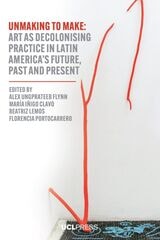
Unmaking to Make
Art as Decolonising Practice in Latin America’s Future, Past and PresentEdited by Alex Ungprateeb Flynn, María Iñigo Clavo, Beatriz Lemos, and Florencia Portocarrero
University College London, 2026
An examination of art's evolving role in theorizing decolonization, with Afro-diasporic and Indigenous perspectives in Latin America at its center.
Unmaking to Make reorients global conversations on decolonization by centering Afro-diasporic and Indigenous perspectives from across Latin America. Through a wide-ranging selection of texts, including critical essays, curatorial reflections, and interviews, it explores how artistic practice actively theorizes, models, and enacts alternative modes of living. Showcases cutting-edge work of emerging artists and curators, currently under-recognized in North American and European contexts. The volume establishes new reference points, methodologies, and institutional models for the next generation of scholars. By mapping forthcoming debates and potential institutional shifts, the book provides forward-looking insights into where and how decolonial thought will unfold in the years to come.

Unmanageable Revolutionaries
Women and Irish NationalismMargaret Ward
Pluto Press, 1996

Unmanning
How Humans, Machines and Media Perform Drone WarfareKatherine Fehr Chandler
Rutgers University Press, 2020

Unmarried Couples with Children
Paula England
Russell Sage Foundation, 2007
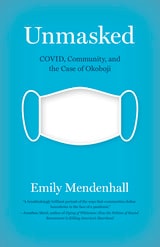
Unmasked
COVID, Community, and the Case of OkobojiEmily Mendenhall
Vanderbilt University Press, 2022
The story is both personal and political. Author Emily Mendenhall, an anthropologist at Georgetown University, grew up in Okoboji, and her family still lives there. As the events unfolded, Mendenhall was in Okoboji, where she spoke formally with over 100 people and observed a community that rejected public health guidance, revealing deep-seated mistrust in outsiders and strong commitments to local thinking. Unmasked is a fascinating and heartbreaking account of where people put their trust, and how isolationist popular beliefs can be in America's small communities.
This book is the recipient of the 2022 Norman L. and Roselea J. Goldberg Prize from Vanderbilt University Press for the best book in the area of art or medicine.
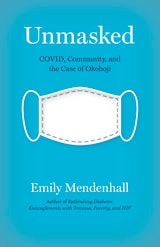
Unmasked
COVID, Community, and the Case of OkobojiEmily Mendenhall
Vanderbilt University Press, 2022
The story is both personal and political. Author Emily Mendenhall, an anthropologist at Georgetown University, grew up in Okoboji, and her family still lives there. As the events unfolded, Mendenhall was in Okoboji, where she spoke formally with over 100 people and observed a community that rejected public health guidance, revealing deep-seated mistrust in outsiders and strong commitments to local thinking. Unmasked is a fascinating and heartbreaking account of where people put their trust, and how isolationist popular beliefs can be in America's small communities.
This book is the recipient of the 2022 Norman L. and Roselea J. Goldberg Prize from Vanderbilt University Press for the best book in the area of art or medicine.
Unmasking Class, Gender, and Sexuality in Nicaraguan Festival
Katherine Borland
University of Arizona Press, 2006
The first extended study in English of Nicaraguan festival arts, Unmasking Class, Gender, and Sexuality in Nicaraguan Festival is an ethnographically and historically grounded inquiry into three festival enactments during the Somoza, Sandinista, and Neoliberal periods: the carnivalesque torovenado masquerades, the transvestite Negras marimba dances, and the wagon pilgrimage to Popoyuapa. Through a series of interlinked essays, Katherine Borland shows that these enactments constitute a people’s theater, articulating a range of perspectives on the homegrown and the global; on class, race, and ethnicity; on gender and sexuality; and on religious sensibilities.
Borland’s book is a case study of how the oppositional power of popular culture resides in the process of cultural negotiation itself as communities deploy cherished traditions to assert their difference from the nation and the world. It addresses both the gendered dimensions of a particular festival masquerade and the ways in which sexuality is managed in traditional festival transvestism. It demonstrates how performativity and theatricality interact to negotiate certain crucial realities in a festival complex. By showing how one locale negotiates, incorporates, and resists globally circulating ideas, identities, and material objects, it makes a major contribution to studies of ritual and festival in Latin America.
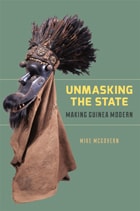
Unmasking the State
Making Guinea ModernMike McGovern
University of Chicago Press, 2012
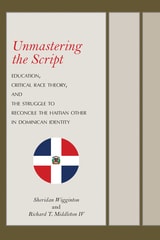
Unmastering the Script
Education, Critical Race Theory, and the Struggle to Reconcile the Haitian Other in Dominican IdentitySheridan Wigginton and Richard T. Middleton IV
University of Alabama Press, 2019
Unmastering the Script: Education, Critical Race Theory, and the Struggle to Reconcile the Haitian Other in Dominican Identity examines how school curriculum–based representations of Dominican identity navigate black racial identity, its relatedness to Haiti, and the culturally entrenched pejorative image of the Haitian Other in Dominican society. Wigginton and Middleton analyze how social science textbooks and historical biographies intended for young Dominicans reflect an increasing shift toward a clear and public inclusion of blackness in Dominican identity that serves to renegotiate the country’s long-standing antiblack racial master script.
The authors argue that although many of the attempts at this inclusion reflect a lessening of “black denial,” when considered as a whole, the materials often struggle to find a consistent and coherent narrative for the place of blackness within Dominican identity, particularly regarding the ways in which blackness continues to be meaningfully related to the otherness of Haitian racial identity. Unmastering the Script approaches the text materials as an example of “reconstructing” and “unburying” an African past, supporting the uneven, slow, and highly context-specific nature of the process.
This work engages with multiple disciplines including history, anthropology, education, and race studies, building on a new wave of Dominican scholarship that considers how contemporary perspectives of Dominican identity both accept the existence of an African past and seek to properly weigh its importance. The use of critical race theory as the framework facilitates unfolding the past political and legal agendas of governing elites in the Dominican Republic and also helps to unlock the nuance of an increasingly black-inclusive Dominican identity. In addition, this framework allows the unveiling of some of the socially damaging effects the Haitian Other master script can have on children, particularly those of Haitian ancestry, in the Dominican Republic.
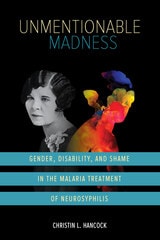
Unmentionable Madness
Gender, Disability, and Shame in the Malaria Treatment of NeurosyphilisChristin L. Hancock
University of Illinois Press, 2025
Christin L. Hancock looks through the lens of feminist disability to examine the popular but ethically suspect treatment and its consequences. As Hancock shows, the treatment’s purported success rate relied on the disabled minds and bodies of people incarcerated in mental hospitals. The backgrounds and identities of these patients reflected and perpetuated attitudes around poverty, gender, race, and disability while betraying authorities’ desire to protect the public from women and men perceived as abnormal, sexually tainted, and unworthy of community life.
Paying special attention to the patients’ voices and experiences, Unmentionable Madness offers a disability history that confronts the ethics of experimentation.
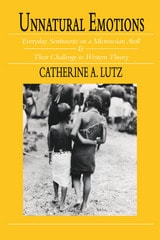
Unnatural Emotions
Everyday Sentiments on a Micronesian Atoll and Their Challenge to Western TheoryCatherine A. Lutz
University of Chicago Press, 1988
Unnatural Selection
The Yanomami, the Kayapo & the Onslaught of CivilisationLinda Rabben
Pluto Press, 1998
Linda Rabben interviews celebrated leaders such as Paulinho Payakan and Davi Yanomami; looks at the ways that both groups interact with Brazilian society and the wider world, and considers their differing futures.

Unpacking My Father's Bookstore
Laurence Roth
Rutgers University Press, 2025
2026 Independent Publisher Book Awards (IPPY) Silver Medal in the West – Pacific Non-Fiction category
Unpacking My Father’s Bookstore brings to life the history of J. Roth / Bookseller of Fine & Scholarly Judaica, which was a microcosm of the Los Angeles Jewish community from 1966 to 1994 and one of the premier Jewish bookstores in the United States. Blending critical analysis with a personal account of growing up in his father’s bookstore, and connecting both to larger forces that helped shape Jewish and American book retailing in the twentieth-century, Laurence Roth crafts a richly felt narrative about his family’s Jewish experience in America. It is a reminder, too, that while most independent bookstores like J. Roth Bookseller disappear from history, these retailers often had outsized effects on their communities. Breaking with conventional modes of scholarship, Unpacking My Father’s Bookstore tells a unique and troubled story that rarely gets told, one that is both personal and analytical, theoretical but rooted in the everyday.
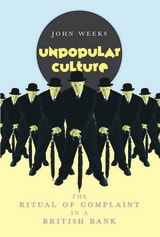
Unpopular Culture
The Ritual of Complaint in a British BankJohn R. Weeks
University of Chicago Press, 2003
As Weeks demonstrates, this is because the everyday standards of behavior that regulate complaints curtail their effectiveness. Embarrass someone by complaining in a way that is too public or too pointed, and you will find your social standing diminished. Complain too loudly or too long, and your coworkers might see you as contrary. On the other hand, complain too little and you may be seen as too stiff or just too strange to be trusted. The rituals of complaint, Weeks shows, have powerful social functions.
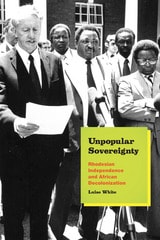
Unpopular Sovereignty
Rhodesian Independence and African DecolonizationLuise White
University of Chicago Press, 2015
White locates Rhodesia’s independence in the era of decolonization in Africa, a time of great intellectual ferment in ideas about race, citizenship, and freedom. She shows that racists and reactionaries were just as concerned with questions of sovereignty and legitimacy as African nationalists were and took special care to design voter qualifications that could preserve their version of legal statecraft. Examining how the Rhodesian state managed its own governance and electoral politics, she casts an oblique and revealing light by which to rethink the narratives of decolonization.
Unquiet Americans
U.S. Catholics, Moral Truth, and the Preservation of Civil LibertiesGerard V. Bradley
St. Augustine's Press, 2013
Before the Second Vatican Council, America’s Catholics operated largely as a coherent voting bloc, usually in connection with the Democratic Party. Their episcopal leaders generally spoke for Catholics in political matters; at least, where America’s bishops asserted themselves in public affairs there was little audible dissent from the faithful.
More than occasionally, the immigrant Church’s eagerness to demonstrate its patriotic bona fides furthered its tendency to speak with one voice about national matters, and in line with the broader societal consensus. And, notwithstanding the considerable conflict which Catholics encountered, and generated, in American political life, there was before the Council broad agreement in American culture about the centrality of Biblical morality to the success of Americans’ experiment with republican government.
In other words: before the Council, American Catholics’ relationship to the political common good was mediated, somewhat uncritical, and insulated from conflict (both within and without the Church) over such fundamental matters as protection of innocent life, marriage and family life, and (to a lesser extent) religious liberty.
This has all changed since the mid-1960s. For the first time in the Church’s pilgrimage on these shores, controversial questions about the basic moral requirements of the political common good are front and center for America’s Catholics. These questions require Catholics to confront matters which heretofore they either took for granted, read off from the background culture, or which they left to the bishops to handle. But the Council Fathers rightly recognized that Jesus calls upon a formed and informed laity to act as leaven in the public realm, to bring Gospel values to the temporal sphere. In this book of essays touching upon Catholic social doctrine, the truth about human equality and political liberty, and religious faith as it bears upon public life and the public engagement of lay Catholics, Gerard Bradley supplies indispensable aid to those seeking to answer Jesus’ call.
Unraveling Time
Thirty Years of Ethnography in Cuenca, EcuadorAnn Miles
University of Texas Press, 2022
Ann Miles has been chronicling life in the Ecuadorian city of Cuenca for more than thirty years. In that time, she has witnessed change after change. A large regional capital where modern trains whisk residents past historic plazas, Cuenca has invited in the world and watched as its own citizens risk undocumented migration abroad. Families have arrived from rural towns only to then be displaced from the gentrifying city center. Over time, children have been educated, streetlights have made neighborhoods safer, and remittances from overseas have helped build new homes and sometimes torn people apart. Roads now connect people who once were far away, and talking or texting on cell phones has replaced hanging out at the corner store.
Unraveling Time traces the enduring consequences of political and social movements, transnational migration, and economic development in Cuenca. Miles reckons with details that often escape less committed observers, suggesting that we learn a good deal more when we look back on whole lives. Practicing what she calls an ethnography of accrual, Miles takes a long view, where decades of seemingly disparate experiences coalesce into cultural transformation. Her approach not only reveals what change has meant in a major Latin American city but also serves as a reflection on ethnography itself.
Unraveling of Civil Society
Peacebuilding, Health Crises, and Aid in Twenty-First-Century Guinea and Sierra LeoneMichelle Reddy
Ohio University Press, 2026
In recent years, the capacity of civil society to respond to crises has been increasingly constrained by rising authoritarianism. Yet in West Africa, where civil society has historically played a pivotal role in democratization, this trend reveals deeper structural challenges. Unraveling of Civil Society examines how international aid strategies emphasizing technical capacity and professionalization have inadvertently contributed to the politicization and fragmentation of civil society in Guinea and Sierra Leone.
Drawing on extensive fieldwork—including interviews with representatives of more than a hundred locally led organizations, analysis of 260 strategic plans, and collection of cross-national survey data—this book offers a rare longitudinal and comparative study of civil society in the region. It traces how donor-driven models have led organizations to become sector specific, mimic donor institutions, or align with political interests—ultimately reducing organizational diversity and weakening the social infrastructure necessary for collective action and crisis resilience.
The book situates these findings within broader debates on democratic backsliding, noting that three of the nine countries that transitioned to autocracy between 2021 and 2023—Guinea, Chad, and Mali—are in West Africa. Despite significant international investment, “coup culture” and unconstitutional power shifts have resurged, raising urgent questions about the effectiveness of aid and the role of civil society in sustaining democratic norms.
Combining comparative historical analysis with a mixed-methods approach, Unraveling of Civil Society challenges prevailing assumptions about capacity building and offers practical recommendations for democratizing local organizations from within. It advocates for participatory governance and funding mechanisms and engages with ongoing conversations around the localization and decolonization of aid in a shifting geopolitical landscape.
This book is essential reading for scholars of African studies, political science, development studies, and global civil society as well as for practitioners in crisis management and political reform.