Results by title
22277 books match the query 'Social Science' and 356 start with u

Unspooled
How the Cassette Made Music ShareableRob Drew
Duke University Press, 2024
Unsustainable Empire
Alternative Histories of Hawai‘i StatehoodDean Itsuji Saranillio
Duke University Press, 2018
Untaming the Frontier in Anthropology, Archaeology, and History
Edited by Bradley J. Parker and Lars Rodseth
University of Arizona Press, 2005
Untangling the Intangible
Reconstructing Ideologies, Beliefs, and Religion in the PastKathryn MacFarland
University Press of Colorado, 2026
In Untangling the Intangible a diverse group of authors focuses on new and rigorous ways to approach religion, beliefs, and ideology in archaeology. Reconstructing the human experience from archaeologically recovered materials is a complex task that can only benefit by making use of all available avenues of inquiry. To that end, the authors of this volume model inclusive discussions that recognize the inherent overlap, intersectionality, and co-constitutive relationship among the widely considered “intangibles” of culture: ideas, beliefs, ideology, and religion. The material and tangible aspects of these related elements inform human behavior and should not be treated independently because they constitute different and equal parts of a cognitive mosaic that forms the basis of the human experience.
The chapters encompass an array of research topics, geographical settings (Crete, Eurasia, the eastern Mediterranean, Madagascar, Mexico, and Mongolia), and temporal periods and highlight how practices associated with religious and ideological beliefs have shaped human societies across space and time. By focusing on multiple scales of inquiry and novel ways of accessing the material expressions of cultural phenomena and addressing underrepresented themes, this book challenges existing approaches and perspectives on the topic and directs future researchers to grapple with these elements as integral to researching the past.
Emphasizing a more comprehensive study of religious and ideological aspects of material culture, Untangling the Intangible highlights the potential for a more holistic understanding of the past and for approaching the very aspects that make us human through archaeology.
Publication of this book has been aided by a grant from the von Bothmer Publication Fund of the Archaeological Institute of America.
Untapped
Exploring the Cultural Dimensions of Craft BeerNathaniel G. Chapman
West Virginia University Press, 2017
In the United States, the United Kingdom, and Western Europe there has been exponential growth in the number of small independent breweries over the past thirty years – a reversal of the corporate consolidation and narrowing of consumer choice that characterized much of the twentieth century. While there are legal and policy components involved in this shift, the contributors to Untapped ask broader questions. How does the growth of craft beer connect to trends like the farm-to-table movement, gentrification, the rise of the “creative class,” and changing attitudes toward both cities and farms? How do craft beers conjure history, place, and authenticity? At perhaps the most fundamental level, how does the rise of craft beer call into being new communities that may challenge or reinscribe hierarchies based on gender, class, and race?
Unthinking Mastery
Dehumanism and Decolonial EntanglementsJulietta Singh
Duke University Press, 2018
Unthinking Social Science
Limits Of 19Th Century ParadigmsImmanuel Wallerstein
Temple University Press, 2001
Untidy Gender
Domestic Service in TurkeyGul Ozyegin
Temple University Press, 2000

Until Choice Do Us Part
Marriage Reform in the Progressive EraClare Virginia Eby
University of Chicago Press, 2013
For centuries, people have been thinking and writing—and fiercely debating—about the meaning of marriage. Just a hundred years ago, Progressive era reformers embraced marriage not as a time-honored repository for conservative values, but as a tool for social change.
In Until Choice Do Us Part, Clare Virginia Eby offers a new account of marriage as it appeared in fiction, journalism, legal decisions, scholarly work, and private correspondence at the turn into the twentieth century. She begins with reformers like sexologist Havelock Ellis, anthropologist Elsie Clews Parsons, and feminist Charlotte Perkins Gilman, who argued that spouses should be “class equals” joined by private affection, not public sanction. Then Eby guides us through the stories of three literary couples—Upton and Meta Fuller Sinclair, Theodore and Sara White Dreiser, and Neith Boyce and Hutchins Hapgood—who sought to reform marriage in their lives and in their writings, with mixed results. With this focus on the intimate side of married life, Eby views a historical moment that changed the nature of American marriage—and that continues to shape marital norms today.
Untimely Interventions
AIDS Writing, Testimonial, and the Rhetoric of HauntingRoss Chambers
University of Michigan Press, 2004
Ross Chambers argues that culture produces itself as civilized by denying the forms of collective violence and other traumatic experience that it cannot control. In the context of such denial, personal accounts of collective disaster can function as a form of counter-denial. By investigating a range of writing on AIDS, the First World War, and the Holocaust, Chambers shows how such writing produces a rhetorical effect of haunting, as it seeks to describe the reality of those experiences culture renders unspeakable.
Ross Chambers is Professor of Romance Languages at the University of Michigan. His other books includeFacing It: AIDS Diaries and the Death of the Author.

Untold Stories
Tyler Clementi's Death and Crisis Leadership in Higher EducationJudy Farmer Jarvis
Rutgers University Press, 2027
Untold Stories: Tyler Clementi’s Death and Crisis Leadership in Higher Education delves into the well-known but poorly understood death of gay first-year Rutgers student Tyler Clementi in 2010 and explains how social identities shaped the responses to his tragic death, the media firestorm, Rutgers University’s actions, and the legacy of his life and death. It offers insights for higher education crisis responders and anyone who wants to learn more about this well-known but poorly understood case.
Untold Tales of the Hasidim
Crisis and Discontent in the History of HasidismDavid Assaf
Brandeis University Press, 2011
Untying Things Together
Philosophy, Literature, and a Life in TheoryEric L. Santner
University of Chicago Press, 2022
In 1905, Freud published his Three Essays on the Theory of Sexuality, the book that established the core psychoanalytic thesis that sexuality is central to formations of the unconscious. With this book, Eric L. Santner inverts Freud’s title to take up the sexuality of theory—or, more exactly, the modes of enjoyment to be found in the kinds of critical thinking that, since the 1960s, have laid claim to that ancient word, “theory.” Santner unfolds his argument by tracking his own relationship with this tradition and the ways his intellectual and spiritual development has been informed by it.
Untying Things Together is both an intellectual history of major theoretical paradigms and a call for their reexamination and renewal. Revisiting many of the topics he has addressed in previous work, Santner proposes a new way of conceptualizing the eros of thinking, attuned to how our minds and bodies individually and collectively incorporate or “encyst” on a void at the heart of things. Rather than proposing a “return to theory,” Santner’s book simply employs theory as a way of further “(un)tying together” the resources of philosophy, art and literature, theology, psychoanalysis, political thought, and more.
Unveiled Voices, Unvarnished Memories
The Cromwell Family in Slavery and Segregation, 1692-1972Adelaide M. Cromwell
University of Missouri Press, 2006
Unveiling Desire
Fallen Women in Literature, Culture, and Films of the EastDas, Devaleena
Rutgers University Press, 2018
Unveiling Inequality
A World-Historical PerspectiveRoberto Patricio Korzeniewicz
Russell Sage Foundation, 2009
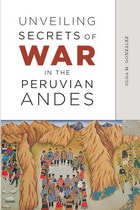
Unveiling Secrets of War in the Peruvian Andes
Olga M. González
University of Chicago Press, 2011
The Maoist guerrilla group Shining Path launched its violent campaign against the government in Peru’s Ayacucho region in 1980. When the military and counterinsurgency police forces were dispatched to oppose the insurrection, the violence quickly escalated. The peasant community of Sarhua was at the epicenter of the conflict, and this small village is the focus of Unveiling Secrets of War in the Peruvian Andes. There, nearly a decade after the event, Olga M. González follows the tangled thread of a public secret: the disappearance of Narciso Huicho, the man blamed for plunging Sarhua into a conflict that would sunder the community for years.
Drawing on extensive fieldwork and a novel use of a cycle of paintings, González examines the relationship between secrecy and memory. Her attention to the gaps and silences within both the Sarhuinos’ oral histories and the paintings reveals the pervasive reality of secrecy for people who have endured episodes of intense violence. González conveys how public secrets turn the process of unmasking into a complex mode of truth telling. Ultimately, public secrecy is an intricate way of “remembering to forget” that establishes a normative truth that makes life livable in the aftermath of a civil war.

Unveiling Traditions
Postcolonial Islam in a Polycentric WorldAnouar Majid
Duke University Press, 2000
Majid moves beyond Edward Said’s unmasking of orientalism in the West to examine the intellectual assumptions that have prevented a more nuanced understanding of Islam’s legacies. In addition to questioning the pervasive logic that assumes the “naturalness” of European social and political organizations, he argues that it is capitalism that has intensified cultural misunderstanding and created global tensions. Besides examining the resiliency of orientalism, the author critically examines the ideologies of nationalism and colonialist categories that have redefined the identity of Muslims (especially Arabs and Africans) in the modern age and totally remapped their cultural geographies. Majid is aware of the need for Muslims to rethink their own assumptions. Addressing the crisis in Arab-Muslim thought caused by a desire to simultaneously “catch up” with the West and also preserve Muslim cultural authenticity, he challenges Arab and Muslim intellectuals to imagine a post-capitalist, post-Eurocentric future. Critical of Islamic patriarchal practices and capitalist hegemony, Majid contends that Muslim feminists have come closest to theorizing a notion of emancipation that rescues Islam from patriarchal domination and resists Eurocentric prejudices.
Majid’s timely appeal for a progressive, multicultural dialogue that would pave the way to a polycentric world will interest students and scholars of postcolonial, cultural, Islamic, and Marxist studies.
Unveiling the Color Line
W. E. B. Du Bois on the Problem of WhitenessLisa J. McLeod
University of Massachusetts Press, 2024
In The Souls of Black Folk, W. E. B. Du Bois brilliantly details the African American experience. Yet the renowned sociologist was also an astute chronicler of white people, particularly their racism. As Unveiling the Color Line demonstrates, Du Bois’s trenchant analysis of whiteness and white supremacy began in his earliest work—his 1890 speech on Jefferson Davis—and continued in every major book he published in his more than sixty-year career, up to The Black Flame Trilogy.
Lisa J. McLeod traces the development of Du Bois’s conception of whiteness, and the racism inherent to it, as an all-encompassing problem, whether predicated on ignorance, moral failure, or the inability to recognize the humanity in other people. In clear, elegant prose, McLeod investigates Du Bois’s complex and nuanced thinking, putting his insights into dialogue with contemporary racial theorists to demonstrate his continuing value to present-day critical thought and activism.
Unveiling the Prophet
The Misadventures of a Reluctant DebutanteLucy Ferriss
University of Missouri Press, 2005
Unwanted Claims
The Politics of Participation in the U.S. Welfare SystemJoe Soss
University of Michigan Press, 2002
Unwanted Claims is a work of political sociology that provides an illuminating account of political life in the U.S. welfare system that should be of interest to scholars, students, policy practitioners, and the general public. Written in a style that minimizes technical jargon, avoids complex statistical presentations, and makes extensive use of clients' own descriptions of their experiences, beliefs, and actions, it offers an accessible and humanizing portrait of welfare participation that challenges conventional wisdom and raises important questions about poverty, welfare, and democracy in America.
Joe Soss is Assistant Professor of Government, The American University.
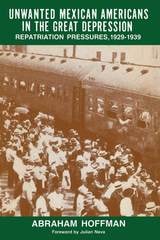
Unwanted Mexican Americans in the Great Depression
Repatriation Pressures, 1929–1939Abraham Hoffman; Foreword by Julian Nava
University of Arizona Press, 1973
Prior to 1931, many Mexican Americans left the United States voluntarily, prompted by homesickness, unemployment, and the Mexican government’s offer of free small land parcels. As the Great Depression deepened, repatriation pressures increased. Anglo groups lobbied for laws that excluded aliens from jobs and welfare benefits. Many businessmen, government officials, and social workers believed that removing Mexican Americans would open up jobs for U.S. citizens and alleviate some of the burden placed on relief agencies.
The Department of Labor’s federal deportation drive, launched in 1931, created an atmosphere of fear and tension in Mexican American communities. Immigration agents conducted surprise searches for people who had entered the country illegally, and Mexicans who had crossed the border before restrictive legislation was passed became prime targets of the deportation campaign.
Welfare agencies throughout the United States organized repatriation programs. The Los Angeles County Welfare Bureau, with the most extensive program, was responsible for the removal of more than thirteen thousand Mexican Americans. A few well-publicized deportations had frightened Mexicans who were unsure of their immigration status. Many chose repatriation over possible deportation.
Using much archival material and many previously unpublished government documents, Hoffman focuses on the repatriation experience in Los Angeles. The city’s large Mexican American population provides an excellent case study of the entire movement. He also surveys the process of Mexican repatriation throughout the entire United States.
Unwanted
A Murder Mystery of the Gilded AgeAndrew Young
Westholme Publishing, 2016
On the foggy, cold morning of February 1, 1896, a boy came upon what he thought was a pile of clothes. It was soon discovered to be the headless body of a young woman, brutally butchered and discarded. She was found just across the river from one of the largest cities in the country, Cincinnati, Ohio. Soon the authorities, the newspapers, and the public were obsessed with finding the poor girl’s identity and killer. Misinformation and rumor spread wildly around the case and led authorities down countless wrong paths. Initially, it appeared the crime would go unsolved. An autopsy, however, revealed that the victim was four months pregnant, presenting a possible motive. It would take the hard work of a sheriff, two detectives, and the unlikely dedication of a shoe dealer to find out who the girl was; and once she had been identified, the case came together. Within a short time the police believed they had her killers—a handsome and charismatic dental student and his roommate—and enough evidence to convict them of first-degree murder. While the suspects seemed to implicate themselves, the police never got a clear answer as to what exactly happened to the girl and they were never able to find her lost head—despite the recovery of a suspicious empty valise.
Centering his riveting new book, Unwanted: A Murder Mystery of the Gilded Age, around this shocking case and how it was solved, historian Andrew Young re-creates late nineteenth- century America, where Coca-Cola in bottles, newfangled movie houses, the Gibson Girl, and ragtime music played alongside prostitution, temperance, racism, homelessness, the rise of corporations, and the women’s rights movement. While the case inspired the sensationalized pulp novel Headless Horror, songs warning girls against falling in love with dangerous men, ghost stories, and the eerie practice of random pennies left heads up on a worn gravestone, the story of an unwanted young woman captures the contradictions of the Gilded Age as America stepped into a new century, and toward a modern age.

Unwatchable
Baer, Nicholas
Rutgers University Press, 2019
With over 50 original essays by leading scholars, artists, critics, and curators, this is the first book to trace the “unwatchable” across our contemporary media environment, in which viewers encounter difficult content on various screens and platforms. Appealing to a broad academic and general readership, the volume offers multidisciplinary approaches to the vast array of troubling images that circulate in global visual culture.
Unwelcome Shores
Black Refugees in AmericaBernadette Ludwig
Rutgers University Press, 2026
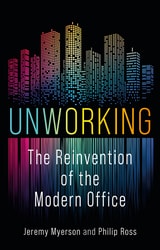
Unworking
The Reinvention of the Modern OfficeJeremy Myserson and Phillip Ross
Reaktion Books, 2022
Over the past one hundred years, the office has been integral to the development of modern society. It has shaped the architecture of our cities, the behavior of our organizations, and the everyday movements of millions of people. In 2020, however, the global pandemic brought our attendance in the office to an abrupt halt and triggered a complete reevaluation of the purpose of the workplace. This book offers a panoramic view of the office and explores what happens next. The authors advance a manifesto for “unworking”—unlearning old habits and rituals established for an outdated office and crafting and creating new ones fit for an age of digital technology, design innovation, and diverse workforces.
Unwrapping the Sacred Bundle
Reflections on the Disciplining of AnthropologyDaniel A. Segal and Sylvia J. Yanagisako, eds.
Duke University Press, 2005
The essayists consider the complex state of anthropology, its relation to other disciplines and the public sphere beyond academia, the significance of the convergence of linguistic and cultural anthropology, and whether or not anthropology is the best home for archaeology. While the contributors are not in full agreement with one another, they all critique “official” definitions of anthropology as having a fixed, four-field core. The editors are keenly aware that anthropology is too protean to be remade along the lines of any master plan, and this volume does not offer one. It does open discussions of anthropology’s institutional structure to all possible outcomes, including the refashioning of the discipline as it now exists.
Contributors. James Clifford, Ian Hodder, Rena Lederman, Daniel A. Segal, Michael Silverstein, Sylvia J. Yanagisako
Up Against The Sprawl
Public Policy And The Making Of Southern CaliforniaJennifer Wolch
University of Minnesota Press, 2004
Los Angeles's experience in managing urban growth and change
America's first truly twenty-first-century metropolis, Los Angeles is often depicted as diverse, fragmented, polarized, and ungovernable, a city without a unifying geographic center or civic culture. The sprawling evolution of the city and its infamous problems—traffic, pollution, growing inequality—are usually attributed to a Wild West version of capitalism—the triumph of an unregulated free market over comprehensive urban planning. But market choices and lack of planning did not set the terrain of Southern California: Los Angeles has been profoundly shaped by a wide range of local, state, and federal public policies and programs.
Up Against the Sprawl details how governmental policies and public agencies have dictated many aspects of the region’s growth: infrastructure, transportation, housing, immigration, finances, civic and regional administration, the environment. The authors also argue that since public policy set the landscape, it can help forge the future. They explore countermovements by progressive activists to use innovative policies—from smart growth initiatives to the actions of living wage advocates—for greater social, economic, and environmental justice. This book is a major contribution to our understanding of past and present urban processes and policy, and highlights practical lessons for urban and regional policy makers and activists in Los Angeles and beyond.Contributors: Carolyn B. Aldana, California State U, San Bernadino; Carol S. Armstrong; Michael Dear, U of Southern California; Gary Dymski, U of California Riverside; Steven P. Erie, USC; Gregory Freeman; William Fulton; Elizabeth Gearin, USC; Genevieve Giuliano, USC; Pascale Joassart-Marcelli, U of Massachusetts, Boston; Enrico A. Marcelli; Myra A. Marks, Loyola Marymount U; Juliet Musso, USC; Stephanie Pincetl, USC; Laura Pulido; Christine M. Ryan; John P. Wilson.
Up Against the Archive
Experiments in Writing British Empire History OtherwiseAntoinette Burton, editor
Duke University Press, 2027
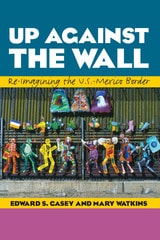
Up Against the Wall
Re-Imagining the U.S.-Mexico BorderBy Edward S. Casey and Mary Watkins
University of Texas Press, 2014
Using the U.S. wall at the border with Mexico as a focal point, two experts examine the global surge of economic and environmental refugees, presenting a new vision of the relationships between citizen and migrant in an era of “Juan Crow,” which systematically creates a perpetual undercaste.
Winner, National Association for Ethnic Studies (NAES) Outstanding Book Award, 2017
As increasing global economic disparities, violence, and climate change provoke a rising tide of forced migration, many countries and local communities are responding by building walls—literal and metaphorical—between citizens and newcomers. Up Against the Wall: Re-imagining the U.S.-Mexico Border examines the temptation to construct such walls through a penetrating analysis of the U.S. wall at the U.S.-Mexico border, as well as investigating the walling out of Mexicans in local communities. Calling into question the building of a wall against a friendly neighboring nation, Up Against the Wall offers an analysis of the differences between borders and boundaries. This analysis opens the way to envisioning alternatives to the stark and policed divisions that are imposed by walls of all kinds. Tracing the consequences of imperialism and colonization as citizens grapple with new migrant neighbors, the book paints compelling examples from key locales affected by the wall—Nogales, Arizona vs. Nogales, Sonora; Tijuana/San Diego; and the lower Rio Grande Valley of Texas. An extended case study of Santa Barbara describes the creation of an internal colony in the aftermath of the U.S. conquest of Mexican land, a history that is relevant to many U.S. cities and towns.
Ranging from human rights issues in the wake of massive global migration to the role of national restorative shame in the United States for the treatment of Mexicans since 1848, the authors delve into the broad repercussions of the unjust and often tragic consequences of excluding others through walled structures along with the withholding of citizenship and full societal inclusion. Through the lens of a detailed examination of forced migration from Mexico to the United States, this transdisciplinary text, drawing on philosophy, psychology, and political theory, opens up multiple insights into how nations and communities can coexist with more justice and more compassion.
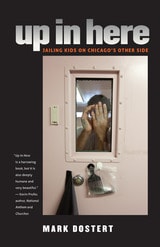
Up in Here
Jailing Kids on Chicago's Other SideMark Dostert
University of Iowa Press, 2014
The juveniles’ attitudes toward Dostert change, however, once he begins working as a “Children’s Attendant” at the Audy Home, clocking in for eight hours every day to enforce rules and maintain order on the cellblocks. His colorblind, altruistic volunteer world fractures into a full-time, emotionally charged reality of white and black and brown. When the boys change, he must change too. Despite wanting to help them feel human in such a dehumanizing environment, Dostert realizes he needs to make sure his kindness is not perceived as weakness. Dostert learns to march the juveniles through the facility to school, recreation activities, and chapel. He must strip-search them, interrupt their brawls, root through their cells for drugs and handcrafted weapons, and monitor group showers to thwart sexual extortion and the inscription of gang symbols in soap on walls and mirrors. Week after week and month after month, the job exposes hidden views not only of the juveniles and the “system” incarcerating them, but of Children’s Attendant Dostert himself.
From one man’s struggle to reconcile his humanitarian intentions with his actual job responsibilities in what, to him, is a strange new world, emerges a sincere effort to confront the realities of America’s persisting racial tensions and institutionalized poverty. Dostert’s story is an honest and unflinching journey from thinking he has many of the answers for how to change this world to discovering how little he really knows about the world he is trying to change.
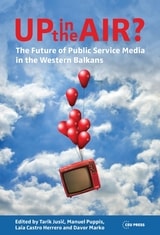
Up in the Air?
The Future of Public Service Media in the Western BalkansTarik Jusic
Central European University Press, 2021
The agenda for transition after the demise of communism in the Western Balkans made the conversion of state radio and television into public service broadcasters a priority, converting mouthpieces of the regime into public forums in which various interests and standpoints could be shared and deliberated. There is general agreement that this endeavor has not been a success. Formally, the countries adopted the legal and institutional requirements of public service media according to European standards. The ruling political elites, however, retained their control over the public media by various means.
Can this trend be reversed? Instead of being marginalized or totally manipulated, can public service media become vehicles of genuine democratization?
A comparison of public service media in seven countries (Albania, Bosnia & Herzegovina, Croatia, Kosovo, Montenegro, North Macedonia, and Serbia) addresses these important questions.
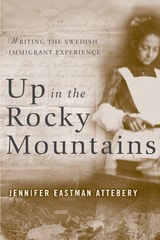
Up in the Rocky Mountains
Writing the Swedish Immigrant ExperienceJennifer Eastman Attebery
University of Minnesota Press, 2007
Before the turn of the twentieth century, many Swedish men emigrated to the American Rockies as itinerant laborers, drawn by the region’s developing industries. Single Swedish women ventured west, too, and whole families migrated, settling into farm communities. By 1920, one-fifth of all Swedish immigrants were living in the West.
In Up in the Rocky Mountains, Jennifer Eastman Attebery offers a new perspective on Swedish immigrants’ experiences in Idaho, Montana, Utah, Wyoming, Colorado, and New Mexico from 1880 to 1917 by interpreting their letters home. Considering more than three hundred letters, Attebery analyzes their storytelling, repetitive language, traditional phrasing, and metaphoric images. Recognizing the letters’ power as a folk form, Attebery sees in them the writers’ relationships back in Sweden as well as their encounters with religious and labor movements, regionalism, and nationalism in their new country.
By defining personal letters as a vernacular genre, Attebery provides a model for discerning immigrants’ shared culture in correspondence collections. By studying their words, she brings to life small Swedish communities throughout the Rocky Mountain region.
Jennifer Eastman Attebery is professor of English and director of American studies at Idaho State University.
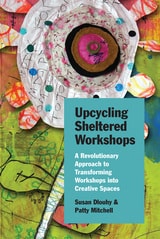
Upcycling Sheltered Workshops
A Revolutionary Approach to Transforming Workshops into Creative SpacesSusan Dlouhy
Ohio University Press, 2015
At a time when the traditional sheltered workshop model has fallen under rightful criticism, and a new paradigm for disability programming is not yet in place, Upcycling Sheltered Workshops offers a revolutionary alternative. As many push to dismantle sheltered workshops, Susan Dlouhy and Patty Mitchell present the Creative Abundance Model, a proven method that redirects sheltered workshops from routine to creativity, putting participants in the driver’s seat.
The Creative Abundance Model does away with the repetitive tasks that characterize traditional workshops. Instead, it is a structured but more open program that incorporates art, music, and other creative pursuits, freeing participants to discover their individual skills and talents. The authors both advocate for the model and provide instructions for implementing it, outlining such steps as obtaining funding, gaining the support and participation of the surrounding community, and preparing studios. Case studies from around the nation and inspiring photographs illustrate Dlouhy and Mitchell’s methods and document the many ways in which participants in Creative Abundance thrive.
Updike and the Patriarchal Dilemma
Masculinity in the Rabbit NovelsMary O'Connell
Southern Illinois University Press, 1996
Mary O’Connell examines the role of socially constructed masculinity in John Updike’s Rabbit tetralogy—Rabbit Run, Rabbit Redux, Rabbit Is Rich, and Rabbit at Rest—which comprises the longest and most comprehensive representation of masculinity in American literature and places Updike firmly with the precursors of the contemporary movement among men to reevaluate their cultural inheritance.
A disturbing element exists, O’Connell determines, in both the texts of the Rabbit novels and in the critical community that examines them. In the novels, O’Connell finds substantial evidence to demonstrate patterns of psychological and physical abuse toward women, citing as the culminating example the mounting toll of literally or metaphorically dead women in the texts. Critics who characterize Updike as a nonviolent writer who strangely overlooks Rabbit’s repressive and violent behaviors avoid a discomforting but crucial aspect of Updike’s portrait.
Because the critical verdict of nonviolence in Updike’s novels contrasts sharply with the string of female corpses, O’Connell deems that something within the text or culture—or both—is seriously amiss.
Although she examines negative aspects of Rabbit’s behavior, O’Connell avoids the oversimplification of labeling Updike a misogynist. Instead, she looks closely at the forces shaping Rabbit’s gender identity as well as at the ways he experiences masculinity and the ways his gender identity affects his personal and spiritual development, his relationships, and, ultimately, his society. She shows how Updike challenges stereotypical masculinity, revealing its limitations and proscriptions as the source of much unhappiness for both men and women. Further, she substantiates the relation between gender, form, structure, perspective, and language use in the novels, alerting the reader to the ambivalence arising from the male author’s examination of masculinity.
O’Connell maintains that Updike does more than write Rabbit as a stereotypical male; he instead explores in depth his character’s habitually flawed ways of seeing and responding to the world. As she discusses these issues, O’Connell uses the term patriarchy in its broadest sense to refer to the practice of centralizing the male and marginalizing the female in all areas of human life. Patriarchal ideology—the assumptions, values, ideas, and patterns of thought that perpetuate the arrangement—is written as hidden text, permeating every aspect of culture, particularly language, from which it spreads to other signifying systems.
Contrary to conventional critical wisdom, Updike is not a straightforward writer; the Rabbit novels create meaning by challenging, undermining, and qualifying their own explicit content. Updike claims that his novels are "moral debates with the reader," and according to O’Connell, the resisting reader, active and skeptical, is the one most likely to discover what Rabbit conceals and to register the nuances of layered discourse.
Uplift Cinema
The Emergence of African American Film and the Possibility of Black ModernityAllyson Nadia Field
Duke University Press, 2015
Upon the Altar of Work
Child Labor and the Rise of a New American SectionalismBetsy Wood
University of Illinois Press, 2020
Betsy Wood examines the evolution of ideas about child labor and the on-the-ground politics of the issue against the backdrop of broad developments related to slavery and emancipation, industrial capitalism, moral and social reform, and American politics and religion. Wood explains how the decades-long battle over child labor created enduring political and ideological divisions within capitalist society that divided the gatekeepers of modernity from the cultural warriors who opposed them. Tracing the ideological origins and the politics of the child labor battle over the course of eighty years, this book tells the story of how child labor debates bequeathed an enduring legacy of sectionalist conflict to modern American capitalist society.
Upon the Ruins of Liberty
Slavery, the President's House at Independence National Historical Park, and Public MemoryRoger C. Aden
Temple University Press, 2014
In Upon the Ruins of Liberty, Roger Aden offers a compelling account that explores the development of this important historic site and how history, space, and public memory intersected with contemporary racial politics. Aden constructs this engrossing tale by drawing on archival material and interviews with principal figures in the controversy-including historian Ed Lawler, site activist Michael Coard, and site designer Emanuel Kelly.
Upon the Ruins of Liberty chronicles the politically-charged efforts to create a fitting tribute to the place where George Washington (and later, John Adams) shaped the presidency while denying freedom to the nine enslaved Africans in his household. From design to execution, the plans prompted advocates to embrace stories informed by race, and address difficulties that included how to handle the results of the site excavation. As such, this landmark project raised concerns and provided lessons about the role of public memory and how places are made to shape the nation's identity.
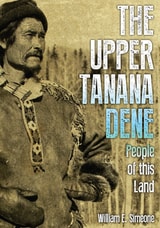
Upper Tanana Dene
People of This Landby William E. Simeone
University of Alaska Press, 2022
As young Dene migrate to towns and cities far from their homeland on the upper Tanana River of east central Alaska, they may never learn what it was like living from the land. In these interviews elders express concern that young Dene are becoming ignorant of the traditions that made their ancestors disciplined and strong enough to withstand the rigors of life on the land. The old life was taxing and made demands on the body and soul, and the struggle to achieve security placed a premium on knowledge, endurance, and constant effort. Modern conveniences have made life easier, but elders believe their knowledge is still vital to the survival of future generations.
With text in both Dene and English, The Upper Tanana Dene is a link to Dene experiences, lives, and understanding of the world and is meant for those interested in Dene heritage, as well as students and scholars of cultural and ethnic studies and history.

Uproarious
How Feminists and Other Subversive Comics Speak TruthCynthia Willett
University of Minnesota Press, 2019
Humor is often dismissed as cruel ridicule or harmless fun. But what if laughter is a vital force to channel rage against patriarchy, Islamophobia, or mass incarceration? To create moments of empathy and dialogue between Black Lives Matter and the police? These and other such questions are at the heart of this powerful reassessment of humor. Placing theorists in conversation with comedians, Uproarious offers a full-frontal approach to the very foundation of comedy and its profound political impact.
Here Cynthia Willett and Julie Willett address the four major theories of humor—superiority, relief, incongruity, and social play—through the lens of feminist and game-changing comics such as Wanda Sykes, Margaret Cho, Hannah Gadsby, Hari Kondabolu, and Tig Notaro. They take a radical and holistic approach to the understanding of humor, particularly of humor deployed by those from groups long relegated to the margins, and propose a powerful new understanding of humor as a force that can engender politically progressive social movements. Drawing on a range of cross-disciplinary sources, from philosophies and histories of humor to the psychology and physiology of laughter to animal studies, Uproarious offers a richer understanding of the political and cathartic potential of humor.
A major new contribution to a wider dialogue on comedy, Uproarious grounds for us explorations of outsider humor and our golden age of feminist comics—showing that when women, prisoners, even animals, laugh back, comedy along with belly laughs forge new identities and alter the political climate.
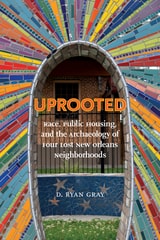
Uprooted
Race, Public Housing, and the Archaeology of Four Lost New Orleans NeighborhoodsD. Ryan Gray
University of Alabama Press, 2020
The archaeology of four New Orleans neighborhoods that were replaced by public housing projects
Uprooted: Race, Public Housing, and the Archaeology of Four Lost New Orleans Neighborhoods uses archaeological research on four neighborhoods that were razed during the construction of public housing in World War II–era New Orleans. Although each of these neighborhoods was identified as a “slum” historically, the material record challenges the simplicity of this designation. D. Ryan Gray provides evidence of the inventiveness of former residents who were marginalized by class, color, or gender and whose everyday strategies of survival, subsistence, and spirituality challenged the city’s developing racial and social hierarchies.
These neighborhoods initially appear to have been quite distinct, ranging from the working-class Irish Channel, to the relatively affluent Creole of Color–dominated Lafitte area, to the former location of Storyville, the city’s experiment in semilegal prostitution. Archaeological and historical investigations suggest that race was the crucial factor in the areas’ selection for clearance. Each neighborhood manifested a particular perceived racial disorder, where race intersected with ethnicity, class, or gender in ways that defied the norms of Jim Crow segregation.
Gray’s research makes use of both primary documents—including census records, city directories, and even the brothel advertising guides called “Blue Books”—and archaeological data to examine what this entailed at a variety of scales, reconstructing narratives of the households and communities affected by clearance. Public housing, both in New Orleans and elsewhere, imposed a new kind of control on urban life that had the effect of making cities both more segregated and less equal. The story of the neighborhoods that were destroyed provides a reminder that their erasure was not an inevitable outcome, and that a more equitable and just city is still possible today. A critical examination of the rise of public housing helps inform the ongoing debates over its demise, especially in light of the changing face of post-Katrina New Orleans.

Uprooting Racism and Racists in the United States
James Boggs and Grace Lee Boggs
Disobedience Press, 2027
“Uprooting Racism and Racists in the United States” has become even more timely and instructive today than when James and Grace Lee Boggs first sounded the alarm in 1970. In this essay, the Boggses diagnose the “essential contradiction” of economic overdevelopment and political underdevelopment, tracing its path through key stages: how racism has been interwoven into U.S. economic development; a destructive national drive for economic growth at all costs; and how subsequent generations of Americans prioritize economics over principles—breeding a collective social irresponsibility that leaves us unable to act ethically in the face of pressing social challenges.
Today, the contradiction the Boggses identified has grown more entrenched—and its consequences more destructive. “Uprooting” helps explain why millions voted for Trump in 2024 despite his demonstrated corruption, why society fails to regulate the expansion of AI and data centers, why we are unable to forestall the climate changes that scientists have long warned against, why immigrants face racist vilification, and why the federal government is intent on erasing the centrality of race to the making of the country. Ultimately, “Uprooting” offers a crucial assessment of where this contradiction began, how it shapes the nation, and where we need to go.
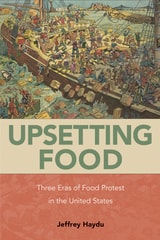
Upsetting Food
Three Eras of Food Protests in the United StatesJeffrey Haydu
Temple University Press, 2021
Battle lines have long been drawn over how food is produced, what food is made available to whom, and how best to protect consumers from risky or unhealthy food. Jeffrey Haydu resurrects the history of food reform and protest in Upsetting Food, showing how activists defined food problems, articulated solutions, and mobilized for change in the United States.
Haydu’s sociological history starts in the 1830s with diet reformer Sylvester Graham, who blamed alcohol and store-bought bread—signs of a commercializing urban society—for poor health and moral decline. His successors at the turn of the twentieth century rallied against impure food and pushed for women to be schooled in scientific food preparation and nutrition. Decades later, in the 1960s and ’70s, a grassroots movement for organic food battled commercial food production in favor of food grown ecologically, by small farmers, and without artificial chemicals.
Each campaign raised doubts about food safety, health, and transparency, reflecting how a capitalist system can undermine trust in food. But Haydu also considers how each movement reflects the politics, inequalities, and gender relations of its time. And he traces how outcomes of each campaign laid the groundwork for the next. The three eras thus come together as parts of a single, recurring food movement.
Upsetting Food offers readers a historical background to better understand contemporary and contentious food politics.
Upsold
Real Estate Agents, Prices, and Neighborhood InequalityMax Besbris
University of Chicago Press, 2020
Stratification defines cities in the contemporary United States. In an era marked by increasing income segregation, one of the main sources of this inequality is housing prices. A crucial part of wealth inequality, housing prices are also directly linked to the uneven distribution of resources across neighborhoods and to racial and ethnic segregation. Upsold shows how the interactions between real estate agents and buyers make or break neighborhood reputations and construct neighborhoods by price.
Employing revealing ethnographic and quantitative housing data, Besbris outlines precisely how social influences come together during the sales process. In Upsold, we get a deep dive into the role that the interactions with sales agents play in buyers’ decision-making and how neighborhoods are differentiated, valorized, and deemed to be worthy of a certain price.
Upstaging Big Daddy
Directing Theater as if Gender and Race MatterEllen Donkin and Susan Clement, Editors
University of Michigan Press, 1993
What happens, then, when a feminist who directs for the theater decides that there is something called a feminist director, someone who sees her job as protesting and intervening in the existing system of representation? The contributors to this volume provide a wide range of answers, in original essays that disrupt traditional approaches of directing by showing how feminist theory might be applied in practice.
Essays and interviews by a wide variety of directors, scholars, and other theater specialists offer fresh new models for thinking about directing. The collection includes essays on African-American theater, feminist “classics,” and male directors working on feminist plays, as well as concrete suggestions for directing a variety of plays, from works by Shakespeare and Euripides to those by Caryl Churchill, Aishah Rahman, and Helene Cixous. The theoretical material, drawing from a wide range of contemporary critics and theorists, has been written with the director in mind, partly for the purpose of analyzing texts but also for inspiring creative directorial and design solutions.
Upstaging the Cold War
American Dissent and Cultural Diplomacy, 1940-1960Andrew J. Falk
University of Massachusetts Press, 2010
Traditional interpretations of the 1950s have emphasized how American anti-communists deployed censorship and the blacklist to silence dissent, particularly in the realm of foreign policy. Yet those efforts at repression did not always succeed. Throughout the early years of the Cold War, a significant number of writers and performers continued to express controversial views about international relations in Hollywood films, through the new medium of television, on the Broadway stage, and from behind the scenes.
By promoting superpower cooperation, decolonization, nuclear disarmament, and other taboo causes, dissident artists such as Lillian Hellman, Arthur Miller, Rod Serling, Dalton Trumbo, Reginald Rose, and Paddy Chayefsky managed both to stretch the boundaries of Cold War ideology and to undermine some of its basic assumptions. Working at times under assumed names and in some cases outside the United States, they took on the role of informal diplomats who competed with Washington in representing America to the world.
Ironically, the dissidents' international appeal eventually persuaded the U.S. foreign policy establishment that their unconventional views could be an asset in the Cold War contest for “hearts and minds,” and their artistic work an effective means to sell American values and culture abroad. By the end of the 1950s, the Eisenhower administration not only appropriated the work of these talented artists but enlisted some of them to serve as official voices of Cold War cultural diplomacy.
Upstream
Trust Lands and Power on the Feather RiverBeth Rose Middleton Manning
University of Arizona Press, 2018
Upstream documents the significance of the Allotment Era to a long and ongoing history of cultural and community disruption. It also details Indigenous resistance to both hydropower and disruptive conservation efforts. With a focus on northeastern California, this book highlights points of intervention to increase justice for Indigenous peoples in contemporary natural resource policy making.
Author Beth Rose Middleton Manning relates the history behind the nation’s largest state-built water and power conveyance system, California’s State Water Project, with a focus on Indigenous resistance and activism. She illustrates how Indigenous history should inform contemporary conservation measures and reveals institutionalized injustices in natural resource planning and the persistent need for advocacy for Indigenous restitution and recognition.
Upstream uses a multidisciplinary and multitemporal approach, weaving together compelling stories with a study of placemaking and land development. It offers a vision of policy reform that will lead to improved Indigenous futures at sites of Indigenous land and water divestiture around the nation.

Uranium Frenzy
Saga of the Nuclear WestRaye C. Ringholz
Utah State University Press, 2002
The uranium boom is only part of the larger story of atomic weapons testing and its impact in the western United States. Nuclear explosions at the Nevada Test Site not only spurred uranium mining, they also had a disastrous impact on many Americans: downwinders in the eastward path of radiation clouds, military observers and guinea pigs in exposed positions, and Navajo and other uranium mill workers all became victims, as deaths from cancer and other radiation-caused diseases reached much higher than normal rates among them. Tons of radioactive waste left by mines, mills, and the nuclear industry and how to dispose of them are other nagging legacies of the nuclear era. Recent decades have brought multiple attempts by victims to obtain compensation from the federal government and other legal battles over disposal of nuclear waste. When courts refused to grant relief to downwinders and others, Congress eventually interceded and legislated compensation for a limited number of victims able to meet strict criteria, but did not adequately fund the program. Recently, Congress attempted to fix this shortfall, but in the meantime many downwinders and others holding compensation IOUs had died. Congressional and other efforts to dispose of waste have lately focused on Nevada and Utah, two states all too familiar with nuclear issues and reluctant to take on further radioactive burdens.

Urban Aloha
Hawaiian Diaspora, Identity, and Belonging in Los AngelesLani Cupchoy
University of Nevada Press, 2027
Urban Aloha reveals the vibrant, little-known story of Kānaka ʻŌiwi (Native Hawaiians) diaspora in Los Angeles, home to the largest Hawaiian community outside Hawai‘i. Moving beyond tourist clichés and the persistent myth that Hawaiian Gardens represents “the” Hawaiian enclave, author Lani Cupchoy traces how a diasporic community took root across the South Bay and San Gabriel Valley. Beginning with the peak migrations of the 1950s and 1960s, and driven by economic recession in the islands, the narrative follows families as they built new lives through civic clubs, newsletters, churches, restaurants, and backyard gatherings.
Drawing on oral histories, archival research, foodways, hula halau, and organizations such as the Hawaiian Inter-Club Council of Southern California, Urban Aloha explores how “Hawaiianness” shifts from identity to lived cultural community. Cupchoy examines how belonging is shaped not only by ancestry but by region, memory, leisure, and everyday practice. At once intimate and intellectually compelling, this book challenges manufactured fantasies of paradise and reveals a dynamic mainland community negotiating authenticity, representation, and cultural resilience. Richly researched and deeply human, Urban Aloha redefines what it means to be Hawaiian—on the continent and beyond.
Urban Blues
Charles Keil
University of Chicago Press, 1968
"Enlightening. . . . [Keil] has given a provocative indication of the role of the blues singer as a focal point of ghetto community expression."—John S. Wilson, New York Times Book Review
"[Urban Blues] expresses authentic concern for people who are coming to realize that their past was . . . the source of meaningful cultural values."—Atlantic
"An achievement of the first magnitude. . . . He opens our eyes and introduces a world of amazingly complex musical happening."—Robert Farris Thompson, Ethnomusicology
"[Keil's] vigorous, aggressive scholarship, lucid style and sparkling analysis stimulate the challenge. Valuable insights come from treating urban blues as artistic communication."—James A. Bonar, Boston Herald