Results by title
5159 books match the query 'Biography' and 42 start with v
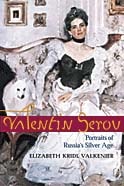
Valentin Serov
Portraits of Russia's Silver AgeElizabeth Valkenier
Northwestern University Press, 2001
Elizabeth Kridl Valkenier weds art criticism to social history in her study of Serov. She casts the artist's work against the Gilden Age of turn-of-the-century Russia, an era when money and consumption abounded and revolutionary change was taking place at all levels of society. Painting prominent people of the day in business, government, the nobility, and the arts, Serov created a gallery of Russia's important figures--figures seen with a sharp eye and painted with subtle irony.
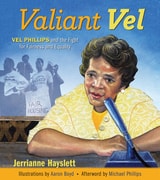
Valiant Vel
Vel Phillips and the Fight for Fairness and EqualityJerrianne Hayslett
Wisconsin Historical Society Press, 2025
An illustrated biography of groundbreaking civil rights activist Vel Phillips for young readers
Fair housing advocate, civil rights champion, and civic leader Vel Phillips spent her life breaking barriers and fighting for justice for all people. As the first Black woman on the Milwaukee Common Council, Wisconsin’s first Black judge, and the first Black woman to win statewide office when she was elected secretary of state of Wisconsin, Phillips left a lasting legacy that has inspired generations to continue the fight for justice and equality.
Valiant Vel depicts Phillips’s captivating story for young readers in middle and high school—from her childhood experiences facing racial discrimination, to achieving her dream of becoming a lawyer, to her long career in politics and civil rights. In the 1960s, Phillips spearheaded a campaign to advocate for fair housing in Milwaukee, joining forces with the NAACP Youth Council and marching alongside other activists in the face of violent opposition. In 1968, Phillips’s persistence paid off when the Milwaukee Common Council passed a fair housing ordinance.
Beautifully illustrated with historic photographs and original artwork by Milwaukee artist Aaron Boyd, Valiant Vel makes an excellent addition to young readers’ bookshelves at school and at home. With an afterword by Phillips’s son, Michael, a glossary of terms, and sources for further research, this book provides a thorough look at an inspirational activist who dedicated her life to making the world a better place.
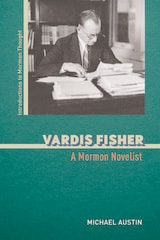
Vardis Fisher
A Mormon NovelistMichael Austin
University of Illinois Press, 2021
Engrossing and enlightening, Vardis Fisher illuminates the acclaimed author's impact on Mormon culture, American letters, and the literary tradition of the American West.
Vasari on Theatre
Thomas A. Pallen
Southern Illinois University Press, 1999
In the process of creating the massive work that eventually became Lives of the Most Eminent Painters, Sculptors, and Architects, painter and scholar Giorgio Vasari (1511–1574) spent much of the mid-sixteenth century traveling throughout Italy, meeting Renaissance artists and writing about their lives and works.
From this imposing source, Thomas A. Pallen has created a compendium of theatrical references augmented by related modern Italian scholarship. Vasari's Lives—daunting because of its sheer magnitude—has remained relatively obscure to English-speaking theatre historians. To introduce the numerous scenographic references of this great work to the English-speaking audience, Pallen provides new translations of all relevant passages, as well as a table of cross-references to the principal editions of Vasari in both English and Italian. And because Vasari often omitted important information, Pallen annotates the text, providing important names, places, and historical background.
Essentially, Pallen divides Vasari's work into four categories: triumphs and pageantry, ingegni for mystery plays and festivals, theatrical scenery, and miscellanea and lacunae. Although triumphs and pageantry were not directly theatrical, they were executed by many of the same artists who worked on theatrical productions and either used or introduced many Renaissance Italian theatrical techniques. The works described here range from tableaux vivants and other forms of street decoration to fireworks displays.
While Vasari did not personally know the work of either Filippo Brunelleschi or Francesco d'Angelo (called Cecca), he discusses their inventions for staging mystery plays and street festivals; indeed, Pallen shows how the work of these two artists paved the way for all later Renaissance scenography.
Pallen then deals with Vasari's references to and descriptions of the theatrical scenery and lighting effects of his time and the artists who created them. In accordance with the schema developed by Elena Povoledo, Pallen leads the reader through the evolution of scenographic thought and practice from the elementary work of Girolamo Genga to the advanced settings created by Vasari himself.
Vasily Zhukovsky's Romanticism and the Emotional History of Russia
Ilya Vinitsky
Northwestern University Press, 2015
The first major study in English of Vasily Zhukovsky (1783–1852)—poet, translator of German romantic verse, and mentor of Pushkin—this book brings overdue attention to an important figure in Russian literary and cultural history. Vinitsky’s “psychological biography” argues that Zhukovsky very consciously set out to create for himself an emotional life reflecting his unique brand of romanticism, different from what we associate with Pushkin or poets such as Byron or Wordsworth. For Zhukovsky, ideal love was harmonious, built on a mystical foundation of spiritual kinship. Vinitsky shows how Zhukovksy played a pivotal role in the evolution of ideas central to Russia’s literary and cultural identity from the end of the eighteenth century into the decades following the Napoleonic Wars.
Vaughan Williams and His World
Edited by Byron Adams and Daniel M. Grimley
University of Chicago Press, 2023
Ralph Vaughan Williams (1872–1958) was one of the most innovative and creative figures in twentieth-century music, whose symphonies stand alongside those of Sibelius, Nielsen, Shostakovich, and Roussel. After his death, shifting priorities in the music world led to a period of critical neglect. What could not have been foreseen is that by the second decade of the twenty-first century, a handful of Vaughan Williams’s scores would attain immense popularity worldwide. Yet the present renown of these pieces has led to misapprehension about the nature of Vaughan Williams’s cultural nationalism and a distorted view of his international cultural and musical significance.
Vaughan Williams and His World traces the composer’s stylistic and aesthetic development in a broadly chronological fashion, reappraising Vaughan Williams’s music composed during and after the Second World War and affirming his status as an artist whose leftist political convictions pervaded his life and music. This volume reclaims Vaughan Williams’s deeply held progressive ethical and democratic convictions while celebrating his achievements as a composer.
Veeck As In Wreck
The Autobiography of Bill VeeckBill Veeck with Ed Linn
University of Chicago Press, 2001
Vegetables
A BiographyEvelyne Bloch-Dano
University of Chicago Press, 2012
From Michael Pollan to locavores, Whole Foods to farmers' markets, today cooks and foodies alike are paying more attention than ever before to the history of the food they bring into their kitchens—and especially to vegetables. Whether it’s an heirloom tomato, curled cabbage, or succulent squash, from a farmers' market or a backyard plot, the humble vegetable offers more than just nutrition—it also represents a link with long tradition of farming and gardening, nurturing and breeding.
In this charming new book, those veggies finally get their due. In capsule biographies of eleven different vegetables—artichokes, beans, chard, cabbage, cardoons, carrots, chili peppers, Jerusalem artichokes, peas, pumpkins, and tomatoes—Evelyne Bloch-Dano explores the world of vegetables in all its facets, from science and agriculture to history, culture, and, of course, cooking. From the importance of peppers in early international trade to the most recent findings in genetics, from the cultural cachet of cabbage to Proust’s devotion to beef-and-carrot stew, to the surprising array of vegetables that preceded the pumpkin as the avatar of All Hallow’s Eve, Bloch-Dano takes readers on a dazzling tour of the fascinating stories behind our daily repasts.
Spicing her cornucopia with an eye for anecdote and a ready wit, Bloch-Dano has created a feast that’s sure to satisfy gardeners, chefs, and eaters alike.
Vendulka
Flight to FreedomOndrej Kundra
Karolinum Press, 2021
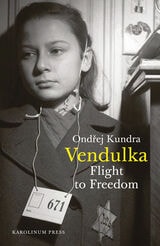
Famed Czech photographer Jan Lukas snapped an offhand portrait of twelve-year-old Vendulka Vogl in March 1943. A friend of the Vogls, Lukas was saying goodbye to the family, who were soon to leave Prague for a concentration camp. The photograph almost didn’t see the light of day—Lukas knew that if the Nazis found it on him, he could wind up in the camps as well—but the image was eventually developed and came to symbolize the Holocaust and humanize its victims. Seventy years after this famous picture was taken, investigative journalist Ondřej Kundra discovered that, despite all odds, Vendulka Vogl had survived the camps of Terezín, Auschwitz, and Christianstadt, and was in fact still alive and living in the United States. Kundra persuaded her to tell the remarkable story surrounding the photograph: her survival, her later decision to flee the Communist regime for America, and how she later reconnected with Jan Lukas, maintaining a lifelong friendship.
Vogl’s thrillingly moving story, Kundra’s sharp and engaging writing, and Lukas’s striking photography all combine to make Vendulka an inspiring investigation into the horrors of totalitarianism and the redemptive beauty of friendship.

Vengeance Is Mine
The Scandalous Love Triangle That Triggered the Boyce-Sneed FeudBill Neal
University of North Texas Press, 2011
Venture Smith and the Business of Slavery and Freedom
James Brewer Stewart
University of Massachusetts Press, 2010
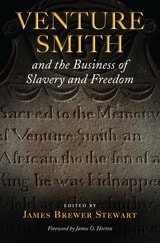
But what began as a scientific inquiry into African origins rapidly evolved into an unparalleled interdisciplinary collaboration between historians, literary analysts, geographers, genealogists, anthropologists, political philosophers, genomic biologists, and, perhaps most revealingly, a poet. Their common goal has been to reconstruct the life of an extraordinary African American and to assay its implications for the sprawling, troubled eighteenth-century world of racial exploitation over which he triumphed. This volume displays the rich results of that collaboration.
A highly intelligent, deeply self-motivated and immensely energetic slave transported from Africa, Venture Smith transformed himself through unstinting labor into a respectable Connecticut citizen, a successful entrepreneur, and the liberator of other enslaved African Americans. As James O. Horton emphasizes in his foreword to this volume, "Venture Smith's saga is a gift to all who seek to understand the complex racial beginnings of America. It helps to connect the broad American story with the stories of many Americans whose lives illustrate the national struggle to live out the national ideals."
In addition to Horton and volume editor James Brewer Stewart, contributors include Cameron Blevins, Vincent Carretta, Anna Mae Duane, Robert P. Forbes, Anne L. Hiskes, Paul Lovejoy, Marilyn Nelson, David Richardson, Chandler B. Saint, Linda Strausbaugh, Kevin Tulimieri, and John Wood Sweet.
Verner Suomi
The Life and Work of the Founder of Satellite MeteorologyJohn M. Lewis et al.
American Meteorological Society, 2018
Vesna Pavlovic
StagecraftVesna Pavlovic
Vanderbilt University Press, 2021
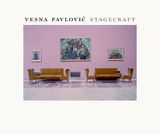
The book includes critical essays that contextualize and expound on Pavlović's unique treatment of the photographic medium, in which a photographic moment is expanded to include the conditions of image making, production, documentation, and representation.
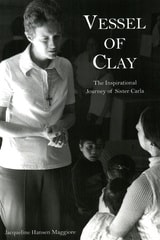
Vessel of Clay
The Inspirational Journey of Sister CarlaJacqueline Hansen Maggiore
University of Scranton Press, 2010
Jacqueline Hansen Maggiore presents in this volume the biography of her lifelong friend Carol Piette, known throughout Chile and El Salvador as Sister Carla. Drawing from the memories of those who knew her and excerpts from her letters and diaries, Vessel of Clay chronicles Sister Carla’s extraordinary life, highlighting her dedication to the poor of Latin America but also revealing her struggles with self-doubt and emotional frailty. Vessel of Clay will appeal to both lay and religious readers interested in peace and social justice, spiritual formation and development, women’s issues, liberation theology, and mission service.
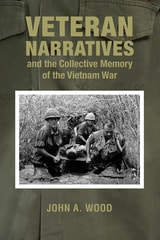
Veteran Narratives and the Collective Memory of the Vietnam War
John A. Wood
Ohio University Press, 2016
In the decades since the Vietnam War, veteran memoirs have influenced Americans’ understanding of the conflict. Yet few historians or literary scholars have scrutinized how the genre has shaped the nation’s collective memory of the war and its aftermath. Instead, veterans’ accounts are mined for colorful quotes and then dropped from public discourse; are accepted as factual sources with little attention to how memory, no matter how authentic, can diverge from events; or are not contextualized in terms of the race, gender, or class of the narrators.
Veteran Narratives and the Collective Memory of the Vietnam War is a landmark study of the cultural heritage of the war in Vietnam as presented through the experience of its American participants. Crossing disciplinary borders in ways rarely attempted by historians, John A. Wood unearths truths embedded in the memoirists’ treatments of combat, the Vietnamese people, race relations in the United States military, male-female relationships in the war zone, and veterans’ postwar troubles. He also examines the publishing industry’s influence on collective memory, discussing, for example, the tendency of publishers and reviewers to privilege memoirs critical of the war. Veteran Narratives is a significant and original addition to the literature on Vietnam veterans and the conflict as a whole.
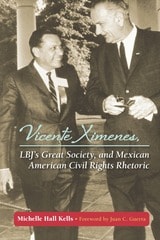
Vicente Ximenes, LBJ's Great Society, and Mexican American Civil Rights Rhetoric
Michelle Hall Kells, with a foreword by Juan C. Guerra
Southern Illinois University Press, 2018
Kells draws on Ximenes’s extensive archive of speeches, reports, articles, and oral interviews to present the activist’s rhetorical history. After a discussion of Ximenes’s early life, the author focuses on his career as an activist, examining Ximenes’s leadership in several key civil rights events, including the historic 1967 White House Cabinet Committee Hearings on Mexican American Affairs. Also highlighted is his role in advancing Mexican Americans and Latinos from social marginalization to greater representation in national politics.
This book shows us a remarkable man who dedicated the majority of his life to public service, using rhetoric to mobilize activists for change to secure civil rights advances for his fellow Mexican Americans.
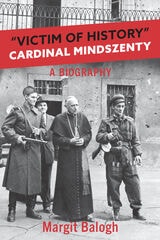
Victim of History
Cardinal Mindszenty, a biographyMargit Balogh
Catholic University of America Press, 2022
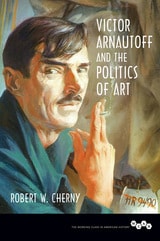
Victor Arnautoff and the Politics of Art
Robert W. Cherny
University of Illinois Press, 2017
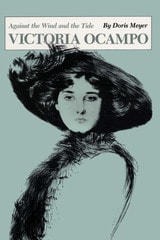
Victoria Ocampo
Against the Wind and the TideBy Doris Meyer
University of Texas Press, 1989
The "first lady of Argentine letters," Victoria Ocampo is best known as the architect of cultural bridges between the American and European continents and as the founder and director of Sur, an influential South American literary review and publishing house.
In this first biographical study in English of "la superbe Argentine," originally published in 1979, Doris Meyer considers Victoria Ocampo's role in introducing European and North American writers and artists to the South American public—through the pages of her review, through translations of their work, and through lecture tours and recitations. She examines Ocampo's personal relationships with some of the most illustrious writers and thinkers of this century—including José Ortega y Gasset, Rabindranath Tagore, Count Hermann Keyserling, Virginia Woolf, Adrienne Monnier, Vita Sackville-West, Gabriela Mistral, and many others. And she portrays an extraordinary woman who rebelled against the strictures of family and social class to become a leading personality in the fight for women's rights in Argentina and, later, a steadfast opponent of the Perón regime, for which she was sent to jail in 1953.
Fifteen of Victoria Ocampo's essays, selected from her more than ten volumes of prose and translated by Doris Meyer, complement the biographical study.
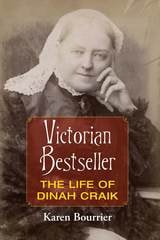
Victorian Bestseller
The Life of Dinah CraikKaren Bourrier
University of Michigan Press, 2019
Victorian Bestseller is the first book to relate the story of Dinah Craik’s remarkable life. Combining extensive archival work with theoretical work in disability studies and the professionalization of women’s authorship, Karen Bourrier engagingly traces the contours of this author’s life. Craik, who wrote extensively about disability in her work, was no stranger to it in her personal and professional life, marked by experiences of mental and physical disability, and the ebb and flow of health. Following scholarship in the ethics of care and disability studies, the book posits Craik as an interdependent subject, placing her within a network of writers, publishers, editors and artists, friends, and family members. Victorian Bestseller also traces the conditions in the material history of the book that allowed Victorian women writers’ careers to flourish. In doing so, the biography connects corporeality, gender, and the material history of the book to the professionalization of Victorian women’s authorship.
Victorian Domesticity
Families in the Life and Art of Louisa May AlcottCharles Strickland
University of Alabama Press, 1985
The subject of Victorian Domesticity is family life in America. The life and works of Louisa May Alcott served as the vehicle for exploring and analyzing this subject. Although Alcott was deeply influenced by popular currents of sentimentality, her own experience exposed her to the confusions and contradictions generated when sentiment confronted the reality of life in 19th-century America.
In the first chapter Strickland outlines the ways in which sentimentality colored the perception of 19th-century Americans about such issues as courtship, marriage, the relationship between the sexes, generational relationships, and the relationship between the nuclear family and the community outside the family. Chapters two and three trace Alcott’s childhood and adolescent experiences, exploring the tensions that developed between Louisa and her father, and detailing the ways in which she carried the double burden of being both poor and female as she sought her identity as a writer.
The following six chapters treat the varieties of family life that appear in Alcott’s stories, the impact of feminism on her life, and her emphasis on the importance of child nurture. In the final two chapters the author treats the relationships that Alcott perceived between the family and the world around it and assesses the legacy of the Victorian family idea.
Victorian People
A Reassessment of Persons and Themes, 1851-67Asa Briggs
University of Chicago Press, 1975
"For expounding this theme, this interaction of event and personality, Mr. Briggs is abundantly and happily endowed. He is always readable, often amusing, never facetious. He is widely read and widely interested. He has a sound historic judgment, and an unfailing sense for what is significant in the historic sequence and what is merely topical. . . . Above all, he is in sympathy with the age of which he is writing."—Times Literary Supplement
Victorine du Pont
The Force behind the FamilyLeonard C. Spitale
University of Delaware Press, 2023
Vienna in the Age of Uncertainty
Science, Liberalism, and Private LifeDeborah R. Coen
University of Chicago Press, 2007
Vienna in the Age of Uncertainty traces the vital and varied roles of science through the story of three generations of the eminent Exner family, whose members included Nobel Prize–winning biologist Karl Frisch, the teachers of Freud and of physicist Erwin Schrödinger, artists of the Vienna Secession, and a leader of Vienna’s women’s movement. Training her critical eye on the Exners through the rise and fall of Austrian liberalism and into the rise of the Third Reich, Deborah R. Coen demonstrates the interdependence of the family’s scientific and domestic lives, exploring the ways in which public notions of rationality, objectivity, and autonomy were formed in the private sphere. Vienna in the Age of Uncertainty presents the story of the Exners as a microcosm of the larger achievements and tragedies of Austrian political and scientific life in the late nineteenth and early twentieth centuries.
Vietnam's Southern Revolution
From Peasant Insurrection to Total WarDavid Hunt
University of Massachusetts Press, 2009
In Vietnam, the American government vowed to win the “hearts and minds” of the people. On the other side, among those who led and sympathized with the insurgents, the term “people's war” gained a wide currency. Yet while much has been written about those who professed to speak for the Vietnamese population, we know surprisingly little about the everyday life of the peasants who made up the bulk of the country's inhabitants. This book illuminates that subject. Drawing on a wide range of sources, including interviews conducted by the Rand Corporation with informants from My Tho Province in the Mekong Delta, David Hunt brings to light the daily experience of villagers in the midst of war and revolution.
The peasants of southern Vietnam were neither onlookers nor mere victims as fighting raged throughout their country. From the “concerted uprising” in 1959–1960 to the Tet Offensive of 1968, the revolutionary movement they created was in fact the driving force within the war. Known as the “Viet Cong” to their adversaries, the rebels called themselves the “Liberation Front.” They demanded an end to landlordism and an egalitarian distribution of the means of subsistence as well as a democratization of relations between town and countryside, parents and children, men and women. They hoped the Vietnamese people would achieve a fuller sense of their place in the world and of the power they possessed to fashion their own destinies, without reliance on supernatural forces.In the first half of the book, Hunt analyzes this cultural revolution. As fighting spread and became more destructive, especially after the U.S. escalation in 1965, villagers were driven from their homes, the rural infrastructure collapsed, and customary notions of space and time lost purchase on an increasingly chaotic world. In the second half of the book, Hunt shows how peasants, who earlier had aspired to a kind of revolutionary modernism, now found themselves struggling to survive and to cope with the American intruders who poured into My Tho, and how they managed to regroup and spearhead the Tet Offensive that irrevocably altered the course of the war.
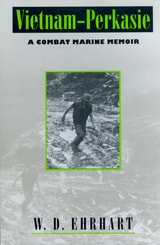
Vietnam-Perkasie
W. D. Ehrhart
University of Massachusetts Press, 1995
In 1982, John Newman, curator of the Vietnam War Literature Collection at Colorado State University, said of W.D. Ehrhart: “As a poet and editor, Bill Ehrhart is clearly one of the major figures in Vietnam War literature.” This autobiographical account of the war, the author's first extended prose work, demonstrates Ehrhart's abilities as a writer of prose as well. Vietnam–Perkasie is grim, comical, disturbing, and accurate. The presentation is novelistic—truly, a “page-turner”—but the events are all real, the atmosphere intensely evocative.
Vigil
Alan Shapiro
University of Chicago Press, 1997
In Vigil, Shapiro chronicles with heart-wrenching lyricism the final four weeks of Beth's life in a hospice, attended by her parents, brothers, husband, daughter and friends. One by one, as loved ones arrive to visit Beth, Shapiro reveals fragments of their personal history, bringing to life a troubled and poignant past. A visit from their brother David triggers the memory of a searing betrayal—the parents disowned Beth after learning from David that she was secretly dating a black man; a visit from the parents recalls their bitter quarrels over Beth's radical politics; a visit from Beth's black husband brings the painful memory of their wedding and her parents' refusal to attend. These recollections and feelings that surface with each visit evoke the unresolved, deeply disturbing issues that kept the Shapiro family estranged for so long, making the reconciliation that Beth's death brings to her family all the more extraordinary.
Shapiro gives an unconventionally honest account of our responses—horror, relief, impatience, exhaustion, exhilaration, projection, fear, self-criticism, and a sense of fulfillment—in the presence of the dying. Concluding with a selection of moving poems, Shapiro affirms the astonishing link between creativity and healing, and provides a coda to the whole experience. The price of human connection may be great, but human connection, in the end, has the power to redeem even the most painful of human experiences.
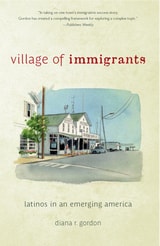
Village of Immigrants
Latinos in an Emerging AmericaGordon, Diana R
Rutgers University Press, 2015
Greenport today boasts a population that is one-third Hispanic. Gordon contends that these immigrants have effectively saved the town’s economy by taking low-skill jobs, increasing the tax base, filling local schools, and patronizing local businesses. Greenport’s seaside beauty still attracts summer tourists, but it is only with the support of the local Latino workforce that elegant restaurants and bed-and-breakfasts are able to serve these visitors. For Gordon the picture is complex, because the wave of immigrants also presents the town with challenges to its services and institutions. Gordon’s portraits of local immigrants capture the positive and the negative, with a cast of characters ranging from a Guatemalan mother of three, including one child who is profoundly disabled, to a Colombian house painter with a successful business who cannot become licensed because he remains undocumented. Village of Immigrants weaves together these people’s stories, fears, and dreams to reveal an environment plagued by threats of deportation, debts owed to coyotes, low wages, and the other bleak realities that shape the immigrant experience—even in the charming seaport town of Greenport.
A timely contribution to the national dialogue on immigration, Gordon’s book shows the pivotal role the American small town plays in the ongoing American immigrant story—as well as how this booming population is shaping and reviving rural communities.
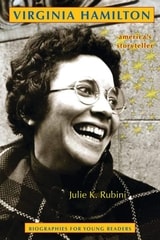
Virginia Hamilton
America’s StorytellerJulie K. Rubini
Ohio University Press, 2017
A Bank Street College of Education Best Children’s Book of 2018 (Outstanding Merit selection) • Finalist, 2018 Ohioana Book Award
Long before she wrote The House of Dies Drear, M. C. Higgins, the Great, and many other children’s classics, Virginia Hamilton grew up among her extended family near Yellow Springs, Ohio, where her grandfather had been brought as a baby through the Underground Railroad. The family stories she heard as a child fueled her imagination, and the freedom to roam the farms and woods nearby trained her to be a great observer. In all, Hamilton wrote forty-one books, each driven by a focus on “the known, the remembered, and the imagined”—particularly within the lives of African Americans.
Over her thirty-five-year career, Hamilton received every major award for children’s literature. This new biography gives us the whole story of Virginia’s creative genius, her passion for nurturing young readers, and her clever way of crafting stories they’d love.
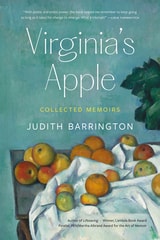
Virginia's Apple
Collected MemoirsJudith Barrington
Oregon State University Press, 2024
Virginia’s Apple is a collection of fourteen literary memoirs that explore pivotal episodes across poet and writer Judith Barrington’s life. Artfully crafted, each one stands alone yet they are linked—characters reappear and, taken together, they create a larger narrative.
The content is wide-ranging: the early days of the Second Wave of feminism—the exhilaration, the wildness, the love affairs, the surprises, and the self-invention, as well as the confusion and conflicts of those heady times; navigating a sometimes precarious existence as an out lesbian long before it was commonplace; leaving England and becoming an American citizen; finding a life partner; and growing old with an inherited disability. The author’s friendship with the distinguished poet Adrienne Rich is the subject of one story. In another, there’s an appearance by the notorious murderer, Lord Lucan, whose wife was a chance acquaintance.
These stories are laced with humor and joy, while pulsing below the surface is the slow unfolding of delayed grief over her parents’ drowning when she was nineteen, revealing how such a loss can shape a life.
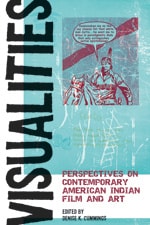
Visualities
Perspectives on Contemporary American Indian Film and ArtDenise K. Cummings
Michigan State University Press, 2011
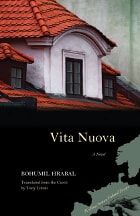
Vita Nuova
A NovelBohumil Hrabal
Northwestern University Press, 2010
Vita Nuova is the second in a trilogy of memoirs written from the perspective of Bohumil Hrabal’s wife, Elis.ka, about their life in Prague from the 1950s to the 1970s, when Communist repression of artists was at its peak.
Hrabal’s inimitable humor, which in Elis.ka’s ruminations ranges from bawdy slapstick to cutting irony, is all the more penetrating for being directed at himself. Vita Nuova showcases Hrabal’s legendary bohemian intellectual life, particularly his relationship with Vladimír Boudník. Hrabal creates a shrewd, lively portrait of Eastern European intellectual life in the mid-twentieth century.

Viva Baseball!
Latin Major Leaguers and Their Special HungerSamuel O. Regalado
University of Illinois Press, 2007
Lively and filled with vivid anecdotes, Viva Baseball! chronicles the struggles of Latin American professional baseball players in the United States from the late 1800s to the present.
As Latino players, managers, and owners continue to blossom into baseball's biggest stars, they have benefited from a growing Spanish-language media, a group identity, an increase in financial leverage and attention, and a burgeoning Latino culture in the United States. Although there have been several positive developments in the treatment of Latin American players, many, such as Albert Pujols, Pedro Martinez, Alex Rodriguez, and Ozzie Guillen, still face shocking racism. Samuel O. Regalado draws upon archives and rich interviews with Latin baseball stars like Felipe Alou, Orlando Cepeda, and Minnie Minoso to show the changing tenor of discrimination in the twenty-first-century game.
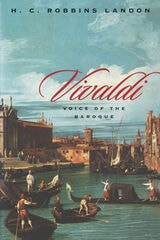
Vivaldi
Voice of the BaroqueH. C. Robbins Landon
University of Chicago Press, 1996
Very little has been written on Vivaldi for the nonspecialist, especially in English. Landon rediscovers the composer in this accessible and musically informed biography while presenting documentation of the musician's life discovered after the Baroque revival in the 1930s. This book includes illustrations of eighteenth-century Venice and several newly translated letters, thoroughly evoking the style of the time and revealing some of the more personal aspects of Vivaldi's life.
"Belongs on the shelf of every serious music student."—Kirkus
"Gives a good feel for Vivaldi's life and times . . . and describes particularly well how Vivaldi has been revived."—Booklist
"Robbins Landon is marvelously entertaining, extravagantly learned."—The Independent
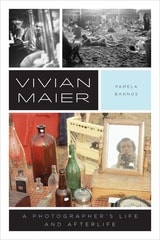
Vivian Maier
A Photographer’s Life and AfterlifePamela Bannos
University of Chicago Press, 2017
But, as Pamela Bannos reveals in this meticulous and passionate biography, this story of the nanny savant has blinded us to Maier’s true achievements, as well as her intentions. Most important, Bannos argues, Maier was not a nanny who moonlighted as a photographer; she was a photographer who supported herself as a nanny. In Vivian Maier: A Photographer’s Life and Afterlife, Bannos contrasts Maier’s life with the mythology that strangers—mostly the men who have profited from her work—have created around her absence. Bannos shows that Maier was extremely conscientious about how her work was developed, printed, and cropped, even though she also made a clear choice never to display it. She places Maier’s fierce passion for privacy alongside the recent spread of her work around the world, and she explains Maier’s careful adjustments of photographic technique, while explaining how the photographs have been misconstrued or misidentified. As well, Bannos uncovers new information about Maier’s immediate family, including her difficult brother, Karl—relatives that once had been thought not to exist.
This authoritative and engrossing biography shows that the real story of Vivian Maier, a true visionary artist, is even more compelling than the myth.
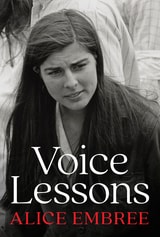
Voice Lessons
By Alice Embree
University of Texas Press, 2021
Voice Lessons explores the rich personal and political terrain of Alice Embree, a 1960s activist and convert to the women’s liberation movement of the 1970s, bringing a woman’s perspective to a transformational time in US history. This riveting memoir traces the author’s roots in segregated Austin and her participation in efforts to integrate the University of Texas. It follows her antiwar activism from a vigil in front of President Lyndon Johnson’s ranch in 1965 to a massive protest after the shootings at Kent State in 1970. Embree’s activism brought her and the Students for a Democratic Society into conflict with Frank Erwin, the powerful chairman of the UT Board of Regents, and inspired a campus free speech movement. She recounts her experiences living in New York during the tumultuous years of 1968 and 1969, including the Columbia University strike and the Woodstock music festival. She also tells about protesting at the Chicago Democratic Convention, her interactions with Yippies and poets, and her travels to Chile, Cuba, and Mexico. Embree highlights the radical roots of the women’s liberation movement in Austin and the audacious women’s community that challenged gender roles, fought for reproductive justice, and inspired a lifetime of activism.
Voices from the "Jungle"
Stories from the Calais Refugee CampCalais Writers
Pluto Press, 2017
In this moving collection of individual testimonies, Calais refugees speak directly in powerful and vivid stories, offering their memories up with stunning honesty. They tell of their childhood dreams and struggles for education; the genocides, wars, and persecution that drove them from home; the simultaneous terror and strength that filled their extraordinary journeys; the realities of living in the Calais refugee camp; and their deepest hopes for the future.
Through their stories, these refugees paint a picture of a different kind of Jungle—a powerful sense of community that has grown despite evictions and attacks and a solidarity that crosses national and religious boundaries. Interspersed with photos taken by the camp's inhabitants, taught by award-winning photographers Gideon Mendel and Crispin Hughes, original artwork by inhabitants, and powerful poems, Voices from the “Jungle” must be read by anyone seeking to understand the human consequences of our current world crisis.

Voices from the Gulag
Aleksandr Solzhenitsyn
Northwestern University Press, 2010
After the publication in 1962 of One Day in the Life of Ivan Denisovich, Aleksandr Solzhenitsyn began receiving, and would continue to receive throughout his life, testimonies from fellow survivors of the gulag. Originally selected by Solzhenitsyn, the memoirs in this volume are an important addition to the literature of the Soviet gulag. Written by men from a wide variety of occupations and social classes, the writing in Voices from the Gulag lends a voice to the many ordinary people—including a circus performer, a teenage boy, and a Red Army soldier—whom a brutal system attempted to erase from memory.
Voices of the Diaspora
Jewish Women Writing in Contemporary EuropeThomas Nolden
Northwestern University Press, 2005
At the same time, these writers address themes specific to their national contexts. Berlin-born Barbara Honigmann questions the possibility of Jewish life in the country responsible for the "final solution." Maghreb-born Marlène Amar and Reina Roffé address the experiences of displacement and emancipation as Sephardic women in Western, post-colonial societies. Clara Sereni describes how Jews in post-Fascist Italy reemerged with a self-assertiveness that troubled a society that had found comfort in amnesia. Ludmila Ulitskaya portrays a Jewish girlhood on the eve of Stalin's death empowered by the religious traditions of Jewish resistance.
From the unique perspective of women's literary voices, this volume reveals to English-speaking readers the extraordinary vivacity and diversity of European Jewry, and introduces them to a new generation of women writers.

Voices of the Jazz Age
Profiles of Eight Vintage JazzmenChip Deffaa
University of Illinois Press, 1990
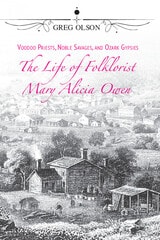
Voodoo Priests, Noble Savages, and Ozark Gypsies
The Life of Folklorist Mary Alicia OwenGreg Olson
University of Missouri Press, 2025
Folklorist Wayland Hand once called Mary Alicia Owen “the most famous American Woman Folklorist of her time.” Drawing on primary sources, such as maps, census records, court documents, personal letters and periodicals, and the scholarship of others who have analyzed various components of Owen’s multifaceted career, historian Greg Olson offers the most complete account of her life and work to date. He also offers a critical look at some of the short stories Owen penned, sometimes under the name Julia Scott, and discusses how the experience she gained as a fiction writer helped lead her to a successful career in folklore.
Olson analyzes many of the nineteenth-century theories, stereotypes, and popular beliefs that influenced the work of Owen and many of her peers. By taking a cross-disciplinary look at her works of fiction, poetry, folklore, history, and anthropology, this volume sheds new light on elements of Owen’s career that have not previously been discussed in print. Examples of the romance stories that Owen wrote for popular magazines in the 1880’s are identified and examined in the context of the time in which Owen wrote them.
This groundbreaking biography shows that Owen was more than just a folklorist—she was a nineteenth-century woman of many contradictions. She was an independent woman of many interests who possessed a keen intellect and a genuine interest in people and their stories. Specialists in folklore, anthropology, women’s studies, local and regional history, and Missouriana will find much to like in this thoroughly researched study.
Voyage to the Island
Raija Nieminen
Gallaudet University Press, 2014