Results by title
3071 books match the query 'Business & Economics' and 14 start with v
Values-Driven Authentic Leadership
Essential Lessons from the LeadershipWWEB Podcast SeriesAndrew Braham
Epic Books, 2022
In Values-Driven Authentic Leadership: Essential Lessons from the LeadershipWWEB Podcast Series, Andrew Braham, Matthew Waller, and John English examine the intersection of values, authenticity, and leadership. Drawing upon numerous conversations with a wide range of professional leaders, including several Fortune 500 CEOs, the authors identify six key opportunities for leadership growth: having a mentor, being in a group, knowing yourself, navigating transitions, being a mentor, and values and company culture. By sharing their own experiences, Braham, Waller, English, and the leaders they interview bring the facets of authentic leadership to life with personal insight.
Whether you are a mentor or a mentee, a student or a professional, Values-Driven Authentic Leadership will help guide you on your own leadership journey.

Valuing Health for Policy
An Economic ApproachEdited by George Tolley, Donald Kenkel, and Robert Fabian
University of Chicago Press, 1994
Valuing Life
Humanizing the Regulatory StateCass R. Sunstein
University of Chicago Press, 2014
As OIRA Administrator, Sunstein helped oversee regulation in a broad variety of areas, including highway safety, health care, homeland security, immigration, energy, environmental protection, and education. This background allows him to describe OIRA and how it works—and how it can work better—from an on-the-ground perspective. Using real-world examples, many of them drawn from today’s headlines, Sunstein makes a compelling case for improving cost-benefit analysis, a longtime cornerstone of regulatory decision-making, and for taking account of variables that are hard to quantify, such as dignity and personal privacy. He also shows how regulatory decisions about health, safety, and life itself can benefit from taking into account behavioral and psychological research, including new findings about what scares us, and what does not. By better accounting for people’s fallibility, Sunstein argues, we can create regulation that is simultaneously more human and more likely to achieve its goals.
In this highly readable synthesis of insights from law, policy, economics, and psychology, Sunstein breaks down the intricacies of the regulatory system and offers a new way of thinking about regulation that incorporates human dignity– and an insistent focus on the consequences of our choices.
Valuing Us All
Feminist Pedagogy and EconomicsApril Laskey Aerni and KimMarie McGoldrick, Editors
University of Michigan Press, 1999
Vehicle of Influence
Building a European Car MarketRoland Stephen
University of Michigan Press, 2000

Village Work
Development and Rural Statecraft in Twentieth-Century GhanaAlice Wiemers
Ohio University Press, 2021
A robust historical case study that demonstrates how village development became central to the rhetoric and practice of statecraft in rural Ghana.
Combining oral histories with decades of archival material, Village Work formulates a sweeping history of twentieth-century statecraft that centers on the daily work of rural people, local officials, and family networks, rather than on the national governments and large-scale plans that often dominate development stories. Wiemers shows that developmentalism was not simply created by governments and imposed on the governed; instead, it was jointly constructed through interactions between them.
The book contributes to the historiographies of development and statecraft in Africa and the Global South by
- emphasizing the piecemeal, contingent, and largely improvised ways both development and the state are comprised and experienced
- providing new entry points into longstanding discussions about developmental power and discourse
- unsettling common ideas about how and by whom states are made
- exposing the importance of unpaid labor in mediating relationships between governments and the governed
- showing how state engagement could both exacerbate and disrupt inequities
Despite massive changes in twentieth-century political structures—the imposition and destruction of colonial rule, nationalist plans for pan-African solidarity and modernization, multiple military coups, and the rise of neoliberal austerity policies—unremunerated labor and demonstrations of local leadership have remained central tools by which rural Ghanaians have interacted with the state. Grounding its analysis of statecraft in decades of daily negotiations over budgets and bureaucracy, the book tells the stories of developers who decided how and where projects would be sited, of constituents who performed labor, and of a chief and his large cadre of educated children who met and shaped demands for local leaders. For a variety of actors, invoking “the village” became a convenient way to allocate or attract limited resources, to highlight or downplay struggles over power, and to forge national and international networks.

Village of Immigrants
Latinos in an Emerging AmericaGordon, Diana R
Rutgers University Press, 2015
Greenport today boasts a population that is one-third Hispanic. Gordon contends that these immigrants have effectively saved the town’s economy by taking low-skill jobs, increasing the tax base, filling local schools, and patronizing local businesses. Greenport’s seaside beauty still attracts summer tourists, but it is only with the support of the local Latino workforce that elegant restaurants and bed-and-breakfasts are able to serve these visitors. For Gordon the picture is complex, because the wave of immigrants also presents the town with challenges to its services and institutions. Gordon’s portraits of local immigrants capture the positive and the negative, with a cast of characters ranging from a Guatemalan mother of three, including one child who is profoundly disabled, to a Colombian house painter with a successful business who cannot become licensed because he remains undocumented. Village of Immigrants weaves together these people’s stories, fears, and dreams to reveal an environment plagued by threats of deportation, debts owed to coyotes, low wages, and the other bleak realities that shape the immigrant experience—even in the charming seaport town of Greenport.
A timely contribution to the national dialogue on immigration, Gordon’s book shows the pivotal role the American small town plays in the ongoing American immigrant story—as well as how this booming population is shaping and reviving rural communities.

Virtue Hoarders
The Case against the Professional Managerial ClassCatherine Liu
University of Minnesota Press, 2021
A denunciation of the credentialed elite class that serves capitalism while insisting on its own progressive heroism
Professional Managerial Class (PMC) elite workers labor in a world of performative identity and virtue signaling, publicizing an ability to do ordinary things in fundamentally superior ways. Author Catherine Liu shows how the PMC stands in the way of social justice and economic redistribution by promoting meritocracy, philanthropy, and other self-serving operations to abet an individualist path to a better world. Virtue Hoarders is an unapologetically polemical call to reject making a virtue out of taste and consumption habits.
Forerunners: Ideas First is a thought-in-process series of breakthrough digital publications. Written between fresh ideas and finished books, Forerunners draws on scholarly work initiated in notable blogs, social media, conference plenaries, journal articles, and the synergy of academic exchange. This is gray literature publishing: where intense thinking, change, and speculation take place in scholarship.

Virtue, Fortune, and Faith
A Genealogy of FinanceMarieke de Goede
University of Minnesota Press, 2005
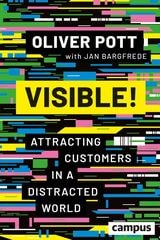
Visible!
Attracting Customers in a Distracted WorldOliver Pott and Jan Bargfrede
Campus Verlag, 2023
The internet has fundamentally changed how businesses reach their customers. Whereas historically it took a major, expensive marketing campaign to get the attention of potential customers, now digital visibility offers similar results on a much more modest budget. Visible! illustrates how by deploying the concept of “smart visibility” to show businesses and entrepreneurs how to more easily find their audience and build a brand.
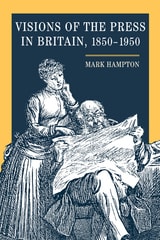
Visions of the Press in Britain, 1850-1950
Mark Hampton
University of Illinois Press, 2004
In Visions of the Press in Britain, 1850-1950, Mark Hampton argues that qualities expected of the contemporary British press--lively writing, speed, impartiality, depth, and the ability to topple corrupt governments by informing readers--are not obvious attributes of journalism but derive from more than a century of debate. He analyzes the various historical conceptions of the British press that helped to create its modern role, and demonstrates that these conceptions were intimately involved in the emergence of mass democracy in the late nineteenth and early twentieth centuries.
Hampton surveys a diversity of sources--Parliamentary speeches and commissions, books, pamphlets, periodicals and select private correspondence--in order to identify how governmental elites, the educated public, professional journalists, and industry moguls characterized the political and cultural function of the press. The resulting blend of cultural history and media sociology demonstrates how once optimistic visions of the press have given way to more pessimistic contemporary views about the power of the mass media.
With clarity and panache, this book shows that many competing conceptions continued to influence twentieth-century understandings of the press but did not remain satisfactory in new political, cultural, and media environments. Visions of the Press in Britain, 1850-1950 provides a rich tapestry against which to understand the contemporary realities of journalism, democracy, and mass media.
Voices from the Heart of the Land
Rural Stories that Inspire CommunityRichard L. Cates Jr.
University of Wisconsin Press, 2008
Voices of the Industrial Revolution
Selected Readings from the Liberal Economists and Their CriticsJohn Bowditch and Clement Ramsland, Editors
University of Michigan Press, 1961
Volatile States
Institutions, Policy, and the Performance of American State EconomiesW. Mark Crain
University of Michigan Press, 2003