Results by title
4531 books match the query 'Cultural & Ethnic Studies' and 32 start with v
Vehicles of Decolonization
Public Transit in the Palestinian West BankMaryam S. Griffin
Temple University Press, 2022
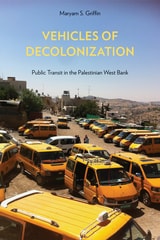
Examining the border-enclosure strategy Israel uses to impose Palestinian im/mobilization, Maryam Griffin considers the ways public transportation in the Palestinian West Bank is a constant site of social struggle. Her illuminating book, Vehicles of Decolonization, studies collective movement, resistance, and everyday life in the West Bank to show how Palestinians assert a kind of Indigenous self-determination over mobility that Israeli settler colonialism seeks to undermine.
Having immersed herself in a year of fieldwork, Griffin maps multiple engagements with the flexible bus, shared van, and private taxi services to demonstrate that the politics of mobility are shaped by ongoing settler colonialism and Indigenous struggle. Griffin uses critical border studies to look at the contested nature of mobility at the sites of transit, where Palestinians practice self-determination through routine participation, spectacular political organizing and demonstration, and artistic renderings.
Featuring a variety of street images, Vehicles of Decolonization shows that multiple registers of people power work in concert not only to resist settler colonial logics but to reinhabit the land through the practice and preservation of alternative relations of mobility.
Vexy Thing
On Gender and LiberationImani Perry
Duke University Press, 2018

Victors’ Justice
The Tokyo War Crimes TrialRichard H. Minear
University of Michigan Press, 2001
Viet Nam Expose
French Scholarship on Twentieth-Century Vietnamese SocietyGisele Bousquet and Pierre Brocheux, Editors
University of Michigan Press, 2002
The book is divided into three parts. Part I, "Vietnamese Society in the Early Twentieth Century," takes a micro approach to the study of Vietnamese society on the eve of the irreversible social transformation that occurred as the colonial infrastructure took root in Indochina. Part II, "Vietnamese Intellectuals: Contesting Colonial Power," contains biographical accounts of Vietnamese intellectuals who tried to reform their society under colonial domination. Part III, "Post-Colonial Vietnam: From Welfare State to Market-Oriented Economy," traces Vietnam's search for a viable economic model while maintaining itself as a socialist state.
The book speaks to diverse themes, including the nature of village life, the development of health care during the colonial era, the status of women, the role of Vietnamese intellectuals in the anticolonial struggle, the building of a socialist state, contemporary rural migration, labor relations, and Vietnam in an age of globalization.
Gisele Bousquet is Research Associate at the Center for Southeast Asian Studies, University of California, Berkeley. Pierre Brocheux is Maître de Conference of History, Université Denis Diderot-Paris VII.

Vietnam Veteranos
Chicanos Recall the WarBy Lea Ybarra
University of Texas Press, 2004
One of the most decorated groups that served in the Vietnam War, Chicanos fought and died in numbers well out of proportion to their percentage of the United States' population. Yet despite this, their wartime experiences have never received much attention in either popular media or scholarly studies. To spotlight and preserve some of their stories, this book presents substantial interviews with Chicano Vietnam veterans and their families that explore the men's experiences in combat, the war's effects on the Chicano community, and the veterans' postwar lives.
Lea Ybarra groups the interviews topically to bring out different aspects of the Chicano vets' experiences. In addition to discussing their involvement in and views on the Vietnam War, the veterans also reflect on their place in American society, American foreign policy, and the value of war. Veterans from several states and different socioeconomic classes give the book a broad-based perspective, which Ybarra frames with sociological material on the war and its impact on Chicanos.
Village Ties
Women, NGOs, and Informal Institutions in Rural BangladeshNayma Qayum
Rutgers University Press, 2022

Village and Family in Contemporary China
William L. Parish and Martin King Whyte
University of Chicago Press, 1978
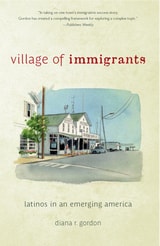
Village of Immigrants
Latinos in an Emerging AmericaGordon, Diana R
Rutgers University Press, 2015
Greenport today boasts a population that is one-third Hispanic. Gordon contends that these immigrants have effectively saved the town’s economy by taking low-skill jobs, increasing the tax base, filling local schools, and patronizing local businesses. Greenport’s seaside beauty still attracts summer tourists, but it is only with the support of the local Latino workforce that elegant restaurants and bed-and-breakfasts are able to serve these visitors. For Gordon the picture is complex, because the wave of immigrants also presents the town with challenges to its services and institutions. Gordon’s portraits of local immigrants capture the positive and the negative, with a cast of characters ranging from a Guatemalan mother of three, including one child who is profoundly disabled, to a Colombian house painter with a successful business who cannot become licensed because he remains undocumented. Village of Immigrants weaves together these people’s stories, fears, and dreams to reveal an environment plagued by threats of deportation, debts owed to coyotes, low wages, and the other bleak realities that shape the immigrant experience—even in the charming seaport town of Greenport.
A timely contribution to the national dialogue on immigration, Gordon’s book shows the pivotal role the American small town plays in the ongoing American immigrant story—as well as how this booming population is shaping and reviving rural communities.
Violence and Indigenous Communities
Confronting the Past and Engaging the PresentEdited by Susan Sleeper-Smith, Jeffrey Ostler, and Joshua L. Reid
Northwestern University Press, 2021
In contrast to past studies that focus narrowly on war and massacre, treat Native peoples as victims, and consign violence safely to the past, this interdisciplinary collection of essays opens up important new perspectives. While recognizing the long history of genocidal violence against Indigenous peoples, the contributors emphasize the agency of individuals and communities in genocide’s aftermath and provide historical and contemporary examples of activism, resistance, identity formation, historical memory, resilience, and healing. The collection also expands the scope of violence by examining the eyewitness testimony of women and children who survived violence, the role of Indigenous self-determination and governance in inciting violence against women, and settler colonialism’s promotion of cultural erasure and environmental destruction.
By including contributions on Indigenous peoples in the United States, Canada, the Pacific, Greenland, Sápmi, and Latin America, the volume breaks down nation-state and European imperial boundaries to show the value of global Indigenous frameworks. Connecting the past to the present, this book confronts violence as an ongoing problem and identifies projects that mitigate and push back against it.

Violence and Memory
The Mulele Rebellion in Postcolonial CongoEmery Kalema
Duke University Press, 2027

Violent Encounters
Gender, Colonialism, and the First World War in Cameroon, 1884–1916George N. Njung
Ohio University Press, 2027
Violent Encounters offers a powerful and original gendered history of colonial rule and warfare in Cameroon from the advent of German imperialism to the end of the First World War. Centering German Cameroon as an understudied but pivotal site of empire and global conflict, George N. Njung demonstrates that violence was a calculated instrument of colonial governance, which was systematically organized along racial and gendered lines to conquer territory, discipline African communities, and suppress resistance.
Drawing on extensive archival research in Africa and Europe, oral traditions, and interdisciplinary gender analysis, Njung reconstructs how empire and war were lived differently by African men and women. He shows that gender-based violence—especially sexual abuse—functioned as a deliberate political strategy embedded in military campaigns, forced labor regimes, and systems of punishment. African women bore disproportionate burdens at the intersection of gender, race, and militarization, even as they acted as resisters, mobilizers, and negotiators. African men, meanwhile, experienced forced recruitment, battlefield violence, and profound challenges to social authority under colonial rule.
Reinterpreting the First World War in Africa as an escalation rather than a rupture, Violent Encounters situates wartime atrocities, mass displacement, and one of the twentieth century’s earliest refugee crises within a longer continuum of imperial violence. By foregrounding gender, the book repositions Cameroon—and Africa more broadly—as central to understanding the global dynamics of empire, militarization, and resistance in the early twentieth century.

Violent Intimacies
The Trans Everyday and the Making of an Urban WorldAsli Zengin
Duke University Press, 2024
Violent Utopia
Dispossession and Black Restoration in TulsaJovan Scott Lewis
Duke University Press, 2022

Viral Frictions
Global Health and the Persistence of HIV Stigma in KenyaElizabeth J. Pfeiffer
Rutgers University Press, 2022
Virtual Americas
Transnational Fictions and the Transatlantic ImaginaryPaul Giles
Duke University Press, 2002
Throughout Virtual Americas Giles focuses on specific examples of transatlantic cultural interactions such as Frederick Douglass’s experiences and reputation in England; Herman Melville’s satirizing fictions of U.S. and British nationalism; and Vladimir Nabokov’s critique of European high culture and American popular culture in Lolita. He also reverses his perspective, looking at the representation of San Francisco in the work of British-born poet Thom Gunn and Sylvia Plath’s poetic responses to England. Giles develops his theory about the need to defamiliarize the study of American literature by considering the cultural legacy of Surrealism as an alternative genealogy for American Studies and by examining the transatlantic dimensions of writers such as Henry James and Robert Frost in the context of Surrealism.
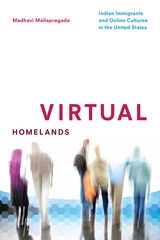
Virtual Homelands
Indian Immigrants and Online Cultures in the United StatesMadhavi Mallapragada
University of Illinois Press, 2014
As Mallapragada shows, ideologies around family and citizenship shift to fit the transnational contexts of the online world and immigration. At the same time, the tactical use of the home page to make gender, racial, and class struggles visible and create new modes for belonging implicates the web within complex political and cultural terrain. On e-commerce, community, and activist sites, the recasting of home and homeland online points to intrusion by public agents such as the state, the law, and immigration systems in the domestic, the private, and the familial. Mallapragada reveals that the home page may mobilize to reproduce conservative narratives of Indian immigrants' familial and citizenship cultures, but the reach of a website extends beyond the textual and discursive to encompass the institutions shaping it, as the web unmakes and remakes ideas of "India" and "America."

Virtual Lotus
Modern Fiction of Southeast AsiaTeri Shaffer Yamada, Editor
University of Michigan Press, 2002
Short introductions to each story provide a sketch of the country's literary history, revealing the interaction between individual writers and their sociopolitical situations. Many of the stories are ethnographic and provide snapshots of cultures at a specific historical moment. The stories also reflect gender balance, diversity of style, and quality of literary expression. Exploring everything from the realities of being a middle-aged woman in Burma in the witty drama "An Umbrella" to the difficult choice between appeasing a troubled Vietnamese community or tending to an ailing father in "Tu Ben the Actor," this collection is sure to appeal to a variety of readers the world over.
This anthology will be useful in courses in comparative translation and culture, postcolonial studies, political science, Asian history, and gender studies. It is also appropriate for a literary reading public interested in comparative world literature.
Teri Shaffer Yamada is Associate Professor, California State University, Long Beach.
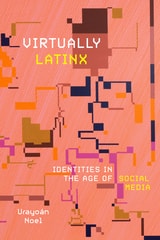
Virtually Latinx
Identities in the Age of Social MediaUrayoán Noel
University of Texas Press, 2026
Examining how Latinx identity reimagines and connects communities through social media.
The very idea of Latinidad flattens identities, subsuming diverse peoples under a single racialized framework useful for corporate and political marketing. But it is not only ethnic identity that Latinidad tends to erase. In the first-ever study of Latinx social media, Urayoán Noel shows how historically marginalized Latinxs—including Black, Trans, undocumented, and disabled people—have used digital platforms to challenge hegemonic Latinidad and to build alternatives communities.
Incorporating elements of history, ethnography, and performance studies, Virtually Latinx traces the evolution of Latinx social media and blogging since the early 1990s, focusing on creative movements and vocabularies emerging and consolidating online. From Chicano/LatinoNet, Latina Lista, and Remezcla, to activists and performers on TikTok, online creators and platforms have spurred modes of art and activism that counter both Latinidad’s essentialized body politics and Big Tech’s domination of the information sphere. In dialogue with scholars of media, virtuality, and identity, Noel theorizes how hashtags like #Afrolatina, #Latinx, and #Latine have not only facilitated online exchange but also nurtured new knowledge formations surrounding Black, feminist, undocuqueer, Trans, and disability poetics and politics.
Viscous Performances
The Persistence of Creative Resistances in Neoliberal ChileMaría José Contreras Lorenzini
Duke University Press, 2026
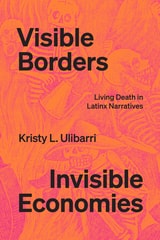
Visible Borders, Invisible Economies
Living Death in Latinx NarrativesKristy L. Ulibarri
University of Texas Press, 2022
2023 Outstanding Book Award, National Association for Ethnic Studies
A thorough examination of the political and economic exploitation of Latinx subjects, migrants, and workers through the lens of Latinx literature, photography, and film.
Globalization in the United States can seem paradoxical: free trade coincides with fortification of the southern border, while immigration is reimagined as a national-security threat. US politics turn aggressively against Latinx migrants and subjects even as post-NAFTA markets become thoroughly reliant on migrant and racialized workers. But in fact, there is no incongruity here. Rather, anti-immigrant politics reflect a strategy whereby capital uses specialized forms of violence to create a reserve army of the living, laboring dead.
Visible Borders, Invisible Economies turns to Latinx literature, photography, and films that render this unseen scheme shockingly vivid. Works such as Valeria Luiselli’s Tell Me How It Ends and Alex Rivera’s Sleep Dealer crystallize the experience of Latinx subjects and migrants subjugated to social death, their political existence erased by disenfranchisement and racist violence while their bodies still toil in behalf of corporate profits. In Kristy L. Ulibarri’s telling, art clarifies what power obscures: the national-security state performs anti-immigrant and xenophobic politics that substitute cathartic nationalism for protections from the free market while ensuring maximal corporate profits through the manufacture of disposable migrant labor.

Visitation
The Conjure Work of Black Feminist Avant-Garde CinemaJennifer DeClue
Duke University Press, 2022
Duke University Press Scholars of Color First Book Award recipient
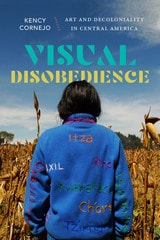
Visual Disobedience
Art and Decoloniality in Central AmericaKency Cornejo
Duke University Press, 2024
Visual Syntax of Race
Arab-Jews in Zionist Visual CultureNoa Hazan
University of Michigan Press, 2022
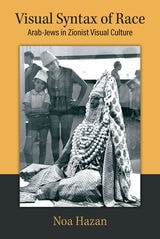
Analyzing the visual syntax and display rhetoric applied in newspaper photos, national historical albums, and museum exhibitions, Noa Hazan shows that although racial thought was and still is verbally suppressed in Israel, it is vividly present in its nonverbal official and public visual sphere. The racist perspective of newspaper editors, book publishers, photographers, and museum curators were morally justified in its time by such patronizing ideals as realistic news coverage or the salvation of Jewish heritage assets. Although their perspectives played a dominant role in establishing a visual syntax of race in Israel, they were not seen as racially discriminating at the time. The racist motifs and actions are revealed here by colligating multiple cases into a coherent narrative in retrospect.
This book points to a direct influence of the anti-Semitic discourse in Europe toward Mizrahim in Israel, highlighting the shared visual stereotypes used in both Europe and the fledgling state of Israel. Engraved in their body, these cultural traits were depicted and understood as racial-biological qualities and were visually manipulated to silo Ashkenazim and Mizrahim in Israel as distinct racial types.
Visuality of Violence
Witnessing the Policing of RaceOfelia Ortiz Cuevas
Temple University Press, 2025
Addressing the frequently ignored experiences of Asian and Native Americans, among others, in its comparative undertaking, Visuality of Violence exceeds intersectional mapping to uniquely charge the spectacle of racial violence as a foundational practice in its continued presence in contemporary society. Cuevas argues that the visual presentations of the racial body throughout history requires a reckoning and acknowledgement of the material and legal effects of the images, narratives, and practices used to maintain hegemonic racial order and inequality.
In holding a theoretical mirror to history, Visuality of Violence reveals liberal mythical reliance on the ideals of western law and its rationalities as the location of justice and freedom, thereby presenting its readers with a new understanding in the quest for peace and liberation.
In the series Critical Race, Indigeneity, and Relationality
Visualizing Black Lives
Ownership and Control in Afro-Brazilian MediaReighan Gillam
University of Illinois Press, 2022
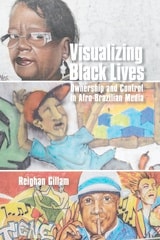
An eye-opening union of analysis and fieldwork, Visualizing Black Lives examines the alternative and activist Black media and the people creating it in today's Brazil.
Visualizing Latinx
Creative Practices in Fashion, Film, and BeyondArlene Dávila
Duke University Press, 2026

Viva Baseball!
Latin Major Leaguers and Their Special HungerSamuel O. Regalado
University of Illinois Press, 2007
Lively and filled with vivid anecdotes, Viva Baseball! chronicles the struggles of Latin American professional baseball players in the United States from the late 1800s to the present.
As Latino players, managers, and owners continue to blossom into baseball's biggest stars, they have benefited from a growing Spanish-language media, a group identity, an increase in financial leverage and attention, and a burgeoning Latino culture in the United States. Although there have been several positive developments in the treatment of Latin American players, many, such as Albert Pujols, Pedro Martinez, Alex Rodriguez, and Ozzie Guillen, still face shocking racism. Samuel O. Regalado draws upon archives and rich interviews with Latin baseball stars like Felipe Alou, Orlando Cepeda, and Minnie Minoso to show the changing tenor of discrimination in the twenty-first-century game.
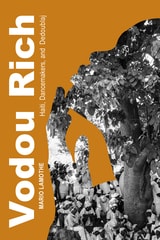
Vodou Rich
Haiti, Dancemakers, and DedoublajMario LaMothe
University of Illinois Press, 2026
LaMothe weaves Vodou teaching practices with humanist and social science theory to shed light on how choreographers move among ideas of Haitian bodies as vessels, producers, and traffickers of Vodou economies. As he shows, the dancemakers’ work maneuvers through national uncertainties and international caricatures of Haiti’s challenges. At the same time, it pivots between these phenomena via dedoublaj—the act of doubling, self-doubling, transformation, and soulful travel. LaMothe’s analysis of dedoublaj reveals how dancemakers reimagine Haitian bodies as self-possessed human beings remedying unjust practices, envisioning chances for solidarity and being, and setting a course for queerly paced futures.
Powerful and multidisciplinary, Vodou Rich explores Haitian dancemaking at home and its reception around the world.
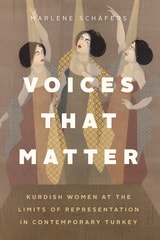
Voices That Matter
Kurdish Women at the Limits of Representation in Contemporary TurkeyMarlene Schäfers
University of Chicago Press, 2023
A fine-grained ethnography exploring the sociopolitical power of Kurdish women’s voices in contemporary Turkey.
“Raise your voice!” and “Speak up!” are familiar refrains that assume, all too easily, that gaining voice will lead to empowerment, healing, and inclusion for marginalized subjects. Marlene Schäfers’s Voices That Matter reveals where such assumptions fall short, demonstrating that “raising one’s voice” is no straightforward path to emancipation but fraught with anxieties, dilemmas, and contradictions. In its attention to the voice as form, this book examines not only what voices say but also how they do so, focusing on Kurdish contexts where oral genres have a long, rich legacy. Examining the social labor that voices carry out as they sound, speak, and resonate, Schäfers shows that where new vocal practices arise, they produce new selves and practices of social relations. In Turkey, recent decades have seen Kurdish voices gain increasing moral and political value as metaphors of representation and resistance. Women’s voices, in particular, are understood as potent means to withstand patriarchal restrictions and political oppression. By ethnographically tracing the transformations in how Kurdish women relate to and employ their voices as a result of these shifts, Schäfers illustrates how contemporary politics foster not only new hopes and desires but also create novel vulnerabilities as they valorize, elicit, and discipline voice in the name of empowerment and liberation.

Voices from Madagascar Voix de Madagascar
An Anthology of Contemporary Francophone Literature/Anthologie de littérature francophone contemporaineJacques Bourgeacq
Ohio University Press, 2001
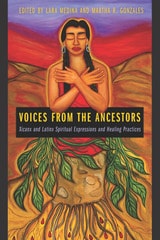
Voices from the Ancestors
Xicanx and Latinx Spiritual Expressions and Healing PracticesEdited by Lara Medina and Martha R. Gonzales
University of Arizona Press, 2019
This wisdom is based on the authors’ oral traditions, research, intuitions, and lived experiences—wisdom inspired by, and created from, personal trajectories on the path to spiritual conocimiento, or inner spiritual inquiry. This conocimiento has reemerged over the last fifty years as efforts to decolonize lives, minds, spirits, and bodies have advanced. Yet this knowledge goes back many generations to the time when the ancestors understood their interconnectedness with each other, with nature, and with the sacred cosmic forces—a time when the human body was a microcosm of the universe.
Reclaiming and reconstructing spirituality based on non-Western epistemologies is central to the process of decolonization, particularly in these fraught times. The wisdom offered here appears in a variety of forms—in reflective essays, poetry, prayers, specific guidelines for healing practices, communal rituals, and visual art, all meant to address life transitions and how to live holistically and with a spiritual consciousness for the challenges of the twenty-first century.

Voices of the Jazz Age
Profiles of Eight Vintage JazzmenChip Deffaa
University of Illinois Press, 1990