Results by title
998 books match the query 'Life' and 16 start with v
Values of Happiness
Toward an Anthropology of Purpose in LifeEdited by Iza Kavedžija and Harry Walker
HAU, 2016
The contributors explore how happiness intersects with dominant social values as well as an array of aims and aspirations that are potentially conflicting, demonstrating that not every kind of happiness is seen as a worthwhile aim or evaluated in positive moral terms. In tracing this link between different conceptions of happiness and their evaluations, the book engages some of the most fundamental questions concerning human happiness: What is it and how is it achieved? Is happiness everywhere a paramount value or aim in life? How does it relate to other ideas of the good? What role does happiness play in orienting peoples’ desires and life choices? Taking these questions seriously, the book draws together considerations of meaning, values, and affect, while recognizing the diversity of human ends.
Van Dorn
The Life and Times of a Confederate GeneralRobert G. Hartje
Vanderbilt University Press, 1967
When it came to large-scale military initiatives, however, Van Dorn was remarkable for his failures. His tactical blunders at the battles of Pea Ridge, Arkansas, and Corinth, Mississippi, contributed greatly to the end of the Confederate military advantage in the Civil War.
The intrigue and scandals that figured in his personal life, even at the height of the War, led directly to his murder and the mystery that still surrounds it. Van Dorn’s dishonorable death concludes Hartje’s fascinating account of a checkered career and the role Earl Van Dorn played in the great tragedy of the Civil War.
Variety
The Life of a Roman ConceptWilliam Fitzgerald
University of Chicago Press, 2016
William Fitzgerald looks at the definition and use of the Latin term varietas and how it has played out in different works and with different authors. He shows that, starting with the Romans, variety has played a key role in our thinking about nature, rhetoric, creativity, pleasure, aesthetics, and empire. From the lyric to elegy and satire, the concept of variety has helped to characterize and distinguish different genres. Arguing that the ancient Roman ideas and controversies about the value of variety have had a significant afterlife up to our own time, Fitzgerald reveals how modern understandings of diversity and choice derive from what is ultimately an ancient concept.
Verner Suomi
The Life and Work of the Founder of Satellite MeteorologyJohn M. Lewis et al.
American Meteorological Society, 2018
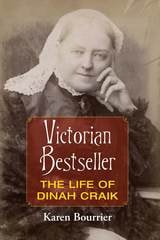
Victorian Bestseller
The Life of Dinah CraikKaren Bourrier
University of Michigan Press, 2019
Victorian Bestseller is the first book to relate the story of Dinah Craik’s remarkable life. Combining extensive archival work with theoretical work in disability studies and the professionalization of women’s authorship, Karen Bourrier engagingly traces the contours of this author’s life. Craik, who wrote extensively about disability in her work, was no stranger to it in her personal and professional life, marked by experiences of mental and physical disability, and the ebb and flow of health. Following scholarship in the ethics of care and disability studies, the book posits Craik as an interdependent subject, placing her within a network of writers, publishers, editors and artists, friends, and family members. Victorian Bestseller also traces the conditions in the material history of the book that allowed Victorian women writers’ careers to flourish. In doing so, the biography connects corporeality, gender, and the material history of the book to the professionalization of Victorian women’s authorship.
Victorian Domesticity
Families in the Life and Art of Louisa May AlcottCharles Strickland
University of Alabama Press, 1985
The subject of Victorian Domesticity is family life in America. The life and works of Louisa May Alcott served as the vehicle for exploring and analyzing this subject. Although Alcott was deeply influenced by popular currents of sentimentality, her own experience exposed her to the confusions and contradictions generated when sentiment confronted the reality of life in 19th-century America.
In the first chapter Strickland outlines the ways in which sentimentality colored the perception of 19th-century Americans about such issues as courtship, marriage, the relationship between the sexes, generational relationships, and the relationship between the nuclear family and the community outside the family. Chapters two and three trace Alcott’s childhood and adolescent experiences, exploring the tensions that developed between Louisa and her father, and detailing the ways in which she carried the double burden of being both poor and female as she sought her identity as a writer.
The following six chapters treat the varieties of family life that appear in Alcott’s stories, the impact of feminism on her life, and her emphasis on the importance of child nurture. In the final two chapters the author treats the relationships that Alcott perceived between the family and the world around it and assesses the legacy of the Victorian family idea.
Vinegar Pie and Chicken Bread
A Woman's Diary of Life in the Rural South, 1890–1891Margeret Bolsterli
University of Arkansas Press, 1982
Visiting Dr. Williams
Poems Inspired by the Life and Work of William Carlos WilliamsSheila Coghill
University of Iowa Press, 2011

Visiting Emily
Poems Inspired by the Life and Work of Emily DickinsonSheila Coghill
University of Iowa Press, 2000
This unique anthology gathers work by eighty poets inspired by Emily Dickinson. Beginning with Hart Crane's 1927 poem “To Emily Dickinson” and moving forward through the century to such luminary figures as Archibald MacLeish, John Berryman, Yvor Winters, Adrienne Rich, Richard Eberhart, Richard Wilbur, Maxine Kumin, Amy Clampitt, William Stafford, and Galway Kinnell, Visiting Emily offers both a celebration of and an homage to one of the world's great poets.
If there was ever any doubt about Dickinson's influence on modern and contemporary poets, this remarkable collection surely puts it to rest. Gathered here are poems reflecting a wide range of voices, styles, and forms—poems written in traditional and experimental forms; poems whose tones are meditative, reflective, reverent and irreverent, satirical, whimsical, improvisational, and serious. Many of the poets draw from Dickinson's biography, while others imagine events from her life. Some poets borrow lines from Dickinson's poems or letters as triggers for their inspiration. Though most of the poems connect directly to Dickinson's life or work, for others the connection is more oblique.
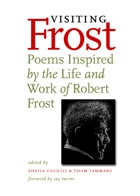
Visiting Frost
Poems Inspired by the Life and Work of Robert FrostSheila Coghill
University of Iowa Press, 2005
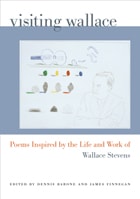
Visiting Wallace
Poems Inspired by the Life and Work of Wallace StevensDennis Barone
University of Iowa Press, 2009
Whether whimsical or serious, solemn or light, the poems in Dennis Barone and James Finnegan’s Visiting Wallace are sure to inspire delight and thought. Alan Filreis’s brilliant foreword asks us to consider whether there is another modern poet who means as much to contemporary verse as Stevens: “seventy-six poems giving us seventy-six distinct Stevenses to follow and succeed.”
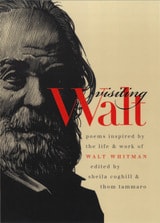
Visiting Walt
Poems Inspired by the Life and Work of Walt WhitmanSheila Coghill
University of Iowa Press, 2003
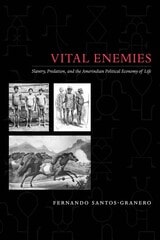
Vital Enemies
Slavery, Predation, and the Amerindian Political Economy of LifeBy Fernando Santos-Granero
University of Texas Press, 2009
Analyzing slavery and other forms of servitude in six non-state indigenous societies of tropical America at the time of European contact, Vital Enemies offers a fascinating new approach to the study of slavery based on the notion of "political economy of life." Fernando Santos-Granero draws on the earliest available historical sources to provide novel information on Amerindian regimes of servitude, sociologies of submission, and ideologies of capture.
Estimating that captive slaves represented up to 20 percent of the total population and up to 40 percent when combined with other forms of servitude, Santos-Granero argues that native forms of servitude fulfill the modern understandings of slavery, though Amerindian contexts provide crucial distinctions with slavery as it developed in the American South. The Amerindian understanding of life forces as being finite, scarce, unequally distributed, and in constant circulation yields a concept of all living beings as competing for vital energy. The capture of human beings is an extreme manifestation of this understanding, but it marks an important element in the ways Amerindian "captive slavery" was misconstrued by European conquistadors.
Illuminating a cultural facet that has been widely overlooked or miscast for centuries, Vital Enemies makes possible new dialogues regarding hierarchies in the field of native studies, as well as a provocative re-framing of pre- and post-contact America.
Voegelin Recollected
Conversations on a LifeEdited by Barry Cooper & Jodi Bruhn
University of Missouri Press, 2007
Although his contributions to philosophy are revered and his writings have been collected, Eric Voegelin’s persona will inevitably fade with the memories of those who knew him. This book preserves the human element of Voegelin by capturing those valuable personal recollections.
Barry Cooper and Jodi Bruhn conducted intensive interviews with Voegelin’s wife, his closest friends, and his first-generation students—many of whom have since passed on—in order to bring to print everything important about his life and personality. American scholars will especially appreciate the glimpses provided by Voegelin’s German colleagues into his life in Munich, as well as the thoughts of his students in Vienna. Reflections of people such as Paul Caringella, Bruno Schlesinger, and Heinz Barazon capture Voegelin’s greatness and shortcomings alike and also shed new light on his philosophical quest for truth.
By descending progressively further into the past, the book takes readers deeper into the essence of Voegelin as reminiscences become more dramatic. Ranging widely from America back to Germany—with recollections of Gestapo intimidation and eventual emigration—the accounts interweave episodes of pathos, humor, fear, rivalry, and ambition. We witness Voegelin’s persistent and partly self-imposed communication problems and impatience with administrative duties, his respect for prudent political actors and public servants, and his genuine affection not only for his colleagues and best students but also for diligent secretaries and empathetic nurses. Through these recollections, key elements of his personality repeatedly emerge: his intelligence, optimism, and integrity, combined with an acute perception of the significance of his work.
This is the most revealing and comprehensive biographical work yet available on a man known to be captivating as a thinker—and now shown to be equally fascinating as a human being. His own publications attest to his mind and methods; Voegelin Recollected provides a deeper understanding of the man himself.
Voluntourism and Multispecies Collaboration
Life, Death, and Conservation in the Mesoamerican Barrier ReefKeri Vacanti Brondo
University of Arizona Press, 2021
Winner of the 2022 Edward M. Bruner Book Award
Voluntourism and Multispecies Collaboration is a lively ethnographic exploration of the world of conservation voluntourism and its engagement with marine and terrestrial biodiversity on the Honduran Bay Island of Utila, located in the ecologically critical Mesoamerican Barrier Reef.
In this highly readable text, anthropologist Keri Vacanti Brondo provides a pioneering theoretical framework that conceptualizes conservation voluntourism as a green industry. Brondo argues that the volunteer tourism industry is the product of coloniality and capitalism that works to produce and sustain an economy of affect while generating inequalities and dispossession. Employing a decolonizing methodology based on landscape assemblage theory, Brondo offers “thinking-like-a-mangrove” to attend to alternative worldings in Utila beyond the hegemonic tourist spectacle–dominated world attached to the volunteer tourism industry. Readers journey through the mangroves and waters alongside voluntourists, iguanas, whale sharks, turtles, lionfish, and islanders to build valuable research experience in environmental management while engaging in affective labor and multispecies relations of care.
Conservation organizations benefit from the financial capital and labor associated with conservation tourism, an industry boosted by social media. This critical work asks us to consider the impacts of this new alternative tourism market, one that relies on the exchange of “affect” with other species. How are human socialities made through interactions with other species? What lives and dies in Utila’s affect economy? Why are some species killable? Who gets to decide?
Voodoo Priests, Noble Savages, and Ozark Gypsies
The Life of Folklorist Mary Alicia OwenGreg Olson
University of Missouri Press, 2025
Folklorist Wayland Hand once called Mary Alicia Owen “the most famous American Woman Folklorist of her time.” Drawing on primary sources, such as maps, census records, court documents, personal letters and periodicals, and the scholarship of others who have analyzed various components of Owen’s multifaceted career, historian Greg Olson offers the most complete account of her life and work to date. He also offers a critical look at some of the short stories Owen penned, sometimes under the name Julia Scott, and discusses how the experience she gained as a fiction writer helped lead her to a successful career in folklore.
Olson analyzes many of the nineteenth-century theories, stereotypes, and popular beliefs that influenced the work of Owen and many of her peers. By taking a cross-disciplinary look at her works of fiction, poetry, folklore, history, and anthropology, this volume sheds new light on elements of Owen’s career that have not previously been discussed in print. Examples of the romance stories that Owen wrote for popular magazines in the 1880’s are identified and examined in the context of the time in which Owen wrote them.
This groundbreaking biography shows that Owen was more than just a folklorist—she was a nineteenth-century woman of many contradictions. She was an independent woman of many interests who possessed a keen intellect and a genuine interest in people and their stories. Specialists in folklore, anthropology, women’s studies, local and regional history, and Missouriana will find much to like in this thoroughly researched study.