Results by title
1787 books match the query 'Literary Collections' and 13 start with v
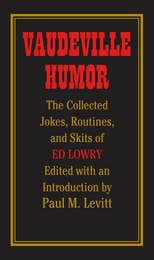
Vaudeville Humor
The Collected Jokes, Routines, and Skits of Ed LowryEdited with an Introduction by Paul M. Levitt
Southern Illinois University Press, 2006
Vaudeville Humor: The Collected Jokes, Routines, and Skits of Ed Lowry contains vaudeville jokes, skits, and routines from the first three decades of the twentieth century originally compiled by comedian Ed Lowry (1896–1983). Although occasionally found in bits and pieces in anthologies and in some period dramatic comedies, vaudeville humor has never before been available in one collection—performers rarely if ever kept a record of their jokes and routines. Fortunately, Ed Lowry was an inveterate collector. He kept copious notebooks of jokes and routines that he not only commissioned but also stole from other comics, clipped from newspapers, and copied from now defunct popular magazines of the day.
Editor Paul M. Levitt has reorganized the material into categories that preserve some of the flavor of Lowry’s scrapbooks yet provide for finer distinctions. Part one, “Jokes,” is organized by subject matter and cataloged by genre, dialects, and wordplay. From “Accidents” to “Work,” this exhaustive catalog of humor features over one thousand jokes with topics that range from city slickers and country hicks through midgets and old maids to Swedes and tattoos. Part two, “MC Material: Biz, Jokes, Routines, and Skits” is germane to the job of master of ceremonies, routines, and skits. It features topics from fractured fairy tales to stuttering. Part three, an appendix, “Ed Lowry Laffter,”reproduces a privately published collection that is now a rare collector’s item.
“Although some of the jokes can undoubtedly be found in other places,” explains Levitt in his introduction, “I know of no source as rich as this one for the twenties and thirties, a period so abundant in humor that for years afterward it fueled radio, cinema, and television.”
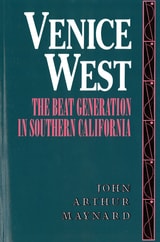
Venice West
The Beat Generation in Southern CaliforniaMaynard, John Arthur
Rutgers University Press, 1993
"A most remarkable book . . . a wonderful account of an odd and unlikely place where for a brief time a small number of people pursued a romantic vision of what a life dedicated to art should be like . . . a superb story."ÐÐWilliam O'Neill, author of American High: The Years of Confidence, 1945-1960
The beatnik was born in Venice, California, in the 1950s. An imaginary figure in many respectsÐÐthe invention of both the media and the people who played the beatnik roleÐÐthe character quickly assumed nearly mythic proportions for the American public. Coffeehouses, beards, poetry, drugs, and free-wheeling sexuality were all associated with the beatnik, the quintessential rebel who, by rejecting material values, represented both a threat and an alluring alternative to the dominant middle-class culture.
In this fascinating book, John Arthur Maynard tells the story of the poets and promoters who invented the Beat Generation and who, in many cases, destroyed themselves in the process. In this look at the least remembered (but in its time, most publicized) beat enclave, Maynard focuses on two of Venice's most newsworthy residentsÐÐLawrence Lipton and Stuart Z. Perkoff. Lipton began as a writer of popular detective stories and screenplays, but was determined to be recognized as a poet and social critic. He eventually published The Holy Barbarians, which helped to create the enduring public image of the beatnik. Stuart Perkoff was a more gifted poet; with fascination and horror, we follow his failed attempts to support his family, his heroin addiction, his first wive's courage and mental fragility, his sexual entanglements, his imprisonment, and the development of his own writing. Other characters who move in and out of the story are Kenneth Rexroth, Jack Kerouac, and Allen Ginsberg, as well as lesser-known poets, artists, hangers-on, and the many women who were rarely treated as full members of the community.
For most of the 1950s, the Venice beatniks were able to live and work in isolation. Once the media decided that beats made good copy, however, their peace was shattered. Reporters, drug dealers, violent criminals, and would-be beatniks invaded Venice in such force that many "square" residents began an unrelenting campaign to purge their community of bohemianism. This campaign persisted long after the beats, who tended to ignore politics, had yielded the stage to a new generation of political activists. In this collective biography, based largely on unpublished sources, Maynard tells us how these events affected public perceptions and the beats' own perceptions of themselves.
Vernon Lee
Aesthetics, History, and the Victorian Female IntellectualChrista Zorn
Ohio University Press, 2003
The subject of renewed interest among literary and cultural scholars, Vernon Lee wrote more than forty books, in a broad range of genres, including fiction, history, aesthetics, and travel literature. Early on, Lee established her reputation as a public critic whose unconventional viewpoints stood out among those of her contemporaries.
To feminist and cultural critics, she is a fascinating model of the independent female intellectual who, as Desmond MacCarthy once put it, provides a rare combination of intellectual curiosity and imaginative sensibility.
A startlingly original critical study, Vernon Lee adds new dimensions to the legacy of this woman of letters whose career spans the transition from the late Victorian to the modernist period. Zorn draws on archival materials to discuss Lee’s work in terms of British aestheticism and in the context of the Western European history of ideas.
Zorn contends that Lee’s fiction and nonfiction represent a literary position that bridges and surpasses both the Victorian sage and the modernist aesthetic critic.
Through Professor Zorn’s approach, which combines theoretical framings of texts in terms of recent feminist and cultural criticism with passages of close reading, Vernon Lee emerges as an influential figure in late-nineteenth-century British and continental European thinking on history, art, culture, and gender.
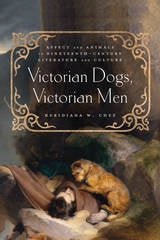
Victorian Dogs, Victorian Men
Affect and Animals in Nineteenth-Century Literature and CultureKeridiana W. Chez
The Ohio State University Press, 2017
Chez traces the evolution of the human-dog relationship as it developed parallel to an increasingly imperialist national discourse. The dog began as the affective mediator of the family, then addressed the emotional needs of its individual members, and finally evolved into both “man’s best friend” and worst enemy. By the last decades of the nineteenth century, the porous human-animal boundary served to produce the “humane” man: a liberal subject enabled to engage in aggressive imperial projects. Reading the work of Charles Dickens, George Eliot, Margaret Marshall Saunders, Bram Stoker, and Jack London, Victorian Dogs, Victorian Men charts the mobilization of affect through transatlantic narratives, demonstrating the deep interconnections between animals, affect, and gender.
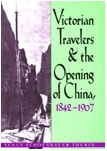
Victorian Travelers and the Opening of China 1842–1907
Susan Shoenbauer Thurin
Ohio University Press, 1999
Three men and three women: a plant collector, a merchant and his novelist wife, a military officer, and two famous women travelers went to China between the Opium War and the formal end of the opium trade, 1842–1907. Their range of perspectives, their acquaintance with one another and their similar scope of travel to Hong Kong, the treaty ports, and Sichuan lend intensity to their picture of China and the Western presence there.
What the travelers record reveals is a continuity in the response of the West and China to each other. Susan Schoenbauer Thurin’s study of these writings presents a rich tapestry of impressions, biases, and cultural perspectives that inform our own understanding of the Victorians and their views of the world outside their own.
The strange mix of opium and missionaries, the aura of fabled “Cathay” and its valuable trade items, the attraction and repulsion of the exotic otherness the travelers experience, reflect the political, religious, and racial views of their era, and explain the allure of the Orient that, in part, characterized their age. Victorian Travelers and the Opening of China, 1842–1907 is a remarkable look into the cultural past.
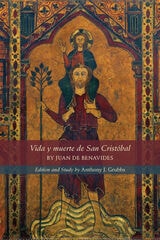
Vida y muerte de San Cristóbal
Juan de Benavides
Arizona Center for Medieval and Renaissance Studies, 2020
As the patron of travelers, Saint Christopher inspired one of the most popular cults in the medieval era, which spread across Europe and especially the Iberian Peninsula. Artistic renderings of the saint were found near the doors of most Spanish Gothic churches, and paratheatrical representations of Saint Christopher were also commonplace in religious processions. His conversion and martyrdom were often staged between the fifteenth and early eighteenth centuries.
In the theater, Juan de Benavides’s Vida y muerte de San Cristóbal is one of two known comedias dealing with the saint, but it was heavily censored after its premiere. The immense popularity of St. Christopher and other primitive saints first drew the attention of the Council of Trent in the mid-1500s, when the Catholic Church attempted to suppress the influence of the earlier saints due to their fantastical nature. The stories of these saints were censored, rewritten or even omitted in the post-Tridentine martyrologies. This publication is the first critical edition of the only extant copy of Benavides’s playscript. The circumstances surrounding Benavides’s play continue a dialogue about such important topics as censorship and the influence of the church over artistic production.

Vietnam Anthology
American War LiteratureNancy Anisfield
University of Wisconsin Press, 1987
Novel excerpts include: Robert Stone’s Dog Soldiers, David Halberstam’s One Very Hot Day, and Jeff Danziger’s Lieutenant Kitt. Short stories include Asa Baber’s “The Ambush,” Tobias Wolff’s “Wingfield,” and Tim O’Brien’s “The Things They Carried.” Drama excerpts include David Rabe’s Streamers and Lanford Wilson’s The 5th of July. Poets include: Denise Levertov, Jan Barry, E. D. Ehrhart, Basil T. Paquet, Stephen Sossaman, Bryan Alec Floyd, Bruce Weigl, and Trang Thi Nga.

View from the Fazenda
A Tale of the Brazilian HeartlandsEllen Bromfield Geld
Ohio University Press, 2012
“I imagine everyone has a center of gravity,” says Ellen Bromfield Geld. “Something which binds one to the earth and gives sense and direction to what one does.” For Ellen, this center is a writing table before a window that looks out upon groves of pecan trees and mahogany-colored cattle in seas of grass. The place is Fazenda Pau D’Alho, Brazil, where she and her husband, Carson, have lived and farmed since 1961.
Healing the ravaged coffee plantation, rearing five children, exploring the outposts, the Gelds have created a dynamic yet peaceful life far from Ellen’s native Ohio. Their practice of sustainable agriculture, and Ellen’s plea for the preservation of Brazil’s remaining wilderness areas, reflect the legacy of her father, the novelist and farm visionary Louis Bromfield. Their shared vision is crystallized in her account of a cattle drive across the Pantanal, the vast flood plain on Brazil’s side of the Paraguay River. She describes a two-hundred year symbiosis between ranchers and a fragile ecosystem that is being threatened by development.
View from the Fazenda is distilled from fifty years of living in Brazil, weaving daily life on the farm into her quest to understand a nation. It portrays a true melting pot of people who—as conquerers, immigrants, or slaves, their blood and history mingled with those of native Indians—have created the character of Brazil. This huge, diverse county, living in several eras at the same time, is ever changing through its people’s amazing ability to “find a way.”
Ellen Bromfield Geld evokes the land and people of Brazil and offers readers an invigorating glimpse into a soulful life. “It seems to me that being a bit of a poet is perhaps the only way one can survive as a farmer,” she explains. “For in the end, more than anything, farming is a way of life you either love or become bitter enduring.”
Visions Of Excess
Selected Writings, 1927-1939Georges Bataille
University of Minnesota Press, 1985
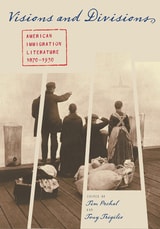
Visions and Divisions
American Immigration Literature, 1870-1930Prchal, Timothy
Rutgers University Press, 2008
From these debates came such novels as Willa Cather’s My Ántonia and Upton Sinclair’s The Jungle. Henry James, Charlotte Perkins Gilman, and Carl Sandburg added to the diversity of viewpoints of native born Americans while equally divergent immigrant perspectives were represented by writers such as Anzia Yezierska, Kahlil Gibran, and Claude McKay. This anthology presents the writing of these authors, among others less well known, to show the many ways literature participated in shaping the face of immigration. The volume also includes an introduction, annotations, a timeline, and historical documents that contextualize the literature.

Voices from Madagascar Voix de Madagascar
An Anthology of Contemporary Francophone Literature/Anthologie de littérature francophone contemporaineJacques Bourgeacq
Ohio University Press, 2001
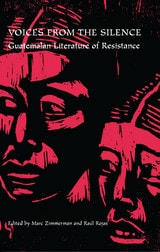
Voices from the Silence
Guatemalan Literature of ResistanceMarc Zimmerman
Ohio University Press, 1998
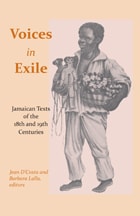
Voices in Exile
Jamaican Texts of the 18th and 19th CenturiesJean D'Costa
University of Alabama Press, 2009
Recovering the voices that shaped Jamaica's language, literature, and identity.
Voices in Exile: Jamaican Texts of the 18th and 19th Centuries is a landmark anthology that brings together a rich collection of historical documents illuminating the origins and development of Jamaican language, culture, and identity. Edited by renowned scholars Jean D'Costa and Barbara Lalla, the volume gathers songs, sermons, folk narratives, eyewitness accounts, personal testimonies, and other primary materials that reveal the complex social and cultural world of Jamaica during the colonial and post-emancipation eras.
Spanning the eighteenth and nineteenth centuries, the collection traces the emergence of a distinctive Jamaican society forged through the interaction of African, European, and Caribbean peoples. The selected texts capture the realities of plantation life, slavery, resistance, religious expression, language development, and everyday experience while showcasing the creativity and resilience of communities whose voices have often been marginalized in traditional historical narratives.
Particularly valuable for its documentation of Jamaican Creole and evolving linguistic practices, the anthology provides readers with direct access to the words and perspectives of individuals living through profound social transformation. Materials from the periods before emancipation, during apprenticeship, and after emancipation illustrate how language and culture adapted to changing political and economic conditions.
More than a collection of historical texts, Voices in Exile serves as a window into the formation of Jamaican identity and the broader cultural history of the Caribbean. By preserving and contextualizing these remarkable documents, D'Costa and Lalla offer an indispensable resource for students and scholars of Caribbean studies, literature, linguistics, history, postcolonial studies, and the African diaspora. The result is a compelling archive of voices that continue to resonate across centuries and enrich our understanding of Jamaica's cultural heritage.