Results by title
4917 books match the query 'Philosophy' and 37 start with v
Value in Marx
The Persistence of Value in a More-Than-Capitalist WorldGeorge Henderson
University of Minnesota Press, 2013
Long prone to dogmatic disagreement, the question of value in Marx’s thought—what value is, the purpose it serves, its application to real-world capitalism—requires renewal if Marx’s work is to remain vibrant. In Value in Marx, George Henderson offers a lucid rereading of Marx that strips value of its turgid theoretical reduction and reframes it as an investigation into the tensions between social relations and forms as they are rather than as what they could otherwise become.
Drawing on Marx’s Capital and Grundrisse, Henderson shows how these volumes do not harbor a single theory of value that equates value to capital. Instead, these books experimentally compose and recompose value for a world that is more than capitalist. At stake is how Marx conceives of human freedom, of balanced social arrangements, and of control over the things people produce. Henderson finds that the limits on social becoming, including the tendency toward alienated existence, haunt Marx even as he looks beyond the critique of capital to an emancipated society to come.
Can these limits be confronted in a creative, even joyful, way? Can they become aspects of what we desire, rather than being silenced and denied? As long as we persist in interpreting value broadly, following it as an active and not a shut-down, predetermined feature of Marx’s texts, Henderson ultimately views Marx as responding positively to these challenges and employing value as a powerful tool of the political imaginary.
Value, Conflict, and Order
Berlin, Hampshire, Williams, and the Realist Revival in Political TheoryEdward Hall
University of Chicago Press, 2020
Is the purpose of political philosophy to articulate the moral values that political regimes would realize in a virtually perfect world and show what that implies for the way we should behave toward one another? That model of political philosophy, driven by an effort to draw a picture of an ideal political society, is familiar from the approach of John Rawls and others. Or is political philosophy more useful if it takes the world as it is, acknowledging the existence of various morally non-ideal political realities, and asks how people can live together nonetheless?
The latter approach is advocated by “realist” thinkers in contemporary political philosophy. In Value, Conflict, and Order, Edward Hall builds on the work of Isaiah Berlin, Stuart Hampshire, and Bernard Williams in order to establish a political realist’s theory of politics for the twenty-first century. The realist approach, Hall argues, helps us make sense of the nature of moral and political conflict, the ethics of compromising with adversaries and opponents, and the character of political legitimacy. In an era when democratic political systems all over the world are riven by conflict over values and interests, Hall’s conception is bracing and timely.
Vampyroteuthis Infernalis
A Treatise, with a Report by the Institut Scientifique de Recherche ParanaturalisteVilém Flusser
University of Minnesota Press, 2012
How far apart are humans from animals—even the “vampire squid from hell”? Playing the scientist/philosopher/provocateur, Vilém Flusser uses this question as a springboard to dive into a literal and a philosophical ocean. “The abyss that separates us” from the vampire squid (or vampire octopus, perhaps, since Vampyroteuthis infernalis inhabits its own phylogenetic order somewhere between the two) “is incomparably smaller than that which separates us from extraterrestrial life, as imagined in science fiction and sought by astrobiologists,” Flusser notes at the outset of the expedition.
Part scientific treatise, part spoof, part philosophical discourse, part fable, Vampyroteuthis Infernalis gives its author ample room to ruminate on human—and nonhuman—life. Considering the human condition along with the vampire squid/octopus condition seems appropriate because “we are both products of an absurd coincidence . . . we are poorly programmed beings full of defects,” Flusser writes. Among other things, “we are both banished from much of life’s domain: it into the abyss, we onto the surfaces of the continents. We have both lost our original home, the beach, and we both live in constrained conditions.”
Thinking afresh about the life of an “other”—as different from ourselves as the vampire squid/octopus—complicates the linkages between animality and embodiment. Odd, and strangely compelling, Vampyroteuthis Infernalis offers up a unique posthumanist philosophical understanding of phenomenology and opens the way for a non-philosophy of life.

Vanishing Points
Articulations of Death, Fragmentation, and the Unexperienced Experience of Created ObjectsNatasha Chuk
Intellect Books, 2015
Variations on the Body
Michel Serres
University of Minnesota Press, 2015
World-renowned philosopher, Michel Serres writes a text in praise of the body and movement, in praise of teachers of physical education, coaches, mountain guides, athletes, dancers, mimes, clowns, artisans, and artists. This work describes the variations, the admirable metamorphoses that the body can accomplish. While animals lack such a variety of gestures, postures, and movements, the fluidity of the human body mimics the leisure of living beings and things; what’s more, it creates signs. Already here, within its movements and metamorphoses, the mind is born. The five senses are not the only source of knowledge: it emerges, in large part, from the imitations the plasticity of the body allows. In it, with it, by it knowledge begins.
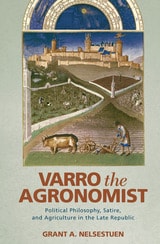
Varro the Agronomist
Political Philosophy, Satire, and Agriculture in the Late RepublicGrant A. Nelsestuen
The Ohio State University Press, 2015
On one level, Varro’s treatise presents an innovative account of the Roman farm, which rationalizes new agricultural and pastoral opportunities for contemporary elite owners of large-scale estates. But on another level, this bold agronomical vision associates the farm’s different spheres with distinct areas under Roman control, thereby allegorizing Rome’s empire on the model of a farm. Nelsestuen argues that Varro’s treatise thus provides his contemporaries with a model for governing the Roman state, anticipates Augustus’ subsequent transformation of Roman dominion into a coherent territorial state, and offers an ancient theory of imperialism.
Shedding new light on the only completely extant work of a much-celebrated but ill-understood figure, Varro the Agronomist has much to offer to those interested in Latin literature—especially, Cicero and Vergil—as well as on the political dimensions of intellectual life in first-century bce Rome, ancient imperialism, and Roman political philosophy.
Vector Media
Leonardo Impett
University of Minnesota Press, 2026
Dispelling the notion of “generative” AI
Neural networks are designed to dissolve all media into the vector space—a universal space of commensurability. In Vector Media, Leonardo Impett and Fabian Offert parse theories of automatic vision to trace contemporary artificial intelligence’s technical ideology of epistemic reduction, where sensory data is turned into abstracted forms of meaning. Under this regime, bias is not just a question of what is represented but of the logic of representation itself. Drawing on Phil Agre’s notion of a critical technical practice, Vector Media reveals how artificial intelligence systems embed new epistemologies of media beneath the surface of their architectures.
Analyzing the techniques underpinning large multimodal artificial intelligence models like DALL-E, Midjourney, Flux, or Stable Diffusion, Impett and Offert offer the concept of neural exchange value: the value cultural artifacts acquire not through meaning or context but through their capacity to function as vectors. In such a system, commensurability becomes a condition of existence: what matters is not what something is but that it can be embedded. Rather than focusing solely on datasets, Vector Media proposes a critical study of vector spaces—and the machine cultures they produce—as a necessary complement to prevailing approaches in AI critique.
Retail e-book files for this title are screen-reader friendly with images accompanied by short alt text and/or extended descriptions.
Veer Ecology
A Companion for Environmental ThinkingJeffrey Jerome Cohen
University of Minnesota Press, 2017
The words most commonly associated with the environmental movement—save, recycle, reuse, protect, regulate, restore—describe what we can do to help the environment, but few suggest how we might transform ourselves to better navigate the sudden turns of the late Anthropocene. Which words can help us to veer conceptually along with drastic environmental flux? Jeffrey Jerome Cohen and Lowell Duckert asked thirty brilliant thinkers to each propose one verb that stresses the forceful potential of inquiry, weather, biomes, apprehensions, and desires to swerve and sheer. Each term is accompanied by a concise essay contextualizing its meaning in times of resource depletion, environmental degradation, and global climate change.
Some verbs are closely tied to natural processes: compost, saturate, seep, rain, shade, sediment, vegetate, environ. Many are vaguely unsettling: drown, unmoor, obsolesce, power down, haunt. Others are enigmatic or counterintuitive: curl, globalize, commodify, ape, whirl. And while several verbs pertain to human affect and action—love, represent, behold, wait, try, attune, play, remember, decorate, tend, hope—a primary goal of Veer Ecology is to decenter the human. Indeed, each of the essays speaks to a heightened sense of possibility, awakening our imaginations and inviting us to think the world anew from radically different perspectives. A groundbreaking guide for the twenty-first century, Veer Ecology foregrounds the risks and potentialities of living on—and with—an alarmingly dynamic planet.
Contributors: Stacy Alaimo, U of Texas at Arlington; Joseph Campana, Rice U; Holly Dugan, George Washington U; Lara Farina, West Virginia U; Cheryll Glotfelty, U of Nevada, Reno; Anne F. Harris, DePauw U; Tim Ingold, U of Aberdeen; Serenella Iovino, U of Turin; Stephanie LeMenager, U of Oregon; Scott Maisano, U of Massachusetts, Boston; Tobias Menely, U of California, Davis; Steve Mentz, St. John’s U; J. Allan Mitchell, U of Victoria; Timothy Morton, Rice U; Vin Nardizzi, U of British Columbia; Laura Ogden, Dartmouth College; Serpil Opperman, Hacettepe U, Ankara; Daniel C. Remein, U of Massachusetts, Boston; Margaret Ronda, U of California, Davis; Nicholas Royle, U of Sussex; Catriona Sandilands, York U; Christopher Schaberg, Loyola U; Rebecca R. Scott, U of Missouri; Theresa Shewry, U of California, Santa Barbara; Mick Smith, Queen’s U; Jesse Oak Taylor, U of Washington; Brian Thill, Golden West College; Coll Thrush, U of British Columbia, Vancouver; Cord J. Whitaker, Wellesley College; Julian Yates, U of Delaware.
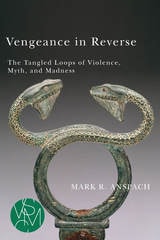
Vengeance in Reverse
The Tangled Loops of Violence, Myth, and MadnessMark R. Anspach
Michigan State University Press, 2017
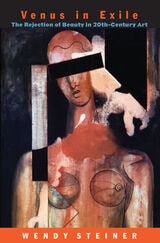
Venus in Exile
The Rejection of Beauty in Twentieth-Century ArtWendy Steiner
University of Chicago Press, 2002
Versions of Academic Freedom
From Professionalism to RevolutionStanley Fish
University of Chicago Press, 2014
Depending on who’s talking, academic freedom is an essential bulwark of democracy, an absurd fig leaf disguising liberal agendas, or, most often, some in-between muddle that both exaggerates its own importance and misunderstands its actual value to scholarship. Fish enters the fray with his typical clear-eyed, no-nonsense analysis. The crucial question, he says, is located in the phrase “academic freedom” itself: Do you emphasize “academic” or “freedom”? The former, he shows, suggests a limited, professional freedom, while the conception of freedom implied by the latter could expand almost infinitely. Guided by that distinction, Fish analyzes various arguments for the value of academic freedom: Is academic freedom a contribution to society's common good? Does it authorize professors to critique the status quo, both inside and outside the university? Does it license and even require the overturning of all received ideas and policies? Is it an engine of revolution? Are academics inherently different from other professionals? Or is academia just a job, and academic freedom merely a tool for doing that job?
No reader of Fish will be surprised by the deftness with which he dismantles weak arguments, corrects misconceptions, and clarifies muddy arguments. And while his conclusion—that academic freedom is simply a tool, an essential one, for doing a job—may surprise, it is unquestionably bracing. Stripping away the mystifications that obscure academic freedom allows its beneficiaries to concentrate on what they should be doing: following their intellectual interests and furthering scholarship.
Vessels of Evil
American Slavery and the HolocaustLaurence Mordekhai Thomas
Temple University Press, 1993
Two profound atrocities in the history of Western culture form the subject of this moving philosophical exploration: American Slavery and the Holocaust. An African American and a Jew, Laurence Mordekhai Thomas denounces efforts to place the suffering of one group above the other. Rather, he pronounces these two defining historical experiences as profoundly evil in radically different ways and points to their logically incompatible aims.
The author begins with a discussion of the nature of evil, exploring the fragility of human beings and the phenomena of compartmentalizing, unquestioning obedience to authority, and moral drift. Citing compelling examples from history and contemporary life, he characterizes evil acts in terms of moral agency, magnitude, and intent.
With moving testimony, Thomas depicts the moral pain of African Americans and Jews during their ordeals and describes how their past as victims has affected their future. Without invidious comparison, he distinguishes between extermination and domination, death and natal alienation, physical and mental cruelty, and between being viewed as irredeemable evil and as a moral simpleton. Thomas also considers the role of blacks and Jews in the Christian narrative.
In Vessels of Evil, Thomas also considers the ways Jews and blacks have gone on to survive. He analyzes the relative flourishing of Jews and the languishing of blacks in this country and examines the implications of their dissimilar tragedies on any future relationship between these two minorities.
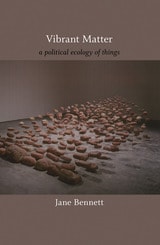
Vibrant Matter
A Political Ecology of ThingsJane Bennett
Duke University Press, 2010
Bennett examines the political and theoretical implications of vital materialism through extended discussions of commonplace things and physical phenomena including stem cells, fish oils, electricity, metal, and trash. She reflects on the vital power of material formations such as landfills, which generate lively streams of chemicals, and omega-3 fatty acids, which can transform brain chemistry and mood. Along the way, she engages with the concepts and claims of Spinoza, Nietzsche, Thoreau, Darwin, Adorno, and Deleuze, disclosing a long history of thinking about vibrant matter in Western philosophy, including attempts by Kant, Bergson, and the embryologist Hans Driesch to name the “vital force” inherent in material forms. Bennett concludes by sketching the contours of a “green materialist” ecophilosophy.
Vices, Virtues, and Consequences
Essays in Moral and Political PhilosophyPeter Simpson
Catholic University of America Press, 2019
Vilém Flusser
An IntroductionAnke Finger
University of Minnesota Press, 2010
An accessible and thorough introduction to Flusser’s thought, this book reveals his engagement with a wide array of disciplines, from communication studies, posthuman philosophy, media studies, and history to art and art history, migrant studies, anthropology, and film studies. The first to connect Flusser’s entire oeuvre, this volume shows how his works on media theory are just one part of a greater mosaic of writings that bring to the fore cultural and cognitive changes concerning all of us in the twenty-first century.
A theorist deeply influenced by his experiences as a privileged citizen of Prague, a Jew pursued by the Nazis, a European emigrant, a Brazilian immigrant, and a survivor keenly interested and invested in history and memory, Vilém Flusser was an outsider in a staunchly hierarchical and disciplined academic world.

Vinyl Theory
Jeffrey R. Di Leo
Lever Press, 2020

Violence and Difference
Girard, Derrida, and DeconstructionAndrew J. McKenna
University of Illinois Press, 1992
theory of Jacques Derrida in terms of each other--to create an interpretive strategy that he
hopes will "salvage deconstruction from the flashy sterility it favors."
Violence and Grace
Exceptional Life between Shakespeare and ModernityNichole E. Miller
Northwestern University Press, 2014
In Violence and Grace, Nichole Miller establishes a conceptual link between early modern English drama and twentieth-century political theology, both of which emerge from the experience of political crisis. Miller’s analyses accordingly undertake to retrieve for political theology the relations between gender, sexuality, and the political aesthetics of violence on the early modern stage, addressing the plays of Marlowe, Middleton, and especially Shakespeare. In doing so, she expands our understanding of drama’s continuing theoretical impact.
Violence and Splendor
Alphonso Lingis
Northwestern University Press, 2011
“The Sacred” studies the ways death—the death of others and our own death—fascinates and energizes us. It exhibits the glory in violence and sacrilege. The book culminates in “Splendor,” a study of collective performances that create splendor. Concerning itself most immediately with philosophy, psychology, aesthetics, anthropology, and the theory of religion, Violence and Splendor bridges the discourses of continental philosophy and cross-cultural studies. Further drawing insights from both Western and non-Western traditions, it brings such diverse fields as psychology, art and aesthetics, botany, politics, history, zoology, and religious theory into a new and significant dialogue about the nature of humanity.
Violence and the Mimetic Unconscious, Volume 2
The Affective HypothesisNidesh Lawtoo
Michigan State University Press, 2023
Violence and the Oedipal Unconscious
vol. 1, The Catharsis HypothesisNidesh Lawtoo
Michigan State University Press, 2023

Violence in Modern Philosophy
Piotr Hoffman
University of Chicago Press, 1989
In his previous book, Doubt, Time, Violence, Hoffman explored the theme of violence in relation to Descartes' problematic of doubt and Heidegger's work on temporality. The pivotal notion deriving from that investigation is the notion of the other as the ultimate limit of one's powers. In effect, Hoffman argues, our practical mastery of the natural environment still leaves intact the limitation of human agents by each other. In a violent environment, the other emerges as an insurmountable obstacle to one's aims and purposes or as an inescapable danger which one is powerless to hold at bay. The other is thus the focus of an ultimate resistance to one's powers.
The special status of the other, as Hoffman articulates it, is at the root of several key notions around which modern philosophy has built its problematic. Arguing here that when the theme of violence is taken into account many conceptual tensions and puzzles receive satisfying solutions, Hoffman traces the theme through the issue of things versus properties; through Kant's treatment of causality, necessity, and freedom in the Critique of Pure Reason; and through the early parts of Hegel's Logic. The result is a complete reorientation and reinterpretation of these important texts.
Violence in Modern Philosophy offers patient and careful textual clarification in light of Hoffman's central thesis regarding the other as ultimate limit. With a high level of originality, he shows that the theme of violence is the hidden impulse behind much of modern philosophy. Hoffman's unique stress on the constitutive importance of violence also offers a challenge to the dominant "compatibilist" tradition in moral and political theory. Of great interest to all philosophers, this work will also provide fresh insights to anthropologists and all those in the social sciences and humanities who occupy themselves with the general theory of culture.
Violence in the Films of Alfred Hitchcock
A Study in MimesisDavid Humbert
Michigan State University Press, 2017
Violence, the Sacred, and Things Hidden
A Discussion with René Girard at Esprit (1973)René Girard
Michigan State University Press, 2022
Virality
Contagion Theory in the Age of NetworksTony D. Sampson
University of Minnesota Press, 2012
In this thought-provoking work, Tony D. Sampson presents a contagion theory fit for the age of networks. Unlike memes and microbial contagions, Virality does not restrict itself to biological analogies and medical metaphors. It instead points toward a theory of contagious assemblages, events, and affects. For Sampson, contagion is not necessarily a positive or negative force of encounter; it is how society comes together and relates.
Sampson argues that a biological knowledge of contagion has been universally distributed by way of the rhetoric of fear used in the antivirus industry and other popular discourses surrounding network culture. This awareness is also detectable in concerns over too much connectivity, such as problems of global financial crisis and terrorism. Sampson’s “virality” is as established as that of the biological meme and microbe but is not understood through representational thinking expressed in metaphors and analogies. Rather, Sampson interprets contagion theory through the social relationalities first established in Gabriel Tarde’s microsociology and subsequently recognized in Gilles Deleuze’s ontological worldview.
According to Sampson, the reliance on representational thinking to explain the social behavior of networking—including that engaged in by nonhumans such as computers—allows language to overcategorize and limit analysis by imposing identities, oppositions, and resemblances on contagious phenomena. It is the power of these categories that impinges on social and cultural domains. Assemblage theory, on the other hand, is all about relationality and encounter, helping us to understand the viral as a positively sociological event, building from the molecular outward, long before it becomes biological.
Virgin Mary and the Neutrino
Reality in TroubleIsabelle Stengers
Duke University Press, 2023
Virtue Is Knowledge
The Moral Foundations of Socratic Political PhilosophyLorraine Smith Pangle
University of Chicago Press, 2014
Lorraine Smith Pangle traces the argument for the primacy of virtue and the power of knowledge throughout the five dialogues that feature them most prominently—the Apology, Gorgias, Protagoras, Meno, and Laws—and reveals the truth at the core of these seemingly strange claims. She argues that Socrates was more aware of the complex causes of human action and of the power of irrational passions than a cursory reading might suggest. Pangle’s perceptive analyses reveal that many of Socrates’s teachings in fact explore the factors that make it difficult for humans to be the rational creatures that he at first seems to claim. Also critical to Pangle’s reading is her emphasis on the political dimensions of the dialogues. Underlying many of the paradoxes, she shows, is a distinction between philosophic and civic virtue that is critical to understanding them.
Ultimately, Pangle offers a radically unconventional way of reading Socrates’s views of human excellence: Virtue is not knowledge in any ordinary sense, but true virtue is nothing other than wisdom.
Visions of the Sociological Tradition
Donald N. Levine
University of Chicago Press, 1995
"Visions" has three meanings, each of which corresponds to a part of the book. In Part 1, Levine presents the ways previous sociologists have rendered accounts of their discipline, as a series of narratives—or "life stories"—that build upon each other, generation to generation, a succession of efforts to envisage a coherent past for the sake of a purposive present.
In Part 2, the heart of the book, Levine offers his own narrative, reconnecting centuries of voices into a richly textured dialogue among the varied strands of the sociological tradition: Hellenic, British, French, German, Marxian, Italian, and American. Here, in a tour de force of clarity and conciseness, he tracks the formation of the sociological imagination through a series of conversations across generations. From classic philosophy to pragmatism, Aristotle to W. I. Thomas, Levine maps the web of visionary statements—confrontations and oppositions—from which social science has grown.
At the same time, this is much more than an expert synthesis of social theory. Throughout each stage, Levine demonstrates social knowledge has grown in response to three recurring questions: How shall we live? What makes humans moral creatures? How do we understand the world? He anchors the creation of social knowledge to ethical foundations, and shows for the first time how differences in those foundations disposed the shapers of modern social science—among them, Marshall and Spencer, Comte and Durkheim, Simmel and Weber, Marx and Mosca, Dewey and Park—to proceed in vastly different ways.
In Part 3, Levine offers a vision of the contemporary scene, setting the crisis of fragmentation in social sciences against the fragmentation of experience and community. By reconstructing the history of social thought as a series of fundamentally moral engagements with common themes, he suggests new uses for sociology's intellectual resources: not only as insight about the nature of modernity, but also as a model of mutually respectful communication in an increasingly fractious world.
Visual Alterity
Seeing Difference in CinemaRandall Halle
University of Illinois Press, 2021
Using cinema to explore the visual aspects of alterity, Randall Halle analyzes how we become cognizant of each other and how we perceive and judge another person in a visual field. Halle draws on insights from philosophy and recent developments in cognitive and neuroscience to argue that there is no pure "natural" sight. We always see in a particular way, from a particular vantage point, and through a specific apparatus, and Halle shows how human beings have used cinema to experiment with the apparatus of seeing for over a century. Visual alterity goes beyond seeing difference to being conscious of how one sees difference. Investigating the process allows us to move from mere perception to apperception, or conscious perception.
Innovative and insightful, Visual Alterity merges film theory with philosophy and cutting-edge science to propose new ways of perceiving and knowing.
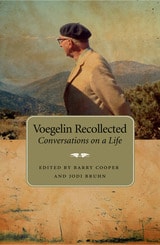
Voegelin Recollected
Conversations on a LifeEdited by Barry Cooper & Jodi Bruhn
University of Missouri Press, 2007
Although his contributions to philosophy are revered and his writings have been collected, Eric Voegelin’s persona will inevitably fade with the memories of those who knew him. This book preserves the human element of Voegelin by capturing those valuable personal recollections.
Barry Cooper and Jodi Bruhn conducted intensive interviews with Voegelin’s wife, his closest friends, and his first-generation students—many of whom have since passed on—in order to bring to print everything important about his life and personality. American scholars will especially appreciate the glimpses provided by Voegelin’s German colleagues into his life in Munich, as well as the thoughts of his students in Vienna. Reflections of people such as Paul Caringella, Bruno Schlesinger, and Heinz Barazon capture Voegelin’s greatness and shortcomings alike and also shed new light on his philosophical quest for truth.
By descending progressively further into the past, the book takes readers deeper into the essence of Voegelin as reminiscences become more dramatic. Ranging widely from America back to Germany—with recollections of Gestapo intimidation and eventual emigration—the accounts interweave episodes of pathos, humor, fear, rivalry, and ambition. We witness Voegelin’s persistent and partly self-imposed communication problems and impatience with administrative duties, his respect for prudent political actors and public servants, and his genuine affection not only for his colleagues and best students but also for diligent secretaries and empathetic nurses. Through these recollections, key elements of his personality repeatedly emerge: his intelligence, optimism, and integrity, combined with an acute perception of the significance of his work.
This is the most revealing and comprehensive biographical work yet available on a man known to be captivating as a thinker—and now shown to be equally fascinating as a human being. His own publications attest to his mind and methods; Voegelin Recollected provides a deeper understanding of the man himself.
Voegelin, Schelling, and the Philosophy of Historical Existence
Jerry Day
University of Missouri Press, 2003
Voegelinian Readings of Modern Literature
Edited by Charles R. Embry
University of Missouri Press, 2011
For Voegelinian Readings of Modern Literature, scholar Charles R. Embry has collected essays that consider particular pieces of literature in light of the philosopher’s work. These essays supply a theoretical grounding for the reading of novels, poems, and plays and reveal how the Voegelinian perspective exposes the existential and philosophical dimensions of the literary works themselves. As a unit, this collection of essays shows how modern pieces of literature can symbolize their creators’ participation in the human search for the truth of existence—just as myths, philosophical works, and religious texts always have.
Voegelin’s primary concern as a philosopher was to expose the roots of the disturbances of the modern era—religious conflict, imperialism, war—so that the sources of order leading to meaning are revealed. The openness of Voegelinian thought and the many ways he considered the levels of reality generate intriguing themes for literary criticism. In these essays, noted Voegelin scholars focus on American and European literary artists from the 1700s through the late twentieth century, including Emily Dickinson, Henrik Ibsen, Thomas Carlyle, D. H. Lawrence, Marcel Proust, and Hermann Broch.
While the intersection of the work of Eric Voegelin and literature has been a part of Voegelin scholarship for decades, this book explores that relationship in an extended form. Through a broad collection of thoughtful essays, Voegelinian Readings of Modern Literature reveals how much Voegelin did to break down the barriers between literature and philosophy and makes an engaging contribution to Voegelin scholarship.
Voice and Phenomenon
Introduction to the Problem of the Sign in Husserl's PhenomenologyJacques Derrida, Translated from the French by Leonard Lawlor
Northwestern University Press, 2011
Only in relation to phenomenology is it possible to measure the importance of deconstruction. Only in relation to Husserl’s philosophy is it possible to understand the novelty of Derrida’s thinking. Voice and Phenomenon therefore may be the best introduction to Derrida’s thought in general. To adapt Derrida’s comment on Husserl’s Logical Investigations, it contains “the germinal structure” of Derrida’s entire thought. Lawlor’s fresh translation of Voice and Phenomenon brings new life to Derrida’s most seminal work.
Voices of Hope
Rediscovering and Building Hope for AllJan Jorrit Hasselaar
Central European University Press, 2026
Volksgeist as Method and Ethic
Essays on Boasian Ethnography and the German Anthropological TraditionEdited by George W. Stocking, Jr.
University of Wisconsin Press, 1998
Vulnerability in Resistance
Judith Butler, Zeynep Gambetti, and Leticia Sabsay, editors
Duke University Press, 2016
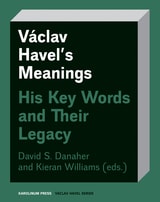
Václav Havel’s Meanings
His Key Words and Their LegacyEdited by David Danaher and Kieran Williams
Karolinum Press, 2022
No one in Czech politics or culture could match the international stature of Václav Havel at the time of his death in 2011. In the years since his passing, his legacy has only grown, as developments in the Czech Republic and elsewhere around the world continue to show the importance of his work and writing against a range of political and social ills, from autocratic brutality to messianic populism.
This book looks squarely at the heart of Havel’s legacy: the rich corpus of texts he left behind. It analyzes the meanings of key concepts in Havel’s core vocabulary: truth, power, civilsociety, home, appeal, indifference, hotspot, theatre, prison, and responsibility. Where do these concepts appear in Havel’s oeuvre? What part do they play in his larger intellectual project? How might we understand Havel’s focus on these concepts as a centerpiece of his contribution to contemporary thought? How does Havel’s particular perspective on the meaning of these concepts speak to us in the here and now? The ten contributors use a variety of methodological tools to examine the meaning of these concepts, drawing on a diversity of disciplines: political science and political philosophy, historical and cultural analysis, discourse/textual analysis, and linguistic-corpus analysis.