Results by title
2018 books match the query 'Political aspects' and 21 start with v

Value in Art
Manet and the Slave TradeHenry M. Sayre
University of Chicago Press, 2022
How did art critics come to speak of light and dark as, respectively, “high in value” and “low in value”? Henry M. Sayre traces the origin of this usage to one of art history’s most famous and racially charged paintings, Édouard Manet’s Olympia.
Art critics once described light and dark in painting in terms of musical metaphor—higher and lower tones, notes, and scales. Sayre shows that it was Émile Zola who introduced the new “law of values” in an 1867 essay on Manet. Unpacking the intricate contexts of Zola’s essay and of several related paintings by Manet, Sayre argues that Zola’s usage of value was intentionally double coded—an economic metaphor for the political economy of slavery. In Manet’s painting, Olympia and her maid represent objects of exchange, a commentary on the French Empire’s complicity in the ongoing slave trade in the Americas.
Expertly researched and argued, this bold study reveals the extraordinary weight of history and politics that Manet’s painting bears. Locating the presence of slavery at modernism’s roots, Value in Art is a surprising and necessary intervention in our understanding of art history.

Vanguard Performance Beyond Left and Right
Kimberly Jannarone, Editor
University of Michigan Press, 2015

Vesna Pavlovic
StagecraftVesna Pavlovic
Vanderbilt University Press, 2021
The book includes critical essays that contextualize and expound on Pavlović's unique treatment of the photographic medium, in which a photographic moment is expanded to include the conditions of image making, production, documentation, and representation.
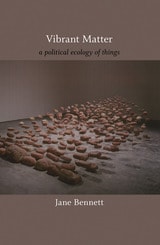
Vibrant Matter
A Political Ecology of ThingsJane Bennett
Duke University Press, 2010
Bennett examines the political and theoretical implications of vital materialism through extended discussions of commonplace things and physical phenomena including stem cells, fish oils, electricity, metal, and trash. She reflects on the vital power of material formations such as landfills, which generate lively streams of chemicals, and omega-3 fatty acids, which can transform brain chemistry and mood. Along the way, she engages with the concepts and claims of Spinoza, Nietzsche, Thoreau, Darwin, Adorno, and Deleuze, disclosing a long history of thinking about vibrant matter in Western philosophy, including attempts by Kant, Bergson, and the embryologist Hans Driesch to name the “vital force” inherent in material forms. Bennett concludes by sketching the contours of a “green materialist” ecophilosophy.
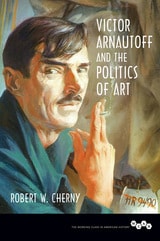
Victor Arnautoff and the Politics of Art
Robert W. Cherny
University of Illinois Press, 2017
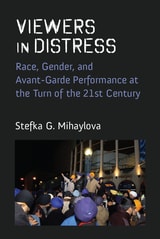
Viewers in Distress
Race, Gender, Religion, and Avant-Garde Performance at the Turn of the Twenty-First CenturyStefka G. Mihaylova
University of Michigan Press, 2023
Honorable Mention: American Society for Theatre Research Barnard Hewitt Award | November 8, 2024
Conventional notions of avant-garde art suggest innovative artists rebelling against artistic convention and social propriety, shocking unwilling audiences into new ways of seeing and living. Viewers in Distress tells a different story. Beginning in the tumultuous 1990s, after the fall of the Berlin Wall and in the wake of the Los Angeles riots, rebellious spectators in American and British theaters broke with theater decorum and voiced their radical interpretations of shows that were not meant to be radical. In doing so, audiences tried to understand the complex racial, gender, and religious politics of their times, while insisting that liberal societies fulfill their promise of dignity for all. Stefka Mihaylova argues that such non-conforming viewing amounts to an avant-garde of its own: a bold reimagining of how we live together and tell stories of our lives together, aimed to achieve liberalism’s promise. In telling this story, she analyzes the production and reception politics of works by Susan-Lori Parks, Sarah Kane, Forced Entertainment, Gurpreet Kaur Bhatti, and Young Jean Lee, as well as non-theatrical controversies such as the conflict over Halloween costumes at Yale in 2015. At the core of spectators’ discontent, this book suggests, is an effort to figure out how to get along with people different from ourselves in the diverse U.S. and British societies in which we live.

Village of the Dammed
The Fight for Open Space and the Flooding of a Connecticut TownJames Lomuscio
Brandeis University Press, 2025
In the early 1940s, the Bridgeport Hydraulic Company flooded Connecticut’s Saugatuck River Valley to create a reservoir that would meet the region’s growing population. Under twelve billion gallons of water lay Valley Forge, once a thriving iron and steel manufacturing town, which was seized by eminent domain to create the reservoir and dam. In Village of the Dammed, journalist James Lomuscio tells the story of the rise and fall of Valley Forge, drawing on Civil War-era photographs of the town and other sources to show what the town was like, document the futile battle to save it, and reveal the flooding’s life-altering repercussions. He also recounts a grassroots movement to prevent the development of nearby Trout Brook Valley in the 1990s, a heated fight with a different outcome. As the population of the American northeast continues to swell and spread, placing new demands on existing resources, communities are frequently confronted with forces and choices not unlike those faced by Valley Forge and Trout Brook Valley. Village of the Dammed reminds us to be ever vigilant in the protection of our irreplaceable environmental heritage.
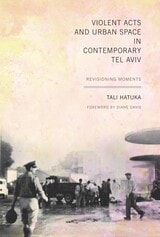
Violent Acts and Urban Space in Contemporary Tel Aviv
Revisioning MomentsBy Tali Hatuka
University of Texas Press, 2010
Violent acts over the past fifteen years have profoundly altered civil rituals, cultural identity, and the meaning of place in Tel Aviv. Three events in particular have shed light on the global rule of urban space in the struggle for territory, resources, and power: the assassination of Prime Minister Rabin in 1995 in the city council square; the suicidal bombing at the Dolphinarium Discothèque along the shoreline in 2001; and bombings in the Neve Shaanan neighborhood in 2003.
Tali Hatuka uses an interdisciplinary framework of urban theory and sociopolitical theory to shed light on the discourse regarding violent events to include an analysis of the physical space where these events take place. She exposes the complex relationships among local groups, the state, and the city, challenging the national discourse by offering a fresh interpretation of contesting forces and their effect on the urban environment.
Perhaps the most valuable contribution of this book is its critical assessment of the current Israeli reality, which is affected by violent events that continually alter the everyday life of its citizens. Although these events have been widely publicized by the media, there is scant literature focusing on their impact on the urban spaces where people live and meet. In addition, Hatuka shows how sociopolitical events become crucial defining moments in contemporary lived experience, allowing us to examine universal questions about the way democracy, ideology, and memory are manifested in the city.
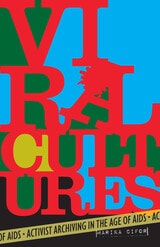
Viral Cultures
Activist Archiving in the Age of AIDSMarika Cifor
University of Minnesota Press, 2022
Delves deep into the archives that keep the history and work of AIDS activism alive
Serving as a vital supplement to the existing scholarship on AIDS activism of the 1980s and 1990s, ViralCultures is the first book to critically examine the archives that have helped preserve and create the legacy of those radical activities. Marika Cifor charts the efforts activists, archivists, and curators have made to document the work of AIDS activism in the United States and the infrastructure developed to maintain it, safeguarding the material for future generations to remember these social movements and to revitalize the epidemic’s past in order to remake the present and future of AIDS.
Drawing on large institutional archives such as the New York Public Library, as well as those developed by small, community-based organizations, this work of archival ethnography details how contemporary activists, artists, and curators use these records to build on the cultural legacy of AIDS activism to challenge the conditions of injustice that continue to undergird current AIDS crises. Cifor analyzes the various power structures through which these archives are mediated, demonstrating how ideology shapes the nature of archival material and how it is accessed and used. Positioning vital nostalgia as both a critical faculty and a generative practice, this book explores the act of saving this activist past and reanimating it in the digital age.
While many books, popular films, and major exhibitions have contributed to a necessary awareness of HIV and AIDS activism, Viral Cultures provides a crucial missing link by highlighting the powerful role of archives in making those cultural moments possible.

Virgin Crossing Borders
Feminist Resistance and Solidarity in TranslationEmek Ergun
University of Illinois Press, 2023
Ergun’s comparative framework reveals translation’s potential to facilitate cross-border flows of feminist theories, empower feminist interventions, connect feminist activists across differences and divides, and forge transnational feminist solidarities. As she considers hopeful and woeful pictures of border crossings, Ergun invites readers to revise their views of translation’s role in transnational feminism and examine their own potential as ethically and politically responsible agents willing to search for new meanings.
Sophisticated and compelling, Virgin Crossing Borders reveals translation’s vital role in exchanges of feminist theories, stories, and knowledge.
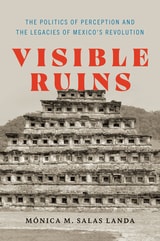
Visible Ruins
The Politics of Perception and the Legacies of Mexico's RevolutionMónica M. Salas Landa
University of Texas Press, 2024
2026 Honorable Mention, Mejor Libro, Historia Reciente y Memoria Section of the Latin American Studies Association
An examination of the failures of the Mexican Revolution through the visual and material records.
The Mexican Revolution (1910–1920) introduced a series of state-led initiatives promising modernity, progress, national grandeur, and stability; state surveyors assessed land for agrarian reform, engineers used nationalized oil for industrialization, archaeologists reconstructed pre-Hispanic monuments for tourism, and anthropologists studied and photographed Indigenous populations to achieve their acculturation. Far from accomplishing their stated goals, however, these initiatives concealed violence, and permitted land invasions, forced displacement, environmental damage, loss of democratic freedom, and mass killings. Mónica M. Salas Landa uses the history of northern Veracruz to demonstrate how these state-led efforts reshaped the region's social and material landscapes, affecting what was and is visible. Relying on archival sources and ethnography, she uncovers a visual order of ongoing significance that was established through postrevolutionary projects and that perpetuates inequality based on imperceptibility.
Visionary Pragmatism
Radical and Ecological Democracy in Neoliberal TimesRomand Coles
Duke University Press, 2016
Visions of Beirut
The Urban Life of Media InfrastructureHatim El-Hibri
Duke University Press, 2021
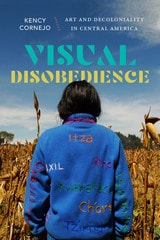
Visual Disobedience
Art and Decoloniality in Central AmericaKency Cornejo
Duke University Press, 2024
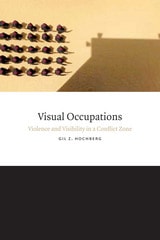
Visual Occupations
Violence and Visibility in a Conflict ZoneGil Z. Hochberg
Duke University Press, 2015
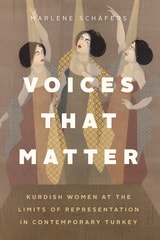
Voices That Matter
Kurdish Women at the Limits of Representation in Contemporary TurkeyMarlene Schäfers
University of Chicago Press, 2023
A fine-grained ethnography exploring the sociopolitical power of Kurdish women’s voices in contemporary Turkey.
“Raise your voice!” and “Speak up!” are familiar refrains that assume, all too easily, that gaining voice will lead to empowerment, healing, and inclusion for marginalized subjects. Marlene Schäfers’s Voices That Matter reveals where such assumptions fall short, demonstrating that “raising one’s voice” is no straightforward path to emancipation but fraught with anxieties, dilemmas, and contradictions. In its attention to the voice as form, this book examines not only what voices say but also how they do so, focusing on Kurdish contexts where oral genres have a long, rich legacy. Examining the social labor that voices carry out as they sound, speak, and resonate, Schäfers shows that where new vocal practices arise, they produce new selves and practices of social relations. In Turkey, recent decades have seen Kurdish voices gain increasing moral and political value as metaphors of representation and resistance. Women’s voices, in particular, are understood as potent means to withstand patriarchal restrictions and political oppression. By ethnographically tracing the transformations in how Kurdish women relate to and employ their voices as a result of these shifts, Schäfers illustrates how contemporary politics foster not only new hopes and desires but also create novel vulnerabilities as they valorize, elicit, and discipline voice in the name of empowerment and liberation.
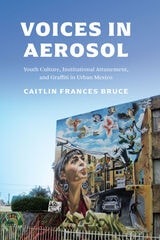
Voices in Aerosol
Youth Culture, Institutional Attunement, and Graffiti in Urban MexicoCaitlin Frances Bruce
University of Texas Press, 2024
2024 Visual Communication Division Award, National Communication Association
2025 Philosophy of Communication, Theory, and Critique Division Distinguished Book Award, National Communication Association
2025 Winans-Wichelns Memorial Award for Distinguished Scholarship in Rhetoric and Public Address, National Communication Association
How a city government in central Mexico evolved from waging war on graffiti in the early 2000s to sanctioning its creation a decade later, and how youth navigated these changing conditions for producing art.
The local government, residents, and media outlets in León, Mexico, treated graffiti as a disease until the state began sponsoring artistic graffiti through a program of its own. In Voices in Aerosol, the first book-length study of state-sponsored graffiti, Caitlin Frances Bruce considers the changing perceptions and recognition of graffiti artists, their right to the city, and the use of public space over the span of eighteen years (2000–2018). Focusing on the midsized city of León, Bruce offers readers a look at the way negotiations with the neoliberal state unfolded at different levels and across decades.
Issues brought to light in this case study, such as graffiti as a threat and graffiti as a sign of gentrification, resonate powerfully with those germane to other urban landscapes throughout the Western Hemisphere and beyond. Combining archival work, interviews, considerations of urban planning, local politics in Mexico, and insights gained by observing graffiti events and other informal artistic encounters, Bruce offers a new lens through which to understand the interplay between sanctioned and unsanctioned forms of cultural expression. Ultimately, Voices in Aerosol builds a strong case for graffiti as a contested tool for "voicing" public demands.

Voices in the Wilderness
Public Discourse and the Paradox of Puritan RhetoricPatricia Roberts-Miller
University of Alabama Press, 1999
Both Jürgen Habermas and Wayne Booth—two of the most influential theorists in the domain of public discourse and good citizenry—argue for an inclusive public deliberation that involves people who are willing to listen to one another, to identify points of agreement and disagreement, and to make good faith attempts to validate any disputed claims. The Puritan voice crying in the wilderness, Roberts-Miller shows, does none of these things. To this individual of conscience engaged in a ceaseless battle of right and wrong against greedy philistines, all inclusion, mediation, and reciprocity are seen as evil, corrupting, and unnecessary. Hence, the voice in the wilderness does not in any real sense participate in public deliberation, only in public pronouncement.
Arguing that our culture’s continuing affection for the ethos of the voice crying in the wilderness is one of our more troubling inheritances from the early American ambivalence to public discourse—including the Puritan denigration of rhetoric—Roberts-Miller contends that the monologic discourse of the Puritans in fact contains within it arguments for dialogism. Thus, the history of rhetoric can provide much richer fields for reimagining discourse than heretofore credited. Roberts-Miller concludes by extending her findings into their practical applications for argumentation in the public sphere and in the composition classroom.

Voices of Drought
The Politics of Music and Environment in Northeastern BrazilMichael B. Silvers
University of Illinois Press, 2018
Silvers offers case studies focused on the sertão that range from the Brazilian wax harvested in Ceará for use in early wax cylinder sound recordings to the drought- and austerity-related cancellation of Carnival celebrations in 2014-16. Unearthing links between music and the environmental and social costs of drought, his daring synthesis explores ecological exile, poverty, and unequal access to water resources alongside issues like corruption, prejudice, unbridled capitalism, and expanding neoliberalism.
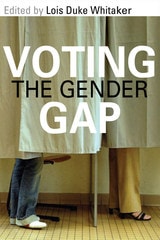
Voting the Gender Gap
Edited by Lois Duke Whitaker
University of Illinois Press, 2007
This book concentrates on the gender gap in voting--the difference in the proportion of women and men voting for the same candidate. Evident in every presidential election since 1980, this polling phenomenon reached a high of 11 percentage points in the 1996 election. The contributors discuss the history, complexity, and ways of analyzing the gender gap; the gender gap in relation to partisanship; motherhood, ethnicity, and the impact of parental status on the gender gap; and the gender gap in races involving female candidates. Voting the Gender Gap analyzes trends in voting while probing how women's political empowerment and gender affect American politics and the electoral process.
Contributors are Susan J. Carroll, Erin Cassese, Cal Clark, Janet M. Clark, M. Margaret Conway, Kathleen A. Dolan, Laurel Elder, Kathleen A. Frankovic, Steven Greene, Leonie Huddy, Mary-Kate Lizotte, Barbara Norrander, Margie Omero, and Lois Duke Whitaker.
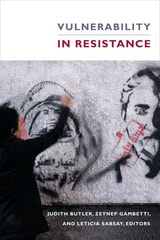
Vulnerability in Resistance
Judith Butler, Zeynep Gambetti, and Leticia Sabsay, editors
Duke University Press, 2016