1325 books match the query 'Psychology' and 14 start with v
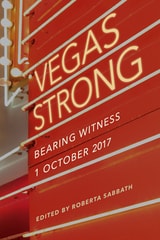
cover of Vegas Strong: Bearing Witness 1 October 2017

Vegas Strong

Bearing Witness 1 October 2017

Roberta Sterman Sabbath

University of Nevada Press, 2023

Mass shootings have been on the rise in the United States since the early 2000s, but until the heartbreak of the 1 October 2017 Route 91 Harvest Music Festival, the citizens of Las Vegas had never experienced the violence and tragedy of this now all-too-frequent occurrence. That day, fifty-eight people were shot to death on site, while another two victims later died of their injuries. The 1 October incident physically wounded nearly 900 concert-goers, but psychologically impacted countless untold victims.

As individual and institutional response to urgent requests for help came in both during and after the 1 October catastrophe, those who call Las Vegas home struggled to cope with pain and grief. Now, editor Roberta Sabbath draws together a collection of personal essays, oral histories, interviews, scholarly writings, and commentaries to remember those whose lives were lost, and to honor survivors and their loved ones. Written five years after the tragedy, each contribution offers a unique story of healing, demonstrating the wide-ranging experiences and repercussions of the event. The essays in this collection represent a broad diversity of voices from political leaders, health professionals, first responders, community members, and incident survivors. This work is dedicated to those who lost their lives on 1 October 2017, to survivors and their loved ones, and to the caregivers—both individual and institutional—all of whom continue to keep Vegas Strong.
[more]
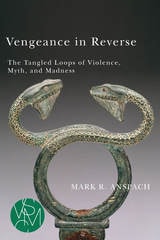
cover of Vengeance in Reverse: The Tangled Loops of Violence, Myth, and Madness

Vengeance in Reverse

The Tangled Loops of Violence, Myth, and Madness

Mark R. Anspach

Michigan State University Press, 2017
How do humans stop fighting? Where do the gods of myth come from? What does it mean to go mad? Mark R. Anspach tackles these and other conundrums as he draws on ethnography, literature, psychotherapy, and the theory of René Girard to explore some of the fundamental mechanisms of human interaction. Likening gift exchange to vengeance in reverse, the first part of the book outlines a fresh approach to reciprocity, while the second part traces the emergence of transcendence in collective myths and individual delusions. From the peacemaking rituals of prestate societies to the paradoxical structure of consciousness, Anspach takes the reader on an intellectual journey that begins with the problem of how to deceive violence and ends with the riddle of how one can deceive oneself.
 
 
[more]
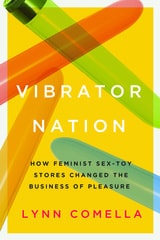
cover of Vibrator Nation: How Feminist Sex-Toy Stores Changed the Business of Pleasure

Vibrator Nation

How Feminist Sex-Toy Stores Changed the Business of Pleasure

Lynn Comella

Duke University Press, 2017

In the 1970s a group of pioneering feminist entrepreneurs launched a movement that ultimately changed the way sex was talked about, had, and enjoyed. Boldly reimagining who sex shops were for and the kinds of spaces they could be, these entrepreneurs opened sex-toy stores like Eve’s Garden, Good Vibrations, and Babeland not just as commercial enterprises, but to provide educational and community resources as well. In Vibrator Nation Lynn Comella tells the fascinating history of how these stores raised sexual consciousness, redefined the adult industry, and changed women's lives. Comella describes a world where sex-positive retailers double as social activists, where products are framed as tools of liberation, and where consumers are willing to pay for the promise of better living—one conversation, vibrator, and orgasm at a time.
[more]
cover of Vicissitudes: Histories and Destinies of Psychoanalysis

Vicissitudes

Histories and Destinies of Psychoanalysis

Edited by Naomi Segal and Sharon Kivland

University of London Press, 2012
The legacy of Italy's experience of political violence and terrorism in the anni di piombo ('years of lead', c. 1969-83) continues to exercise the Italian imagination to an extraordinary degree. Cinema has played a particularly prominent role in articulating the ongoing impact of the anni di piombo and in defining the ways in which Italians remember and work through the atrocities and traumas of those years. Terrorism, Italian Style brings together some of the most important scholars contributing to the study of cinematic representations of the anni di piombo. Drawing on a comparative approach and a broad range of critical perspectives (including genre theory, family and gender issues, trauma theory and ethics), the book addresses an extensive range of films produced between the 1970s and the present and articulates their significance and relevance to contemporary Italian society and culture. Ruth Glynn is Senior Lecturer in Italian at the University of Bristol.Giancarlo Lombardi is Professor of Italian Literature at the City University of New York. Alan O'Leary is Senior Lecturer in Italian at the University of Leeds.
[more]
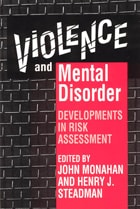
cover of Violence and Mental Disorder: Developments in Risk Assessment

Violence and Mental Disorder

Developments in Risk Assessment

Edited by John Monahan and Henry J. Steadman

University of Chicago Press, 1994

In courts across the country, judges depend on mental health experts to determine whether mentally disordered people are dangerous. But experts' ability to predict violence is severely limited, and they are wrong as often as they are right. This study reviews two decades of research on mental disorder and offers new empirical and theoretical work that will pave the way for more accurate predictions of violent behavior.

"Essential for all those who are interested in the study of risk assessment of violence. It is particularly important for the researcher in this area. . . . For the clinician who must make violence assessments it is important reading as well."—Stewart Levine, Bulletin of the American Academy of Psychiatry and the Law

[more]
cover of Violence in the Films of Alfred Hitchcock: A Study in Mimesis

Violence in the Films of Alfred Hitchcock

A Study in Mimesis

David Humbert

Michigan State University Press, 2017

Parting ways with the Freudian and Lacanian readings that have dominated recent scholarly understanding of Hitchcock, David Humbert examines the roots of violence in the director’s narratives and finds them not in human sexuality but in mimesis. Through an analysis of seven key films, he argues that Girard’s model of mimetic desire—desire oriented by imitation of and competition with others—best explains a variety of well-recognized themes, including the MacGuffin, the double, the innocent victim, the wrong man, the transfer of guilt, and the scapegoat. This study will appeal not only to Hitchcock fans and film scholars but also to those interested in Freud and Girard and their competing theories of desire.
 
[more]
cover of Virginia Woolf and the Fictions of Psychoanalysis

Virginia Woolf and the Fictions of Psychoanalysis

Elizabeth Abel

University of Chicago Press, 1989

"A stunning, brilliant, absolutely compelling reading of Woolf through the lens of Kleinian and Freudian psychoanalytic debates about the primacy of maternality and paternality in the construction of consciousness, gender, politics, and the past, and of psychoanalysis through the lens of Woolf's novels and essays. In addition to transforming our understanding of Woolf, this book radically expands our understanding of the historicity and contingent construction of psychoanalytic theory and our vision of the potential of psychoanalytic feminism."—Nancy J. Chodorow, University of California at Berkeley

"Virginia Woolf and the Fictions of Psychoanalysis brings Woolf's extraordinary craftsmanship back into view; the book combines powerful claims about sexual politics and intellectual history with the sort of meticulous, imaginative close reading that leaves us, simply, seeing much more in Woolf's words than we did before. It is the most exciting book on Woolf to come along in some time."—Lisa Ruddick, Modern Philology
[more]
cover of Visual Alterity: Seeing Difference in Cinema

Visual Alterity

Seeing Difference in Cinema

Randall Halle

University of Illinois Press, 2021

Reconsidering the dynamics of perception

Using cinema to explore the visual aspects of alterity, Randall Halle analyzes how we become cognizant of each other and how we perceive and judge another person in a visual field. Halle draws on insights from philosophy and recent developments in cognitive and neuroscience to argue that there is no pure "natural" sight. We always see in a particular way, from a particular vantage point, and through a specific apparatus, and Halle shows how human beings have used cinema to experiment with the apparatus of seeing for over a century. Visual alterity goes beyond seeing difference to being conscious of how one sees difference. Investigating the process allows us to move from mere perception to apperception, or conscious perception.

Innovative and insightful, Visual Alterity merges film theory with philosophy and cutting-edge science to propose new ways of perceiving and knowing.
[more]
cover of Vita Sexualis: Karl Ulrichs and the Origins of Sexual Science

Vita Sexualis

Karl Ulrichs and the Origins of Sexual Science

Ralph M. Leck

University of Illinois Press, 2020

Karl Ulrichs's studies of sexual diversity galvanized the burgeoning field of sexual science in the nineteenth century. But in the years since, his groundbreaking activism has overshadowed his scholarly achievements. Ulrichs publicly defied Prussian law to agitate for gay equality and marriage, and founded the world's first organization dedicated to the legal and social emancipation of homosexuals. Ralph M. Leck returns Ulrichs to his place as the inventor of the science of sexual heterogeneity. Leck's analysis situates sexual science in a context that includes politics, aesthetics, the languages of science, and the ethics of gender. Although he was the greatest nineteenth-century scholar of sexual heterogeneity, Ulrichs retained certain traditional conjectures about gender. Leck recognizes these subtleties and employs the analytical concepts of modernist vita sexualis and traditional psychopathia sexualis to articulate philosophical and cultural differences among sexologists. Original and audacious, Vita Sexualis uses a bedrock figure's scientific and political innovations to open new insights into the history of sexual science, legal systems, and Western amatory codes.
[more]
cover of Vocational Interest Measurement: Theory and Practice

Vocational Interest Measurement

Theory and Practice

John G. Darley and Theda Hagenah

University of Minnesota Press, 1955

Vocational Interest Measurement was first published in 1955. Minnesota Archive Editions uses digital technology to make long-unavailable books once again accessible, and are published unaltered from the original University of Minnesota Press editions.

Many years of clinical experience at the University of Minnesota, using the Strong Vocational Interest Bank in counseling services, form the basis for this book. The work will help other counselors to understand the meaning of the interest scores which they obtain with this test. In successive chapters, the authors discuss the meaning of work and jobs in our society, deal with the anatomy of interests, analyze interest patterns and outline a normative framework for their system of analysis, discuss personality factors as related to interests, review theories of origin and development of interests, and illustrate the use of interest measurement in counseling through a series of case studies. A volume in the Minnesota Library on Student Personnel Work.

[more]
cover of Vocational Interests 18 Years After College

Vocational Interests 18 Years After College

Edward K. Strong Jr.

University of Minnesota Press, 1955

Vocational Interests 18 Years After College was first published in 1955. Minnesota Archive Editions uses digital technology to make long-unavailable books once again accessible, and are published unaltered from the original University of Minnesota Press editions.

A pioneer in scientific vocational counseling, Edward K. Strong, Jr., devised the Strong Vocational Interest Blank some years ago as a tool to help the counselor find out what kind of work a young person is best suited for. In this volume Mr. Strong reports on a study which he undertook to determine the validity of the interest blank in predicting the future vocations of individuals.

For this study, the interest scores of several hundred former college students were compared with the occupations in which these men were engaged 18 years later. The results provide answers to basic questions regarding the use of interest scores in vocational counseling. The findings also serve to confirm or modify the conclusions published earlier by Mr. Strong in his book Vocational Interests in Men and Women (a volume for which he was awarded the Butler Silver Medal by Columbia University).

The original group whim the present study is based consisted of 884 Stanford University graduates whose interests had been revealed by the use of the Vocational Interest Blank while they were in college. Follow-up data on their actual careers are presented and analyzed for approximately three fourths of this number, the remainder being eliminated because they were engaged in occupations for which no specific scales were available.

In addition to revising and amplifying Mr. Strong's earlier work on the subject, this volume outlines a number of developments which provoke new problems and point the way for future research.
[more]
cover of Vocational Interests of NonProfessional Men

Vocational Interests of NonProfessional Men

Kenneth Clark

University of Minnesota Press, 1961
Vocational Interests of Non-Professional Men was first published in 1961.In contrast to most psychological research about occupational interests and related achievement, which has centered on professional and managerial occupations, the study reported here deals with the vocational interests of skilled trades workers. The study is important because, among young people not planning to go to college, many each year select occupations when they have only fragmentary information about the occupation and its requirements and about their own characteristics and needs; the findings of this study will contribute to better counseling of such young people in the future.Dr. Clark’s investigation is based on the responses of approximately 25,000 persons to the Minnesota Vocational Interest Inventory. About 6,000 of the subjects were civilians and the rest were enlisted personnel in the U.S. Navy. He describes the development of the Minnesota Vocational Interest Inventory and of scoring keys for use with it, examines the characteristics of these keys, and summarizes various studies of the psychometric characteristics of keys developed by different methods. He discusses use of keys in classifying individuals into occupational groups, then turns to the use of interest measures in predicting achievement and choice of specialty. In conclusion he suggests ways in which improved interest measures may be developed to the end that there may be not only better counseling of individuals but also greater understanding of the processes by which occupational choices occur.Vocational counselors, industrial psychologists, personnel managers, and psychometrists will find the book especially useful.
[more]
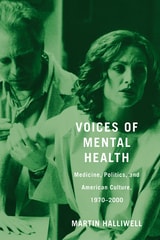
cover of Voices of Mental Health: Medicine, Politics, and American Culture, 1970-2000

Voices of Mental Health

Medicine, Politics, and American Culture, 1970-2000

Halliwell, Martin

Rutgers University Press, 2017

This dynamic and richly layered account of mental health in the late twentieth century interweaves three important stories: the rising political prominence of mental health in the United States since 1970; the shifting medical diagnostics of mental health at a time when health activists, advocacy groups, and public figures were all speaking out about the needs and rights of patients; and the concept of voice in literature, film, memoir, journalism, and medical case study that connects the health experiences of individuals to shared stories.

Together, these three dimensions bring into conversation a diverse cast of late-century writers, filmmakers, actors, physicians, politicians, policy-makers, and social critics. In doing so, Martin Halliwell’s Voices of Mental Health breaks new ground in deepening our understanding of the place, politics, and trajectory of mental health from the moon landing to the millennium. 
 
[more]
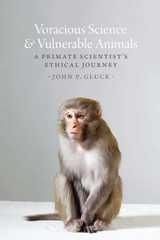
cover of Voracious Science and Vulnerable Animals: A Primate Scientist's Ethical Journey

Voracious Science and Vulnerable Animals

A Primate Scientist's Ethical Journey

John P. Gluck

University of Chicago Press, 2016

The National Institute of Health recently announced its plan to retire the fifty remaining chimpanzees held in national research facilities and place them in sanctuaries. This significant decision comes after a lengthy process of examination and debate about the ethics of animal research. For decades, proponents of such research have argued that the discoveries and benefits for humans far outweigh the costs of the traumatic effects on the animals; but today, even the researchers themselves have come to question the practice. John P. Gluck has been one of the scientists at the forefront of the movement to end research on primates, and in Voracious Science and Vulnerable Animals he tells a vivid, heart-rending, personal story of how he became a vocal activist for animal protection.

Gluck begins by taking us inside the laboratory of Harry F. Harlow at the University of Wisconsin, where Gluck worked as a graduate student in the 1960s. Harlow’s primate lab became famous for his behavioral experiments in maternal deprivation and social isolation of rhesus macaques. Though trained as a behavioral scientist, Gluck finds himself unable to overlook the intense psychological and physical damage these experiments wrought on the macaques. Gluck’s sobering and moving account reveals how in this and other labs, including his own, he came to grapple with the uncomfortable justifications that many researchers were offering for their work. As his sense of conflict grows, we’re right alongside him, developing a deep empathy for the often smart and always vulnerable animals used for these experiments.

At a time of unprecedented recognition of the intellectual cognition and emotional intelligence of animals, Voracious Science and Vulnerable Animals is a powerful appeal for our respect and compassion for those creatures who have unwillingly dedicated their lives to science. Through the words of someone who has inflicted pain in the name of science and come to abhor it, it’s important to know what has led this far to progress and where further inroads in animal research ethics are needed.
 
[more]