Results by title
1095 books match the query 'Rhetoric' and 13 start with v

Vaccine Rhetorics
Heidi Yoston Lawrence
The Ohio State University Press, 2020
Honorable Mention, Conference on College Composition and Communication Best Book in Technical or Scientific Communication
Debates over vaccination run rampant in the US—from the pages of medical journals, to news coverage about the latest outbreak, to vehement messages passed back and forth online. From the professional level to the personal one, almost everyone has an opinion on vaccinations—and often conversations around this issue pit supporters of vaccinations against “anti-vaxxers.” In Vaccine Rhetorics, Heidi Yoston Lawrence turns a critical eye toward such conversations—proposing a new approach that moves us beyond divisive rhetoric and seeks to better understand the material conditions underlying the debate.
Starting with a key question—If vaccines work, why are they controversial?—and using an approach she calls “material exigence,” Lawrence seeks to understand the material conditions of disease and injury associated with vaccination. Examining four primary motivations—the exigency of disease at the heart of physician views, the desire for eradication from policymakers, concern over injury expressed by parents and patients in online confessionals, and questions about the unknown surrounding potential recipients of the flu vaccine, Lawrence demonstrates the complexity of vaccination skepticism and the need for more nuanced public discourse. In bringing together the voices of those who oppose, question, and support vaccines, Vaccine Rhetorics unearths the material circumstances that lead to differing viewpoints and brings important attention not just to what is said but how and why it is said—providing a useful framework for studying other controversial issues.
Very Like a Whale
The Assessment of Writing ProgramsEdward M. White
Utah State University Press, 2015
Winner of the 2015 CPTSC Award for Excellence in Program Assessment
Written for those who design, redesign, and assess writing programs, Very Like a Whale is an intensive discussion of writing program assessment issues. Taking its title from Hamlet, the book explores the multifaceted forces that shape writing programs and the central role these programs can and should play in defining college education.
Given the new era of assessment in higher education, writing programs must provide valid evidence that they are serving students, instructors, administrators, alumni, accreditors, and policymakers. This book introduces new conceptualizations associated with assessment, making them clear and available to those in the profession of rhetoric and composition/writing studies. It also offers strategies that aid in gathering information about the relative success of a writing program in achieving its identified goals.
Philosophically and historically aligned with quantitative approaches, White, Elliot, and Peckham use case study and best-practice scholarship to demonstrate the applicability of their innovative approach, termed Design for Assessment (DFA). Well grounded in assessment theory, Very Like a Whale will be of practical use to new and seasoned writing program administrators alike, as well as to any educator involved with the accreditation process.
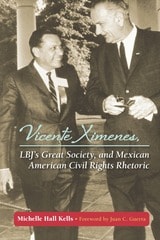
Vicente Ximenes, LBJ's Great Society, and Mexican American Civil Rights Rhetoric
Michelle Hall Kells, with a foreword by Juan C. Guerra
Southern Illinois University Press, 2018
Kells draws on Ximenes’s extensive archive of speeches, reports, articles, and oral interviews to present the activist’s rhetorical history. After a discussion of Ximenes’s early life, the author focuses on his career as an activist, examining Ximenes’s leadership in several key civil rights events, including the historic 1967 White House Cabinet Committee Hearings on Mexican American Affairs. Also highlighted is his role in advancing Mexican Americans and Latinos from social marginalization to greater representation in national politics.
This book shows us a remarkable man who dedicated the majority of his life to public service, using rhetoric to mobilize activists for change to secure civil rights advances for his fellow Mexican Americans.
Violence in the Work of Composition
Recognizing, Intervening, Amelioratingedited by Scott Gage and Kristie S. Fleckenstein
Utah State University Press, 2022
This book provides a focused, nuanced, and systematic discussion of violence and its presence and influence across pedagogical and administrative sites. Violence in the Work of Composition offers a close look at the nature of violence as it emerges in the work of composition; provides strategies for identifying violence, especially covert violence, addressing its impact and preventing its eruption across many sites; and invites readers to reflect on both the presence of violence and the hope for its cessation. Contributors consider, first, how compositionists can recognize the ways their work inadvertently enacts and/or perpetuates violence and, second, how they can intervene and mitigate that violence.
Rich with the voices of myriad stakeholders, Violence in the Work of Composition initiates an essential conversation about violence and literacy education at a time when violence in its many forms continues to shape our culture, communities, and educational systems.
Contributors: Kerry Banazek, Katherine Bridgman, Eric Camarillo, Elizabeth Chilbert Powers, Joshua Daniel, Lisa Dooley, Allison Hargreaves, Jamila Kareem, Lynn C. Lewis, Trevor Meyer, Cathryn Molloy, Kellie Sharp-Hoskins, Ellen Skirvin, Krista Speicher Sarraf, Thomas Sura, James Zimmerman
Violent Exceptions
Children's Human Rights and Humanitarian RhetoricsWendy S. Hesford
The Ohio State University Press, 2021

Violent Exceptions
Children's Human Rights and Humanitarian RhetoricsWendy S. Hesford
The Ohio State University Press, 2021
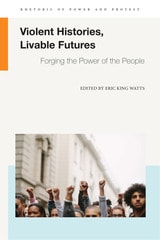
Violent Histories, Livable Futures
Forging the Power of the PeopleEric King Watts
Michigan State University Press, 2026
Our political landscape is crowded with competing voices—claims, demands, grievances, and even acts of violence—all made in the name of some idea of “the people.” This powerful concept has been wielded both to assert democratic sovereignty and to justify exclusion and control. Violent Histories, Livable Futures unpacks this complex dynamic through compelling historical case studies, spanning sub-Saharan Africa in the 1950s, post–World War II Guatemala, and the United States in the aftermath of George Floyd’s murder. By tracing how societies have contended over which people matter and which do not, this book offers a deeply relevant exploration of power, representation, and the struggle for justice, all in pursuit of a more livable future.
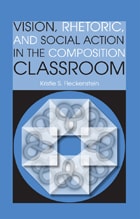
Vision, Rhetoric, and Social Action in the Composition Classroom
Kristie S. Fleckenstein
Southern Illinois University Press, 2009
In this innovative volume, Kristie S. Fleckenstein explores how the intersection of vision, rhetoric, and writing pedagogy in the classroom can help students become compassionate citizens who participate in the world as they become more critically aware of the world. Fleckenstein argues that all social action—behavior designed to increase human dignity, value, and quality of life—depends on a person’s repertoire of visual and rhetorical habits. To develop this repertoire in students, the author advocates the incorporation of visual habits—or ways of seeing—into a language-based pedagogical approach in the writing classroom. According to Fleckenstein, interweaving the visual and rhetorical in composition pedagogy enables students to more readily perceive the need for change, while arming them with the abilities and desire to enact it.
The author addresses social action from the perspective of three visual habits: spectacle, which fosters disengagement; animation, or fusing body with meaning; and antinomy, which invites the invention of new realities. Fleckenstein then examines the ways in which particular visual habits interact with rhetorical habits and with classroom methods, resulting in the emergence of various forms of social action. To enhance the understanding of the concepts she discusses, the author represents the intertwining relationships of vision, rhetoric, and writing pedagogy graphically as what she calls symbiotic knots. In tracing the modes of social action privileged by a visual habit and a teacher’s pedagogical choices, Fleckenstein attends particularly to the experiences of students who have been traditionally barred from participation in the public sphere because of gender, race, or class. The book culminates in a call for visually and rhetorically robust writing pedagogies.
In Vision, Rhetoric, and Social Action in the Composition Classroom, Fleckenstein combines classic methods of rhetorical teaching with fresh perspectives to provide a unique guide for initiating important improvements in teaching social action. The result is a remarkable volume that empowers teachers to best inspire students to take part in their world at that most crucial moment when they are discovering it.
Visions and Revisions
Continuity and Change in Rhetoric and CompositionEdited by James D. Williams
Southern Illinois University Press, 2002
A history of contemporary rhetoric, Visions and Revisions: Continuity and Change in Rhetoric and Composition examines the discipline’s emergence and development from the rise of new rhetoric in the late 1960s through the present. Editor James D. Williams has assembled nine essays from leading scholars to trace the origins of new rhetoric and examine current applications of genre studies, the rhetoric of science, the rhetoric of information, and the influence of liberal democracy on rhetoric in society.
Given the field’s diversity, a historical sketch cannot adopt a single perspective. Part one of Visions and Revisions therefore offers the detailed reminiscences of four pioneers in new rhetoric, while the essays in part two reflect on a variety of issues that have influenced (and continue to influence) current theory and practice. In light of the recent shift in focus of scholarly investigation toward theory, Williams’s collection contextualizes the underlying tension between theory and practice while stressing instruction of students as the most important dimension of rhetoric and composition today. Together, these chapters from some of the most influential scholars in the field provide a range of perspectives on the state of rhetoric and composition and illuminate the discipline’s development over the course of the last forty years.
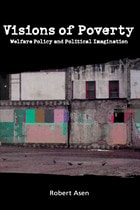
Visions of Poverty
Welfare Policy and Political ImaginationRobert Asen
Michigan State University Press, 2002
Visualizing Posthuman Conservation in the Age of the Anthropocene
Amy D. Propen
The Ohio State University Press, 2018
Through case studies in which visual technologies and science play a prominent role in arguments to protect threatened marine species—from photographs showing the impact of ocean plastics on vulnerable sea birds, to debates about seismic testing and its impact on marine species, to maps created from GPS tracking projects—Propen advances a notion of posthuman environmental conservation that decenters the human enough to consider ideas about the material world from the vantage point of the nonhuman animal. In so bringing together work in environmental humanities, animal studies, human geography, and visual-material rhetoric, Propen further shows how interdisciplinary ways of knowing can further shape and illuminate our various lived and embodied experiences.
Voices in the Wilderness
Public Discourse and the Paradox of Puritan RhetoricPatricia Roberts-Miller
University of Alabama Press, 1999
Both Jürgen Habermas and Wayne Booth—two of the most influential theorists in the domain of public discourse and good citizenry—argue for an inclusive public deliberation that involves people who are willing to listen to one another, to identify points of agreement and disagreement, and to make good faith attempts to validate any disputed claims. The Puritan voice crying in the wilderness, Roberts-Miller shows, does none of these things. To this individual of conscience engaged in a ceaseless battle of right and wrong against greedy philistines, all inclusion, mediation, and reciprocity are seen as evil, corrupting, and unnecessary. Hence, the voice in the wilderness does not in any real sense participate in public deliberation, only in public pronouncement.
Arguing that our culture’s continuing affection for the ethos of the voice crying in the wilderness is one of our more troubling inheritances from the early American ambivalence to public discourse—including the Puritan denigration of rhetoric—Roberts-Miller contends that the monologic discourse of the Puritans in fact contains within it arguments for dialogism. Thus, the history of rhetoric can provide much richer fields for reimagining discourse than heretofore credited. Roberts-Miller concludes by extending her findings into their practical applications for argumentation in the public sphere and in the composition classroom.
Vote and Voice
Women's Organizations and Political Literacy, 1915-1930Wendy B. Sharer
Southern Illinois University Press, 2007
Vote and Voice is the first book-length study to address the writing and speaking practices of members of women’s political organizations in the decade after the suffrage movement. During those years, women still did not have power within deliberative and administrative organs of politics, despite their recent enfranchisement. Because they were largely absent from diplomatic circles and political parties, post-suffrage women’s organizations developed rhetorical practices of public discourse to push for reform within traditional politics.
Vote and Voice is historically significant as well as pedagogically beneficial for instructors who connect rhetorical education with public participation by integrating writing and speaking skills into a curriculum that aims to prepare educated students and active citizens.