Results by title
39 books match the query 'Subjectivity'

#Triggered
Social Media, Subjectivity, and the Struggle for Safe SpaceSean Johnson Andrews
University of Michigan Press, 2027
In this time of social crisis and revolutionary change, words have become one of the key sites of social struggle. Using a framework informed by trans studies, critical race theory, and digital media studies, #Triggered looks at the peak period of progressive social media activism in the U.S. and argues that it is primarily a struggle over whether it is safe for each of us to be ourselves, openly, publicly, proudly, and without permission from the dominant culture.
The term “triggered” and the concept of the trigger warning are just two of many emergent sites of struggle. This book provides a contextual, theoretical history to consider them alongside movements like #BlackLivesMatter, #MeToo, and #TimesUp and concepts like cultural appropriation, “cancel culture,” and safe spaces. These on- and offline struggles have transformed the way we talk, the words we use, and the dominant cultural conversation of race, gender, sexuality, police violence, trauma, and equity. And yet the status quo is still one where marginalized individuals are made to fear for their lives if they do not exhibit the appropriate care and deference. #Triggered invites readers to consider the legitimate complaints about oppressive systems underlying this social crisis, the hierarchy of traumas and subjectivity these movements are opposing, and the opportunity to develop a more open and less repressive society and culture.
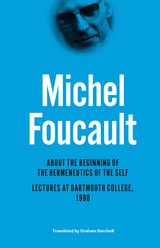
About the Beginning of the Hermeneutics of the Self
Lectures at Dartmouth College, 1980Michel Foucault
University of Chicago Press, 2015
Foucault analyzes the practices of self-examination and confession in Greco-Roman antiquity and in the first centuries of Christianity in order to highlight a radical transformation from the ancient Delphic principle of “know thyself” to the monastic precept of “confess all of your thoughts to your spiritual guide.” His aim in doing so is to retrace the genealogy of the modern subject, which is inextricably tied to the emergence of the “hermeneutics of the self”—the necessity to explore one’s own thoughts and feelings and to confess them to a spiritual director—in early Christianity. According to Foucault, since some features of this Christian hermeneutics of the subject still determine our contemporary “gnoseologic” self, then the genealogy of the modern subject is both an ethical and a political enterprise, aiming to show that the “self” is nothing but the historical correlate of a series of technologies built into our history. Thus, from Foucault’s perspective, our main problem today is not to discover what “the self” is, but to try to analyze and change these technologies in order to change its form.

Across the Art/Life Divide
Performance, Subjectivity, and Social Practice in Contemporary ArtMartin Patrick
Intellect Books, 2018

Common Law Judging
Subjectivity, Impartiality, and the Making of LawDouglas E. Edlin
University of Michigan Press, 2016
In Common Law Judging, Douglas Edlin challenges these widely held assumptions by reorienting the entire discussion. Rather than analyze judging in terms of objectivity and truth, he argues that we should instead approach the role of a judge’s individual perspective in terms of intersubjectivity and validity. Drawing upon Kantian aesthetic theory as well as case law, legal theory, and constitutional theory, Edlin develops a new conceptual framework for the respective roles of the individual judge and of the judiciary as an institution, as well as the relationship between them, as integral parts of the broader legal and political community. Specifically, Edlin situates a judge’s subjective responses within a form of legal reasoning and reflective judgment that must be communicated to different audiences.
Edlin concludes that the individual values and perspectives of judges are indispensable both to their judgments in specific cases and to the independence of the courts. According to the common law tradition, judicial subjectivity is a virtue, not a vice.

Dead Letters to Nietzsche, or the Necromantic Art of Reading Philosophy
Joanne Faulkner
Ohio University Press, 2010
Dead Letters to Nietzsche examines how writing shapes subjectivity through the example of Nietzsche’s reception by his readers, including Stanley Rosen, David Farrell Krell, Georges Bataille, Laurence Lampert, Pierre Klossowski, and Sarah Kofman. More precisely, Joanne Faulkner finds that the personal identification that these readers form with Nietzsche’s texts is an enactment of the kind of identity-formation described in Lacanian and Kleinian psychoanalysis. This investment of their subjectivity guides their understanding of Nietzsche’s project, the revaluation of values.
Not only does this work make a provocative contribution to Nietzsche scholarship, but it also opens in an original way broader philosophical questions about how readers come to be invested in a philosophical project and how such investment alters their subjectivity.
Digital Platforms and Algorithmic Subjectivities
Emiliana Armano, Marco Briziarelli and Elisabetta Risi
University of Westminster Press, 2022
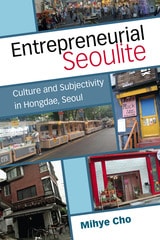
Entrepreneurial Seoulite
Culture and Subjectivity in Hongdae, SeoulMihye Cho
University of Michigan Press, 2019
Recent research on Korean culture approaches the K-wave phenomenon from the perspectives of cultural consumption, media analysis, and cultural management and policy. Meanwhile, studies on Seoul have centered on its transformation as a global, creative city. Rather than examining the K-wave or the city itself, this book explores the experience of living through the city-in-transition, focusing on the relationship between “the ideology that justified engagement in capitalism” and the “subjectification process.” The book aims to understand the project to institutionalize a cultural district in Hongdae as a demonstration of the coevolution of ideologies and citizenship in a society undergoing rapid liberalization—politically, culturally, and economically.
A cultural turn took place in Korea during the 1990s, amid the economic prosperity driven by state-led industrialization and the collapse of the military dictatorship due to democratization movements. Cultural critiques, emerging as an alternative to social movements, proliferated to assert the freedom and autonomy of individuals against regulatory systems and institutions. The nation was hit by the Asian financial crisis in 1997, and witnessed massive economic restructuring including layoffs, stakeouts, and a prevalence of contingent employment. As a result, the entire nation had to find new engines of economic growth while experiencing a creative destruction. At the center of this national transformation, Seoul has sought to recreate itself from a mega city to a global city, equipped with cutting-edge knowledge industries and infrastructures.
By juxtaposing the cultural turn and cultural/creative city-making, Entrepreneurial Seoulite interrogates the formation of new citizen subjectivity, namely the enterprising self, in post-Fordist Seoul. What kinds of logic guide individuals in the engagement of new urban realities in rapidly liberalized Seoul—culturally and economically? In order to explore this query, Mihye Cho draws on Weber’s concept of “the spirit of capitalism” on the formation of a new economic agency focusing on the re-configuration of meanings, and seeks to capture a transformative moment detailing when and how capitalism requests a different spirit and lifestyle of its participants. Likewise, this book approaches the enterprising self as the new spirit of post-Fordist Seoul and explores the ways in which people in Seoul internalize and negotiate this new enterprising self.

Epidemic Subjects - Radical Ontology
Edited by Elisabeth von Samsonow
Diaphanes, 2016
Epidemic Subjects—Radical Ontology brings together a renowned team of contributors, including Levi Bryant, Angela Melitopoulos, and Susan Stryker, who together forge a radically inclusive definition of subjectivity. Drawing on Gilles Deleuze and Félix Guattari’s concept of the “girl” as a heuristic device for examining modern society and its foundations, they tie together recent trends in philosophy and offer a concrete way forward from the conception of the “thing” or “object” privileged by new materialism, speculative realism, and other theories of subjectivity.
Foucault's Discipline
The Politics of SubjectivityJohn S. Ransom
Duke University Press, 1997
Foucault’s Discipline demonstrates how Foucault’s valorization of descriptive critique over prescriptive plans of action can be applied to the decisively altered political landscape of the end of this millennium. By reconstructing the philosopher’s arguments concerning the significance of disciplinary institutions, biopower, subjectivity, and forms of resistance in modern society, Ransom shows how Foucault has provided a different way of looking at and responding to contemporary models of government—in short, a new depiction of the political world.
Genre, Race, and the Production of Subjectivity in German Romanticism
Stephanie Galasso
Northwestern University Press, 2024
Late Enlightenment philosophers and writers like Herder, Goethe, and Schiller broke with conventions of form and genre to prioritize an idealized, and racially coded, universality. Newly translated literatures from colonial contexts served as the basis for their evaluations of how to contribute to a distinctly “German” national literary tradition, one that valorized modernity and freedom and thus fortified crucial determinants of modern concepts of whiteness. Through close readings of both canonical and less-studied Romantic texts, Stephanie Galasso examines the intimately entwined histories of racialized subjectivity and aesthetic theory and shows how literary genre is both symptomatic and generative of the cultural violence that underpinned the colonial project.
Poetic expression and its generic conventions continue to exert pressure on the framing and reception of the stories that can be told about interpersonal and structural experiences of oppression. Genre, Race, and the Production of Subjectivity in German Romanticism explores how white subjectivity is guarded by symbolic and material forms of violence.
History & Subjectivity
Roger Gottlieb
Temple University Press, 1987
Homo Aestheticus
The Invention of Taste in the Democratic AgeLuc Ferry
University of Chicago Press, 1993
Ferry's treatise begins in the mid-1600s with the simultaneous invention of the notions of taste (the essence of art as subjective pleasure) and modern democracy (the idea of the State as a consensus among individuals). He explores the differences between subjectivity and individuality by examining aesthetic theory as developed first by Kant's predecessors and then by Kant, Hegel, Nietzsche, and proponents of the avant-garde. Ferry discerns two "moments" of the avant-garde aesthetic: the hyperindividualistic iconoclasm of creating something entirely new, and the hyperrealistic striving to achieve an extraordinary truth. The tension between these two, Ferry argues, preserves an essential element of the Enlightenment concern for reconciling the subjective and the objective—a problem that is at once aesthetic, ethical, and political.
Rejecting postmodern proposals for either a radical break with or return to tradition, Ferry embraces a postmodernism that recasts Enlightenment notions of value as a new intersubjectivity. His original analysis of the growth and decline of the twentieth-century avant-garde movement sheds new light on the connections between aesthetics, ethics, and political theory.
Intimate Commerce
Exchange, Gender, and Subjectivity in Greek TragedyBy Victoria Wohl
University of Texas Press, 1997
Exchanges of women between men occur regularly in Greek tragedy—and almost always with catastrophic results. Instead of cementing bonds between men, such exchanges rend them. They allow women, who should be silent objects, to become monstrous subjects, while men often end up as lifeless corpses. But why do the tragedies always represent the transferal of women as disastrous?
Victoria Wohl offers an illuminating analysis of the exchange of women in Sophocles' Trachiniae, Aeschylus' Agamemnon, and Euripides' Alcestis. She shows how the attempts of women in these plays to become active subjects rather than passive objects of exchange inevitably fail. While these failures seem to validate male hegemony, the women's actions, however futile, blur the distinction between male subject and female object, calling into question the very nature of the tragic self. What the tragedies thus present, Wohl asserts, is not only an affirmation of Athens' reigning ideologies (including its gender hierarchy) but also the possibility of resistance to them and the imagination of alternatives.

Inwardness and Existence
Subjectivity in/and Hegel, Heidegger, Marx, and FreudWalter A. Davis
University of Wisconsin Press, 1989

Kwaito Bodies
Remastering Space and Subjectivity in Post-Apartheid South AfricaXavier Livermon
Duke University Press, 2020
Loving the World Appropriately
Persuasion and the Transformation of SubjectivityJames L. Kastely
University of Chicago Press, 2022
What is persuasion? For some, it is the ideal alternative to violence. For others, persuasion is simply a neutral instrumentality—a valued source of soft power. Both positions rest on a fundamental belief: persuasion is a power that resides in a speaker acting on an audience. Loving the World Appropriately asks a different, more fundamental, question: why does an audience need persuasion? In shifting our focus, James Kastely delivers a provocative new history of rhetoric and philosophy, one that describes rhetoric as more than a matter of effective communication and recasts persuasion as a philosophical concern central to notions of human subjectivity. Ultimately, Kastely insists, persuasion enables us to love the world appropriately.

Monumental Matters
The Power, Subjectivity, and Space of India's Mughal ArchitectureSanthi Kavuri-Bauer
Duke University Press, 2011
She examines the representation and eventual preservation of the monuments, from their disrepair in the colonial past to their present status as protected heritage sites. Drawing on theories of power, subjectivity, and space, Kavuri-Bauer’s interdisciplinary analysis encompasses Urdu poetry, British landscape painting, imperial archaeological surveys, Indian Muslim identity, and British tourism, as well as postcolonial nation building, World Heritage designations, and conservation mandates. Since Independence, the state has attempted to construct a narrative of Mughal monuments as symbols of a unified, secular nation. Yet modern-day sectarian violence at these sites continues to suggest that India’s Mughal monuments remain the transformative spaces—of social ordering, identity formation, and national reinvention—that they have been for centuries.
Negotiated Moments
Improvisation, Sound, and SubjectivityGillian Siddall and Ellen Waterman, editors
Duke University Press, 2016
Contributors. George Blake, David Borgo, Judith Butler, Rebecca Caines, Louise Campbell, Illa Carrillo Rodríguez, Berenice Corti, Andrew Raffo Dewar, Nina Eidsheim, Tomie Hahn, Jaclyn Heyen, Christine Sun Kim, Catherine Lee, Andra McCartney, Tracy McMullen, Kevin McNeilly, Leaf Miller, Jovana Milovic, François Mouillot, Pauline Oliveros, Jason Robinson, Neil Rolnick, Simon Rose, Gillian Siddall, Julie Dawn Smith, Jesse Stewart, Clara Tomaz, Sherrie Tucker, Lindsay Vogt, Zachary Wallmark, Ellen Waterman, David Whalen, Pete Williams, Deborah Wong, Mandy-Suzanne Wong
Phenomenology and Embodiment
Husserl and the Constitution of SubjectivityJoona Taipale
Northwestern University Press, 2014

Queer and Trans Aesthetics
Lloyd Whitesell
University of Michigan Press, 2026
If a creative individual identifies as queer or trans, does that fact belong solely to the realm of biography, or does it pertain to their artistic achievement? In Queer and Trans Aesthetics, Lloyd Whitesell discusses literature, visual culture, audio-visual media, music, and performance from the 19th to the 21st century. Through this analysis, Whitesell develops a systematic framework to enrich our understanding of LGBTQ aesthetics and cultural production. He traces the history of queer aesthetic inquiry, develops a justification for a synthetic approach, identifies a fund of expressive strategies motivated by queer subjectivity, and highlights how such strategies create affinity across differences of gender, race, local context, and artistic media.
Rooted in a gender-inclusive theory of queer/trans subjectivity, the book draws on testimony from people of diverse backgrounds, genders, and races. Whitesell engages with debates in the existing scholarly literature while making connections between a wide range of artists: some from mainstream canons, some established subcultural figures, and others only now emerging as notable contributors to queer culture. The book explores five expressive archetypes or poses which have had profound significance in queer art traditions: the Monster, the Victim, the Trickster, the Dandy, and the Dreamer. Each offers a repertoire of creative responses to social oppression and configures queer subjective experience in a unique way. With its unique systematic approach, Queer and Trans Aesthetics enhances our knowledge of queer aesthetic traditions across genres and time.
Revolution and Subjectivity in Postwar Japan
J. Victor Koschmann
University of Chicago Press, 1996
In a major contribution to modern Japanese intellectual history, J. Victor Koschmann analyzes the debate over subjectivity. He traces the arguments of intellectuals from various disciplines and political viewpoints, and finds that despite their stress on individual autonomy, they all came to define subjectivity in terms of deterministic historical structures, thus ultimately deferring the possibility of radical change in Japan.
Establishing a basis for historical dialogue about democratic revolution, this book will interest anyone concerned with issues of nationalism, postcolonialism, and the formation of identities.

Saying I No More
Subjectivity and Consciousness in the Prose of Samuel BeckettDaniel Katz
Northwestern University Press, 1999

Socialist Subjectivities
Queering East Germany under HoneckerScott Harrison, Jeff Hayton, and Katharine White, Editors
University of Michigan Press, 2025
Whether one was an apparatchik, artist, or alcoholic, the everyday interactions, experiences, and rituals of late socialism proved crucial to establishing the conditions around which subjecthood was constructed. Despite stereotypes of apathy and inertia, East Germans lent a considerable dynamism to their society, and by generating a cacophony of opinions and a heterogeneity of ideas, they constantly transformed state socialism. By foregrounding socialist subjects and the iterative nature of socialism during these decades, this volume paints a richer portrait of East Germany—one that illuminates how East Germans imagined their futures in a society whose collapse they could not foresee.
Speaking the Truth about Oneself
Lectures at Victoria University, Toronto, 1982Michel Foucault
University of Chicago Press, 2021
Just before the summer of 1982, French philosopher Michel Foucault gave a series of lectures at Victoria University in Toronto. In these lectures, which were part of his project of writing a genealogy of the modern subject, he is concerned with the care and cultivation of the self, a theme that becomes central to the second, third, and fourth volumes of his History of Sexuality. Foucault had always been interested in the question of how constellations of knowledge and power produce and shape subjects, and in the last phase of his life, he became especially interested not only in how subjects are formed by these forces but in how they ethically constitute themselves.
In this lecture series and accompanying seminar, Foucault focuses on antiquity, starting with classical Greece, the early Roman empire, and concluding with Christian monasticism in the fourth and fifth centuries AD. Foucault traces the development of a new kind of verbal practice—“speaking the truth about oneself”—in which the subject increasingly comes to be defined by its inner thoughts and desires. He deemed this new form of “hermeneutical” subjectivity important not just for historical reasons, but also due to its enduring significance in modern society.
Subjectivity and Lifeworld in Transcendental Phenomenology
Sebastian Luft
Northwestern University Press, 2011
The key point Luft brings into focus is that Husserl's hermeneutic phenomenology is distinct from other hermeneutic philosophers', namely Ernst Cassirer, Martin Heidegger, and Hans-Georg Gadamer. Unlike them, Husserl's focus centers on the work subjects must do in order to uncover the prejudices that guide their unreflective relationship to the world. Luft also demonstrates that there is a deep consistency within Husserl's own writings—from early to late—around the guiding themes of the natural attitude, the need and function of the epoché, and the split between egos, where the transcendental self (distinct from the natural self) is seen as the fundamental ability we all have to inquire into the genesis of our tradition-laden attitudes toward the world.
Subjectivity, Objectivity, and Intersubjectivity
A New Paradigm for Religion and ScienceJoseph A. Bracken
Templeton Press, 2009
During the Middle Ages, philosophers and theologians argued over the extramental reality of universal forms or essences. In the early modern period, the relation between subjectivity and objectivity, the individual self and knowledge of the outside world, was a rich subject of debate. Today, there is considerable argument about the relation between spontaneity and determinism within the evolutionary process, whether a principle of spontaneous self-organization as well as natural selection is at work in the aggregation of molecules into cells and the development of primitive forms of life into complex organisms. In Subjectivity, Objectivity and Intersubjectivity, Joseph A. Bracken proposes that what is ultimately at stake here is the age-old problem of the relationship between the One and the Many, universality and particularity on different levels of existence and activity within nature.
Talking Heads
Language, Metalanguage, and the Semiotics of SubjectivityBenjamin Lee
Duke University Press, 1997
Talking Heads synthesizes the views and works of a breathtaking range of the most influential modern theorists of the humanities and social sciences, including Austin, Searle, Derrida, Jakobson, Bakhtin, Wittgenstein, Peirce, Frege, Kripke, Donnellan, Putnam, Saussure, and Whorf. After illuminating these many strands of thought, Lee moves beyond disciplinary biases and re-embeds within the context of the public sphere the questions of subjectivity and language raised by these theorists. In his examination of how subjectivity relates not just to grammatical patterns but also to the specific social institutions in which these patterns develop and are sustained, Lee discusses such topics as the concept of public opinion and the emergence of Western nation-states.

Televising Chineseness
Gender, Nation, and SubjectivityGeng Song
University of Michigan Press, 2022
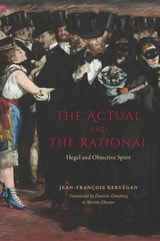
The Actual and the Rational
Hegel and Objective SpiritJean-Francois Kervegan
University of Chicago Press, 2018
Kervégan begins with Hegel’s term “objective spirit,” the public manifestation of our deepest commitments, the binding norms that shape our existence as subjects and agents. He examines objective spirit in three realms: the notion of right, the theory of society, and the state. In conversation with Tocqueville and other theorists of democracy, whether in the Anglophone world or in Europe, Kervégan shows how Hegel—often associated with grand metaphysical ideas—actually had a specific conception of civil society and the state. In Hegel’s view, public institutions represent the fulfillment of deep subjective needs—and in that sense, demonstrate that the real is the rational, because what surrounds us is the product of our collective mindedness. This groundbreaking analysis will guide the study of Hegel and nineteenth-century political thought for years to come.

The Natural World as a Philosophical Problem
Jan Patocka, edited by Ivan Chvatík and Lubica Ucnik, translated by Erika Abrams, foreword by Ludwig Landgrebe
Northwestern University Press, 2016

The Novel Map
Space and Subjectivity in Nineteenth-Century French FictionPatrick M. Bray
Northwestern University Press, 2013
Focusing on Stendhal, Gérard de Nerval, George Sand, Émile Zola, and Marcel Proust, The Novel Map: Mapping the Self in Nineteenth-Century French Fiction explores the ways that these writers represent and negotiate the relationship between the self and the world as a function of space in a novel turned map.
With the rise of the novel and of autobiography, the literary and cultural contexts of nineteenth-century France reconfigured both the ways literature could represent subjects and the ways subjects related to space. In the first-person works of these authors, maps situate the narrator within the imaginary space of the novel. Yet the time inherent in the text’s narrative unsettles the spatial self drawn by the maps and so creates a novel self, one which is both new and literary. The novel self transcends the rigid confines of a map. In this significant study, Patrick M. Bray charts a new direction in critical theory.

The Politics of Subjectivity in American Foreign Policy Discourses
Ty Solomon
University of Michigan Press, 2015

The Treadmill Affect
Marxism, Subjectivity, and the PresentBenjamin Lee
Prickly Paradigm Press, 2025
The Treadmill Affect draws upon the work of three University of Chicago professors, each a former program director at the Center for Transcultural Studies: literary and cultural critic Lauren Berlant, historian and social theorist Moishe Postone, and linguist Michael Silverstein. Through this intellectual synthesis, Benjamin Lee demonstrates the critical possibilities of uniting a revived linguistic turn with Marxist accounts of affect and subjectivity, adding new dimensions to the "treadmill" affective structure of cruel optimism.

Translation and Subjectivity
On Japan and cultural nationalismNaoki Sakai
University of Minnesota Press, 1997
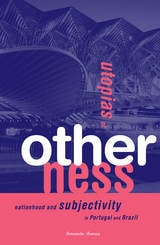
Utopias Of Otherness
Nationhood And Subjectivity In Portugal And BrazilFernando Arenas
University of Minnesota Press, 2003
Forges a new understanding of how these two Lusophone nations are connected
The closely entwined histories of Portugal and Brazil remain key references for understanding developments—past and present—in either country. Accordingly, Fernando Arenas considers Portugal and Brazil in relation to one another in this exploration of changing definitions of nationhood, subjectivity, and utopias in both cultures. Examining the two nations’s shared language and histories as well as their cultural, social, and political points of divergence, Arenas pursues these definitive changes through the realms of literature, intellectual thought, popular culture, and political discourse.
Both Brazil and Portugal are subject to the economic, political, and cultural forces of postmodern globalization. Arenas analyzes responses to these trends in contemporary writers including José Saramago, Caio Fernando Abreu, Maria Isabel Barreno, Vergílio Ferreira, Clarice Lispector, and Maria Gabriela Llansol. Ultimately, Utopias of Otherness shows how these writers have redefined the concept of nationhood, not only through their investment in utopian or emancipatory causes such as Marxist revolution, women’s liberation, or sexual revolution, but also by shifting their attention to alternative modes of conceiving the ethical and political realms.
Virtual Gender
Fantasies of Subjectivity and EmbodimentMary Ann O'Farrell and Lynne Vallone, Editors
University of Michigan Press, 1999

Waiting For The Revolution To End
Syrian Displacement, Time and SubjectivityCharlotte Al-Khalili
University College London, 2023
Based on more than three years of embedded fieldwork with Syrians displaced in the border city of Gaziantep (southern Turkey), this book places the Syrian revolution and its tragic aftermath under ethnographic scrutiny. It charts the evolution from peaceful uprising (2011) to armed confrontation (2012), descent into fully fledged conflict (2013) and finally to proxy war (2015), to propose an understanding of revolution beyond success and failure.
While the Assad regime remains in place, the Syrian revolution (al-thawra) still holds a transformational power that can be located on intimate and world-making scales. Charlotte Al-Khalili traces the unintended consequences of revolution to reveal the reshaping of Syrian life-worlds and exiles’ evolving theorizations, experiences, and imaginations of al-thawra. She describes the in-between spatio-temporal realm inhabited by Syrians displaced to Turkey as they await the revolution’s outcomes and maps the revolution’s multidimensional and multi-scalar effects on their everyday life. By following the chronology of events inside Syria and Syrians’ geography of displacement, Waiting for the Revolution to End makes the relation between revolution and displacement its centerpiece, both as an ethnographic object and an analytical device.
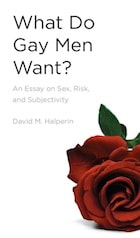
What Do Gay Men Want?
An Essay on Sex, Risk, and SubjectivityDavid M. Halperin
University of Michigan Press, 2010
“Compelling, timely, and provocative. The writing is sleek and exhilarating. It doesn’t waste time telling us what it will do or what it has just done—it just does it.”
—Don Kulick, Professor of Anthropology, New York University
How we can talk about sex and risk in the age of barebacking—or condomless sex—without invoking the usual bogus and punitive clichés about gay men’s alleged low self-esteem, lack of self-control, and other psychological “deficits”? Are there queer alternatives to psychology for thinking about the inner life of homosexuality? What Do Gay Men Want? explores some of the possibilities.
Unlike most writers on the topic of gay men and risky sex, David Halperin liberates gay male subjectivity from psychology, demonstrating the insidious ways in which psychology’s defining opposition between the normal and the pathological subjects homosexuality to medical reasoning and revives a whole set of unexamined moral assumptions about “good” sex and “bad” sex.
In particular, Halperin champions neglected traditions of queer thought, including both literary and popular discourses, by drawing on the work of well-known figures like Jean Genet and neglected ones like Marcel Jouhandeau. He shows how the long history of of gay men’s uses of “abjection” can offer an alternative, nonmoralistic model for thinking about gay male subjectivity, something which is urgently needed in the age of barebacking.
Anyone searching for nondisciplinary ways to slow the spread of HIV/AIDS among gay men—or interested in new modes of thinking about gay male subjectivity—should read this book.
David M. Halperin is W. H. Auden Collegiate Professor of the History and Theory of Sexuality, Professor of English, Professor of Women’s Studies, Professor of Comparative Literature, and Adjunct Professor of Classical Studies at the University of Michigan.

Zizek's Ontology
A Transcendental Materialist Theory of SubjectivityAdrian Johnston
Northwestern University Press, 2008
By taking this avowal seriously, Adrian Johnston finally clarifies the philosophical project underlying Žižek’s efforts. His book charts the interlinked ontology and theory of subjectivity constructed by Žižek at the intersection of German idealism and Lacanian theory. Johnston also uses Žižek’s combination of philosophy and psychoanalysis to address two perennial philosophical problems: the relationship of mind and body, and the nature of human freedom. By bringing together the past two centuries of European philosophy, psychoanalytic metapsychology, and cutting-edge work in the natural sciences, Johnston develops a transcendental materialist theory of subjectivity—in short, an account of how more-than-material forms of subjectivity can emerge from a corporeal being. His work shows how an engagement with Žižek’s philosophy can produce compelling answers to today’s most vexing and urgent questions as inherited from the history of ideas.