Results by title
3027 books match the query 'Sociology' and 31 start with v
Valley Interfaith and School Reform
Organizing for Power in South TexasBy Dennis Shirley
University of Texas Press, 2002
Can public schools still educate America's children, particularly in poor and working class communities? Many advocates of school reform have called for dismantling public education in favor of market-based models of reform such as privatization and vouchers. By contrast, this pathfinding book explores how community organizing and activism in support of public schools in one of America's most economically disadvantaged regions, the Rio Grande Valley of South Texas, has engendered impressive academic results.
Dennis Shirley focuses the book around case studies of three schools that have benefited from the reform efforts of a community group called Valley Interfaith, which works to develop community leadership and boost academic achievement. He follows the remarkable efforts of teachers, parents, school administrators, clergy, and community activists to take charge of their schools and their communities and describes the effects of these efforts on students' school performance and testing results.
Uniting gritty realism based on extensive field observations with inspiring vignettes of educators and parents creating genuine improvement in their schools and communities, this book demonstrates that public schools can be vital "laboratories of democracy," in which students and their parents learn the arts of civic engagement and the skills necessary for participating in our rapidly changing world. It persuasively argues that the American tradition of neighborhood schools can still serve as a bedrock of community engagement and academic achievement.

Value Change in Global Perspective
Paul R. Abramson and Ronald Inglehart
University of Michigan Press, 1995
from Materialist values (such as the desire for economic and physical security) to Post-materialist values (such as the desire for freedom, self-expression, and the quality of life) is in all likelihood a global phenomenon. Value Change in Global Perspective analyzes over thirty years worth of national surveys in European countries and presents the most comprehensive and nuanced discussion of this shift to date. By paying special attention to the way generational replacement transforms values among mass publics, the authors are able to present a comprehensive analysis of the processes through which values change.
Van Gogh on Demand
China and the ReadymadeWinnie Won Yin Wong
University of Chicago Press, 2014
Vanishing Eden
White Construction of Memory, Meaning, and Identity in a Racially Changing CityMichael Maly
Temple University Press, 2015
For many whites, desegregation initially felt like an attack on their community. But how has the process of racial change affected whites’ understanding of community and race? In Vanishing Eden, Michael Maly and Heather Dalmage provide an intriguing analysis of the experiences and memories of whites who lived in Chicago neighborhoods experiencing racial change during the 1950s through the 1980s. They pay particular attention to examining how young people made sense of what was occurring, and how this experience impacted their lives.
Using a blend of urban studies and whiteness studies, the authors examine how racial solidarity and whiteness were created and maintained—often in subtle and unreflective ways. Vanishing Eden also considers how race is central to the ways social institutions such as housing, education, and employment function. Surveying the shifting social, economic, and racial contexts, the authors explore how race and class at local and national levels shaped the organizing strategies of those whites who chose to stay as racial borders began to change.
Varieties of Civic Innovation
Deliberative, Collaborative, Network, and Narrative ApproachesJennifer Girouard
Vanderbilt University Press, 2014
Varieties of Social Imagination
Barbara Celarent
University of Chicago Press, 2017
Sociologist and AJS editor Andrew Abbott edited the Celarent essays, and in Varieties of Social Imagination, he brings the work together for the first time. Previously available only in the journal, the thirty-six meditations found here allow readers not only to engage more deeply with a diversity of thinkers from the past, but to imagine more fully a sociology—and a broader social science—for the future.
Vegetarianism
Movement Or Moment: Promoting A Lifestyle For Cult ChangeDonna Maurer
Temple University Press, 2002
Venezuela's Bolivarian Democracy
Participation, Politics, and Culture under ChávezDavid Smilde and Daniel Hellinger, eds.
Duke University Press, 2011
Contributors
Carolina Acosta-Alzuru
Julia Buxton
Luis Duno Gottberg
Sujatha Fernandes
María Pilar García-Guadilla
Kirk A. Hawkins
Daniel Hellinger
Michael E. Johnson
Luis E. Lander
Margarita López-Maya
Elizabeth Gackstetter Nichols
Coraly Pagan
Guillermo Rosas
Naomi Schiller
David Smilde
Alejandro Velasco
Venice
A Contested Bohemia in Los AngelesAndrew Deener
University of Chicago Press, 2012

Vetting for Passion
Race, Gender, and Inequalities in the Veterinary ProfessionAdilia E. E. James
Temple University Press, 2027
Despite calls from industry associations for a diverse workforce to meet a changing client base, racial and gendered occupational segregation persists in the veterinary profession. As of 2018, nearly 90% of veterinarians identify as White and more than 70% are women. Adilia James explains the causes and effects of this growing and alarming trend in Vetting for Passion.
James interviews aspiring and employed veterinarians about why marginalized groups are, ironically, not making equitable progress in an elite labor market that encourages diversity and inclusion policies. She shows how cultural and structural barriers exclude people of color from the profession and how relationships with animals are used as racialization tools. People of color are also hindered by factors such as social and lived experiences, the debt-to-income ratio, and an uncomfortable working environment.
Additionally, James finds that hiring managers, veterinary schools, and mentors rely on “constrained choice narratives” to justify their assumption that only White women are likely to appreciate the unique benefits of a career in veterinary medicine, leading these gatekeepers to excuse their opportunity hoarding as benevolent.
Vetting for Passion offers a critical case study of a profession whose associations, colleges, and workplaces justify and perpetuate a culture of racial exclusion.

Vibrator Nation
How Feminist Sex-Toy Stores Changed the Business of PleasureLynn Comella
Duke University Press, 2017
Vice Patrol
Cops, Courts, and the Struggle over Urban Gay Life before StonewallAnna Lvovsky
University of Chicago Press, 2021
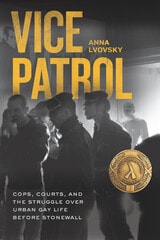
In Vice Patrol, Anna Lvovsky chronicles this painful story, tracing the tactics used to criminalize, profile, and suppress gay life from the 1930s through the 1960s, and the surprising controversies those tactics often inspired in court. Lvovsky shows that the vice squads’ campaigns stood at the center of live debates about not only the law’s treatment of queer people, but also the limits of ethical policing, the authority of experts, and the nature of sexual difference itself—debates that had often unexpected effects on the gay community’s rights and freedoms. Examining those battles, Vice Patrol enriches understandings of the regulation of queer life in the twentieth century and disputes about police power that continue today.

Vice Patrol
Cops, Courts, and the Struggle over Urban Gay Life before StonewallAnna Lvovsky
University of Chicago Press, 2021
In the mid-twentieth century, gay life flourished in American cities even as the state repression of queer communities reached its peak. Liquor investigators infiltrated and shut down gay-friendly bars. Plainclothes decoys enticed men in parks and clubs. Vice officers surveilled public bathrooms through peepholes and two-way mirrors.
In Vice Patrol, Anna Lvovsky chronicles this painful story, tracing the tactics used to criminalize, profile, and suppress gay life from the 1930s through the 1960s, and the surprising controversies those tactics often inspired in court. Lvovsky shows that the vice squads’ campaigns stood at the center of live debates about not only the law’s treatment of queer people, but also the limits of ethical policing, the authority of experts, and the nature of sexual difference itself—debates that had often unexpected effects on the gay community’s rights and freedoms. Examining those battles, Vice Patrol enriches understandings of the regulation of queer life in the twentieth century and disputes about police power that continue today.

Victims as Offenders
The Paradox of Women's Violence in RelationshipsMiller, Susan L.
Rutgers University Press, 2005
Arrests of women for assault increased more than 40 percent over the past decade, while male arrests for this offense have fallen by about one percent. Some studies report that for the first time ever the rate of reported intimate partner abuse among men and women is nearly equal. Susan L. Miller’s timely book explores the important questions raised by these startling statistics.
Are women finally closing the gender gap on violence? Or does this phenomenon reflect a backlash shaped by men who batter? How do abusive men use the criminal justice system to increase control over their wives? Do police, courts, and treatment providers support aggressive arrest policies for women? Are these women “victims” or “offenders”?
In answering these questions, Miller draws on extensive data from a study of police behavior in the field, interviews with criminal justice professionals and social service providers, and participant observation of female offender programs. She offers a critical analysis of the theoretical assumptions framing the study of violence and provides insight into the often contradictory implications of the mandatory and pro-arrest policies enacted in the 1980s and 1990s. Miller argues that these enforcement strategies, designed to protect women, have often victimized women in different ways. Without sensationalizing, Miller unveils a reality that looks very different from what current statistics on domestic violence imply.

Vida Zoo-cial
The Buenos Aires Zoo and the Making of Argentine Society, 1875–1924Ashley Elizabeth Kerr
Vanderbilt University Press, 2025
Premio al Mejor Libro en Humanidades, Latin American Studies Association, Nineteenth-Century Section, 2026
In late nineteenth- and early twentieth‑century Buenos Aires, elites attempted to tackle growing poverty and social problems with a suite of social, educational, and medical reforms, hoping to make the city and larger nation more “modern” and “progressive” on the world stage. Known as the “social question,” this turn-of-the-century preoccupation with the future of the city and nation was undergirded by a larger set of social Darwinist beliefs about the biological and racial inferiority of immigrants and the working class, linking them to higher susceptibility to alcoholism, sexual deviancy, insanity, and disease.
In Vida Zoo-cial, Ashley Elizabeth Kerr argues that the Buenos Aires Zoo and its many animal species were an important tool in attempts to remake Argentinian society. Elites used the zoo’s physical spaces, programming, and visual and literary representations of its animals to try to educate and “improve” the masses, especially immigrants and the poor, but stopped short of supporting more radical social transformations. Drawing upon extensive archival research from the zoo’s archive, including correspondence, municipal reports, receipts, and employment records, as well as a range of literary and popular culture sources, Kerr records these efforts, which included enlisting lionesses as object lessons in proper motherhood and elephants as model immigrants. Although some projects were successful, Kerr also documents the many ways others went awry when the zoo's animals and the humans who came to see them failed to cooperate.
Vida Zoo-cial is not only a story about how the poor and working class resisted elite efforts for social reform founded upon racialized beliefs and pseudoscience, but also one that challenges readers to rethink the relationship between humans and non‑humans.
Village Housing
Constraints and Opportunities in Rural EnglandNick Gallent, Iqbal Hamiduddin, Phoebe Stirling, and Meiling Wu
University College London, 2022
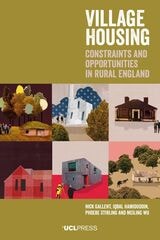
Village Housing explores the housing challenges faced by England’s amenity villages, rooted in post-war counter-urbanization and a rising tide of investment demand for rural homes. It tracks solutions to date and considers what further actions might be taken to increase the equity of housing outcomes and thereby support rural economies and alternate rural futures. The authors examine first the interwar reliance on landowners to provide tied housing and post-war diversification of responses to rising housing access difficulties, including from the public and third sectors; second, recent community-led responses; and third, actions that disrupt established production processes: self-build, low impact development, and a re-emergence of council provision. These responses to the village housing challenges are set against a broader backdrop of structural constraints and opportunities to reduce those constraints through planning, land, and tax reforms that can broaden the social inclusivity and diversity of villages and support their economic well-being.
Village Ties
Women, NGOs, and Informal Institutions in Rural BangladeshNayma Qayum
Rutgers University Press, 2022
Village and Family in Contemporary China
William L. Parish and Martin King Whyte
University of Chicago Press, 1978
Violence Work
State Power and the Limits of PoliceMicol Seigel
Duke University Press, 2018
Violence in Rural South Africa, 1880–1963
Sean Redding
University of Wisconsin Press, 2023
Many violent acts attempted to reestablish and reinforce a moral, social, and political order among Africans. However, what constituted a moral order changed as white governance became more intrusive, land became scarcer, and people reconstructed their notions of “traditional” culture. State policies became obstacles around which Africans had to navigate by invoking the idea of tradition, using the state’s court system, alleging the use of witchcraft, or engaging in violent threats and acts. Redding’s use of multiple court cases and documents to discuss several types of violence provides a richer context for the scholarly conversation about the legitimation of violence in traditions, family life, and political protest.
Violent Acts and Urban Space in Contemporary Tel Aviv
Revisioning MomentsBy Tali Hatuka
University of Texas Press, 2010
Violent acts over the past fifteen years have profoundly altered civil rituals, cultural identity, and the meaning of place in Tel Aviv. Three events in particular have shed light on the global rule of urban space in the struggle for territory, resources, and power: the assassination of Prime Minister Rabin in 1995 in the city council square; the suicidal bombing at the Dolphinarium Discothèque along the shoreline in 2001; and bombings in the Neve Shaanan neighborhood in 2003.
Tali Hatuka uses an interdisciplinary framework of urban theory and sociopolitical theory to shed light on the discourse regarding violent events to include an analysis of the physical space where these events take place. She exposes the complex relationships among local groups, the state, and the city, challenging the national discourse by offering a fresh interpretation of contesting forces and their effect on the urban environment.
Perhaps the most valuable contribution of this book is its critical assessment of the current Israeli reality, which is affected by violent events that continually alter the everyday life of its citizens. Although these events have been widely publicized by the media, there is scant literature focusing on their impact on the urban spaces where people live and meet. In addition, Hatuka shows how sociopolitical events become crucial defining moments in contemporary lived experience, allowing us to examine universal questions about the way democracy, ideology, and memory are manifested in the city.

Violent Affections
Queer Sexuality, Techniques of Power, and Law in RussiaAlexander Sasha Kondakov
University College London, 2022
Passed in 2013, Russia’s “gay propaganda” law cemented the nation’s anti-LGBTQ sentiment into legal rhetoric that has since emboldened countless instances of violence against queer people. Based on an analysis of over three hundred criminal cases of anti-queer violence in Russia before and after the introduction of the law, Violent Affections shows how violent acts are framed in emotional language by perpetrators during their criminal trials, thus uncovering the techniques of power that work to translate emotions into violence against queer people. Utilizing an original methodology of studying legal memes, this book argues that individual affective states are directly connected to the political and legislative violence aimed at policing queer lives. Alexander Sasha Kondakov expands upon two sets of interdisciplinary literature–queer theory and affect theory–in order to conceptualize what is referred to as neo-disciplinary power. The book traces how affections circulate from body to body as a kind of virus, eventually enabling the turn from a memetic response to violent action.
Violent Utopia
Dispossession and Black Restoration in TulsaJovan Scott Lewis
Duke University Press, 2022
Visibility Interrupted
Rural Queer Life and the Politics of UnbecomingCarly Thomsen
University of Minnesota Press, 2021
A questioning of the belief in the power of LGBTQ visibility through the lives of queer women in the rural Midwest
Today most LGBTQ rights supporters take for granted the virtue of being “out, loud, and proud.” Most also assume that it would be terrible to be LGBTQ in a rural place. By considering moments in which queerness and rurality come into contact, Visibility Interrupted argues that both positions are wrong. In the first monograph on LGBTQ women in the rural Midwest, Carly Thomsen deconstructs the image of the rural as a flat, homogenous, and anachronistic place where LGBTQ people necessarily suffer. And she suggests that visibility is not liberation and will not lead to liberation.
Far from being an unambiguous good, argues Thomsen, visibility politics can, in fact, preclude collective action. They also advance metronormativity, postraciality, and capitalism. To make these interventions, Thomsen develops the theory of unbecoming: interrogating the relationship between that which we celebrate and that which we find disdainful—the past, the rural, politics—is crucial for developing alternative subjectivities and politics. Unbecoming precedes becoming. Drawing from critical race studies, disability studies, and queer Marxism, in addition to feminist and queer studies, the insights of this book will be useful to scholars theorizing issues far beyond sexuality and place and to social justice activists who want to move beyond visibility.
Visions of Beirut
The Urban Life of Media InfrastructureHatim El-Hibri
Duke University Press, 2021
Visions of the Sociological Tradition
Donald N. Levine
University of Chicago Press, 1995
"Visions" has three meanings, each of which corresponds to a part of the book. In Part 1, Levine presents the ways previous sociologists have rendered accounts of their discipline, as a series of narratives—or "life stories"—that build upon each other, generation to generation, a succession of efforts to envisage a coherent past for the sake of a purposive present.
In Part 2, the heart of the book, Levine offers his own narrative, reconnecting centuries of voices into a richly textured dialogue among the varied strands of the sociological tradition: Hellenic, British, French, German, Marxian, Italian, and American. Here, in a tour de force of clarity and conciseness, he tracks the formation of the sociological imagination through a series of conversations across generations. From classic philosophy to pragmatism, Aristotle to W. I. Thomas, Levine maps the web of visionary statements—confrontations and oppositions—from which social science has grown.
At the same time, this is much more than an expert synthesis of social theory. Throughout each stage, Levine demonstrates social knowledge has grown in response to three recurring questions: How shall we live? What makes humans moral creatures? How do we understand the world? He anchors the creation of social knowledge to ethical foundations, and shows for the first time how differences in those foundations disposed the shapers of modern social science—among them, Marshall and Spencer, Comte and Durkheim, Simmel and Weber, Marx and Mosca, Dewey and Park—to proceed in vastly different ways.
In Part 3, Levine offers a vision of the contemporary scene, setting the crisis of fragmentation in social sciences against the fragmentation of experience and community. By reconstructing the history of social thought as a series of fundamentally moral engagements with common themes, he suggests new uses for sociology's intellectual resources: not only as insight about the nature of modernity, but also as a model of mutually respectful communication in an increasingly fractious world.
Visions of the Southland
A Year in Los Angeles CountyEdited by Wade Graham and William Deverell
University of Chicago Press, 2026
Experience a year in Los Angeles County, in all its glitter and grit, through a unique anthology that pairs essays by acclaimed writers and historians with custom maps.
When many of us picture Los Angeles, we’re actually thinking of LA County. Home to roughly ten million people, the county alone is more populous than forty-two US states. Its eighty-eight cities include places made famous by Hollywood glamor and California dreaming—Beverly Hills, Malibu, and Santa Monica—but also working-class municipalities and the self-explanatory City of Industry. With a territory that includes the Pacific coastline, mountain ranges, and the high Mojave Desert, the county’s landscapes have been touched by earthquakes, droughts, and, of course, devastating fires. LA County is a place of extremes: progress and injustice, innovation and stagnation.
Visions of the Southland collects essays by writers, journalists, and historians to create a nuanced portrait of LA that’s grounded in the county itself—its sites, structures, and stories. Contributors—including Gustavo Arellano, Keri Blakinger, Lynell George, Christopher Hawthorne, Michael Hiltzik, Greg Hise, Carolina Miranda, Becky Nicolaides, Susan Straight, and David L. Ulin—delve into LA’s infamous air pollution, movie ranches, prisons, aqueducts, urban forests, SoCal Bohemianism, and more. A custom map by Ezra Rawitsch enriches each piece and grounds the reader in specific locations throughout the county. Unfolding over the course of a year, the book traces the rhythms of politics, sports, weather, and wildlife across this sprawling and enigmatic place.
Sweeping in its scope and gorgeous in its design, Visions of the Southland will delight Angelenos, history buffs, urbanists, and map enthusiasts alike.
Visual Encounters in the Study of Rural Childhoods
Mandrona, April R.
Rutgers University Press, 2018
Voices from the Heart of the Land
Rural Stories that Inspire CommunityRichard L. Cates Jr.
University of Wisconsin Press, 2008
Voices of 1968
Documents from the Global NorthEdited by Laurence Cox, Salar Mohandesi and Bjarke Skaerlund Risager
Pluto Press, 2018
Voices of 1968 is a vivid collection of key texts from the movements and uprisings of “the long 1968.” Emphasizing the transnational linkages between these struggles, the primary documents of this collection delve into events that took place as far afield as Italy, France, West Germany, the United States, Mexico, Canada, Britain, Northern Ireland, Denmark, Czechoslavakia, Yugoslavia, and Japan. This wealth of material is supported by framing essays helping readers to find their way around the era’s revolutionary ideas and to understand their legacy in politics, culture, and society today. Featuring many texts that have never been seen in English before, this remarkable collection is published to coincide with the fiftieth anniversary of the events of 1968.

Vows, Veils, and Masks
The Performance of Marriage in the Plays of Eugene O'NeillBeth Wynstra
University of Iowa Press, 2023
Weaving in artifacts like advice columns, advertisements, theatrical reviews, and even the lived experiences of the actors who brought O’Neill’s wife characters to life, Beth Wynstra points to new ways of seeing and empathizing with those who are betrothed and new possibilities for reading marriage in literary and dramatic works. She suggests that the various ways women were, and still are, expected to divert from their true ambitions, desires, and selves in the service of appropriate wifely behavior is a detrimental performance and one at the crux of O’Neill’s marital tragedies. This book invites more inclusive and nuanced ways of thinking about the choices married characters must make and the roles they play, both on and off the stage.