Results by title
4155 books match the query 'State & Local' and 33 start with v

VISIONS OF PLACE
CITY, NEIGHBORHOODS, SUBURBS, AND CINCINNATI'S CLIFTON, 1850–2000ZANE L. MILLER
The Ohio State University Press, 2001
Almost every American city has or had neighborhoods like Clifton, which developed in the mid-nineteenth century as a silk-stocking suburb with a more diverse population than most observers noticed. Incorporated by Cincinnati in the late nineteenth century, Clifton had a reputation as a better-than-average place in which to live, a view that persisted until the end of the twentieth century.
In Visions of Place, Zane L. Miller treats ideas about the nature of cities—including their neighborhoods and their suburbs—as the dynamic factors in Clifton’s experience and examines the changes in Clifton's social, physical, civic, and political structure resulting from these transforming notions. These structural shifts involved a variety of familiar nineteenth- and twentieth-century urban phenomena, including not only the switch from suburban village to city neighborhood and the salience of interracial fears but also the rise of formal city planning and conflicts among Protestants, Catholics, and Jews over the future of Clifton's religious and ethnic ambiance.
Miller concludes with a policy analysis of current and future prospects for neighborhoods like Clifton and the cities and metropolitan areas of which they form a part.

Vacationland
Sarah Stonich
University of Minnesota Press, 2013
On a lake in northernmost Minnesota, you might find Naledi Lodge—only two cabins still standing, its pathways now trodden mostly by memories. And there you might meet Meg, or the ghost of the girl she was, growing up under her grandfather’s care in a world apart and a lifetime ago. Now an artist, Meg paints images “reflected across the mirrors of memory and water,” much as the linked stories of Vacationland cast shimmering spells across distance and time.
Those whose paths have crossed at Naledi inhabit Vacationland: a man from nearby Hatchet Inlet who knew Meg back when, a Sarajevo refugee sponsored by two parishes who can’t afford “their own refugee,” aged sisters traveling to fulfill a fateful pact once made at the resort, a philandering ad man, a lonely Ojibwe stonemason, and a haiku-spouting girl rescued from a bog.
Sarah Stonich, whose work has been described as “unexpected and moving” by the Chicago Tribune and “a well-paced feast” by the Los Angeles Times, weaves these tales of love and loss, heartbreak and redemption into a rich novel of interconnected and disjointed lives. Vacationland is a moving portrait of a place—at once timeless and of the moment, composed of conflicting dreams and shared experience—and of the woman bound to it by legacy and sometimes longing, but not necessarily by choice.
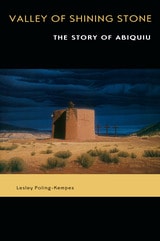
Valley of Shining Stone
The Story of AbiquiuLesley Poling-Kempes
University of Arizona Press, 1997
O'Keeffe saw the magic of sandstone cliffs and turquoise skies, but her life and death here are only part of the story. Reading almost like a novel, this book spills over with other legends buried deep in time, just as some of North America's oldest dinosaur bones lie hidden beneath the valley floor. Here are the stories of Pueblo Indians who have claimed this land for generations. Here, too, are Utes, Navajos, Jicarilla Apaches, Hispanos, and Anglos—many lives tangled together, yet also separate and distinct.
Underlying these stories is the saga of Ghost Ranch itself, a last living vestige of the Old West ideal of horses, cowboys, and wide-open spaces. Readers will meet a virtual Who's Who of visitors from "dude ranch" days, ranging from such luminaries as Willa Cather, Ansel Adams, and Charles Lindbergh to World War II scientist J. Robert Oppenheimer and his colleagues, who were working on the top-secret atomic bomb in nearby Los Alamos. Moving on through the twentieth century, the book describes struggles to preserve the valley's wild beauty in the face of land development and increased tourism.
Just as the Piedra Lumbre landscape has captivated countless wayfarers over hundreds of years, so its stories cast their own spell. Indispensable for travelers, pure pleasure for history buffs and general readers, these pages are a magic carpet to a magic land: Abiquiu, Ghost Ranch, the Valley of Shining Stone.

Van Dorn
The Life and Times of a Confederate GeneralRobert G. Hartje
Vanderbilt University Press, 1967
When it came to large-scale military initiatives, however, Van Dorn was remarkable for his failures. His tactical blunders at the battles of Pea Ridge, Arkansas, and Corinth, Mississippi, contributed greatly to the end of the Confederate military advantage in the Civil War.
The intrigue and scandals that figured in his personal life, even at the height of the War, led directly to his murder and the mystery that still surrounds it. Van Dorn’s dishonorable death concludes Hartje’s fascinating account of a checkered career and the role Earl Van Dorn played in the great tragedy of the Civil War.

Vanderbilt Divinity School
Education, Contest and ChangeDale A. Johnson
Vanderbilt University Press, 2002
Engagement with southern culture, present from the beginnings of the university but taking on special significance in the mid-twentieth century around the issue of race;
The transition from an institution of the church (Methodist) to an independent and interdenominational school with a liberal Protestant orientation;
The development of the modern research university, evident in the establishment of a graduate program in religion in addition to its program for the profession of ministry;
From the 1950s, a growing concern with diversity and inclusivity, in keeping with national and international issues and developments both religious and cultural, which has broadened the school's sense of ecumenism and deepened its commitments to social justice.
Conflict has played an important part in shaping the history of the Vanderbilt Divinity School, from struggles over initial visions to questions of financial support and institutional control, from local debates over academic freedom to national issues of social justice. Especially noteworthy are the transformations the school has undergone since 1960: the "James Lawson affair," where the divinity school faculty resigned over the expulsion of an African American graduate student who was organizing local lunch counter sit-ins; the impact of social change on the school since the late 1960s; and the contributions of women and African Americans, including their appointment to the faculty.

Vegas Strong
Bearing Witness 1 October 2017Roberta Sterman Sabbath
University of Nevada Press, 2023
Mass shootings have been on the rise in the United States since the early 2000s, but until the heartbreak of the 1 October 2017 Route 91 Harvest Music Festival, the citizens of Las Vegas had never experienced the violence and tragedy of this now all-too-frequent occurrence. That day, fifty-eight people were shot to death on site, while another two victims later died of their injuries. The 1 October incident physically wounded nearly 900 concert-goers, but psychologically impacted countless untold victims.
As individual and institutional response to urgent requests for help came in both during and after the 1 October catastrophe, those who call Las Vegas home struggled to cope with pain and grief. Now, editor Roberta Sabbath draws together a collection of personal essays, oral histories, interviews, scholarly writings, and commentaries to remember those whose lives were lost, and to honor survivors and their loved ones. Written five years after the tragedy, each contribution offers a unique story of healing, demonstrating the wide-ranging experiences and repercussions of the event. The essays in this collection represent a broad diversity of voices from political leaders, health professionals, first responders, community members, and incident survivors. This work is dedicated to those who lost their lives on 1 October 2017, to survivors and their loved ones, and to the caregivers—both individual and institutional—all of whom continue to keep Vegas Strong.

Vertebrate Faunal Remains from Grasshopper Pueblo, Arizona
John W. Olsen with a foreword by John D. Speth
University of Michigan Press, 1990

Vicarious Thrills
A Championship Season of High School BasketballPaul E. Bates
Southern Illinois University Press, 1995
This engaging book chronicles the Carbondale Terriers’ 1993–94 season, a season in which the team progressed all the way to the state high school basketball championship game before ending the season with a one-point loss.
Although arranged chronologically, the book is much more than a team diary. Paul E. Bates, whose son was one of the team’s starting guards, brings his sensitivity and expertise as an educational psychologist to bear on team sports in general and on how they define and are defined by the players and coaches that make up the teams and by the communities in which they thrive.
Bates frames the team’s experience by sharing his own personal love of basketball, beginning with his childhood years in Decatur, Illinois, when Stephen Decatur High School was a perennial Illinois high school powerhouse. Through his exploration of the sport and his involvement and interest in it, Bates creates a book that serves both as a rousing tale of youthful achievement and as a history of high school basketball in the state of Illinois.
Throughout his account, Bates repeatedly emphasizes his belief that extraordinary accomplishment is no accident but rather the result of years of preparation, dedication, and hard work. Most of the key performers on the 1993–94 Terriers, for example, had played together on a grade school all-star team that was undefeated. Then, in junior high, this group went on to win numerous championships, and in high school their remarkable success continued, even though their accomplishments were humbled by season-ending losses.
But Vicarious Thrills leads the reader through a very personal account of both the ups and downs of championship basketball. Triumph does not occur without defeat, and it is through defeat that the team members, as well as their families and other supporters, learn many important lessons. As significant as the individual and team accomplishments are in making up this story, the 1993–94 basketball season is more importantly a beginning rather than the defining moment in the lives of these young men.
As an inspiration and motivation to young people, and as a spark to memories of childhood aspirations for older readers, this book is a pleasure to read for individuals of all ages.

Victor Arnautoff and the Politics of Art
Robert W. Cherny
University of Illinois Press, 2017

Victorine du Pont
The Force behind the FamilyLeonard C. Spitale
University of Delaware Press, 2023

Victory without Violence
The First Ten Years of the St. Louis Committee of Racial Equality (CORE), 1947-1957Mary Kimbrough & Margaret W. Dagen
University of Missouri Press, 2000
Winner, Missouri Conference on History Book Award, 2001
Victory without Violence is the story of a small, integrated group of St. Louisans who carried out sustained campaigns from 1947 to 1957 that were among the earliest in the nation to end racial segregation in public accommodations. Guided by Gandhian principles of nonviolent direct action, the St. Louis Committee of Racial Equality (CORE) conducted negotiations, demonstrations, and sit-ins to secure full rights for the African American residents of St. Louis.
The book opens with an overview of post-World War II racial injustice in the United States and in St. Louis. After recounting the genesis of St. Louis CORE, the writers vividly relate activities at lunch counters, cafeterias, and restaurants, demonstrating CORE's remarkable success in winning over initially hostile owners, manager, and service employees. A detailed review of its sixteen-month campaign at a major St. Louis department store, Stix, Baer & Fuller, illustrates the groups' patient persistence. Kimbrough and Dagen show after the passage of a public accommodations ordinance in 1961, CORE's goal of equal access was realized throughout the city of St. Louis.
On the scene reports drawn from CORE newsletters (1951-1955) and reminiscences by members appear throughout the text. In a closing chapter, the authors trace the lasting effects of the CORE experience on the lives of its members. Victory without Violence casts light on a previously obscured decade in St. Louis civil rights history.

Village of Immigrants
Latinos in an Emerging AmericaGordon, Diana R
Rutgers University Press, 2015
Greenport today boasts a population that is one-third Hispanic. Gordon contends that these immigrants have effectively saved the town’s economy by taking low-skill jobs, increasing the tax base, filling local schools, and patronizing local businesses. Greenport’s seaside beauty still attracts summer tourists, but it is only with the support of the local Latino workforce that elegant restaurants and bed-and-breakfasts are able to serve these visitors. For Gordon the picture is complex, because the wave of immigrants also presents the town with challenges to its services and institutions. Gordon’s portraits of local immigrants capture the positive and the negative, with a cast of characters ranging from a Guatemalan mother of three, including one child who is profoundly disabled, to a Colombian house painter with a successful business who cannot become licensed because he remains undocumented. Village of Immigrants weaves together these people’s stories, fears, and dreams to reveal an environment plagued by threats of deportation, debts owed to coyotes, low wages, and the other bleak realities that shape the immigrant experience—even in the charming seaport town of Greenport.
A timely contribution to the national dialogue on immigration, Gordon’s book shows the pivotal role the American small town plays in the ongoing American immigrant story—as well as how this booming population is shaping and reviving rural communities.
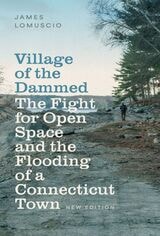
Village of the Dammed
The Fight for Open Space and the Flooding of a Connecticut TownJames Lomuscio
Brandeis University Press, 2025
In the early 1940s, the Bridgeport Hydraulic Company flooded Connecticut’s Saugatuck River Valley to create a reservoir that would meet the region’s growing population. Under twelve billion gallons of water lay Valley Forge, once a thriving iron and steel manufacturing town, which was seized by eminent domain to create the reservoir and dam. In Village of the Dammed, journalist James Lomuscio tells the story of the rise and fall of Valley Forge, drawing on Civil War-era photographs of the town and other sources to show what the town was like, document the futile battle to save it, and reveal the flooding’s life-altering repercussions. He also recounts a grassroots movement to prevent the development of nearby Trout Brook Valley in the 1990s, a heated fight with a different outcome. As the population of the American northeast continues to swell and spread, placing new demands on existing resources, communities are frequently confronted with forces and choices not unlike those faced by Valley Forge and Trout Brook Valley. Village of the Dammed reminds us to be ever vigilant in the protection of our irreplaceable environmental heritage.

Vintage Wisconsin Gardens
A History of Home GardeningLee Somerville
Wisconsin Historical Society Press, 2011
The Wisconsin State Horticultural Society, established during the mid-nineteenth century, was the primary source of advice for home gardeners. Through carefully selected excerpts from WSHS articles, Somerville shares the excitement of these gardeners as they traded cultivation and design knowledge and explored the possibilities of their avocation. Women were frequent presenters at the WSHS annual meetings, and their voices resonate. Their writings, and those of their male colleagues, are a remarkable legacy we can draw on today—learning how Wisconsinites past created and enjoyed their gardens helps us appreciate our own. Filled with period and contemporary images, recommended plant lists, and garden layouts, Vintage Wisconsin Gardens will interest those curious about the history of the state’s cultural landscape and inspire readers to restore or reconstruct period gardens.

Violence and Culture in the Antebellum South
By Dickson D. Bruce, Jr.
University of Texas Press, 1979
This provocative book draws from a variety of sources—literature, politics, folklore, social history—to attempt to set Southern beliefs about violence in a cultural context. According to Dickson D. Bruce, the control of violence was a central concern of antebellum Southerners.
Using contemporary sources, Bruce describes Southerners’ attitudes as illustrated in their duels, hunting, and the rhetoric of their politicians. He views antebellum Southerners as pessimistic and deeply distrustful of social relationships and demonstrates how this world view impelled their reliance on formal controls to regularize human interaction.
The attitudes toward violence of masters, slaves, and “plain-folk”—the three major social groups of the period—are differentiated, and letters and family papers are used to illustrate how Southern child-rearing practices contributed to attitudes toward violence in the region. The final chapter treats Edgar Allan Poe as a writer who epitomized the attitudes of many Southerners before the Civil War.
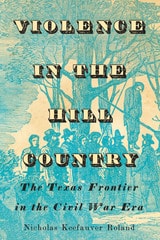
Violence in the Hill Country
The Texas Frontier in the Civil War EraBy Nicholas Keefauver Roland
University of Texas Press, 2021
2022 Ramirez Family Award for Most Significant Scholarly Book, Texas Institute of Letters
An in-depth history of the Civil War in the Texas Hill Country, this book examines patterns of violence on the Texas frontier to illuminate white Americans’ cultural and political priorities in the nineteenth century.
In the nineteenth century, Texas’s advancing western frontier was the site of one of America’s longest conflicts between white settlers and native peoples. The Texas Hill Country functioned as a kind of borderland within the larger borderland of Texas itself, a vast and fluid area where, during the Civil War, the slaveholding South and the nominally free-labor West collided. As in many borderlands, Nicholas Roland argues, the Hill Country was marked by violence, as one set of peoples, states, and systems eventually displaced others.
In this painstakingly researched book, Roland analyzes patterns of violence in the Texas Hill Country to examine the cultural and political priorities of white settlers and their interaction with the century-defining process of national integration and state-building in the Civil War era. He traces the role of violence in the region from the eve of the Civil War, through secession and the Indian wars, and into Reconstruction. Revealing a bitter history of warfare, criminality, divided communities, political violence, vengeance killings, and economic struggle, Roland positions the Texas Hill Country as emblematic of the Southwest of its time.

Violence in the Model City
The Cavanagh Administration, Race Relations, and the Detroit Riot of 1967Sidney Fine
Michigan State University Press, 2007
On July 23, 1967, the Detroit police raided a blind pig (after-hours drinking establishment), touching off the most destructive urban riot of the 1960s. It took the U.S. Army, the Michigan National Guard, the Michigan State Police, and the Detroit police department—17,000 men—more than a week to restore order. When all was done, the riot had claimed 43 lives (mostly Black) and resulted in nearly 700 injuries. Over 7,000 individuals were arrested, with property damage estimates over $75 million. Yet, Detroit had been lauded nationally as a "model city" in the governance of a large industrial metropolis. On the 40th anniversary of this nation-changing event, we are pleased to reissue Sidney Fine's seminal work—a detailed study of what happened, why, and with what consequences.

Violence, the Body, and the South, Volume 73
Houston A. Baker Jr. and Dana D. Nelson, eds.
Duke University Press, 0
This collection represents first-rate examples of gender, critical race, genre, and material culture studies. Topics ranging from epistemological and authorial rebellions marking Frederick Douglass’s Narrative and Charles Chesnutt’s The Marrow of Tradition to the twentieth-century labors of writers, such as Francisco Goldman and Helena María Viramontes, who work to make visible the complexities of “North” and “South” with respect to subordinated Latino/a bodies. William Faulkner is revisited in an essay on the internalization of “race” in Light in August. Guess Who’s Coming to Dinner and In the Heat of the Night are analyzed in a framework of homopolitical desire. Genre and regional studies combine in an energetic essay resituating Harriet Jacobs’s Incidents in the Life of a Slave Girl with respect to “Northern” fiction.
Contributors. Houston A. Baker Jr., Jeannine DeLombard, Laura Doyle, Jennifer Rae Greeson, Andrea Levine, Dana D. Nelson, Ana Patricia Rodríguez, Bryan Wagner
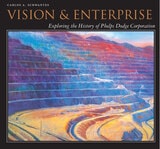
Vision and Enterprise
Exploring the History of Phelps Dodge CorporationCarlos A. Schwantes
University of Arizona Press, 2000
Phelps Dodge Corporation has shaped the landscape of America from the industrial revolution to the information technology revolution. A name synonymous with copper, Phelps Dodge has grown from a cotton and metal trading firm founded in 1834 to its present position as the world's largest publicly traded copper company.
Carlos Schwantes has written a sweeping corporate history of Phelps Dodge. Using landscape as an organizing concept to underscore the company's impact and accomplishments, he offers a close look at this corporate giant within the context of American technological and social history. In tracing the progress of Phelps Dodge through its 165-year history, Schwantes takes readers from the streets of Bisbee, Arizona, to the boardrooms of New York and Phoenix in order to examine the impact the company has had on the many landscapes in which it figures so prominently. Considering factors ranging from the environment to labor, he examines how Phelps Dodge has influenced, and has been influenced by, such forces as the global economy, technological innovation, urban growth, and social change.
Exhaustively researched and profusely illustrated with over 200 photographs, Vision and Enterprise makes a unique contribution to the history of the United States and the evolution of industry by considering the changing face of labor, the environment, and technology from one dynamic company's point of view.
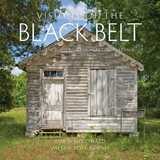
Visions of the Black Belt
A Cultural Survey of the Heart of AlabamaRobin McDonald and Valerie Pope Burnes
University of Alabama Press, 2015
Capturing the soul of the South’s Black Belt.
In Visions of the Black Belt, Robin McDonald and Valerie Pope Burnes offer a richly illustrated tour of the Black Belt, the fertile arc that represents the cultural efflorescence of Alabama’s heartland. Like knowledgeable friends, McDonald and Burnes guide readers through the Black Belt’s towns and architecture and introduce the region’s great panoply of citizens, farmers, craftspeople, cooks, writers, and musicians.
A constellation of Black Belt towns arose during Alabama’s territorial decades, communities like Selma, Camden, Eutaw, Tuskegee, Greenville, and many more. Visions of the Black Belt recounts their stories and others, such as Demopolis’s founding by exiles from Napoleon’s France. As an escarpment of clouds scuds across an indigo sky, the ruins of Alabama’s lost capital of Cahaba reveal the secrets of its lost squares. Also on this picturesque tour are the Black Belt’s homes, from artless cabins wreathed in fern to ozymandian manses wrapped by stately columns, such as Kirkwood and Reverie.
Among the emblematic houses of worship lovingly photographed in Visions of the Black Belt is Prairieville’s St. Andrew’s Episcopal Church, noted for its “carpenter gothic” style. Also reflecting the region’s history of faith are poignant graveyards such as Greenville’s Pioneer Cemetery with its homespun memorials of seashell-and-concrete and the elegant marbles clad in ebon lichen of Selma's Live Oak Cemetery.
In photos and text, McDonald and Burnes bring to life the layers of history that shaped the Black Belt’s tastes, sounds, and colors. Their gastronomic discoveries include the picant crawfish of the Faunsdale Bar & Grill and GainesRidge Dining Club’s famed Black Bottom pie. They bring the sounds of the Black Belt to life by presenting a wide range of musicians and musical events, from bona fide blues and soul masters to Eutaw’s Black Belt Roots Festival.
Including two maps and more than 370 full-color photographs, Visions of the Black Belt offers a timeless message of faith, determination, and the rich simplicity of living in harmony with the rhythms of the land and nature.
Published in Cooperation with the Black Belt Treasures Cultural Arts Center, Camden, Alabama.
Visions of the Southland
A Year in Los Angeles CountyEdited by Wade Graham and William Deverell
University of Chicago Press, 2026
Experience a year in Los Angeles County, in all its glitter and grit, through a unique anthology that pairs essays by acclaimed writers and historians with custom maps.
When many of us picture Los Angeles, we’re actually thinking of LA County. Home to roughly ten million people, the county alone is more populous than forty-two US states. Its eighty-eight cities include places made famous by Hollywood glamor and California dreaming—Beverly Hills, Malibu, and Santa Monica—but also working-class municipalities and the self-explanatory City of Industry. With a territory that includes the Pacific coastline, mountain ranges, and the high Mojave Desert, the county’s landscapes have been touched by earthquakes, droughts, and, of course, devastating fires. LA County is a place of extremes: progress and injustice, innovation and stagnation.
Visions of the Southland collects essays by writers, journalists, and historians to create a nuanced portrait of LA that’s grounded in the county itself—its sites, structures, and stories. Contributors—including Gustavo Arellano, Keri Blakinger, Lynell George, Christopher Hawthorne, Michael Hiltzik, Greg Hise, Carolina Miranda, Becky Nicolaides, Susan Straight, and David L. Ulin—delve into LA’s infamous air pollution, movie ranches, prisons, aqueducts, urban forests, SoCal Bohemianism, and more. A custom map by Ezra Rawitsch enriches each piece and grounds the reader in specific locations throughout the county. Unfolding over the course of a year, the book traces the rhythms of politics, sports, weather, and wildlife across this sprawling and enigmatic place.
Sweeping in its scope and gorgeous in its design, Visions of the Southland will delight Angelenos, history buffs, urbanists, and map enthusiasts alike.

Visiting Mackinac
150 Years of Tourism at Michigan's Fabled StraitsFrank Boles
Michigan State University Press, 2025

Voice Lessons
By Alice Embree
University of Texas Press, 2021
Voice Lessons explores the rich personal and political terrain of Alice Embree, a 1960s activist and convert to the women’s liberation movement of the 1970s, bringing a woman’s perspective to a transformational time in US history. This riveting memoir traces the author’s roots in segregated Austin and her participation in efforts to integrate the University of Texas. It follows her antiwar activism from a vigil in front of President Lyndon Johnson’s ranch in 1965 to a massive protest after the shootings at Kent State in 1970. Embree’s activism brought her and the Students for a Democratic Society into conflict with Frank Erwin, the powerful chairman of the UT Board of Regents, and inspired a campus free speech movement. She recounts her experiences living in New York during the tumultuous years of 1968 and 1969, including the Columbia University strike and the Woodstock music festival. She also tells about protesting at the Chicago Democratic Convention, her interactions with Yippies and poets, and her travels to Chile, Cuba, and Mexico. Embree highlights the radical roots of the women’s liberation movement in Austin and the audacious women’s community that challenged gender roles, fought for reproductive justice, and inspired a lifetime of activism.

Voices and Votes Teacher's Guide
How Democracy Works in Wisconsin TGJon Kasparek and Bobbie Malone
Wisconsin Historical Society Press, 2006
Voices and Votes: How Democracy Works in Wisconsin; Teacher's Guide and Student Materials features several activities for each chapter to engage students in a more in-depth exploration of the book. These activities, designed for both individual and small groups, demand the use of higher-level thinking skills while integrating a wide range of learning styles, and all have culminating components that can be used for assessment. The guide also features easily reproducible student pages, including maps, charts, and interesting illustrations.

Voices and Votes
How Democracy Works in WisconsinJon Kasparek
Wisconsin Historical Society Press, 2006
Voices & Votes: How Democracy Works in Wisconsin invites upper elementary school students to explore the intersection of American civics and Wisconsin history. This sixth and final book in the New Badger History series introduces students to the basic structures of American democracy, state government, and Wisconsin's road to statehood. The first seven chapters help students grasp how the three branches of government function at the federal, state, local, and tribal levels, while tying these structural notions to Wisconsin history. Students will learn that citizens' voices and votes help government evolve to meet ever-changing societal needs. The last chapter emphasizes how young people can actively engage in their communities to bring about positive change.

Voices and Votes
How Government Works in WisconsinWisconsin Historical Society Press, 2025
What are the different levels of government in Wisconsin? How are laws made? What is a political party? Who is allowed to vote in elections? How can citizens get involved in their communities?
These questions and many more are answered in this revised and updated edition of Voices and Votes, aimed at students in grades 3–5. Filled with color photos and illustrations—as well as diagrams, maps, and vocabulary words that make the material easy to absorb—this book explores:
- The fundamentals of federal, state, local, and Tribal government
- How Wisconsin’s constitution was created and how it has changed
- The way elections work and why voting matters
Readers will also find compelling examples of citizens from our state’s past who spoke up and worked to change laws and policies in order to improve their communities, including:
- Gaylord Nelson, who advocated for the environment as a state senator, member of Congress, and governor
- Vel Phillips, who helped expand housing opportunities as a member of Milwaukee’s city council
- Jesus Salas, who worked with state agencies to improve the lives of migrant farmworkers in Wisconsin
The book also offers contemporary stories of young people engaging with their communities, working to solve problems, and sharing their voices. This brilliantly updated edition of Voices and Votes will inspire a new generation of readers to understand and participate in our democracy.
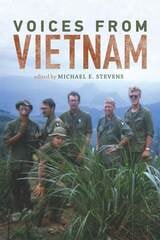
Voices from Vietnam
Michael E. Stevens
Wisconsin Historical Society Press, 1996
An unforgettable collection of 174 letters and diary entries written by 92 wisconsin men and women who served in Vietnam. Includes a journal kept by Menasha native Frederic Flom on cigarette wrappers during his final 16 days of captivity — the only known diary smuggled out by a Vietnam prisoner of war.
Voices from the Heart of the Land
Rural Stories that Inspire CommunityRichard L. Cates Jr.
University of Wisconsin Press, 2008
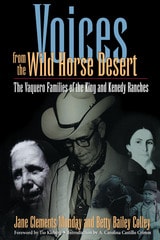
Voices from the Wild Horse Desert
The Vaquero Families of the King and Kenedy RanchesBy Jane Clements Monday and Betty Bailey Colley
University of Texas Press, 1997
Founded before the Civil War, the King and Kenedy Ranches have become legendary for their size, their wealth, and their endless herds of cattle. A major factor in the longevity of these ranches has always been the loyal workforce of vaqueros (Mexican and Mexican American cowboys) and their families. Some of the vaquero families have worked on the ranches through five or six generations.
In this book, Jane Clements Monday and Betty Bailey Colley bring together the voices of these men and women who make ranching possible in the Wild Horse Desert. From 1989 to 1995, the authors interviewed more than sixty members of vaquero families, ranging in age from 20 to 93. Their words provide a panoramic view of ranch work and life that spans most of the twentieth century.
The vaqueros and their families describe all aspects of life on the ranches, from working cattle and doing many kinds of ranch maintenance to the home chores of raising children, cooking, and cleaning. The elders recall a life of endless manual labor that nonetheless afforded the satisfaction of jobs done with skill and pride. The younger people describe how modernization has affected the ranches and changed the lifeways of the people who work there.
Volunteer Forty-Niners
Tennesseans and the California Gold RushWalter T. Durham
Vanderbilt University Press, 1997
In Volunteer Forty-Niners, Walter T. Durham provides the first comprehensive examination of the role Tennessee and Tennesseans played in creating a new state and a new society on the West Coast. Drawing from such archival sources and personal narratives in letters and diaries, public records, and newspaper reports, Durham has woven a wealth of information into his recounting of their adventures. He follows many of the emigrants into the mines and details the activities of others in commerce and government. In the process, he shows that Tennesseans made an enormous contribution to the beginnings of government in California. Among the many offices they held were governor, assemblyman, sheriff, state senator, secretary of state, state treasurer, controller, U.S. senator, U.S. marshal, U.S. surveyor general and Indian commissioner.
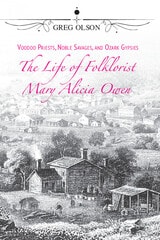
Voodoo Priests, Noble Savages, and Ozark Gypsies
The Life of Folklorist Mary Alicia OwenGreg Olson
University of Missouri Press, 2025
Folklorist Wayland Hand once called Mary Alicia Owen “the most famous American Woman Folklorist of her time.” Drawing on primary sources, such as maps, census records, court documents, personal letters and periodicals, and the scholarship of others who have analyzed various components of Owen’s multifaceted career, historian Greg Olson offers the most complete account of her life and work to date. He also offers a critical look at some of the short stories Owen penned, sometimes under the name Julia Scott, and discusses how the experience she gained as a fiction writer helped lead her to a successful career in folklore.
Olson analyzes many of the nineteenth-century theories, stereotypes, and popular beliefs that influenced the work of Owen and many of her peers. By taking a cross-disciplinary look at her works of fiction, poetry, folklore, history, and anthropology, this volume sheds new light on elements of Owen’s career that have not previously been discussed in print. Examples of the romance stories that Owen wrote for popular magazines in the 1880’s are identified and examined in the context of the time in which Owen wrote them.
This groundbreaking biography shows that Owen was more than just a folklorist—she was a nineteenth-century woman of many contradictions. She was an independent woman of many interests who possessed a keen intellect and a genuine interest in people and their stories. Specialists in folklore, anthropology, women’s studies, local and regional history, and Missouriana will find much to like in this thoroughly researched study.

Votes for Delaware Women
Anne M. Boylan
University of Delaware Press, 2021

Voyage of the Adventure
Retracing the Donelson Party's Journey to the Founding of NashvilleJohn Guider
Vanderbilt University Press, 2021
This photo book contains more than 120 striking images from the course of the journey, allowing the reader to see how much has changed and how much has remained untouched in the two and a half centuries since Donelson first took to the water. Equally significant, the essays include long-ignored contemporary histories of both the Cherokee whom Donelson encountered and the slaves he brought with him, some of whom did not survive the journey.
Guider, a professional photographer, has created images of every point in the thousand-mile trip from a platform just a few feet above the waterline of three of Tennessee’s most notable rivers.