Results by title
22279 books match the query 'Social Science' and 211 start with v

Visitation
The Conjure Work of Black Feminist Avant-Garde CinemaJennifer DeClue
Duke University Press, 2022
Duke University Press Scholars of Color First Book Award recipient

Visual Archives of Sex
Heike Bauer, Melina Pappademos, Katie Sutton, and Jennifer Tucker, special issue editors
Duke University Press, 2021
Contributors. Heike Bauer, Roland Betancourt, Alexis L. Boylan, Topher Campbell, João Florêncio, Kyle Frackman, Javier Fernández Galeano, Sarah Jones, Carol Leigh, Conor McGrady, Ben Miller, Derek Conrad Murray, Lynda Nead, Melina Pappademos, Ashkan Sepahvand, David Serlin, Meg Slater, Katie Sutton, Annette F. Timm, Jennifer Tucker, Jeanne Vaccaro, Sunny Xiang

Visual Cultures
Edited by James Elkins
Intellect Books, 2010
Visual Cultures is the first study of the place of visuality and literacy in specific nations around the world, featuring authoritative, insightful essays on the value accorded to the visual and the verbal in Japan, Poland, China, Russia, Ireland, and Slovenia.
Focusing on the national instead of the global, distinguished art critic James Elkins offers a critique of general histories of visuality, such as those of Martin Jay or Jean Baudrillard, as well as a critique of local histories of visuality, as in Third Text and other postcolonial studies. The content is not only analytic, but also historical, tracing changes in the significance of visual and verbal literacy in each nation. Visual Cultures also explores questions of national identity and the many issues Elkins raises suggest a wealth of promising avenues for future research.

Visual Cultures of Japanese Imperialism, Volume 8
Gennifer Weisenfeld, ed.
Duke University Press, 0
The articles, contributed by scholars in the fields of art history, cultural history, and Japanese literature, address the interactions between Japan, the West, and the rest of Asia. Costumes, architecture, tourism propaganda, pottery, and a host of other sources provide the raw materials for Visual Cultures of Japanese Imperialism, and the incisive essays built from these sources will change readers’ understanding of the visual culture(s) of imperialism.
Contributors. Kim Brandt, Leo Ching, Carol Ann Christ, Christine Guth, Jordan Sand, Gennifer Weisenfeld, Cherie Wendelken
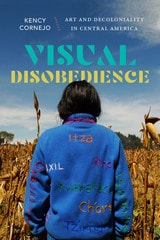
Visual Disobedience
Art and Decoloniality in Central AmericaKency Cornejo
Duke University Press, 2024

Visual Encounters in the Study of Rural Childhoods
Mandrona, April R.
Rutgers University Press, 2018
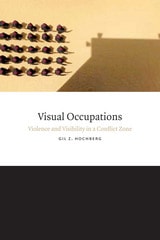
Visual Occupations
Violence and Visibility in a Conflict ZoneGil Z. Hochberg
Duke University Press, 2015

Visual Syntax of Race
Arab-Jews in Zionist Visual CultureNoa Hazan
University of Michigan Press, 2022
Analyzing the visual syntax and display rhetoric applied in newspaper photos, national historical albums, and museum exhibitions, Noa Hazan shows that although racial thought was and still is verbally suppressed in Israel, it is vividly present in its nonverbal official and public visual sphere. The racist perspective of newspaper editors, book publishers, photographers, and museum curators were morally justified in its time by such patronizing ideals as realistic news coverage or the salvation of Jewish heritage assets. Although their perspectives played a dominant role in establishing a visual syntax of race in Israel, they were not seen as racially discriminating at the time. The racist motifs and actions are revealed here by colligating multiple cases into a coherent narrative in retrospect.
This book points to a direct influence of the anti-Semitic discourse in Europe toward Mizrahim in Israel, highlighting the shared visual stereotypes used in both Europe and the fledgling state of Israel. Engraved in their body, these cultural traits were depicted and understood as racial-biological qualities and were visually manipulated to silo Ashkenazim and Mizrahim in Israel as distinct racial types.

Visualising Facebook
A Comparative PerspectiveDaniel Miller and Jolynna Sinanan
University College London, 2017
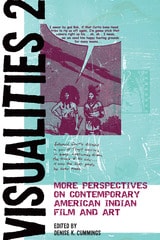
Visualities 2
More Perspectives on Contemporary American Indian Film and ArtDenise K. Cummings
Michigan State University Press, 2019
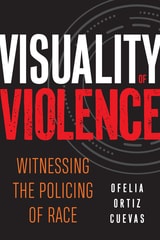
Visuality of Violence
Witnessing the Policing of RaceOfelia Ortiz Cuevas
Temple University Press, 2025
Addressing the frequently ignored experiences of Asian and Native Americans, among others, in its comparative undertaking, Visuality of Violence exceeds intersectional mapping to uniquely charge the spectacle of racial violence as a foundational practice in its continued presence in contemporary society. Cuevas argues that the visual presentations of the racial body throughout history requires a reckoning and acknowledgement of the material and legal effects of the images, narratives, and practices used to maintain hegemonic racial order and inequality.
In holding a theoretical mirror to history, Visuality of Violence reveals liberal mythical reliance on the ideals of western law and its rationalities as the location of justice and freedom, thereby presenting its readers with a new understanding in the quest for peace and liberation.
In the series Critical Race, Indigeneity, and Relationality
Visualizing Anthropology
Experimenting with Image-Based EthnographyEdited by Anna Grimshaw and Amanda Ravetz
Intellect Books, 1995
The origins of this collection lie in visual anthropology. Although the field has greatly expanded and diversified, many of the key debates continue to be focused around the textual concerns of the mainstream discipline. In seeking to establish a more genuinely visual anthropology, the editors have sought to forge links with other kinds of image-based projects. Ethnography is the shared space of practice. Understood not as a specialized method but as cultural critique, the book explores new collaborative possibilities linked to image-based work.
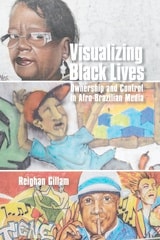
Visualizing Black Lives
Ownership and Control in Afro-Brazilian MediaReighan Gillam
University of Illinois Press, 2022
An eye-opening union of analysis and fieldwork, Visualizing Black Lives examines the alternative and activist Black media and the people creating it in today's Brazil.
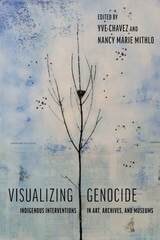
Visualizing Genocide
Indigenous Interventions in Art, Archives, and MuseumsEdited by Yve Chavez and Nancy Marie Mithlo; Foreword by Charlene Villaseñor Black
University of Arizona Press, 2022
Rather than dwelling simply in celebratory appraisals of Indigenous survival, this unprecedented volume tracks how massacres, disease, removals, abrogated treaties, religious intolerance, theft of land, and relocation are conceived by contemporary academics and artists. Contributors address indigeneity in the United States, Norway, Canada, Australia, and the Caribbean in scholarly essays, poems, and artist narratives. Missions, cemeteries, archives, exhibitions, photography, printmaking, painting, installations, performance, music, and museums are documented by fourteen authors from a variety of disciplines and illustrated with forty-three original artworks.
The authors offer honest critique, but in so doing they give hopeful and concrete strategies for the future. This powerful collection of voices employs Indigenous epistemologies and decolonial strategies, providing essential perspectives on art and visual culture.
Contributors
T. Christopher Aplin
Emily Arthur
Marwin Begaye
Charlene Villaseñor Black
Yve Chavez
Iris Colburn
Ellen Fernandez-Sacco
Stephen Gilchrist
John Hitchcock
Michelle J. Lanteri
Jérémie McGowan
Nancy Marie Mithlo
Anne May Olli
Emily Voelker
Richard Ray Whitman

Visualizing Latinx
Creative Practices in Fashion, Film, and BeyondArlene Dávila
Duke University Press, 2026

Visualizing Secularism and Religion
Egypt, Lebanon, Turkey, IndiaAlev Cinar, Srirupa Roy and Maha Yahya, Editors
University of Michigan Press, 2012
Over the past two decades secular polities across the globe have witnessed an increasing turn to religion-based political movements, such as the rise of political Islam and Hindu nationalism, which have been fueling new and alternative notions of nationhood and national ideologies. The rise of such movements has initiated widespread debates over the meaning, efficacy, and normative worth of secularism. Visualizing Secularism and Religion examines the constitutive role of religion in the formation of secular-national public spheres in the Middle East and South Asia, arguing that in order to establish secularism as the dominant national ideology of countries such as Turkey, Lebanon, and India, the discourses, practices, and institutions of secular nation-building include rather than exclude religion as a presence within the public sphere. The contributors examine three fields---urban space and architecture, media, and public rituals such as parades, processions, and commemorative festivals---with a view to exploring how the relation between secularism, religion, and nationalism is displayed and performed. This approach demands a reconceptualization of secularism as an array of contextually specific practices, ideologies, subjectivities, and "performances" rather than as simply an abstract legal bundle of rights and policies.
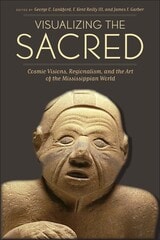
Visualizing the Sacred
Cosmic Visions, Regionalism, and the Art of the Mississippian WorldEdited by George E. Lankford, F. Kent Reilly III, and James F. Garber
University of Texas Press, 2011
The prehistoric native peoples of the Mississippi River Valley and other areas of the Eastern Woodlands of the United States shared a complex set of symbols and motifs that constituted one of the greatest artistic traditions of the pre-Columbian Americas. Traditionally known as the Southeastern Ceremonial Complex, these artifacts of copper, shell, stone, clay, and wood were the subject of the groundbreaking 2007 book Ancient Objects and Sacred Realms: Interpretations of Mississippian Iconography, which presented a major reconstruction of the rituals, cosmology, ideology, and political structures of the Mississippian peoples.
Visualizing the Sacred advances the study of Mississippian iconography by delving into the regional variations within what is now known as the Mississippian Iconographic Interaction Sphere (MIIS). Bringing archaeological, ethnographic, ethnohistoric, and iconographic perspectives to the analysis of Mississippian art, contributors from several disciplines discuss variations in symbols and motifs among major sites and regions across a wide span of time and also consider what visual symbols reveal about elite status in diverse political environments. These findings represent the first formal identification of style regions within the Mississippian Iconographic Interaction Sphere and call for a new understanding of the MIIS as a network of localized, yet interrelated religious systems that experienced both continuity and change over time.

Vita Sexualis
Karl Ulrichs and the Origins of Sexual ScienceRalph M. Leck
University of Illinois Press, 2020

Vital Decomposition
Soil Practitioners and Life PoliticsKristina M. Lyons
Duke University Press, 2020

Vital Signs
The Deadly Costs of Health InequalityLee Humber
Pluto Press, 2019

Vitality Politics
Health, Debility, and the Limits of Black EmancipationStephen Knadler
University of Michigan Press, 2019

Vitamania
Vitamins in American CultureRima Apple
Rutgers University Press, 1996
"Have you taken your vitamins today?" That question echoes daily through American households. Thanks to intensive research in nutrition and medicine, the importance of vitamins to health is undisputed. But millions of Americans believe that the vitamins they get in their food are not enough. Vitamin supplements have become a multibillion-dollar industry. At the same time, many scientists, consumer advocacy groups, and the federal Food and Drug Administration doubt that most people need to take vitamin pills.
Vitamania tells how and why vitamins have become so important to so many Americans. Rima Apple examines the claims and counterclaims of scientists, manufacturers, retailers, politicians, and consumers from the discovery of vitamins in the early twentieth century to the present. She reveals the complicated interests--scientific, professional, financial--that have propelled the vitamin industry and its would-be regulators. From early advertisements linking motherhood and vitamin D, to Linus Pauling's claims for vitamin C, to recent congressional debates about restricting vitamin products, Apple's insightful history shows the ambivalence of Americans toward the authority of science. She also documents how consumers have insisted on their right to make their own decisions about their health and their vitamins.
Vitamania makes fascinating reading for anyone who takes--or refuses to take--vitamins. It will be of special interest to students, scholars, and professionals in public health, the biomedical sciences, history of medicine and science, twentieth-century history, nutrition, marketing, and consumer studies.

Viva Baseball!
Latin Major Leaguers and Their Special HungerSamuel O. Regalado
University of Illinois Press, 2007
Lively and filled with vivid anecdotes, Viva Baseball! chronicles the struggles of Latin American professional baseball players in the United States from the late 1800s to the present.
As Latino players, managers, and owners continue to blossom into baseball's biggest stars, they have benefited from a growing Spanish-language media, a group identity, an increase in financial leverage and attention, and a burgeoning Latino culture in the United States. Although there have been several positive developments in the treatment of Latin American players, many, such as Albert Pujols, Pedro Martinez, Alex Rodriguez, and Ozzie Guillen, still face shocking racism. Samuel O. Regalado draws upon archives and rich interviews with Latin baseball stars like Felipe Alou, Orlando Cepeda, and Minnie Minoso to show the changing tenor of discrimination in the twenty-first-century game.

Viva George!
Celebrating Washington's Birthday at the US-Mexico BorderBy Elaine A. Peña
University of Texas Press, 2020
For 120 years, residents of the cross-border community of Laredo/Nuevo Laredo have celebrated George Washington's birthday together, and this account reveals the essential political work of a time-honored civic tradition.
Since 1898, residents of Laredo, Texas, and Nuevo Laredo, Tamaulipas, have reached across the US-Mexico border to celebrate George Washington's birthday. The celebration can last a whole month, with parade goers reveling in American and Mexican symbols; George Washington saluting; and “Pocahontas” riding on horseback. An international bridge ceremony, the heart and soul of the festivities, features children from both sides of the border marching toward each other to link the cities with an embrace. ¡Viva George! offers an ethnography and a history of this celebration, which emerges as both symbol and substance of cross-border community life. Anthropologist and Laredo native Elaine A. Peña shows how generations of border officials, civil society organizers, and everyday people have used the bridge ritual to protect shared economic and security interests as well as negotiate tensions amid natural disasters, drug-war violence, and immigration debates. Drawing on previously unknown sources and extensive fieldwork, Peña finds that border enactments like Washington's birthday are more than goodwill gestures. From the Rio Grande to the 38th Parallel, they do the meaningful political work that partisan polemics cannot.
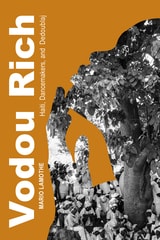
Vodou Rich
Haiti, Dancemakers, and DedoublajMario LaMothe
University of Illinois Press, 2026
LaMothe weaves Vodou teaching practices with humanist and social science theory to shed light on how choreographers move among ideas of Haitian bodies as vessels, producers, and traffickers of Vodou economies. As he shows, the dancemakers’ work maneuvers through national uncertainties and international caricatures of Haiti’s challenges. At the same time, it pivots between these phenomena via dedoublaj—the act of doubling, self-doubling, transformation, and soulful travel. LaMothe’s analysis of dedoublaj reveals how dancemakers reimagine Haitian bodies as self-possessed human beings remedying unjust practices, envisioning chances for solidarity and being, and setting a course for queerly paced futures.
Powerful and multidisciplinary, Vodou Rich explores Haitian dancemaking at home and its reception around the world.

Voice Lessons
By Alice Embree
University of Texas Press, 2021
Voice Lessons explores the rich personal and political terrain of Alice Embree, a 1960s activist and convert to the women’s liberation movement of the 1970s, bringing a woman’s perspective to a transformational time in US history. This riveting memoir traces the author’s roots in segregated Austin and her participation in efforts to integrate the University of Texas. It follows her antiwar activism from a vigil in front of President Lyndon Johnson’s ranch in 1965 to a massive protest after the shootings at Kent State in 1970. Embree’s activism brought her and the Students for a Democratic Society into conflict with Frank Erwin, the powerful chairman of the UT Board of Regents, and inspired a campus free speech movement. She recounts her experiences living in New York during the tumultuous years of 1968 and 1969, including the Columbia University strike and the Woodstock music festival. She also tells about protesting at the Chicago Democratic Convention, her interactions with Yippies and poets, and her travels to Chile, Cuba, and Mexico. Embree highlights the radical roots of the women’s liberation movement in Austin and the audacious women’s community that challenged gender roles, fought for reproductive justice, and inspired a lifetime of activism.

Voice Over
The Making of Black RadioWilliam Barlow
Temple University Press, 1998
Barlow, whose voice has been heard on WPFW (Washington, D.C.) for many years, brings an insider's knowledge to this account of black radio as a predominantly local and still powerful medium. Many of the broadcasters he profiles -- Jack Cooper, Paul Robeson, Richard Durham, Cathy Hughes, Al Benson, Georgie Woods, Peggy Mitchell, Hal Jackson, Jocko Henderson, Mary Mason, Wesley South, Martha Jean "the Queen" Steinberg, to name a few -- became not only celebrities but also respected members of their communities. Atlanta's Jack "the Rapper" Gibson, for instance, tells how he literally shared his microphone with Rev. Martin Luther King Jr. to announce meetings and rally listeners around a key issue. By showing the extent to which so many black broadcasters achieved the status of trusted and influential community leaders, Barlow acknowledges that their grassroots activism was an indispensable and often overlooked part of the ongoing African American civil rights movement.
Voice Over also addresses black radio's broadly significant role in entertainment and shifting race relations. Until the rock and roll revolution, audiences had largely been segregated. The African American personality jocks who introduced white teens to rhythm and blues were a revelation; their wild style and personas and the music they played changed broadcasting while it enthralled a multiracial audience. Although the stations that introduced the enormously popular music were identified as black, virtually none was black-owned or managed. The broadcasters who distanced themselves from music industry perks and payoffs proposed an ambitious agenda for change. This little-known story sets the stage for how the proliferation of black-owned stations and networks occurred and for Barlow's assessment of the instability of today's black radio scene.
Written for a broad spectrum of readers -- from nostalgic fans of Jocko and Georgie Woods to loyal listeners of surviving stations and media watchers committed to diversity in broadcasting -- Voice Over tells the whole story of the making of black radio.
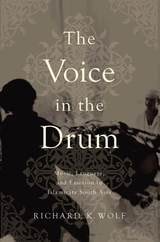
Voice in the Drum
Music, Language, and Emotion in Islamicate South AsiaRichard Wolf
University of Illinois Press, 2017

Voice, Silence and Gender in South Africa's Anti-Apartheid Struggle
The Shadow of a Young WomanRachel E. Johnson
University of London Press, 2025
Who spoke about the liberation struggle whilst it was ongoing? When did they speak and how? And what effects do the gendered history of speech and silence within anti-apartheid politics continue to have upon our knowledge of the past? Arguing that she is emblematic of the way gendered narratives of the struggle have been made, this book listens for the voice and silence of Masabata Loate and her contemporaries within political trials; newspapers; photography; human rights reportage; creative fiction, drama, poetry and song; autobiography and memoir; and oral histories. The result is an unconventional biography that sees this young woman as a shadow within the story of South Africa’s anti-apartheid liberation struggle.

Voices That Matter
Kurdish Women at the Limits of Representation in Contemporary TurkeyMarlene Schäfers
University of Chicago Press, 2023
A fine-grained ethnography exploring the sociopolitical power of Kurdish women’s voices in contemporary Turkey.
“Raise your voice!” and “Speak up!” are familiar refrains that assume, all too easily, that gaining voice will lead to empowerment, healing, and inclusion for marginalized subjects. Marlene Schäfers’s Voices That Matter reveals where such assumptions fall short, demonstrating that “raising one’s voice” is no straightforward path to emancipation but fraught with anxieties, dilemmas, and contradictions. In its attention to the voice as form, this book examines not only what voices say but also how they do so, focusing on Kurdish contexts where oral genres have a long, rich legacy. Examining the social labor that voices carry out as they sound, speak, and resonate, Schäfers shows that where new vocal practices arise, they produce new selves and practices of social relations. In Turkey, recent decades have seen Kurdish voices gain increasing moral and political value as metaphors of representation and resistance. Women’s voices, in particular, are understood as potent means to withstand patriarchal restrictions and political oppression. By ethnographically tracing the transformations in how Kurdish women relate to and employ their voices as a result of these shifts, Schäfers illustrates how contemporary politics foster not only new hopes and desires but also create novel vulnerabilities as they valorize, elicit, and discipline voice in the name of empowerment and liberation.

Voices and Votes Teacher's Guide
How Democracy Works in Wisconsin TGJon Kasparek and Bobbie Malone
Wisconsin Historical Society Press, 2006
Voices and Votes: How Democracy Works in Wisconsin; Teacher's Guide and Student Materials features several activities for each chapter to engage students in a more in-depth exploration of the book. These activities, designed for both individual and small groups, demand the use of higher-level thinking skills while integrating a wide range of learning styles, and all have culminating components that can be used for assessment. The guide also features easily reproducible student pages, including maps, charts, and interesting illustrations.

Voices and Votes
How Democracy Works in WisconsinJon Kasparek
Wisconsin Historical Society Press, 2006
Voices & Votes: How Democracy Works in Wisconsin invites upper elementary school students to explore the intersection of American civics and Wisconsin history. This sixth and final book in the New Badger History series introduces students to the basic structures of American democracy, state government, and Wisconsin's road to statehood. The first seven chapters help students grasp how the three branches of government function at the federal, state, local, and tribal levels, while tying these structural notions to Wisconsin history. Students will learn that citizens' voices and votes help government evolve to meet ever-changing societal needs. The last chapter emphasizes how young people can actively engage in their communities to bring about positive change.

Voices and Votes
How Government Works in WisconsinWisconsin Historical Society Press, 2025
What are the different levels of government in Wisconsin? How are laws made? What is a political party? Who is allowed to vote in elections? How can citizens get involved in their communities?
These questions and many more are answered in this revised and updated edition of Voices and Votes, aimed at students in grades 3–5. Filled with color photos and illustrations—as well as diagrams, maps, and vocabulary words that make the material easy to absorb—this book explores:
- The fundamentals of federal, state, local, and Tribal government
- How Wisconsin’s constitution was created and how it has changed
- The way elections work and why voting matters
Readers will also find compelling examples of citizens from our state’s past who spoke up and worked to change laws and policies in order to improve their communities, including:
- Gaylord Nelson, who advocated for the environment as a state senator, member of Congress, and governor
- Vel Phillips, who helped expand housing opportunities as a member of Milwaukee’s city council
- Jesus Salas, who worked with state agencies to improve the lives of migrant farmworkers in Wisconsin
The book also offers contemporary stories of young people engaging with their communities, working to solve problems, and sharing their voices. This brilliantly updated edition of Voices and Votes will inspire a new generation of readers to understand and participate in our democracy.

Voices for the Future
Essays on Major Science Fiction Writers, Volume 1Thomas D. Clareson
University of Wisconsin Press, 1976

Voices for the Future
Essays on Major Science Fiction Writers, Volume 3Thomas D. Clareson
University of Wisconsin Press, 1984

Voices from Madagascar Voix de Madagascar
An Anthology of Contemporary Francophone Literature/Anthologie de littérature francophone contemporaineJacques Bourgeacq
Ohio University Press, 2001
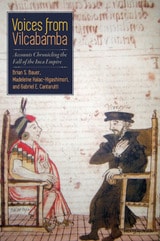
Voices from Vilcabamba
Accounts Chronicling the Fall of the Inca EmpireBrian S. Bauer
University Press of Colorado, 2016
A rich new source of important archival information, Voices from Vilcabamba examines the fall of the Inca Empire in unprecedented detail. Containing English translations of seven major documents from the Vilcabamba era (1536–1572), this volume presents an overview of the major events that occurred in the Vilcabamba region of Peru during the final decades of Inca rule.
Brian S. Bauer, Madeleine Halac-Higashimori, and Gabriel E. Cantarutti have translated and analyzed seven documents, most notably Description of Vilcabamba by Baltasar de Ocampo Conejeros and a selection from Martín de Murúa’s General History of Peru, which focuses on the fall of Vilcabamba. Additional documents from a range of sources that include Augustinian investigations, battlefield reports, and critical eyewitness accounts are translated into English for the first time.
With a critical introduction on the history of the region during the Spanish Conquest and introductions to each of the translated documents, the volume provides an enhanced narrative on the nature of European-American relations during this time of important cultural transformation.

Voices from the "Jungle"
Stories from the Calais Refugee CampCalais Writers
Pluto Press, 2017
In this moving collection of individual testimonies, Calais refugees speak directly in powerful and vivid stories, offering their memories up with stunning honesty. They tell of their childhood dreams and struggles for education; the genocides, wars, and persecution that drove them from home; the simultaneous terror and strength that filled their extraordinary journeys; the realities of living in the Calais refugee camp; and their deepest hopes for the future.
Through their stories, these refugees paint a picture of a different kind of Jungle—a powerful sense of community that has grown despite evictions and attacks and a solidarity that crosses national and religious boundaries. Interspersed with photos taken by the camp's inhabitants, taught by award-winning photographers Gideon Mendel and Crispin Hughes, original artwork by inhabitants, and powerful poems, Voices from the “Jungle” must be read by anyone seeking to understand the human consequences of our current world crisis.

Voices from the Ancestors
Xicanx and Latinx Spiritual Expressions and Healing PracticesEdited by Lara Medina and Martha R. Gonzales
University of Arizona Press, 2019
This wisdom is based on the authors’ oral traditions, research, intuitions, and lived experiences—wisdom inspired by, and created from, personal trajectories on the path to spiritual conocimiento, or inner spiritual inquiry. This conocimiento has reemerged over the last fifty years as efforts to decolonize lives, minds, spirits, and bodies have advanced. Yet this knowledge goes back many generations to the time when the ancestors understood their interconnectedness with each other, with nature, and with the sacred cosmic forces—a time when the human body was a microcosm of the universe.
Reclaiming and reconstructing spirituality based on non-Western epistemologies is central to the process of decolonization, particularly in these fraught times. The wisdom offered here appears in a variety of forms—in reflective essays, poetry, prayers, specific guidelines for healing practices, communal rituals, and visual art, all meant to address life transitions and how to live holistically and with a spiritual consciousness for the challenges of the twenty-first century.

Voices from the Global Margin
Confronting Poverty and Inventing New Lives in the AndesBy William P. Mitchell
University of Texas Press, 2006
2007 — LASA Peru Flora Tristán Book Prize from the Peru Section – Latin American Studies Association
Voices from the Global Margin looks behind the generalities of debates about globalization to explore the personal impact of global forces on the Peruvian poor. In this highly readable ethnography, William Mitchell draws on the narratives of people he has known for forty years, offering deep insight into how they have coped with extreme poverty and rapid population growth—and their creation of new lives and customs in the process. In their own passionate words they describe their struggles to make ends meet, many abandoning rural homes for marginal wages in Lima and the United States. They chronicle their terror during the Shining Path guerrilla war and the government's violent military response. Mitchell's long experience as an anthropologist living with the people he writes about allows him to put the stories in context, helping readers understand the impact of the larger world on individuals and their communities. His book reckons up the human costs of the global economy, urging us to work toward a more just world.
Voices from the Heart of the Land
Rural Stories that Inspire CommunityRichard L. Cates Jr.
University of Wisconsin Press, 2008

Voices in American Archaeology
Wendy Ashmore
University Press of Colorado, 2010
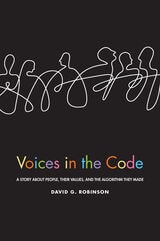
Voices in the Code
A Story about People, Their Values, and the Algorithm They MadeDavid G. Robinson
Russell Sage Foundation, 2022
In Voices in the Code, scholar David G. Robinson tells the story of how one community built a life-and-death algorithm in an inclusive, accountable way. Between 2004 and 2014, a diverse group of patients, surgeons, clinicians, data scientists, public officials and advocates collaborated and compromised to build a new kidney transplant matching algorithm—a system to offer donated kidneys to particular patients from the U.S. national waiting list. Drawing on interviews with key stakeholders, unpublished archives, and a wide scholarly literature, Robinson shows how this new Kidney Allocation System emerged and evolved over time, as participants gradually built a shared understanding both of what was possible, and of what would be fair. Robinson finds much to criticize, but also much to admire, in this story. It ultimately illustrates both the promise and the limits of participation, transparency, forecasting and auditing of high stakes software. The book’s final chapter draws out lessons for the broader struggle to build technology in a democratic and accountable way.
Voices in the Shadows
Women and Verbal Art in Serbia and BosniaCelia Hawkesworth
Central European University Press, 2000
Women are conspicuously absent from traditional cultural histories of south-east Europe. This book addresses that imbalance by describing the contribution of women to literary culture in the Orthodox/ Ottoman areas of Serbia and Bosnia.
The first complete literary history in relation to women's writing in south-east Europe. The author provides a broad chronological account of this contribution, dividing the book into two main parts; the earlier period up until the eighteenth century concentrates on the projections of gender through the medium of oral tradition and the lives of a handful of educated women in medieval Serbia and the few works of literature they left. Hawkesworth also looks at the written literature produced by women, first in the mid-nineteenth century and then at the turn of the century. The second part focuses on the trials and tribulations that affected feminism and women's literature throughout the twentieth century. The author finishes by highlighting the new women's movement, 1975-1990, a great period for women in Yugoslavia which created a stimulating atmosphere for outstanding pieces of women's journalism, prose and verse, culminating in the creation of new women's studies courses in many universities.

Voices of 1968
Documents from the Global NorthEdited by Laurence Cox, Salar Mohandesi and Bjarke Skaerlund Risager
Pluto Press, 2018
Voices of 1968 is a vivid collection of key texts from the movements and uprisings of “the long 1968.” Emphasizing the transnational linkages between these struggles, the primary documents of this collection delve into events that took place as far afield as Italy, France, West Germany, the United States, Mexico, Canada, Britain, Northern Ireland, Denmark, Czechoslavakia, Yugoslavia, and Japan. This wealth of material is supported by framing essays helping readers to find their way around the era’s revolutionary ideas and to understand their legacy in politics, culture, and society today. Featuring many texts that have never been seen in English before, this remarkable collection is published to coincide with the fiftieth anniversary of the events of 1968.
Voices of Fire
Reweaving the Literary Lei of Pele and Hi'iakaku'ualoha ho'omanawanui
University of Minnesota Press, 2014
Stories of the volcano goddess Pele and her youngest sister Hi‘iaka, patron of hula, are most familiar as a form of literary colonialism—first translated by missionary descendants and others, then co-opted by Hollywood and the tourist industry. But far from quaint tales for amusement, the Pele and Hi‘iaka literature published between the 1860s and 1930 carried coded political meaning for the Hawaiian people at a time of great upheaval. Voices of Fire recovers the lost and often-suppressed significance of this literature, restoring it to its primary place in Hawaiian culture.
Ku‘ualoha ho‘omanawanui takes up mo‘olelo (histories, stories, narratives), mele (poetry, songs), oli (chants), and hula (dances) as they were conveyed by dozens of authors over a tumultuous sixty-eight-year period characterized by population collapse, land alienation, economic exploitation, and military occupation. Her examination shows how the Pele and Hi‘iaka legends acted as a framework for a Native sense of community. Freeing the mo‘olelo and mele from colonial stereotypes and misappropriations, Voices of Fire establishes a literary mo‘okū‘auhau, or genealogy, that provides a view of the ancestral literature in its indigenous contexts.
The first book-length analysis of Pele and Hi‘iaka literature written by a Native Hawaiian scholar, Voices of Fire compellingly lays the groundwork for a larger conversation of Native American literary nationalism.
Voices of Indigenuity
Michelle Montgomery
University Press of Colorado, 2023
Advocating for and providing an expansion of place-based Indigenized education that infuses Indigenous epistemologies for student success in both K–12 and higher education curricula, these essays explore topics such as land fragmentation, remote sensing, and outreach through the lens of TEK, demonstrating methods of fusing learning with Indigenous knowledge (IK). Contributors emphasize the need to increase the perspectives of IK within institutionalized knowledge beyond being co-opted into non-Indigenous frameworks that may be fundamentally different from Indigenous ways of thinking.
Decolonizing current harmful pedagogical curricula and research training about the natural world through an Indigenous- guided approach is an essential first step to rebuilding a healthy relationship with our environment while acknowledging that all relationships come with an ethical responsibility. Voices of Indigenuity captures the complexities of exploring the contextu- alized meanings for why TEK should be integrated into Western environmental science processes and frameworks while rooted in Indigenous studies programs.

Voices of Mental Health
Medicine, Politics, and American Culture, 1970-2000Halliwell, Martin
Rutgers University Press, 2017
Together, these three dimensions bring into conversation a diverse cast of late-century writers, filmmakers, actors, physicians, politicians, policy-makers, and social critics. In doing so, Martin Halliwell’s Voices of Mental Health breaks new ground in deepening our understanding of the place, politics, and trajectory of mental health from the moon landing to the millennium.
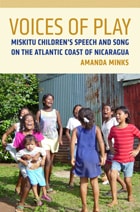
Voices of Play
Miskitu Children's Speech and Song on the Atlantic Coast of NicaraguaAmanda Minks
University of Arizona Press, 2013
Corn Island is historically home to Afro-Caribbean Creole people, but increasing numbers of Miskitu people began moving there from the mainland during the Contra War, and many Spanish-speaking mestizos from western Nicaragua have also settled there. Miskitu kids on Corn Island often gain some competence speaking Miskitu, Spanish, and Kriol English. As the children of migrants and the first generation of their families to grow up with television, they develop creative forms of expression that combine languages and genres, shaping intercultural senses of belonging.
Voices of Play is the first ethnography to focus on the interaction between music and language in children’s discourse. Minks skillfully weaves together Latin American, North American, and European theories of culture and communication, creating a transdisciplinary dialogue that moves across intellectual geographies. Her analysis shows how music and language involve a wide range of communicative resources that create new forms of belonging and enable dialogue across differences. Miskitu children’s voices reveal the intertwining of speech and song, the emergence of “self” and “other,” and the centrality of aesthetics to social struggle.

Voices of the Jazz Age
Profiles of Eight Vintage JazzmenChip Deffaa
University of Illinois Press, 1990