Results by title
51 books match the query 'Arts in Education' and 3 start with w

Walking in Art Education
Ecopedagogical and A/r/tographical Encounters.Edited by Nicole Rallis, Ken Morimoto, Michele Sorensen, Valerie Triggs, and Rita Irwin
Intellect Books, 2024
In Walking in Art Education, authors explore walking and a/r/tography in their local contexts. As a result, the book finds that kinship and relationality are significant themes that permeate across a/r/tographic practices focused on ecopedagogy and learning with the land. These walking practices serve as ecopedagogical moments that attune us to human-land and more-than-human relationships, while also moving us past Western-centric understandings of land and place. More than this, the book situates this work in a/r/tographic practices taking up walking as one method for engagement.
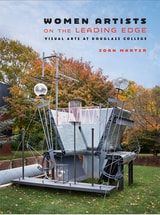
Women Artists on the Leading Edge
Visual Arts at Douglass CollegeJoan M. Marter
Rutgers University Press, 2020
How do students develop a personal style from their instruction in a visual arts program? Women Artists on the Leading Edge explores this question as it describes the emergence of an important group of young women artists from an innovative post-war visual arts program at Douglass College.
The women who studied with avant-garde artists at Douglas were among the first students in the nation to be introduced to performance art, conceptual art, Fluxus, and Pop Art. These young artists were among the first to experience new approaches to artmaking that rejected the predominant style of the 1950s: Abstract Expressionism. The New Art espoused by faculty including Robert Watts, Allan Kaprow, Roy Lichtenstein, Geoffrey Hendricks, and others advocated that art should be based on everyday life. The phrase “anything can be art” was frequently repeated in the creation of Happenings, multi-media installations, and video art. Experimental approaches to methods of creation using a remarkable range of materials were investigated by these young women. Interdisciplinary aspects of the Douglass curriculum became the basis for performances, videos, photography, and constructions. Sculpture was created using new technologies and industrial materials. The Douglass women artists included in this book were among the first to implement the message and direction of their instructors.
Ultimately, the artistic careers of these young women have reflected the successful interaction of students with a cutting-edge faculty. From this BA and MFA program in the Visual Arts emerged women such as Alice Aycock. Rita Myers, Joan Snyder, Mimi Smith, and Jackie Winsor, who went on to become lifelong innovators. Camaraderie was important among the Douglass art students, and many continue to be instructors within a close circle of associates from their college years. Even before the inception of the women’s art movement of the 1970s, these women students were encouraged to pursue professional careers, and to remain independent in their approach to making art. The message of the New Art was to relate one’s art production to life itself and to personal experiences. From these directions emerged a “proto-feminist” art of great originality identified with women’s issues. The legacy of these artists can be found in radical changes in art instruction since the 1950s, the promotion of non-hierarchical approaches to media, and acceptance of conceptual art as a viable art form.
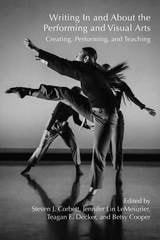
Writing in and about the Performing and Visual Arts
Creating, Performing, and TeachingSteven J. Corbett
University Press of Colorado, 2020