Results by title
3071 books match the query 'Business & Economics' and 101 start with w

WERNER VON SIEMENS
INVENTOR AND INTERNATIONAL ENTREPRENEURWILFRIED FELDENKIRCHEN
The Ohio State University Press, 1994

Wageless Life
A Manifesto for a Future beyond CapitalismIan G. R. Shaw
University of Minnesota Press, 2019
Drawing up alternate ways to “make a living” beyond capitalism
To live in this world is to be conditioned by capital. Once paired with Western democracy, unfettered capitalism has led to a shrinking economic system that squeezes out billions of people—creating a planet of surplus populations. Wageless Life is a manifesto for building a future beyond the toxic failures of late-stage capitalism. Daring to imagine new social relations, new modes of economic existence, and new collective worlds, the authors provide skills and tools for perceiving—and living in— a post-capitalist future.
Forerunners: Ideas First
Short books of thought-in-process scholarship, where intense analysis, questioning, and speculation take the lead
Wages and Labor Markets in the United States, 1820-1860
Robert A. Margo
University of Chicago Press, 1999
This volume makes a significant contribution to economic history by presenting a vast amount of previously unexamined data to advance the understanding of the history of wages and labor markets in the antebellum economy.
Wages, Welfare Costs and Inflation in Classical Athens
William T. Loomis
University of Michigan Press, 1999
Individual chapters critically examine each surviving wage or other payment in thirteen job categories, including public office holders; soldiers and sailors; priests, oracles, and seers; overseers, architects, and other salaried construction personnel; and prostitutes and pimps. Three additional chapters then consider whether there was a "standard wage," inflation and deflation in Athens, and the implications of these conclusions for the hotly debated question about the nature of the Athenian economy.
This is the first comprehensive study of Athenian labor and welfare costs since August Böckh's Die Staatshaushaltung der Athener (1886). An updated critical study has been much needed, to take account of the greatly expanded evidence (Aristotle's Constitution of the Athenians, more than a dozen other papyrus texts and hundreds of inscriptions), and the uneven quality of the sources. This collection allows William T. Loomis to argue--contrary to prevailing scholarly opinion--that there never was a "standard wage" at Athens.
"This volume will be a significant contribution to all studies of ancient Greek civilization." --Alan L. Boegehold, Brown University
William Loomis is Visiting Professor of Classics, University of Michigan.
Waikiki Dreams
How California Appropriated Hawaiian Beach CulturePatrick Moser
University of Illinois Press, 2024
Despite a genuine admiration for Native Hawaiian culture, white Californians of the 1930s ignored authentic relationships with Native Hawaiians. Surfing became a central part of what emerged instead: a beach culture of dressing, dancing, and acting like an Indigenous people whites idealized.
Patrick Moser uses surfing to open a door on the cultural appropriation practiced by Depression-era Californians against a backdrop of settler colonialism and white nationalism. Recreating the imagined leisure and romance of life in Waikīkī attracted people buffeted by economic crisis and dislocation. California-manufactured objects like surfboards became a physical manifestation of a dream that, for all its charms, emerged from a white impulse to both remove and replace Indigenous peoples. Moser traces the rise of beach culture through the lives of trendsetters Tom Blake, John “Doc” Ball, Preston “Pete” Peterson, Mary Ann Hawkins, and Lorrin “Whitey” Harrison while also delving into California’s control over images of Native Hawaiians via movies, tourism, and the surfboard industry.
Compelling and innovative, Waikīkī Dreams opens up the origins of a defining California subculture.
Waiting On Washington
Central American Workers in the Nation's CapitalTerry A. Repak
Temple University Press, 1995
In an analysis of recent immigration patterns in Washington, D.C., Terry A. Repak documents the unusual predominance of women among Central American immigrants. Two thirds of the arriving immigrants in earlier decades have been women, many of them recruited by international diplomats and U.S. government employees to work as housekeepers and nannies. Repak considers the labor force participation patterns for women compared to men, the effect of immigration laws—particularly the IRCA's uneven impact on women versus men—and the profound adjustments in gender roles and identities that accompany migration.
Showing an extraordinary amount of autonomy, most of these immigrant women decided to migrate without consulting either fathers or partners, and they gained even greater independence once settled. Repak plots the career trajectories of numerous Central American immigrant women and men to illustrate the array of the women's responses, gender differences in the migration and assimilation experience, the availability of work, and the possibility for upward mobility and higher wages. Providing social, economic and political context, she looks at the conditions that set the stage for this migration, including the rapid expansion of service jobs in the 1960s and 1970s in Washington, D. C. and the political strife in such Central American countries as war-torn El Salvador, Nicaragua, and Guatemala.
Walking the Gendered Tightrope
Theresa May and Nancy Pelosi as Legislative LeadersMelissa Haussman and Karen M. Kedrowski
University of Michigan Press, 2023

Wall Street Women
Melissa S. Fisher
Duke University Press, 2012
Fisher charts the evolution of the women's careers, the growth of their political and economic clout, changes in their perspectives and the cultural climate on Wall Street, and their experiences of the 2008 financial collapse. While most of the pioneering subjects of Wall Street Women did not participate in the women's movement as it was happening in the 1960s and 1970s, Fisher argues that they did produce a "market feminism" which aligned liberal feminist ideals about meritocracy and gender equity with the logic of the market.

Walter Reuther
THE MOST DANGEROUS MAN IN DETROITNelson Lichtenstein
University of Illinois Press, 1995
Previously published by Basic Books as The Most Dangerous Man in Detroit: Walter Reuther and the Fate of American Labor

War, Peace, and Prosperity in the Name of God
The Ottoman Role in Europe's Socioeconomic EvolutionMurat Iyigun
University of Chicago Press, 2015
War, Peace, and Prosperity in the Name of God turns the focus on the “big three monotheisms”—Judaism, Islam, and Christianity—to consider these questions. Chronicling the relatively rapid spread of the Abrahamic religions among the Old World, Murat Iyigun shows that societies that adhered to a monotheistic belief in that era lasted longer, suggesting that monotheism brought some sociopolitical advantages. While the inherent belief in one true god meant that these religious communities had sooner or later to contend with one another, Iyigun shows that differences among them were typically strong enough to trump disagreements within. The book concludes by documenting the long-term repercussions of these dynamics for the organization of societies and their politics in Europe and the Middle East.

Waste is a Terrible Thing to Mind
Risk, Radiation, and Distrust of GovernmentWeingart, John
Rutgers University Press, 2007
It is an unenviable task, but one that all state governments face: finding a final “resting place” for low-level nuclear waste from power plants, hospitals, university laboratories, and other industries. John Weingart was the official in New Jersey who for many years led this onerous charge. This book is the story of how he and a commission appointed by the governor, instead of imposing a top-down solution, designed an approach that would confront public fears by seeking a community that would volunteer to host a disposal facility. Initially, this novel approach was surprisingly successful, as leaders in a dozen municipalities stepped forward to say they might be interested. Once their interest became known, however, the process in each town derailed. Residents demanded assurances of zero-percent risk and expressed profound distrust of government assertions and promises.
Waste Is a Terrible Thing to Mind is a compelling, suspenseful, and amusing insider’s account of New Jersey policy and politics, but it is also a larger saga of the challenges facing society in the post–9/11 era when the public’s distrust of government is increasing at the same time that its sensitivity to health and safety threats is heightened.
For more information, see: http://wasteisaterriblethingtomind.com/
"Written with a wry sense of humor, it is a pleasure to read and could provide the blueprint for future efforts to find locations for controversial land uses."
- Marie Curtis, Executive Director, New Jersey Environmental Lobby
"A penetrating look at one state's struggle with radioactive waste ... offering some tantalizing reflections on the public understanding of science and how we, in a democratic society, deal with complexity and uncertainty."
- Jay Kaufman, State Senator, Massachusetts State Legislature
"A provocative story, laced with humor, demonstrates how public distrust of government can make it impotent. It should be read by anyone working on public policy issues, especially planning, growth, and the environment."
- Harriet Keyserling, Former Energy Committee Chair, South Carolina State Legislature
"Readers interested in environmental policy, land use and how governments make decisions will learn much from this fine reflective insider's account. It's also a primer on how to survive and thrive in state government."
- David N. Kinsey, Visiting Professor, Woodrow Wilson School Princeton University
"... a fascinating case study of how a government agency creatively tried to solve an intractable public issue. Although the agency failed in its quest to recruit a town to host a low-level radioactive waste site, Weingart's detailed and often humorous narrative of the agency's efforts is a clear winner."
- Jack Sabatino, Judge, New Jersey Superior Court
"... a very engaging and sometimes discouraging case study about the pitfalls and perils of trying to site a controversial facility the right way."
- Gregg Larson, Administrator, Center for Biometric Research, University of Minnesota
Waterfront Workers of New Orleans
Race, Class, and Politics, 1863-1923Eric Arnesen
University of Illinois Press, 1991
Winner of the John H. Dunning Prize in United States History
During the nineteenth century, American and foreign travelers often found New Orleans a delightful, exotic stop on their journeys. Few failed to marvel at the riverfront, the center of the city's economic activity. But historical memory overlooks the immigrants and Black migrants who served in the riverfront's army of laborers and provided the essential human power that kept the cotton, sugar, and other goods flowing. Eric Arnesen examines the diverse group of 10,000 to 15,000 cotton screwmen, longshoremen, cotton and round freight teamsters, cotton yardmen, railroad freight handlers, and Mississippi River roustabouts that formed the backbone of the Crescent City's trade and economic life.
Waterfront Workers
New Perspectives on Race and ClassEdited by Calvin Winslow
University of Illinois Press, 1998

Waves of Opposition
Labor and the Struggle for Democratic RadioElizabeth Fones-Wolf
University of Illinois Press, 2006
Radio sparked the massive upsurge of organized labor during the Great Depression. The powerful new medium became an important weapon in the ideological war between labor and business. Corporations used radio to sing the praises of individualism and consumerism, while unions emphasized equal rights, industrial democracy, and social justice.
Elizabeth Fones-Wolf analyzes the battle to utilize, and control, the airwaves in radio's early era. Working chronologically, she explores the advent of local labor radio stations such as WCFL and WEVD, labor's campaigns against corporate censorship, and union experiments with early FM broadcasting. Using union archives and broadcast industry records, Fones-Wolf demonstrates radio's key role in organized labor's efforts to fight business's domination of political discourse throughout the 1930s, 1940s, and 1950s. She concludes with a look at how labor's virtual disappearance from today's media helps explain why unions have become so marginalized, and offers important historical lessons for revitalizing organized labor.
We Always Had a Union
The New York Hotel Workers' Union, 1912-1953Shaun Richman
University of Illinois Press, 2025
From the start, New York’s organized hotel workers experimented with and adapted how they organized and governed members and related to other labor unions. Richman follows union fortunes from early IWW activity through the Communist-led affiliates of the American Federation of Labor in the 1920s and 1930s, the shaping of breakthrough negotiating strategies, and the postwar era. As Richman shows, workers adopted a radicalism and militancy seldom associated with an AFL organization while openly negotiating the Communist Party’s power and influence within the union, until the Party’s eclipse in the 1950s.
An inspiring story of action and perseverance, We Always Had a Union profiles a foundational American labor union and offers lessons for today’s workers and organizers.
We Cant Eat Prestige
The Women Who Organized HarvardJohn Hoerr
Temple University Press, 2001
This story explodes the popular belief that women white-collar workers tend to reject unionization and accept a passive role in the workplace. On the contrary, the women workers of Harvard University created a powerful and unique union--one that emphasizes their own values and priorities as working women and rejects unwanted aspects of traditional unionism.
The workers involved comprise Harvard's 3,600-member "support staff," which includes secretaries, library and laboratory assistants, dental hygienists, accounting clerks, and a myriad of other office workers who keep a great university functioning. Even at prestigious private universities like Harvard and Yale, these workers--mostly women--have had to put up with exploitive management policies that denied them respect and decent wages because they were women. But the women eventually rebelled, declaring that they could not live on "prestige" alone.
Encouraged by the women's movement of the early 1970's, a group of women workers (and a few men) began what would become a 15-year struggle to organize staff employees at Harvard. The women persisted in the face of patronizing and sexist attitudes of university administrators and leaders of their own national unions. Unconscionably long legal delays foiled their efforts. But they developed innovative organizing methods, which merged feminist values with demands for union representation and a means of influencing workplace decisions.
Out of adversity came an unorthodox form of unionism embodied in the Harvard Union of Clerical and Technical Workers (HUCTW). Its founding was marked by an absorbing human drama that pitted unknown workers, such as Kris Rondeau, a lab assistant who came to head the union, against famous educators such as Harvard President Derek Bok and a panoply of prestigious deans. Other characters caught up in the drama included Harvard's John T. Dunlop, the nation's foremost industrial relations scholar and former U.S. Secretary of Labor. The drama was played out in innumerable hearings before the National Labor Relations Board, in the streets of Cambridge, and on the walks of historic Harvard Yard, where union members marched and sang and employed new tactics like "ballooning," designed to communicate a message of joy and liberation rather than the traditional "hate-the-boss" hostility.
John Hoerr tells this story from the perspective of both Harvard administrators and union organizers. With unusual access to its meetings, leaders, and files, he examines the unique culture of a female-led union from the inside. Photographs add to the impact of this dramatic narrative.
postamble();We Shall Be All
A History of the Industrial Workers of the World (abridged ed.)Melvyn Dubofsky
University of Illinois Press, 2000
Originally published in 1969, Melvyn Dubofsky's We Shall Be All has remained the definitive archive-based history of the IWW. While much has been written on aspects of the IWW's history in the past three decades, nothing has duplicated or surpassed this authoritative work. The present volume, an abridged version of this labor history classic, makes the compelling story of the IWW accessible to a new generation of readers.
In its heyday, between 1905 and 1919, the IWW nourished a dream of a better America where poverty-–material and spiritual–-would be erased and where all people, regardless of nationality or color, would walk free and equal. More than half a century ago the Wobblies tried in their own ways to grapple with issues that still plague the nation in a more sophisticated and properous era. Their example has inspired radicals in America and abroad over the greater part of a century
We Stay the Same
Subsistence, Logging, and Enduring Hopes for Development in Papua New GuineaJason Steadman Roberts
University of Arizona Press, 2024
Following a long history of smaller-scale and largely unsuccessful resource development efforts, New Hanover became the site of three multinational-controlled special agricultural and business leases (SABLs) that combined to cover over 75 percent of the island for ninety-nine-year lease terms. These agroforestry projects were part of a national effort to encourage “sustainable” rural development by tapping into the growing global demand for agricultural lands and crops like oil palm and biofuels. They were supposed to succeed where the smaller-scale projects of the past had failed. Unfortunately, these SABLs resulted in significant forest loss and livelihood degradation, while doing little to promote the type of economic development that many Lavongai had been hoping for.
It is within this context that We Stay the Same grounds questions of hope for transformative economic change within Lavongai assessments of the inequitable relationships between global processes of resource development and the local lives that have become increasingly defined by the necessities and failures of these processes. Written in a clear and relatable style for students, We Stay the Same combines ethnographic and ecological research to show how the Lavongai continue to survive and make meaningful lives in a situation where their own hopes for a better future have often been used against them as a mechanism of a more distantly profitable dispossession.

Wealth Accumulation and Communities of Color in the United States
Current IssuesJessica Gordon Nembhard and Ngina Chiteji, Editors
University of Michigan Press, 2010
--Kilolo Kijakazi, Ph.D., The Ford Foundation
"An important contribution to the economics literature on wealth and to our understanding of racial and ethnic inequality. This book adds to our knowledge and understanding of the wealth positions of Latinos, Asian Americans, Hawaiians, and Native Americans and places this information in the context of black-white wealth inequality."
--Cecilia A. Conrad, Department of Economics, Pomona College
--Patrick L. Mason, Department of Economics, Florida State University
"This edited volume takes up an important, indeed, fundamental, topic, bringing together leading scholars to assess wealth accumulation among people of color. No other book or research report covers as many groups of color as appear in this volume, devoting chapters to African Americans, Latinos, Native Americans, Asian Americans, and Native Hawaiians. The result is a noteworthy achievement." --Michael Sherraden, Benjamin E. Youngdahl Professor of Social Development, Washington University in St. Louis
Jessica Gordon Nembhard is Assistant Professor and Economist, African American Studies Department, and co-founder of the Democracy Collaborative at the University of Maryland, College Park. Her work on the history of black cooperatives is well known in progressive circles.
Ngina Chiteji is Associate Professor of Economics, Skidmore College. She was a Visiting Assistant Research Scholar at The Democracy Collaborative, University of Maryland, College Park.
Wealth, Commerce, and Philosophy
Foundational Thinkers and Business EthicsEdited by Eugene Heath and Byron Kaldis
University of Chicago Press, 2017
Spanning the history of western philosophy as well as looking toward classical Chinese thought and medieval Islamic philosophy, this volume provides business ethicists a unified source of clear, accurate, and compelling accounts of how the ideas of foundational thinkers—from Aristotle to Friedrich Hayek to Amartya Sen—relate to wealth, commerce, and markets. The essays illuminate perspectives that have often been ignored or forgotten, informing discussion in fresh and often unexpected ways. In doing so, the authors not only throw into relief common misunderstandings and misappropriations often endemic to business ethics but also set forth rich moments of contention as well as novel ways of approaching complex ethical problems. Ultimately, this volume provides a bedrock of moral thought that will move business ethics beyond the ever-changing opinions of headline-driven debate.

Weavers of Dreams, Unite!
Actors' Unionism in Early Twentieth-Century AmericaSean P. Holmes
University of Illinois Press, 2013

Weaving a Fabric of Unity
Conversations on Education and DevelopmentHaleh Arbab
West Virginia University Press, 2024
Welfare Reform and Political Theory
Lawrence M. Mead
Russell Sage Foundation, 2005
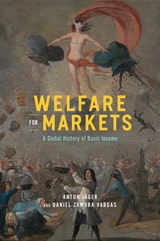
Welfare for Markets
A Global History of Basic IncomeAnton Jäger and Daniel Zamora Vargas
University of Chicago Press, 2023
A sweeping intellectual history of the welfare state’s policy-in-waiting.
The idea of a government paying its citizens to keep them out of poverty—now known as basic income—is hardly new. Often dated as far back as ancient Rome, basic income’s modern conception truly emerged in the late nineteenth century. Yet as one of today’s most controversial proposals, it draws supporters from across the political spectrum.
In this eye-opening work, Anton Jäger and Daniel Zamora Vargas trace basic income from its rise in American and British policy debates following periods of economic tumult to its modern relationship with technopopulist figures in Silicon Valley. They chronicle how the idea first arose in the United States and Europe as a market-friendly alternative to the postwar welfare state and how interest in the policy has grown in the wake of the 2008 credit crisis and COVID-19 crash.
An incisive, comprehensive history, Welfare for Markets tells the story of how a fringe idea conceived in economics seminars went global, revealing the most significant shift in political culture since the end of the Cold War.

Well Worth Saving
How the New Deal Safeguarded Home OwnershipPrice Fishback, Jonathan Rose, and Kenneth Snowden
University of Chicago Press, 2013
Well Worth Saving tells the story of the disastrous housing market during the Great Depression and the extent to which an immensely popular New Deal relief program, the Home Owners’ Loan Corporation (HOLC), was able to stem foreclosures by buying distressed mortgages from lenders and refinancing them. Drawing on historical records and modern statistical tools, Price Fishback, Jonathan Rose, and Kenneth Snowden investigate important unanswered questions to provide an unparalleled view of the mortgage loan industry throughout the 1920s and early ’30s. Combining this with the stories of those involved, the book offers a clear understanding of the HOLC within the context of the housing market in which it operated, including an examination of how the incentives and behaviors at play throughout the crisis influenced the effectiveness of policy.
More than eighty years after the start of the Great Depression, when politicians have called for similar programs to quell the current mortgage crisis, this accessible account of the Home Owners’ Loan Corporation holds invaluable lessons for our own time.

Well-Being and Creative Careers
What Makes You Happy Can Also Make You SickMark Deuze
Intellect Books, 2025
The media and creative industries thrive on passion, but that passion often comes at a cost. Behind the glamour of journalism, filmmaking, games, music, advertising, and online content creation lies a growing crisis—one of burnout, anxiety, substance abuse, and exhaustion. Why do so many creative professionals report feeling both deeply fulfilled and profoundly unwell?
Mark Deuze investigates the systemic issues that make creative work both exhilarating and unsustainable. Drawing on extensive research and in-depth interviews with media professionals, he notes the hidden downsides of doing what you love and offers a candid analysis of how workplace structures, high workloads, and perceived injustices contribute to mental and physical distress.
But this book is not just about what’s broken; it’s about what can be done. Deuze provides a roadmap for rethinking the culture of creative industries and offers strategies for balancing passion with sustainability. A practical resource for media scholars and those navigating the highs and lows of a creative career, this work challenges us to imagine a healthier future for our labor of love.

Well-Being
Foundations of Hedonic PsychologyDaniel Kahneman
Russell Sage Foundation, 1999
Wellbeing Economics
How and Why Economics Needs to ChangeNicky Pouw
Amsterdam University Press, 2020
In 'Wellbeing Economics' Nicky Pouw puts forward a new framework that places human wellbeing at the centre, instead of economic growth. She postulates ten reasons why economics should change to remain a relevant discipline and develops a Wellbeing Economic Matrix (WEM) to implement this approach. In doing so, it is one of the first economics books that 'rethinks the economy' from head to tail.
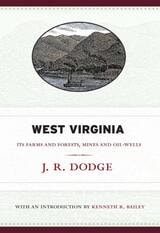
West Virginia
Its Farms and Forests, Mines and Oil-WellsJ. R. Dodge
West Virginia University Press, 2011
West Virginia: Its Farms and Forests, Mines and Oil-Wells celebrates the state of West Virginia. Originally published in 1865 as a series of studies on mineral resources, observations on agriculture, and interviews with businessmen, West Virginia details the industrial statistics, terrain, and population of a state during its infancy. With no record of natural wealth or reported transactions of agriculture or geography prior to this overview, West Virginia sparked the curiosity of non-residents, enticing investment and settlement through descriptions of abundant natural resources and an agreeable industrial condition. With an introduction by Kenneth R. Bailey, this new edition reminds us of the state’s alluring beginning and rich, yet often exploited development.

Western Stock Ranching
Mont H. Saunderson
University of Minnesota Press, 1950
Western Stock Ranching was first published in 1950. Minnesota Archive Editions uses digital technology to make long-unavailable books once again accessible, and are published unaltered from the original University of Minnesota Press editions.
Successful management of a stock ranch today requires a thorough, specialized knowledge of the land, the livestock, and the financial methods involved. This facts and figures study by an expert with long experience as a range economist deals with the working problems of sheep and cattle ranching and provides authoritative information on how to operate a ranch profitably.
The business of ranching is analyzed in terms of markets, prices and incomes, management standards and guides for production, financial planning and reports, production cost analysis, ranch appraisal, rangeland management, and procedures in the use of government lands. The various natural regions of the West are surveyed and the types of ranches found in each section are described.
In addition to considering in detail everyday ranch problems, the author realistically discusses the long-range problems confronting western stock ranchers as a group. Photographs, tables, sample accounting forms, and actual case illustrations add greatly to the usefulness of the book.
Owners and operators of stock ranches, persons planning to enter the business, professional agriculturalists specializing in credit, marketing, or management, and teachers of courses in ranch management and economy will find this an invaluable reference or text.
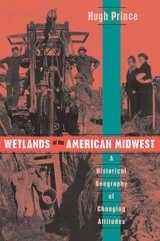
Wetlands of the American Midwest
A Historical Geography of Changing AttitudesHugh Prince
University of Chicago Press, 1997
As attitudes changed, so did scientific research agendas, government policies, and farmers' strategies for managing their land. Originally viewed as bountiful sources of wildlife by indigenous peoples, wet areas called "wet prairies," "swamps," or "bogs" in the late nineteenth and early twentieth centuries were considered productive only when drained for agricultural use. Beginning in the 1950s, many came to see these renamed "wetlands" as valuable for wildlife and soil conservation.
Prince's book will appeal to a wide readership, ranging from geographers and environmental historians to the many government and private agencies and individuals concerned with wetland research, management, and preservation.
What Employers Want
Job Prospects for Less-Educated WorkersHarry J. Holzer
Russell Sage Foundation, 1996

What Poetry Brings to Business
Morgan Clare, Kristen Lange, Ted Buswick
University of Michigan Press, 2010
"Creativity is a means of controlling chaos, finding order. Business and poetry draw their waters out of the same well."
---John Barr, President, Poetry Foundation
"At last there is a book that explores the deep but unexpected connections between business and poetry. Clare Morgan and her colleagues demonstrate how the creative energy, emotional power, and communicative complexity of poetry relate directly to the practical needs for innovation and problem solving that face business managers. There has never been a book on developing managerial potential quite like this one."
---Dana Gioia, former chairman of the National Endowment for the Arts and a former corporate executive at General Foods
What does poetry bring to business? According to Clare Morgan and her coauthors, it brings complexity and flexibility of thinking, along with the ability to empathize with and better understand the thoughts and feelings of others. Through her own experiences and many examples, Morgan demonstrates that the skills necessary to talk and think about poetry can be of significant benefit to leaders and strategists, to executives who are facing infinite complexity and who are armed with finite resources in a changing world.
What Poetry Brings to Business presents ways in which reading and thinking about poetry offer businesspeople new strategies for reflection on their companies, their daily tasks, and their work environments. The goal is both to increase and broaden readers' understanding of poems and how they convey meaning, and also to help readers develop analytical and cognitive skills that will be beneficial in a business context. The unique combinations and connections made in this book will open new avenues of thinking about poetry and business alike.
Clare Morgan is Director of the graduate creative writing programme at the University of Oxford. She has run workshops and given presentations on this topic in the United States, the United Kingdom, continental Europe, and Japan. Dr. Morgan is a fiction writer and critic, and a Fellow of the Royal Society of Arts.
Kirsten Lange and Ted Buswick are employed by The Boston Consulting Group, an international management consulting firm, she as Managing Director of the Munich office, he as head of Oral History and Archiving.

What We Are Fighting For
A Radical Collective ManifestoEdited by Federico Campagna and Emanuele Campiglio
Pluto Press, 2012
From the pens of major figures of the anti-austerity movement, comes the first radical, collective manifesto of the new decade.
From participatory democracy to media reform, from direct action to communal living, What Are We Fighting For is a bold look at alternatives to the economic, social and political travesty of contemporary capitalism. Chapters from Owen Jones, David Graeber, John Holloway, Nina Power, Mark Fisher, Franco Berardi Bifo and Marina Sitrin show a multifaceted but collective desire for a better world.
Anarchists, communists, feminists and autonomists come together to inspire us to think beyond neoliberalism.
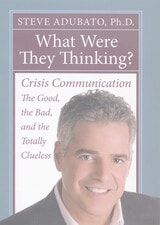
What Were They Thinking?
Crisis Communication: The Good, the Bad, and the Totally CluelessSteve Adubato, Ph.D.
Rutgers University Press, 2008
Nationally recognized communication coach and four-time Emmy Awardûwinning broadcaster Steve Adubato has been teaching, writing, and thinking about comm¡unication, leadership, and crisis communication for nearly two decades. In What Were They Thinking? Adubato examines twenty-two controversial and complex public relations and media mishaps, many of which were played out in public. Among cases and people discussed are:
- The Johnson & Johnson Tylenol scare: Perhaps the best crisis management ever
- Don Imus: Sometimes saying "sorry" is too little too late
- Former Attorney General Alberto Gonzales: Authority does not put you above questioning
- Bill O'Reilly: Know when to stop defending yourself and save face
- Former EPA Administrator Christie Whitman: Proof that your written words can come back to haunt you
- Hurricane Katrina: A natural disaster that led to a larger governmental disaster
- The Catholic Church's pedophilia scandal: Denial won't get rid of the skeletons in your closet
Arranged in short chapters detailing each case individually, the book provides a brief history of the topics and answers the questions: Who got it right? Who got it wrong? What can the rest of us learn from them?
What Work Is
Robert Bruno
University of Illinois Press, 2024
For more than twenty years, Robert Bruno has taught labor history and labor studies to union members from a wide range of occupations and demographic groups. In the class, he asked his students to finish the question “Work is—?” in six words or less. The thousands of responses he collected provide some of the rich source material behind What Work Is. Bruno draws on the thoughts and feelings experienced by workers in the present day to analyze how we might design a future of work. He breaks down perceptions of work into five categories: work and time; the space workers occupy; the impact of work on our lives; the sense of purpose that motivates workers; and the people we work for, in all senses of the term.
Far-seeing and sympathetic, What Work Is merges personal experiences with research, poetry, and other diverse sources to illuminate workers’ lives in the present and envision what work could be in the future.
What Workers Say
Decades of Struggle and How to Make Real Opportunity NowRoberta Rehner Iversen
Temple University Press, 2022
What have jobs really been like for the past 40 years and what do the workers themselves say about them? In What Workers Say, Roberta Iversen shows that for employees in labor market industries—like manufacturing, construction, printing—as well as those in service-producing jobs, like clerical work, healthcare, food service, retail, and automotive—jobs are often discriminatory, are sometimes dangerous and exploitive, and seldom utilize people’s full range of capabilities. Most importantly, they fail to provide any real opportunity for advancement.
What Workers Say takes its cue from Studs Terkel’s Working, as Iversen interviewed more than 1,200 workers to present stories about their labor market jobs since 1980. She puts a human face on the experiences of a broad range of workers indicating what their jobs were and are truly like. Iversen reveals how transformations in the political economy of waged work have shrunk or eliminated opportunity for workers, families, communities, and productivity. What Workers Say also offers an innovative proposal for compensated civil labor that could enable workers, their communities, labor market organizations, and the national infrastructure to actually flourish.
What Works for Workers?
Public Policies and Innovative Strategies for Low-Wage WorkersStephanie Luce
Russell Sage Foundation, 2014
When Good Jobs Go Bad
Globalization, De-unionization, and Declining Job Quality in the North American Auto IndustryRothstein, Jeffrey S
Rutgers University Press, 2016

When Horses Pulled the Plow
Life of a Wisconsin Farm Boy, 1910–1929Olaf F. Larson
University of Wisconsin Press, 2011
When Public Sector Workers Unionize
Edited by Richard B. Freeman and Casey Ichniowski
University of Chicago Press, 1988
Contributors to When Public Sector Workers Unionize—which was developed from the NBER's program on labor studies—examine these and other questions using newly collected data on public sector labor laws, labor relations practices of state and local governments, and labor market outcomes. Topics considered include the role, effect, and evolution of public sector labor law and the effects that public sector bargaining has on both wage and nonwage issues.
Several themes emerge from the studies in this volume. Most important, public sector labor law has a strong and pervasive effect on bargaining and on wage and employment outcomes in public sector labor markets. Also, public sector unionism affects the economy in ways that are different from, and in many cases opposite to, the ways private sector unionism does, appearing to stimulate rather than reduce employment, reducing rather than increasing layoff rates, and developing innovate ways to settle labor disputes such as compulsory interest arbitration instead of strikes and lockouts found in the private sector.

When Rules Change
The Economics of RetroactivityDaniel Shaviro
University of Chicago Press, 2000
Daniel Shaviro tackles these tough questions, bringing legal, economic, and political perspectives to bear on a persistent problem not often given serious attention. When Rules Change: An Economic and Political Analysis of Transition Relief and Retroactivity focuses on tax law changes to develop an in-depth understanding of the transitional issues inherent in any substantive rule change and also to advance a set of normative policy guidelines applicable to any such circumstance. Shaviro reframes traditional approaches to the problem of retroactivity and offers new insights into both the theory and policy of legislative transitions.
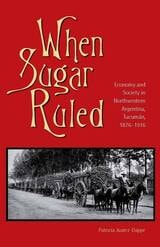
When Sugar Ruled
Economy and Society in Northwestern Argentina, Tucumán, 1876–1916Patricia Juarez-Dappe
Ohio University Press, 2010
Two tropical commodities—coffee and sugar—dominated Latin American export economies in the nineteenth and early twentieth centuries. When Sugar Ruled: Economy and Society in Northwestern Argentina, Tucumán, 1876–1916 presents a distinctive case that does not quite fit into the pattern of many Latin American sugar economies.
During the last quarter of the nineteenth century, the province of Tucumán emerged as Argentina’s main sugar producer, its industry catering almost exclusively to the needs of the national market and financed mostly by domestic capital. The expansion of the sugar industry provoked profound changes in Tucumán’s economy as sugar specialization replaced the province’s diversified productive structure. Since ingenios relied on outside growers for the supply of a large share of the sugarcane, sugar production did not produce massive land dispossession and resulted in the emergence of a heterogeneous planter group. The arrival of thousands of workers from neighboring provinces during the harvest season transformed rural society dramatically. As the most dynamic sector in Tucumán’s economy, revenues from sugar enabled the provincial government to participate in the modernizing movement sweeping turn-of-the-century Argentina.
Patricia Juarez-Dappe uncovers the unique features that characterized sugar production in Tucumán as well as the changes experienced by the province’s economy and society between 1876 and 1916, the period of most dramatic sugar expansion. When Sugar Ruled is an important addition to the literature on sugar economies in Latin America and Argentina.
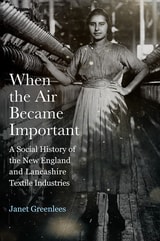
When the Air Became Important
A Social History of the New England and Lancashire Textile IndustriesJanet Greenlees
Rutgers University Press, 2019
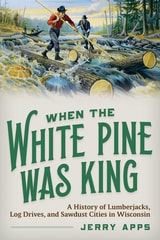
When the White Pine Was King
A History of Lumberjacks, Log Drives, and Sawdust Cities in WisconsinJerry Apps
Wisconsin Historical Society Press, 2020
For more than half a century, logging, lumber production, and affiliated enterprises in Wisconsin’s Northwoods provided jobs for tens of thousands of Wisconsinites and wealth for many individuals. The industry cut through the lives of nearly every Wisconsin citizen, from an immigrant lumberjack or camp cook in the Chippewa Valley to a Suamico sawmill operator, an Oshkosh factory worker to a Milwaukee banker.
When the White Pine Was King tells the stories of the heyday of logging: of lumberjacks and camp cooks, of river drives and deadly log jams, of sawmills and lumber towns and the echo of the ax ringing through the Northwoods as yet another white pine crashed to the ground. He explores the aftermath of the logging era, including efforts to farm the cutover (most of them doomed to fail), successful reforestation work, and the legacy of the lumber and wood products industries, which continue to fuel the state’s economy.
Enhanced with dozens of historic photos, When the White Pine Was King transports readers to the lumber boom era and reveals how the lessons learned in the vast northern forestlands continue to shape the region today.
Where Are All the Good Jobs Going?
What National and Local Job Quality and Dynamics Mean for U.S. WorkersHarry J. Holzer
Russell Sage Foundation, 2011
Where Bad Jobs Are Better
Retail Jobs Across Countries and CompaniesFrancoise Carre
Russell Sage Foundation, 2017
In surveying retail work across the United States, Carré and Tilly find that the majority of retail workers receive low pay and nearly half work part-time, which contributes to high turnover and low productivity. Jobs staffed predominantly by women, such as grocery store cashiers, pay even less than retail jobs in male-dominated fields, such as consumer electronics. Yet, when comparing these jobs to similar positions in Western Europe, Carré and Tilly find surprising differences. In France, though supermarket cashiers perform essentially the same work as cashiers in the United States, they receive higher pay, are mostly full-time, and experience lower turnover and higher productivity. And unlike the United States, where many retail employees are subject to unpredictable schedules, in Germany, retailers are required by law to provide their employees notice of work schedules six months in advance.
The authors show that disparities in job quality are largely the result of differing social norms and national institutions. For instance, weak labor regulations and the decline of unions in the United States have enabled retailers to cut labor costs aggressively in ways that depress wages and discourage full-time work. On the other hand, higher minimum wages, greater government regulation of work schedules, and stronger collective bargaining through unions and works councils have improved the quality of retail jobs in Europe.
As retail and service work continue to expand, American employers and policymakers will have to decide the extent to which these jobs will be good or bad. Where Bad Jobs Are Better shows how stronger rules and regulations can improve the lives of retail workers and boost the quality of low-wage jobs across the board.
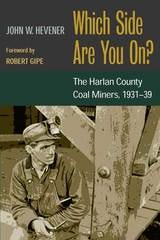
Which Side Are You On?
The Harlan County Coal Miners, 1931-39John W. Hevener. Foreword by Robert Gipe
University of Illinois Press, 1978
Depression-era Harlan County, Kentucky, was the site of one of the most bitter and protracted labor disputes in American history. The decade-long conflict between miners and the coal operators who adamantly resisted unionization has been immortalized in folksong by Florence Reece and Aunt Molly Jackson, contemplated in prose by Theodore Dreiser and Sherwood Anderson, and long been obscured by popular myths and legends.
John W. Hevener separates the fact from the legend in his Weatherford Award-winning investigation of Harlan's civil strife, now available for the first time in paperback. In Which Side Are You On? Hevener attributes the violence–-including the deaths of thirteen union miners–-to more than just labor conflict, viewing Harlan's troubles as sectional economic conflict stemming from the county's rapid industrialization and social disorganization in the preceding decade.
Detailing the dimensions of unionization and the balance of power spawned by New Deal labor policy after government intervention, Which Side Are You On? is the definitive analysis of Harlan's bloody decade and a seminal contribution to American labor history.
Which Way Goes Capitalism?
In Search of Adequate Policies in a Dramatically Changing WorldDaniel Daianu
Central European University Press, 2009
While Waiting for Rain
Community, Economy, and Law in a Time of ChangeJohn Henry Schlegel
University of Michigan Press, 2022
What might a sensible community choose to do if its economy has fallen apart and becoming a ghost town is not an acceptable option? Unfortunately, answers to this question have long been measured against an implicit standard: the postwar economy of the 1950s. After showing why that economy provides an implausible standard—made possible by the lack of economic competition from the European and Asian countries, winners or losers, touched by the war—John Henry Schlegel attempts to answer the question of what to do.
While Waiting for Rain first examines the economic history of the United States as well as that of Buffalo, New York: an appropriate stand-in for any city that may have seen its economy start to fall apart in the 1960s, 70s, and 80s. It makes clear that neither Buffalo nor the United States as a whole has had an economy in the sense of “a persistent market structure that is the fusion of an understanding of economic life with the patterns of behavior within the economic, political, and social institutions that enact that understanding” since both economies collapsed. Next, this book builds a plausible theory of how economic growth might take place by examining the work of the famous urbanist, Jane Jacobs, especially her book Cities and the Wealth of Nations. Her work, like that of many others, emphasizes the importance of innovation for economic growth, but is singular in its insistence that such innovation has to come from local resources. It can neither be bought nor given, even by well-intentioned political actors. As a result Americans generally, as well as locally, are like farmers in the midst of a drought, left to review their resources and wait. Finally, it returns to both the local Buffalo and the national economies to consider what these political units might plausibly do while waiting for an economy to emerge.