Results by title
547 books match the query 'California' and 25 start with w
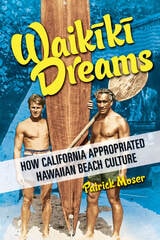
Waikiki Dreams
How California Appropriated Hawaiian Beach CulturePatrick Moser
University of Illinois Press, 2024
Despite a genuine admiration for Native Hawaiian culture, white Californians of the 1930s ignored authentic relationships with Native Hawaiians. Surfing became a central part of what emerged instead: a beach culture of dressing, dancing, and acting like an Indigenous people whites idealized.
Patrick Moser uses surfing to open a door on the cultural appropriation practiced by Depression-era Californians against a backdrop of settler colonialism and white nationalism. Recreating the imagined leisure and romance of life in Waikīkī attracted people buffeted by economic crisis and dislocation. California-manufactured objects like surfboards became a physical manifestation of a dream that, for all its charms, emerged from a white impulse to both remove and replace Indigenous peoples. Moser traces the rise of beach culture through the lives of trendsetters Tom Blake, John “Doc” Ball, Preston “Pete” Peterson, Mary Ann Hawkins, and Lorrin “Whitey” Harrison while also delving into California’s control over images of Native Hawaiians via movies, tourism, and the surfboard industry.
Compelling and innovative, Waikīkī Dreams opens up the origins of a defining California subculture.
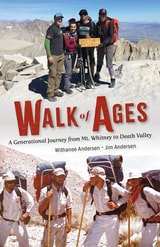
Walk of Ages
A Generational Journey from Mt. Whitney to Death ValleyWithanee Andersen
University of Nevada Press, 2024
With hopes of being listed in the Guinness Book of World Records, Jim led the first documented walk from the highest to lowest point in the contiguous United States in 1974. He lived, albeit just barely, to tell the tale to his daughter, sparking a desire in Withanee to retrace his steps in his honor. In 2017, she took on the incredible task of recreating Jim’s legacy trek of 131 miles with the help of divine intervention, ice-cold beer, and her parents, who were following along as the support party.
Walk of Ages humorously relates the parallel journey of an epic adventure told from two perspectives—a daughter’s difficult quest, and a father who supports her through it while recalling his own experiences from four decades earlier. Throughout this momentous odyssey, readers will realize how a once-in-a-generation adventure leads to life-changing transformation, and that the bond between father and daughter knows no bounds.
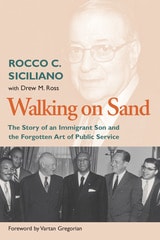
Walking On Sand
The Story of an Immigrant Son and the Forgotten Art of Public ServiceRocco C Siciliano
University of Utah Press, 2004
Rocco C. Siciliano broke new ground as the first Italian-American to serve in the White House as an assistant to the president, Dwight D. Eisenhower. At 31, "Ike’s Youngest" attained a prominence not suggested in his humble beginnings in Salt Lake City, Utah. But his upbringing in the Mormon-dominated community, where he balanced the heritage of his striving immigrant parents with his own aspirations for success, prepared him for a wide variety of service. This service includes leading a special weapons platoon in the 10th Mountain Division in World War II, bringing Martin Luther King Jr. to meet with President Eisenhower, and becoming a recognized business leader in California.
Siciliano used his expertise in labor, personnel management, and business to contribute substantively to the J. Paul Getty Center, the Los Angeles Philharmonic Association, the Committee for Economic Development, and the "Volcker" Commission on Public Service, among others.
The variety of Siciliano’s experiences reinvigorates our understanding of the forgotten art of public service. Walking on Sand emphasizes the role that public service can play for corporations, communities, states, and the nation. This story is a gift from the Greatest Generation to the many people who serve America today and will serve her tomorrow.
Walking with Muir across Yosemite
Thomas R. Vale
University of Wisconsin Press, 1998
Illustrated with drawings by John Muir and drawings and photos by the Vales, Walking with Muir across Yosemite emphasizes that current visitors to Yosemite—indeed to any national park—can still experience the solitude, wildness, and romanticism of nature. They believe, however, that this modern exploration would benefit from a national parks policy that actively promotes nature study and encourages a more profound interaction between humans and the natural world.

Wallbangin'
Graffiti and Gangs in L.A.Susan A. Phillips
University of Chicago Press, 1999
Anthropologist Susan Phillips enters the lives of the African-American and Chicano gang members to write a comprehensive guide to their symbolic and visual expression. She not only decodes the graffiti—explaining how, for instance, gang boundaries are visually delimited and how "memorial" graffiti functions—but she also places it in the context of the changing urban landscapes within the city. Graffiti, she argues, is inextricably linked to political change, to race, and to art, and she demonstrates how those connections are played out in contemporary L.A. Wallbangin' is, on this level, an iconography of street imagery. But it is also a very personal narrative about entering the world of L.A. street gangs—a world of pride, enemies, affirmation, and humanity where gang members use graffiti to redefine their social and political position in society.
To many outsiders, graffiti is cryptic, senseless scribbling. But Phillips explains it as an ingenious and creative solution to the disenfranchisement felt by those who produce it. With personal narratives, provocative photography, and contemporary voices, Wallbangin' unlocks the mysteries behind street-level ideologies and their visual manifestations.

War, Genocide, and Justice
Cambodian American Memory WorkCathy J. Schlund-Vials
University of Minnesota Press, 2012
In the three years, eight months, and twenty days of the Khmer Rouge’s deadly reign over Cambodia, an estimated 1.7 million Cambodians perished as a result of forced labor, execution, starvation, and disease. Despite the passage of more than thirty years, two regime shifts, and a contested U.N. intervention, only one former Khmer Rouge official has been successfully tried and sentenced for crimes against humanity in an international court of law to date. It is against this background of war, genocide, and denied justice that Cathy J. Schlund-Vials explores the work of 1.5-generation Cambodian American artists and writers.
Drawing on what James Young labels “memory work”—the collected articulation of large-scale human loss—War, Genocide, and Justice investigates the remembrance work of Cambodian American cultural producers through film, memoir, and music. Schlund-Vials includes interviews with artists such as Anida Yoeu Ali, praCh Ly, Sambath Hy, and Socheata Poeuv. Alongside the enduring legacy of the Killing Fields and post-9/11 deportations of Cambodian American youth, artists potently reimagine alternative sites for memorialization, reclamation, and justice. Traversing borders, these artists generate forms of genocidal remembrance that combat amnesic politics and revise citizenship practices in the United States and Cambodia.
Engaged in politicized acts of resistance, individually produced and communally consumed, Cambodian American memory work represents a significant and previously unexamined site of Asian American critique.

We Are Not Dreamers
Undocumented Scholars Theorize Undocumented Life in the United StatesLeisy J. Abrego and Genevieve Negrón-Gonzales, editors
Duke University Press, 2020
Contributors. Leisy J. Abrego, Gabrielle Cabrera, Gabriela Garcia Cruz, Lucía León, Katy Joseline Maldonado Dominguez, Grecia Mondragón, Gabriela Monico, Genevieve Negrón-Gonzales, Maria Liliana Ramirez, Joel Sati, Audrey Silvestre, Carolina Valdivia
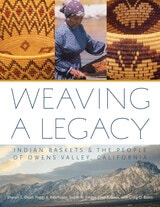
Weaving A Legacy - Paper
Indian Baskets and the People of Owens Valley, CaliforniaSharon Dean
University of Utah Press, 2005
Situated on the western edge of the Great Basin between the Sierra Nevada and White-Inyo mountain ranges, Owens Valley has been home for thousands of years to the Owens Valley Paiute and their southern neighbors, the Panamint Shoshone. The willow baskets both groups created are noteworthy for their complex construction and durability, and their materials and designs reflected available resources as well as the seminomadic existence that characterized life in the Great Basin for generations.
Since the mid-nineteenth-century arrival of non-Indians into the Valley, the baskets have changed. Weaving a Legacy places those changes in the context of the region’s dramatic social history. In addition, the volume closely examines basketry techniques and technology, historic weavers and their lineages, contemporary weavers, and basket collectors.
The text is extensively illustrated with black-and-white photographs of people, landscapes, and baskets. Among the legacies of these baskets are the stories they evoke, many of which the authors recount in this beautiful work.

Weimar Under the Palms
Pacific Palisades, German Exiles, and the Invention of HollywoodThomas Blubacher
Brandeis University Press, 2025
In the early twentieth century, Pacific Palisades was home to America’s most modern film studio of the time as well as the proposed site of the world’s largest Christian center. But by the end of the 1920s, the Los Angeles neighborhood had become the refuge of the rich and beautiful as German and Austrian filmmakers, among them Salka and Berthold Viertel, settled there. They were soon followed by cultural and intellectual giants of the Weimar Republic who were fleeing Europe, such as Max Reinhardt, Hanns Eisler, or Max Horkheimer. These great minds turned Pacific Palisades into a “Weimar under the palm trees.” Though many were successful in exile—including Vicki Baum, Thomas Mann, and Lion Feuchtwanger—others felt as if they were in a “sun prison” far from home.
Recounting a story of glamor and great minds, Thomas Blubacher tells of the history of German-speaking exiles that is still alive there today, going on a foray through the film industry, taking us on a journey to this special place that was so recently devastated by fire. Many of the homes in this book have now gone, but Marta Feuchtwanger’s Villa Aurora and the Thomas Mann house still stand as a testament to luck, resilience, and history.
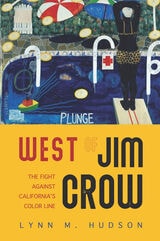
West of Jim Crow
The Fight against California's Color LineLynn M. Hudson
University of Illinois Press, 2020
Lynn M. Hudson deepens our understanding of the practices that African Americans in the West deployed to dismantle Jim Crow in the quest for civil rights prior to the 1960s. Faced with institutionalized racism, black Californians used both established and improvised tactics to resist and survive the state's color line. Hudson rediscovers forgotten stories like the experimental all-black community of Allensworth, the California Ku Klux Klan's campaign of terror against African Americans, the bitter struggle to integrate public swimming pools in Pasadena and elsewhere, and segregationists' preoccupation with gender and sexuality.
What Night Brings
Carla Trujillo
Northwestern University Press, 2003

What You See in the Dark
A NovelManuel Muñoz and Charles Taylor
Northwestern University Press, 2025
A doomed love story unfolds alongside the production of Psycho in 1950s Bakersfield, California
Muñoz’s debut novel tells the story of Teresa, an aspiring singer too far away from Los Angeles to share the city’s glamour. In Dan Watson, the most desirable man in town, she believes she has found someone to help her realize those dreams. But when a famous actress arrives from Hollywood with a legendary director in tow, local gossip about Teresa and Dan turns to speculation about the celebrity visitors there to work on what will become an iconic, groundbreaking film of madness and murder at a roadside motel: Alfred Hitchcock’s Psycho. Framed by a foreword from film critic Charles Taylor, Muñoz’s haunting tale reflects “the slow winding down of everything that once seemed certain.”

When Monsters Speak
A Susan Stryker ReaderSusan Stryker. Edited by McKenzie Wark
Duke University Press, 2024
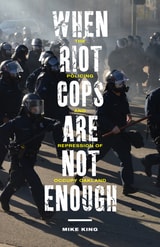
When Riot Cops Are Not Enough
The Policing and Repression of Occupy OaklandKing, Mike
Rutgers University Press, 2017
Drawn from King’s intensive field work, the book focuses on the physical, legal, political, and ideological dimensions of repression—in the streets, in courtrooms, in the media, in city hall, and within the movement itself—When Riot Cops Are Not Enough highlights the central role of political legitimacy, both for mass movements seeking to create social change, as well as for governmental forces seeking to control such movements. Although Occupy Oakland was different from other Occupy sites in many respects, King shows how the contradictions it illuminated within both social movement and police strategies provide deep insights into the nature of protest policing generally, and a clear map to understanding the full range of social control techniques used in North America in the twenty-first century.

When Women Rule the Court
Gender, Race, and Japanese American BasketballWillms, Nicole
Rutgers University Press, 2017
For nearly one hundred years, basketball has been an important part of Japanese American life. Women’s basketball holds a special place in the contemporary scene of highly organized and expansive Japanese American leagues in California, in part because these leagues have produced numerous talented female players. Using data from interviews and observations, Nicole Willms explores the interplay of social forces and community dynamics that have shaped this unique context of female athletic empowerment. As Japanese American women have excelled in mainstream basketball, they have emerged as local stars who have passed on the torch by becoming role models and building networks for others.
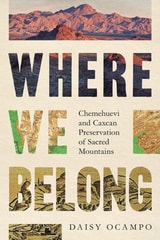
Where We Belong
Chemehuevi and Caxcan Preservation of Sacred MountainsDaisy Ocampo
University of Arizona Press, 2023
The author brings together the history and experiences of the Chemehuevi people and their ties with Mamapukaib, or the Old Woman Mountains in the East Mojave Desert, and the Caxcan people and their relationship with Tlachialoyantepec, or Cerro de las Ventanas, in Zacatecas, Mexico. Through a trans-Indigenous approach, Daisy Ocampo weaves historical methodologies (oral histories, archival research, ethnography) with Native studies and historic preservation to reveal why Native communities are the most knowledgeable and transformational caretakers of their sacred places.
This work transcends national borders to reveal how settler structures are sustained through time and space in the Americas. Challenging these structures, traditions such as the Chemehuevi Salt Songs and Caxcan Xuchitl Dance provide both an old and a fresh look at how Indigenous people are reimagining worlds that promote Indigenous-to-Indigenous futures through preservation.
Ultimately, the stories of these two peoples and places in North America illuminate Indigenous sovereignty within the field of public history, which is closely tied to governmental policies, museums, archives, and agencies involved in historic preservation.

White Poplar, Black Locust
Louise Wagenknecht
Oregon State University Press, 2021
Originally published by the University of Nebraska Press in 2003, this first book in Louise Wagenknecht’s trilogy about life in the Klamath Mountains is now available through Oregon State University Press, together with Light on the Devils (2011) and Shadows on the Klamath (2021).
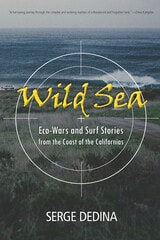
Wild Sea
Eco-Wars and Surf Stories from the Coast of the CaliforniasSerge Dedina
University of Arizona Press, 2011
Dedina grew up in Imperial Beach, California, just north of the Mexican border, and he feels equally at home in Mexico and the States. An expert on gray whales, he eloquently describes the fight he helped to lead against the Mitsubishi Corporation, whose plan to build a salt-processing plant in the San Ignacio Lagoon in Baja California would have destroyed the world’s last undeveloped gray whale lagoon. With similar fervor, Dedina describes helping to construct the unlikely coalition that succeeded in defeating a proposed toll road that would have decimated a legendary California surf spot.
In between, he writes about the first surfers in Baja, the Great Baja Land Rush of the 1990s, Tijuana’s punk music scene, the pop-culture wrestling phenomenon lucha libre, the reasons why ocean pollution must be stopped, and the way HBO took over his hometown. Anyone interested in what’s happening to our natural places or just yearning to read about someone really making a difference in the world will find this a book worth sinking their teeth into.

Wine By Design
Santa Barbara's Quest for TerroirVictor W. Geraci
University of Nevada Press, 2020
As the American demand for premium wine grapes intensified in the late twentieth century, the Northern California wine industry rapidly grew its boutique and innovative local designer winemaking to increase profit to meet demand and compete on a global scale. Set in the context of the regional, national, and global wine community, this story illuminates a regional story of how the Santa Barbara wine industry found solutions to current market conditions while utilizing local traditions to develop a new version of local wine terroir. An accomplishment that allowed them to compete in the global marketplace yet develop highly specialized wine that is unique to the region.
By employing leading-edge technology and entrepreneurship, the California Central Coast region of Santa Barbara became a model for the American vision of agricultural innovation and an integral part of the international wine trade, developing a personalized version of local wine terroir.
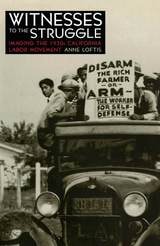
Witnesses to the Struggle
Imaging the 1930s California Labor MovementAnne Loftis
University of Nevada Press, 2014
In this groundbreaking interdisciplinary study, Loftis examines the artists who put a human face on the farmworkers’ plight in California during the Great Depression, focusing on writer John Steinbeck, photographer Dorothea Lange, sociologist and author Paul Taylor, and journalist Carey McWilliams. Loftis probes the interplay between journalism and art in the 1930s, when both academics and artists felt an urgent need to be relevant in the face of enormous misery. The power of their work grew out of their personal involvement in both the labor struggles and the hardships endured by workers and their families. Steinbeck, Lange, and the other artists and intellectuals in their circles created the public images of their times. Works such as The Grapes of Wrath or Lange’s Migrant Mother actually helped mold public opinion and form government policies. Even today these works remain icons in our shared perception of that era. Loftis helps us understand why this art still seems the truest representation of those desperate times, three-quarters of a century later.
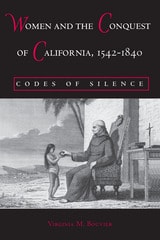
Women and the Conquest of California, 1542-1840
Codes of SilenceVirginia M. Bouvier
University of Arizona Press, 2001

Women and the Everyday City
Public Space in San Francisco, 1890–1915Jessica Ellen Sewell
University of Minnesota Press, 2011
Focusing on women's everyday use of streetcars, shops, restaurants, and theaters, Sewell reveals the impact of women on these public places-what women did there, which women went there, and how these places were changed in response to women's presence. Using the diaries of three women in San Francisco-Annie Haskell, Ella Lees Leigh, and Mary Eugenia Pierce, who wrote extensively on their everyday experiences-Sewell studies their accounts of day trips to the city and combines them with memoirs, newspapers, maps, photographs, and her own observations of the buildings that exist today to build a sense of life in San Francisco at this pivotal point in history.
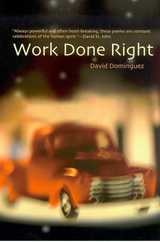
Work Done Right
David Dominguez
University of Arizona Press, 2003
I pulled into Galdini Sausage at noon.
The workers walked out of production
and swatted away the flies desperate for pork.
Pork gripped the men and was everywhere,
in the form of blood, in the form of fat,
and in pink meat that stuck to the workers' shoes.
Work Done Right is a sequence of narrative poems, told with a lyricist's tenderness and an eye for detail, that address the human condition in unexpected ways. David Dominguez explores Abraham's struggle to maintain personal dignity in harsh circumstances, juxtaposing bleak images of the sausage factory with the hope of finding one's true place in the world. Through his sensuously textured words, he pays tribute to people and place as he takes readers on a mystic journey toward redemption.
Working the Street
Police Discretion and the Dilemmas of ReformMichael K. Brown
Russell Sage Foundation, 1981
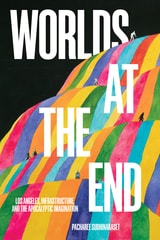
Worlds at the End
Los Angeles, Infrastructure, and the Apocalyptic ImaginationPacharee Sudhinaraset
Temple University Press, 2024
Worlds at the End analyzes destruction, rupture, and continuance through texts ranging from Karen Tei Yamashita’s Tropic of Orange, which considers racial colonial infrastructure, to the work of Diné poet Esther Belin, which illuminates how the separation between the Indian reservation and LA is part of a broader infrastructural network of termination. And she unpacks Octavia Butler’s post-apocalyptic novel, Parable of the Sower, where LA’s freeways and roadways are routes of forced migration, colonization, and flight.
Tearing down existing institutions that marginalize people of color and moving past them, Worlds at the End highlights the imaginaries of those subjugated, racialized, and made other, for whom modernity, freedom, and progress meant violence, brutality, and relegation to the status of devalued surplus populations. As Sudhinaraset deftly shows, the apocalypse marks moments of historical and spatial transition, offering stories of doomsdays that will give rise to resurgence and regeneration.