Results by title
152 books match the query 'Childhood and youth' and 8 start with w

Water Thicker Than Blood
A Memoir of a Post-Internment ChildhoodGeorge Uba
Temple University Press, 2022
“I thought my life began in Chicago. I was mistaken. That is where my body first made its appearance, but the contours of my life…had their start much sooner.”
In Water Thicker Than Blood, poet and professor George Uba traces his life as a Japanese American born in the late 1940s, a period of insidious anti-Japanese racism. His beautiful, impressionist memoir chronicles how he, like many Sansei (and Nisei) across the United States, grappled with dislocation and trauma while seeking acceptance and belonging.
Uba’s personal account of his efforts to achieve normality and assuage guilt unfolds as racial demographics in America are shifting. He struggled with inherently violent midcentury educational and childrearing practices and a family health crisis, along with bullying. Uba describes boy scouts and yogore (community rebels and castoffs) with vivid detail, using these vignettes to show how margins were blurred and how both sets of youth experienced injury through the same ideological pressures.
Water Thicker Than Blood is not a conventional story about recovery or family reconciliation. But itoffers an intimate look at the lasting—in some ways irreversible—damage caused by post-internment ideologies of “being accepted” and “fitting in inconspicuously.” It speaks volumes for the greater Sansei post-internment experience.
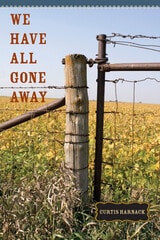
We Have All Gone Away
Curtis Harnack
University of Iowa Press, 1973
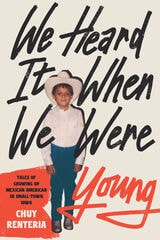
We Heard It When We Were Young
Renteria, Chuy
University of Iowa Press, 2021
Renteria looks past the public celebrations of diversity to dive into the private tensions of a community reflecting the changing American landscape. There are culture clashes, breakdancing battles, fistfights, quinceañeras, vandalism, adventures on bicycles, and souped-up lowriders, all set to an early 2000s soundtrack. Renteria and his friends struggle to find their identities and reckon with intergenerational trauma and racism in a town trying to do the same. A humorous and poignant reflection on coming of age, We Heard It When We Were Young puts its finger on a particular cultural moment at the turn of the millennium.

Wedding Song
Memoirs of an Iranian Jewish WomanFarideh Goldin
Brandeis University Press, 2004
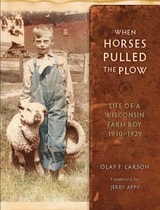
When Horses Pulled the Plow
Life of a Wisconsin Farm Boy, 1910–1929Olaf F. Larson
University of Wisconsin Press, 2011
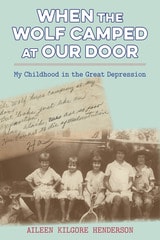
When the Wolf Camped at Our Door
My Childhood in the Great DepressionAileen Kilgore Henderson
University of Alabama Press, 2022
Recounts the hardships and joys the Kilgore family and their neighbors experienced in a close-knit southern rural community during the Great Depression
As the Great Depression tightened its grip on the world, six members of the Kilgore family were living in a cramped farmhouse in Brookwood, Alabama. Crops didn’t grow well, food was scarce, shoes were in short supply, and the few clothes they had were all hand-me-downs. The Kilgores struggled to make ends meet, cobbling together odd jobs and working the land by hand.
Despite all of this, young Aileen thought life was full of hope. She longed to hold on to it and scribbled down daily events on whatever odds and ends of paper she could find. In her new memoir, When the Wolf Camped at Our Door, Aileen Kilgore Henderson creates a vivid portrait of what life was like for so many living in the rural South during the Depression. The book begins when Aileen is ten years old and follows her into her teenage years over the course of twenty-seven episodic chapters. Drawing on her girlhood diaries and told through the charismatic voice of her younger self, Henderson’s nuanced storytelling sheds light on the common struggle for survival during a time when people were at their most vulnerable.
Against the backdrop of a world where hard work and harsh conditions like hunger, privation, sickness, and early death were everyday realities, Henderson’s stories are nevertheless tinged with young Aileen’s lively sense of humor and optimistic faith in people and in the promise of life despite trying circumstances. We follow her rambles in the woods, her visits with friends, a trip to a fortune teller, and a search for the Howton Horror, a mysterious monster rumored to live deep in the Alabama backwoods.
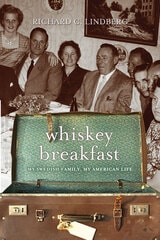
Whiskey Breakfast
My Swedish Family, My American LifeRichard C. Lindberg
University of Minnesota Press, 2011
Chicago in the 1920s: Clark Street was the city’s last Swedetown, a narrow corridor of weather-beaten storefronts, coal yards, and taverns running along the north side of the city and the locus of Swedish community life in Chicago during the first half of the twentieth century. It represented a way station for a generation of working-class immigrants escaping the hardships of the old country for the promise of a brighter new day in a halfway house of sorts, perched between the old and new lands. For Richard C. Lindberg, whose Swedish immigrant parents and grandparents settled there, it was also the staging ground for an intensely personal, multigenerational, coming-of-age drama based on the struggles of two disparate families—their dreams and their depravities, their victories and their failures.
Whiskey Breakfast is Lindberg’s captivating tale of life as a first-generation baby-boomer Swedish American, caught between the customs of a land he had never been to and the desire to conform and fit into a troubled existence, tragically scarred by alcoholism, divorce, and peer abuse. But it is also a powerful and intimate portrait of his immigrant ancestors, and especially of his father, Oscar—a contractor and master builder who helped develop Chicago’s post–World War II suburbs. A paradoxical man, known to some as a socialist, an anarchist, and a serious drinker, Oscar would carry with him to the grave a sixty-two-year-old family secret, a secret that for Lindberg lies at the very heart of the great Swedish unrest that drove his father and countless other men and women out of Sweden and onward to America.
Masterfully blending autobiography with immigrant history, Whiskey Breakfast surrounds Lindberg’s family story with Swedish cultural history and politics, as well as remarkable Chicago history and how Clark Street and Swedetown became, and in many ways remain, a center of Swedish immigrants’ social and cultural life. Far from a eulogy for an idealized past, Lindberg has crafted a moving and sobering memoir of a young man’s struggle to come to terms with his father and himself, his immigrant heritage, and his native home.
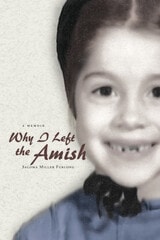
Why I Left the Amish
A MemoirSaloma Miller Furlong
Michigan State University Press, 2011
There are two ways to leave the Amish—one is through life and the other through death. When Saloma Miller Furlong’s father dies during her first semester at Smith College, she returns to the Amish community she had left twenty four years earlier to attend his funeral. Her journey home prompts a flood of memories. Now a mother with grown children of her own, Furlong recalls her painful childhood in a family defined by her father’s mental illness, her brother’s brutality, her mother’s frustration, and the austere traditions of the Amish—traditions Furlong struggled to accept for years before making the difficult decision to leave the community. In this personal and moving memoir, Furlong traces the genesis of her desire for freedom and education and chronicles her conflicted quest for independence. Eloquently told, Why I Left the Amish is a revealing portrait of life within—and without—this frequently misunderstood community.