Results by title
744 books match the query 'Culture' and 22 start with w
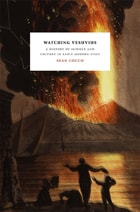
Watching Vesuvius
A History of Science and Culture in Early Modern ItalySean Cocco
University of Chicago Press, 2012
Water, Community, and the Culture of Owning
Eric T. Freyfogle
University of Utah Press, 2018
Building on these cultural critiques, Freyfogle takes up the issue of private property rights, highlighting the longstanding flexibility of this key American institution as well as the moral imperative to ensure that property rights aren’t used in ways that harm communities. Outdated understandings about private property, he concludes, have further confused our understanding and made sensible solutions to water problems even harder to imagine. Water-policy reform won’t happen, Freyfogle argues, until we reconsider how we understand nature and take charge of the institution of ownership, recasting it so as to increase the benefits it generates for everyone. If we can do that, solutions to water troubles could prove easier than we expect. The work concludes with an original, sweeping policy proposal to resolve the West’s water shortages and meet environmental needs in ways fair to all.
This lecture was presented on March 22, 2017, at the 22nd annual symposium sponsored by the Wallace Stegner Center for Land, Resources and the Environment at the S. J. Quinney College of Law, University of Utah.

Weapons of the People
The Culture and Politics of Guns in Modern ChinaLei Duan
University of Michigan Press, 2027
Why did a country that once mobilized millions of armed civilians become one of the most tightly regulated gun societies in the world? Weapons of the People traces the history of private gun ownership in modern China, from the late Qing dynasty to the early People’s Republic of China. Far from being rare, firearms were once embedded in everyday life, used for self-defense, social status, and political struggle. At the same time, government policies toward civilian arms were often inconsistent. These inconsistencies extended beyond uneven enforcement to include shifting official attitudes toward unsanctioned armed groups. The Chinese Communist Party’s treatment of armed individuals and groups repeatedly adapted to changing political conditions and strategic needs.
Drawing on extensive archival research, as well as published documents, legal cases, and personal accounts, Lei Duan reconstructs the social life of firearms and their shifting political meanings across different regimes. By uncovering these patterns of diversity in firearm ownership and inconsistency in government policy, this book highlights the complex interplay between firearms, society, and the state in modern Chinese history. This study invites readers to reconsider the role of firearms in shaping China’s modern trajectory and to challenge conventional understandings of the nation’s sociopolitical landscape. Duan offers a new prism through which to examine state-society relations in modern China.
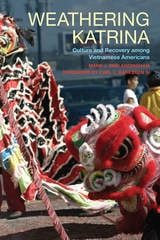
Weathering Katrina
Culture and Recovery among Vietnamese AmericansMark J. VanLandingham
Russell Sage Foundation, 2017
In 2005, Hurricane Katrina devastated New Orleans. The principal Vietnamese-American enclave was a remote, low-income area that flooded badly. Many residents arrived decades earlier as refugees from the Vietnam War and were marginally fluent in English. Yet, despite these poor odds of success, the Vietnamese made a surprisingly strong comeback in the wake of the flood. In Weathering Katrina, public health scholar Mark VanLandingham analyzes their path to recovery, and examines the extent to which culture helped them cope during this crisis.
Contrasting his longitudinal survey data and qualitative interviews of Vietnamese residents with the work of other research teams, VanLandingham finds that on the principal measures of disaster recovery—housing stability, economic stability, health, and social adaptation—the Vietnamese community fared better than other communities. By Katrina’s one-year anniversary, almost 90 percent of the Vietnamese had returned to their neighborhood, higher than the rate of return for either blacks or whites. They also showed much lower rates of post-traumatic stress disorder than other groups. And by the second year after the flood, the employment rate for the Vietnamese had returned to its pre-Katrina level.
While some commentators initially attributed this resilience to fairly simple explanations such as strong leadership or to a set of vague cultural strengths characteristic of the Vietnamese and other “model minorities”, VanLandingham shows that in fact it was a broad set of factors that fostered their rapid recovery. Many of these factors had little to do with culture. First, these immigrants were highly selected—those who settled in New Orleans enjoyed higher human capital than those who stayed in Vietnam. Also, as a small, tightly knit community, the New Orleans Vietnamese could efficiently pass on information about job leads, business prospects, and other opportunities to one another. Finally, they had access to a number of special programs that were intended to facilitate recovery among immigrants, and enjoyed a positive social image both in New Orleans and across the U.S., which motivated many people and charities to offer the community additional resources. But culture—which VanLandingham is careful to define and delimit—was important, too. A shared history of overcoming previous challenges—and a powerful set of narratives that describe these successes; a shared set of perspectives or frames for interpreting events; and a shared sense of symbolic boundaries that distinguish them from broader society are important elements of culture that provided the Vietnamese with some strong advantages in the post-Katrina environment.
By carefully defining and disentangling the elements that enabled the swift recovery of the Vietnamese in New Orleans, Weathering Katrina enriches our understanding of this understudied immigrant community and of why some groups fare better than others after a major catastrophe like Katrina.
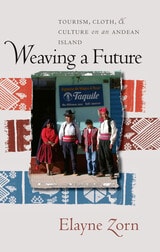
Weaving a Future
Tourism, Cloth, and Culture on an Andean IslandElayne Zorn
University of Iowa Press, 2004
The people of Taquile Island on the Peruvian side of beautiful Lake Titicaca, the highest navigable lake in the Americas, are renowned for the hand-woven textiles that they both wear and sell to outsiders. One thousand seven hundred Quechua-speaking peasant farmers, who depend on potatoes and the fish from the lake, host the forty thousand tourists who visit their island each year. Yet only twenty-five years ago, few tourists had even heard of Taquile. In Weaving a Future: Tourism, Cloth, and Culture on an Andean Island, Elayne Zorn documents the remarkable transformation of the isolated rocky island into a community-controlled enterprise that now provides a model for indigenous communities worldwide.
Over the course of three decades and nearly two years living on Taquile Island, Zorn, who is trained in both the arts and anthropology, learned to weave from Taquilean women. She also learned how gender structures both the traditional lifestyles and the changes that tourism and transnationalism have brought. In her comprehensive and accessible study, she reveals how Taquileans used their isolation, landownership, and communal organizations to negotiate the pitfalls of globalization and modernization and even to benefit from tourism. This multi-sited ethnography set in Peru, Washington, D.C., and New York City shows why and how cloth remains central to Andean society and how the marketing of textiles provided the experience and money for Taquilean initiatives in controlling tourism.
The first book about tourism in South America that centers on traditional arts as well as community control, Weaving a Future will be of great interest to anthropologists and scholars and practitioners of tourism, grassroots development, and the fiber arts.
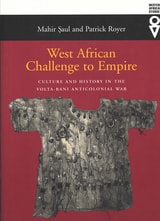
West African Challenge To Empire
Culture and History in the Volta-Bani Anticolonial WarMahir Saul
Ohio University Press, 2002
West African Challenge to Empire examines the anticolonial war in the Volta and Bani region in 1915–16. It was the largest challenge that the French ever faced in their West African colonial empire, and one of the largest armed oppositions to colonialism anywhere in Africa. How such a movement could be organized in the face of European technological superiority despite the fact that this region is generally described as having consisted of rival villages and descent groups is a puzzle. In this jointly written book the two authors provide a detailed political and military history of this event based on archival research and ethnographic fieldwork. Using cultural and sociological analysis, it probes the origins of the movement, its internal organization, its strategy, and the reasons for its initial success and why it spread.
In 2001 the authors of West African Challenge to Empire were awarded the Amaury Talbot Prize for African Anthropology by the Royal Anthropological Institute.
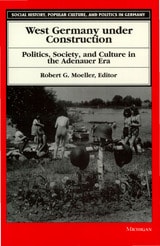
West Germany under Construction
Politics, Society, and Culture in the Adenauer EraRobert G. Moeller, Editor
University of Michigan Press, 1997
Western Apache Language and Culture
Essays in Linguistic AnthropologyKeith H. Basso
University of Arizona Press, 1990
CONTENTS
The Western Apache Classificatory Verb System: A Semantic Analysis
Semantic Aspects of Linguistic Acculturation
A Western Apache Writing System: The Symbols of Silas John
"Wise Words" of the Western Apache: Metaphor and Semantic Theory
"To Give Up on Words": Silence in Western Apache Culture
"Stalking With Stories": Names, Places, and Moral Narratives among the Western Apache
"Speaking with Names": Language and Landscapes among the Western Apache
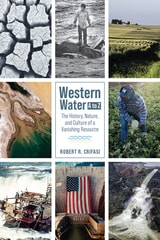
Western Water A to Z
The History, Nature, and Culture of a Vanishing Resourceby Robert R. Crifasi
University Press of Colorado, 2022
Organized as a collection of terms, the book addresses the most salient water issues and provides helpful background information regarding their origins and implications. Photographs serve a vital role in the cultural dialogue on water and stand as an equal partner to the text. Each subject is covered in about one page and is accompanied by one or two striking images from famous photographers like Margaret Bourke-White, Carleton E. Watkins, Arthur Rothstein, William Henry Jackson, and Dorothea Lang as well as Crifasi’s own work. Water often finds itself at the center of our cultural discourse in art, cinema, and literature, which play essential roles in shaping our understanding and experience of Western water. Crifasi also engages personalities that are nearly synonymous with Western water—John Wesley Powell, Elwood Mead, and Floyd Dominy, among others—to show how their lives intertwined with and often influenced the course of water development across the region.
Travelers, adventurers, students, and anyone interested in water will find Western Water A to Z a handy and entertaining reference guide.
What History Tells
George L. Mosse and the Culture of Modern EuropeEdited by Stanley G. Payne, David J. Sorkin, and John S. Tortorice
University of Wisconsin Press, 2004
The contributors include Walter Laqueur, David Sabean, Johann Sommerville, Emilio Gentile, Roger Griffin, Saul Friedländer, Jay Winter, Rudy Koshar, Robert Nye, Janna Bourke, Shulamit Volkov, and Steven E. Aschheim.
What's so Funny?
The Comic Conception of Culture and SocietyMurray S. Davis
University of Chicago Press, 1993
Drawing on a vast array of jokes and the work of dozens of comedians from Jay Leno and Lenny Bruce to Steve Allen and Billy Crystal, Davis reminds us of the extraordinarily subversive power of comedy. When we laugh, we accept the truth of the comic moment: that this is the way life really is. The book is in two parts. In the first, Davis explores the cultural conventions that even simple jokes take apart—the rules of logic, language, rationality, and meaning. In the second, he looks at the social systems that have been at the root of jokes for centuries: authority figures, power relations, and institutions. Whatever their style, comedians use the tools of the trade—ambiguous meanings, missed signals, incongruous characters, unlikely events—to violate our expectations about the world.
Setting comedy within a rich intellectual tradition—from Plato to Freud, Hobbes to Kant, in philosophy as well as sociology—Davis makes a convincing case for comedy as a subtle, complex, and articulated theory of culture and society. He reveals the unsuspected ways in which comedy, with its spotlight on the gap between appearance and reality, the ideal and the actual, can be a powerful mode for understanding the world we have made.

What’s the Matter with the Internet?
Mark Poster
University of Minnesota Press, 2001
A provocative investigation into the social and cultural implications of the Internet by a leading cultural critic.
As the Internet has become more and more a part of our daily lives, responses to its impact on culture and society have tended toward the extremes, hopeful or pessimistic. Fears that the Internet undermines community, inhibits social interaction, exacerbates economic and racial divisions, and facilitates greater state or corporate intrusion into our lives are balanced by excitement about the transformative qualities of the new medium and its potential to stimulate individual creativity, inspire new social forms, and further democratization.
In What’s the Matter with the Internet?, leading cultural theorist Mark Poster offers a sophisticated and astute assessment of the potential the new medium has to redefine culture and politics. Avoiding the mindless hype and meaningless jargon that has characterized much of the debate about the future of the Web, he details what truly distinguishes the Internet from other media and the implications these novel properties have for such vital issues as authorship, national identity and global citizenship, the fate of ethnicity and race, and democracy. Arguing that the Internet demands a social and cultural theory appropriate to the specific qualities of cyberspace, Poster reformulates the ideas of thinkers associated with our understanding of postmodern culture and the media (including Foucault, Deleuze, Heidegger, Baudrillard, and Derrida) to account for and illuminate the virtual world, paying particular attention to its political dimensions and the nature of identity. In this innovative analysis, Poster acknowledges that although the colonization of the Internet by corporations and governments does threaten to retard its capacity to bring about genuine change, the new medium is still capable of transforming both contemporary social practices and the way we see the world and ourselves.
White Space
Essays on Culture, Race, & WritingJennifer De Leon
University of Massachusetts Press, 2021
Alternately honest, funny, and visceral, this powerful collection follows De Leon as she comes of age as a Guatemalan-American woman and learns to navigate the space between two worlds. Never rich or white enough for her posh college, she finds herself equally adrift in her first weeks in her parents' home country. During the years to follow, she would return to Guatemala again and again, meet ex-guerrillera and genocide survivors, get married in the old cobblestoned capital of Antigua, and teach her newborn son about his roots.
Who Cares? Women, Care, and Culture
Julia T. Wood
Southern Illinois University Press, 1994
At a time when studies suggest the average American woman spends seventeen years caring for children and eighteen years caring for aging parents, Julia T. Wood examines how culture creates and sustains our definitions of caring, determines who cares along gender lines, and assigns the diminished value that caring has in our society.
Wood argues that America’s expanding need for caring is currently being met at an unacceptably high cost to caregivers. It is time, she believes, to examine caregiving roles and the personal, political, and social issues that surround the question of who cares. Caring must be recognized and promoted as an activity that commands the respect and participation of all members of our society—men and women alike.
Only by implementing changes in the basic fabric of American culture, affecting both the structure and the policies of our society and government, can we, Wood concludes, carve out a system of caring that will recognize caring as everyone’s responsibility.
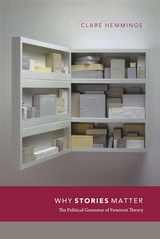
Why Stories Matter
The Political Grammar of Feminist TheoryClare Hemmings
Duke University Press, 2011

Why War?
The Cultural Logic of Iraq, the Gulf War, and SuezPhilip Smith
University of Chicago Press, 2005
Comprised of case studies of the War in Iraq, the Gulf War, and the Suez Crisis, Why War? decodes the cultural logic of the narratives that justify military action. Each nation, Smith argues, makes use of binary codes—good and evil, sacred and profane, rational and irrational, to name a few. These codes, in the hands of political leaders, activists, and the media, are deployed within four different types of narratives—mundane, tragic, romantic, or apocalyptic. With this cultural system, Smith is able to radically recast our "war stories" and show how nations can have vastly different understandings of crises as each identifies the relevant protagonists and antagonists, objects of struggle, and threats and dangers.
The large-scale sacrifice of human lives necessary in modern war, according to Smith, requires an apocalyptic vision of world events. In the case of the War in Iraq, for example, he argues that the United States and Britain replicated a narrative of impending global doom from the Gulf War. But in their apocalyptic account they mistakenly made the now seemingly toothless Saddam Hussein once again a symbol of evil by writing him into the story alongside al Qaeda, resulting in the war's contestation in the United States, Britain, and abroad.
Offering an innovative approach to understanding how major wars are packaged, sold, and understood, Why War? will be applauded by anyone with an interest in military history, political science, cultural studies, and communication.
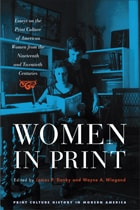
Women in Print
Essays on the Print Culture of American Women from the Nineteenth and Twentieth CenturiesEdited by James P. Danky and Wayne A. Wiegand
University of Wisconsin Press, 2006
Women readers, editors, librarians, authors, journalists, booksellers, and others are the subjects in this stimulating new collection on modern print culture. The essays feature women like Marie Mason Potts, editor of Smoke Signals, a mid-twentieth century periodical of the Federated Indians of California; Lois Waisbrooker, publisher of books and journals on female sexuality and women's rights in the decades after the Civil War; and Elizabeth Jordan, author of two novels and editor of Harper's Bazaar from 1900 to 1913. The volume presents a complex and engaging picture of print culture and of the forces that affected women's lives in the nineteenth and twentieth centuries.
Published in collaboration among the University of Wisconsin Press, the Center for the History of Print Culture in Modern America (a joint program of the University of Wisconsin–Madison and the Wisconsin Historical Society), and the University of Wisconsin–Madison General Library System Office of Scholarly Communication.
Women with Disabilities
Essays in Psychology, Culture, and Politicsedited by Michelle Fine and Adrienne Asch
Temple University Press, 1989
Women with disabilities are women first, sharing the dreams and disappointments common to women in a male-dominated society. But because society persists in viewing disability as an emblem of passivity and incompetence, disabled women occupy a devalued status in the social hierarchy. This book represents the intersection of the feminist and disability rights perspectives; it analyzes the forces that push disabled women towards the margins of social life, and it considers the resources that enable these women to resist the stereotype.
Drawing on law, social science, folklore, literature, psychoanalytic theory, and political activism, this book describes the experience of women with disabilities. The essays consider the impact of social class, race, the age at which disability occurs, and sexual orientation on the disabled woman's self esteem as well as on her life options. The contributors focus their inquiry on the self perceptions of disabled women and ask: From what sources do these women draw positive self images? How do they resist the culture's power to label them as deviant? The essays describe the ways in which disabled women face discrimination in the workplace and the failure of the mainstream women's movement to address their concerns.
In the series Health, Society, and Policy, edited by Sheryl Ruzek and Irving Kenneth Zola.

Word Crimes
Blasphemy, Culture, and Literature in Nineteenth-Century EnglandJoss Marsh
University of Chicago Press, 1998
From extensive archival and literary research, Joss Marsh reconstructs a unified and particular account of blasphemy in Victorian England. Rewriting English history from the bottom up, she tells the forgotten stories of more than two hundred working-class "blasphemers," like Foote, whose stubborn refusal to silence their "hooligan" voices helped secure our rights to speak and write freely today. The new standards of criminality used to judge their "word crimes" rewrote the terms of literary judgment, demoting the Bible to literary masterpiece and raising Literature as the primary standard of Victorian cultural value.
Working Time
Essays on Poetry, Culture, and TravelJane Miller
University of Michigan Press, 1992
The essays consider notions of time, duration, narrative, documentary, and history in American poetry, and view poetry in the light of developments in feminism, postmodern theory, and contemporary poetic practice. In addition to poetry, Miller investigates a range of cultural products and art forms, including film, video, photography, painting, sculpture, music, and the Madonna phenomenon.
Worship and Wilderness
Culture, Religion, and Law in Public Lands ManagementLloyd Burton
University of Wisconsin Press, 2002
Questions about land use, conservation, and preservation—already so perplexing and contentious—take on a new complexity and greater urgency when the land in question is understood as sacred. This is a view increasingly held, as adherents of mainstream religions come to recognize what indigenous peoples knew centuries ago—that the sacred inheres in nature itself. What such a trend means and how it involves the forces of culture, religion, and constitutional law (especially First Amendment clauses concerning the free exercise of religion) are considered with a remarkable breadth and depth of understanding in this important new work.
Drawing on case studies of national parks and monuments, national forests, and other public lands and resources, Lloyd Burton gives a clear and comprehensive account of how the intertwining influences of culture, religion, and law have affected the management of public lands and resources in the recent past and how they may do so in the future. In a unique and unprecedented way, his book weaves together teachings on nature and the sacred among indigenous and immigrant culture groups in the United States; the relevant constitutional history of religion and government action; and analysis of contemporary conflicts over culture, religion, and public lands management. As such, Worship and Wilderness is essential reading not only for public land managers and environmental policy makers but also for anyone interested in the growing significance of religious interests in the use of resources that constitute our national commons and our common natural heritage.
Writing National Cinema
Film Journals and Film Culture in PeruJeffrey Middents
Dartmouth College Press, 2009