Results by title
447 books match the query 'Eastern' and 19 start with w
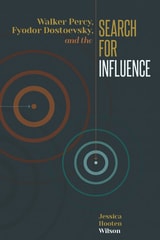
Walker Percy, Fyodor Dostoevsky, and the Search for Influence
Jessica Hooten Wilson
The Ohio State University Press, 2017
From Dostoevsky, Percy learned how to captivate his non-Christian readership with fiction saturated by a Christian vision of reality. Not only was his method of imitation in line with this Christian faith but also the aesthetic mode and very content of his narratives centered on his knowledge of Christ. The influence of Dostoevsky on Percy, then, becomes significant as a modern case study for showing the illusion of artistic autonomy and long-held, Romantic assumptions about artistic originality. Ultimately, Wilson suggests, only by studying the good that came before can one translate it in a new voice for the here and now.

Walking Trails of Eastern and Central Wisconsin
Bob Crawford
University of Wisconsin Press, 1997
A companion to the popular Walking Trails of Southern Wisconsin, this book describes more than 200 trails in 72 locations throughout five of the state's major regions. Bob Crawford provides maps and detailed instructions to make the trails easy to locate.
With each trail description you'll find:
* details about the route and terrain, as well as geographical, biological, or historical features of interest;
* regulations including open days and hours, and rules regarding dogs, trail bikes, cross-country skiing, and other activities;
* information about available restrooms, drinking water, nature centers, and other facilities at the site;
* a description assessing degree of difficulty—slope, width, maintenance, and other such factors—and a helpful rating of "walkability" on a scale from 1 to 5.
The only comprehensive guide to hiking locations in the eastern part of the state, this book also provides lists of trail locations that include playground equipment for kids and picnic facilities for those who want to make a day trip of their hiking outing. Appendices spotlight trails that boast historical significance, ice age features, picnic areas, and cross-country skiing opportunities.
War with the Newts
Karel Capek
Northwestern University Press, 1996
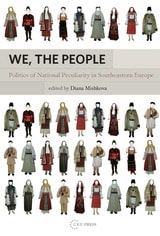
We, the People
Politics of National Peculiarity in Southeastern EuropeDiana Mishkova
Central European University Press, 2009
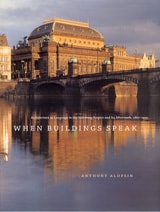
When Buildings Speak
Architecture as Language in the Habsburg Empire and Its Aftermath, 1867-1933Anthony Alofsin
University of Chicago Press, 2006
“The book itself as a production is spectacular.”—David Dunster, Architectural Review
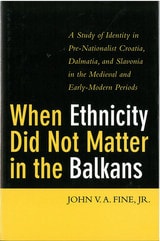
When Ethnicity Did Not Matter in the Balkans
A Study of Identity in Pre-Nationalist Croatia, Dalmatia, and Slavonia in the Medieval and Early-Modern PeriodsJohn V. A. Fine, Jr.
University of Michigan Press, 2006
-Steve Rapp, Associate Professor of Caucasian, Byzantine, and Eurasian History, and Director, Program in World History and Cultures Department of History, Georgia State University Atlanta
When Ethnicity Did Not Matter in the Balkans is a study of the people who lived in what is now Croatia during the Middle Ages (roughly 600-1500) and the early-modern period (1500-1800), and how they identified themselves and were identified by others. John V. A. Fine, Jr., advances the discussion of identity by asking such questions as: Did most, some, or any of the population of that territory see itself as Croatian? If some did not, to what other communities did they consider themselves to belong? Were the labels attached to a given person or population fixed or could they change? And were some people members of several different communities at a given moment? And if there were competing identities, which identities held sway in which particular regions?
In When Ethnicity Did Not Matter in the Balkans, Fine investigates the identity labels (and their meaning) employed by and about the medieval and early-modern population of the lands that make up present-day Croatia. Religion, local residence, and narrow family or broader clan all played important parts in past and present identities. Fine, however, concentrates chiefly on broader secular names that reflect attachment to a city, region, tribe or clan, a labeled people, or state.
The result is a magisterial analysis showing us the complexity of pre-national identity in Croatia, Dalmatia, and Slavonia. There can be no question that the medieval and early-modern periods were pre-national times, but Fine has taken a further step by demonstrating that the medieval and early-modern eras in this region were also pre-ethnic so far as local identities are concerned. The back-projection of twentieth-century forms of identity into the pre-modern past by patriotic and nationalist historians has been brought to light. Though this back-projection is not always misleading, it can be; Fine is fully cognizant of the danger and has risen to the occasion to combat it while frequently remarking in the text that his findings for the Balkans have parallels elsewhere.
John V. A. Fine, Jr. is Professor of History at the University of Michigan.
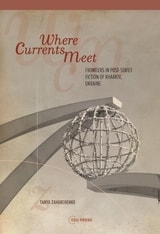
Where Currents Meet
Frontiers of Memory in Post-Soviet Fiction of Kharkiv, UkraineTanya Zaharchenko
Central European University Press, 2016
Where Currents Meet, Tanya Zaharchenko’s path-breaking study of literature and cultural memory, moves decisively beyond the simplistic view of a post-Soviet Ukraine divided between east and west. It positions the Ukrainian and Russian components of cultural experience in the country’s east as elements of a complex continuum. Combining insights from memory studies and border studies, Zaharchenko analyzes a generation of younger riters in the city of Kharkiv—a “doubletake generation” that came of age at the time of the Soviet Union’s collapse and now revisits this experience through fiction. In the works of Serhiy Zhadan, Andreĭ Krasniashchikh, Yuri Tsaplin, Oleh Kotsarev, and others the author reveals how borderlands and frontiers, both geographical and conceptual, acquire zonal qualities of their own as these writers navigate the historical legacy they have inherited.
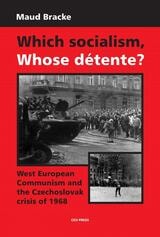
Which Socialism, Whose Detente?
West European Communism and the Czechoslovak Crisis of 1968Maud Bracke
Central European University Press, 2007
Why So Easily . . . Some Family Reasons for the Velvet Revolution
A Sociological EssayIvo Možný
Karolinum Press, 2023
Thirty-two years after its initial publication, this respected sociological essay, written in the history-making years of 1989 and 1990, is available for the first time in English. The essay tells the story of a despotic Socialist state expropriating the family (and with it the private sphere of life) only to be colonized by the very thing it expropriated forty years later. The essay plunges the reader into the pivotal time of the Velvet Revolution and provides valid explanations for the grassroots causes of the old regime’s downfall, examining the private aspirations and strategies of highly disparate groups of nameless social actors of the old regime that eventually sapped almost everyone of any interest in keeping the regime afloat.
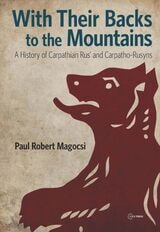
With Their Backs to the Mountains
A History of Carpathian Rus' and Carpatho-RusynsPaul Robert Magocsi
Central European University Press, 2016
This is a history of a stateless people, the Carpatho-Rusyns, and their historic homeland, Carpathian Rus’, located in the heart of central Europe. A little over 100,000 Carpatho-Rusyns are registered in official censuses but their population is estimated at around 1,000,000, the greater part in Ukraine and Slovakia. The majority of the diaspora—nearly 600,000—lives in the US.
At the present, when it is fashionable to speak of nationalities as “imagined communities” created by intellectuals or elites who may live in the historic homeland, Carpatho-Rusyns provide an ideal example of a people made—or some would say still being made—before our very eyes. The book traces the evolution of Carpathian Rus’ from earliest prehistoric times to the present, and the complex manner in which a distinct Carpatho-Rusyn people, since the mid-nineteenth century, came into being, disappeared, and then re-appeared in the wake of the revolutions of 1989 and the collapse of communist rule in central and eastern Europe.
To help guide the reader further there are 34 detailed maps plus an annotated discussion of relevant books, chapters, and journal articles.
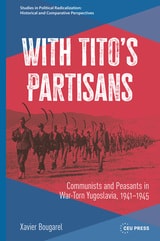
With Tito’s Partisans
Communists and Peasants in War-Torn Yugoslavia, 1941–1945Xavier Bougarel
Central European University Press, 2026
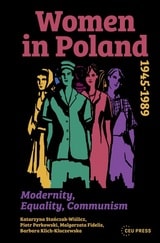
Women in Poland, 1945–1989
Modernity, Equality, CommunismKatarzyna Stanczak-Wislicz
Central European University Press, 2026
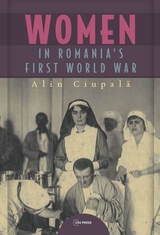
Women in Romania’s First World War
Alin Ciupalã
Central European University Press, 2025
Beyond women’s contribution to the war, the book also examines the effects of the First World War on gender roles in Romania. Feminist leaders expected that a wartime “training service” would entitle women to a life with full rights as citizens. Yet after the war, the situation returned to “normal,” and women largely continued to be excluded from the public sphere.
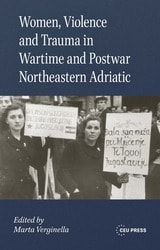
Women, Violence and Trauma in Wartime and Postwar Northeastern Adriatic
Marta Verginella
Central European University Press, 2026
Drawing on a rich range of sources—psychiatric records, diaries, autobiographies, oral histories, literature, film, and archival documents—the contributors foreground voices long marginalized in official histories. Together, the chapters reveal both vulnerability and resilience, tracing how trauma was lived, narrated, silenced, and politically instrumentalized across different post-war contexts, from the early Cold War to post-socialist societies. This collection reshapes debates in gender history, memory studies, and trauma research, offering new insights into how women endured, interpreted, and transformed the violent legacies of the twentieth century.
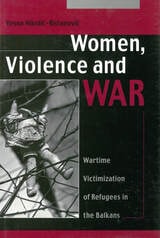
Women, Violence and War
Wartime Victimization of Refugees in the BalkansVesna Nikolic-Ristanovic
Central European University Press, 2000
Based on interviews with seventy women refugees, Women, Violence and War is a book about war as it is seen, lived and interpreted by women who were citizens of the former Yugoslavia.
Many of the accounts portray the horrific experiences the victims had to face and the book addresses issues of sexual, physical and psychological violence, as well as problems of confinement, upheaval and family separation. In a completely new insight the book dispels the myth that many of the women were peasants, and shows that in fact they were educated, middle-class women with independent careers. The study also depicts how some of the victims attempt to come to terms with the aftermath of wartime abuse.
This probing, accurate and unique investigation of victimization is an unparalleled volume that presents a completely new perspective maintaining that violence against women in war is not independent of peace-time victimization and the imbalance of power between sexes.
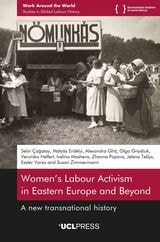
Women’s Labour Activism in Eastern Europe and Beyond
A New Transnational historySelin Çagatay, et al.
University College London, 2025
So often, theories of activism and social change neglect acts of resistance in informal, community, and domestic contexts. This collaborative investigation from a transnational team of scholars addresses two related shortcomings: the lack of class analysis in gender history and the neglect of gender dynamics in labor history. Women’s Labour Activism in Eastern Europe and Beyond highlights understudied topics in both of these fields, such as radical, grassroots, and interclass women’s labor activism on behalf of lower-income and working-class women and communities; women’s participation in trade unions on both sides of the Iron Curtain; and the heretofore neglected presence of Eastern European women in international organizations, including the cooperative movement.
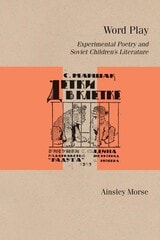
Word Play
Experimental Poetry and Soviet Children’s LiteratureAinsley Morse
Northwestern University Press, 2021
Word Play traces the history of the relationship between experimental aesthetics and Soviet children’s books, a relationship that persisted over the seventy years of the Soviet Union’s existence. From the earliest days of the Soviet project, children’s literature was taken unusually seriously—its quality and subject matter were issues of grave political significance. Yet, it was often written and illustrated by experimental writers and artists who found the childlike aesthetic congenial to their experiments in primitivism, minimalism, and other avant‑garde trends. In the more repressive environment following Stalin’s rise to power, experimental aesthetics were largely relegated to unofficial and underground literature, but unofficial writers continued to author children’s books, which were often more appealing than adult literature of the time.
Word Play focuses on poetry as the primary genre for both children’s and unofficial literature throughout the Soviet period. Five case studies feature poets‑cum‑children’s writers—Leonid Aronzon, Oleg Grigoriev, Igor Kholin, Vsevolod Nekrasov, and Dmitri Prigov—whose unpublished work was not written for children but features lexical and formal elements, abundant humor, and childlike lyric speakers that are aspects of the childlike aesthetic. The book concludes with an exploration of the legacy of this aesthetic in Russian poetry today. Drawing on rich primary sources, Word Play joins a growing literature on Russian children’s books, connecting them to avant-garde poetics in fresh, surprising ways.
Words Are Something Else
David Albahari
Northwestern University Press, 1996
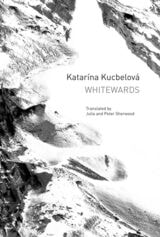
whitewards
Katarína Kucbelová
Seagull Books, 2025
Katarína Kucbelová’s whitewards is a haunting and deeply moving sequence of poems that unfolds in a stark, snowbound landscape where winter seems endless. Three unnamed figures struggle to find their way through a snow-covered mountainside, grappling with uncertainty, unspoken fears, and the weight of questions they can barely put into words. Framed as a series of brief fragments and longer passages that use a range of narrative and cinematic techniques, the collection explores themes of identity, survival, and the search for meaning in a time of global crisis—whether political, environmental, or technological. Yet amid the darkness, Kucbelová finds light in storytelling itself, offering it as a form of solace, a way to break through loneliness, and a means to endure. The beauty of her images stimulates and inspires, acting as an antidote to the bleakness of the world. This stunning collection of poems explores identity, survival, and the power that storytelling possesses to bring light even to the bleakest landscapes.