917 books match the query 'Economics' and 24 start with w

cover of Wageless Life: A Manifesto for a Future beyond Capitalism

Wageless Life

A Manifesto for a Future beyond Capitalism

Ian G. R. Shaw

University of Minnesota Press, 2019

Drawing up alternate ways to “make a living” beyond capitalism

To live in this world is to be conditioned by capital. Once paired with Western democracy, unfettered capitalism has led to a shrinking economic system that squeezes out billions of people—creating a planet of surplus populations. Wageless Life is a manifesto for building a future beyond the toxic failures of late-stage capitalism. Daring to imagine new social relations, new modes of economic existence, and new collective worlds, the authors provide skills and tools for perceiving—and living in— a post-capitalist future. 

Forerunners: Ideas First
Short books of thought-in-process scholarship, where intense analysis, questioning, and speculation take the lead
[more]
cover of Wages, Welfare Costs and Inflation in Classical Athens

Wages, Welfare Costs and Inflation in Classical Athens

William T. Loomis

University of Michigan Press, 1999

William T. Loomis examines all surviving Athenian wages, salaries, welfare payments and other labor costs to determine what people really were paid for various kinds of work and allowances. These determinations, in turn, enable the author to cast a new and authoritative light on three controversial questions: Was there a "standard wage" in Athens? Were there periods of inflation and deflation? Did Athenians have an "embedded" or a "market" economy?
Individual chapters critically examine each surviving wage or other payment in thirteen job categories, including public office holders; soldiers and sailors; priests, oracles, and seers; overseers, architects, and other salaried construction personnel; and prostitutes and pimps. Three additional chapters then consider whether there was a "standard wage," inflation and deflation in Athens, and the implications of these conclusions for the hotly debated question about the nature of the Athenian economy.
This is the first comprehensive study of Athenian labor and welfare costs since August Böckh's Die Staatshaushaltung der Athener (1886). An updated critical study has been much needed, to take account of the greatly expanded evidence (Aristotle's Constitution of the Athenians, more than a dozen other papyrus texts and hundreds of inscriptions), and the uneven quality of the sources. This collection allows William T. Loomis to argue--contrary to prevailing scholarly opinion--that there never was a "standard wage" at Athens.
"This volume will be a significant contribution to all studies of ancient Greek civilization." --Alan L. Boegehold, Brown University
William Loomis is Visiting Professor of Classics, University of Michigan.

[more]
cover of War, Peace, and Prosperity in the Name of God: The Ottoman Role in Europe's Socioeconomic Evolution

War, Peace, and Prosperity in the Name of God

The Ottoman Role in Europe's Socioeconomic Evolution

Murat Iyigun

University of Chicago Press, 2015

Differences among religious communities have motivated—and continue to motivate—many of the deadliest conflicts in human history. But how did political power and organized religion become so thoroughly intertwined? And how have religion and religiously motivated conflicts affected the evolution of societies throughout history, from demographic and sociopolitical change to economic growth?

War, Peace, and Prosperity in the Name of God turns the focus on the “big three monotheisms”—Judaism, Islam, and Christianity—to consider these questions. Chronicling the relatively rapid spread of the Abrahamic religions among the Old World, Murat Iyigun shows that societies that adhered to a monotheistic belief in that era lasted longer, suggesting that monotheism brought some sociopolitical advantages. While the inherent belief in one true god meant that these religious communities had sooner or later to contend with one another, Iyigun shows that differences among them were typically strong enough to trump disagreements within. The book concludes by documenting the long-term repercussions of these dynamics for the organization of societies and their politics in Europe and the Middle East.
[more]
cover of Wealth, Commerce, and Philosophy: Foundational Thinkers and Business Ethics

Wealth, Commerce, and Philosophy

Foundational Thinkers and Business Ethics

Edited by Eugene Heath and Byron Kaldis

University of Chicago Press, 2017

The moral dimensions of how we conduct business affect all of our lives in ways big and small, from the prevention of environmental devastation to the policing of unfair trading practices, from arguments over minimum wage rates to those over how government contracts are handed out. Yet for as deep and complex a field as business ethics is, it has remained relatively isolated from the larger, global history of moral philosophy. This book aims to bridge that gap, reaching deep into the past and traveling the globe to reinvigorate and deepen the basis of business ethics. 
           
Spanning the history of western philosophy as well as looking toward classical Chinese thought and medieval Islamic philosophy, this volume provides business ethicists a unified source of clear, accurate, and compelling accounts of how the ideas of foundational thinkers—from Aristotle to Friedrich Hayek to Amartya Sen—relate to wealth, commerce, and markets. The essays illuminate perspectives that have often been ignored or forgotten, informing discussion in fresh and often unexpected ways.  In doing so, the authors not only throw into relief common misunderstandings and misappropriations often endemic to business ethics but also set forth rich moments of contention as well as novel ways of approaching complex ethical problems. Ultimately, this volume provides a bedrock of moral thought that will move business ethics beyond the ever-changing opinions of headline-driven debate. 
 
[more]
cover of Welfare Reform and Political Theory

Welfare Reform and Political Theory

Lawrence M. Mead

Russell Sage Foundation, 2005
During the 1990s, both the United States and Britain shifted from entitlement to work-based systems for supporting their poor citizens. Much research has examined the implications of welfare reform for the economic well-being of the poor, but the new legislation also affects our view of democracy—and how it ought to function. By eliminating entitlement and setting behavioral conditions on aid, welfare reform challenges our understanding of citizenship, political equality, and the role of the state. In Welfare Reform and Political Theory, editors Lawrence Mead and Christopher Beem have assembled an accomplished list of political theorists, social policy experts, and legal scholars to address how welfare reform has affected core concepts of political theory and our understanding of democracy itself. Welfare Reform and Political Theory is unified by a common set of questions. The contributors come from across the political spectrum, each bringing different perspectives to bear. Carole Pateman argues that welfare reform has compromised the very tenets of democracy by tying the idea of citizenship to participation in the marketplace. But William Galston writes that American citizenship has in some respects always been conditioned on good behavior; work requirements continue that tradition by promoting individual responsibility and self-reliance—values essential to a well-functioning democracy. Desmond King suggests that work requirements draw invidious distinctions among citizens and therefore destroy political equality. Amy Wax, on the other hand, contends that ending entitlement does not harm notions of equality, but promotes them, by ensuring that no one is rewarded for idleness. Christopher Beem argues that entitlement welfare served a social function—acknowledging the social value of care—that has been lost in the movement towards conditional benefits. Stuart White writes that work requirements can be accepted only subject to certain conditions, while Lawrence Mead argues that concerns about justice must be addressed only after recipients are working. Alan Deacon is well to the left of Joel Schartz, but both say government may actively promote virtue through social policy—a stance some other contributors reject. The move to work-centered welfare in the 1990s represented not just a change in government policy, but a philosophical change in the way people perceived government, its functions, and its relationship with citizens. Welfare Reform and Political Theory offers a long overdue theoretical reexamination of democracy and citizenship in a workfare society.
[more]
cover of What Employers Want: Job Prospects for Less-Educated Workers

What Employers Want

Job Prospects for Less-Educated Workers

Harry J. Holzer

Russell Sage Foundation, 1996
A very important contribution to the field of labor economics, and in particular to the understanding of the labor market forworkers with relatively low skill levels. I think we have the sense that the market looks bad, but haven't been clear on how bad it is, or how it got that way. What Employers Want provides some of the answers and identifies the important questions. It is essential reading. —Jeffrey S. Zax, University of Colorado at Boulder The substantial deterioration in employment and earnings among the nation's less-educated workers, especially minorities and younger males in the nation's big cities, has been tentatively ascribed to a variety of causes: an increase in required job skills, the movement of companies from the cities to the suburbs, and a rising unwillingness to hire minority job seekers. What Employers Want is the first book to replace conjecture about today's job market with first-hand information gleaned from employers about who gets hired. Drawn from asurvey of over 3,000 employers in four major metropolitan areas—Los Angeles, Boston, Atlanta, and Detroit—this volume provides a wealth of data on what jobs are available to the less-educated, in what industries, what skills they require, where they are located, what they pay, and how they are filled. The evidence points to a dramatic surge in suburban, white-collar jobs. The manufacturing industry—once a steady employer of blue-collar workers—has been eclipsed by the expanding retail trade and service industries, where the vast majority of jobs are in clerical, managerial, or sales positions. Since manufacturing establishments have been the most likely employers to move from the central cities to the suburbs, the shortage of jobs for low-skill urban workers is particularly acute. In the central cities, the problem is compounded and available jobs remain vacant because employers increasingly require greater cognitive and social skills as well as specific job-related experience. Holzer reveals the extent to which minorities are routinely excluded by employer recruitment and screening practices that rely heavily on testing, informal referrals, and stable work histories. The inaccessible location and discriminatory hiring patterns of suburban employers further limit the hiring of black males in particular, while earnings, especially for minority females, remain low. Proponents of welfare reform often assume that stricter work requirements and shorter eligibility periods will effectively channel welfare recipients toward steady employment and off federal subsidies. What Employers Want directly challenges this premise and demonstrates that only concerted efforts to close the gap between urban employers and inner city residents can produce healthy levels of employment in the nation's cities. Professor Holzer outlines the measures that will benecessary—targeted education and training programs, improved transportation and job placement, heightened enforcement of antidiscrimination laws, and aggressive job creation strategies. Repairing urban labor markets will not be easy. This book shows why. A Volume in the Multi-City Study of Urban Inequality
[more]
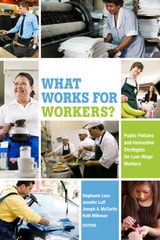
cover of What Works for Workers?: Public Policies and Innovative Strategies for Low-Wage Workers

What Works for Workers?

Public Policies and Innovative Strategies for Low-Wage Workers

Stephanie Luce

Russell Sage Foundation, 2014

The majority of new jobs created in the United States today are low-wage jobs, and a fourth of the labor force earns no more than poverty-level wages. Policymakers and citizens alike agree that declining real wages and constrained spending among such a large segment of workers imperil economic prosperity and living standards for all Americans. Though many policies to assist low-wage workers have been proposed, there is little agreement across the political spectrum about which policies actually reduce poverty and raise income among the working poor. What Works for Workers provides a comprehensive analysis of policy measures designed to address the widening income gap in the United States. Featuring contributions from an eminent group of social scientists, What Works for Workers evaluates the most high-profile strategies for poverty reduction, including innovative “living wage” ordinances, education programs for African American youth, and better regulation of labor laws pertaining to immigrants. The contributors delve into an extensive body of scholarship on low-wage work to reveal a number of surprising findings. Richard Freeman suggests that labor unions, long assumed to be moribund, have a fighting chance to reclaim their historic redistributive role if they move beyond traditional collective bargaining and establish new ties with other community actors. John Schmitt predicts that the Affordable Care Act will substantially increase insurance coverage for low-wage workers, 38 percent of whom currently lack any kind of health insurance. Other contributors explore the shortcomings of popular solutions: Stephanie Luce shows that while living wage ordinances rarely lead to job losses, they have not yet covered most low-wage workers. And Jennifer Gordon corrects the notion that a path to legalization alone will fix the plight of immigrant workers. Without energetic regulatory enforcement, she argues, legalization may have limited impact on the exploitation of undocumented workers. Ruth Milkman and Eileen Appelbaum conclude with an analysis of California’s paid family leave program, a policy designed to benefit the working poor, who have few resources that allow them to take time off work to care for children or ill family members. Despite initial opposition, the paid leave program proved more acceptable than expected among employers and provided a much-needed system of wage replacement for low-income workers. In the wake of its success, the initiative has emerged as a useful blueprint for paid leave programs in other states. Alleviating the low-wage crisis will require a comprehensive set of programs rather than piecemeal interventions. With its rigorous analysis of what works and what doesn’t, What Works for Workers points the way toward effective reform. For social scientists, policymakers, and activists grappling with the practical realities of low-wage work, this book provides a valuable guide for narrowing the gap separating rich and poor.
[more]
cover of When Rules Change: The Economics of Retroactivity

When Rules Change

The Economics of Retroactivity

Daniel Shaviro

University of Chicago Press, 2000

Suppose Congress were to change Social Security just before you retired? Or repeal income tax deductions for homeowners? Or institute a flat tax? Should those changes be retroactive? Or should you retain the gains or accept the losses resulting from the new enactments? What kinds of policies might governments adopt in order to mitigate the transitional effects of changing legal rules?

Daniel Shaviro tackles these tough questions, bringing legal, economic, and political perspectives to bear on a persistent problem not often given serious attention. When Rules Change: An Economic and Political Analysis of Transition Relief and Retroactivity focuses on tax law changes to develop an in-depth understanding of the transitional issues inherent in any substantive rule change and also to advance a set of normative policy guidelines applicable to any such circumstance. Shaviro reframes traditional approaches to the problem of retroactivity and offers new insights into both the theory and policy of legislative transitions.
[more]
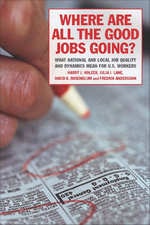
cover of Where Are All the Good Jobs Going?: What National and Local Job Quality and Dynamics Mean for U.S. Workers

Where Are All the Good Jobs Going?

What National and Local Job Quality and Dynamics Mean for U.S. Workers

Harry J. Holzer

Russell Sage Foundation, 2011
Deindustrialization in the United States has triggered record-setting joblessness in manufacturing centers from Detroit to Baltimore. At the same time, global competition and technological change have actually stimulated both new businesses and new jobs. The jury is still out, however, on how many of these positions represent a significant source of long-term job quality and security. Where Are All the Good Jobs Going? addresses the most pressing questions for today's workers: whether the U.S. labor market can still produce jobs with good pay and benefits for the majority of workers and whether these jobs can remain stable over time. What constitutes a "good" job, who gets them, and are they becoming more or less secure? Where Are All the Good Jobs Going? examines U.S. job quality and volatility from the perspectives of both workers and employers. The authors analyze the Longitudinal Employer Household Dynamics (LEHD) data compiled by the U.S. Census Bureau, and the book covers data for twelve states during twelve years, 1992–2003, resulting in an unprecedented examination of workers and firms in several industries over time. Counter to conventional wisdom, the authors find that good jobs are not disappearing, but their character and location have changed. The market produces fewer good jobs in manufacturing and more in professional services and finance. Not surprisingly, the best jobs with the highest pay still go to the most educated workers. The most vulnerable workers—older, low-income, and low-skilled—work in the most insecure environments where they can be easily downsized or displaced by a fickle labor market. A higher federal minimum wage and increased unionization can contribute to the creation of well paying jobs. So can economic strategies that help smaller metropolitan areas support new businesses. These efforts, however, must function in tandem with policies that prepare workers for available positions, such as improving general educational attainment and providing career education. Where Are All the Good Jobs Going? makes clear that future policies will need to address not only how to produce good jobs but how to produce good workers. This cohesive study takes the necessary first steps with a sensible approach to the needs of workers and the firms that hire them.
[more]
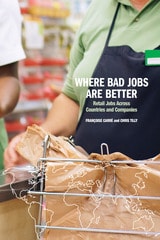
cover of Where Bad Jobs Are Better: Retail Jobs Across Countries and Companies

Where Bad Jobs Are Better

Retail Jobs Across Countries and Companies

Francoise Carre

Russell Sage Foundation, 2017

Retail is now the largest employer in the United States. For the most part, retail jobs are “bad jobs” characterized by low wages, unpredictable work schedules, and few opportunities for advancement. However, labor experts Françoise Carré and Chris Tilly show that these conditions are not inevitable. In Where Bad Jobs Are Better, they investigate retail work across different industries and seven countries to demonstrate that better retail jobs are not just possible, but already exist. By carefully analyzing the factors that lead to more desirable retail jobs, Where Bad Jobs Are Better charts a path to improving job quality for all low-wage jobs.
 
In surveying retail work across the United States, Carré and Tilly find that the majority of retail workers receive low pay and nearly half work part-time, which contributes to high turnover and low productivity. Jobs staffed predominantly by women, such as grocery store cashiers, pay even less than retail jobs in male-dominated fields, such as consumer electronics. Yet, when comparing these jobs to similar positions in Western Europe, Carré and Tilly find surprising differences. In France, though supermarket cashiers perform essentially the same work as cashiers in the United States, they receive higher pay, are mostly full-time, and experience lower turnover and higher productivity. And unlike the United States, where many retail employees are subject to unpredictable schedules, in Germany, retailers are required by law to provide their employees notice of work schedules six months in advance.
 
The authors show that disparities in job quality are largely the result of differing social norms and national institutions. For instance, weak labor regulations and the decline of unions in the United States have enabled retailers to cut labor costs aggressively in ways that depress wages and discourage full-time work. On the other hand, higher minimum wages, greater government regulation of work schedules, and stronger collective bargaining through unions and works councils have improved the quality of retail jobs in Europe.
 
As retail and service work continue to expand, American employers and policymakers will have to decide the extent to which these jobs will be good or bad. Where Bad Jobs Are Better shows how stronger rules and regulations can improve the lives of retail workers and boost the quality of low-wage jobs across the board.

 
[more]
cover of Who Should Pay for Medicare?

Who Should Pay for Medicare?

Daniel Shaviro

University of Chicago Press, 2004

Good news first? The good news is that Americans today are living longer, in part because of continual advances in healthcare. But the bad news is that with our aging population larger than ever before, nothing is being done to ensure that we can continue to afford the increasing costs of care. How Medicare—with the Bush administration's reforms and a slumping economy—will meet the needs of its recipients without adequate financing is among the most pressing issues facing this country today.

Daniel N. Shaviro sees the future of our national healthcare system as hinging on the issue of funding. The author of books on the economic issues surrounding Social Security and budget deficits, Shaviro is a skilled guide for anyone seeking to understand the financial aspects of government programs. Who Should Pay for Medicare? offers an accessible overview of how Medicare operates as a fiscal system. Discussions of Medicare reform often focus on the expansion of program treatment choices but not on the question of who should pay for Medicare's services. Shaviro's book addresses this critical issue, examining the underanalyzed dynamics of the significant funding gap facing Medicare. He gives a balanced, nonpartisan evaluation of various reform alternatives—considering everything from the creation of new benefits in this fiscal crunch to tax cuts to the demographic pressures we face and the issues this will raise when future generations have to pay for the care of today's seniors.

Who Should Pay for Medicare? speaks to seniors who feel entitled to expanded coverage, younger people who wonder what to expect from the government when they retire, and Washington policy makers who need an indispensable guidebook to Medicare's future.
[more]
cover of Why the Poor Get Richer and the Rich Slow Down: Essays in the Marshallian Long Period

Why the Poor Get Richer and the Rich Slow Down

Essays in the Marshallian Long Period

By W. W. Rostow

University of Texas Press, 1980

Bearing on fundamental issues of economic theory, history, and public policy, this volume elaborates and goes beyond themes enunciated in W. W. Rostow's previous works. The eight essays presented here are unified by the author's insistence that neo-Keynesian and neoclassical theory are an inadequate basis for economic analysis and policy prescription. Changes in technology and in the supply of energy, food, and raw materials, he contends, must be taken into account. The scale and character of the investments required to respond to these changes link his analysis back to conventional income analysis. Rostow outlines in several contexts the framework for a general, disaggregated theory of production and prices that meets this criterion.

The theoretical and historical essays include a review and unification of various long-cycle theories; a formal mathematical model of the Kondratieff cycle; a review of theories relating technology and the price system, including Rostow's own formulation of the appropriate linkage; a lengthy analysis of the pre-1914 relation between money and prices, including a detailed critique of modern monetarist interpretations; and an analysis of the proposition that economic growth assumes an S-shaped path of acceleration and deceleration.

The policy essays include an examination of the links between energy-related investment, full employment, and patterns of regional development in the United States; the discussion of an appropriate framework and procedure for North-South international economic negotiations; and the text of a 1965 talk on inflation that touches on the relations among economics, economists, and the performance of societies as a whole.

[more]
cover of Will We Be Smart Enough?: A Cognitive Analysis of the Coming Workforce

Will We Be Smart Enough?

A Cognitive Analysis of the Coming Workforce

Earl Hunt

Russell Sage Foundation, 1995
The American workforce and the American workplace are rapidly changing—in ways that make them increasingly incompatible. Advances in automation and telecommunications have eliminated many jobs based on routine tasks and muscle power and fueled the demand for employees who can understand and apply new technologies. But, as Earl Hunt convincingly demonstrates in Will We Be Smart Enough?, such "smart" employees will be in dangerously short supply unless fundamental changes are made to our educational and vocational systems. Will We Be Smart Enough? combines cognitive theory, demographic projections, and psychometric research to measure the capabilities of tomorrow's workforce against the needs of tomorrow's workplace. Characterized by sophisticated machinery, instant global communication, and continuous reorganization, the workplace will call for people to fuse multiple responsibilities, adapt quickly to new trends, and take a creative approach to problem solving. Will Americans be able to meet the difficult and unprecedented challenges brought about by these innovations? Hunt examines data from demographic sources and a broad array of intelligence tests, whose fairness and validity he judiciously assesses. He shows that the U.S. labor force will be increasingly populated by older workers, who frequently lack the cognitive flexibility required by rapid change, and by racial and ethnic minorities, who have so far not fully benefitted from the nation's schools to develop the cognitive skills necessary in a technologically advanced workplace. At the heart of Will We Be Smart Enough? lies the premise that this forecast can be altered, and that cognitive skills can be widely and successfully taught. Hunt applies psychological principles of learning and cognitive science to a variety of experimental teaching programs, and shows how the information revolution, which has created such rapid change in the workplace, can also be used to transform the educational process and nurture the skills that the workplace of the future will require. Will We Be Smart Enough? answers naysayers who pronounce so many people "cognitively disadvantaged" by suggesting that new forms of education can provide workers with enhanced skills and productive employment in the twenty-first century.   "Hunt's book provides succinct, lucid presentations of our best scientific understandings of thinking, intelligence, job performance, and how to measure them. Only by comprehending and applying these understandings to develop sound educational and instructional strategies can we create a capable workforce for the digital age." —John T. Bruer, President, James S. McDonnell Foundation< "Earl Hunt applies keys insights from cognitive psychology and from the psychology of measurement to issues of workers and the workplace. His book constitutes a valuable contribution to, and synthesis of, an important area of study. "—Howard Gardner, Harvard Project Zero   Will We Be Smart Enough? and The Bell Curve Controversy What about [The Bell Curve by Herrnstein and Murray] caused The New York Times to refer to it as the most controversial book of 1994, and to Murray as the most dangerous conservative in America? The answer is that they took an extreme position on a number of controversial issues [regarding intelligence and genetics]....My conclusion is that we have to do something to increase the amount of cognitive skills in the coming workforce and that, in many cases, we know what to do. Herrnstein and Murray claim that nothing can be done. I disagree....When it comes to improving the cognitive skills of the workforce, this is an area where everyone, whites and blacks, Latinos and Anglos, government programs and private enterprise, has got to get their act togeth
[more]
cover of Women Working Longer: Increased Employment at Older Ages

Women Working Longer

Increased Employment at Older Ages

Edited by Claudia Goldin and Lawrence F. Katz

University of Chicago Press, 2018

Today, more American women than ever before stay in the workforce into their sixties and seventies. This trend emerged in the 1980s, and has persisted during the past three decades, despite substantial changes in macroeconomic conditions. Why is this so? Today’s older American women work full-time jobs at greater rates than women in other developed countries.
            In Women Working Longer, editors Claudia Goldin and Lawrence F. Katz assemble new research that presents fresh insights on the phenomenon of working longer. Their findings suggest that education and work experience earlier in life are connected to women’s later-in-life work.  Other contributors to the volume investigate additional factors that may play a role in late-life labor supply, such as marital disruption, household finances, and access to retirement benefits.  A pioneering study of recent trends in older women’s labor force participation, this collection offers insights valuable to a wide array of social scientists, employers, and policy makers.
 
[more]
cover of Work and Family in the United States: A Critical Review and Agenda for Research and Policy

Work and Family in the United States

A Critical Review and Agenda for Research and Policy

Rosabeth Moss Kanter

Russell Sage Foundation, 1977
Now considered a classic in the field, this book first called attention to what Kanter has referred to as the "myth of separate worlds." Rosabeth Moss Kanter was one of the first to argue that the assumes separation between work and family was a myth and that research must explore the linkages between these two roles.
[more]
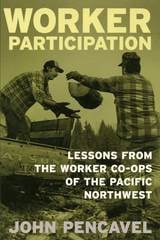
cover of Worker Participation: Lessons from Worker Co-ops of the Pacific Northwest

Worker Participation

Lessons from Worker Co-ops of the Pacific Northwest

John Pencavel

Russell Sage Foundation, 2001

Once they accept a job, most Americans have little control over their work environments. In Worker Participation, John Pencavel examines some of those rare workplaces where employees both own and manage the companies they work for: the plywood cooperatives and forest worker cooperatives of the Pacific Northwest. Rather than relying on abstract theories, Pencavel reviews the actual experiences of these two groups of worker co-ops. He focuses on how worker-owned companies perform when compared to more traditional firms and whether companies operate more efficiently when workers determine how they are run. He also looks at the long-term viability of these enterprises and why they are so unusual. Most businesses are constantly caught in the battle over whether to use the firm's profits to pay labor or to increase capital. Worker cooperatives provide an appealing case study because the interests of labor and capital are aligned. If individuals have a role in setting goals, they should have an added incentive to help meet those goals, and productivity should benefit. On the other hand, observers have long argued that, since any single employee in a co-op reaps only a small benefit from working hard, workers may shirk work, and productivity can flag. Furthermore, co-ops often have difficulty raising capital, since they are constrained by how much money the workers have, and banks are often reluctant to lend them money. Using some fifteen years of data on forty mills in Washington State, Pencavel examines how worker co-ops really function. He assesses the practical problems of running a workplace where every employee is a boss. He looks at worker productivity, on-the-job injuries and financial risks facing owner-workers. He considers whether co-ops are inherently unstable and if they are plagued by infighting among the many worker-owners. Although many of the co-ops he studied have closed or been replaced by conventional businesses, Pencavel judges them to have been a success. Despite the risks inherent in such operations, allowing workers to make the decisions that profoundly affect them produces many benefits, including workplace efficiency and increased job security. However, Pencavel concludes, if more Americans are to enjoy such a working arrangement, labor laws will have to be changed, participation encouraged, and a more vigorous public debate about worker participation must take place. This book provides an excellent place to start the discussion.
[more]
cover of Working Communally: Patterns and Possibilities

Working Communally

Patterns and Possibilities

David G. French

Russell Sage Foundation, 1975

Examines an alternative to the old patterns of living and working in the prevailing social system—the communal work place where work, recreation, and living space are brought together in a unified setting. The authors deal with a number of questions the communal work group faces, including the selection of projects, the choice of technologies and legal structure, and the means for determining economic viability. Past American and European communitarian movements are traced, as well as the nature and limitations of the new community experiments of the 1960s and 1970s.
[more]
cover of Working Knowledge: A Simon Schaffer Reader

Working Knowledge

A Simon Schaffer Reader

Simon Schaffer

University of Chicago Press, 2026

Collects key articles by Simon Schaffer, one of the most important historians of science working today.
 
Working Knowledge is the first English-language collection of essays by Simon Schaffer, coauthor of Leviathan and the Air-Pump, a landmark text in the history of science. Though the latter may be his most famous book, Schaffer is also renowned for seminal articles on Isaac Newton and the cultures of popular spectacle, nineteenth-century physics and its practices of labor discipline and standardization, the history of anthropology and collecting, and the globe-spanning cultural interactions that have shaped modern science. Working Knowledge compiles these well-known pieces alongside newer selections, making them accessible in a single place and representing the huge scope and impact of Schaffer’s oeuvre.

The Reader divides sixteen of Schaffer’s articles across five thematic sections, which take up timely issues like the turn toward global histories of science; the intersection of science and capitalism; the interaction between bodies and machines; and the connection between science, politics, and the environment. Eight new essays by notable historians such as Adrian Johns, Lissa Roberts, and Steven Shapin bring Schaffer’s pieces into discussion with current scholarship. Illustrations and brief commentaries by Schaffer and the artist Adam Lowe, a longtime collaborator, are included throughout the volume.
 
Bringing together essential articles that were previously scattered across several publications, Working Knowledge is an insightful introduction to Schaffer and his ever-relevant writing.
[more]
cover of Working Under Different Rules

Working Under Different Rules

Richard B. Freeman

Russell Sage Foundation, 1994
For much of the 20th century, American workers were the world's leaders in productivity, wages, and positive workplace conditions. American unions championed free enterprise and high labor standards, and American businesses dominated the world market. But, as editor Richard B. Freeman cautions in Working Under Different Rules, despite our relatively high standard of living we have fallen behind our major trading partners and competitors in providing good jobs at good pay—what was once considered "the American dream." Working Under Different Rules assesses the decline in the well-being of American workers—evidenced by spiraling income inequality and stagnant real earnings—and compares our employment and labor conditions with those of Western Europe, Canada, Japan, and Australia. As these original essays demonstrate, the modern U.S. labor market is characterized by a high degree of flexibility, with rapid employee turnover, ongoing creation of new jobs, and decentralized wage setting practices. But closer inspection reveals a troubling flip side to this adaptability in the form of inadequate job training, more frequent layoffs, and increased numbers of workers pushed to the very bottom of the income scale, into the low wage occupations where much of the recent job growth has occurred. While the variety of works councils prevalent throughout the developed world have done much to foster democratic rights and economic protection for employees, the virtually union-free environment emerging in many areas of the private U.S. economy has stripped workers of a strong collective voice. German apprenticeship programs and the Japanese system of "job rotation" represent more effective approaches to preparing workers for the changing demands of lifetime employment. In addition, workers in European advanced economies and in Canada have greater social protection than Americans. But while this has some cost in unemployment and higher taxes, carefully designed social safety nets do not seriously jeopardize economic efficiency. Working Under Different Rules is an illuminating analysis of the often complex interaction of market institutions, social policy, and economic results. The authors' up-to-date international assessment of unions, wage setting, apprenticeship programs, welfare support, and works councils suggests alternate ways of training, paying, and empowering workers that, if effectively adapted, could facilitate the growth of a healthier American economy and better prospects for American workers.
[more]
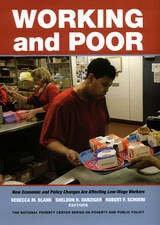
cover of Working and Poor: How Economic and Policy Changes Are Affecting Low-Wage Workers

Working and Poor

How Economic and Policy Changes Are Affecting Low-Wage Workers

Rebecca M. Blank

Russell Sage Foundation, 2006
Over the last three decades, large-scale economic developments, such as technological change, the decline in unionization, and changing skill requirements, have exacted their biggest toll on low-wage workers. These workers often possess few marketable skills and few resources with which to support themselves during periods of economic transition. In Working and Poor, a distinguished group of economists and policy experts, headlined by editors Rebecca Blank, Sheldon Danziger, and Robert Schoeni, examine how economic and policy changes over the last twenty-five years have affected the well-being of low-wage workers and their families. Working and Poor examines every facet of the economic well-being of less-skilled workers, from employment and earnings opportunities to consumption behavior and social assistance policies. Rebecca Blank and Heidi Schierholz document the different trends in work and wages among less-skilled women and men. Between 1979 and 2003, labor force participation rose rapidly for these women, along with more modest increases in wages, while among the men both employment and wages fell. David Card and John DiNardo review the evidence on how technological changes have affected less-skilled workers and conclude that the effect has been smaller than many observers claim. Philip Levine examines the effectiveness of the Unemployment Insurance program during recessions. He finds that the program's eligibility rules, which deny benefits to workers who have not met minimum earnings requirements, exclude the very people who require help most and should be adjusted to provide for those with the highest need.  On the other hand, Therese J. McGuire and David F. Merriman show that government help remains a valuable source of support during economic downturns.  They find that during the most recent recession in 2001, when state budgets were stretched thin, legislatures resisted political pressure to cut spending for the poor. Working and Poor provides a valuable analysis of the role that public policy changes can play in improving the plight of the working poor. A comprehensive analysis of trends over the last twenty-five years, this book provides an invaluable reference for the public discussion of work and poverty in America. A Volume in the National Poverty Center Series on Poverty and Public Policy
[more]
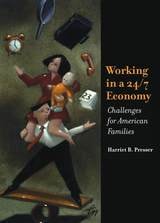
cover of Working in a 24/7 Economy: Challenges for American Families

Working in a 24/7 Economy

Challenges for American Families

Harriet B. Presser

Russell Sage Foundation, 2003
An economy that operates 24/7—as ours now does—imposes extraordinary burdens on workers. Two-fifths of all employed Americans work mostly during evenings, nights, weekends, or on rotating shifts outside the traditional 9-to-5 work day. The pervasiveness of nonstandard work schedules has become a significant social phenomenon, with important implications for the health and well-being of workers and their families. In Working in a 24/7 Economy, Harriet Presser looks at the effects of nonstandard work schedules on family functioning and shows how these schedules disrupt marriages and force families to cobble together complex child-care arrangements that should concern us all. The number of hours Americans work has received ample attention, but the issue of which hours—or days—Americans work has received much less scrutiny. Working in a 24/7 Economy provides a comprehensive overview of who works nonstandard schedules and why. Presser argues that the growth in women's employment, technological change, and other demographic changes over the past thirty years gave rise to the growing demand for late-shift and weekend employment in the service sector. She also demonstrates that most people who work these hours do so primarily because it is a job requirement, rather than a choice based on personal considerations. Presser shows that the consequences of working nonstandard schedules often differ for men and women since housework and child-rearing remain assigned primarily to women even when both spouses are employed. As with many other social problems, the burden of these schedules disproportionately affects the working poor, reflecting their lack of options in the workplace and adding to their disadvantage. Presser also documents how such work arrangements have created a new rhythm of daily life within many American families, including those with two earners and absent fathers. With spouses often not at home together in the evenings or nights, and parents often not at home with their children at such times, the relatively new concept of "home-time" has emerged as primary concern for families across the nation. Employing a wealth of empirical data, Working in a 24/7 Economy shows that nonstandard work schedules are both highly prevalent among American families and generate a level of complexity in family functioning that demands greater public attention. Presser makes a convincing case for expanded research and meaningful policy initiatives to address this growing social phenomenon.
[more]
cover of Works Councils: Consultation, Representation, and Cooperation in Industrial Relations

Works Councils

Consultation, Representation, and Cooperation in Industrial Relations

Edited by Joel Rogers and Wolfgang Streeck

University of Chicago Press, 1995

As the influence of labor unions declines in many industrialized nations, particularly the United States, the influence of workers has decreased. Because of the need for greater involvement of workers in changing production systems, as well as frustration with existing structures of workplace regulation, the search has begun for new ways of providing a voice for workers outside the traditional collective bargaining relationship.

Works councils—institutionalized bodies for representative communication between an employer and employees in a single workplace—are rare in the Anglo-American world, but are well-established in other industrialized countries. The contributors to this volume survey the history, structure, and functions of works councils in the Netherlands, Germany, France, Spain, Sweden, Italy, Poland, Canada, and the United States. Special attention is paid to the relations between works councils and unions and collective bargaining, works councils and management, and the role and interest of governments in works councils. On the basis of extensive comparative data from other Western countries, the book demonstrates powerfully that well-designed works councils may be more effective than labor unions at solving management-labor problems.
[more]
cover of World Bank Literature

World Bank Literature

Amitava Kumar

University of Minnesota Press, 2002

A trailblazing interrogation of the cultural, political, and economic implications of World Bank hegemony.

World Bank literature is more than a concept-it is a provocation, a call to arms. It is intended to prompt questions about each word, to probe globalization, political economy, and the role of literary and cultural studies. As asserted in this major work, it signals a radical rewriting of academic debates, a rigorous analysis of the World Bank and the International Monetary Fund (IMF), and a consideration of literature that deals with new global realities.

Made more relevant than ever by momentous antiglobalization demonstrations in Seattle and Genoa, World Bank Literature brings together essays by a distinguished group of economists, cultural and literary critics, social scientists, and public policy analysts to ask how to understand the influence of the World Bank/IMF on global economic power relations and cultural production. The authors attack this question in myriad ways, examining World Bank/IMF documents as literature, their impact on developing nations, the relationship between literature and globalization, the connection between the academy and the global economy, and the emergence of coalitions confronting the new power. World Bank Literature shows, above all, the multifarious and sometimes nefarious ways that abstract academic debates play themselves out concretely in social policy and cultural mores that reinforce traditional power structures. Contributors: Anthony C. Alessandrini, Kent State U; Bret Benjamin, SUNY, Albany; John Berger; Suzanne Bergeron, U of Michigan, Dearborn; Lorrayne Carroll, U of Southern Maine; Manthia Diawara, NYU; Grant Farred, Duke; Barbara Foley, Rutgers; Claire F. Fox, U of Iowa; Rosemary Hennessy, SUNY, Albany; Doug Henwood, Left Business Observer; Caren Irr, Brandeis; Joseph Medley, U of Southern Maine; Cary Nelson, U of Illinois; Gautam Premnath, U of Massachusetts, Boston; Bruce Robbins, Columbia; Andrew Ross, NYU; Subir Sinha, U of London; Kenneth Surin, Duke; Rashmi Varma, U of North Carolina; Evan Watkins, U of California, Davis; Phillip E. Wegner, U of Florida; Richard Wolff, U of Massachusetts.
[more]
cover of World Economy and National Finance in Historical Perspective

World Economy and National Finance in Historical Perspective

Charles P. Kindleberger

University of Michigan Press, 1995

The World Economy and National Finance in Historical Perspective is a collection of essays and lectures by the distinguished economist, Charles P. Kindleberger. The main topic is the world economy of the past, present, and future, but the author also turns his deep historical understanding on a cluster of national financial problems faced by the United States and Germany. The essays deal with the world economy and the place within it of the United States and Europe. Other topics treated include the succession of world economic leaders, and the spread of booms and crashes from one country to another, the quality of debt, financial intermediation and disintermediation, and the German inflation of 1919-23. In an important discussion of the role of the United States in the world economy, the author places special emphasis on the responsibility that a country with such a leading economic role has of bringing about and maintaining economic stability. This will appeal to economists, especially economic historians, and will be of interest to the financial community.
[more]