Results by title
295 books match the query 'Ecosystems & Habitats' and 18 start with w
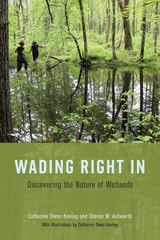
Wading Right In
Discovering the Nature of WetlandsCatherine Owen Koning and Sharon M. Ashworth
University of Chicago Press, 2019
In Wading Right In, Catherine Owen Koning and Sharon M. Ashworth take us on a journey into wetlands through stories from the people who wade in the muck. Traveling alongside scientists, explorers, and kids with waders and nets, the authors uncover the inextricably entwined relationships between the water flows, natural chemistry, soils, flora, and fauna of our floodplain forests, fens, bogs, marshes, and mires. Tales of mighty efforts to protect rare orchids, restore salt marshes, and preserve sedge meadows become portals through which we visit major wetland types and discover their secrets, while also learning critical ecological lessons.
The United States still loses wetlands at a rate of 13,800 acres per year. Such loss diminishes the water quality of our rivers and lakes, depletes our capacity for flood control, reduces our ability to mitigate climate change, and further impoverishes our biodiversity. Koning and Ashworth’s stories captivate the imagination and inspire the emotional and intellectual connections we need to commit to protecting these magical and mysterious places.
Wading for Bugs
Exploring Streams with the ExpertsJudith L. Li
Oregon State University Press, 2011
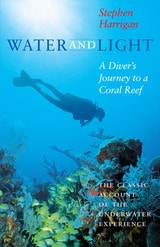
Water and Light
A Diver's Journey to a Coral ReefBy Stephen Harrigan
University of Texas Press, 1999
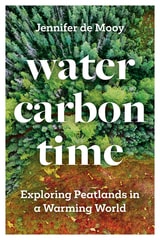
Water, Carbon, Time
Exploring Peatlands in a Warming WorldJennifer de Mooy
University of Minnesota Press, 2026
Revealing the hidden worlds of peatlands and their potential to fight climate change
Bogs, fens, mires, moors, muskegs, and pocosins—they are found in nearly all the world’s climatic zones but are easily overlooked in our landscapes. Yet these murky ecosystems formed of decay are both full of life and crucial to our planetary wellbeing: covering only about three percent of the earth’s surface, peatlands store more carbon than all the world’s forests combined. In Water, Carbon, Time, Jennifer de Mooy shares her personal discovery of these natural wonders in all their variety and understated beauty, bringing much-needed attention to the restorative possibilities of their spongy depths.
De Mooy first encountered peatlands on a trip to Ireland with her father, but her later work on climate change policy in the United States motivated her to investigate options for reducing greenhouse gases in the atmosphere. Her interest was practical: could peatlands combat global warming? To deepen her understanding of these unique wetlands, she embarked on a quest from bogs and fens in Minnesota and Maine to bofedales in Peru and muskegs in Canada and Alaska. A vivid account of her journey, Water, Carbon, Time describes these peatlands in all their richness and mystery: what they are and how to find them, the diversity of ecological life they support, and how their hidden systems promote climate resilience.
As she learns more about the importance of peatlands, de Mooy emphasizes all we lose when they are damaged by drainage, fire, and the broader sweep of climate change. When peatlands are threatened, we risk releasing stored carbon from their soil, where it has accumulated over millennia, into the atmosphere. In parts a travelogue, an ecological history, and a call to action, Water, Carbon, Time demonstrates there is still hope for these precious ecosystems—and their potential as a natural climate solution right beneath our feet.
Retail e-book files for this title are screen-reader friendly with images accompanied by short alt text and/or extended descriptions.
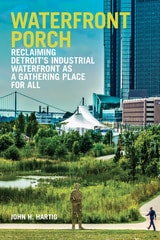
Waterfront Porch
Reclaiming Detroit's Industrial Waterfront as a Gathering Place for AllJohn H. Hartig
Michigan State University Press, 2019
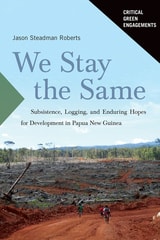
We Stay the Same
Subsistence, Logging, and Enduring Hopes for Development in Papua New GuineaJason Steadman Roberts
University of Arizona Press, 2024
Following a long history of smaller-scale and largely unsuccessful resource development efforts, New Hanover became the site of three multinational-controlled special agricultural and business leases (SABLs) that combined to cover over 75 percent of the island for ninety-nine-year lease terms. These agroforestry projects were part of a national effort to encourage “sustainable” rural development by tapping into the growing global demand for agricultural lands and crops like oil palm and biofuels. They were supposed to succeed where the smaller-scale projects of the past had failed. Unfortunately, these SABLs resulted in significant forest loss and livelihood degradation, while doing little to promote the type of economic development that many Lavongai had been hoping for.
It is within this context that We Stay the Same grounds questions of hope for transformative economic change within Lavongai assessments of the inequitable relationships between global processes of resource development and the local lives that have become increasingly defined by the necessities and failures of these processes. Written in a clear and relatable style for students, We Stay the Same combines ethnographic and ecological research to show how the Lavongai continue to survive and make meaningful lives in a situation where their own hopes for a better future have often been used against them as a mechanism of a more distantly profitable dispossession.
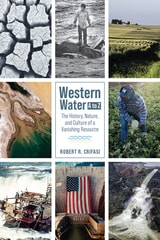
Western Water A to Z
The History, Nature, and Culture of a Vanishing Resourceby Robert R. Crifasi
University Press of Colorado, 2022
Organized as a collection of terms, the book addresses the most salient water issues and provides helpful background information regarding their origins and implications. Photographs serve a vital role in the cultural dialogue on water and stand as an equal partner to the text. Each subject is covered in about one page and is accompanied by one or two striking images from famous photographers like Margaret Bourke-White, Carleton E. Watkins, Arthur Rothstein, William Henry Jackson, and Dorothea Lang as well as Crifasi’s own work. Water often finds itself at the center of our cultural discourse in art, cinema, and literature, which play essential roles in shaping our understanding and experience of Western water. Crifasi also engages personalities that are nearly synonymous with Western water—John Wesley Powell, Elwood Mead, and Floyd Dominy, among others—to show how their lives intertwined with and often influenced the course of water development across the region.
Travelers, adventurers, students, and anyone interested in water will find Western Water A to Z a handy and entertaining reference guide.
Westwater Lost and Found
Mike Milligan
Utah State University Press, 2004
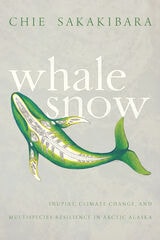
Whale Snow
Iñupiat, Climate Change, and Multispecies Resilience in Arctic AlaskaChie Sakakibara
University of Arizona Press, 2014
Using multispecies ethnography, Whale Snow explores how everyday the relatedness of the Iñupiat of Arctic Alaska and the bowhead whale forms and transforms “the human” through their encounters with modernity. Whale Snow shows how the people live in the world that intersects with other beings, how these connections came into being, and, most importantly, how such intimate and intense relations help humans survive the social challenges incurred by climate change. In this time of ecological transition, exploring multispecies relatedness is crucial as it keeps social capacities to adapt relational, elastic, and resilient.
In the Arctic, climate, culture, and human resilience are connected through bowhead whaling. In Whale Snow we see how climate change disrupts this ancient practice and, in the process, affects a vital expression of Indigenous sovereignty. Ultimately, though, this book offers a story of hope grounded in multispecies resilience.
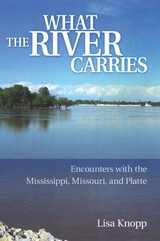
What the River Carries
Encounters with the Mississippi, Missouri, and PlatteLisa Knopp
University of Missouri Press, 2012
Because Knopp was born and raised just a few blocks away, she considers the Mississippi from the perspective of a native resident, a “dweller in the land.” She revisits places she has long known: Nauvoo, Illinois, the site of two nineteenth-century utopias, one Mormon, one Icarian; Muscatine, Iowa, once the world’s largest manufacturer of pearl (mussel shell) buttons; and the mysterious prehistoric bird- and bear-shaped effigy mounds of northeastern Iowa. On a downriver trip between the Twin Cities and St. Louis, she meditates on what can be found in Mississippi river water—state lines, dissolved oxygen, smallmouth bass, corpses, family history, wrecked steamboats, mayfly nymphs, toxic perfluorinated chemicals, philosophies.
Knopp first encountered the Missouri as a tourist and became acquainted with it through literary and historical documents, as well as stories told by longtime residents. Her journey includes stops at Fort Bellefontaine, where Lewis and Clark first slept on their sojourn to the Pacific; Little Dixie, Missouri’s slaveholding, hemp-growing region, as revealed through the life of Jesse James’s mother; Fort Randall Dam and Lake Francis Case, the construction of which destroyed White Swan on the Yankton Sioux Reservation; and places that produced unique musical responses to the river, including Native American courting flutes, indie rock, Missouri River valley fiddling, Prohibition-era jazz jam sessions, and German folk music.
Knopp’s relationship with the Platte is marked by intentionality: she settled nearby and chose to develop deep and lasting connections over twenty years’ residence. On this adventure, she ponders the half-million sandhill cranes that pass through Nebraska each spring, the ancient varieties of Pawnee corn growing at the Great Platte River Road Archway Monument, a never-broken tract of tallgrass prairie, the sugar beet industry, and the changes in the river brought about by the demands of irrigation.
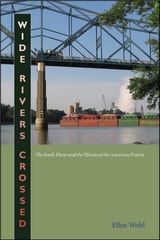
Wide Rivers Crossed
The South Platte and the Illinois of the American PrairieEllen E. Wohl
University Press of Colorado, 2013
During the past two centuries, these rivers changed dramatically, mostly due to human interaction. Crops replaced native vegetation; excess snowmelt and rainfall carried fertilizers and pesticides into streams; and levees, dams, and drainage altered distribution. These changes cascaded through networks, starting in small headwater tributaries, and reduced the ability of rivers to supply the clean water, fertile soil, and natural habitats they had provided for centuries. Understanding how these rivers, and rivers in general, function and how these functions have been altered over time will allow us to find innovative approaches to restoring river ecosystems.
The environmental changes in the South Platte and the Illinois reflect the relentless efforts by humans to control the distribution of water: to enhance surface water in the arid western prairie and to limit the spread of floods and drain the wetlands along the rivers in the water-abundant east. Wide Rivers Crossed looks at these historical changes and discusses opportunities for much-needed protection and restoration for the future.
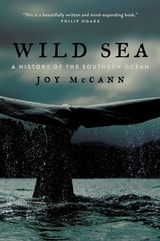
Wild Sea
A History of the Southern OceanJoy McCann
University of Chicago Press, 2019
So begins Joy McCann’s Wild Sea, the remarkable story of the world’s remote Southern, or Antarctic, Ocean. Unlike the Pacific, Atlantic, Indian, and Arctic Oceans with their long maritime histories, little is known about the Southern Ocean. This book takes readers beyond the familiar heroic narratives of polar exploration to explore the nature of this stormy circumpolar ocean and its place in Western and Indigenous histories. Drawing from a vast archive of charts and maps, sea captains’ journals, whalers’ log books, missionaries’ correspondence, voyagers’ letters, scientific reports, stories, myths, and her own experiences, McCann embarks on a voyage of discovery across its surfaces and into its depths, revealing its distinctive physical and biological processes as well as the people, species, events, and ideas that have shaped our perceptions of it. The result is both a global story of changing scientific knowledge about oceans and their vulnerability to human actions and a local one, showing how the Southern Ocean has defined and sustained southern environments and people over time.
Beautifully and powerfully written, Wild Sea will raise a broader awareness and appreciation of the natural and cultural history of this little-known ocean and its emerging importance as a barometer of planetary climate change.
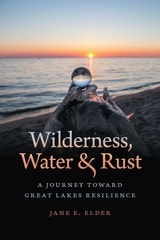
Wilderness, Water, and Rust
A Journey toward Great Lakes ResilienceJane Elder
Michigan State University Press, 2024
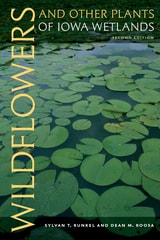
Wildflowers and Other Plants of Iowa Wetlands, 2nd edition
Sylvan T. Runkel, Dean M. Roosa, Thomas Rosburg
University of Iowa Press, 2015
In clear and accessible prose, authors Sylvan Runkel and Dean Roosa provide common, scientific, and family names; the Latin or Greek meaning of the scientific names; habitat and blooming times; and a complete description. Plants are presented by habitat (terrestrial or aquatic), then refined by habit (e.g., emergent, floating, or submerged) or taxonomic group (e.g., ferns and allies or trees, shrubs, and vines). Particularly interesting is the information on the many ways in which Native Americans and early pioneers used these plants for everything from pain relief to tonics to soup and the ways that wildlife today use them for food and shelter. Each of the more than 150 species accounts is accompanied by a brilliant full-page color photograph by botanist Thomas Rosburg, who has also updated the nomenclature and descriptions for certain species.
After decades of being considered an enemy of the settler, the farmer, and the citizen, Iowa’s wetlands have come into their own. We are finally caring for these important habitats. Runkel and Roosa’s updated field companion will be a valuable guide to today’s preservation and restoration initiatives.
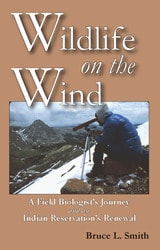
Wildlife on the Wind
A Field Biologist's Journey and an Indian Reservation's RenewalBruce L Smith
Utah State University Press, 2010
In the heart of Wyoming sprawls the ancient homeland of the Eastern Shoshone Indians, who were forced by the U.S. government to share a reservation in the Wind River basin and flanking mountain ranges with their historical enemy, the Northern Arapahos. Both tribes lost their sovereign, wide-ranging ways of life and economic dependence on decimated buffalo. Tribal members subsisted on increasingly depleted numbers of other big game—deer, elk, moose, pronghorn, and bighorn sheep. In 1978, the tribal councils petitioned the U.S. Fish and Wildlife Service to help them recover their wildlife heritage. Bruce Smith became the first wildlife biologist to work on the reservation. Wildlife on the Wind recounts how he helped Native Americans change the course of conservation for some of America's most charismatic wildlife.
Wildness
Relations of People and PlaceEdited by Gavin Van Horn and John Hausdoerffer
University of Chicago Press, 2017
This book charts a different path. Exploring how people can become attuned to the wild community of life and also contribute to the well-being of the wild places in which we live, work, and play, Wildness brings together esteemed authors from a variety of landscapes, cultures, and backgrounds to share their stories about the interdependence of everyday human lifeways and wildness. As they show, far from being an all or nothing proposition, wildness exists in variations and degrees that range from cultivated soils to multigenerational forests to sunflowers pushing through cracks in a city alley. Spanning diverse geographies, these essays celebrate the continuum of wildness, revealing the many ways in which human communities can nurture, adapt to, and thrive alongside their wild nonhuman kin.
From the contoured lands of Wisconsin’s Driftless region to remote Alaska, from the amazing adaptations of animals and plants living in the concrete jungle to indigenous lands and harvest ceremonies, from backyards to reclaimed urban industrial sites, from microcosms to bioregions and atmospheres, manifestations of wildness are everywhere. With this book, we gain insight into what wildness is and could be, as well as how it might be recovered in our lives—and with it, how we might unearth a more profound, wilder understanding of what it means to be human.
Wildness: Relations of People and Place is published in association with the Center for Humans and Nature, an organization that brings together some of the brightest minds to explore and promote human responsibilities to each other and the whole community of life. Visit the Center for Humans and Nature's Wildness website for upcoming events and a series of related short films.
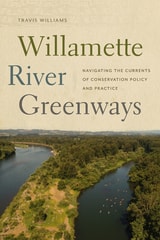
Willamette River Greenways
Navigating the Currents of Conservation Policy and PracticeTravis Williams
Oregon State University Press, 2021
Travis Williams, executive director of Willamette Riverkeeper, has spent countless hours paddling the Willamette, becoming familiar with its flora, fauna, and human neighbors. In Willamette River Greenways, he combines personal narrative about his experiences on the river with nuanced consideration of the controversies and challenges of the Greenway Program. Williams sheds light on current land stewardship practices, revealing the institutional and leadership failures that endanger the river’s water quality and habitat, and looks to the program’s future. He also takes readers with him onto the water, sharing what it’s like to travel the river by canoe, paying homage to the river’s natural beauty and the host of wildlife species that call it home.
Part policy analysis, part advocacy, and all love letter to one of Oregon’s great rivers, Willamette River Greenways offers valuable perspective to policymakers, land use managers, and recreational river users alike.
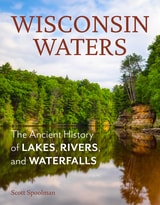
Wisconsin Waters
The Ancient History of Lakes, Rivers, and WaterfallsScott Spoolman
Wisconsin Historical Society Press, 2022