Results by title
2728 books match the query 'Education' and 128 start with w
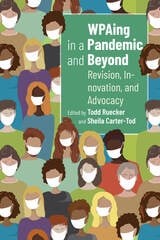
WPAing in a Pandemic and Beyond
Revision, Innovation, and AdvocacyTodd Ruecker
Utah State University Press, 2025
The chapters in this collection include a variety of voices who have been involved in writing program administration in recent years to reflect on the work done in this moment of crisis. Through both short vignettes and longer chapters, this book explores the complicated interactions between WPA work and navigating times of crisis to provide insights for moving forward. Authors explore a variety of topics including professional development, curricular change, advocating in the face of intransigent administrations and others, caring for students, and taking time for self-care. Pointing to specific actions for continued advocacy, WPAing in a Pandemic and Beyond will be of great interest to WPAs and writing studies scholars.
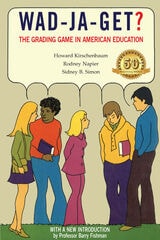
Wad-Ja-Get?
The Grading Game in American Education, 50th Anniversary EditionHoward Kirschenbaum, Rodney Napier, and Sidney B. Simon; With a new introduction by Professor Barry Fishman
Michigan Publishing Services, 2020
Grades and grading are an accepted part of modern education. But why? Why do we accept a system that is more focused on ranking students than on learning? Why do we accept the negative effects of standard grading approaches, including turning students off from learning, increasing stress, creating winners and losers, and perpetuating racial and economic inequality? Why do we accept these things when there are better alternatives?
Wad-Ja-Get? is a unique discussion of grading and its effects on students. The book was written by three education professors who have had first-hand contact with the problems of grading in all its forms. Written in the form of a novel, the topic is explored through the eyes of students, teachers, and parents in one high school embroiled in a controversy around grading. Possible alternatives to the grading system are examined in detail and the research on grading is summarized in an appendix. This 50th anniversary edition of the book includes a new introduction by Professor Barry Fishman, updating the research and setting the original book in the context of today’s educational and societal challenges. Wad-Ja-Get? remains timely five decades after its original publication, and will be inspiring to students, parents, educators, and policymakers.
Wake
Why the Battle over Diverse Public Schools Still MattersKarey Alison Harwood
Rutgers University Press, 2024

Walking in Art Education
Ecopedagogical and A/r/tographical Encounters.Edited by Nicole Rallis, Ken Morimoto, Michele Sorensen, Valerie Triggs, and Rita Irwin
Intellect Books, 2024
In Walking in Art Education, authors explore walking and a/r/tography in their local contexts. As a result, the book finds that kinship and relationality are significant themes that permeate across a/r/tographic practices focused on ecopedagogy and learning with the land. These walking practices serve as ecopedagogical moments that attune us to human-land and more-than-human relationships, while also moving us past Western-centric understandings of land and place. More than this, the book situates this work in a/r/tographic practices taking up walking as one method for engagement.
Wanasema
Conversations with African WritersDon Burness
Ohio University Press, 1985
Wannabe U
Inside the Corporate UniversityGaye Tuchman
University of Chicago Press, 2009
Based on years of observation at a large state university, Wannabe U tracks the dispiriting consequences of trading in traditional educational values for loyalty to the market. Aping their boardroom idols, the new corporate administrators at such universities wander from job to job and reductively view the students there as future workers in need of training. Obsessed with measurable successes, they stress auditing and accountability, which leads to policies of surveillance and control dubiously cloaked in the guise of scientific administration. In this eye-opening exposé of the modern university, Tuchman paints a candid portrait of the corporatization of higher education and its impact on students and faculty.
Like the best campus novelists, Tuchman entertains with her acidly witty observations of backstage power dynamics and faculty politics, but ultimately Wannabe U is a hard-hitting account of how higher education’s misguided pursuit of success fails us all.
Wasted Education
How We Fail Our Graduates in Science, Technology, Engineering, and MathJohn D. Skrentny
University of Chicago Press, 2023
An urgent reality check for America’s blinkered fixation on STEM education.
We live in an era of STEM obsession. Not only do tech companies dominate American enterprise and economic growth while complaining of STEM shortages, but we also need scientific solutions to impending crises. As a society, we have poured enormous resources—including billions of dollars—into cultivating young minds for well-paid STEM careers. Yet despite it all, we are facing a worker exodus, with as many as 70% of STEM graduates opting out of STEM work. Sociologist John D. Skrentny investigates why, and the answer, he shows, is simple: the failure of STEM jobs.
Wasted Education reveals how STEM work drives away bright graduates as a result of “burn and churn” management practices, lack of job security, constant training for a neverending stream of new—and often socially harmful—technologies, and the exclusion of women, people of color, and older workers. Wasted Education shows that if we have any hope of improving the return on our STEM education investments, we have to change the way we’re treating the workers on whom our future depends.
Wasted Education
How We Fail Our Graduates in Science, Technology, Engineering, and MathJohn D. Skrentny
University of Chicago Press, 2023
This is an auto-narrated audiobook version of this book.
An urgent reality check for America’s blinkered fixation on STEM education.
We live in an era of STEM obsession. Not only do tech companies dominate American enterprise and economic growth while complaining of STEM shortages, but we also need scientific solutions to impending crises. As a society, we have poured enormous resources—including billions of dollars—into cultivating young minds for well-paid STEM careers. Yet despite it all, we are facing a worker exodus, with as many as 70% of STEM graduates opting out of STEM work. Sociologist John D. Skrentny investigates why, and the answer, he shows, is simple: the failure of STEM jobs.
Wasted Education reveals how STEM work drives away bright graduates as a result of “burn and churn” management practices, lack of job security, constant training for a neverending stream of new—and often socially harmful—technologies, and the exclusion of women, people of color, and older workers. Wasted Education shows that if we have any hope of improving the return on our STEM education investments, we have to change the way we’re treating the workers on whom our future depends.
We Are All Equal
Student Culture and Identity at a Mexican Secondary School, 1988–1998Bradley A. U. Levinson
Duke University Press, 2001
Exploring how students develop a cultural “game of equality” that enables them to identify—across typical class and social boundaries—with their peers, the school, and the nation, Levinson considers such issues as the organizational and discursive resources that students draw on to maintain this culture. He also engages cultural studies, media studies, and globalization theory to examine the impact of television, music, and homelife on the students and thereby better comprehend—and problematize—the educational project of the state. Finding that an ethic of solidarity is sometimes used to condemn students defined as different or uncooperative and that little attention is paid to accommodating the varied backgrounds of the students—including their connection to indigenous, peasant, or working class identities—Levinson reveals that their “schooled identity” often collapses in the context of migration to the United States or economic crisis in Mexico. Finally, he extends his study to trace whether the cultural game is reinforced or eroded after graduation as well as its influence relative to the forces of family, traditional gender roles, church, and global youth culture.
We Are All Equal will be of particular interest to educators, sociologists, Latin Americanists, and anthropologists.
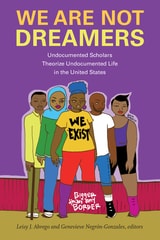
We Are Not Dreamers
Undocumented Scholars Theorize Undocumented Life in the United StatesLeisy J. Abrego and Genevieve Negrón-Gonzales, editors
Duke University Press, 2020
Contributors. Leisy J. Abrego, Gabrielle Cabrera, Gabriela Garcia Cruz, Lucía León, Katy Joseline Maldonado Dominguez, Grecia Mondragón, Gabriela Monico, Genevieve Negrón-Gonzales, Maria Liliana Ramirez, Joel Sati, Audrey Silvestre, Carolina Valdivia
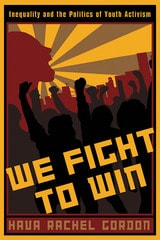
We Fight To Win
Inequality and the Politics of Youth ActivismHava Rachel Gordon
Rutgers University Press, 2009
Hava Rachel Gordon compares the struggles and successes of two very different youth movements: a mostly white, middle-class youth activist network in Portland, Oregon, and a working-class network of minority youth in Oakland, California. She examines how these young activists navigate schools, families, community organizations, and the mainstream media, and employ a variety of strategies to make their voices heard on some of today's most pressing issuesùwar, school funding, the environmental crisis, the prison industrial complex, standardized testing, corporate accountability, and educational reform. We Fight to Win is one of the first books to focus on adolescence and political action and deftly explore the ways that the politics of youth activism are structured by age inequality as well as race, class, and gender.
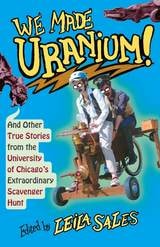
We Made Uranium!
And Other True Stories from the University of Chicago's Extraordinary Scavenger HuntEdited by Leila Sales
University of Chicago Press, 2018
Item #74: Enter a lecture class in street clothes. Receive loud phone call. Shout “I NEED TO GO, THE CITY NEEDS ME!” Remove street clothes to reveal superhero apparel. Run out for the good of the land.
Item #293: Hypnotizing a chicken seems easy, but if the Wikipedia article on the practice is to be believed, debate on the optimal method is heated. Do some trials on a real chicken and submit a report . . . for science of course.
Item #234: A walking, working, people-powered but preferably wind-powered Strandbeest.
Item #188: Fattest cat. Points per pound.
The University of Chicago’s annual Scavenger Hunt (or “Scav”) is one of the most storied college traditions in America. Every year, teams of hundreds of competitors scramble over four days to complete roughly 350 challenges. The tasks range from moments of silliness to 1,000-mile road trips, and they call on participants to fully embrace the absurd. For students it is a rite of passage, and for the surrounding community it is a chance to glimpse the lighter side of a notoriously serious university.
We Made Uranium! shares the stories behind Scav, told by participants and judges from the hunt’s more than thirty-year history. The twenty-three essays range from the shockingly successful (a genuine, if minuscule, nuclear reaction created in a dorm room) to the endearing failures (it’s hard to build a carwash for a train), and all the chicken hypnotisms and permanent tattoos in between. Taken together, they show how a scavenger hunt once meant for blowing off steam before finals has grown into one of the most outrageous annual traditions at any university. The tales told here are absurd, uplifting, hilarious, and thought-provoking—and they are all one hundred percent true.
We Make the Road by Walking
Conversations on Education and Social ChangeMyles Horton
Temple University Press, 1990
Weaving a Fabric of Unity
Conversations on Education and DevelopmentHaleh Arbab
West Virginia University Press, 2024
West Virginia University
Symbol of Unity in a Sectionalized StateWilliam T. Doherty, Jr
West Virginia University Press, 2013
What Are the Arts and Sciences?
A Guide for the CuriousEdited by Dan Rockmore
Dartmouth College Press, 2017
What Do You Think, Mr. Ramirez?
The American Revolution in EducationGeoffrey Galt Harpham
University of Chicago Press, 2017
That, says Harpham, was the midcentury promise of American education, the deep current of commitment and aspiration that undergirded the educational system that was built in the postwar years, and is under extended assault today. The United States was founded, he argues, on the idea that interpreting its foundational documents was the highest calling of opinion, and for a brief moment at midcentury, the country turned to English teachers as the people best positioned to train students to thrive as interpreters—which is to say as citizens of a democracy. Tracing the roots of that belief in the humanities through American history, Harpham builds a strong case that, even in very different contemporary circumstances, the emphasis on social and cultural knowledge that animated the midcentury university is a resource that we can, and should, draw on today.

What Does It Mean to Be Human?
Elizabeth Minnich
Temple University Press, 2027
What does it mean to be human? It has long been a tantalizing question for religious figures, scientists, political leaders, artists, and autocrats, among others. Noted philosopher Elizabeth Minnich claims, “There are no answers to such a question (although we all have favored responses).”
In What Does It Mean to Be Human?, Minnich invites us to reclaim our freedom from the dangerously distorted rationales for supremacism. She explores how the simplest mistakes in responses to “what does it mean to be human?” have enabled deadly historical errors, totalizing regimes, colonialisms, genocides, and enslavement. Paying close attention to the languages, logics, and nonsense of authoritative pronouncements, Minnich considers ways of thinking that affect and reflect meaning. She offers a fresh understanding of how mistakenly limited definitions of “human being” can be.
What Does It Mean to Be Human? emerges from Minnich’s ongoing effort to find, think through, and dissolve past mistakes that keep resurfacing to disastrous effect.
What Employers Want
Job Prospects for Less-Educated WorkersHarry J. Holzer
Russell Sage Foundation, 1996
What Error Correction Can(not) Accomplish for Second Language Writers
Dispelling Myths, Discussing OptionsDana R. Ferris
University of Michigan Press, 2018
What Every College Student Should Know
How to Find the Best Teachers and Learn the Most from ThemLepore, Ernie
Rutgers University Press, 2002
Students do months of research before choosing just the right college, but once theyre on campus, how many of them actually research the professors who are teaching their classes? To optimize your college education you need to find your schools best teachers but how?
What Every College Student Should Know is a guide to discovering the best teachers at your school and learning everything you can from them. Here, the unique writing combination of a professor and a student provides you with perspectives from both sides of the equation. You'll learn:
-
- What questions to ask in selecting an instructor
- How to evaluate professors based on the first class sessions
- What to look for in a syllabus and grading policies
- How to identify a professors teaching style and how to adapt to it
-
- Advice on how to review your exam or paper with your professor
- Ways to build a relationship with a teacher and get invaluable feedback on your work
- Tips on how to get the best recommendations from proffessors
What Every ESL Student Should Know
A Guide to College and University Academic SuccessKathy Ochoa Flores
University of Michigan Press, 2008
This book teaches English language learners about language learning and classroom expectations. It is a compilation of advice, experiences, suggestions, strategies, and learning theories collected over many years of teaching this population.
What Every ESL Student Should Know was written to help English language learners be successful in community college and college classrooms—specifically, how to prepare students for expectations and behavior within the classroom and how to help them to be good students, how to participate in class, what to expect from the class, and what to do to learn English. Learning strategies and language theories are presented in brief.
What Every Science Student Should Know
Justin L. Bauer, Yoo Jung Kim, Andrew H. Zureick, and Daniel K. Lee
University of Chicago Press, 2016
In 2012, the White House put out a call to increase the number of STEM graduates by one million. Since then, hundreds of thousands of science students have started down the path toward a STEM career. Yet, of these budding scientists, more than half of all college students planning to study science or medicine leave the field during their academic careers.
What Every Science Student Should Know is the perfect personal mentor for any aspiring scientist. Like an experienced lab partner or frank advisor, the book points out the pitfalls while providing encouragement. Chapters cover the entire college experience, including choosing a major, mastering study skills, doing scientific research, finding a job, and, most important, how to foster and keep a love of science.
This guide is a distillation of the authors’ own experiences as recent science graduates, bolstered by years of research and interviews with successful scientists and other science students. The authorial team includes former editors-in-chief of the prestigious Dartmouth Undergraduate Journal of Science. All have weathered the ups and downs of undergrad life—and all are still pursuing STEM careers. Forthright and empowering, What Every Science Student Should Know is brimming with insider advice on how to excel as both a student and a scientist.

What Happened to Notre Dame?
Charles E. Rice
St. Augustine's Press, 2009
What Is Education?
Philip W. Jackson
University of Chicago Press, 2011
What Is Research?
Edited by Peter Miller
Bard Graduate Center, 2021
What is Research? includes conversations with theater director Annie Dorsen, biomedical researcher Elodie Ghedin, sculptor Tom Joyce, physicist Hideo Mabuchi, poet Campbell McGrath, photographer and filmmaker An-My Lê, neuroscientist Sheila Nirenberg, geochemist Terry Plank, and historian Marina Rustow, all of whom grapple with questions about the nature of research from their varied perspectives.
What Should Schools Teach?
Disciplines, Subjects and the Pursuit of TruthEdited by Alka Sehgal Cuthbert and Alex Standish
University College London, 2021
The design of school curricula involves deep thought about the nature of knowledge and its value to learners and society. Such a serious responsibility raises a number of questions: What is knowledge for? What knowledge is important for children to learn? How do we decide what knowledge matters in each school subject? The blurring of distinctions between pedagogy and curriculum, as well as that between experience and knowledge, has resulted in a confusing message for teachers about the part that each plays in the education of children. This book aims to dispel confusion through a robust rationale for what schools should teach, offering key understanding to teachers of the relationship between knowledge and their own pedagogy. This second edition includes new chapters on chemistry, drama, music, and religious education, as well as an updated chapter on biology. A revised introduction reflects on the emerging discourse around decolonizing the curriculum and on the relationship between the knowledge that children encounter at school and in their homes.
What We Are Becoming
Developments in Undergraduate Writing MajorsGreg Giberson and Thomas A. Moriarty
Utah State University Press, 2010
Contributors to the volume address a range of vital questions for undergraduate programs, including such issues as the competition for majors within departments, the job market for undergraduates, varying focuses and curricula of such majors, and the formation of them in departments separate from English. Other chapters discuss the importance of flexibility, consider arguments for a rhetorical or civic discourse core for the writing major, address the relationship between rhetoric and composition majors, and review the role of multiliteracies in the major.
The field of composition has not come to a consensus on the shape, content, or focus of the undergradutate major. But as individual programs develop and refine their curricula, one thing has become clear: we must think about them in ways that go beyond our particular circumstances, theorize them in ways that secure their place on our campuses and in our discipline for years to come. What We Are Becoming is an effort to do just that.
What We Hold in Trust
Rediscovering the Purpose of Catholic Higher EducationDon Briel
Catholic University of America Press, 2021
What We Really Value
Beyond Rubrics in Teaching and Assessing WritingBob Broad
Utah State University Press, 2003
What We Really Value traces the origins of traditional rubrics within the theoretical and historical circumstances out of which they emerged, then holds rubrics up for critical scrutiny in the context of contemporary developments in the field. As an alternative to the generic character and decontextualized function of scoring guides, he offers dynamic criteria mapping, a form of qualitative inquiry by which writing programs (as well as individual instructors) can portray their rhetorical values with more ethical integrity and more pedagogical utility than rubrics allow.
To illustrate the complex and indispensable insights this method can provide, Broad details findings from his study of eighty-nine distinct and substantial criteria for evaluation at work in the introductory composition program at "City University." These chapters are filled with the voices of composition instructors debating and reflecting on the nature, interplay, and relative importance of the many criteria by which they judged students' texts. Broad concludes his book with specific strategies that can help writing instructors and programs to discover, negotiate, map, and express a more robust truth about what they value in their students' rhetorical performances.

What We Teach When We Teach DH
Digital Humanities in the ClassroomBrian Croxall
University of Minnesota Press, 2023
Exploring how DH shapes and is in turn shaped by the classroom
How has the field of digital humanities (DH) changed as it has moved from the corners of academic research into the classroom? And how has our DH praxis evolved through interactions with our students? This timely volume explores how DH is taught and what that reveals about the field of DH. While institutions are formally integrating DH into the curriculum and granting degrees, many instructors are still almost as new to DH as their students. As colleagues continue to ask what digital humanities is, we have the opportunity to answer them in terms of how we teach DH.
The contributors to What We Teach When We Teach DH represent a wide range of disciplines, including literary and cultural studies, history, art history, philosophy, and library science. Their essays are organized around four critical topics at the heart of DH pedagogy: teachers, students, classrooms, and collaborations. This book highlights how DH can transform learning across a vast array of curricular structures, institutions, and education levels, from high schools and small liberal arts colleges to research-intensive institutions and postgraduate professional development programs.
Contributors: Kathi Inman Berens, Portland State U; Jing Chen, Nanjing U; Lauren Coats, Louisiana State U; Scott Cohen, Stonehill College; Laquana Cooke, West Chester U; Rebecca Frost Davis, St. Edward’s U; Catherine DeRose; Quinn Dombrowski, Stanford U; Andrew Famiglietti, West Chester U; Jonathan D. Fitzgerald, Regis College; Emily Gilliland Grover, Notre Dame de Sion High School; Gabriel Hankins, Clemson U; Katherine D. Harris, San José State U; Jacob Heil, Davidson College; Elizabeth Hopwood, Loyola U Chicago; Hannah L. Jacobs, Duke U; Alix Keener, Stanford U; Alison Langmead, U of Pittsburgh; Sheila Liming, Champlain College; Emily McGinn, Princeton U; Nirmala Menon, Indian Institute of Technology; James O’Sullivan, U College Cork; Harvey Quamen, U of Alberta; Lisa Marie Rhody, CUNY Graduate Center; Kyle Roberts, Congregational Library and Archives; W. Russell Robinson, Alabama State U; Chelcie Juliet Rowell, Tufts U; Dibyadyuti Roy, U of Leeds; Asiel Sepúlveda, Simmons U; Andie Silva, York College, CUNY; Victoria Szabo, Duke U; Lik Hang Tsui, City U of Hong Kong; Annette Vee, U of Pittsburgh; Brandon Walsh, U of Virginia; Kalle Westerling, The British Library; Kathryn Wymer, North Carolina Central U; Claudia E. Zapata, UCLA; Benjun Zhu, Peking U.
Retail e-book files for this title are screen-reader friendly.
What Work Is
Robert Bruno
University of Illinois Press, 2024
For more than twenty years, Robert Bruno has taught labor history and labor studies to union members from a wide range of occupations and demographic groups. In the class, he asked his students to finish the question “Work is—?” in six words or less. The thousands of responses he collected provide some of the rich source material behind What Work Is. Bruno draws on the thoughts and feelings experienced by workers in the present day to analyze how we might design a future of work. He breaks down perceptions of work into five categories: work and time; the space workers occupy; the impact of work on our lives; the sense of purpose that motivates workers; and the people we work for, in all senses of the term.
Far-seeing and sympathetic, What Work Is merges personal experiences with research, poetry, and other diverse sources to illuminate workers’ lives in the present and envision what work could be in the future.
What Would It Take to Make an Ed School Great?
Voices from an Unfinished RevolutionJohn Schwille
Michigan State University Press, 2023
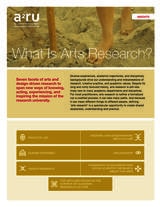
What is Arts Research?
Gabriel Harp
A2RU Intervals, 2018
Diverse experiences, academic trajectories, and disciplinary backgrounds drive our understanding and interpretations of research, creative practice, and academic values. Despite its long and richly textured history, arts research is still relatively new to many academic departments and disciplines. For most practitioners, arts research is neither a formalized nor a codified process; it can take many paths. And because it can mean different things to different people, defining ‘arts research’ is a spectacular opportunity to create shared awareness, understanding and practice.
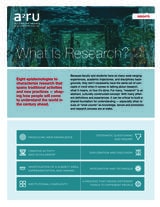
What is Research?
Gabriel Harp
A2RU Intervals, 2018
Because faculty and students have so many wide-ranging experiences, academic trajectories, and disciplinary backgrounds, they don’t necessarily have the same set of concepts in mind when it comes to talking about research, what it means, or how it’s done. For many, “research” is an abstract, culturally constructed concept. With many different definitions and experiences, it can be critical to build a shared foundation for understanding — especially when issues of “what counts” as knowledge, tenure and promotion, and research process are at stake.

What's Next?
Jim Agutter
A2RU Intervals, 2018
When Diversity Drops
Race, Religion, and Affirmative Action in Higher EducationPark, Julie J.
Rutgers University Press, 2013
The story documents IVCF’s evolution from a predominantly white group that rarely addressed race to the most racially diverse campus fellowship at the university. However, its ability to maintain its multiethnic membership was severely hampered by the drop in black enrollment at California University following the passage of Proposition 209, a statewide affirmative action ban.
Park demonstrates how the friendships that students have—or do not have—across racial lines are not just a matter of personal preference or choice; they take place in the contexts that are inevitably shaped by the demographic conditions of the university. She contends that a strong organizational commitment to diversity, while essential, cannot sustain racially diverse student subcultures. Her work makes a critical contribution to our understanding of race and inequality in collegiate life and is a valuable resource for educators and researchers interested in the influence of racial politics on students’ lives.
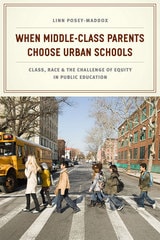
When Middle-Class Parents Choose Urban Schools
Class, Race, and the Challenge of Equity in Public EducationLinn Posey-Maddox
University of Chicago Press, 2014
Drawing on in-depth research at an urban elementary school, Posey-Maddox examines parents’ efforts to support the school through their outreach, marketing, and volunteerism. She shows that when middle-class parents engage in urban school communities, they can bring a host of positive benefits, including new educational opportunities and greater diversity. But their involvement can also unintentionally marginalize less-affluent parents and diminish low-income students’ access to the improving schools. In response, Posey-Maddox argues that school reform efforts, which usually equate improvement with rising test scores and increased enrollment, need to have more equity-focused policies in place to ensure that low-income families also benefit from—and participate in—school change.
When Students Have Power
Negotiating Authority in a Critical PedagogyIra Shor
University of Chicago Press, 1996
Shor provides the reader with a reenactment of one semester that shows what really can happen when one applies the theory and democratizes the classroom. This is the story of one class in which Shor tried to fully share with his students control of the curriculum and of the classroom. After twenty years of practicing critical teaching, he unexpectedly found himself faced with a student uprising that threatened the very possibility of learning. How Shor resolves these problems, while remaining true to his commitment to power-sharing and radical pedagogy, is the crux of the book. Unconventional in both form and substance, this deeply personal work weaves together student voices and thick descriptions of classroom experience with pedagogical theory to illuminate the power relations that must be negotiated if true learning is to take place.
When Will the Joy Come?
Black Women in the Ivory TowerEdited by Robin Phylisia Chapdelaine, Michelle Dionne Thompson, and Abena Ampofoa Asare
University of Massachusetts Press, 2023
How do Black women in higher education create, experience, and understand joy? What sustains them? While scholars have long documented sexism, racism, and classism in the academy, one topic has been conspicuously absent from the literature—how Black women academics have found joy in the midst of adversity. Moving beyond questions of resilience, labor for others, and coping, When Will the Joy Come? focuses on the journeys of over thirty Black women at various stages of their careers.
Joy is a mixture of well-being, pleasure, alignment, and purpose that can be elusive for Black women scholars. With racial reckoning and a global pandemic as context, this volume brings together honest and vital essays that ponder how Black women balance fatigue and frustrations in the halls of the ivory tower, and explore where, when, and if joy enters their lives. By carefully contemplating the emotional, physical, and material consequences of their labor, this collection demonstrates that joy is a tactical and strategic component of Black women’s struggle.
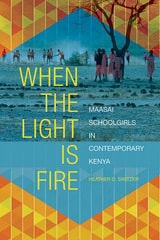
When the Light Is Fire
Maasai Schoolgirls in Contemporary KenyaHeather D. Switzer
University of Illinois Press, 2018
Heather D. Switzer's interviews with over one hundred Kenyan Maasai schoolgirls challenge the widespread view of education as a silver bullet solution to global poverty. In their own voices, the girls offer incisive insights into their commitments, aspirations, and desires. Switzer weaves this ethnographic material into an astute analysis of historical literature, education and development documents, and theoretical literature. Maasai schoolgirls express a particular knowledge about themselves and provocative hopes for their futures. Yet, as Switzer shows, new opportunities force them to face, and navigate, new vulnerabilities and insecurities within a society that is itself in flux.
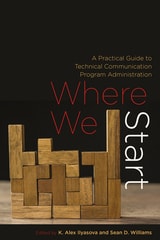
Where We Start
A Practical Guide to Technical Communication Program AdministrationK. Alex Ilyasova
Utah State University Press, 2026
Providing practical, pragmatic guidance for current and aspiring administrators, Where We Start is the first book in technical communication that professionalizes administrativework and practices, offering practical advice on curricular, undergraduate, and graduate program development.
Where We Start teaches by example with each chapter combining personal knowledge with published research to direct readers toward their own practices. Some ofthe most experienced program leaders in technical communication share strategies for program design, curriculum development, assessment, inclusivity, and external partnerships. The collection is divided into three main sections: Programmatic Development and Planning, which focuses on the foundational aspects of strategic planning, curriculum development, and programmatic assessment; Developing Differently, which highlights approaches to inclusivity, diversity, and unconventional career paths in program administration; and Building Beyond, which discusses strategies for expanding technical communication programs through partnerships with industry and international institutions.
A resource for administrators as well as graduate students and early-career faculty looking to understand the intricacies of program management, Where We Start fills a critical gap, offering insights from a uniquely technical communication perspective, where programmatic resources are scarce.
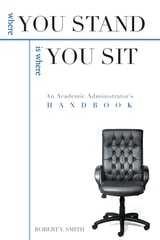
Where You Stand Is Where You Sit
An Academic Administrator's HandbookRobert V. Smith
University of Arkansas Press, 2006
This handbook addresses the three key responsibilities of academic officers: inspiration, evaluation, and representation. “Getting a Good Start” deals with the promise of a new position, communicating with supervisors, and “getting around.” “Offering Inspiration and Direction” looks at the integrated scholar and “academic intrapreneurs”; diversity; the joys, challenges, and failure of professional life; and dealing with tragedies. “Guidance to Various Academic Administrators and Support Staff” examines the development, roles, and responsibilities of academic officers and institutional planning and budgeting. Reviewing the state of the institution and its personnel is covered in “Assessments and Evaluations,” and “Policies and Partnerships” deals with ethics-based policies, academic consortia and partnerships, and international outreach.
Throughout this valuable handbook, Smith offers background, advice, and examples that will interest both the novice and seasoned administrator as he takes us on a tour of success stories, challenges, and foibles.
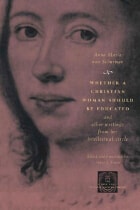
Whether a Christian Woman Should Be Educated and Other Writings from Her Intellectual Circle
Anna Maria van Schurman
University of Chicago Press, 1998
Gathered here in meticulous translation are Anna Maria van Schurman's defense of women's education, her letters to other learned women, and her own account of her early life, as well as responses to her work from male contemporaries, and rare writings by Schurman's mentor, Voetius. This volume will interest the general reader as well as students of women's, religious, and social history.
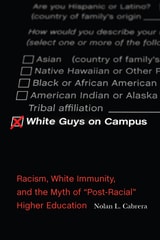
White Guys on Campus
Racism, White Immunity, and the Myth of "Post-Racial" Higher EducationCabrera, Nolan L
Rutgers University Press, 2019
On April 22, 2015, Boston University professor Saida Grundy set off a Twitter storm with her provocative question: “Why is white America so reluctant to identify white college males as a problem population?” White Guys on Campus is a critical examination of race in higher education, centering Whiteness, in an effort to unveil the frequently unconscious habits of racism among White male undergraduates. Nolan L. Cabrera moves beyond the “few bad apples” frame of contemporary racism, and explores the structures, policies, ideologies, and experiences that allow racism to flourish. This book details many of the contours of contemporary, systemic racism, while engaging the possibility of White students to participate in anti-racism. Ultimately, White Guys on Campus calls upon institutions of higher education to be sites of social transformation instead of reinforcing systemic racism, while creating a platform to engage and challenge the public discourse of “post- racialism.”
Whiteness Interrupted
White Teachers and Racial Identity in Predominantly Black SchoolsMarcus Bell
Duke University Press, 2021

Whither College Sports
Amateurism, Athlete Safety, and Academic IntegrityAndrew Zimbalist
Rutgers University Press, 2022
Whither Opportunity?
Rising Inequality, Schools, and Children's Life ChancesGreg J. Duncan
Russell Sage Foundation, 2012
Who Owns Religion?
Scholars and Their Publics in the Late Twentieth CenturyLaurie L. Patton
University of Chicago Press, 2019
Taking the reader through several compelling case studies, Patton identifies two trends of the ’80s and ’90s that fueled that rise: the growth of multicultural identity politics, which enabled a form of volatile public debate she terms “eruptive public space,” and the advent of the internet, which offered new ways for religious groups to read scholarship and respond publicly. These controversies, she shows, were also fundamentally about something new: the very rights of secular, Western scholarship to interpret religions at all.
Patton’s book holds out hope that scholars can find a space for their work between the university and the communities they study. Scholars of religion, she argues, have multiple masters and must move between them while writing histories and speaking about realities that not everyone may be interested in hearing.
Who Owns This Text?
Plagiarism, Authorship, and Disciplinary CulturesCarol Peterson Haviland and Joan A. Mullin
Utah State University Press, 2008
Less a research report than a conversation, the book offers a wide range of ideas, and the chapters here will provoke discussion on scholarly practice relating to intellectual property, plagiarism, and authorship---and to how these matters are conveyed to students. Although these authors find a good deal of consensus in regard to the ethical issues of plagiarism, they document a surprising variety of practice on the subject of what ownership looks like from one discipline to another. And they discover that students are not often instructed in the conventions of their major field.