Results by title
271 books match the query 'Employment' and 36 start with w

WELFARE REFORM IN WEST VIRGINIA
ROBERT J. DILGER
West Virginia University Press, 2004

Wages for Housework
A History of an International Feminist Movement, 1972-77Pluto Press, 2018

Wasted Education
How We Fail Our Graduates in Science, Technology, Engineering, and MathJohn D. Skrentny
University of Chicago Press, 2023
An urgent reality check for America’s blinkered fixation on STEM education.
We live in an era of STEM obsession. Not only do tech companies dominate American enterprise and economic growth while complaining of STEM shortages, but we also need scientific solutions to impending crises. As a society, we have poured enormous resources—including billions of dollars—into cultivating young minds for well-paid STEM careers. Yet despite it all, we are facing a worker exodus, with as many as 70% of STEM graduates opting out of STEM work. Sociologist John D. Skrentny investigates why, and the answer, he shows, is simple: the failure of STEM jobs.
Wasted Education reveals how STEM work drives away bright graduates as a result of “burn and churn” management practices, lack of job security, constant training for a neverending stream of new—and often socially harmful—technologies, and the exclusion of women, people of color, and older workers. Wasted Education shows that if we have any hope of improving the return on our STEM education investments, we have to change the way we’re treating the workers on whom our future depends.
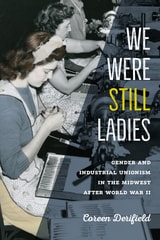
We Were Still Ladies
Gender and Industrial Unionism in the Midwest after World War IICoreen Derifield
University of Iowa Press, 2025
How did this transition into industrial work affect a woman’s sense of self? How did this new workforce change the dynamic of families and communities? While women choosing to work outside of the home may seem to have been a mundane decision, it caused tremendous change within families and with household roles. These alterations in daily life rippled throughout midwestern culture and society, even changing the landscape of small towns into decentralized industrial centers.
Weaving Work & Motherhood
Anita Garey
Temple University Press, 1999
A sociologist and work and family expert, Garey situates her research in the health service industry. Interviewing a racially and ethnically diverse group of women hospital workers -- clerical workers, janitorial workers, nurses, and nurse's aids -- Garey analyzes what it means to be at once a mother who is employed and a worker with children. Within the limits of the resources available to them, women integrate their identities as workers and their identities as mothers by valuing their relation to work while simultaneously preserving cultural norms about what it means to be a good mother. Some of these women work non-day shifts in order to have the right blocks of time at home, including, for example, a registered nurse who explains how working the night shift enables her to see her children off to school, greet them when they return, and attend school events in the way she feels "good mothers" should -- even if she finds little time for sleep.
Moving beyond studies of women, work, and family in terms of structural incompatibilities, Garey challenges images of the exclusively "work-oriented" or exclusively "family-oriented" mother. As women talk about their lives, Garey focuses on the meanings of motherhood and of work that underlie their strategies for integrating employment and motherhood. She replaces notions of how women "balance" work and family with a better understanding of how women integrate, negotiate, and weave together their identities as both workers and mothers.
Breaking new ground in the study of work and family, Weaving Work and Motherhood offers new insights for those interested in sociology, gender and women's studies, social policy, child care, social welfare, and health care.
Welfare Reform and Political Theory
Lawrence M. Mead
Russell Sage Foundation, 2005

What Diantha Did
Charlotte Perkins Gilman
Duke University Press, 2005
In her introduction to the novel, Charlotte J. Rich highlights Gilman’s engagement with such hotly debated Progressive Era issues as the “servant question,” the rise of domestic science, and middle-class efforts to protect and aid the working girl. She illuminates the novel’s connections to Gilman’s other feminist works, including “The Yellow Wall-Paper” and Herland; to her personal life; and to her commitment to women’s social and economic freedom. Rich contends that the novel’s engagement with class and race makes it particularly significant to the newly complex understanding of Gilman that has emerged in recent scholarship. What Diantha Did provides essential insight into Charlotte Perkins Gilman’s important legacy of social thought.

Wildcat Women
Narratives of Women Breaking Ground in Alaska's Oil and Gas IndustryCarla Williams
University of Alaska Press, 2018

Winning the War for Democracy
The March on Washington Movement, 1941-1946David Lucander
University of Illinois Press, 2014
Winning the War for Democracy: The March on Washington Movement, 1941-1946 recalls that triumph, but also looks beyond Randolph and the MOWM's national leadership to focus on the organization's evolution and actions at the local level. Using the personal papers of previously unheralded MOWM members such as T.D. McNeal, internal government documents from the Roosevelt administration, and other primary sources, David Lucander highlights how local affiliates fighting for a double victory against fascism and racism helped the national MOWM accrue the political capital it needed to effect change.
Lucander details the efforts of grassroots organizers to implement MOWM's program of empowering African Americans via meetings and marches at defense plants and government buildings and, in particular, focuses on the contributions of women activists like Layle Lane, E. Pauline Myers, and Anna Arnold Hedgeman. Throughout he shows how local activities often diverged from policies laid out at MOWM's national office, and how grassroots participants on both sides ignored the rivalry between Randolph and the leadership of the NAACP to align with one another on the ground.

Woman'S Place Is At The Typewriter
Margery W. Davies
Temple University Press, 1984

Women Adrift
Independent Wage Earners in Chicago, 1880-1930Joanne J. Meyerowitz
University of Chicago Press, 1988
"Brilliant. . . . Gracefully written, and mercifully free from the jargon that often plagues social history, this book is a welcome addition to literature in women's, urban, and black history."—Ann Schofield, American Historical Review
"Meyerowitz provides a splendid portrait of her subjects. . . . She deserves praise for her demographic spadework, sensitive analysis, and engaging style. This is a valuable and rewarding book."—Nancy Woloch, Journal of American History
"A state-of-the-art product of the new women's history. . . . Meyerowitz's work is an extremely useful contribution, a corrective to over-concentration on women in family, an opening to new ways of looking at single women."—Linda Gordon, Women's Review of Books
"Women Adrift not only brings together many of the most exciting insights of women's history in recent years, but Meyerowitz's particular angle on issues of work, family, sexuality, mass culture and relationships among women also encourages us to rethink these insights."—Ileen A. DeVault, Historian
Women Between Two Worlds
Midlife Reflections on Work and FamilyMyra Dinnerstein
Temple University Press, 1992

Women Employment & Family
In The International Division Of LaborSharon Stichter
Temple University Press, 1990

Women Have Always Worked
A Concise HistoryAlice Kessler-Harris
University of Illinois Press, 2018
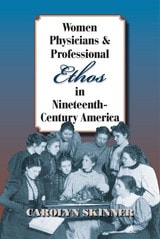
Women Physicians and Professional Ethos in Nineteenth-Century America
Carolyn Skinner
Southern Illinois University Press, 2014
Women physicians in nineteenth-century America faced a unique challenge in gaining acceptance to the medical field as it began its transformation into a professional institution. The profession had begun to increasingly insist on masculine traits as signs of competency. Not only were these traits inaccessible to women according to nineteenth-century gender ideology, but showing competence as a medical professional was not enough. Whether women could or should be physicians hinged mostly on maintaining their femininity while displaying the newly established standard traits of successful practitioners of medicine.
Women Physicians and Professional Ethos provides a unique example of how women influenced both popular and medical discourse. This volume is especially notable because it considers the work of African American and American Indian women professionals. Drawing on a range of books, articles, and speeches, Carolyn Skinner analyzes the rhetorical practices of nineteenth-century American women physicians. She redefines ethos in a way that reflects the persuasive efforts of women who claimed the authority and expertise of the physician with great difficulty.
Descriptions of ethos have traditionally been based on masculine communication and behavior, leaving women’s rhetorical situations largely unaccounted for. Skinner’s feminist model considers the constraints imposed by material resources and social position, the reciprocity between speaker and audience, the effect of one rhetor’s choices on the options available to others, the connections between ethos and genre, the potential for ethos to be developed and used collectively by similarly situated people, and the role ethos plays in promoting social change. Extending recent theorizations of ethos as a spatial, ecological, and potentially communal concept, Skinneridentifies nineteenth-century women physicians’ rhetorical strategies and outlines a feminist model of ethos that gives readers a more nuanced understanding of how this mode of persuasion operates for all speakers and writers.
Women Working Longer
Increased Employment at Older AgesEdited by Claudia Goldin and Lawrence F. Katz
University of Chicago Press, 2018
In Women Working Longer, editors Claudia Goldin and Lawrence F. Katz assemble new research that presents fresh insights on the phenomenon of working longer. Their findings suggest that education and work experience earlier in life are connected to women’s later-in-life work. Other contributors to the volume investigate additional factors that may play a role in late-life labor supply, such as marital disruption, household finances, and access to retirement benefits. A pioneering study of recent trends in older women’s labor force participation, this collection offers insights valuable to a wide array of social scientists, employers, and policy makers.
Women and Change at the U.S.–Mexico Border
Mobility, Labor, and ActivismEdited by Doreen J. Mattingly and Ellen R. Hansen
University of Arizona Press, 2006

Women and National Development
The Complexities of ChangeEdited by Wellesley Editorial Committee
University of Chicago Press, 1978
Women and Work
Feminism, Labour, and Social ReproductionSusan Ferguson
Pluto Press, 2019
Feminism is once again on the political agenda. Across the world women are taking to the streets to protest unfair working conditions, abortion laws, and sexual violence. They are demanding decent wages, better schools and free childcare.
But why do some feminists choose to fight for more women CEOs, while others fight for a world without CEOs?
To understand these divergent approaches, Susan Ferguson looks at the ideas that have inspired women to protest, exploring the ways in which feminists have placed work at the center of their struggle for emancipation. Two distinct trajectories emerge: “equality feminism” and “social reproduction feminism.” Ferguson argues that socialists have too often embraced the “liberal” tendencies of equality feminism, while neglecting the insights of social reproduction feminism. Engaging with feminist anti-work critiques, She proposes that women's emancipation depends upon a radical reimagining of all labor and advocates for a renewed social reproduction framework as a powerful basis for an inclusive feminist politics. Chapters here include;
*The Rational-Humanist Roots of Equality Feminism
*Socialist Feminism: Two Approaches to Understanding Women's Work
*Equal Work for and against Capital
*Anti-Racist Feminism and Women's Work
*A Political Economy of 'Women's Work': Producing Patriarchal Capitalism
*Renewing Social Reproduction Feminism
*The Social Reproduction Strike: Life-Making Beyond Capitalism
Women and Work offers a timely and important look at the intersectionality of feminism and workers rights. Scholars and students will both find valuable insights into the history of feminist theory and social movement.

Women at Work in the Deuteronomistic History
Mercedes L. García Bachmann
SBL Press, 2013
A thorough study of the socio-economic and literary contexts of women in the Deuteronomistic History
Mercedes L. García Bachmann examines the key texts in the Deuteronomistic History that mention women in service occupations: slaves and dependents, cooks, wet nurses, childcare givers, prostitutes, and scribes. The mostly anonymous women who performed this work for others are sometimes mentioned only in a single verse. Consequently, they often are as unrecognized in modern scholarship as they seem in the biblical text. García Bachmann shows that these women were honored not in relation to matters such as sexual purity or marital faithfulness but on account of the valuable service that they provided.
- A close examination of unnamed women
- A review of previous work in feminist, ancient Near Eastern, biblical, and social-scientific studies
- Extensive coverage of Hebrew terms used for women workers
Women in 1900
Gateway to the Political Economy of the 20th CenturyChristine E. Bose
Temple University Press, 2001
Women of the Commonwealth
Work, Family, and Social Change in Ninteenth-Century MassachusettsSusan L. Porter
University of Massachusetts Press, 1996
These essays reflect the complexity and richness of current scholarship in women's history. Informed by a variety of source materials and methodologies, the ten chapters break down a generalized construct of “womanhood” to explore the dynamics between gender, race, ethnicity, and class.
The first section of the book focuses on women's work, paid and unpaid, and the effects of class, ethnicity, and gender on the structure of the job market and on power relations within the family. The second section revisits the concept of “sisterhood” by looking at women in relation to their families, social and cultural networks, and civic and private institutions. The editor's introduction sets the essays in the current historiographical context of women's studies and provides a bibliographical essay for the nonspecialist reader.
Women on the Polish Labor Market
Henryk Domanski
Central European University Press, 2001

Women on the Verge
Japanese Women, Western DreamsKaren Kelsky
Duke University Press, 2001
In exploring the promises, limitations, and contradictions of these “occidental longings,” Women on the Verge exposes the racial and erotic politics of transnational mobility. Kelsky shows how female cosmopolitanism recontextualizes the well-known Western male romance with the Orient: Japanese women are now the agents, narrating their own desires for the “modern” West in ways that seem to defy Japanese nationalism as well as long-standing relations of power not only between men and women but between Japan and the West. While transnational movement is not available to all Japanese women, Kelsky shows that the desire for the foreign permeates many Japanese women’s lives. She also reveals how this feminine allegiance to the West—and particularly to white men—can impose its own unanticipated hegemonies of race, sexuality, and capital.
Combining ethnography and literary analysis, and bridging anthropology and cultural studies, Women on the Verge will also appeal to students and scholars of Japan studies, feminism, and global culture.
Women's Labor in the Global Economy
Speaking in Multiple VoicesHarley, Sharon
Rutgers University Press, 2007
Globalization is not a new phenomenon; women throughout the world have been dealing with the circumstances and consequences of an international economy long before the advent of the transnational corporate conglomerate. However, in a mercenary example of the tried clich "the more things change, the more they stay the same," women-particularly those of color-continue to be relegated to the lowest rung of the occupational ladder, where their indispensable contributions to global market capitalism are downplayed or invalidated completely through the perpetuation of stereotypes and the denial of access to better job opportunities and resources.
How women of color around the world adapt and challenge the economic, political, and social effects of globalization is the subject of this broad-minded and incisive anthology. From Mexico, Jamaica, Ghana, Zimbabwe, and Sri Lanka, to immigrant and non-immigrant communities in the United States-the women documented in these essays are agricultural and factory workers, artists and entrepreneurs, mothers and activists. Their stories bear stark witness to how globalization continues to develop new sites and forms of exploitation, while its apparent victims continue to be women, men, and children of color.

Women, Power, and Dissent in the Hills of Carolina
Mary K. Anglin
University of Illinois Press, 2002
Women, Power, and Dissent in the Hills of Carolina is a unique and impassioned exploration of gender, labor, and resistance in western North Carolina. Based on eight months of field research in a mica manufacturing plant and the surrounding rural community, as well as oral histories of women who worked in mica houses in the early twentieth century, this landmark study canvasses the history of the mica industry and the ways it came to be organized around women's labor.
Mary K. Anglin's investigation of working women's lives in the plant she calls "Moth Hill Mica Company" reveals the ways women have contributed to household and regional economies for more than a century. Without union support or recognition as skilled laborers, these women developed alternate strategies for challenging the poor working conditions, paltry wages, and corporate rhetoric of Moth Hill. Utilizing the power of memory and strong family and community ties, as well as their own interpretations of gender and culture, the women have found ways to "boss themselves."
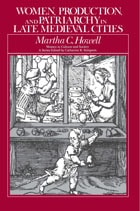
Women, Production, and Patriarchy in Late Medieval Cities
Martha C. Howell
University of Chicago Press, 1986
Work, Retire, Repeat
The Uncertainty of Retirement in the New EconomyTeresa Ghilarducci
University of Chicago Press, 2024
A damning portrait of the dire realities of retirement in the United States—and how we can fix it.
While the French went on strike in 2023 to protest the increase in the national retirement age, workers in the United States have all but given up on the notion of dignified retirement for all. Instead, Americans—whose elders face the highest risk of poverty compared to workers in peer nations—are fed feel-good stories about Walmart clerks who can finally retire because a customer raised the necessary funds through a GoFundMe campaign.
Many argue that the solution to the financial straits of American retirement is simple: people need to just work longer. Yet this call to work longer is misleading in a multitude of ways, including its endangering of the health of workers and its discrimination against people who work in lower-wage occupations. In Work, Retire, Repeat, Teresa Ghilarducci tells the stories of elders locked into jobs—not because they love to work but because they must.
But this doesn’t need to be the reality. Work, Retire, Repeat shows how relatively low-cost changes to how we finance and manage retirement will allow people to truly choose how they spend their golden years.

Workfare or Fair Work
Women, Welfare, and Government Work ProgramsNancy E Rose
Rutgers University Press, 1995
Can the welfare system in the United States accord people dignity? That question is often left out of the current debates over welfare and workfare. In this provocative book, Nancy Rose argues that the United States has been successful in the past––notably during the New Deal and in the 1970s––at shaping programs that gave people “fair work.”
However, as Rose documents, those innovative job creation programs were voluntary and were mainly directed at putting men back to work. Women on welfare, and especially women of color, continue to be forced into a very different kind of program: mandatory, punitive, and demeaning. Such workfare programs are set up for failure. They rarely train women for jobs with futures, they ignore the needs of the women’s families, and they do not pay an honest wage. They perpetuate poverty rather than prevent it.
Rose uses the history of U.S. job creation programs to show alternatives to mandatory workfare. Any effort to redesign welfare in America needs to pay close attention to the lessons drawn from this perceptive analysis of the history of women, welfare, and work. This is an indispensable book for students, scholars, policymakers, politicians, and activists––for everyone who knows the system is broken and wants to fix it.
Workforce Development Politics
Civic Capacity And Performanceedited by Robert P. Giloth, Published in association with the Annie E. Casey Foundation.
Temple University Press, 2004
Workforce Intermediaries
For The 21St Centuryedited by Robert P. Giloth, Published in association with The American Assembly, Columbia University
Temple University Press, 2003
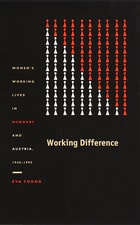
Working Difference
Women's Working Lives in Hungary and Austria, 1945-1995Éva Fodor
Duke University Press, 2003
Fodor brings qualitative and quantitative analyses to bear, combining statistical analyses of survey data, interviews with women managers in both countries, and archival materials including those from the previously classified archives of the Hungarian communist party and transcripts from sessions of the Austrian Parliament. She shows how women's access to power varied in degree and operated through different principles and mechanisms in accordance with the stratification systems of the respective countries. In Hungary women's mobility was curtailed by political means (often involving limited access to communist party membership), while in Austria women's professional advancement was affected by limited access to educational institutions and the labor market. Fodor discusses the legacies of Austria's and Hungary's "gender regimes" following the demise of state socialism and during the process of integration into the European Union.
Working Women in Jordan
Education, Migration, and AspirationFida J. Adely
University of Chicago Press, 2024
Jordan has witnessed tremendous societal transformation in its relatively short history. Today it has one of the most highly educated populations in the region, and women have outnumbered and outperformed their male counterparts for more than a decade. Yet, despite their education and professional status, many women still struggle to build a secure future and a life befitting of their aspirations.
In Working Women in Jordan anthropologist Fida J. Adely turns to college-educated women in Jordan who migrate from rural provinces to Amman for employment opportunities. Building on twelve years of ethnographic research and extensive interviews with dozens of women, as well as some of their family members, Adely analyzes the effects of developments such as expanded educational opportunities, urbanization, privatization, and the restructuring of the labor market on women’s life trajectories, gender roles, the institution of marriage, and kinship relations. Through these rich narrative accounts and the analysis of broader socio-economic shifts, Adely explains how educational structures can act as both facilitators and obstacles to workforce entry—along with cascading consequences for family and social life. Deeply thorough and compelling, Working Women in Jordan asks readers to think more critically about what counts as development, and for whom.
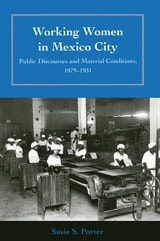
Working Women in Mexico City
Public Discourses and Material Conditions, 1879-1931Susie S. Porter
University of Arizona Press, 2003

Working in the Virtual Stacks
Laura Townsend Kane
American Library Association, 2011

Working on the Railroad, Walking in Beauty
Navajos, Hozho, and Track WorkJay Youngdahl
Utah State University Press, 2011
For over one hundred years, Navajos have gone to work in significant numbers on Southwestern railroads. As they took on the arduous work of laying and anchoring tracks, they turned to traditional religion to anchor their lives.
Jay Youngdahl, an attorney who has represented Navajo workers in claims with their railroad employers since 1992 and who more recently earned a master's in divinity from Harvard, has used oral history and archival research to write a cultural history of Navajos' work on the railroad and the roles their religious traditions play in their lives of hard labor away from home.