Results by title
201 books match the query 'English fiction' and 5 start with w
Who Paid for Modernism?
Art, Money, and the Fiction of Conrad, Joyce and LawrenceJoyce Piell Wexler
University of Arkansas Press, 1997

Women Times Three
Writers, Detectives, ReadersKathleen Gregory Klein
University of Wisconsin Press, 1995
The eleven essays concentrate new attention on the trio of reader, writer, and text when all three are modified by the terms “woman” and “mystery.”
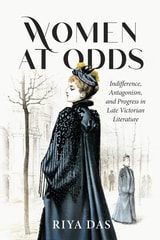
Women at Odds
Indifference, Antagonism, and Progress in Late Victorian LiteratureRiya Das
The Ohio State University Press, 2024
In Women at Odds, Riya Das demonstrates the limitations of female solidarity for the New Woman in Victorian society. On the one hand, feminist antagonism disrupts the status quo in unanticipated ways, and it helps open new domestic and professional pathways for women. On the other hand, the urban professional New Woman’s rhetoric recycles distinctly sexist, racist, and classist conventions, thereby bringing middle-class Englishwomen dialectically—what Das terms “retro-progressively”—into the labor pool of the British empire.
While foregrounding the figure of the New Woman as a white imperialist reformer, Das illustrates how the New Woman movement detaches itself from the domestic politics of female friendship. In works by George Eliot, George Gissing, Olive Schreiner, Bram Stoker, and others, antagonism and indifference enable the fin de siècle New Woman to transcend traditionally defined roles and fashion social progress for herself at the expense of femininities she excludes as “other.” By contesting the critical notion of solidarity as the only force that brings Victorian women’s narratives to fruition, Women at Odds reveals the troubled but effective role of antagonistic and indifferent reformist politics in loosening rigid social structures for privileged populations.
Working Fictions
A Genealogy of the Victorian NovelCarolyn Lesjak
Duke University Press, 2006
Lesjak demonstrates how the ideological work of the literature of the Victorian era, the “golden age of the novel,” revolved around separating the domains of labor and pleasure and emphasizing the latter as the proper realm of literary representation. She reveals how the utopian works of Morris and Wilde grapple with this divide and attempt to imagine new relationships between work and pleasure, relationships that might enable a future in which work is not the antithesis of pleasure. In Working Fictions, Lesjak argues for the contemporary relevance of the “labor novel,” suggesting that within its pages lie resources with which to confront the gulf between work and pleasure that continues to characterize our world today.
Writing against War
Literature, Activism, and the British Peace MovementCharles Andrews
Northwestern University Press, 2017
The cataclysm of the First World War gave rise to the British Peace Movement, a spectrum of pacifist, internationalist, and antiwar organizations and individuals. Antiwar sentiments found expression not only in editorials, criticism, and journalism but also in novels and other works of literature. Writing against War examines the work of Aldous Huxley, Storm Jameson, Siegfried Sassoon, Rose Macaulay, and Virginia Woolf to analyze the effects of their attempts to employ fiction in the service of peace activism. It further traces how Huxley, Woolf, and others sought to reconcile their antiwar beliefs with implacable military violence.
The British Peace Movement's failure to halt the rise of fascism and the Second World War continues to cast a shadow over contemporary pacifist movements. Writing about War will fascinate scholars of peace studies and literature and offers valuable insights for current-day peace activists and artists who seek to integrate creativity with activism.