Results by title
304 books match the query 'Entertainment & Performing Arts' and 18 start with w
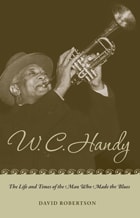
W. C. Handy
The Life and Times of the Man Who Made the BluesDavid Robertson
University of Alabama Press, 2011
Normal0falsefalsefalseEN-USX-NONEX-NONEMicrosoftInternetExplorer4
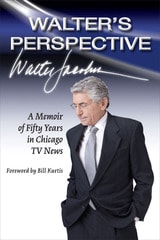
Walter's Perspective
A Memoir of Fifty Years in Chicago TV NewsWalter Jacobson, Foreword by Bill Kurtis
Southern Illinois University Press, 2012
This highly readable book provides a unique glimpse into the rough-and-tumble Chicago news business as seen through the eyes of one of its legendary players. From his first news job working as a legman for Daily News columnist Jack Mabley in the 1950s to his later role as a news anchor and political commentator at CBS-owned WBBM, Walter Jacobson battled along the front lines of an industry undergoing dramatic changes. While it is ultimately Jacobson’s story, a memoir of a long and distinguished (and sometimes highly controversial) career, it is also an insider’s account of the inner workings of Chicago television news, including the ratings games, the process of defining news and choosing stories, the media’s power and its failures, and the meddling by corporate and network executives.
As a reporter, Jacobson was regularly contentious and confrontational. He was fired on a number of occasions and was convicted of libeling tobacco company Brown and Williamson, resulting in a multimillion-dollar federal court judgment against him and CBS. Yet it was this gutsy attitude that put him at the top of the news game. With an engaging writing style, Jacobson recollects his interactions with Chicago mayors Richard J. and Richard M. Daley, Jane Byrne, Harold Washington, and Rahm Emanuel; recounts his coverage of such fascinating news stories as the violent 1968 Democratic National Convention and the execution of convicted mass murderer John Wayne Gacy; and recalls his reporting on and interviews with Louis Farrakhan, governors George Ryan and Rod Blagojevich, and Barack Obama. More than a memoir, Walter’s Perspective is the extraordinary journey of one reporter whose distinctive career followed the changing face of Chicago’s local news.
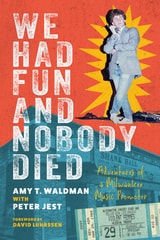
We Had Fun and Nobody Died
Adventures of a Milwaukee Music PromoterAmy T. Waldman
Wisconsin Historical Society Press, 2024
The entertaining and inspiring story of a stubbornly independent promoter and club owner
This irreverent biography provides a rare window into the music industry from a promoter’s perspective. From a young age, Peter Jest was determined to make a career in live music, and despite naysayers and obstacles, he did just that, bringing national acts to his college campus at UW–Milwaukee, booking thousands of concerts across Wisconsin and the Midwest, and opening Shank Hall, the beloved Milwaukee venue named after a club in the cult film This Is Spinal Tap.
This funny, nostalgia-inducing book details the lasting friendships Jest established over the years with John Prine, Arlo Guthrie, and Milwaukee’s own Violent Femmes, among others. It also shines a light into the seldom-seen world of music promotion, as Jest attempts to manage a turbulent band on the road, negotiates with agents, deals with fires (both real and metaphorical), struggles through a pandemic, and takes pleasure in presenting music of all kinds—from world-famous acts to up-and-coming local bands. In addition to photos of celebrated musicians, the book includes concert posters, tickets, and backstage passes documenting decades of rock, folk, and alternative shows that helped put Milwaukee on the live music map.
As the music industry has become dominated by profit-driven corporations, We Had Fun and Nobody Died chronicles the career of a one-of-a-kind independent promoter whose hardheadedness and love of music have helped him keep it real and make it in the music business for more than forty years.
"[An] adventure-filled biography of music promoter Peter Jest. . . . Reflecting decades of changes to the music business, We Had Fun and Nobody Died is a fascinating biography of a passionate promoter’s work to transform Milwaukee’s music scene."
—Foreword Reviews
“Amy Waldman and Peter Jest weave a thrilling tale of fanhood gone pro. Dreams followed, dragons slain, and the roof of a venerable venue repeatedly blown sky-high. We’re proud to have provided the name [for Shank Hall]; it took men and women of sterner stuff to do the heavy lifting.”
—Michael McKean, actor and comedian, This Is Spinal Tap
“We Had Fun and Nobody Died is a fantastic journey of a Midwest boy, his love of music, and his excitement to be part of it all.”
—Kevn Kinney, lead singer and guitarist of Drivin N Cryin
“Peter Jest’s story is one that conveys a winning combination of friendship, determination, and entrepreneurial insights that led him to a lifelong career in support of the live music industry and the community that comes together in common appreciation of it.”
—Shana Morrison, singer-songwriter
We Had Fun and Nobody Died
Adventures of a Milwaukee Music PromoterAmy T. Waldman
Wisconsin Historical Society Press, 2025
The entertaining and inspiring story of a stubbornly independent promoter and club owner
This irreverent biography provides a rare window into the music industry from a promoter’s perspective. From a young age, Peter Jest was determined to make a career in live music, and despite naysayers and obstacles, he did just that, bringing national acts to his college campus at UW–Milwaukee, booking thousands of concerts across Wisconsin and the Midwest, and opening Shank Hall, the beloved Milwaukee venue named after a club in the cult film This Is Spinal Tap.
This funny, nostalgia-inducing book details the lasting friendships Jest established over the years with John Prine, Arlo Guthrie, and Milwaukee’s own Violent Femmes, among others. It also shines a light into the seldom-seen world of music promotion, as Jest attempts to manage a turbulent band on the road, negotiates with agents, deals with fires (both real and metaphorical), struggles through a pandemic, and takes pleasure in presenting music of all kinds—from world-famous acts to up-and-coming local bands.
As the music industry has become dominated by profit-driven corporations, We Had Fun and Nobody Died chronicles the career of a one-of-a-kind independent promoter whose hardheadedness and love of music have helped him keep it real and make it in the music business for more than forty years.
"[An] adventure-filled biography of music promoter Peter Jest. . . . Reflecting decades of changes to the music business, We Had Fun and Nobody Died is a fascinating biography of a passionate promoter’s work to transform Milwaukee’s music scene."
—Foreword Reviews
“Amy Waldman and Peter Jest weave a thrilling tale of fanhood gone pro. Dreams followed, dragons slain, and the roof of a venerable venue repeatedly blown sky-high. We’re proud to have provided the name [for Shank Hall]; it took men and women of sterner stuff to do the heavy lifting.”
—Michael McKean, actor and comedian, This Is Spinal Tap
“We Had Fun and Nobody Died is a fantastic journey of a Midwest boy, his love of music, and his excitement to be part of it all.”
—Kevn Kinney, lead singer and guitarist of Drivin N Cryin
“Peter Jest’s story is one that conveys a winning combination of friendship, determination, and entrepreneurial insights that led him to a lifelong career in support of the live music industry and the community that comes together in common appreciation of it.”
—Shana Morrison, singer-songwriter
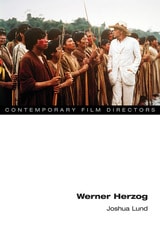
Werner Herzog
Joshua Lund
University of Illinois Press, 2020
Joshua Lund offers the first systematic interpretation of Werner Herzog's Americas-themed works, illuminating the director's career as a political filmmaker—a label Herzog himself rejects. Lund draws on materialist and post-colonial approaches to argue that Herzog's American work confronts us with the circulation, distribution, accumulation, application, and negotiation of power that resides, quietly, at the center of his films. By operating beyond conventional ideological categories, Herzog renders political ideas in radically unfamiliar ways while fearlessly confronting his viewers with questions of world-historical significance. His maddeningly opaque viewpoint challenges us to rethink discovery and conquest, migration and exploitation, resource extraction, slavery, and other foundational traumas of the contemporary human condition.
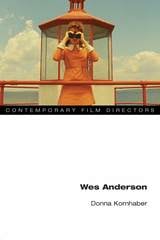
Wes Anderson
Donna Kornhaber
University of Illinois Press, 2017
Donna Kornhaber approaches Anderson's style as the necessary product of the narrative and thematic concerns that define his body of work. Using Anderson's focus on collecting, Kornhaber situates the director as the curator of his filmic worlds, a prime mover who artfully and conscientiously arranges diverse components into cohesive collections and taxonomies. Anderson peoples each mise-en-scéne in his ongoing ""Wesworld"" with characters orphaned, lost, and out of place amidst a riot of handmade clutter and relics. Within, they seek a wholeness and collective identity they manifestly lack, with their pain expressed via an ordered emotional palette that, despite being muted, cries out for attention. As Kornhaber shows, Anderson's films offer nothing less than a fascinating study in the sensation of belonging--told by characters who possess it the least.
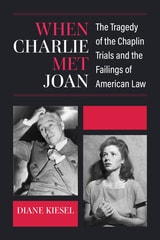
When Charlie Met Joan
The Tragedy of the Chaplin Trials and the Failings of American LawDiane Kiesel
University of Michigan Press, 2025
A 2026 PROSE Award Category Winner for Biography and Autobiography
Charlie Chaplin, the silent screen’s “Little Tramp,” was beloved by millions of movie fans until he starred in a series of salacious, real-life federal courtroom dramas. The 1944 trial was described by ace New York Daily News reporter Florabel Muir as “the best show in town.” The leading lady was a woman under contract to his studio—red-haired ingénue Joan Barry, Chaplin’s protégée and former mistress. Although he beat the federal criminal trial, Chaplin lost a paternity case and had to pay child support despite blood type evidence that proved he was not the child’s father.
A decade later during the Cold War, the U.S. government used the Barry trials as an excuse to bar the left-leaning, sexually adventurous, British-born comic from the country he had called home for forty years. Not only did these trials have a lasting impact on law; they also raise concerns about the power of celebrity, Cold War politics, the media frenzy surrounding high-profile court proceedings, and the sorry history of the casting couch. When Charlie Met Joan examines these trials from the perspective of both parties, asking whether Chaplin was unfairly persecuted by the government because of his left-leaning political beliefs, or if he should have been held more accountable for his cavalier treatment of Barry and other women in his life.
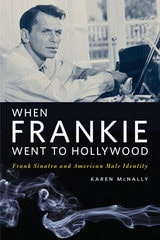
When Frankie Went to Hollywood
Frank Sinatra and American Male IdentityKaren McNally
University of Illinois Press, 2007
This first in-depth study of Frank Sinatra’s film career explores his iconic status in relation to his many performances in postwar Hollywood cinema. When Frankie Went to Hollywood considers how Sinatra’s musical acts, television appearances, and public commentary impacted his screen performances in Pal Joey, The Tender Trap, Some Came Running, The Man with the Golden Arm, and other hits. A lively discussion of sexuality, class, race, ethnicity, and male vulnerability in postwar American culture illuminates Karen McNally’s investigation into Sinatra’s cinematic roles and public persona. This entertainment luminary, she finds, was central in shaping debates surrounding definitions of American male identity in the 1940s and ’50s.
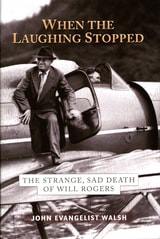
When the Laughing Stopped
The Strange, Sad Death of Will RogersJohn Evangelist Walsh
University of Alaska Press, 2008
The plane carrying Rogers and aviator Wiley Post crashed in a lagoon just outside Barrow, Alaska on August 15, 1935. Walsh retells the tragic tale from various angles, primarily alternating between Rogers and Post’s journey and the actions of the two men’s families on that fateful day. In particular, Walsh reveals moving details about the families and their struggle with grief, such as the fact that Post’s daughter was in a stage play about plane crashes at the time of the crash, or how Will Rogers’s daughter Mary never fully recovered from her father’s death and subsequently abandoned her promising acting career.
When the Laughing Stopped is a gripping and poignant retelling of the death of a beloved American legend, and it shines a humanizing light upon a pivotal moment in American history and culture.
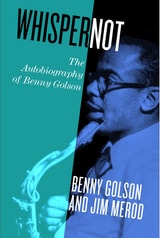
Whisper Not
The Autobiography of Benny GolsonBenny Golson
Temple University Press, 2016
“One of the greatest artists our country has is Benny Golson. He is not only a great musician, but an original and fabulous composer. He is inventive and creative and his work is loved the world over. Benny is a rare, creative genius. All I would like to say is THREE CHEERS for Benny Golson!”—Tony Bennett
“Composer supreme, tenor man supreme, jazz man supreme, good guy supreme: that’s BENNY GOLSON!"—Sonny Rollins
Born during the de facto inaugural era of jazz, saxophonist Benny Golson learned his instrument and the vocabulary of jazz alongside John Coltrane while Golson was still in high school in Philadelphia. Quickly establishing himself as an iconic fixture on the jazz landscape, Golson performed with dozens of jazz greats, from Sonny Rollins, Coleman Hawkins, and Jimmy Heath to Dizzy Gillespie, Freddie Hubbard, and many others. An acclaimed composer, Golson also wrote music for Hollywood films and television and composed such memorable jazz standards as “Stablemates,” “Killer Joe,” and “Whisper Not.”
An eloquent account of Golson’s exceptional life—presented episodically rather than chronologically—Whisper Not includes a dazzling collection of anecdotes, memories, experiences, and photographs that recount the successes, the inevitable failures, and the rewards of a life eternally dedicated to jazz.
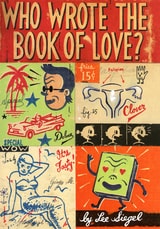
Who Wrote the Book of Love?
Lee Siegel
University of Chicago Press, 2005
Vignettes from the author's childhood provide the material for the construction of what is at once comic fiction, imaginative historical reportage, and an ironically nostalgic confession. The book evokes the tone and tempo of a decade during which America was blatantly happy, wholesome, and confident, and yet, at the same time, deeply fearful of communism and nuclear holocaust. Siegel recounts both the cheer and the paranoia of the period and the ways in which those sentiments informed wondering about sex and falling in love.
"Part of my plan," Mark Twain wrote in The Adventures of Tom Sawyer, "has been to try to pleasantly remind adults of what they once were themselves, and of how they felt and thought and talked." With the same motive, Lee Siegel has written what Twain might have composed had he been Jewish, raised in Beverly Hills in the 1950s, and joyously obsessed with sex and love.
Whom God Wishes to Destroy . . .
Francis Coppola and the New HollywoodJon Lewis
Duke University Press, 1995
Why the Grateful Dead Matter
Michael Benson
University Press of New England, 2016
Wilde Times
Patricia Wilde, George Balanchine, and the Rise of New York City BalletJoel Lobenthal
University Press of New England, 2016
Wisconsin Idols
100 Heroes Who Changed the State, the World, and MeDean Robbins
Wisconsin Historical Society Press, 2025
Discover intriguing true tales of legends and trailblazers with Wisconsin connections who left their mark on the world, including the Beatles, Georgia O’Keeffe, Kareem Abdul-Jabbar, Harrison Ford, Joni Mitchell, Abraham Lincoln, Oprah Winfrey, Bob Dylan, Jackie Robinson, Orson Welles, and many more. Marvel at Elvis Presley’s miracle on the streets of Madison, applaud the award-winning acting of Reedsburg’s Agnes Moorehead, follow fearless quarterback Bart Starr to the gates of hell in Green Bay, and join Joshua Glover in Racine on his daring escape from enslavers. These brief narratives—whether poignant or humorous—also offer personal reflections on the impact of each featured idol.
Author Dean Robbins has spent a lifetime researching and revering these prominent figures and visiting exhibits, shrines, historic homes, and other sites dedicated to their achievements. Wisconsin Idols gathers all of Robbins’s obsessions into one collection, enhanced by dozens of photographs. Taken together, these stories of musicians, activists, artists, athletes, actors, and great thinkers irrefutably establish Wisconsin as a crossroads for extraordinary people who changed the world.
Woman with a Movie Camera
My Life as a Russian FilmmakerBy Marina Goldovskaya
University of Texas Press, 2006
Marina Goldovskaya is one of Russia's best-known documentary filmmakers. The first woman in Russia (and possibly the world) to combine being a director, writer, cinematographer, and producer, Goldovskaya has made over thirty documentary films and more than one hundred programs for Russian, European, Japanese, and American television. Her work, which includes the award-winning films The House on Arbat Street, The Shattered Mirror, and Solovky Power, has garnered international acclaim and won virtually every prize given for documentary filmmaking.
In Woman with a Movie Camera, Goldovskaya turns her lens on her own life and work, telling an adventurous, occasionally harrowing story of growing up in the Stalinist era and subsequently documenting Russian society from the 1960s, through the Thaw and Perestroika, to post-Soviet Russia. She recalls her childhood in a Moscow apartment building that housed famous filmmakers, being one of only three women students at the State Film School, and working as an assistant cameraperson on the first film of Andrei Tarkovsky, Russia's most celebrated director. Reviewing her professional filmmaking career, which began in the 1960s, Goldovskaya reveals her passion for creating films that presented a truthful picture of Soviet life, as well as the challenges of working within (and sometimes subverting) the bureaucracies that controlled Russian film and television production and distribution. Along the way, she describes a host of notable figures in Russian film, theater, art, and politics, as well as the technological evolution of filmmaking from film to video to digital media.
A compelling portrait of a woman who broke gender and political barriers, as well as the eventful four decades of Russian history she has documented, Woman with a Movie Camera will be fascinating reading for a wide audience.
Woody on Rye
Jewishness in the Films and Plays of Woody AllenEdited by Vincent Brook and Marat Grinberg
Brandeis University Press, 2013
Writing Himself Into History
Oscar Micheaux, His Silent Films, and His AudiencesBowser, Pearl
Rutgers University Press, 2000
Winner of the 2001 Kraszna-Krausz Moving Image Book Awards | Winner of the Theatre Library Association Award
Writing Himself Into History is an eagerly anticipated analysis of the career and artistry surrounding the legendary Black filmmaker Oscar Micheaux. With the exception of Spike Lee, Micheaux is the most famous—and prolific—African American film director. Between 1918 and 1948 he made more than 40 “race pictures,” movies made for and about African Americans. A man of immense creativity, he also wrote seven novels.
Pearl Bowser and Louise Spence concentrate here on the first decade of Micheaux’s career, when Micheaux produced and directed more than twenty silent features and built a reputation as a controversial and maverick entrepreneur. Placing his work firmly within his social and cultural milieu, they also examine Micheaeux’s family and life. The authors provide a close textual analysis of his surviving films (including The Symbol of the Unconquered, Within Our Gates, and Body and Soul), and highlight the rivalry between studios, dilemmas of assimilation versus separatism, gender issues, and class. In Search of Oscar Micheaux also analyzes Micheaux’s career as a novelist in relation to his work as a filmmaker.
This is a much-awaited book that is especially timely as interest in Micheaux’s work increases.