Results by title
314 books match the query 'Environmental aspects' and 13 start with w
Wasted World
How Our Consumption Challenges the PlanetRob Hengeveld
University of Chicago Press, 2012
Water Wisdom
Preparing the Groundwork for Cooperative and Sustainable Water Management in the Middle EastAbed Rabbo, Alfred
Rutgers University Press, 2010
Watering the Revolution
An Environmental and Technological History of Agrarian Reform in MexicoMikael D. Wolfe
Duke University Press, 2017
Ways to the West
How Getting Out of Our Cars Is Reclaiming America's FrontierTim Sullivan
Utah State University Press, 2015
In Ways to the West, Tim Sullivan embarks on a car-less road trip through the Intermountain West, exploring how the region is taking on what may be its greatest challenge: sustainable transportation. Combining personal travel narrative, historical research, and his professional expertise in urban planning, Sullivan takes a critical yet optimistic and often humorous look at how contemporary Western cities are making themselves more hospitable to a life less centered on the personal vehicle.
The modern West was built by the automobile, but so much driving has jeopardized the West’s mystic hold on the American future. At first, automobility heightened the things that made the West great, but love became dependence, and dependence became addiction. Via his travels by bicycle, bus, and train through Las Vegas, Phoenix, Denver, Boise, Salt Lake City, and Portland, Sullivan captures the modern transportation evolution taking place across the region and the resulting ways in which contemporary Western communities are reinterpreting classic American values like mobility, opportunity, adventure, and freedom.
Finding a West created, lost, and reclaimed, Ways to the West will be of great interest to anyone curious about sustainable transportation and the history, geography, and culture of the American West.
We Live with the Sea
Ecologizing Safety in Post-Tsunami JapanAndrew Littlejohn
Duke University Press, 2026
We Stay the Same
Subsistence, Logging, and Enduring Hopes for Development in Papua New GuineaJason Steadman Roberts
University of Arizona Press, 2024
Following a long history of smaller-scale and largely unsuccessful resource development efforts, New Hanover became the site of three multinational-controlled special agricultural and business leases (SABLs) that combined to cover over 75 percent of the island for ninety-nine-year lease terms. These agroforestry projects were part of a national effort to encourage “sustainable” rural development by tapping into the growing global demand for agricultural lands and crops like oil palm and biofuels. They were supposed to succeed where the smaller-scale projects of the past had failed. Unfortunately, these SABLs resulted in significant forest loss and livelihood degradation, while doing little to promote the type of economic development that many Lavongai had been hoping for.
It is within this context that We Stay the Same grounds questions of hope for transformative economic change within Lavongai assessments of the inequitable relationships between global processes of resource development and the local lives that have become increasingly defined by the necessities and failures of these processes. Written in a clear and relatable style for students, We Stay the Same combines ethnographic and ecological research to show how the Lavongai continue to survive and make meaningful lives in a situation where their own hopes for a better future have often been used against them as a mechanism of a more distantly profitable dispossession.
When Forests Run Amok
War and Its Afterlives in Indigenous and Afro-Colombian TerritoriesDaniel Ruiz-Serna
Duke University Press, 2023
When the Hills Are Gone
Frac Sand Mining and the Struggle for CommunityThomas W. Pearson
University of Minnesota Press, 2017
Fracking is one of the most controversial methods of fossil fuel extraction in the United States, but a great deal about it remains out of the public eye. In Wisconsin it has ignited an unprecedented explosion in the state’s sand mining operations, an essential ingredient in hydraulic fracturing that has shaken local communities to the core.
In When the Hills Are Gone, Thomas W. Pearson reveals the jolting impact of sand mining on Wisconsin’s environment and politics. A source of extraordinary wealth for a lucky few, and the cause of despoiled land for many others, sand mining has raised alarm over air quality, water purity, noise, blasting, depressed tourism, and damage to the local way of life. It has also spurred a backlash in a grassroots effort that has grown into a mature political movement battling a powerful mining industry.
When the Hills Are Gone tells the story of Wisconsin’s sand mining wars. Providing on-the-ground accounts from both the mining industry and the concerned citizens who fought back, Pearson blends social theory, ethnography, stirring journalism, and his own passionate point of view to offer an essential chapter of Wisconsin’s history and an important episode in the national environmental movement. Digging deep into the struggles over place, community, and local democracy that are occurring across the United States, When the Hills Are Gone gives vital insight into America’s environmental battles along the unexpected frontlines of energy development.
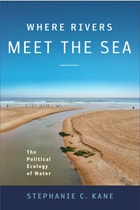
Where Rivers Meet the Sea
The Political Ecology of WaterStephanie Kane
Temple University Press, 2012
Where fresh water appears to be abundant and generally accessible, chronic pollution may be relatively ignored as a public issue. Yet there are those whose lives, livelihoods, and traditions are touched directly by the destructive albeit essential relationship between humans and water.
In her passionate and persuasively argued Where Rivers Meet the Sea, Stephanie Kane compares two cities and nations—Salvador, Brazil and Buenos Aires, Argentina—as she tells the stories of those who organize in the streets, petition the courts, and challenge their governments to implement and enforce existing laws designed to protect springs, lakes, harbors, and rivers.
Illuminating the complex and distinctive cultural forces in the South Atlantic that shape conflicts and collaborations pertaining to particular waterfront settings, Kane shows the dilemmas, inventiveness, and persistence that provide the foundation for environmental and social justice movements writ large.

Who Owns America?
Social Conflict over Property RightsEdited by Harvey M. Jacobs
University of Wisconsin Press, 1998
Land ownership by individual citizens is a cornerstone of American heritage and a centerpiece of the American dream. Thomas Jefferson called it the key to our success as a democracy. Yet the question of who owns America not only remains unanswered but is central to a fundamental conflict that can pit private property rights advocates against government policymakers and environmentalists.
Land use authority Harvey M. Jacobs has gathered a provocative collection of perspectives from eighteen contributors in the fields of law, history, anthropology, economics, sociology, forestry, and environmental studies. Who Owns America? begins with the popular view of land ownership as seen though the television show Bonanza! It examines public regulation of private land; public land management; the roles culture and ethnic values play in land use; and concludes with Jacobs’ title essay.
Who Owns America? is a powerful and illuminating exploration of the very terrain that makes us Americans. Its broad set of theoretical and historical perspectives will fascinate historians, environmental activists, policy makers, and all who care deeply about the land we share.
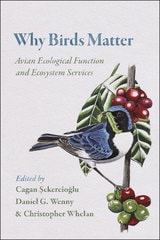
Why Birds Matter
Avian Ecological Function and Ecosystem ServicesEdited by Çagan H. Sekercioglu, Daniel G. Wenny, and Christopher J. Whelan
University of Chicago Press, 2016
The first book to approach ecosystem services from an ornithological perspective, Why Birds Matter asks what economic value we can ascribe to those services, if any, and how this value should inform conservation. Chapters explore the role of birds in such important ecological dynamics as scavenging, nutrient cycling, food chains, and plant-animal interactions—all seen through the lens of human well-being—to show that quantifying avian ecosystem services is crucial when formulating contemporary conservation strategies. Both elucidating challenges and providing examples of specific ecosystem valuations and guidance for calculation, the contributors propose that in order to advance avian conservation, we need to appeal not only to hearts and minds, but also to wallets.
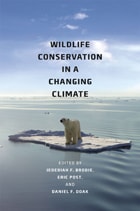
Wildlife Conservation in a Changing Climate
Edited by Jedediah F. Brodie, Eric S. Post, and Daniel F. Doak
University of Chicago Press, 2012
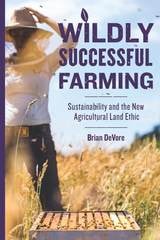
Wildly Successful Farming
Sustainability and the New Agricultural Land EthicBrian DeVore
University of Wisconsin Press, 2020
Written by agricultural journalist Brian DeVore, the book is based on interviews he has conducted at farms, wildlife refuges, laboratories, test plots, and gardens over the past twenty-five years. He documents innovations in cover cropping, managed rotational grazing, perennial polyculture, and integrated pest management. His accounts provide insight into the impacts regenerative farming methods can have on wildlife, water, landscape, soils, and rural communities and suggest ways all of us can support wildly successful farmers.