Results by title
3388 books match the query 'Fiction' and 138 start with w
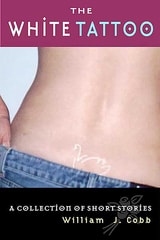
WHITE TATTOO
A COLLECTION OF SHORT STORIESWilliam J. Cobb
The Ohio State University Press, 2002
The White Tattoo is a smart, always surprising collection of American stories. William J. Cobb knows and loves his character and places. His first collection of short stories, The White Tattoo, revels in the undeniable allure of the physical world even as it is juxtaposed with the twists and kinks of psychological and emotional pain. At one extreme is the tense, torturous psychology of “Motel Ice,” whose narrative voice emerges from the mind of a mentally disturbed Jehovah’s Witness gazing out on a world of temptation and redemption. Similarly hyperdramatic in its conclusion and its arc of betrayal and violent aftermath, “For All You Dorks, Blah Blah Blah” conjures up a sleepwalking, murderous father who is less culpable in the harm he causes but all the while most destructive.
Stylistically, the stories crackle, snap, and zing. Several of them, including “The Wishes,” “The Atmosphere of Vienna,” and “Dark Matter,” use an idiosyncratic, Tilt-O-Whirl narrative marked by a swirling, shifting focus and point of view, trying to create a multifaceted, complex vision of the world by dipping in and out of the consciousness of various characters.
WHY WE READ FICTION
Theory of Mind and the NovelLisa Zunshine
The Ohio State University Press, 2006
WOMEN DRINKING BENEDICTINE
Sharon Dilworth
The Ohio State University Press, 1998
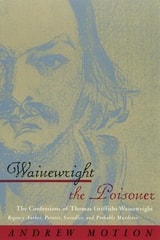
Wainewright the Poisoner
The Confessions of Thomas Griffiths WainewrightAndrew Motion
University of Chicago Press, 2001
"Thomas Griffiths Wainewright is a dream subject for either novelist or biographer. . . . Andrew Motion, Britain's poet laureate, clearly felt that neither straight biography nor pure fiction would do Wainewright's complexities justice, and so he combined the two genres. The result is stunning. The central voice is that of Wainewright himself, reflecting back on his life. After each chapter Mr. Motion has added detailed notes that inform and flesh out the narrative, giving not only his own informed opinion of Wainewright's actions but also those of Wainewright's contemporaries and the scholars and writers who have studied him over the past two centuries."—Lucy Moore, Washington Times
"Brilliantly innovative, gripping, intricately researched, Motion's biography does justice to its subject at last."—John Carey, The Sunday Times
"Engaging and convincing. . . . The trajectory of this character-from neglected and resentful child to arrogant and envious London dandy to sociopathic murderer on to an enfeebled, frightened prisoner-is indelibly imagined and drawn."—Edmund White, Financial Times
"[A] fascinating look at an evil artist, a charmer still having his way with us. We can hear him being economical with the truth, telling us and himself just what he wants to hear."—Michael Olmert, New Jersey Star Ledger
"Motion crafts a fascinating tale as complex and compelling as if Wainewright himself had written it."—Michael Spinella, Booklist
"Did he kill his servant, and possibly others as well? . . . The footnotes seem to say yes, but Wainewright adamantly argues his own case. Motion's prose is flawless, and Wainewright's voice is convincing. But in the long run, it's this ambiguity that makes Wainewright the Poisoner a fascinating and memorable read."—R.V. Schelde, Sacramento News and Review
"Who could as for a better Romantic villain than Thomas Griffiths Wainewright? . . . [The book] succeeds on many levels: as an act of ventriloquism, a work of scholarship, a psychological study, as a set of sharp portraits of famous men and an engrossing read. . . ."—Polly Shulman, Newsday
"Instead of a straightforward biography, Andrew Motion gives us Wainewright's first person, fictionalized "confession."—a document as circumspect, slyly reticent, and oeaginously smooth as the man himself. Splendid."—John Banville, Literary Review
"A genuine tour de force, and on a non-fictional level, a telling portrait of a strange, intriguing and repellant man."—Brian Fallon, Irish Times
"A marvelous literary hybrid that totters with one foot in the world of nonfiction, the other in the land of make-believe. One is alternatively swept up in Motion's dizzy imaginative pastiche, or sent crashing into a dusty stack of scholarly cogitations. . . ."—Philadelphia Inquirer
"As true a portrait of a liar as its subject could wish. Rich and strange. . . ."—Glasgow Herald
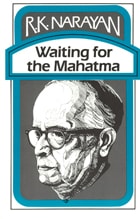
Waiting for Mahatma
R. K. Narayan
University of Chicago Press, 1955
"The experience of reading one of his novels is . . . comparable to one's first reaction to the great Russian novels: the fresh realization of the common humanity of all peoples, underlain by a simultaneous sense of strangeness—like one's own reflection seen in a green twilight."—Margaret Parton, New Herald Tribune Book Review
"The hardest of all things for a novelist to communicate is the extraordinary ordinariness of most human happiness. . . . Jane Austen, Soseki, Chekhov: a few bring it off. Narayan is one of them."—Francis King, Spectator
"The novels of R.K. Narayan are the best I have read in any language for a long time."—Amit Roy, Daily Telegraph
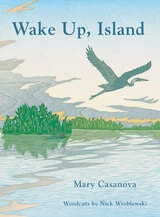
Wake Up, Island
Mary Casanova
University of Minnesota Press, 2016
Wake up, little one, a soft voice beckons, the world around you is already stirring. As Wake Up, Island gently rouses the sleepy child, it summons a world of nature coming to life on a summer island in the magical North Woods. Sunlit fingers touch the shores, pine trees stretch their limbs, and lichen warms on ancient rock. Doe and fawn rise from their grass bed and pearls of dew bead a spider’s finely woven web. Mallards skim the water’s surface. Ravens perch and gargle greetings, chickadees call dee, dee, dee, and a heron swoops—minnows flee! The moose and her calf wade, munching on plants. The red squirrel chatters. The black bear lazily scratches her back against a tree.
Conjuring the morning life around a cabin fragrant with berry pancakes, this timeless book wakens the child in every reader to the wonders of nature that greet every new day in the charmed world of a northern woodland island.
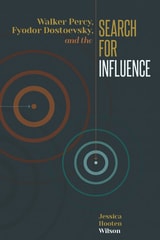
Walker Percy, Fyodor Dostoevsky, and the Search for Influence
Jessica Hooten Wilson
The Ohio State University Press, 2017
From Dostoevsky, Percy learned how to captivate his non-Christian readership with fiction saturated by a Christian vision of reality. Not only was his method of imitation in line with this Christian faith but also the aesthetic mode and very content of his narratives centered on his knowledge of Christ. The influence of Dostoevsky on Percy, then, becomes significant as a modern case study for showing the illusion of artistic autonomy and long-held, Romantic assumptions about artistic originality. Ultimately, Wilson suggests, only by studying the good that came before can one translate it in a new voice for the here and now.
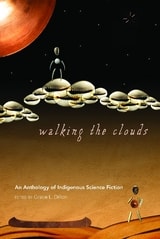
Walking the Clouds
An Anthology of Indigenous Science FictionEdited by Grace L. Dillon
University of Arizona Press, 2012
In this first-ever anthology of Indigenous science fiction Grace Dillon collects some of the finest examples of the craft with contributions by Native American, First Nations, Aboriginal Australian, and New Zealand Maori authors. The collection includes seminal authors such as Gerald Vizenor, historically important contributions often categorized as "magical realism" by authors like Leslie Marmon Silko and Sherman Alexie, and authors more recognizable to science fiction fans like William Sanders and Stephen Graham Jones. Dillon's engaging introduction situates the pieces in the larger context of science fiction and its conventions.
Organized by sub-genre, the book starts with Native slipstream, stories infused with time travel, alternate realities and alternative history like Vizenor's "Custer on the Slipstream." Next up are stories about contact with other beings featuring, among others, an excerpt from Gerry William's The Black Ship. Dillon includes stories that highlight Indigenous science like a piece from Archie Weller's Land of the Golden Clouds, asserting that one of the roles of Native science fiction is to disentangle that science from notions of "primitive" knowledge and myth. The fourth section calls out stories of apocalypse like William Sanders' "When This World Is All on Fire" and a piece from Zainab Amadahy's The Moons of Palmares. The anthology closes with examples of biskaabiiyang, or "returning to ourselves," bringing together stories like Eden Robinson's "Terminal Avenue" and a piece from Robert Sullivan's Star Waka.
An essential book for readers and students of both Native literature and science fiction, Walking the Clouds is an invaluable collection. It brings together not only great examples of Native science fiction from an internationally-known cast of authors, but Dillon's insightful scholarship sheds new light on the traditions of imagining an Indigenous future.
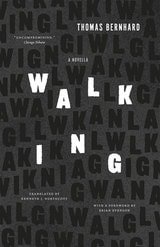
Walking
A NovellaThomas Bernhard
University of Chicago Press, 2003
Thomas Bernhard is “one of the masters of contemporary European fiction” (George Steiner); “one of the century’s most gifted writers” (Newsday); “a virtuoso of rancor and rage” (Bookforum). And although he is favorably compared with Franz Kafka, Samuel Beckett, and Robert Musil, it is only in recent years that he has gained a devoted cult following in America.
A powerful, compact novella, Walking provides a perfect introduction to the absurd, dark, and uncommonly comic world of Bernhard, showing a preoccupation with themes—illness and madness, isolation, tragic friendships—that would obsess Bernhard throughout his career. Walking records the conversations of the unnamed narrator and his friend Oehler while they walk, discussing anything that comes to mind but always circling back to their mutual friend Karrer, who has gone irrevocably mad. Perhaps the most overtly philosophical work in Bernhard’s highly philosophical oeuvre, Walking provides a penetrating meditation on the impossibility of truly thinking.
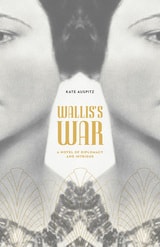
Wallis's War
A Novel of Diplomacy and IntrigueKate Auspitz
University of Chicago Press, 2015
The facts: reviled by the British as a social-climbing seductress even as Time magazine named her its 1936 Woman of the Year, Simpson was the American socialite whose affair with King Edward VIII led him to abdicate the throne on the eve of WWII. In this fanciful novel written in the form of a fictional memoir, Auspitz imagines an alternative history in which Simpson was encouraged by Allied statesmen to remove defeatist, pro-German Edward from the throne, forever altering the course of the war. A comically unreliable narrator who knows more than she realizes, and reveals more than she knows, Simpson leads us from historic treaties and military campaigns to dinner parties and cruises as she describes encounters with everyone from Duff and Diana Cooper to Charles Lindbergh, Coco Chanel, and Hitler—all the while acting as a willing but seemingly oblivious pawn of international intrigue.
A rare blend of diplomacy and dalliance, fashion and fascists, this meticulously researched satire offers witty and erudite entertainment and leaves us speculating: who really brought about the abdication and—always—what were they wearing?
Wandering Star
J.M.G. Le Clézio
Northwestern University Press, 2009
From the winner of the 2008 Nobel Prize for Literature, Wandering Star is the story of two young women, one uprooted by the Holocaust and the other by the founding of the state of Israel. Bearing witness to the boundless strength of the spirit, and based on his own experience as a child in World War II, J.M.G. Le Clézio chronicles the saga of a young girl, Esther, who, in a small mountain village north of Nice occupied by Italian forces, learns what it means to be Jewish in wartime Europe. A quiet young teenager, she suffers the loss of her beloved father and, with her mother, is forced to flee advancing German troops.
At war’s end, Esther and her mother make an arduous journey to Jerusalem, where their path crosses with a group of displaced refugees, including Nejma, a Palestinian girl whose story of life in the camps balances Esther’s own tale of suffering and survival. Esther and Nejma never meet again, but in their respective exiles, they are forever haunted by the memory of one another. Wandering Star is a powerful coming-of-age story and, as Le Figaro notes, truly “a luminous lesson in humanity.”
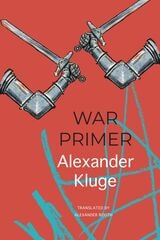
War Primer
Alexander Kluge
Seagull Books, 2024
“War is back again.” So begins Alexander Kluge’s latest book, prompted by a war of aggression that, though being waged in Europe, is of global importance. Blending simple stories with multimedia and reflecting on human responses and hope, the author does not aim to take sides nor make an appeal. Rather, he is concerned with what he calls “mole war,” the tenacious and often subterranean survival of war—what war makes of people and what life of its own it is capable of.
Kluge’s book is based on an iconic model, the primer, and named after a famous one: Bertolt Brecht’s. Here we find simple stories underpinned with montages, film stills, and sequences. The author was ten years old when—sitting at his school desk and with his finger on the map—he followed German tanks on their journey to Stalingrad. In the time between then and his ninety-first birthday in February 2023, this chronicler of emotions has studied the costumes of war again and again: War is mortal but does not die quickly. How can we respond to its demands?
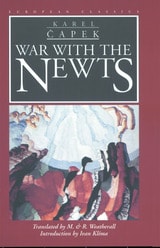
War with the Newts
Karel Capek
Northwestern University Press, 1996
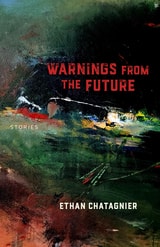
Warnings From the Future
StoriesEthan Chatagnier
Acre Books, 2018
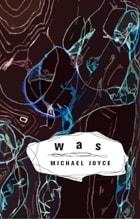
Was
Annales Nomadique: A Novel Of InternetMichael Joyce
University of Alabama Press, 2007
Was is half-poem, half-narrative, a nomadic history whose main character is the fleetingness of information itself. The novel’s title figure, the word was, marks that instant of utterance outside the present; neither past nor future but rather the interstitial space of any telling. Like Ariel in flight, Was takes place before you can say ‘come’ and ‘go,'" slipping away before you can "breath twice and cry ‘so, so."
The nomadic lovers here, as any lovers, attempt to linger in the afterglow of what was, but it slips away like mist. Story begets story as if without author, events gathering into one another, as much memory as dream, their locales literally moving across the face of the globe. Continent to continent, from hemisphere to hemisphere, synaptic episodes strobe across the earth’s surface like thunderstorms seen from a satellite. Yet in these brief flashes a memorable and deeply moving procession of characters passes in vignette: lovers and children, parents and refugees, sailors, missionaries, clowns, mourners, forlorn warriors, sweet singers.
Was is a brilliant new work by the author of afternoon, a story which the New York Times calls "the granddaddy of hypertext fictions"and the Toronto Globe and Mail describes as being "to the hypertext interactive novel what the Gutenberg bible is to publishing."
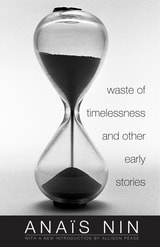
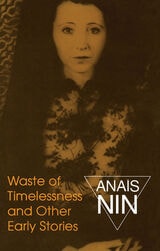
Waste of Timelessness and Other Early Stories
Anaïs Nin
Ohio University Press, 2017
Written when Anaïs Nin was in her twenties and living in France, the stories collected in Waste of Timelessness contain many elements familiar to those who know her later work as well as revelatory, early clues to themes developed in those more mature stories and novels. Seeded with details remembered from childhood and from life in Paris, the wistful tales portray artists, writers, strangers who meet in the night, and above all, women and their desires.
These experimental and deeply introspective missives lay out a central theme of Nin’s writing: the contrast between the public and private self. The stories are taut with unrealized sexual tension and articulate the ways that language and art can shape reality. Nin’s deft humor, ironic wit, and ecstatic prose display not only superb craftsmanship but also the author’s own constant balancing act between feeling and rationality, vulnerability and strength. Perhaps more than any other writer of the twentieth century, she mastered that act and wrote about it on her own terms, defying the literary and social norms of the time.
Waste of Timelessness and Other Early Stories
And Other Early StoriesAnaïs Nin
Ohio University Press, 1993
These stories precede all of Nin’s published work to date. In them are many sources of the more mature work that collectors and growing writers can appreciate.
Written when Anaïs Nin was in her twenties and living in Louveciennes, France, these stories contain many elements that will delight her readers: details remembered from childhood, of life in Paris, the cafés, theatres; characters including dancers, artists, writers, women who devote themselves to their work and visions as well as romance, strangers met in the night; themes such as the scruples of lovers, the search for brilliant, imaginative living; the writer’s experimentation with exotic words like “sybaritic” and “violaceous”. In the craft of these stories readers are treated to a deft sense of humor, ironic wit, much conversation as well as ecstatic prose, and surprise endings. Throughout all, the Nin personality shines, a wonderful mixture of feeling and rationality, of vulnerability and strength.
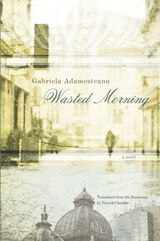
Wasted Morning
A NovelGabriela Adamesteanu
Northwestern University Press, 2011
She's a born storyteller, chatting and gossiping tirelessly. But she also listens, so it is through her that Adamesteanu is able to show us a panoramic portrait of Romanian society as the fortunes of its various strata shift violently. Rich or poor, honest (more or less) or deceitful, all of the characters in this polyphonic novel are brought vividly to life. From Bucharest's aspirations to be the Paris of Eastern Europe to the darkest days of dictatorship, the novel presents a sweeping vision of the personal and collective costs of a turbulent century.
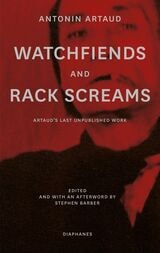
Watchfiends and Rack Screams
Artaud’s Last Unpublished WorkAntonin Artaud
Diaphanes, 2024
Antonin Artaud’s last large-scale work, published in its complete form in English for the first time.
Drawings on texts and letters dating from 1946, some of them written while he was still confined at the Rodez psychiatric hospital, Artaud devoted the months of November 1946 to February 1947 to completing his book through a long series of vocal improvisations titled Interjections, dictated at his pavilion on the edge of Paris. He cursed the assassins he believed were on their way there to steal his semen, to make his brain go “up in smoke as under the action of one of those machines created to suck up filth from the floor,” and finally to erase him. The publisher who had commissioned the book, Louis Broder, was horrified at reading its incandescent, fiercely obscene, and anti-religious manuscript and refused to publish it. Ambitious and experimental in scale, fragmentary and ferocious in intent, it was not published until 1978, in an edition prepared by Artaud’s close friend Paule Thévenin. Artaud commented that it was an “impossible” book, and that “nobody has ever read it from end to end, not even its own author.”
Clayton Eshleman, together with his translation collaborators such as David Rattray, began to work soon after 1978 on an English-language edition, with extracts appearing especially in Eshleman’s poetry magazine, Sulfur. This volume presents his translations with additional ones by Paul Buck, and Catherine Petit it in its complete form in English for the first time.
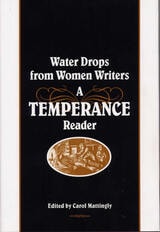
Water Drops from Women Writers
A Temperance ReaderEdited by Carol Mattingly
Southern Illinois University Press, 2001
The temperance movement was the largest single organizing force for women in American history, uniting and empowering women seeking to enact social change. By the end of the century, more than two hundred thousand women had become members of the Woman’s Christian Temperance Union (WCTU), and numerous others belonged to smaller temperance organizations. Despite the impact of the movement, its literature has been largely neglected.
In this collection of nineteen temperance tales, Carol Mattingly has recovered and revalued previously unavailable writing by women. Mattingly’s introduction provides a context for these stories, locating the pieces within the temperance movement as well as within larger issues in women’s studies.
The temperance movement was essential to women’s awareness of and efforts to change gender inequalities in the United States during the nineteenth and early twentieth centuries. In their fiction, temperance writers protested physical and emotional abuse at the hands of men, argued for women’s rights, addressed legal concerns, such as divorce and child custody, and denounced gender-biased decisions affecting the care and rights of children. Temperance fiction by women broadens our understanding of the connections between women’s rights and temperance, while shedding light on women’s thinking and behavior in the nineteenth century.
Water Drops from Women Writers features biographical sketches of each writer as well as thirteen illustrations.
Water Witches
Chris. Bohjalian
University Press of New England, 1995
Water's Edge
Writing on WaterEdited by Lenore Manderson and Forrest Gander
Northwestern University Press, 2023
A wide-ranging consideration of water’s plenitude and paucity—and of our relationship to its many forms
Water is quotidian, ubiquitous, precious, and precarious. With their roots in this element, the authors of Water’s Edge reflect on our natural environment: its forms, textures, and stewardship. Born from a colloquium organized by the editors at the Institute at Brown for Environment and Society, the anthology features a diverse group of writers and artists from half a dozen countries, from different fields of scholarship and practice: artists, biologists, geologists, poets, ecocritics, actors, and anthropologists. The contributors explore and celebrate water while reflecting on its disturbances and pollution, and their texts and art play with the boundaries by which we differentiate literary forms.
In the creative nonfiction, poetry, and visual art collected here, water moves from backdrop to subject. Ashley Dawson examines the effects of industrial farming on the health of local ecosystems and economies. Painter Kulvinder Kaur Dhew captures water’s brilliance and multifaceted reflections through a series of charcoal pieces that interlace the collection. Poet Arthur Sze describes the responsibility involved in the careful management of irrigation ditches in New Mexico. Rather than concentrating their thoughts into a singular, overwhelming argument, the authors circulate moments of apprehension, intimation, and felt experience. They are like tributaries, each carrying, in a distinctive style, exigent and often intimate reports concerning a substance upon which all living organisms depend.
Watercolor Women Opaque Men
A Novel in VerseAna Castillo, introduction by Carmen Tafolla
Northwestern University Press, 2017
In this updated edition of Ana Castillo’s celebrated novel in verse, featuring a new introduction by Poet Laureate of Texas Carmen Tafolla, we revisit the story’s spirited heroine, known only as “Ella” or “She,” as she takes us through her own epic journey of self-actualization as an artist and a woman. With a remarkable combination of tenderness, lyricism, wicked humor, and biting satire, Castillo dramatizes Ella’s struggle through poverty as a Chicano single mother at the threshold of the twenty-first century, fighting for upward mobility while trying to raise her son to be independent and self-sufficient. Urged on by the gods of the ancients, Ella’s life interweaves with those of others whose existences are often neglected, even denied, by society’s status quo. Castillo’s strong rhythmic voice and exploration of such issues as love, sexual orientation, and cultural identity will resonate with readers today as much as they did upon the book’s original publication more than ten years ago. This expanded edition also includes a short preface by the author, as well as a glossary, a reader’s guide, and a list of additional suggested readings.
Ways to Disappear
StoriesVictoria Lancelotta, Foreword by Cristina Rivera Garza
University of Alabama Press, 2023
Winner of FC2’s Catherine Doctorow Prize in Innovative Fiction
Some disappearances are chosen. Others are survived.
The stories in Victoria Lancelotta’s Ways to Disappear excavate the unexamined places between dread and desire, promise and threat, where the body is both prison and salvation. Populated by the grieving and the exultant and those who see no difference between the two, by men and women who are only a little bit broken and boys and girls who can’t wait to be, by souls untethered, rootless, yet bound by blood and flesh, Lancelotta’s characters are driven by the irresistible need to be a bigger part of the worlds they each inhabit, by turns strange and commonplace. In language lush and jagged, never sentimental, these stories scrutinize the exhaustion and enchantment of the everyday: houses seething with resentment and devotion, cars dream-full and hurtling the children in them into a world they think they know but can’t imagine; front porches, back yards, luxury hotels, and truck stops. Lancelotta understands that sometimes people check their wounds not to see if they’ve healed, but to be sure they’re still there.
We Are All Zimbabweans Now
James Kilgore
Ohio University Press, 2011

We Are Three Sisters
Self and Family in the Writing of the BrontësDrew Lamonica
University of Missouri Press, 2003
We Defy Augury
Hélène Cixous
Seagull Books, 2020
We Have Buried the Past
Abdelkrim Ghallab
Haus Publishing, 2018
Written after the country gained independence, the historical novel follows two generations of al-Tihamis, a well-to-do family residing in Fez’s ancient medina. The family members’ lives reflect the profound social changes taking place in Morocco during that time. Bridging two worlds, We Buried the Past begins during the quieter days of the late colonial period, a world of seemingly timeless tradition, in which the patriarch, al-Haj Muhammad, proudly presides over the family. Here, religion is unquestioned and permeates all aspects of daily life. But the coming upheaval and imminent social transition are reflected in al-Haj’s three sons, particularly his second son, Abderrahman, who eventually defies his father and comes to symbolize the break between the old ways and the new.
Noted for marrying classical Arabic style and European literary form, this book also offers insight into the life of Ghallab himself, who was deeply involved in the nationalist movement that led to Moroccan independence. A pioneering work, We Buried the Past beautifully characterizes an influential period in the history of Morocco.
We Were Lucky with the Rain (stories)
Susan Buttenwieser
Four Way Books, 2020
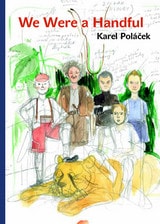
We Were a Handful
Karel Polácek
Karolinum Press, 2007
A favorite work of Czech humor, We Were a Handful depicts the adventures of five boys from a small Czech town through the diary of Petr Bajza, the grocer’s son. Written by Karel Poláček at the height of World War II before his deportation to Auschwitz in 1944, this book draws on the happier years of Poláček’s own childhood as inspiration. As we look upon the world through Petr’s eyes, we, too, marvel at the incomprehensible world of grownups; join in fights between gangs of neighborhood kids; and laugh at the charming language of boys, a major source of the book’s humor. This translation at last offers English-language readers the opportunity to share in Petr’s (and Poláček’s) childhood and reminds us that joy and laughter are possible even in the darkest times.
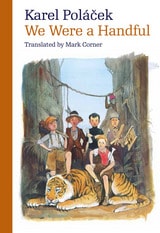
We Were a Handful
Karel Polácek
Karolinum Press, 2007
A favorite work of Czech humor, We Were a Handful depicts the adventures of five boys from a small Czech town through the diary of Petr Bajza, the grocer’s son. Written by Karel Poláček at the height of World War II before his deportation to Auschwitz in 1944, this book draws on the happier years of Poláček’s own childhood as inspiration. As we look upon the world through Petr’s eyes, we, too, marvel at the incomprehensible world of grownups; join in fights between gangs of neighborhood kids; and laugh at the charming language of boys, a major source of the book’s humor. This translation at last offers English-language readers the opportunity to share in Petr’s (and Poláček’s) childhood and reminds us that joy and laughter are possible even in the darkest times.
We-Narratives
Collective Storytelling in Contemporary FictionNatalya Bekhta
The Ohio State University Press, 2020
Natalya Bekhta’s We-Narratives: Collective Storytelling in Contemporary Fiction analyzes a storytelling form shaped by the pronoun “we,” probing the tensions between individuality and collectivity in more recent narratives in English. Despite a growing interest in collective characters and the we-form in narratology and beyond, narrative theory has not yet done justice to the plural voice in fiction. In fact, the formulation of a poetics of collective expression needs clear theoretical conventions and a reassessment of established concepts in order to approach plural voices and agents on their own terms. We-Narratives addresses this demand by distinguishing between indicative and performative uses of the first-person plural pronoun in fiction and by identifying formal and rhetorical possibilities of stories told by group narrators.
What does it mean for a multitude to speak as one? How can a truly collective narrative voice be achieved or lost? What are its aesthetic and political repercussions? In order to tackle these questions, Bekhta reads a range of contemporary novels and short stories by Jeffrey Eugenides, Joshua Ferris, Toby Litt, Zakes Mda, Joyce Carol Oates, and Julie Otsuka. She also focuses on narrative innovation by Margaret Atwood, William Faulkner, and Susan Sontag. These narratives feature group protagonists and narrators and therefore offer insight into collective narrative discourse and focalization, construction of communal knowledge and unreliability. We-narrative, taken as a distinct storytelling form, illuminates fiction’s expressive potential and nuances models of narrative analysis.
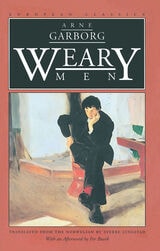
Weary Men
Arne Garborg, translated by Sverre Lyngstad, and afterword by Per Buvik
Northwestern University Press, 1999
Originally published in 1891, Weary Men introduces a bachelor nearly middle age named Gabriel Gram, who suffers an existential crisis, considers suicide, but finally finds solace in a religious conversion of questionnable sincerity. Garborg depicts Gram's Kristiania (present day Oslo) in fascinating detail as Gram divides his time between male friends and "new women," a new generation of Norwegian women embolded to walk freely with men in public but who continue to rebuff Gram's sexual advances.
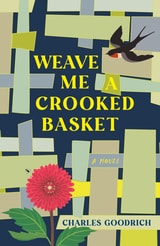
Weave Me a Crooked Basket
A NovelCharles Goodrich
University of Nevada Press, 2023
It’s the summer of 2008, and thirty-five-year-old Ursula Tunder, reeling from the breakup of a bad marriage, has abandoned her career as a botanist and moved home to the family farm to start a wholesale garden-plant greenhouse, and, perhaps more importantly, to care for her ailing father, Joe. Her younger brother, Bodie, now that a shoulder injury has ended his NFL career, comes home as well, to try his hand at organic farming. Their land at the edge of a prosperous college town is coveted by developers. Ursula wants to sell the farm to Camas Valley State University, which has promised to create a research facility on the land, but Bodie and his idealistic wife, Fleece, are committed to farming.
Enter Nu, Ursula and Bodie’s Vietnamese-American cousin by adoption, and an up-and-coming visual artist. When Nu gets arrested after a fight with a pair of dirt bikers, Joe persuades him to take refuge at the Tunder farm. Nu gets pressed into service helping Bodie with farm chores and taking care of Joe, so Ursula seizes the opportunity to get away from the farm, accepting a temporary job surveying native plants in the Cascades. But when Joe’s health plummets and Bodie’s finances crash, Ursula abandons her summer job to return home once again.
Facing bankruptcy, Ursula, Bodie, and Nu enlist a ragtag troupe of land-defenders in a festival of resistance in a last-ditch effort to save a way of life that may disappear forever.
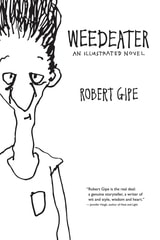
Weedeater
An Illustrated NovelRobert Gipe
Ohio University Press, 2018
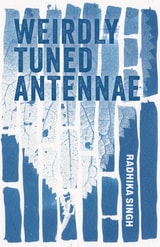
Weirdly Tuned Antennae
A NovelRadhika Singh
University of Alabama Press, 2026
WINNER OF THE SUKENICK INNOVATIVE FICTION PRIZE
A postimperialist future shaped by revolutionary struggle and healing, where plant-based technology reshapes sovereignty and intimacy
Weirdly Tuned Antennae is a coming-of-age adventure story that hums with sensory detail, political force, and the uncanny beauty of nature in a profoundly transformed world. This speculative tale traces one person’s attempt to explore how freedom is embodied, shared, and fought for, and how love can emerge from networks far older and stranger than the self.
Set in the monsoon-soaked Himalayan foothills in a near future, the story follows Navi on their quest to reconnect with their estranged mother, a freedom fighter in the ongoing battles for self-determination. Navi quickly gets entangled with a lineage of healer-witches who possess mastery over the spirit world and over the cell; a ubiquitous plant-based technology that channels energy and information, revolutionizing both political and bodily sovereignty. Navi’s journey is soon distracted by a mysterious lover driven by an interplanetary longing for home that mirrors Navi’s own search for belonging.
Rejecting the familiar arc of Western dystopia, Weirdly Tuned Antennae imagines a postimperialist future rooted in collective struggle, internationalism, and the liberation of human potential. Lush, moody, and deeply character-driven, it will resonate with readers who admire the speculative ethics of Octavia Butler and the quiet emotional force of Kazuo Ishiguro.
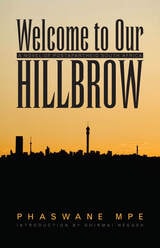
Welcome to Our Hillbrow
A Novel of Postapartheid South AfricaPhaswane Mpe
Ohio University Press, 2011
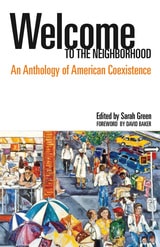
Welcome to the Neighborhood
An Anthology of American CoexistenceSarah Green
Ohio University Press, 2019
How to live with difference—not necessarily in peace, but with resilience, engagement, and a lack of vitriol—is a defining worry in America at this moment. The poets, fiction writers, and essayists (plus one graphic novelist) who contributed to Welcome to the Neighborhood don’t necessarily offer roadmaps to harmonious neighboring. Some of their narrators don’t even want to be neighbors. Maybe they grieve, or rage. Maybe they briefly find resolution or community. But they do approach the question of what it means to be neighbors, and how we should do it, with open minds and nuance.
The many diverse contributors give this collection a depth beyond easy answers. Their attentions to the theme of neighborliness as an ongoing evolution offer hope to readers: possible pathways for rediscovering community, even just by way of a shared wish for it. The result is an enormously rich resource for the classroom and for anyone interested in reflecting on what it means to be American today, and how place and community play a part.
Contributors include Leila Chatti, Rita Dove, Jonathan Escoffery, Rebecca Morgan Frank, Amina Gautier, Ross Gay, Mark Halliday, Joy Harjo, Edward Hirsch, Marie Howe, Sonya Larson, Dinty W. Moore, Robert Pinsky, Christine Schutt, and many more.
West African Folktales
Translated by Jack Berry, Edited and with an introduction by Richard Spears
Northwestern University Press, 1991
West-Eastern Divan
Complete, annotated new translation (bilingual edition)Johann Wolfgang von Goethe
Gingko, 2019
The West-Eastern Divan is one of the world’s great works of literature, an inspired masterpiece, and a poetic linking of European and Persian traditions. This new bilingual edition expertly presents the wit, intelligence, humor, and technical mastery of the poetry in Goethe’s Divan. In order to preserve the work’s original power, Eric Ormsby has created this translation in clear contemporary prose rather than in rhymed verse, which tends to obscure the works sharpness. This edition is also accompanied by explanatory notes of the verse in German and in English and a translation of Goethe’s own commentary, the “Notes and Essays for a Better Understanding of the West-Eastern Divan.” This edition not only bring this classic collection to English-language readers, but also, at a time of renewed Western unease about the other, to open up the rich cultural world of Islam.
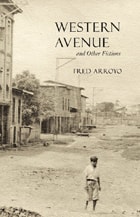
Western Avenue and Other Fictions
Fred Arroyo
University of Arizona Press, 2012
In these engaging and often gripping short stories, Fred Arroyo takes us into the lives of working-class Hispanic migrants and immigrants, who are often invisible while they work in plain sight across America. As characters intertwine and evolve across stories, Arroyo creates a larger narrative that dramatizes the choices we make to create identity, make meaning, and deal with hardships and loss. His stories are linked by a concern with borders, both real and imagined, and the power that memory and imagination have to shape and structure our lives.
Through his characters and their true-to-life situations, Arroyo makes visible both internal and external conflicts that are deeply rooted in—and affected by—place. A bodega, a university town, a factory, a Chicago street, some dusty potato fields: here is where we encounter ordinary people who work, dream, love, and persist in the face of violence, bereavement, disappointment, and loss—particularly the loss of mothers, fathers, and loved ones.
Arroyo's characters experience a strange wonder as the midwestern United States increasingly appears to be a place created by the Latinas and Latinos who remain out of the sight and minds of Anglos. In lyrical language weighted by detail, exquisite imagery, and evocative story, Arroyo imagines characters who confront the tattered connections between memory and longing, generations and geographies, place and displacement, as they begin to feel their own longings, "breathing in whatever was offered, feeling, deep in the small and fragile borders of my heart," as one character puts it, "that it came with a sorrow I could never betray."
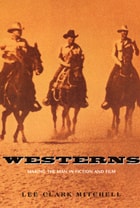
Westerns
Making the Man in Fiction and FilmLee Clark Mitchell
University of Chicago Press, 1996
Few genres are so closely identified with America as the Western. In this wide-ranging examination of the Western and its appeal, Lee Clark Mitchell ranges from the novels of James Fenimore Cooper to Louis L'Amour, and from classic films like Stagecoach to spaghetti Westerns like A Fistful of Dollar to show how Westerns helped assuage a series of crises in American culture. This landmark book shows that the Western owes its perennial appeal not to unchanging conventions but to the deftness with which it responds to the obsessions and fears of its audience. And no obsession, Lee Mitchell argues, has figured more prominently in the Western than what it means to be a man.
Wet Places at Noon
Abbott, Lee K.
University of Iowa Press, 1997
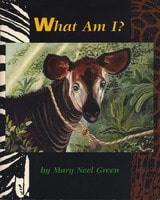
What Am I?
By Mary Neel Green
University of Texas Press, 1999
In the dense, shady rain forest, it's easy for a little guy to get lost from his mother. When a young okapi wanders away from his mom, he discovers the world of people and learns that he is a very special animal, different from all the rest. But still he misses his mother and their home in the forest. How can he get back?
This heartwarming tale with a happy ending introduces children from ages three to eight to the okapi, a graceful, elusive animal native to the Ituri Forest of Congo-Zaire. Based on the true story of an okapi calf that escaped from captivity, it is sure to delight young animal lovers, while teaching them basic facts about the family life of the okapi. A brief afterword provides more information for parents and older children.

What Are You Afraid Of?
Michael Hyde
University of North Texas Press, 2005
What Begins with Bird
FictionsFlournoy Holland
University of Alabama Press, 2005

What Could Be Saved
Bookmatched Novellas & StoriesGregory Spatz
Tupelo Press, 2019
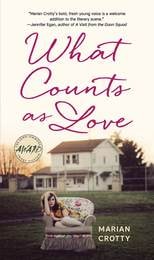
What Counts as Love
Marian Crotty
University of Iowa Press, 2017
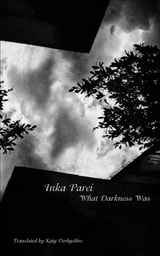
What Darkness Was
Inka Parei
Seagull Books, 2013
Combining tight prose with a compulsive delight in detail, Parei’s second novel in English presents a dynamic portrait of the West German soul from World War II through the German Autumn of 1977.
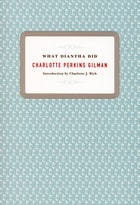
What Diantha Did
Charlotte Perkins Gilman
Duke University Press, 2005
In her introduction to the novel, Charlotte J. Rich highlights Gilman’s engagement with such hotly debated Progressive Era issues as the “servant question,” the rise of domestic science, and middle-class efforts to protect and aid the working girl. She illuminates the novel’s connections to Gilman’s other feminist works, including “The Yellow Wall-Paper” and Herland; to her personal life; and to her commitment to women’s social and economic freedom. Rich contends that the novel’s engagement with class and race makes it particularly significant to the newly complex understanding of Gilman that has emerged in recent scholarship. What Diantha Did provides essential insight into Charlotte Perkins Gilman’s important legacy of social thought.