Results by title
1441 books match the query 'Great Britain' and 44 start with w
Wainewright the Poisoner
The Confessions of Thomas Griffiths WainewrightAndrew Motion
University of Chicago Press, 2001
"Thomas Griffiths Wainewright is a dream subject for either novelist or biographer. . . . Andrew Motion, Britain's poet laureate, clearly felt that neither straight biography nor pure fiction would do Wainewright's complexities justice, and so he combined the two genres. The result is stunning. The central voice is that of Wainewright himself, reflecting back on his life. After each chapter Mr. Motion has added detailed notes that inform and flesh out the narrative, giving not only his own informed opinion of Wainewright's actions but also those of Wainewright's contemporaries and the scholars and writers who have studied him over the past two centuries."—Lucy Moore, Washington Times
"Brilliantly innovative, gripping, intricately researched, Motion's biography does justice to its subject at last."—John Carey, The Sunday Times
"Engaging and convincing. . . . The trajectory of this character-from neglected and resentful child to arrogant and envious London dandy to sociopathic murderer on to an enfeebled, frightened prisoner-is indelibly imagined and drawn."—Edmund White, Financial Times
"[A] fascinating look at an evil artist, a charmer still having his way with us. We can hear him being economical with the truth, telling us and himself just what he wants to hear."—Michael Olmert, New Jersey Star Ledger
"Motion crafts a fascinating tale as complex and compelling as if Wainewright himself had written it."—Michael Spinella, Booklist
"Did he kill his servant, and possibly others as well? . . . The footnotes seem to say yes, but Wainewright adamantly argues his own case. Motion's prose is flawless, and Wainewright's voice is convincing. But in the long run, it's this ambiguity that makes Wainewright the Poisoner a fascinating and memorable read."—R.V. Schelde, Sacramento News and Review
"Who could as for a better Romantic villain than Thomas Griffiths Wainewright? . . . [The book] succeeds on many levels: as an act of ventriloquism, a work of scholarship, a psychological study, as a set of sharp portraits of famous men and an engrossing read. . . ."—Polly Shulman, Newsday
"Instead of a straightforward biography, Andrew Motion gives us Wainewright's first person, fictionalized "confession."—a document as circumspect, slyly reticent, and oeaginously smooth as the man himself. Splendid."—John Banville, Literary Review
"A genuine tour de force, and on a non-fictional level, a telling portrait of a strange, intriguing and repellant man."—Brian Fallon, Irish Times
"A marvelous literary hybrid that totters with one foot in the world of nonfiction, the other in the land of make-believe. One is alternatively swept up in Motion's dizzy imaginative pastiche, or sent crashing into a dusty stack of scholarly cogitations. . . ."—Philadelphia Inquirer
"As true a portrait of a liar as its subject could wish. Rich and strange. . . ."—Glasgow Herald
Walking Pepys's London
Jacky Colliss Harvey
Haus Publishing, 2022
Samuel Pepys, the seventeenth century's best-known diarist, walked around London for miles, chronicling these walks in his diary. He made the two-and-a-half-mile trek to Whitehall from his house near the Tower of London on an almost daily basis. These streets, where many of his professional conversations took place while walking, became for him an alternative to his office.
With Walking Pepys’s London, we come to know life in London from the pavement up and see its streets from the perspective of this renowned diarist. The city was a key character in Pepys’s life, and this book draws parallels between his experience of seventeenth-century London and the lives of Londoners today. Bringing together geography, biography, and history, Jacky Colliss Harvey reconstructs the sensory and emotional experience of Pepys’s time. Full of fascinating details, Walking Pepys’s London is a sensitive exploration into the places that made the greatest English diarist of all time.
Walking the Gendered Tightrope
Theresa May and Nancy Pelosi as Legislative LeadersMelissa Haussman and Karen M. Kedrowski
University of Michigan Press, 2023
Wallis's War
A Novel of Diplomacy and IntrigueKate Auspitz
University of Chicago Press, 2015
The facts: reviled by the British as a social-climbing seductress even as Time magazine named her its 1936 Woman of the Year, Simpson was the American socialite whose affair with King Edward VIII led him to abdicate the throne on the eve of WWII. In this fanciful novel written in the form of a fictional memoir, Auspitz imagines an alternative history in which Simpson was encouraged by Allied statesmen to remove defeatist, pro-German Edward from the throne, forever altering the course of the war. A comically unreliable narrator who knows more than she realizes, and reveals more than she knows, Simpson leads us from historic treaties and military campaigns to dinner parties and cruises as she describes encounters with everyone from Duff and Diana Cooper to Charles Lindbergh, Coco Chanel, and Hitler—all the while acting as a willing but seemingly oblivious pawn of international intrigue.
A rare blend of diplomacy and dalliance, fashion and fascists, this meticulously researched satire offers witty and erudite entertainment and leaves us speculating: who really brought about the abdication and—always—what were they wearing?
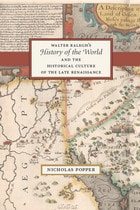
Walter Ralegh's "History of the World" and the Historical Culture of the Late Renaissance
Nicholas Popper
University of Chicago Press, 2012
Nicholas Popper uses Ralegh’s History as a touchstone in this lively exploration of the culture of history writing and historical thinking in the late Renaissance. From Popper we learn why early modern Europeans ascribed heightened value to the study of the past and how scholars and statesmen began to see historical expertise as not just a foundation for political practice and theory, but as a means of advancing their power in the courts and councils of contemporary Europe. The rise of historical scholarship during this period encouraged the circulation of its methods to other disciplines, transforming Europe’s intellectual—and political—regimes. More than a mere study of Ralegh’s History of the World, Popper’s book reveals how the methods that historians devised to illuminate the past structured the dynamics of early modernity in Europe and England.

Waterscapes
Reservoirs, Environment and Identity in Modern England and WalesAndrew McTominey
University of London Press, 2025
Carving vast lakes into the countryside, reservoirs have long reshaped the landscapes and communities of England and Wales. Waterscapes evaluates how these feats of engineering transformed rural and urban environments between the late nineteenth and early twentieth centuries, altering local ecologies and economies. Through studies of Leeds’s Washburn Valley, Liverpool’s Vyrnwy Reservoir, and Birmingham’s Elan Reservoir, Andrew McTominey addresses the environmental consequences of dam construction and the surprising ways in which reservoirs became sites of leisure and tourism.
McTominey explains that water management has never been a simple question of supply and demand, but a story of contested landscapes and the complex interplay between nature and human ambition. Drawing on environmental history and urban studies, Waterscapes demystifies the reservoirs that continue to shape Britain’s countryside and city life.
Welfare Reform and Political Theory
Lawrence M. Mead
Russell Sage Foundation, 2005
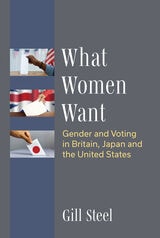
What Women Want
Gender and Voting in Britain, Japan and the United StatesGill Steel
University of Michigan Press, 2022
What Women Want analyzes decades of voting preferences, values, and policy preferences to debunk some of the media and academic myths about gender gaps in voting and policy preferences. Findings show that no single theory explains when differences in women’s and men’s voting preferences emerge, when they do not, or when changes—or the lack thereof—occur over time. Steel extends existing theories to create a broader framework for thinking about gender and voting behavior to provide more analytical purchase in understanding gender and its varying effects on individual voters’ preferences. She incorporates the long-term effects of party identification and class politics on political decision-making, particularly in how they influence preferences on social provision and on expectations of the state. She also points to the importance of symbolic politics

What is to Be Done About Law and Order?
Crisis in the NinetiesJohn Lea and Jock Young
Pluto Press, 1993
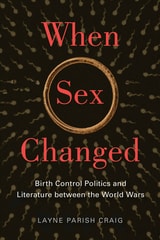
When Sex Changed
Birth Control Politics and Literature between the World WarsLayne Parish Craig
Rutgers University Press, 2013
In When Sex Changed, Layne Parish Craig analyzes the ways literary texts responded to the political, economic, sexual, and social values put forward by the birth control movements of the 1910s to the 1930s in the United States and Great Britain.
Discussion of contraception and related topics (including feminism, religion, and eugenics) changed the way that writers depicted women, marriage, and family life. Tracing this shift, Craig compares disparate responses to the birth control controversy, from early skepticism by mainstream feminists, reflected in Charlotte Perkins Gilman’s Herland, to concern about the movement’s race and class implications suggested in Nella Larsen’s Quicksand, to enthusiastic speculation about contraception’s political implications, as in Virginia Woolf’s Three Guineas.
While these texts emphasized birth control’s potential to transform marriage and family life and emancipate women from the “slavery” of constant childbearing, birth control advocates also used less-than-liberatory language that excluded the poor, the mentally ill, non-whites, and others. Ultimately, Craig argues, the debates that began in these early political and literary texts—texts that document both the birth control movement’s idealism and its exclusionary rhetoric—helped shape the complex legacy of family planning and women’s rights with which the United States and the United Kingdom still struggle.
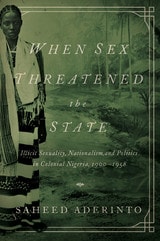
When Sex Threatened the State
Illicit Sexuality, Nationalism, and Politics in Colonial Nigeria, 1900-1958Saheed Aderinto
University of Illinois Press, 2015
As Saheed Aderinto shows, British colonizers saw prostitution as an African form of sexual primitivity and a problem to be solved as part of imperialism's "civilizing mission". He details the Nigerian response to imported sexuality laws and the contradictory ways both African and British reformers advocated for prohibition or regulation of prostitution. Tracing the tensions within diverse groups of colonizers and the colonized, he reveals how wrangling over prostitution camouflaged the negotiating of separate issues that threatened the social, political, and sexual ideologies of Africans and Europeans alike.
The first book-length project on sexuality in early twentieth century Nigeria, When Sex Threatened the State combines the study of a colonial demimonde with an urban history of Lagos and a look at government policy to reappraise the history of Nigerian public life.
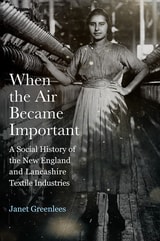
When the Air Became Important
A Social History of the New England and Lancashire Textile IndustriesJanet Greenlees
Rutgers University Press, 2019
Who Paid for Modernism?
Art, Money, and the Fiction of Conrad, Joyce and LawrenceJoyce Piell Wexler
University of Arkansas Press, 1997
Who is Buried in Chaucer's Tomb?
Studies in the Reception of Chaucer's BookJoseph A. Dane
Michigan State University Press, 1998
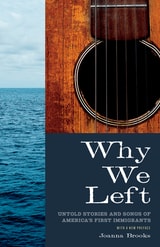
Why We Left
Untold Stories and Songs of America's First ImmigrantsJoanna Brooks
University of Minnesota Press, 2024
A grounded, tender, and mournful reckoning with the catastrophes that launched poor, white Anglos into their role as itinerant foot soldiers for modern imperialism—now in paperback with a new preface
Joanna Brooks’s ancestors were among the early waves of emigrants to leave England for North America. For generations, they lived hardscrabble lives, eking out subsistence in one place after another as they continually moved west in search of a better life. Why, Brooks wondered, did her people and countless other poor English subjects abandon their homeland for such unremitting hardship? The question leads her on a journey through an obscure dimension of American history.
Why We Left reveals the violence and dislocation that propelled seventeenth- and eighteenth-century working-class English emigration, presenting a powerful restorying of how we arrived at our present moment of precarity and rootlessness. Following American folk ballads back across the Atlantic to find histories of economic displacement, environmental destruction, and social betrayal at the heart of the early Anglo-American migrant experience, Brooks offers a scholarly and personal account of the intergenerational traumas that shape the history of white Anglos on Turtle Island.
She shares folk ballads such as “Edward,” which reveals the influence of deforestation on the dislocation of early Anglo-American peasant immigrants, and “The House Carpenter’s Wife,” which emphasizes the impact of economic instability and the colonial enterprise on women. From these ballads, tragic and heartrending, Brooks uncovers an archaeology of the worldviews of America’s earliest immigrants. This tenth-anniversary edition includes a new preface and develops a haunting historical perspective on the ancestors we thought we knew.
Wicked Intelligence
Visual Art and the Science of Experiment in Restoration LondonMatthew C. Hunter
University of Chicago Press, 2013
William Blake and the Impossible History of the 1790s
Saree Makdisi
University of Chicago Press, 2003
William Godwin
A Political LifeRichard Gough Thomas
Pluto Press, 2019
William Godwin was the first major anarchist thinker in the Anglophone world, and his thought rocked the establishment at the beginning of the nineteenth century. Famously married to Mary Wollstonecraft, father to Mary Shelley, and inspiration to Lord Byron, he lived a life and created a body of work that lie at the heart of British radicalism and romanticism.
In this biography, Richard Gough Thomas reads Godwin afresh, drawing on newly discovered letters and journals. He situates Godwin’s early life in the counterculture of eighteenth-century religious dissent, before moving on to exploring the ideas of the French Revolution. As Godwin's groundbreaking works propelled him from Whig party hack to celebrity philosopher, his love affair with Mary Wollstonecraft saw him ostracized in both liberal and conservative circles.
Godwin's anarchism always remained at the center of his work, Thomas shows, inspiring libertarians, both left- and right-wing. This biography places Godwin alongside the other members of his famous family as a major political, ethical, and educational writer and shows why a reappraisal of his ideas is pertinent today.
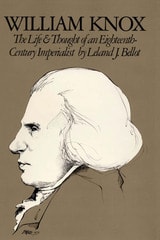
William Knox
The Life and Thought of an Eighteenth-Century ImperialistBy Leland J. Bellot
University of Texas Press, 1977
Colonial expert and pamphleteer William Knox has received attention in virtually every major study of the American Revolution, yet this is the first biography of Knox ever written.
Knox is best known as undersecretary of state in the American Department of the British government from 1770 to 1782. A prolific and candid commentator, he also made a reputation as a pamphleteer, defending the imperial cause during the decade preceding the Revolution. It had been his experience as provost marshal in Georgia from 1757 to 1762 that convinced Knox of the danger to the empire of the growing "democratic" forces in the American colonies.
While numerous historical works have focused on this or that aspect of Knox's career and thought, such treatment has produced at best a jigsaw portrait. Bellot's comprehensive narrative reveals Knox as a person—one whose Calvinist heritage and Scots-Irish upbringing profoundly influenced his view of empire—and as a historical actor and witness. Here is a look at the events of the revolutionary period through the eyes of a British bureaucrat who had a significant role in both the formation and the execution of British policy. This perspective also provides an excellent case study of the operation of the eighteenth-century British bureaucracy.
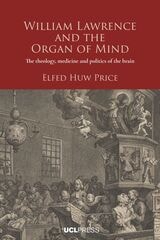
William Lawrence and the Organ of Mind
The Theology, Medicine and Politics of the BrainElfed Huw Price
University College London, 2025
Elfed Huw Price studies the radical history behind the idea that thought and consciousness are rooted in the brain, tracing its emergence in early nineteenth-century Britain. Centered on the controversy surrounding Lawrence’s Lectures on Physiology, Zoology, and the Natural History of Man, this book reveals how his arguments on the sentient brain challenged both medical tradition and religious orthodoxy, provoking backlash from the establishment.
Drawing on archival sources including unpublished material from Bethlem Hospital, Price situates Lawrence’s work within the rise of Christian mortalist thought and the broader shift toward Victorian naturalism. Despite Lawrence’s silencing, his ideas endured, shaping a transformation that redefined human exceptionality through biology rather than theology.
Bridging science, medicine, philosophy, and religion, William Lawrence and the Organ of Mind illuminates a pivotal yet overlooked moment in the history of mind and brain studies, offering fresh insights into the intellectual struggles that helped reshape modern thought.
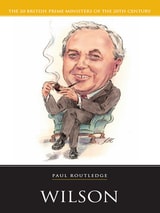
Wilson
Paul Routledge
Haus Publishing, 2006
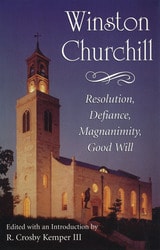
Winston Churchill
Resolution, Defiance, Magnanimity, Good WillEdited by R. Crosby Kemper III
University of Missouri Press, 1995
In 1946 Winston Churchill shook the world with his famous "Iron Curtain" speech on the campus of Westminster College in Fulton, Missouri, now the site of the Winston Churchill Memorial and Library. Inscribed on the pediment of his statue at the memorial is the epigraph from Churchill's History of the Second World War:
In War: Resolution
In Defeat: DefianceIn Victory: MagnanimityIn Peace: Good WillNo other words provide so poignant a summary of the principles that sustained Churchill's life's work.
Under the auspices of the Winston Churchill Memorial and Library, the Crosby Kemper Lectureship was established in 1979 by the Enid and Crosby Kemper Foundation of Kansas City, Missouri. Lectures have been delivered annually, or biennially, at the Winston Churchill Memorial and Library on the campus of Westminster College by authorities on British history and on Sir Winston Churchill. The essays included in this volume constitute the first dozen Crosby Kemper lectures, most by individuals who were personally acquainted with Churchill and all by individuals who had studied his life and his work.
Lord Robert Blake discusses Churchill's ambivalence toward the Conservative party during his political career. Philip S. Ziegler, Earl Mountbatten's biographer, examines whether Britain should have granted independence to India in 1947, taking as his departure Churchill's unequivocal belief that Britain's imperial rule there was a sacred trust not to be betrayed. Martin Gilbert, Churchill's biographer, carefully examines the origins of the Cold War and the famous Iron Curtain speech. Sir Michael Howard, Lovett Professor and Naval Historian at Yale University, further examines Churchill's role during the Cold War and the formulation of his "two-track" strategy that pushed for military strength while persistently striving for peace with the Soviets. Sir John Colville, Churchill's private secretary, ponders the extent to which great men are made by circumstances, citing Churchill's peccadilloes and strengths. Churchill's daughter Mary Soames and granddaughter, the sculptor Edwina Sandys, also give moving portraits of a much-loved family man.
All bring this illustrious leader to life in the process of interpreting his political actions, reviewing his historical contributions, and sharing anecdotes about his personal life.

Wireless
The Crucial Decade: History of the British wireless industry 1924-34Gordon Bussey
The Institution of Engineering and Technology, 1990
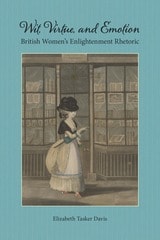
Wit, Virtue, and Emotion
British Women's Enlightenment RhetoricElizabeth Tasker Davis
Southern Illinois University Press, 2022
Women’s persuasion and performance in the Age of Enlightenment
Over a century before first-wave feminism, British women’s Enlightenment rhetoric prefigured nineteenth-century feminist arguments for gender equality, women’s civil rights, professional opportunities, and standardized education. Author Elizabeth Tasker Davis rereads accepted histories of seventeenth- and eighteenth-century British rhetoric, claiming a greater variety and power of women’s rhetoric. This recovery of British women’s performative and written roles as speakers, spectators, authors, and readers in diverse venues counters the traditional masculine model of European Enlightenment rhetoric. Davis broadens women’s Enlightenment rhetorics to include highly public venues such as theaters, clubs, salons, and debating societies, as well as the mediated sites of the periodical essay, the treatise on rhetorical theory, and women’s written proposals, plans, defenses and arguments for education. Through these sites, women’s rhetorical postures diverged from patriarchal prescriptions rather to deliver protofeminist persuasive performances of wit, virtue, and emotion.
Davis examines context, the effects of memory and gendering, and the cultural sites and media of women’s rhetoric to reveal a fuller ecology of British Enlightenment rhetoric. Each chapter covers a cultural site of women’s rhetorical practice—the court, the stage, the salon, and the printed page. Applying feminist rhetorical theory, Davis documents how women grasped their rhetorical ability in this historical moment and staged a large-scale transformation of British women from subalterns to a vocal counterpublic in British society.
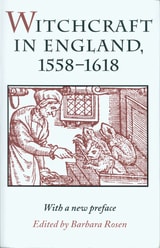
Witchcraft in England, 1558-1618
Barbara Rosen
University of Massachusetts Press, 1991
Anyone interested in manifestations of witchcraft in Elizabethan and Jacobean England will find this book an invaluable source. Barbara Rosen has gathered and edited a rare collection of documents—pamphlets, reports, trial accounts, and other material—that describes the experience, interpretation, and punishment of witchcraft in the late sixteenth and early seventeenth centuries.
In her introduction, Rosen explores the full range of practices and beliefs associated with witchcraft and situates these phenomena in historical context. She explains how ignorance of science and medicine combined with social circumstance and religious ideology to shape popular perceptions and superstitions. Distinguishing between English and Continental forms of witchcraft, she also examines the legal definitions, disciplines, and punishments applied to wizards, witches, wise women, and conjures in the Elizabethan age.
The pamphlets and other original texts have been modernized in certain respects to make them more accessible to general readers. But the book retains its value for scholars: omissions are detailed in the notes and additions marked; obsolete words and grammar are explained in the glossary.
Originally published in England in 1970 under the title Witchcraft, this book appears now for the first time in paperback and includes a new preface by the editor.
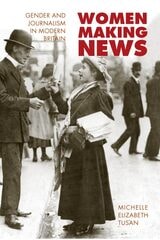
Women Making News
Gender and Journalism in Modern BritainMichelle Elizabeth Tusan
University of Illinois Press, 2005
Michelle Tusan tells two stories. First, she examines alternative print-based political cultures that women developed during the late nineteenth and early twentieth centuries. Second, she explores how British female subjects forged a wide range of new political identities through the pages of "their press." Tusan employs social and cultural historical analysis in the reading of popular printed texts, as well as rare and previously unpublished personal correspondence and business records from archives throughout Britain.
Insightful and filled with fascinating detail, Women Making News uncovers how the relationship between print culture and gender politics provided a vehicle for women's mobilization in the political culture of modern Britain.
Women and Comedy
Rewriting the British Theatrical TraditionSusan Carlson
University of Michigan Press, 1991
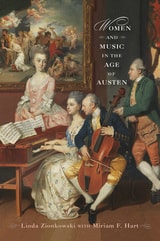
Women and Music in the Age of Austen
Linda Zionkowski
Bucknell University Press, 2024
Published by Bucknell University Press. Distributed worldwide by Rutgers University Press.
Women and the Law
Susan Atkins and Brenda Hoggett
University of London Press, 2018
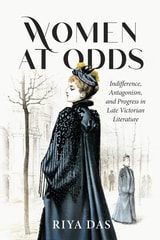
Women at Odds
Indifference, Antagonism, and Progress in Late Victorian LiteratureRiya Das
The Ohio State University Press, 2024
In Women at Odds, Riya Das demonstrates the limitations of female solidarity for the New Woman in Victorian society. On the one hand, feminist antagonism disrupts the status quo in unanticipated ways, and it helps open new domestic and professional pathways for women. On the other hand, the urban professional New Woman’s rhetoric recycles distinctly sexist, racist, and classist conventions, thereby bringing middle-class Englishwomen dialectically—what Das terms “retro-progressively”—into the labor pool of the British empire.
While foregrounding the figure of the New Woman as a white imperialist reformer, Das illustrates how the New Woman movement detaches itself from the domestic politics of female friendship. In works by George Eliot, George Gissing, Olive Schreiner, Bram Stoker, and others, antagonism and indifference enable the fin de siècle New Woman to transcend traditionally defined roles and fashion social progress for herself at the expense of femininities she excludes as “other.” By contesting the critical notion of solidarity as the only force that brings Victorian women’s narratives to fruition, Women at Odds reveals the troubled but effective role of antagonistic and indifferent reformist politics in loosening rigid social structures for privileged populations.
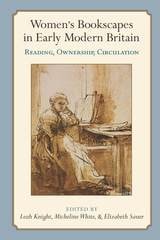
Women’s Bookscapes in Early Modern Britain
Reading, Ownership, CirculationLeah Knight, Micheline White, and Elizabeth Sauer, Editors
University of Michigan Press, 2018
Women in 16th- and 17th-century Britain read, annotated, circulated, inventoried, cherished, criticized, prescribed, and proscribed books in various historically distinctive ways. Yet, unlike that of their male counterparts, the study of women’s reading practices and book ownership has been an elusive and largely overlooked field.
In thirteen probing essays, Women’s Bookscapesin Early Modern Britain brings together the work of internationally renowned scholars investigating key questions about early modern British women’s figurative, material, and cultural relationships with books. What constitutes evidence of women’s readerly engagement? How did women use books to achieve personal, political, religious, literary, economic, social, familial, or communal goals? How does new evidence of women’s libraries and book usage challenge received ideas about gender in relation to knowledge, education, confessional affiliations, family ties, and sociability? How do digital tools offer new possibilities for the recovery of information on early modern women readers?
The volume’s three-part structure highlights case studies of individual readers and their libraries; analyses of readers and readership in the context of their interpretive communities; and new types of scholarly evidence—lists of confiscated books and convent rules, for example—as well as new methodologies and technologies for ongoing research. These essays dismantle binaries of private and public; reading and writing; female and male literary engagement and production; and ownership and authorship.
Interdisciplinary, timely, cohesive, and concise, this collection’s fresh, revisionary approaches represent substantial contributions to scholarship in early modern material culture; book history and print culture; women’s literary and cultural history; library studies; and reading and collecting practices more generally.
Wonderful Things from 400 Years of Collecting
The Bodleian Library 1602-2002Edited by the Bodleian Library
Bodleian Library Publishing, 2002
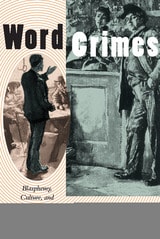
Word Crimes
Blasphemy, Culture, and Literature in Nineteenth-Century EnglandJoss Marsh
University of Chicago Press, 1998
From extensive archival and literary research, Joss Marsh reconstructs a unified and particular account of blasphemy in Victorian England. Rewriting English history from the bottom up, she tells the forgotten stories of more than two hundred working-class "blasphemers," like Foote, whose stubborn refusal to silence their "hooligan" voices helped secure our rights to speak and write freely today. The new standards of criminality used to judge their "word crimes" rewrote the terms of literary judgment, demoting the Bible to literary masterpiece and raising Literature as the primary standard of Victorian cultural value.

Wordsworth and the Green Romantics
Affect and Ecology in the Nineteenth CenturyLisa Ottum
University of New Hampshire Press, 2016
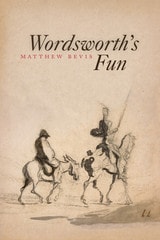
Wordsworth's Fun
Matthew Bevis
University of Chicago Press, 2019
Wordsworth’s Fun explores the writer’s debts to the ludic and the ludicrous in classical tradition; his reworkings of Ariosto, Erasmus, and Cervantes; his engagement with forms of English poetic humor; and his love of comic prose. Combining close reading with cultural analysis, Bevis travels many untrodden ways, studying Wordsworth’s interest in laughing gas, pantomime, the figure of the fool, and the value of play. Intrepid, immersive, and entertaining, Wordsworth’s Fun sheds fresh light on how one poet’s strange humor helped to shape modern literary experiment.
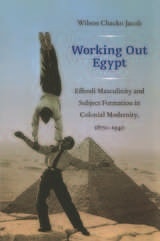
Working Out Egypt
Effendi Masculinity and Subject Formation in Colonial Modernity, 1870–1940Wilson Chacko Jacob
Duke University Press, 2011

World Film Locations
LiverpoolEdited by Jez Conolly and Caroline Whelan
Intellect Books, 2013
World Film Locations
LondonEdited by Neil Mitchell
Intellect Books, 2011
An exciting and visually focused tour of the diverse range of films shot on location in London, World Film Locations: London presents contributions spanning the Victorian era, the swinging ’60s, and the politically charged atmosphere following the 2005 subway bombings. Essays exploring key directors, themes, and historical periods are complemented by reviews of important scenes that offer particular insight into London's relationship to cinema. The book is illustrated throughout with full-color film stills and photographs of cinematic landmarks as they appear now—as well as city maps to aid those keen to investigate them.
From Terror on the Underground to Thames Tales to Richard Curtis's affectionate portrayal of the city in Love Actually, this user-friendly guide explores the diversity and distinctiveness of films shot in location in London.
Worthy of Freedom
Indenture and Free Labor in the Era of EmancipationJonathan Connolly
University of Chicago Press, 2024
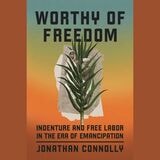
In this book, historian Jonathan Connolly traces the normalization of indenture from its controversial beginnings to its widespread adoption across the British Empire during the nineteenth century. Initially viewed as a covert revival of slavery, indenture caused a scandal in Britain and India. But over time, economic conflict in the colonies altered public perceptions of indenture, now increasingly viewed as a legitimate form of free labor and a means of preserving the promise of abolition. Connolly explains how the large-scale, state-sponsored migration of Indian subjects to work on sugar plantations across Mauritius, British Guiana, and Trinidad transformed both the notion of post-slavery free labor and the political economy of emancipation.
Excavating legal and public debates and tracing practical applications of the law, Connolly carefully reconstructs how the categories of free and unfree labor were made and remade to suit the interests of capital and empire, showing that emancipation was not simply a triumphal event but, rather, a deeply contested process. In so doing, he advances an original interpretation of how indenture changed the meaning of “freedom” in a post-abolition world.
Worthy of Freedom
Indenture and Free Labor in the Era of EmancipationJonathan Connolly
University of Chicago Press, 2024
A study of Indian indentured labor in Mauritius, British Guiana, and Trinidad that explores the history of indenture’s normalization.
In this book, historian Jonathan Connolly traces the normalization of indenture from its controversial beginnings to its widespread adoption across the British Empire during the nineteenth century. Initially viewed as a covert revival of slavery, indenture caused a scandal in Britain and India. But over time, economic conflict in the colonies altered public perceptions of indenture, now increasingly viewed as a legitimate form of free labor and a means of preserving the promise of abolition. Connolly explains how the large-scale, state-sponsored migration of Indian subjects to work on sugar plantations across Mauritius, British Guiana, and Trinidad transformed both the notion of post-slavery free labor and the political economy of emancipation.
Excavating legal and public debates and tracing practical applications of the law, Connolly carefully reconstructs how the categories of free and unfree labor were made and remade to suit the interests of capital and empire, showing that emancipation was not simply a triumphal event but, rather, a deeply contested process. In so doing, he advances an original interpretation of how indenture changed the meaning of “freedom” in a post-abolition world.
Writing Against the Family
Gender in Lawrence and JoyceCynthia Lewiecki-Wilson
Southern Illinois University Press, 1994
This first feminist book-length comparison of D. H. Lawrence and James Joyce offers striking new readings of a number of the novelists’ most important works, including Lawrence’s Man Who Died and Joyce’s Finnegans Wake.
Cynthia Lewiecki-Wilson argues that a feminist reader must necessarily read with and against theories of psychoanalysis to examine the assumptions about gender embedded within family relations and psychologies of gender found in the two authors’ works. She challenges the belief that Lawrence and Joyce are opposites, inhabiting contrary modernist camps; instead they are on a continuum, with both engaged in a reimagination of gender relations.
Lewiecki-Wilson demonstrates that both Lawrence and Joyce write against a background of family material using family plots and family settings. While previous discussions of family relations in literature have not questioned assumptions about the family and about sex roles within it, Lewiecki-Wilson submits the systems of meaning by which gender is construed to a feminist analysis. She reexamines Lawrence and Joyce from the point of view of feminist psychoanalysis, which, she argues, is not a set of beliefs or a single theory but a feminist practice that analyzes how systems of meaning construe gender and produce a psychology of gender.
Lewiecki-Wilson argues against a theory of representation based on gender, however, concluding that Lawrence’s and Joyce’s texts, in different ways, test the idea of a female aesthetic. She analyzes Lawrence’s portrait of family relations in Sonsand Lovers, The Rainbow, and Women in Love and compares Joyce’s Portrait of the Artist as a Young Man with Lawrence’s autobiographical text. She then shows that Portrait begins a deconstruction of systems of meaning that continues and increases in Joyce’s later work, including Ulysses.
Lewiecki-Wilson concludes by showing that Lawrence, Joyce, and Freud relate family material to Egyptian myth in their writings. She identifies Freud’s essay "Leonardo da Vinci and a Memory of Childhood" as an important source for Joyce’s Finnegans Wake, which portrays beneath the gendered individual a root androgyny and asserts an unfixed, evolutionary view of family relations.
Writing Maternity
Medicine, Anxiety, Rhetoric, and GenreDara Rossman Regaignon
The Ohio State University Press, 2021
Writing against War
Literature, Activism, and the British Peace MovementCharles Andrews
Northwestern University Press, 2017
The cataclysm of the First World War gave rise to the British Peace Movement, a spectrum of pacifist, internationalist, and antiwar organizations and individuals. Antiwar sentiments found expression not only in editorials, criticism, and journalism but also in novels and other works of literature. Writing against War examines the work of Aldous Huxley, Storm Jameson, Siegfried Sassoon, Rose Macaulay, and Virginia Woolf to analyze the effects of their attempts to employ fiction in the service of peace activism. It further traces how Huxley, Woolf, and others sought to reconcile their antiwar beliefs with implacable military violence.
The British Peace Movement's failure to halt the rise of fascism and the Second World War continues to cast a shadow over contemporary pacifist movements. Writing about War will fascinate scholars of peace studies and literature and offers valuable insights for current-day peace activists and artists who seek to integrate creativity with activism.
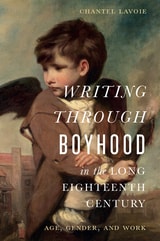
Writing through Boyhood in the Long Eighteenth Century
Age, Gender, and WorkChantel Lavoie
University of Delaware Press, 2024