Results by title
95 books match the query 'History & Culture' and 5 start with w
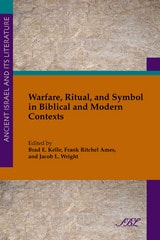
Warfare, Ritual, and Symbol in Biblical and Modern Contexts
Brad E. Kelle
SBL Press, 2014
New perspectives on Israelite warfare for biblical studies, military studies, and social theory
Contributors investigate what constituted a symbol in war, what rituals were performed and their purpose, how symbols and rituals functioned in and between wars and battles, what effects symbols and rituals had on insiders and outsiders, what ways symbols and rituals functioned as instruments of war, and what roles rituals and symbols played in the production and use of texts.
Features:
- Thirteen essays examine war in textual, historical, and social contexts
- Texts from the Hebrew Bible are read in light of ancient Near Eastern texts and archaeology
- Interdisciplinary studies make use of contemporary ritual and social theory
When Texts Are Canonized
Timothy H. Lim
SBL Press, 2017
How did canonization take place, and what difference does it make?
Essays in this collection probe the canonical process: Why were certain books, but not others, included in the canon? What criteria were used to select the books of the canon? Was canonization a divine fiat or human act? What was the nature of the authority of the laws and narratives of the Torah? How did prophecy come to be included in the canon? Others reflect on the consequences of canonization: What are the effects in elevating certain writings to the status of “Holy Scriptures”? What happens when a text is included in an official list? What theological and hermeneutical questions are at stake in the fact of the canon? Should the canon be unsealed or reopened to include other writings?
Features:
- Essays that contribute to our understanding of the complex processes of canonization
- Exploration of early concepts of canonicity
- Discussion of reopening the New Testament canon
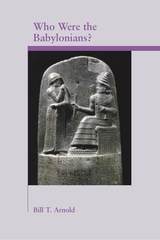
Who Were the Babylonians?
Bill T. Arnold
SBL Press, 2004

Women at Work in the Deuteronomistic History
Mercedes L. García Bachmann
SBL Press, 2013
A thorough study of the socio-economic and literary contexts of women in the Deuteronomistic History
Mercedes L. García Bachmann examines the key texts in the Deuteronomistic History that mention women in service occupations: slaves and dependents, cooks, wet nurses, childcare givers, prostitutes, and scribes. The mostly anonymous women who performed this work for others are sometimes mentioned only in a single verse. Consequently, they often are as unrecognized in modern scholarship as they seem in the biblical text. García Bachmann shows that these women were honored not in relation to matters such as sexual purity or marital faithfulness but on account of the valuable service that they provided.
- A close examination of unnamed women
- A review of previous work in feminist, ancient Near Eastern, biblical, and social-scientific studies
- Extensive coverage of Hebrew terms used for women workers
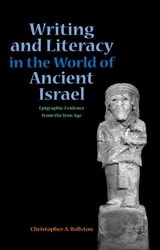
Writing and Literacy in the World of Ancient Israel
Epigraphic Evidence from the Iron AgeChristopher A. Rollston
SBL Press, 2010