Results by title
4030 books match the query 'Language Arts & Disciplines' and 189 start with w
WPAing in a Pandemic and Beyond
Revision, Innovation, and AdvocacyTodd Ruecker
Utah State University Press, 2025
The chapters in this collection include a variety of voices who have been involved in writing program administration in recent years to reflect on the work done in this moment of crisis. Through both short vignettes and longer chapters, this book explores the complicated interactions between WPA work and navigating times of crisis to provide insights for moving forward. Authors explore a variety of topics including professional development, curricular change, advocating in the face of intransigent administrations and others, caring for students, and taking time for self-care. Pointing to specific actions for continued advocacy, WPAing in a Pandemic and Beyond will be of great interest to WPAs and writing studies scholars.
WPAs in Transition
Navigating Educational Leadership PositionsCourtney Adams Wooten
Utah State University Press, 2017
WPAs in Transition shares a wide variety of professional and personal perspectives about the costs, benefits, struggles, and triumphs experienced by writing program administrators making transitions into and out of leadership positions. Contributors to the volume come from various positions, as writing center directors, assistant writing program administrators, and WPAs; mixed settings, including community colleges, small liberal arts colleges, and research institutions; and a range of career stages, from early to retiring. They recount insightful anecdotes and provide a scholarly context in which WPAs can share experiences related to this long-ignored aspect of their work.
During such transitions, WPAs and other leaders who function as both administrators and faculty face the professional and personal challenges of redefining who they are, the work they do, and with whom they collaborate. WPAs in Transition creates a grounded and nuanced experiential understanding of what it means to navigate changing roles, advancing the dialogue around WPAs’ and other administrators’ identities, career paths, work-life balance, and location, and is a meaningful addition to the broader literature on administration and leadership.
Contributors: Mark Blaauw-Hara, Christopher Blankenship, Jennifer Riley Campbell, Nicole I. Caswell, Richard Colby, Steven J. Corbett, Beth Daniell, Laura J. Davies, Jaquelyn Davis, Holland Enke, Letizia Guglielmo, Beth Huber, Karen Keaton Jackson, Rebecca Jackson, Tereza Joy Kramer, Jackie Grutsch McKinney, Kerri K. Morris, Liliana M. Naydan, Reyna Olegario, Kate Pantelides, Talinn Phillips, Andrea Scott, Paul Shovlin, Bradley Smith, Cheri Lemieux Spiegel, Sarah Stanley, Amy Rupiper Taggart, Molly Tetreault, Megan L. Titus, Chris Warnick
Waiting for Prime Time
THE WOMEN OF TELEVISION NEWSMarlene Sanders and Marcia Rock
University of Illinois Press, 1988
Walking on Fire
The Shaping Force of Emotion in Writing DramaJim Linnell
Southern Illinois University Press, 2011
Walking on Fire opens up new conversations about content and emotion for writers and offers exciting answers to the questions of why we make drama and why we connect to it. Linnell’s userfriendly theory and passionate approach create a framework for understanding the links between the writer’s work in creating the text, the text itself, and the audience’s engagement.

Wandering Dixie
Dispatches from the Lost Jewish SouthSue Eisenfeld
The Ohio State University Press, 2020
From South Carolina to Arkansas, she explores the small towns where Jewish people once lived and thrived. She visits the site of her distant cousin and civil rights activist Andrew Goodman’s murder during 1964’s Freedom Summer. She also talks with the only Jews remaining in some of the “lost” places, from Selma to the Mississippi Delta to Natchitoches, and visits areas with no Jewish community left—except for an old temple or overgrown cemetery. Eisenfeld follows her curiosity about Jewish Confederates and casts an unflinching eye on early southern Jews’ participation in slavery. Her travels become a journey of revelation about our nation’s fraught history and a personal reckoning with the true nature of America.
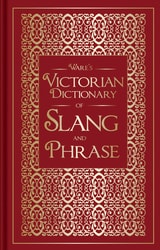
Ware's Victorian Dictionary of Slang and Phrase
J. Redding Ware
Bodleian Library Publishing, 2013
First published in 1909 and reproduced here with a new introduction by Oxford English Dictionary editor John Simpson, Ware’s Victorian Dictionary of Slang and Phrase reflects the rich history of unofficial English. Many of the expressions are obsolete; one is not likely to have the misfortune of encountering a “parlour jumper.” Order a “shant of bivvy” at the pub and you’ll be met with a blank stare. But some of the entries reveal the origins of expressions still in use today, such as calling someone a “bad egg” to indicate that they are dishonest or of ill-repute. While showing the significant influence of American English on Victorian slang, the Dictionary also demonstrates how impressively innovative its speakers were.
A treasure trove of everyday language of the nineteenth century, this book has much to offer in terms of insight into the intriguing history of English and will be of interest to anyone with a passion for words.
Water Drops from Women Writers
A Temperance ReaderEdited by Carol Mattingly
Southern Illinois University Press, 2001
The temperance movement was the largest single organizing force for women in American history, uniting and empowering women seeking to enact social change. By the end of the century, more than two hundred thousand women had become members of the Woman’s Christian Temperance Union (WCTU), and numerous others belonged to smaller temperance organizations. Despite the impact of the movement, its literature has been largely neglected.
In this collection of nineteen temperance tales, Carol Mattingly has recovered and revalued previously unavailable writing by women. Mattingly’s introduction provides a context for these stories, locating the pieces within the temperance movement as well as within larger issues in women’s studies.
The temperance movement was essential to women’s awareness of and efforts to change gender inequalities in the United States during the nineteenth and early twentieth centuries. In their fiction, temperance writers protested physical and emotional abuse at the hands of men, argued for women’s rights, addressed legal concerns, such as divorce and child custody, and denounced gender-biased decisions affecting the care and rights of children. Temperance fiction by women broadens our understanding of the connections between women’s rights and temperance, while shedding light on women’s thinking and behavior in the nineteenth century.
Water Drops from Women Writers features biographical sketches of each writer as well as thirteen illustrations.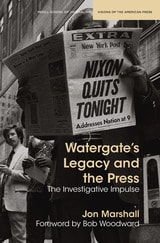
Watergate's Legacy and the Press
The Investigative ImpulseJon Marshall
Northwestern University Press, 2011
Bob Woodward and Carl Bernstein symbolize an era when investigative reporters were seen as courageous fighters of corruption and injustice. Although many mainstream news outlets no longer have the resources to support expensive investigative reporters on staff, journalists have found other ways to support themselves Marshall’s discussion of the opportunities they have found in blogs, crowd-sourcing, and nonprofit institutions offers hope for the future of investigative journalism.

We Are All Americans, Pure and Simple
Theodore Roosevelt and the Myth of AmericanismLeroy G. Dorsey
University of Alabama Press, 2008
Redefining American identity through Roosevelt’s words.
The turn of the 20th century represented one of the most chaotic periods in the nation's history, as immigrants, Native Americans, and African Americans struggled with their roles as Americans while white America feared their encroachments on national identity. This book examines Theodore Roosevelt’s public rhetoric—speeches, essays, and narrative histories—as he attempted to craft one people out of many. Leroy G. Dorsey observes that Roosevelt's solution to the problem appeared straightforward: everyone could become "Americans, pure and simple" if they embraced his notion of "Americanism." Roosevelt grounded his idea of Americanism in myth, particularly the frontier myth—a heroic combination of individual strength and character. When nonwhites and immigrants demonstrated these traits, they would become true Americans, earning an exalted status that they had heretofore been denied.
Dorsey’s analysis illuminates how Roosevelt's rhetoric achieved a number of delicate, if problematic, balancing acts. Roosevelt gave his audiences the opportunity to accept a national identity that allowed "some" room for immigrants and nonwhites, while reinforcing their status as others, thereby reassuring white Americans of their superior place in the nation. Roosevelt’s belief in an ordered and unified nation did not overwhelm his private racist attitudes, Dorsey argues, but certainly competed with them. Despite his private sentiments, he recognized that racist beliefs and rhetoric were divisive and bad for the nation’s progress. The resulting message he chose to propagate was thus one of a rhetorical, if not literal, melting pot.
By focusing on Roosevelt’s rhetorical constructions of national identity, as opposed to his personal exploits or his role as a policy maker, We Are All Americans offers new insights into Roosevelt’s use of public discourse to bind the nation together during one of the most polarized periods in its history.
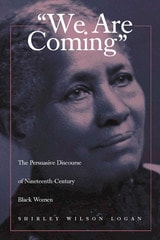
We Are Coming
The Persuasive Discourse of Nineteenth-Century Black WomenShirley Wilson Logan
Southern Illinois University Press, 1999
Shirley Wilson Logan analyzes the distinctive rhetorical features in the persuasive discourse of nineteenth-century black women, concentrating on the public discourse of club and church women from 1880 until 1900.
Logan develops each chapter in this illustrated study around a feature of public address as best exemplified in the oratory of a particular woman speaker of the era. She analyzes not only speeches but also editorials, essays, and letters.
Logan first focuses on the prophetic oratory of Maria Stewart, the first American-born black woman to speak publicly. Turning to Frances Harper, she considers speeches that argue for common interests between divergent communities. And she demonstrates that central to the antilynching rhetoric of Ida Wells is the concept of "presence," or the tactic of enhancing certain selected elements of the presentation.
In her discussion of Fannie Barrier Williams and Anna Cooper, Logan shows that when speaking to white club women and black clergymen, both Williams and Cooper employ what Kenneth Burke called identification. To analyze the rhetoric of Victoria Matthews, she applies Carolyn Miller's modification of Lloyd Bitzer's concept of the rhetorical situation.
Logan also examines the discourse of women associated with the black Baptist women's movement and those participating in college-affiliated conferences.
The book includes an appendix with little-known speeches and essays by Anna Julia Cooper, Selena Sloan Butler, Lucy Wilmot Smith, Mary V. Cook, Adella Hunt Logan, Victoria Earle Matthews, Lucy C. Laney, and Georgia Swift King.
We Are the Union
Democratic Unionism and Dissent at BoeingDana L. Cloud
University of Illinois Press, 2011
We Are the Union is grounded in on-site research and interviews and focuses on the efforts by Unionists for Democratic Change to reform unions from within. Incorporating theory and methods from the fields of organizational communication as well as labor studies, Cloud methodically uncovers and analyzes the goals, strategies, and dilemmas of the dissidents who, while wanting to uphold the ideas and ideals of the union, took up the gauntlet to make it more responsive to workers and less conciliatory toward management, especially in times of economic stress or crisis. Cloud calls for a revival of militant unionism as a response to union leaders' embracing of management and training programs that put workers in the same camp as management, arguing that reform groups should look to the emergence of powerful industrial unions in the United States for guidance on revolutionizing existing institutions and building new ones that truly accommodate workers' needs.
We Can Do Better
Feminist Manifestos for Media and CommunicationLinda Steiner
Rutgers University Press, 2025
Weathering the Storm
Independent Writing Programs in the Age of Fiscal AusterityRichard N. Matzen Jr.
Utah State University Press, 2019
Leading writing specialists at the University of Texas at Austin, Syracuse University, the University of Minnesota, and many other institutions document and think carefully about the on-the-ground obstacles that have made the creation of IWPs unique. From institutional naysayers in English departments to skeptical administrators, IWPs and the faculty within them have surmounted not only negative economics but also negative rhetorics. This collection charts the story of this journey as writing faculty continually make the case for the importance of writing in the university curriculum.
Independence has, for the most part, allowed IWPs to better respond to the Great Recession, but to do so they have had to define writing studies in relation to other disciplines and departments. Weathering the Storm will be of great interest to faculty and graduate students in rhetoric and composition, writing program administrators, and writing studies and English department faculty.
Contributors: Linda Adler-Kassner, Lois Agnew, Alice Batt, David Beard, Davida Charney, Amy Clements, Diane Davis, Frank Gaughan, Heidi Skurat Harris, George H. Jensen, Rodger LeGrand, Drew M. Loewe, Mark Garrett Longaker, Cindy Moore, Peggy O’Neill, Chongwon Park, Louise Wetherbee Phelps, Mary Rist, Valerie Ross, John J Ruszkiewicz, Eileen E. Schell, Madeleine Sorapure, Chris Thaiss, Patrick Wehner, Jamie White-Farnham, Carl Whithaus, Traci A. Zimmerman

Web 2.0 Tools and Strategies for Archives and Local History Collections
American Library Association, 2010
Web 2.0 for Librarians & Info Prof
American Library Association, 2008
Web Analytics Strategies for Information Professionals
A LITA GuideTabatha American Library Association
American Library Association, 2013
Web Scale Discovery Services
Jason American Library Association
American Library Association, 0
Web Writing
Why and How for Liberal Arts Teaching and LearningJack Dougherty and Tennyson O'Donnell, editors
University of Michigan Press, 2015
Web-Based Instruction
Susan Sharpless Smith
American Library Association, 2010
Web-Based Instruction
American Library Association, 2006
Weekly Newspaper Makeup and Typography
Thomas Barnhart
University of Minnesota Press, 1949
Well-Being in the Library Workplace
A Handbook for ManagersBobbi L. Newman
American Library Association, 2025
- navigating the pitfalls of vocational awe, which can lead to unrealistic expectations and self-neglect;
- setting and recalibrating healthy boundaries;
- approaching difficult conversations by creating spaces for positive staff communication;
- overcoming limited budgets;
- the proper mindset for encouraging realistic performance expectations among employees;
- using recognition, appreciation, and staff professional development as tools for wellness;
- nurturing social connections and collaboration to combat loneliness;
- effective techniques for addressing sensitive issues such as disabilities, confronting anti-fat bias, and moral injury;
- emotional and invisible labor mitigation; and
- self-care methods for library leaders at risk of burnout.
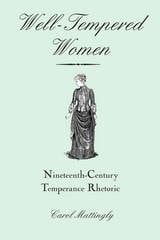
Well-Tempered Women
Nineteenth-Century Temperance RhetoricCarol Mattingly
Southern Illinois University Press, 2000
In this richly illustrated study, Carol Mattingly examines the rhetoric of the temperance movement, the largest political movement of women in the nineteenth century.
Tapping previously unexplored sources, Mattingly uncovers new voices and different perspectives, thus greatly expanding our knowledge of temperance women in particular and of nineteenth-century women and women's rhetoric in general. Her scope is broad: she looks at temperance fiction, newspaper accounts of meetings and speeches, autobiographical and biographical accounts, and minutes of national and state temperance meetings.
The women's temperance movement was first and foremost an effort by women to improve the lives of women. Twentieth-centuty scholars often dismiss temperance women as conservative and complicit in their own oppression. As Mattingly demonstrate, however, the opposite is true: temperance women made purposeful rhetorical choices in their efforts to improve the lives of women. They carefully considered the life circumstances of all women and sought to raise consciousness and achieve reform in an effective manner. And they were effective, gaining legal, political, and social improvements for women as they became the most influential and most successful group of women reformers in the nineteenth and early twentieth centuries.
Mattingly finds that, for a large number of women who were unhappy with their status in the nineteenth century, the temperance movement provided an avenue for change. Examining the choices these women made in their efforts to better conditions for women, Mattingly looks first at oral rhetoric among nineteenth-century temperance women. She examines the early temperance speeches of activists like Susan B. Anthony and Elizabeth Cady Stanton, who later chose to concentrate their effort in the suffrage organizations, and those who continued to work on behalf of women primarily through the temperance topic, such as Amelia Bloomer and Clarina Howard Nichols. Finally, she examines the rhetoric of members of the Woman’s Christian Temperance Union—the largest organization of women in the nineteenth century.
Mattingly then turns to the rhetoric from perspectives outside those of mainstream, middle-class women. She focuses on racial conflicts and alliances as an increasingly diverse membership threatened the unity and harmony in the WCTU. Her primary source for this discussion is contemporary newspaper accounts of temperance speeches.
Fiction by temperance writers also proves to be a fertile source for Mattingly's investigation. Insisting on greater equality between men and women, this fiction candidly portrayed injustice toward women. Through the temperance issue, Mattingly discovers, women could broach otherwise clandestine topics openly. She also finds that many of the concerns of nineteenth-century temperance women are remarkably similar to concerns of today’s feminists.
What Are Stem Cells?
Definitions at the Intersection of Science and PoliticsJohn Lynch
University of Alabama Press, 2011
What Democracy Looks Like
The Rhetoric of Social Movements and CounterpublicsEdited by Christina R. Foust, Amy Pason, and Kate Zittlow Rogness
University of Alabama Press, 2017
Examining How Social Movements and Counterpublics Shape Democratic Change.
Recent protests around the world (such as the Arab Spring uprisings and Occupy Wall Street movements) have drawn renewed interest to the study of social change and, especially, to the manner in which words, images, events, and ideas associated with protestors can “move the social.” What Democracy Looks Like is an attempt to foster a more coherent understanding of social change among scholars of rhetoric and communication studies by juxtaposing the ideas of social movements and counterpublics—historically two key factors significant in the study of social change. Foust, Pason, and Zittlow Rogness’s volume compiles the voices of leading and new scholars who are contributing to the history, application, and new directions of these two concepts, all in conversation with a number of acts of resistance or social change.
The theories of social movements and counterpublics are related, but distinct. Social movement theories tend to be concerned with enacting policy and legislative changes. Scholars flying this flag have concentrated on the organization and language (for example, rallies and speeches) that are meant to enact social change. Counterpublic theory, on the other hand, focuses less on policy changes and more on the unequal distribution of power and resources among different protest groups, which is sometimes synonymous with subordinated identity groups such as race, gender, sexuality, and class.
Nonetheless, contributors argue that in recent years the distinctions between these two methods have become less evident. By putting the literatures of the two theories in conversation with one another, these scholars seek to promote and imagine social change outside the typical binaries.
What Editors Do
The Art, Craft, and Business of Book EditingEdited by Peter Ginna
University of Chicago Press, 2017
In What Editors Do, Peter Ginna gathers essays from twenty-seven leading figures in book publishing about their work. Representing both large houses and small, and encompassing trade, textbook, academic, and children’s publishing, the contributors make the case for why editing remains a vital function to writers—and readers—everywhere.
Ironically for an industry built on words, there has been a scarcity of written guidance on how to actually approach the work of editing. This book will serve as a compendium of professional advice and will be a resource both for those entering the profession (or already in it) and for those outside publishing who seek an understanding of it. It sheds light on how editors acquire books, what constitutes a strong author-editor relationship, and the editor’s vital role at each stage of the publishing process—a role that extends far beyond marking up the author’s text.
This collection treats editing as both art and craft, and also as a career. It explores how editors balance passion against the economic realities of publishing. What Editors Do shows why, in the face of a rapidly changing publishing landscape, editors are more important than ever.
What Editors Want
An Author's Guide to Scientific Journal PublishingPhilippa J. Benson and Susan C. Silver
University of Chicago Press, 2012
Research publications have always been key to building a successful career in science, yet little if any formal guidance is offered to young scientists on how to get research papers peer reviewed, accepted, and published by leading scientific journals. With What Editors Want, Philippa J. Benson and Susan C. Silver, two well-respected editors from the science publishing community, remedy that situation with a clear, straightforward guide that will be of use to all scientists.
Benson and Silver instruct readers on how to identify the journals that are most likely to publish a given paper, how to write an effective cover letter, how to avoid common pitfalls of the submission process, and how to effectively navigate the all-important peer review process, including dealing with revisions and rejection. With supplemental advice from more than a dozen experts, this book will equip scientists with the knowledge they need to usher their papers through publication.
What Error Correction Can(not) Accomplish for Second Language Writers
Dispelling Myths, Discussing OptionsDana R. Ferris
University of Michigan Press, 2018
What Good Is Journalism?
How Reporters and Editors Are Saving America's Way of LifeGeorge Kennedy and Daryl Moen
University of Missouri Press, 2007
To go by today’s critics of the news media—who have created a virtual cottage industry—American journalism has reached a nadir. Yet with all its well-documented faults, journalism is vital to the health of our democracy, the glue of information that holds this complex nation together. This book shows the most important roles that journalism plays in the world’s oldest democracy. Two seasoned educators and practitioners of journalism have assembled a team of writers who look beyond the critics to show that there is much to be praised about the state of American journalism today.
Journalism tells us most of what we know about the world beyond our own experience by going where its audience cannot or will not. It keeps watch on the government and other powerful institutions, exposes wrongdoing and injustice, and shares the endless fascinations of everyday life. Through stories of real people, this book forcefully argues that American journalism is better than its critics admit and a force for good in the lives of both individuals and the nation. Like the exemplary journalism it describes, it offers dozens of instances that show how good journalistic practices enrich the daily lives of citizens and enable them to play their own roles in the democracy.
These essays offer a multifaceted view of the press, tracing the development of free expression through American history and showing how the principles of journalism that we take for granted are playing a revolutionary role in emerging democracies. They report the results of a unique national survey—undertaken for this book—revealing how Americans really view and use the press, and cite the successes of good reporting, from hometown newspapers to NPR. They show how investigative journalism and computer-assisted reporting unearth important truths and even create new knowledge and suggest how citizens can demand the good journalism they need.
What good is journalism? This book spells out the answer through a conversation about journalism and democracy that offers both an antidote to the recent storm of ideologically based criticism of “liberal media” and a demonstration of the true worth of an institution essential to the protection of freedom. It provides today’s readers—and tomorrow’s journalists—a fresh perspective on the press to remind us where we would be without it.
What Is College Reading?
Alice S. Horning
University Press of Colorado, 2017
What Is Happening to News
The Information Explosion and the Crisis in JournalismJack Fuller
University of Chicago Press, 2010
Across America, newspapers that have defined their cities for over a century are rapidly failing, their circulations plummeting even as opinion-soaked web outlets like the Huffington Post thrive. Meanwhile, nightly news programs shock viewers with stories of horrific crime and celebrity scandal, while the smug sarcasm and shouting of pundits like Glenn Beck and Keith Olbermann dominate cable television. Is it any wonder that young people are turning away from the news entirely, trusting comedians like Jon Stewart as their primary source of information on current events?
In the face of all the problems plaguing serious news, What Is Happening to News explores the crucial question of how journalism lost its way—and who is responsible for the ragged retreat from its great traditions. Veteran editor and newspaperman Jack Fuller locates the surprising sources of change where no one has thought to look before: in the collision between a revolutionary new information age and a human brain that is still wired for the threats faced by our prehistoric ancestors. Drawing on the dramatic recent discoveries of neuroscience, Fuller explains why the information overload of contemporary life makes us dramatically more receptive to sensational news, while rendering the staid, objective voice of standard journalism ineffective. Throw in a growing distrust of experts and authority, ably capitalized on by blogs and other interactive media, and the result is a toxic mix that threatens to prove fatal to journalism as we know it.
For every reader troubled by what has become of news—and worried about what the future may hold—What Is Happening to News not only offers unprecedented insight into the causes of change but also clear guidance, strongly rooted in the precepts of ethical journalism, on how journalists can adapt to this new environment while still providing the information necessary to a functioning democracy.
What Is Said and What Is Not
The Semantics/Pragmatics InterfaceEdited by Carlo Penco and Filippo Domaneschi
CSLI, 2013
What Makes Sound Patterns Expressive?
The Poetic Mode of Speech PerceptionReuven Tsur
Duke University Press, 1992
Research in recent decades has established two distinct types of aural perception: a nonspeech mode, in which the acoustic signals are received in the manner of musical sounds or natural noises; and a speech mode, in which acoustic signals are excluded from awareness and only an abstract phonetic category is perceived. Here, Tsur proposes a third type of speech perception, a poetic mode in which some part of the acoustic signal becomes accessible, however faintly, to consciousness.
Using Roman Jakobson’s model of childhood acquisition of the phonological system, Tsur shows how the nonreferential babbling sounds made by infants form a basis for aesthetic valuation of language. He tests the intersubjective and intercultural validity of various spatial and tactile metaphors for certain sounds. Illustrating his insights with reference to particular literary texts, Tsur considers the relative merits of cognitive and psychoanalytic approaches to the emotional symbolism of speech sounds.
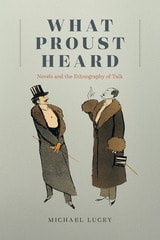
What Proust Heard
Novels and the Ethnography of TalkMichael Lucey
University of Chicago Press, 2022
What happens when we talk? This deceptively simple question is central to Marcel Proust’s monumental novel In Search of Lost Time. Both Proust’s narrator and the novel that houses him devote considerable energy to investigating not just what people are saying or doing when they talk, but also what happens socioculturally through their use of language. Proust, in other words, is interested in what linguistic anthropologists call language-in-use.
Michael Lucey elucidates Proust’s approach to language-in-use in a number of ways: principally in relation to linguistic anthropology, but also in relation to speech act theory, and to Pierre Bourdieu’s sociology. The book also includes an interlude after each of its chapters that contextualizes Proust’s social-scientific practice of novel writing in relation to that of a number of other novelists, earlier and later, and from several different traditions, including Honoré de Balzac, George Eliot, Virginia Woolf, Nathalie Sarraute, and Rachel Cusk. Lucey is thus able to show how, in the hands of quite different novelists, various aspects of the novel form become instruments of linguistic anthropological analysis. The result introduces a different way of understanding language to literary and cultural critics and explores the consequences of this new understanding for the practice of literary criticism more generally.
What They Don't Teach You in Library School
Elisabeth Doucett
American Library Association, 2010
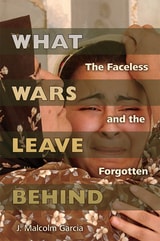
What Wars Leave Behind
The Faceless and the ForgottenJ. Malcolm Garcia
University of Missouri Press, 2014
What We Are Becoming
Developments in Undergraduate Writing MajorsGreg Giberson and Thomas A. Moriarty
Utah State University Press, 2010
Contributors to the volume address a range of vital questions for undergraduate programs, including such issues as the competition for majors within departments, the job market for undergraduates, varying focuses and curricula of such majors, and the formation of them in departments separate from English. Other chapters discuss the importance of flexibility, consider arguments for a rhetorical or civic discourse core for the writing major, address the relationship between rhetoric and composition majors, and review the role of multiliteracies in the major.
The field of composition has not come to a consensus on the shape, content, or focus of the undergradutate major. But as individual programs develop and refine their curricula, one thing has become clear: we must think about them in ways that go beyond our particular circumstances, theorize them in ways that secure their place on our campuses and in our discipline for years to come. What We Are Becoming is an effort to do just that.
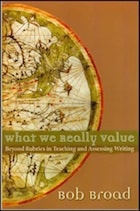
What We Really Value
Beyond Rubrics in Teaching and Assessing WritingBob Broad
Utah State University Press, 2003
What We Really Value traces the origins of traditional rubrics within the theoretical and historical circumstances out of which they emerged, then holds rubrics up for critical scrutiny in the context of contemporary developments in the field. As an alternative to the generic character and decontextualized function of scoring guides, he offers dynamic criteria mapping, a form of qualitative inquiry by which writing programs (as well as individual instructors) can portray their rhetorical values with more ethical integrity and more pedagogical utility than rubrics allow.
To illustrate the complex and indispensable insights this method can provide, Broad details findings from his study of eighty-nine distinct and substantial criteria for evaluation at work in the introductory composition program at "City University." These chapters are filled with the voices of composition instructors debating and reflecting on the nature, interplay, and relative importance of the many criteria by which they judged students' texts. Broad concludes his book with specific strategies that can help writing instructors and programs to discover, negotiate, map, and express a more robust truth about what they value in their students' rhetorical performances.
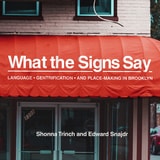
What the Signs Say
Language, Gentrification, and Place-Making in BrooklynShonna Trinch
Vanderbilt University Press, 2020
Shonna Trinch and Edward Snajdr, a sociolinguist and an anthropologist respectively, show how the beliefs and ideas that people take as truths about language and its speakers are deployed in these different sign types. They also present in-depth ethnographic case studies that reveal how gentrification and corporate redevelopment in Brooklyn are intimately connected to public communication, literacy practices, the transformation of motherhood and gender roles, notions of historical preservation, urban planning, and systems of privilege. Far from peripheral or irrelevant, shop signs say loud and clear that language displayed in public always matters.
This book is the recipient of the 2021 Norman L. and Roselea J. Goldberg Prize from Vanderbilt University Press for the best book in the area of art or medicine.
What's Black and White and Reid All Over?
Something Hilarious Happened at the LibraryRob Reid
American Library Association, 2012
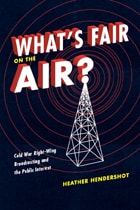
What's Fair on the Air?
Cold War Right-Wing Broadcasting and the Public InterestHeather Hendershot
University of Chicago Press, 2011
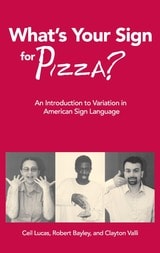
What's Your Sign for Pizza?
An Introduction to Variation in American Sign LanguageCeil Lucas
Gallaudet University Press, 2019
What’s Your Sign for Pizza? derives from an extensive seven-year research project in which more than 200 Deaf ASL users representing different ages, genders, and ethnic groups from seven different regions were filmed sharing their signs for everyday vocabulary. The film clips form a supplemental resource to the text and are referenced in their relevant chapters. The text begins with an explanation of the basic concepts of language and the structure of sign language. Each part of the text concludes with questions for discussion, and the final section offers three supplemental readings that provide further information on variation in both spoken and signed languages. What’s Your Sign for Pizza also briefly sketches the development of ASL, which explains the relationships between language varieties throughout the country.
The videos are available online at www.youtube.com/GallaudetUniversityPress.
When Tutor Meets Student
Martha Maxwell, Editor
University of Michigan Press, 1994
When Words Lose Their Meaning
Constitutions and Reconstitutions of Language, Character, and CommunityJames Boyd White
University of Chicago Press, 1984
"In this ambitious and demanding work of literary criticism, James Boyd White seeks to communicate 'a sense of reading in a new and different way.' . . . [White's] marriage of lawyerly acumen and classically trained literary sensibility—equally evident in his earlier work, The Legal Imagination—gives the best parts of When Words Lose Their Meaning a gravity and moral earnestness rare in the pages of contemporary literary criticism."—Roger Kimball, American Scholar
"James Boyd White makes a state-of-the-art attempt to enrich legal theory with the insights of modern literary theory. Of its kind, it is a singular and standout achievement. . . . [White's] selections span the whole range of legal, literary, and political offerings, and his writing evidences a sustained and intimate experience with these texts. Writing with natural elegance, White manages to be insightful and inciteful. Throughout, his timely book is energized by an urgent love of literature and law and their liberating potential. His passion and sincerity are palpable."—Allan C. Hutchinson, Yale Law Journal
"Undeniably a unique and significant work. . . . When Words Lose Their Meaning is a rewarding book by a distinguished legal scholar. It is a showcase for the most interesting sort of inter-disciplinary work: the kind that brings together from traditionally separate fields not so much information as ideas and approaches."—R. B. Kershner, Jr., Georgia Review
When the Pipirite Sings
Selected PoemsJean Métellus, Translated by Haun Saussy
Northwestern University Press, 2019
Translated by formidable comparative literature scholar Haun Saussy, When the Pipirite Sings expresses an acute historical consciousness and engages recurrent Haitian themes—the wrenching impact of colonialism and underdevelopment, the purposes of education, and the merging of spiritual and temporal power. And, as always with Métellus’s poetry, the range of voices and points of view evokes other genres, including fiction and cinema. This eminently readable book has formal and thematic ties to Aimé Césaire’s Notebook of a Return to the Native Land, central to the canon of French-language postcolonial writings.
In addition to many books of poetry, Métellus published novels, chiefly about the remembered Haiti of his youth, and plays about the conquest of the Caribbean. His nonfiction included reflections on Haitian history and politics, on the iconography of slave emancipation, and studies of aphasia and dyslexia.

Whenever Two or More Are Gathered
Relationship as the Heart of Ethical DiscourseMichael M. Harmon and O. C. McSwite
University of Alabama Press, 2011
A Scholarly Exploration of How Relationships Shape Moral Understanding.
Whenever Two or More Are Gathered focuses on the critical role of ethics and moral responsibility in the field of public administration. Michael M. Harmon and O. C. McSwite posit that administrative ethics, as presently conceived and practiced, is largely a failure, incapable of delivering on its original promise of effectively regulating official conduct in order to promote the public interest. They argue that administrative ethics is compromised at its very foundations by two core assumptions: that human beings act rationally and that language is capable of conveying clear, stable, and unambiguous principles of ethical conduct.
The result is the illusion that values, principles, and rules of ethical conduct can be specified in workably clear ways, in particular, through their formalization in official codes of ethics; that people are capable of comprehending and responding to them as they are intended; and that the rewards and punishments attached to them will be effective in structuring daily behavior.
In a series of essays that draw on both fiction and film, as well as the disciplines of pragmatism, organizational theory, psychoanalysis, structural linguistics, and economics, Harmon and McSwite make their case for human relationship as the proper foundation of administrative ethics. “Exercising responsible ethical practice requires attaining a special kind of relationship with other people. Relationship is how the pure freedom that resides in the human psyche—for ethical choice, creativity, or original action of any type—can be brought into the structured world of human social relations without damaging or destroying it.” Furthermore, they make the case for dropping the term “ethics” in favor of the term “responsibility,” as “responsibility accentuates the social [relational] nature of moral action.”

Where Is the Light Coming From
Essays on Art and Regular PeopleDan Kois
Duke University Press, 2027
Where Research Begins
Choosing a Research Project That Matters to You (and the World)Thomas S. Mullaney and Christopher Rea
University of Chicago Press, 2022
Plenty of books tell you how to do research. This book helps you figure out WHAT to research in the first place, and why it matters.
The hardest part of research isn't answering a question. It's knowing what to do before you know what your question is. Where Research Begins tackles the two challenges every researcher faces with every new project: How do I find a compelling problem to investigate—one that truly matters to me, deeply and personally? How do I then design my research project so that the results will matter to anyone else?
This book will help you start your new research project the right way for you with a series of simple yet ingenious exercises. Written in a conversational style and packed with real-world examples, this easy-to-follow workbook offers an engaging guide to finding research inspiration within yourself, and in the broader world of ideas.
Read this book if you (or your students):
- have difficulty choosing a research topic
- know your topic, but are unsure how to turn it into a research project
- feel intimidated by or unqualified to do research
- worry that you’re asking the wrong questions about your research topic
- have plenty of good ideas, but aren’t sure which one to commit to
- feel like your research topic was imposed by someone else
- want to learn new ways to think about how to do research.
Under the expert guidance of award-winning researchers Thomas S. Mullaney and Christopher Rea, you will find yourself on the path to a compelling and meaningful research project, one that matters to you—and the world.
Where We Start
A Practical Guide to Technical Communication Program AdministrationK. Alex Ilyasova
Utah State University Press, 2026
Providing practical, pragmatic guidance for current and aspiring administrators, Where We Start is the first book in technical communication that professionalizes administrativework and practices, offering practical advice on curricular, undergraduate, and graduate program development.
Where We Start teaches by example with each chapter combining personal knowledge with published research to direct readers toward their own practices. Some ofthe most experienced program leaders in technical communication share strategies for program design, curriculum development, assessment, inclusivity, and external partnerships. The collection is divided into three main sections: Programmatic Development and Planning, which focuses on the foundational aspects of strategic planning, curriculum development, and programmatic assessment; Developing Differently, which highlights approaches to inclusivity, diversity, and unconventional career paths in program administration; and Building Beyond, which discusses strategies for expanding technical communication programs through partnerships with industry and international institutions.
A resource for administrators as well as graduate students and early-career faculty looking to understand the intricacies of program management, Where We Start fills a critical gap, offering insights from a uniquely technical communication perspective, where programmatic resources are scarce.
Where Writing Begins
A Postmodern ReconstructionMichael Carter
Southern Illinois University Press, 2003
Where Writing Begins: A Postmodern Reconstruction is an innovative approach to the postmodern dilemma in rhetoric and composition thatoffers a positive and postmodern pedagogy that redefines and revalues writing and the teaching of writing through reconstructive, postmodern thought. The result is a fresh understanding of both the field of composition and writing instruction.
Drawing on the rich potential of “beginning” as a philosophical concept, Michael Carter asks the simple question: Where does writing begin? His findings take readers first to a new view of what it means to begin, and then to a new understanding of writing and teaching writing based on the redefined beginning. Challenging conventional notions that posit “beginning” as a chronological and temporal concept, he instead advocates an ontological and philosophical approach, in which “beginning” embodies both deconstruction and reconstruction—and the very possibility of newness.
Adding to a growing body of rhetorical scholarship in postmodern reconstruction, Where Writing Begins illustrates that writing must be understood within the framework of deconstruction and reconstruction. Writing, then, may be newly defined and valued as beginning. Weaving together conceptual, structural, and methodological patterns, Carter’s study is also a journey through the history of philosophy and rhetoric that will leave readers feeling refreshed and teachers eager to return to their classes.