Results by title
140 books match the query 'Mental Health' and 7 start with w
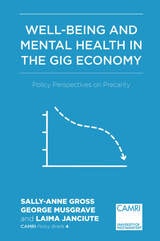
Well-Being and Mental Health in the Gig Economy
Policy Perspectives on PrecaritySally-Anne Gross, George Musgrave and Laima Janciute
University of Westminster Press, 2018
A response is needed to the numerous issues spurred by the expansion of the gig economy, where flexible patterns of employment prevail in contrast to permanent jobs. In this context of the exponential growth of the digital economy and underlying business models the largest nationwide study of its kind into the impact of the working conditions in the UK music industry ‘Can Music Make You Sick?’ has been conducted by MusicTank/University of Westminster.
This research suggests the need to consider the future of work not only from an economic or employment law perspective but from a mental health one too. What are the psychological implications of precarious work and how are factors such as financial instability, the feedback economy and personal relationships reflected in mental health outcomes or connected to the business relationships most musicians and other gig economy participants work under?
Authors Sally-Anne Gross, George Musgrave and Laima Janciute consider which policy measures may help or harm gig economy workers including the taxation of self-employed workers, a universal basic income, education around mental health issues and access to mental health support.

When History Is A Nightmare
Lives and Memories of Ethnic Cleansing in Bosnia-HerzegovinaStevan M. Weine, M.D.
Rutgers University Press, 1999
Weine investigates the survivors’ attempts to reconcile the contrasting, collective memories of having lived in a smoothly functioning, multiethnic society with the later memories of the ethnic atrocities. He discusses the little-known group concept of merhamet. Denoting compassion, forgiveness, and charity, merhamet was a critical cultural value for the Bosnian Muslims.
Weine also explores how ethnic cleansing was justified from the vantage point of psychiatrists who played prominent roles in instigating the horrors. He also provides personal portraits of leaders such as Jovan Raskovic and Radovan Karadzic. He concludes by describing the recovery efforts of survivors—how they work to confront the destructive nature of their memories while trying to bring about healing, both individually and collectively.
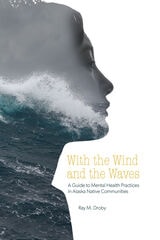
With the Wind and the Waves
A Guide to Mental Health Practices in Alaska Native CommunitiesRay M. Droby
University of Alaska Press, 2020
Women Living With Self-Injury
Jane Wegscheider Hyman
Temple University Press, 1999
In this book, author Jane Wegschneider sheds light on this misunderstood condition. Fifteen women talk about their battle with self-injury and explain how and why they repeatedly and deliberately injure themselves. Most admit they do it because it makes them feel high or safe. They also describe living with ceaseless shame, secrecy, and fear of discovery which could make them unemployable and ostracized. Candidly discussing their attempted and successful recoveries, they reveal the impact living with self-injury has on their day-to-day lives -- where they are competent workers, partners, friends, and mothers.
Hear the voices of these women as they speak to a public that generally sees self-injury as frightening, senseless, and repulsive. Concealing scars or other signs of injury is crucial for them and partly dictates their daily routines, choice of clothes, and the lies they tell to excuse any traces of injury. For these productive women who work outside of the home and often raise children, hiding self-injury is of paramount importance during their workdays and in their relationships with partners, families, and friends.
Hyman's approach is unique in that she not only talked to these women but also really listened to their stories -- something rare in the misunderstood realm of self-injury. Professionals, perplexed by self-injury, have not always tolerated its complexity. As a result those who injure themselves have remained shrouded in secrecy, isolation, and shame -- until now.
This book offers compassion as well as encouragement for recovery by making available the emotional experiences of sufferers in their own words. It is an important book for those who self-injure, their loved ones, anyone who knows of or suspects self-injury in a friend, and mental care professionals.
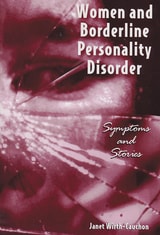
Women and Borderline Personality Disorder
Symptoms and StoriesWirth-Cauchon, Janet
Rutgers University Press, 2000
At the beginning of the twentieth century, “hysteria” was a medical or psychiatric diagnosis applied primarily to women. In fact, the term itself comes from the Greek, meaning “wandering womb.” We have since learned, however, that this diagnosis evolved from certain assumptions about women’s social roles and mental characteristics, and is no longer in use.
The modern equivalent of hysteria, however, may be borderline personality disorder, defined as “a pervasive pattern of instability of self-image, interpersonal relationships, and mood, beginning in early adulthood and present in a variety of contexts.” This diagnosis is applied to women so much more often than to men that feminists have begun to raise important questions about the social, cultural, and even the medical assumptions underlying this “illness.” Women are said to be “unstable” when they may be trying to reconcile often contradictory and conflicting social expectations.
In Women and Borderline Personality Disorder, Janet Wirth-Cauchon presents a feminist cultural analysis of the notions of “unstable” selfhood found in case narratives of women diagnosed with borderline personality disorder. This exploration of contemporary post-Freudian psychoanalytic notions of the self as they apply to women’s identity conflicts is an important contribution to the literature on social constructions of mental illness in women and feminist critiques of psychiatry in general.
Wounded I Am More Awake
Finding Meaning after TerrorJulia Lieblich
Vanderbilt University Press, 2012
This gripping account raises questions for healers, survivors, and readers striving to understand the reality of war and the aftermath of terror. Is it possible to find meaning after enduring crimes against humanity? Can people heal after trauma?
Human rights journalist Julia Lieblich takes the reader through Boskailo's early years under Tito to the wars when friends turned on friends. She documents his harrowing experiences in the camps, where the men he once joined for coffee murder his best friend from childhood.
But the story does not end there. Boskailo moves to the United States and decides to become a psychiatrist so he can guide survivors through the long-term process of restoring hope. Today, inspired by the late psychiatrist and Holocaust survivor Viktor Frankl, Boskailo uses his own experience to help patients mourn their losses and find meaning in the aftermath of terror.