Results by title
584 books match the query 'Short Stories (single author)' and 27 start with w
WOMEN DRINKING BENEDICTINE
Sharon Dilworth
The Ohio State University Press, 1998
Warnings From the Future
StoriesEthan Chatagnier
Acre Books, 2018
Waste of Timelessness and Other Early Stories
And Other Early StoriesAnaïs Nin
Ohio University Press, 1993
These stories precede all of Nin’s published work to date. In them are many sources of the more mature work that collectors and growing writers can appreciate.
Written when Anaïs Nin was in her twenties and living in Louveciennes, France, these stories contain many elements that will delight her readers: details remembered from childhood, of life in Paris, the cafés, theatres; characters including dancers, artists, writers, women who devote themselves to their work and visions as well as romance, strangers met in the night; themes such as the scruples of lovers, the search for brilliant, imaginative living; the writer’s experimentation with exotic words like “sybaritic” and “violaceous”. In the craft of these stories readers are treated to a deft sense of humor, ironic wit, much conversation as well as ecstatic prose, and surprise endings. Throughout all, the Nin personality shines, a wonderful mixture of feeling and rationality, of vulnerability and strength.
Ways to Disappear
StoriesVictoria Lancelotta, Foreword by Cristina Rivera Garza
University of Alabama Press, 2023
Winner of FC2’s Catherine Doctorow Prize in Innovative Fiction
Some disappearances are chosen. Others are survived.
The stories in Victoria Lancelotta’s Ways to Disappear excavate the unexamined places between dread and desire, promise and threat, where the body is both prison and salvation. Populated by the grieving and the exultant and those who see no difference between the two, by men and women who are only a little bit broken and boys and girls who can’t wait to be, by souls untethered, rootless, yet bound by blood and flesh, Lancelotta’s characters are driven by the irresistible need to be a bigger part of the worlds they each inhabit, by turns strange and commonplace. In language lush and jagged, never sentimental, these stories scrutinize the exhaustion and enchantment of the everyday: houses seething with resentment and devotion, cars dream-full and hurtling the children in them into a world they think they know but can’t imagine; front porches, back yards, luxury hotels, and truck stops. Lancelotta understands that sometimes people check their wounds not to see if they’ve healed, but to be sure they’re still there.
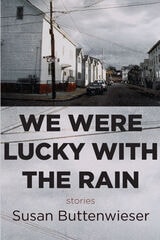
We Were Lucky with the Rain (stories)
Susan Buttenwieser
Four Way Books, 2020
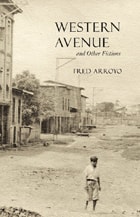
Western Avenue and Other Fictions
Fred Arroyo
University of Arizona Press, 2012
In these engaging and often gripping short stories, Fred Arroyo takes us into the lives of working-class Hispanic migrants and immigrants, who are often invisible while they work in plain sight across America. As characters intertwine and evolve across stories, Arroyo creates a larger narrative that dramatizes the choices we make to create identity, make meaning, and deal with hardships and loss. His stories are linked by a concern with borders, both real and imagined, and the power that memory and imagination have to shape and structure our lives.
Through his characters and their true-to-life situations, Arroyo makes visible both internal and external conflicts that are deeply rooted in—and affected by—place. A bodega, a university town, a factory, a Chicago street, some dusty potato fields: here is where we encounter ordinary people who work, dream, love, and persist in the face of violence, bereavement, disappointment, and loss—particularly the loss of mothers, fathers, and loved ones.
Arroyo's characters experience a strange wonder as the midwestern United States increasingly appears to be a place created by the Latinas and Latinos who remain out of the sight and minds of Anglos. In lyrical language weighted by detail, exquisite imagery, and evocative story, Arroyo imagines characters who confront the tattered connections between memory and longing, generations and geographies, place and displacement, as they begin to feel their own longings, "breathing in whatever was offered, feeling, deep in the small and fragile borders of my heart," as one character puts it, "that it came with a sorrow I could never betray."
Wet Places at Noon
Abbott, Lee K.
University of Iowa Press, 1997
What Begins with Bird
FictionsFlournoy Holland
University of Alabama Press, 2005
What Counts as Love
Marian Crotty
University of Iowa Press, 2017
What Mennonite Girls Are Good For
Jennifer Sears
University of Iowa Press, 2025
A Debutiful Best Debut Short Story Collection of 2025
In these eleven stories, a Mennonite minister’s daughter moves from a youthful, exuberant understanding of her family’s faith toward religious doubt. Stumbling comically at times, Ruthie navigates life with and without the rules in which she’s been raised. Always physical, often sexual, Ruthie’s search for personal truth leads her from missionary outposts in Paraguay and Brazil to Mennonite towns in northern Indiana and central Kansas, a vandalized Native American site, women’s healthcare clinics, and lingerie shops on the secular, melancholy East Coast. Ultimately, these stories consider how faith and identity intertwine, the cost of abandoning one’s cultural heritage, and the complicated longing for return.
What Others Say About Us
StoriesJonathan Ayala
University of Arizona Press, 2027
A man is visited by his now famous ex-boyfriend, and he ponders a life that might have been. A new roommate destabilizes the close friendship between two twenty-somethings. A homesick immigrant plans an eightieth birthday party for the neighborhood grouch. A grisly crime sweeps up an unassuming history teacher, throwing him into the role of outcast.
El Paso serves as a backdrop for many of stories in this deeply human debut collection by Jonathan Ayala. Offering a portrait of contemporary gay Chicano lives, Ayala’s characters contend with the complexities found in navigating belonging, homecoming, falling in love, falling out of love, friendship, and what it means to be Mexican American in the United States today.
These thirteen emotionally rich, character-driven stories are filled with humor, tenderness, and insight into love, friendship, and community.
What You've Been Missing
Janet Desaulniers
University of Iowa Press, 2004
Vividly portraying the possible horrors and detours that can mark anyone’s life, Desaulniers beautifully captures the vast and often conflicting emotions that humans endure at times of loss and sorrow—loneliness, pain, desperation, desire. Yet this balletic push and pull of emotions will challenge, wound, and ultimately enlighten her characters, transporting them to a place beyond individual sorrow.
At times unbearably heartbreaking, What You’ve Been Missing is not just another set of stories about bad things happening to good people. At its heart, this award-winning collection is about people continuing to talk—rather than shutting down—as bad things happen to them. As the recently divorced Liza thinks in “The Good Fight”: “Words do ease us. They comfort us. Maybe they protect us in a way, rescue us from the agony of what our bodies feel.”
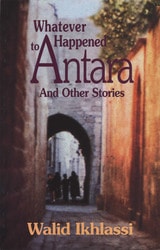
Whatever Happened to Antara?
And Other StoriesBy Walid Ikhlassi
University of Texas Press, 2004
Walid Ikhlassi evokes the individual's struggle for dignity and significance in the Syrian city of Aleppo during the French mandate of the forties and fifties. His characters' seeking of personal fulfillment parallels the struggle of the nation for self-definition. The changing political and cultural landscape of Syria challenges individuals in their attempts to live lives of integrity, as Ikhlassi provides analytical insights into the civil society of Syria, the axis of his writing.
From the boy Antara who personifies the Arab legend of a half-African slave warrior/hero to everyday middle-aged lovers, Ikhlassi's characters fight colonial oppression and corruption from the newly formed government. Foreign and internal forces challenge the evolution of a modern nation rooted in traditional Arab values. Its strong and determined men and women refuse to accept victimhood. The introduction by author and critic Elizabeth Warnock Fernea places the stories in their historical and literary context.
An avowed experimentalist, Ikhlassi portrays the modern human situation through techniques as widely divergent as realism, surrealism, interior monologue, and stream-of-consciousness. Selections of his work have been translated into English, Russian, French, German, Dutch, Armenian, and other languages.
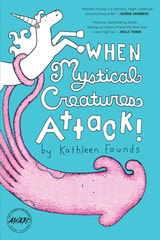
When Mystical Creatures Attack!
Kathleen Founds
University of Iowa Press, 2014
The lives of Janice, Cody, and Ms. Freedman are revealed through in-class essays, letters, therapeutic journal exercises, an advice column, a reality show television transcript, a diary, and a Methodist women’s fundraising cookbook. (Recipes include “Dark Night of the Soul Food,” “Render Unto Caesar Salad,” and “Valley of the Shadow of Death by Chocolate Cake.”) In “Virtue of the Month,” the ghost of Ms. Freedman’s mother argues that suicide is not a choice. In “The Un-Game,” Janice’s chain-smoking nursing home charge composes a dirty limerick. In “The Hall of Old-Testament Miracles,” wax figures of Bible characters come to life, hungry for Cody’s flesh.
Set against a South Texas landscape where cicadas hum and the air smells of taco stands and jasmine flowers, these stories range from laugh-out-loud funny to achingly poignant. This surreal, exuberant collection mines the dark recesses of the soul while illuminating the human heart.
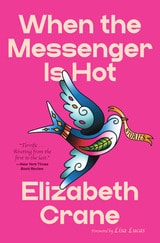
When the Messenger Is Hot
StoriesElizabeth Crane, foreword by Lisa Lucas
Northwestern University Press, 2026
A beloved, smart, and bold story collection surges back to life in a new print edition
Hailed as “revolutionary fiction,” When the Messenger Is Hot gleefully upends the short-story form, rendering the absurdities and possibilities of modern urban life with disarming humor and keen perception as Crane weaves through grief and womanhood. The women in Elizabeth Crane’s world are fierce and kind, damaged and optimistic. They are jilted lovers, absent daughters, twelve-steppers, and smart-asses, recovering from loss, addiction, or betrayal. From a woman who decides to live on the rooftop of her friend’s apartment (why not?), to a writer whose identity is compromised by the actress who portrays her, to a daughter who believes her deceased mother is still alive and living at the bus depot, these characters experience love and loss in a way that is both profoundly universal and uniquely theirs.
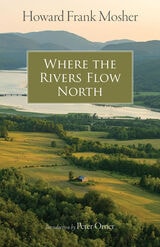
Where the Rivers Flow North
Howard Frank Mosher
Brandeis University Press, 2022
The stories of Where the Rivers Flow North are “superior work, rich in texture and character,” says the Wall Street Journal, and “the novella is brilliantly done.” That novella, the title story of the collection, was also made into a feature film starring Rip Torn and Michael J. Fox. These six stories, available again in this new edition, continue Howard Frank Mosher’s career-long exploration of Kingdom County, Vermont. “Within the borders of his fictional kingdom,” the Providence Journal has noted, “Mosher has created mountains and rivers, timber forests and crossroads villages, history and language. And he has peopled the landscape with some of the truest, most memorable characters in contemporary literature.” This new edition features a new introduction by novelist Peter Orner.
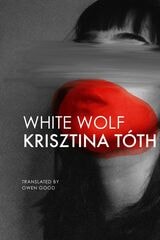
White Wolf
Sixteen StoriesKrisztina Tóth
Seagull Books, 2026
“Every home is a different story,” says one narrator in White Wolf while looking for her own childhood home. Every unhappy home is unhappy in its own way—and so are the stories in Krisztina Tóth’s new volume, in which the writer’s voice is darker and more radical than ever.
These are stories of trauma, oppression, submission, exclusion, stigma, and violence. Many of them tell of childhood abuses, unpunished crimes, lost children—suffering that goes without punishment, apology, and forgiveness. Her mostly nameless heroes are everywhere around us, stepping into the same elevator, running behind us on the staircase. Many of them are so wounded or tormented that they behave in strange ways. In White Wolf, Tóth observes these characters with acute sensitivity and attentiveness to detail.
Whose World Is This?
Lee Montgomery
University of Iowa Press, 2007
In the story "We Americans," a woman abandoned by her husband grows so vulnerable, she internalizes TV news tragedies by developing hives in the shapes of foreign countries. In the title story, Hannah, a speed freak working the graveyard shift in a nursing home, falls in love with a quadriplegic who void of feelings in his limbs, feel things she cannot. In "Avalanche", an editor to movie stars in Beverly Hills struggles with how to reconcile her own story with the fairy-tale endings of celebrity culture.
Tender, poignant, and at times hilarious, the women in Whose World Is This? turn common notions of love, compassion, and tradition upside down as they show us how vulnerability, although dangerous, is what makes life astonishingly beautiful and reality strangely unreal.
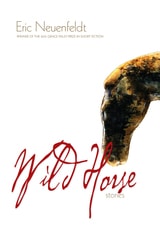
Wild Horse
StoriesEric Neuenfeldt
University of Massachusetts Press, 2016
An orphaned boy fights to keep the dilapidated home that contains the memory of his family. A sawyer's nephew scrambles to recall the skills of the trade in the wake of his uncle's death. A corrections teacher strains to give his son direction in a remote prison town after his addict mother deserts them. These stories create a portrait of the difficult decisions people must make in unforgiving surroundings and the consequences of the battle to press on.
Published in cooperation with Association of Writers and Writing Programs.
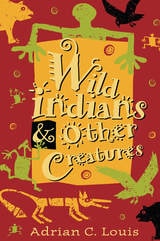
Wild Indians And Other Creatures
Adrian C. Louis
University of Nevada Press, 1997
Winning the Game and Other Stories
Rubem Fonseca
Tagus Press, 2013

Within the Lighted City
Lisa Lenzo
University of Iowa Press, 1997
Wolf Lake, White Gown Blown Open
PoemsDiane Seuss
University of Massachusetts Press, 2010
Diane Seuss's poems grow out of the fertile soil of southwest Michigan, bursting any and all stereotypes of the Midwest and turning loose characters worthy of Faulkner in their obsession, their suffering, their dramas of love and sex and death. The first section of this collection pays homage to the poet's roots in a place where the world hands you nothing and promises less, so you are left to invent yourself or disappear. From there these poems both recount and embody repeated acts of defiant self-creation in the face of despair, loss, and shame, and always in the shadow of annihilation.
With darkly raucous humor and wrenching pathos, Seuss burrows furiously into liminal places of no dimension— state lines, lakes' edges, the space “between the m and the e in the word amen.” From what she calls “this place inbetween” come profane prayers in which "the sound of hope and the sound of suffering" are revealed to be “the same music played on the same instrument.”
Midway through this book, a man tells the speaker that beauty is that which has not been touched. This collection is a righteous and fierce counterargument: in the world of this imagination, beauty spills from that which has been crushed, torn, and harrowed. “We receive beauty,” Seuss writes, “as a nail receives / the hammer blow.” This is the poetry that comes only after the white dress has been blown open—the poetry of necessity, where a wild imagination is the only hope.
Words Are Something Else
David Albahari
Northwestern University Press, 1996
Working It Off in Labor County
StoriesLarry D. Thacker
West Virginia University Press, 2021
“It seems like everybody but people from here are sure about what we’re about, and they make money being wrong about it.” The residents of Labor County, a fictional small community in the mountains of southeastern Kentucky, may be short on cash, but they are rich in creativity and tirelessly inventive as they concoct new schemes to make ends meet, settle old scores, and work off their debts to society and, in a way, to themselves.
A zealous history professor is caught stealing from the local museum in protest of petty theft; an arsonist strikes it lucky—twice; a skilled leatherworker saddles a turkey and finds a rider; an angel aspires to be a punk rock Roller Derby princess; a grieving artist carves a miracle into a roadside rock face; and affable Uncle Archie produces a seemingly unending supply of new and bizarre items to display in his Odditorium.
More than a collection of tales, Working It Off in Labor County assembles memorable characters who recur across these seventeen linked stories, sharing in one another’s struggles and stumbling upon humor and mystery, the grotesque and the divine, each in many forms.
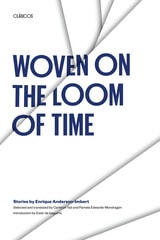
Woven on the Loom of Time
Stories by Enrique Anderson-ImbertSelected and translated by Carleton Vail and Pamela Edwards-Mondragón
University of Texas Press, 1990
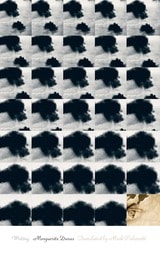
Writing
Marguerite Duras
University of Minnesota Press, 2011
Writing, one of Marguerite Duras’s last works, is a meditation on the process of writing and on her need for solitude in order to do it. In the five short pieces collected in this volume, she explores experiences that had an emotional impact on her and that inspired her to write. These vary from the death of a pilot in World War II, to the death of a fly, to an art exhibition. Two of the pieces were made into documentary films, and one was originally a short film. Both autobiographical and fictional, like much of her work, Writing displays Duras’s unique worldview and sensitive insight in her simple and poetic prose.