Results by title
206 books match the query 'Study & Teaching' and 19 start with w
WPAs in Transition
Navigating Educational Leadership PositionsCourtney Adams Wooten
Utah State University Press, 2017
WPAs in Transition shares a wide variety of professional and personal perspectives about the costs, benefits, struggles, and triumphs experienced by writing program administrators making transitions into and out of leadership positions. Contributors to the volume come from various positions, as writing center directors, assistant writing program administrators, and WPAs; mixed settings, including community colleges, small liberal arts colleges, and research institutions; and a range of career stages, from early to retiring. They recount insightful anecdotes and provide a scholarly context in which WPAs can share experiences related to this long-ignored aspect of their work.
During such transitions, WPAs and other leaders who function as both administrators and faculty face the professional and personal challenges of redefining who they are, the work they do, and with whom they collaborate. WPAs in Transition creates a grounded and nuanced experiential understanding of what it means to navigate changing roles, advancing the dialogue around WPAs’ and other administrators’ identities, career paths, work-life balance, and location, and is a meaningful addition to the broader literature on administration and leadership.
Contributors: Mark Blaauw-Hara, Christopher Blankenship, Jennifer Riley Campbell, Nicole I. Caswell, Richard Colby, Steven J. Corbett, Beth Daniell, Laura J. Davies, Jaquelyn Davis, Holland Enke, Letizia Guglielmo, Beth Huber, Karen Keaton Jackson, Rebecca Jackson, Tereza Joy Kramer, Jackie Grutsch McKinney, Kerri K. Morris, Liliana M. Naydan, Reyna Olegario, Kate Pantelides, Talinn Phillips, Andrea Scott, Paul Shovlin, Bradley Smith, Cheri Lemieux Spiegel, Sarah Stanley, Amy Rupiper Taggart, Molly Tetreault, Megan L. Titus, Chris Warnick
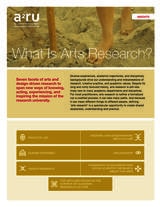
What is Arts Research?
Gabriel Harp
A2RU Intervals, 2018
Diverse experiences, academic trajectories, and disciplinary backgrounds drive our understanding and interpretations of research, creative practice, and academic values. Despite its long and richly textured history, arts research is still relatively new to many academic departments and disciplines. For most practitioners, arts research is neither a formalized nor a codified process; it can take many paths. And because it can mean different things to different people, defining ‘arts research’ is a spectacular opportunity to create shared awareness, understanding and practice.
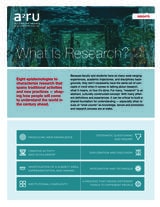
What is Research?
Gabriel Harp
A2RU Intervals, 2018
Because faculty and students have so many wide-ranging experiences, academic trajectories, and disciplinary backgrounds, they don’t necessarily have the same set of concepts in mind when it comes to talking about research, what it means, or how it’s done. For many, “research” is an abstract, culturally constructed concept. With many different definitions and experiences, it can be critical to build a shared foundation for understanding — especially when issues of “what counts” as knowledge, tenure and promotion, and research process are at stake.
When Colleges Sang
The Story of Singing in American College LifeJ. Lloyd Winstead
University of Alabama Press, 2013
Whose America?
Culture Wars in the Public SchoolsJonathan Zimmerman
University of Chicago Press, 2022
Critical Race Theory. The 1619 Project. Mask mandates. As the headlines remind us, American public education is still wracked by culture wars. But these conflicts have shifted sharply over the past two decades, marking larger changes in the ways that Americans imagine themselves. In his 2002 book, Whose America?, Zimmerman predicted that religious differences would continue to dominate the culture wars. Twenty years after that seminal work, Zimmerman has reconsidered: arguments over what American history is, what it means, and how it is taught have exploded with special force in recent years. In this substantially expanded new edition, Zimmerman meditates on the history of the culture wars in the classroom—and on what our inability to find common ground might mean for our future.
Whose America?
Culture Wars in the Public SchoolsJonathan Zimmerman
University of Chicago Press, 2022
In this expanded edition of his 2002 book, Zimmerman surveys how battles over public education have become conflicts at the heart of American national identity.
Critical Race Theory. The 1619 Project. Mask mandates. As the headlines remind us, American public education is still wracked by culture wars. But these conflicts have shifted sharply over the past two decades, marking larger changes in the ways that Americans imagine themselves. In his 2002 book, Whose America?, Zimmerman predicted that religious differences would continue to dominate the culture wars. Twenty years after that seminal work, Zimmerman has reconsidered: arguments over what American history is, what it means, and how it is taught have exploded with special force in recent years. In this substantially expanded new edition, Zimmerman meditates on the history of the culture wars in the classroom—and on what our inability to find common ground might mean for our future.
Why Art Cannot Be Taught
A Handbook for Art StudentsJames Elkins
University of Illinois Press, 2001
"Art can be taught, but it seems as if it can't be since so few students become outstanding artists."
"Art cannot be taught, but it can be fostered or helped along."
"Art cannot be taught or even nourished, but it is possible to teach right up to the beginnings of art so that students are ready to make art the moment they graduate."
"Great art cannot be taught, but more run-of-the-mill art can be."
Elkins traces the development (or invention) of the modern art school and considers how issues such as the question of core curriculum and the intellectual isolation of art schools affect the teaching and learning of art. He also addresses the phenomenon of art critiques as a microcosm for teaching art as a whole and dissects real-life critiques, highlighting presuppositions and dynamics that make them confusing and suggesting ways to make them more helpful.
Elkins's no-nonsense approach clears away the assumptions about art instruction that are not borne out by classroom practice. For example, he notes that despite much talk about instilling visual acuity and teaching technique, in practice neither teachers nor students behave as if those were their principal goals. He addresses the absurdity of pretending that sexual issues are absent from life-drawing classes and questions the practice of holding up great masters and masterpieces as models for students capable of producing only mediocre art. He also discusses types of art--including art that takes time to complete and art that isn't serious--that cannot be learned in studio art classes.
Why Art Cannot Be Taught is a response to Elkins's observation that "we know very little about what we do" in the art classroom. His incisive commentary illuminates the experience of learning art for those involved in it, while opening an intriguing window for those outside the discipline.
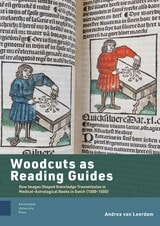
Woodcuts as Reading Guides
How Images Shaped Knowledge Transmission in Medical-Astrological Books in Dutch (1500-1550)Andrea van Leerdam
Amsterdam University Press, 2024
For this book Andrea van Leerdam received the Victorine van Schaick publicatieprijs 2024 and the Menno Hertzberger aanmoedigingsprijs 2026.
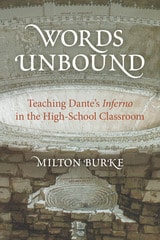
Words Unbound
Teaching Dante's Inferno in the High School ClassroomMilton Burke
University of Arkansas Press, 2017
Words Unbound draws on Milton Burke’s thirty years of teaching experience to help educators bring Inferno alive for today’s young reader. In a conversational, “colleague-to-colleague” style, Burke shares the interpretations, questions, and exercises he found effective in his high-school classroom, emphasizing group discussion to help students, no matter their religious or philosophical moorings, engage meaningfully with the notoriously difficult text.
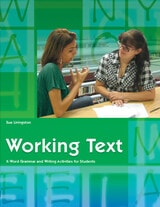
Working Text (Student Workbook)
X-Word Grammar and Writing Activities for StudentsSue Livingston
Gallaudet University Press, 2010
Working Test: X-Word Grammar and Writing Activities for Students features 86 X-Word Grammar reading and writing exercises divided into five parts of increasing complexity. Deaf, second-language, and other students experiencing difficulty with English composition can perform these exercises as homework or as in-class activities. Through these exercises, they can master English grammar, improve their facility with language constructions, and meet the challenges of becoming better writers.
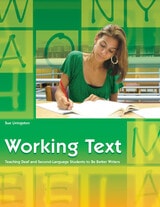
Working Text (Teacher's Guide)
Teaching Deaf and Second-Language Students to Be Better WritersSue Livingston
Gallaudet University Press, 2010
After teaching developmental writing to deaf students for may years, Sue Livingston found that students who can read and analyze written texts become better writers. They achieve their improvement by reading, then writing about what they have read. Livingston has embodied her successful approach in Working Text: Teaching Deaf and Second-Language Students to Be Better Writers.
In this straightforward instructional book, Livingston first explains what is involved and why her methods work with deaf students, second-language students, and other students who need to improve their writing ability. Upon this foundation, Working Text delineates how to teach students to write through reading and writing exercises. These exercises have been carefully crafted using the X-Word Grammar approach to help students discover common language constructions that they can apply to their own writing. As the students progress, their understanding of the elements of good writing will grow.
Working Text also includes all of the exercises and appendices featured in the Working Test: X-Word Grammar and Writing Activities for Students workbook, both in print and on on a special CD. The answers for the exercises are included as well, as are sample quizzes, and the CD can be used in the classroom for interactive lessons in conjunction with the student workbook. Working Text: Teaching Deaf and Second-Language Students to Be Better Writers, in concert with its companion student workbook, will help deaf, second-language, and other students develop into markedly better, more confident writers.

Wright Studies, Volume One
Taliesin, 1911 - 1914Narciso G. Menocal
Southern Illinois University Press, 1992
This inaugural issue is devoted to studies of Taliesin I. Designed and constructed in 1911 upon Wright’s return to Wisconsin from Europe, Taliesin I burned in August 1914. It thus became the most difficult Wright residence for Wright scholars to examine.
In this volume’s critical essays, Neil Levine offers a view of the different layers of meaning of Taliesin I; Scott Gartner explains the legend of the Welsh bard Taliesin and its meaning for Wright; Anthony Alofsin considers the influence of the playwright Richard Hovey and the feminist Ellen Key on Wright’s and Cheney’s thought of the period; and Narciso G. Menocal suggests that the Gilmore and O’Shea houses in Madison, Wisconsin, are a collective antecedent to Taliesin I.
To conclude the volume, Anthony Alofsin has written what amounts to a catalogue raisonné of the drawings and photographs of Taliesin I. Surprisingly, he finds no photographs of the living area and argues that those that have been published are in fact of Taliesin II.
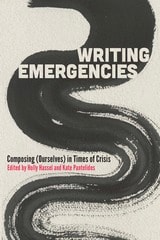
Writing Emergencies
Composing (Ourselves) in Times of CrisisHolly Hassel
Utah State University Press, 2026
Despite the adage “there are no writing emergencies,” at times situations invite or require immediate written response. In a modern era of social media and with the constancy of “crisis,” knowing when, how, and why to respond quickly is increasingly important. In Writing Emergencies, a diverse group of authors contribute scholarly, narrative-based discussions of writing emergencies, descriptions of more and less successful strategies, and a reflective conclusion that offers implications for writing studies praxis and theory.
In this collection, contributors demonstrate the reality of writing emergencies—in their own writing lives, classrooms, and programs—and they offer both self- and community-focused approaches for response. Chapters focus on discernment and prioritization, recognizing that all stressors are not necessarily emergencies. Instead, expanding our vocabulary for (and subsequent understanding) of the kinds of difficulties we come across can build our professional capacity and support greater career sustainability. The volume also illustrates the role of coalitions in navigating writing emergencies and how purposefully building and activating these coalitions subverts some challenges before they become emergencies, particularly those that are recurrent or manufactured.
Writing Emergencies both names and grapples with writing emergencies and offers insights for capacity-building in the acts of filtering and prioritizing competing urgent demands. The findings are meaningful for all leaders, students, and teachers who center care in their relationships with others.
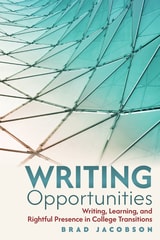
Writing Opportunities
Writing, Learning, and Rightful Presence in College TransitionsBrad Jacobson
Utah State University Press, 2026
Writing Opportunities presents in-depth text histories illustrating the interrelationship of writing, identities, and belonging in college writing transitions. Drawing on more than two years of research with three Latinx/a/o students transitioning from the same high school class to the local university, Brad Jacobson brings together analyses of interview transcripts, student writing, classroom genres, and institutional policies to foreground a sense of belonging as central to writing development and learning.
Including interviews with students and their instructors, Jacobson traces writing opportunities that Hercules, Jain, and Lucy were afforded as they transitioned from high school to college writing, particularly in general education courses. Chapters attend to multiple levels of interaction to show how policies, practices, and social histories can impact opportunities for learning. With attention to dominant discourses of writing that narrow what counts as good writing as well as positive opportunity structures that extend possibilities for identification, engagement, and deep learning, Jacobson also posits writing as an opportunity for writers to explore possibilities for who we are and who we may become.
Jacobson’s humanizing research invites readers to consider opportunity from multiple perspectives and shows how subtle shifts in relationships among students, instructors, and institutions can increase meaningful learning and provide a sense of belonging in educational contexts.
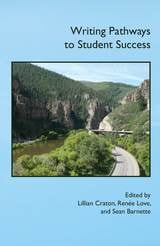
Writing Pathways to Student Success
Lillian Craton
University Press of Colorado, 2017
Teachers of first-year composition courses do essential work. Teaching argumentation and conventions of university-level writing; demystifying citation and punctuation; promoting reading comprehension and analysis. Yet such skills, as important as they are, do not reflect the full scope of our discipline. Some of the best learning in composition coursework relates to students' growth as successful individuals able to live and write in a complex world. Composition instructors demand civil discourse and respect for diversity. They coach students in time management and the creative process. They build up confidence, break down learning obstacles, and promote self-examination. The essays found in Writing Pathways for Student Success, written by and for instructors of college writing, examine life lessons that both students and instructors learn from first-year composition courses.
Contributors: Lori Brown, Kathryn Crowther, Casie Fedukovich, Rachel Anya Fomalhaut, Lynée Lewis Gaillet, Christopher Garland, Ruth A. Goldfine, Pamela Henney, Rachel McCoppin, Deborah Mixson-Brookshire, Karen Bishop Morris, Sarah O’Connor, Abigail G. Scheg, Lisa Whalen
Writing Workplace Cultures
An Archaeology of Professional WritingJim Henry
Southern Illinois University Press, 2000
In Writing Workplace Cultures: An Archaeology of Professional Writing, Jim Henry analyzes eighty-three workplace writing ethnographies composed over seven years in a variety of organizations. He views the findings as so many shards in an archaeology on professional writing at the beginning of the twenty-first century.
These ethnographies were composed by either practicing or aspiring writers participating in a Master’s program in professional writing and editing. Henry solicited the writers' participation in "informed intersubjective research" focused on issues and questions of their own determination. Most writers studied their own workplace, composing "auto-ethnographies" that problematize these workplaces' local cultures even as they depict writing practices within them.
Henry establishes links between current professional writing practices and composition instruction as both were shaped by national economic development and local postsecondary reorganization throughout the twentieth century. He insists that if we accept basic principles of social constructionism, the text demonstrates ways in which writers "write" workplace cultures to produce goods and services whose effects go far beyond the immediate needs of its clients.
Writing in America
Fischer, John
Rutgers University Press, 2018
In this newly reissued volume in the Rutgers University Press Classics Imprint, Writing in America proves to be as stimulating as it was in 1960. Here, writers including Robert Brustein, Stanley Kunitz, and C.P. Snow examine the state of writing in American novels, films, and television candidly and critically. The result is a collection of essays that showcase a first-rate and highly entertaining piece of reporting on the American literary scene that resonate in 2017.
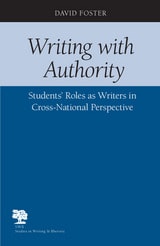
Writing with Authority
Students' Roles as Writers In Cross-National PerspectiveDavid Foster
Southern Illinois University Press, 2006
Writing with Authority: Students’ Roles as Writers in Cross-National Perspective offers a comparison of student writers in two university cultures—one German and one American—as the students learn to connect their writing to academic content. David Foster demonstrates the effectiveness of using cross-cultural comparisons to assess differences in literacy activities and suggests teaching approaches that will help American students better develop their roles as writers in knowledge-based communities. He proposes that American universities make stronger efforts to nurture the autonomy of American undergraduates as learner-writers and to create apprenticeship experiences that more closely reflect the realities of working in the academic community.
This comparative analysis identifies crucial differences in the ways German and American students learn to become academic writers, emphasizing two significant issues: the importance of self-directed, long-term planning and goal setting in developing knowledge-based projects and the impact of time structures on students’ writing practices. Foster suggests that students learn to write as knowledge makers, using cumulative, recursive task development as reflexive writing practices. He argues for the full integration of extended, self-managed, knowledge-based writing tasks into the American undergraduate curriculum from the onset of college study.
A cross-national perspective offers important insights into the conditions that influence novice writers, Foster says, including secondary preparations and transitions to postsecondary study. Foster proposes that students be challenged to write transformatively—to master new forms of authorship and authority based on self-directed planning, researching, and writing in specific academic communities. The text also addresses contested issues of power relations in students’ roles as academic writers and their perception of personal authority and freedom as writers.
A course model incorporates significant, self-directed writing projects to help students build sustainable roles as transformative writers, outlines “change goals” to help teachers develop curricular structures that support cumulative writing projects across the undergraduate curriculum, and shows how teachers can develop self-directed writing projects in a variety of program environments.
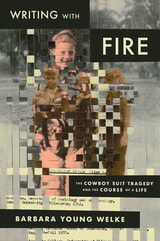
Writing with Fire
The Cowboy Suit Tragedy and the Course of a LifeBarbara Young Welke
University of Chicago Press, 2026
A cultural and legal history intertwined with a deeply emotional meditation on the course of life, memory, and the documents that define us.
During the 1940s and 1950s, an untold number of American children suffered devastating injuries when the fur-like fabric on the chaps of their Gene Autry–branded cowboy playsuits exploded into flame. Barbara Young Welke was researching this history when her teenage daughter unexpectedly died.
The shock of Welke’s loss transformed her understanding of the children and their families. Her experience also led her to question the norms of scholarship and of writing. Historians are trained to separate the personal from the intellectual, to be suspicious of emotion. These and other norms are embedded in and reinforced by the calling card of academics, the curriculum vitae. Welke wondered how that cold document—with its literal meaning, “the course of life”—had become a form that excludes so much of what gives life meaning. What impact did that have on what we know, how we know it, and how we understand ourselves? Similarly, Welke wondered, what might we see if we looked at the history of the cowboy suit tragedy as more than a matter of lawsuits brought by grieving families? Here, Welke traces the making, marketing, and selling of the cowboy suits; the lengths the defendants went to avoid and limit liability; and the meaning of the injuries, deaths, and legal settlements in the course of these children’s and families’ lives.
Writing with Fire interweaves the histories of the cowboy suit tragedy and the curriculum vitae. Grounded in archival and legal research, oral histories, and letters Welke wrote her daughter following her death, Welke offers an inimitable examination of trauma, law, autobiography, and identity. The result is revelatory and unforgettable: a provocative historical reflection on life and death, depression and war, markets and families, law, power, and precarity in modern America.