Results by title
18284 books match the query 'United States' and 882 start with w

W Stands for Women
How the George W. Bush Presidency Shaped a New Politics of GenderMichaele L. Ferguson and Lori J. Marso, eds.
Duke University Press, 2007
In W Stands for Women ten feminist scholars analyze various aspects of Bush’s persona, language, and policy to show how his administration has shaped a new politics of gender. One contributor points out the shortcomings of “compassionate conservatism,” a political philosophy that requires a weaker class to be the subject of compassion. Another examines Lynndie England’s participation in the abuse of prisoners at Abu Ghraib in relation to the interrogation practices elaborated in the Army Field Manual, practices that often entail “feminizing” detainees by stripping them of their masculine gender identities. Whether investigating the ways that Bush himself performs masculinity or the problems with discourse that positions non-Western women as supplicants in need of saving, these essays highlight the far-reaching consequences of the Bush administration’s conflation of feminist rhetoric, conservative gender ideology, and neoconservative national security policy.
Contributors. Andrew Feffer, Michaele L. Ferguson, David S. Gutterman, Mary Hawkesworth, Timothy Kaufman-Osborn, Lori Jo Marso, Danielle Regan, R. Claire Snyder, Iris Marion Young, Karen Zivi
Michaela Ferguson and Karen Zivi appeared on KPFA’s Against the Grain on September 11, 2007. Listen to the audio.
Michaela Ferguson and Lori Jo Marso appeared on WUNC’s The State of Things on August 30, 2007. Listen to the audio.
W. C. Handy
The Life and Times of the Man Who Made the BluesDavid Robertson
University of Alabama Press, 2011
Normal0falsefalsefalseEN-USX-NONEX-NONEMicrosoftInternetExplorer4
W. C. McKern and the Midwestern Taxonomic Method
Written by R. Lee Lyman and Michael J. O'Brien
University of Alabama Press, 2002
Explores W. C. McKern's use of Linnaean taxonomy as the model for development of a pottery classification system
By the early 20th century, North American archaeologists had found evidence of a plethora of prehistoric cultures displaying disparate geographic and chronological distributions. But there were no standards or algorithms for specifying when a culture was distinct or identical to another in a nearby or distant region.
Will Carleton McKern of the Milwaukee Public Museum addressed this fundamental problem of cultural classification beginning in 1929. He modeled his solution—known as the Midwestern Taxonomic Method—on the Linnaean biological taxonomy because he wanted the ability to draw historical and cultural "relationships" among cultures. McKern was assisted during development of the method by Carl E. Guthe, Thorne Deuel, James B. Griffin, and William Ritchie.
This book studies the 1930s correspondence between McKern and his contemporaries as they hashed out the method's nuances. It compares the several different versions of the method and examines the Linnaean biological taxonomy as it was understood and used at the time McKern adapted it to archaeological problems. Finally, this volume reveals how and why the method failed to provide the analytical solution envisioned by McKern and his colleagues and how it influenced the later development of Americanist archaeology.
W. E. B. Du Bois Souls of Black Folk
A Graphic InterpretationW. E. B. Du Bois (1868-1963)
Rutgers University Press, 2023
“The problem of the twentieth century is the problem of the color line.” These were the prescient words of W. E. B. Du Bois’s influential 1903 book The Souls of Black Folk. The preeminent Black intellectual of his generation, Du Bois wrote about the trauma of seeing the Reconstruction era’s promise of racial equality cruelly dashed by the rise of white supremacist terror and Jim Crow laws. Yet he also argued for the value of African American cultural traditions and provided inspiration for countless civil rights leaders who followed him. Now artist Paul Peart-Smith offers the first graphic adaptation of Du Bois’s seminal work.
Peart-Smith’s graphic adaptation provides historical and cultural contexts that bring to life the world behind Du Bois’s words. Readers will get a deeper understanding of the cultural debates The Souls of Black Folk engaged in, with more background on figures like Booker T. Washington, the advocate of black economic uplift, and the Pan-Africanist minister Alexander Crummell. This beautifully illustrated book vividly conveys the continuing legacy of The Souls of Black Folk, effectively updating it for the era of the 1619 Project and Black Lives Matter.

WARRING FACTIONS
INTEREST GROUPS, MONEY, SENATE CONFIRMATIONLAUREN COHEN BELL
The Ohio State University Press, 2002
Warring Factions focuses on the United States Senate’s confirmation process, the constitutional process the Senate uses to approve or reject the president’s choices to fill federal government positions. It is a book about history, the evolution, and, arguably, the decline of the process. Most significantly, it is a book that demonstrates the extent to which interest groups and money have transformed the Senate’s confirmation process into a virtual circus.
Based on in-depth research, including two dozen original interviews with United States senators, former senators and Senate staff members and interest group leaders, this volume demonstrates that today’s confirmation process is nothing more than an extension of the Senate’s legislative work. Changes to internal Senate norms in the 1960s and 1970s, coupled with changes to the external political environment, have allowed interest groups to dominate the Senate confirmation process.
WASP of the Ferry Command
Women Pilots, Uncommon DeedsSarah Byrn Rickman
University of North Texas Press, 2016

WELFARE REFORM IN WEST VIRGINIA
ROBERT J. DILGER
West Virginia University Press, 2004

WHEN KIDS GO TO COLLEGE
A PARENTS GUIDE TO CHANGING RELATIONSHIPBARBARA & PHILIP R. NEWMAN & NEWMAN
The Ohio State University Press, 1992

WHITE TATTOO
A COLLECTION OF SHORT STORIESWilliam J. Cobb
The Ohio State University Press, 2002
The White Tattoo is a smart, always surprising collection of American stories. William J. Cobb knows and loves his character and places. His first collection of short stories, The White Tattoo, revels in the undeniable allure of the physical world even as it is juxtaposed with the twists and kinks of psychological and emotional pain. At one extreme is the tense, torturous psychology of “Motel Ice,” whose narrative voice emerges from the mind of a mentally disturbed Jehovah’s Witness gazing out on a world of temptation and redemption. Similarly hyperdramatic in its conclusion and its arc of betrayal and violent aftermath, “For All You Dorks, Blah Blah Blah” conjures up a sleepwalking, murderous father who is less culpable in the harm he causes but all the while most destructive.
Stylistically, the stories crackle, snap, and zing. Several of them, including “The Wishes,” “The Atmosphere of Vienna,” and “Dark Matter,” use an idiosyncratic, Tilt-O-Whirl narrative marked by a swirling, shifting focus and point of view, trying to create a multifaceted, complex vision of the world by dipping in and out of the consciousness of various characters.
WPA Guide to 1930s Nevada
Writer's Program
University of Nevada Press, 1991
When Las Vegas boasted two motion picture theatres and the University of Nevada student population reached a high of twelve hundred, the original edition of The WPA Guide to 1930s Nevada was just coming off the press. First published in 1940 as Nevada: A Guide to the Silver State, part of the Work Projects Administration's American Guide Series, the book remains one of Nevada's premier tour and travel volumes. The WPA Guide to 1930s Nevada includes material on the state's geography and geology, plant and animal life, churches and schools. The native population is discussed, as are the arts, mining, ranching, press, sports, and recreation during the 1930s. The period photographs spread throughout the volume give an excellent picture of Nevada in the early part of the twentieth century and complement the profiles of thirty cities and eight detailed tour descriptions that follow the pattern of the major highway through the state.

WPAing in a Pandemic and Beyond
Revision, Innovation, and AdvocacyTodd Ruecker
Utah State University Press, 2025
The chapters in this collection include a variety of voices who have been involved in writing program administration in recent years to reflect on the work done in this moment of crisis. Through both short vignettes and longer chapters, this book explores the complicated interactions between WPA work and navigating times of crisis to provide insights for moving forward. Authors explore a variety of topics including professional development, curricular change, advocating in the face of intransigent administrations and others, caring for students, and taking time for self-care. Pointing to specific actions for continued advocacy, WPAing in a Pandemic and Beyond will be of great interest to WPAs and writing studies scholars.
WWII
A Chronicle of SoldieringJames Jones
University of Chicago Press, 1975
Moving chronologically and thematically through the complex history of the conflict, Jones interweaves his own vivid memories of soldiering in the Pacific—from the look on a Japanese fighter pilot’s face as he bombed Pearl Harbor, so close that Jones could see him smile and wave, to hitting the beach under fire in Guadalcanal—while always returning to resounding larger themes. Much of WWII can be read as a tribute to the commitment of American soldiers, but Jones also pulls no punches, bluntly chronicling resentment at the privilege of the officers, questionable strategic choices, wartime suffering, disorganization, the needless loss of life, and the brutal realization that a single soldier is ultimately nothing but a replaceable cog in a heartless machine. As the generation that fought and won World War II leaves the stage, James Jones’s book reminds us of what they accomplished—and what they sacrificed to do so.
Wabanaki Homeland and the New State of Maine
The 1820 Journal and Plans of Survey of Joseph TreatMicah A. Pawling
University of Massachusetts Press, 2007
Edited, annotated, and with an introduction by Micah Pawling, this volume includes a complete transcription of Treat's journal, reproductions of dozens of hand-drawn maps, and records pertaining to the 1820 treaty between the Penobscot Nation and the governing authorities of Maine. As Pawling points out, Treat's journal offers more than the observations of a state agent conducting a survey. It re-creates a dialogue between Euro-Americans and Native peoples, showing how different perceptions of the land were negotiated and disseminated, and exposing the tensions that surfaced when assumptions and expectations clashed. In large part because of Neptune's influence, the maps, in addition to detailing the location of Wabanaki settlements, reflect a river-oriented Native perspective that would later serve as a key to Euro-American access to the region's interior.
The groundwork for cooperation between Treat and Neptune had been laid during the 1820 treaty negotiations, in which both men participated and which were successfully concluded just over a month before their expedition departed from Bangor, Maine. Despite conflicting interests and mutual suspicions, they were able to work together and cultivate a measure of trust as they traveled across northern Maine and western New Brunswick, mapping an old world together while envisioning its uncertain future.
Waccamaw Legacy
Contemporary Indians Fight for SurvivalWritten by Patricia Lerch
University of Alabama Press, 2004
An insightful and informative look into the Waccamaw Siouan's quest for identity and survival
Waccamaw Legacy: Contemporary Indians Fight for Survival sheds light on North Carolina Indians by tracing the story of the now state-recognized Waccamaw Siouan tribe from its beginnings in the Southeastern United States, through their first contacts with Europeans, and into the 21st century, detailing the struggles these Indians have endured over time. We see how the Waccamaw took hold of popular theories about Indian tribes like the Croatan of the Lost Colony and the Cherokee as they struggled to preserve their heritage and to establish their identity.
Patricia Lerch was hired by the Waccamaw in 1981 to perform the research needed to file for recognition under the Bureau of Indian Affairs Federal Acknowledgement Program of 1978. The Waccamaw began to organize powwows in 1970 to represent publicly their Indian heritage and survival and to spread awareness of their fight for cultural preservation and independence. Lerch found herself understanding that the powwows, in addition to affirming identity, revealed important truths about the history of the Waccamaw and the ways they communicate and coexist.
Waccamaw Legacy outlines Lerch’s experience as she played a vital role in the Waccamaw Siouan's continuing fight for recognition and acceptance in contemporary society and culture.

Wad-Ja-Get?
The Grading Game in American Education, 50th Anniversary EditionHoward Kirschenbaum, Rodney Napier, and Sidney B. Simon; With a new introduction by Professor Barry Fishman
Michigan Publishing Services, 2020
Grades and grading are an accepted part of modern education. But why? Why do we accept a system that is more focused on ranking students than on learning? Why do we accept the negative effects of standard grading approaches, including turning students off from learning, increasing stress, creating winners and losers, and perpetuating racial and economic inequality? Why do we accept these things when there are better alternatives?
Wad-Ja-Get? is a unique discussion of grading and its effects on students. The book was written by three education professors who have had first-hand contact with the problems of grading in all its forms. Written in the form of a novel, the topic is explored through the eyes of students, teachers, and parents in one high school embroiled in a controversy around grading. Possible alternatives to the grading system are examined in detail and the research on grading is summarized in an appendix. This 50th anniversary edition of the book includes a new introduction by Professor Barry Fishman, updating the research and setting the original book in the context of today’s educational and societal challenges. Wad-Ja-Get? remains timely five decades after its original publication, and will be inspiring to students, parents, educators, and policymakers.
Wading Right In
Discovering the Nature of WetlandsCatherine Owen Koning and Sharon M. Ashworth
University of Chicago Press, 2019
In Wading Right In, Catherine Owen Koning and Sharon M. Ashworth take us on a journey into wetlands through stories from the people who wade in the muck. Traveling alongside scientists, explorers, and kids with waders and nets, the authors uncover the inextricably entwined relationships between the water flows, natural chemistry, soils, flora, and fauna of our floodplain forests, fens, bogs, marshes, and mires. Tales of mighty efforts to protect rare orchids, restore salt marshes, and preserve sedge meadows become portals through which we visit major wetland types and discover their secrets, while also learning critical ecological lessons.
The United States still loses wetlands at a rate of 13,800 acres per year. Such loss diminishes the water quality of our rivers and lakes, depletes our capacity for flood control, reduces our ability to mitigate climate change, and further impoverishes our biodiversity. Koning and Ashworth’s stories captivate the imagination and inspire the emotional and intellectual connections we need to commit to protecting these magical and mysterious places.
Wages and Labor Markets in the United States, 1820-1860
Robert A. Margo
University of Chicago Press, 1999
This volume makes a significant contribution to economic history by presenting a vast amount of previously unexamined data to advance the understanding of the history of wages and labor markets in the antebellum economy.

Waging War on War
Peacefighting in American LiteratureGiorgio Mariana
University of Illinois Press, 2015
Giorgio Mariani rigorously engages with the essential question of what makes a text explicitly anti-war. Ranging from Emerson and Joel Barlow to Maxine Hong Kingston and Tim O'Brien, Waging War on War explores why sustained attempts at identifying the anti-war text's formal and philosophical features seem to always end at an impasse. Mariani moves a step beyond to construct a theoretical model that invites new inquiries into America's nonviolent, nonconformist tradition even as it challenges the ways we study U.S. warmaking and the cultural reactions to it. In the process, he shows how the ideal of nonviolence and a dislike of war have been significant, if nonhegemonic, features of American culture since the nation's early days.
Ambitious and nuanced, Waging War on War at last defines anti-war literature while exploring the genre's role in an assertive peacefighting project that offered--and still offers--alternatives to violence.
Waikiki Dreams
How California Appropriated Hawaiian Beach CulturePatrick Moser
University of Illinois Press, 2024
Despite a genuine admiration for Native Hawaiian culture, white Californians of the 1930s ignored authentic relationships with Native Hawaiians. Surfing became a central part of what emerged instead: a beach culture of dressing, dancing, and acting like an Indigenous people whites idealized.
Patrick Moser uses surfing to open a door on the cultural appropriation practiced by Depression-era Californians against a backdrop of settler colonialism and white nationalism. Recreating the imagined leisure and romance of life in Waikīkī attracted people buffeted by economic crisis and dislocation. California-manufactured objects like surfboards became a physical manifestation of a dream that, for all its charms, emerged from a white impulse to both remove and replace Indigenous peoples. Moser traces the rise of beach culture through the lives of trendsetters Tom Blake, John “Doc” Ball, Preston “Pete” Peterson, Mary Ann Hawkins, and Lorrin “Whitey” Harrison while also delving into California’s control over images of Native Hawaiians via movies, tourism, and the surfboard industry.
Compelling and innovative, Waikīkī Dreams opens up the origins of a defining California subculture.

Waiting for Prime Time
THE WOMEN OF TELEVISION NEWSMarlene Sanders and Marcia Rock
University of Illinois Press, 1988
Waiting for the Call
From Preacher's Daughter to Lesbian MomJacqueline Taylor
University of Michigan Press, 2007
“Well-written, absorbing, and a great pleasure to read . . . will appeal to Christians struggling to square their traditional beliefs with acceptance of homosexuality as well as to all those interested in adoption, lesbian marriage, and the changing shape of America’s families.”
—Elizabeth C. Fine, Virginia Tech University
Waiting for the Call takes readers from the foothills of the Appalachians—where Jacqueline Taylor was brought up in a strict evangelical household—to contemporary Chicago, where she and her lesbian partner are raising a family. In a voice by turns comic and loving, Taylor recounts the amazing journey that took her in profoundly different directions from those she or her parents could have ever envisioned.
Taylor’s father was a Southern Baptist preacher, and she struggled to deal with his strictures as well as her mother’s manic-depressive episodes. After leaving for college, Taylor finds herself questioning her faith and identity, questions that continue to mount when—after two divorces, a doctoral degree, and her first kiss with a woman—she discovers her own lesbianism and begins a most untraditional family that grows to include two adopted children from Peru.
Even as she celebrates and cherishes this new family, Taylor insists on the possibility of maintaining a loving connection to her religious roots. While she and her partner search for the best way to explain adoption to their children and answer the inevitable question, “Which one is your mom?” they also seek out a church that will unite their love of family and their faith. Told in the great storytelling tradition of the American South, full of deep feeling and wry humor, Waiting for the Call engagingly demonstrates how one woman bridged the gulf between faith and sexual identity without abandoning her principles.

Waiting for the Cemetery Vote
The Fight to Stop Election Fraud in ArkansasTom Glaze
University of Arkansas Press, 2011

Wake of the Unseen Object
Travels through Alaska's Native LandscapesTom Kizzia
University of Alaska Press, 2020
Waking from the Dream
The Struggle for Civil Rights in the Shadow of Martin Luther King, Jr.David L. Chappell
Duke University Press, 2016
Walking Away from Nuremberg
Just War and the Doctrine of Command ResponsibilityLawrence P. Rockwood
University of Massachusetts Press, 2007
In September 1994, Lawrence P. Rockwood, then a counterintelligence officer with the U.S. Army's Tenth Mountain Division, was deployed to Haiti as part of Operation Restore Democracy, the American-led mission to oust the regime of Raoul Cedras and reinstall President Jean-Bertrand Aristide. Shortly after arriving in-country, Captain Rockwood began receiving reports of human rights abuses at the local jails, including the murder of political prisoners. He appealed to his superiors for permission to take action but was repeatedly turned down. Eventually, after filing a formal complaint with an army inspector general, he set off to inspect the jails on his own. The next day, Captain Rockwood found himself on a plane headed back to the United States, where he was tried by court-martial, convicted on several counts, and discharged from military service.
In this book, Rockwood places his own experience within the broader context of the American military doctrine of “command responsibility”—the set of rules that holds individual officers directly responsible for the commission of war crimes under their authority. He traces the evolution of this doctrine from the Civil War, where its principles were first articulated as the “Lieber Code,” through the Nuremberg trials following World War II, where they were reaffirmed and applied, to the present. Rockwood shows how in the past half-century the United States has gradually abandoned its commitment to these standards, culminating in recent Bush administration initiatives that in effect would shield American commanders and officials from prosecution for many war crimes. The Abu Ghraib and Guantánamo prison abuse scandals, the recently disclosed illegal CIA detention centers, the unprecedented policy of tolerating acts considered as torture by both international standards and U.S. military doctrine, and the recent cover-ups of such combat-related war crimes as the Haditha massacre of November 2005, all reflect an “official anti-humanitarian” trend, Rockwood argues, that is at odds with our nation's traditions and principles.
Walking East Harlem
A Neighborhood ExperienceChristopher Bell
Rutgers University Press, 2025
Now East Harlem native Christopher Bell takes you on a tour of his beloved neighborhood. He takes you on three separate walking tours, each visiting a different part of East Harlem and each full of stories about its theaters, museums, art spaces, schools, community centers, churches, mosques, and synagogues. You’ll also learn about the famous people who lived in El Barrio, such as actress Cecily Tyson, opera singer Marian Anderson, portrait artist Alice Neel, incomparable poet Julia De Burgos, and King of Latin Music Tito Puente.
Lavishly illustrated with over fifty photos, Walking East Harlem points out not only the many architectural and cultural landmarks in the neighborhood but also the historical buildings that have since been demolished. Whether you are a tourist or a resident, this guide will give you a new appreciation for El Barrio’s exciting history, cultural diversity, and continued artistic vibrancy.
Walking Harlem
The Ultimate Guide to the Cultural Capital of Black AmericaTaborn, Karen
Rutgers University Press, 2018
This illustrated guide takes readers on five separate walking tours of Harlem, covering ninety-one different historical sites. Alongside major tourist destinations like the Apollo Theater and the Abyssinian Baptist Church, longtime Harlem resident Karen Taborn includes little-known local secrets like Jazz Age speakeasies, literati, political and arts community locales. Drawing from rare historical archives, she also provides plenty of interesting background information on each location.
This guide was designed with the needs of walkers in mind. Each tour consists of eight to twenty-nine nearby sites, and at the start of each section, readers will find detailed maps of the tour sites, as well as an estimated time for each walk. In case individuals would like to take a more leisurely tour, it provides recommendations for restaurants and cafes where they can stop along the way.
Walking Harlem gives readers all the tools they need to thoroughly explore over a century’s worth of this vital neighborhood’s cultural, political, religious, and artistic heritage. With its informative text and nearly seventy stunning photographs, this is the most comprehensive, engaging, and educational walking tour guidebook on one of New York’s historic neighborhoods.

Walking Nature Home
A Life's JourneyBy Susan J. Tweit
University of Texas Press, 2009
Without a map, navigate by the stars. Susan Tweit began learning this lesson as a young woman diagnosed with an autoimmune disease that was predicted to take her life in two to five years. Offered no clear direction for getting well through conventional medicine, Tweit turned to the natural world that was both her solace and her field of study as a plant ecologist. Drawing intuitive connections between the natural processes and cycles she observed and the functions of her body, Tweit not only learned healthier ways of living but also discovered a great truth—love can heal. In this beautifully written, moving memoir, she describes how love of the natural world, of her husband and family, and of life itself literally transformed and saved her own life.
In tracing the arc of her life from young womanhood to middle age, Tweit tells stories about what silence and sagebrush, bird bones and sheep dogs, comets, death, and one crazy Englishman have to teach us about living. She celebrates making healthy choices, the inner voices she learned to hear on days alone in the wilderness, the joys of growing and eating an organic kitchen garden, and the surprising redemption in restoring a once-blighted neighborhood creek. Linking her life lessons to the stories she learned in childhood about the constellations, Tweit shows how qualities such as courage, compassion, and inspiration draw us together and bind us into the community of the land and of all living things.
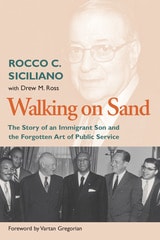
Walking On Sand
The Story of an Immigrant Son and the Forgotten Art of Public ServiceRocco C Siciliano
University of Utah Press, 2004
Rocco C. Siciliano broke new ground as the first Italian-American to serve in the White House as an assistant to the president, Dwight D. Eisenhower. At 31, "Ike’s Youngest" attained a prominence not suggested in his humble beginnings in Salt Lake City, Utah. But his upbringing in the Mormon-dominated community, where he balanced the heritage of his striving immigrant parents with his own aspirations for success, prepared him for a wide variety of service. This service includes leading a special weapons platoon in the 10th Mountain Division in World War II, bringing Martin Luther King Jr. to meet with President Eisenhower, and becoming a recognized business leader in California.
Siciliano used his expertise in labor, personnel management, and business to contribute substantively to the J. Paul Getty Center, the Los Angeles Philharmonic Association, the Committee for Economic Development, and the "Volcker" Commission on Public Service, among others.
The variety of Siciliano’s experiences reinvigorates our understanding of the forgotten art of public service. Walking on Sand emphasizes the role that public service can play for corporations, communities, states, and the nation. This story is a gift from the Greatest Generation to the many people who serve America today and will serve her tomorrow.
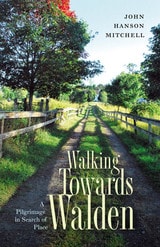
Walking Towards Walden
A Pilgrimage in Search of PlaceJohn Hanson Mitchell
University Press of New England, 2015
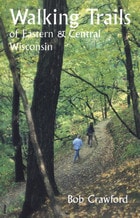
Walking Trails of Eastern and Central Wisconsin
Bob Crawford
University of Wisconsin Press, 1997
A companion to the popular Walking Trails of Southern Wisconsin, this book describes more than 200 trails in 72 locations throughout five of the state's major regions. Bob Crawford provides maps and detailed instructions to make the trails easy to locate.
With each trail description you'll find:
* details about the route and terrain, as well as geographical, biological, or historical features of interest;
* regulations including open days and hours, and rules regarding dogs, trail bikes, cross-country skiing, and other activities;
* information about available restrooms, drinking water, nature centers, and other facilities at the site;
* a description assessing degree of difficulty—slope, width, maintenance, and other such factors—and a helpful rating of "walkability" on a scale from 1 to 5.
The only comprehensive guide to hiking locations in the eastern part of the state, this book also provides lists of trail locations that include playground equipment for kids and picnic facilities for those who want to make a day trip of their hiking outing. Appendices spotlight trails that boast historical significance, ice age features, picnic areas, and cross-country skiing opportunities.
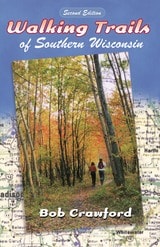
Walking Trails of Southern Wisconsin
Bob Crawford
University of Wisconsin Press, 2000
Take a walk on the wild side with the completely updated version of this popular guide.
This edition now includes coverage of Lafayette and Vernon counties, plus new information on more trails, including ones at Avoca Prairie Savanna State Natural Area, Wildcat Mountain State Park, and Blackhawk Lake Recreational Area. Author Bob Crawford has also revised eleven trail maps in nine counties and updated material throughout the book, which now describes more than 150 trails at more than sixty locations.
These trails wind across southern Wisconsin—into forests and along shores, over glacial formations and around Native American earthworks—and showcase some of the most beautiful and interesting walking trails in the nation. Walking Trails of Southern Wisconsin retains its handy, pocket-sized format plus all the other features that made the first edition so successful:
• details about routes and terrain plus geographical, biological, or historical features of interest
• regulations including open days and hours, and rules regarding dogs, trail bikes, cross-country skiing, and other activities
• information about available restrooms, drinking water, nature centers, and other facilities at the site
• a description assessing degree of difficulty—slope, width, maintenance, and other such factors—and a helpful rating of “walkability” on a scale from 1 to 5
Crawford also provides information about nearby parks, preserves, glacial formations, historical sites, tourist attractions, and other points of interest for those who want to turn a hike into a day trip or weekend outing. Staying fit was never so easy nor so much fun.

Walking on the Wild Side
Long-Distance Hiking on the Appalachian TrailFondren, Kristi M
Rutgers University Press, 2015
The most famous long-distance hiking trail in North America, the 2,181-mile Appalachian Trail—the longest hiking-only footpath in the world—runs along the Appalachian mountain range from Georgia to Maine. Every year about 2,000 individuals attempt to “thru-hike” the entire trail, a feat equivalent to hiking Mount Everest sixteen times. In Walking on the Wild Side, sociologist Kristi M. Fondren traces the stories of forty-six men and women who, for their own personal reasons, set out to conquer America’s most well known, and arguably most social, long-distance hiking trail.
In this fascinating in-depth study, Fondren shows how, once out on the trail, this unique subculture of hikers lives mostly in isolation, with their own way of acting, talking, and thinking; their own vocabulary; their own activities and interests; and their own conception of what is significant in life. They tend to be self-disciplined, have an unwavering trust in complete strangers, embrace a life of poverty, and reject modern-day institutions. The volume illuminates the intense social intimacy and bonding that forms among long-distance hikers as they collectively construct a long-distance hiker identity. Fondren describes how long-distance hikers develop a trail persona, underscoring how important a sense of place can be to our identity, and to our sense of who we are. Indeed, the author adds a new dimension to our understanding of the nature of identity in general.
Anyone who has hiked—or has ever dreamed of hiking—the Appalachian Trail will find this volume fascinating. Walking on the Wild Side captures a community for whom the trail is a sacred place, a place to which they have become attached, socially, emotionally, and spiritually.

Walking the Gendered Tightrope
Theresa May and Nancy Pelosi as Legislative LeadersMelissa Haussman and Karen M. Kedrowski
University of Michigan Press, 2023
Walking the Old Road
A People's History of Chippewa City and the Grand Marais AnishinaabeStaci Lola Drouillard
University of Minnesota Press, 2019
The story of a once vibrant, now vanished off-reservation Ojibwe village—and a vital chapter of the history of the North Shore
“We do this because telling where you are from is just as important as your name. It helps tie us together and gives us a strong and solid place to speak from. It is my hope that the stories of Chippewa City will be heard, shared, and remembered, and that the story of Chippewa City and the Grand Marais Chippewa will continue to grow. By being a part of the living narrative, Bimaadizi Aadizookaan, together we can create a new story about what was, what is, and, ultimately, what will be.” —from the Prologue
At the turn of the nineteenth century, one mile east of Grand Marais, Minnesota, you would have found Chippewa City, a village that as many as 200 Anishinaabe families called home. Today you will find only Highway 61, private lakeshore property, and the one remaining village building: St. Francis Xavier Church. In Walking the Old Road, Staci Lola Drouillard guides readers through the story of that lost community, reclaiming for history the Ojibwe voices that have for so long, and so unceremoniously, been silenced.
Blending memoir, oral history, and narrative, Walking the Old Road reaches back to a time when Chippewa City, then called Nishkwakwansing (at the edge of the forest), was home to generations of Ojibwe ancestors. Drouillard, whose own family once lived in Chippewa City, draws on memories, family history, historical analysis, and testimony passed from one generation to the next to conduct us through the ages of early European contact, government land allotment, family relocation, and assimilation.
Documenting a story too often told by non-Natives, whether historians or travelers, archaeologists or settlers, Walking the Old Road gives an authentic voice to the Native American history of the North Shore. This history, infused with a powerful sense of place, connects the Ojibwe of today with the traditions of their ancestors and their descendants, recreating the narrative of Chippewa City as it was—and is and forever will be—lived.
Walking the Steps Of Cincinnati
A Guide to the Queen City’s Scenic and Historic SecretsMary Anna DuSablon
Ohio University Press, 2014
Walking the Steps of Cincinnati: A Guide to the Queen City’s Scenic and Historic Secrets is a revised and updated version of Mary Anna DuSablon’s original guidebook, first published in 1998. This new edition describes and maps thirty-four walks of varying lengths and levels of difficulty around the neighborhoods of Cincinnati, following scenic or historic routes and taking in many of the city’s more than four hundred sets of steps. Some of these walks follow the same routes laid out by DuSablon in the first edition of the guide; others have been revised to reflect changes in the city and its neighborhoods, the physical condition of the steps, and the scenic views of Cincinnati that they afford; and still others are altogether new.
In writing their descriptions of the walks, authors Connie J. Harrell and John Cicmanec have retraced each path and taken all new photographs of the steps as well as architectural and natural landmarks along the way. Cartographer Brian Balsley has drawn a fresh set of maps, and Roxanne Qualls, vice-mayor of Cincinnati, has graciously written a new foreword.
Walking to the Sun
A Journey through America's Energy LandscapesTom Haines
University Press of New England, 2018

Wall Street Women
Melissa S. Fisher
Duke University Press, 2012
Fisher charts the evolution of the women's careers, the growth of their political and economic clout, changes in their perspectives and the cultural climate on Wall Street, and their experiences of the 2008 financial collapse. While most of the pioneering subjects of Wall Street Women did not participate in the women's movement as it was happening in the 1960s and 1970s, Fisher argues that they did produce a "market feminism" which aligned liberal feminist ideals about meritocracy and gender equity with the logic of the market.

Wallace Stevens And The Apocalyptic Mode
Woodland, Malcolm
University of Iowa Press, 2005
This study begins with an examination of the textual and generic issues surrounding apocalypse, culminating in the idea of apocalyptic language as a form of “discursive mastery” over the mayhem of events. Woodland provides an informative religious/historical discussion of apocalypse and, engaging with such critics as Parker, Derrida, and Fowler, sets forth the paradoxes and complexities that eventually challenge any clear dualities between apocalyptic and antiapocalyptic thinking.
Woodland then examines some of Stevens’s wartime essays and poems and describes Stevens’s efforts to salvage a sense of self and poetic vitality in a time of war, as well as his resistance to the possibility of cultural collapse. Woodland discusses the major postwar poems “Credences of Summer” and “The Auroras of Autumn” in separate chapters, examining the interaction of (anti)apocalyptic modes with, respectively, pastoral and elegy.
The final chapter offers a perspective on Stevens’s place in literary history by examining the work of a contemporary poet, Jorie Graham, whose poetry quotes from Stevens’s oeuvre and shows other marks of his influence. Woodland focuses on Graham's 1997 collection The Errancy and shows that her antiapocalyptic poetry involves a very different attitude toward the possibility of a radical break with a particular cultural or aesthetic stance.
Wallace Stevens and the Apocalyptic Mode, offering a new understanding of Stevens’s position in literary history, will greatly interest literary scholars and students.
Wallace Stevens and the Critical Schools
Melita C. Schaum
University of Alabama Press, 1988
Wallace Stevens and the Critical Schools reveals a field marked by conflict and contradiction, both within and among critical works in their attempts to explicate and appropriate this major American poet. Stevens’ changing reception among the critical schools reveals much about the shifting nature of American literature and criticism in this century and illuminates the often polemical process of literary canon formation. Each chapter of this book examines a particular aspect of the 20th-century critical involvement with Wallace Stevens’ poetry, introduced by a discussion of the poet’s work as an arena for the convergence of modern critical tendencies and concerns.
First, the author examines the avant-garde milieu of early 20th-century modernism, which implicated Stevens in its melee of affiliations and enmities and which influenced critics’ ambivalent responses to his early work. She traces the critical controversies of the poet’s emergence before and during the 1920s, specifically the clash between New Humanism and aestheticism, and demonstrates how the quality of irony in Stevens’ work became a part of the critics’ general repertoire in their assessment of this poet.
The 1930s, 1940s, and 1950s were decades during which Stevens criticism became dominated by the New Critical ideology. The turn toward deconstruction in Stevens criticism stands in part as a response to the New Critical dilemma, seen in the manner in which such critics as J. Hillis Miller and Joseph Riddel appropriated the concept of “decreation” to explain the sense of rupture in Stevens’ late poetry yet brought that concept to its logical end in a deconstructive paradigm.
Finally, Schaum identifies four major theoretical approaches to Stevens in the past two decades that continue to inform and direct the field of critical dissent and exploration in the 1980s. Such theories as Bloomian misprision, versions of hermeneutic criticism, redefinitions of the deconstructive enterprise, and the contemporary call for a new historicism continue the battle to appropriate Stevens as the “hard prize” of critical aims and investigations.

Walled
Barriers, Migration, and Resistance in the U.S.-Mexico BorderlandsEdited by Andréanne Bissonnette and Élisabeth Vallet
University of Arizona Press, 2025
From the bustling San Diego–Tijuana region to the borderlands of Brownsville-Matamoros, the U.S.-Mexico border is marked by extensive stretches of walls. Over the past thirty years, these walls have evolved from purely physical barriers into multifaceted systems encompassing administrative, legal, legislative, and biometric components. This volume invites readers to reflect on the transformations of the border since the construction of the initial fourteen miles of wall, and the subsequent addition of 1,940 miles. It provides a comprehensive exploration of the border’s evolution, and its profound and lasting impacts.
Bringing together recognized scholars in border studies, Walled delves into the varied manifestations and lived experiences associated with U.S.-Mexico border walls. The introduction by Andréanne Bissonnette and Élisabeth Vallet offers a thorough review of the border walls’ thirty-year history, placing it within a global context. Contributions offer diverse perspectives of the border experience, from state policies and migrant experiences to the daily lives of border residents. Topics such as militarization, migration, artistic resistance, and humanitarian aid are carefully examined. This volume is an essential resource for policymakers, activists, scholars, and anyone seeking to understand the intricate realities of border communities and the far-reaching consequences of border policies.
Contributors
Susana Báez-Ayala
Andréanne Bissonnette
Mathilde Bourgeon
Silvia M. Chávez-Baray
Irasema Coronado
Thalia D’Aragon-Giguère
Erin Hoekstra
Anthony Jimenez
T. Mark Montoya
Eva M. Moya
Scott Nicol
Héctor Antonio Padilla Delgado
Lisa Sun-Hee Park
Tony Payan
Patricia Ravelo-Blancas
David A. Shirk
Allyson Teague
Élisabeth Vallet
Wallowing in Sex
The New Sexual Culture of 1970s American TelevisionElana Levine
Duke University Press, 2007
Wallowing in Sex is a lively analysis of the key role of commercial television in the new sexual culture of the 1970s. Elana Levine explores sex-themed made-for-TV movies; female sex symbols such as the stars of Charlie’s Angels and Wonder Woman; the innuendo-driven humor of variety shows (The Sonny and Cher Comedy Hour, Laugh-In), sitcoms (M*A*S*H, Three’s Company), and game shows (Match Game); and the proliferation of rape plots in daytime soap operas. She also uncovers those sexual topics that were barred from the airwaves. Along with program content, Levine examines the economic motivations of the television industry, the television production process, regulation by the government and the tv industry, and audience responses. She demonstrates that the new sexual culture of 1970s television was a product of negotiation between producers, executives, advertisers, censors, audiences, performers, activists, and many others. Ultimately, 1970s television legitimized some of the sexual revolution’s most significant gains while minimizing its more radical impulses.

Walls That Speak
The Murals of John Thomas BiggersOlive Jensen Theisen
University of North Texas Press, 2010
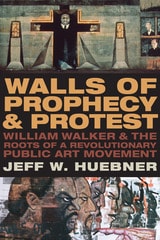
Walls of Prophecy and Protest
William Walker and the Roots of a Revolutionary Public Art MovementJeff W. Huebner
Northwestern University Press, 2019
Though his art could not have been more public, Walker maintained a low profile during his working life and virtually withdrew from the public eye after his retirement in 1989. Author Jeff W. Huebner met Walker in 1990 and embarked on a series of insightful interviews that stretched over the next two decades. Those meetings and years of research form the basis of Walls of Prophecy and Protest, the story of Walker’s remarkable life and the movement that he inspired.
Featuring forty-three color images of Walker’s work, most long since destroyed or painted over, this handsome edition reveals the artist who was the primary figure behind Chicago’s famed Wall of Respect and who created numerous murals that depicted African American historical figures, protested social injustice, and promoted love, respect, racial unity, and community change.

Walmart in the Global South
Workplace Culture, Labor Politics, and Supply ChainsEdited by Carolina Bank Muñoz, Bridget Kenny,and Antonio Stecher
University of Texas Press, 2018
As the largest private employer in the world, Walmart dominates media and academic debate about the global expansion of transnational retail corporations and the working conditions in retail operations and across the supply chain. Yet far from being a monolithic force conquering the world, Walmart must confront and adapt to diverse policies and practices pertaining to regulation, economy, history, union organization, preexisting labor cultures, and civil society in every country into which it enters. This transnational aspect of the Walmart story, including the diversity and flexibility of its strategies and practices outside the United States, is mostly unreported.
Walmart in the Global South presents empirical case studies of Walmart’s labor practices and supply chain operations in a number of countries, including Chile, Brazil, Argentina, Nicaragua, Mexico, South Africa, and Thailand. It assesses the similarities and differences in Walmart’s acceptance into varying national contexts, which reveals when and how state regulation and politics have served to redirect company practice and to what effect. Regulatory context, state politics, trade unions, local cultures, and global labor solidarity emerge as vectors with very different force around the world. The volume’s contributors show how and why foreign workers have successfully, though not uniformly, driven changes in Walmart’s corporate culture. This makes Walmart in the Global South a practical guide for organizations that promote social justice and engage in worker struggles, including unions, worker centers, and other nonprofit entities.
Walt Whitman and Nineteenth-Century Women Reformers
Sherry Ceniza
University of Alabama Press, 1999
WINNER OF THE ELIZABETH AGEE PRIZE IN AMERICAN LITERATURE
Examining Whitman’s poetic development through the documented influence of nineteenth‑century women reformers.
Walt Whitman and 19th-Century Women Reformers documents Whitman's friendships with women during the 1850s, the decade of Whitman's most creative period. The book reveals startling connections between the first three editions of Leaves of Grass and the texts generated by the women he knew during this period, many of whom were radical activists in the women's rights movement.
Sherry Ceniza argues that Whitman's editions of Leaves became progressively more radically 'feminist' as he followed the women's rights movement during the 1850s and that he was influenced by what he called the 'true woman of the new aggressive type . . . woman under the new dispensation.' Ceniza documents the progression of the National Woman's Rights movement through the lives and writings of three of its leaders- Abby Hills Price, Paulina Wright Davis, and Ernestine L. Rose. By juxtaposing the texts written by these women with Leaves, Ceniza shows that Whitman used many of the same arguments and rhetorical gestures as his female activist friends.
The book also discusses the influence of women engaged in women's rights outside the National Woman's Rights organization. And Ceniza's opening chapter is devoted to a fresh interpretation of the life and thought of another strong-minded woman who influenced the poet's writing-Louisa Van Velsor Whitman, Walt Whitman's mother.
Walt Whitman and the Class Struggle
Andrew Lawson
University of Iowa Press, 2006
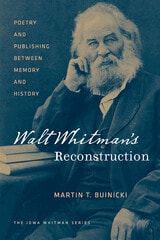
Walt Whitman's Reconstruction
Poetry and Publishing between Memory and HistoryMartin T. Buinicki
University of Iowa Press, 2012
For Walt Whitman, living and working in Washington, D.C., after the Civil War, Reconstruction meant not only navigating these tumultuous years alongside his fellow citizens but also coming to terms with his own memories of the war. Just as the work of national reconstruction would continue long past its official end in 1877, Whitman’s own reconstruction would continue throughout the remainder of his life as he worked to revise his poetic project—and his public image—to incorporate the disasters that had befallen the Union. In this innovative and insightful analysis of the considerable poetic and personal reimagining that is the hallmark of these postwar years, Martin Buinicki reveals the ways that Whitman reconstructed and read the war.
Walt Whitman's Selected Journalism
Walt Whitman
University of Iowa Press, 2015
Walt Whitman’s Selected Journalism covers Whitman’s early years as a part-time editorialist and ambivalent schoolteacher between 1838 and 1841. After 1841, it follows his work as a dedicated full-time newspaperman and editor, most prominently at the New York Aurora and the Brooklyn Daily Eagle between 1842 and 1848. After 1848 and up to the Civil War, Whitman’s journalism shows his slow transformation from daily newspaper editor to poet. This volume gathers journalism from throughout these early years in his career, focusing on reporting, reviews, and editorials on politics and democratic culture, the arts, and the social debates of his day. It also includes some of Whitman’s best early reportage, in the form of the short, personal pieces he wrote that aimed to give his readers a sense of immediacy of experience as he guided them through various aspects of daily life in America’s largest metropolis.
Over time, journalism’s limitations pushed Whitman to seek another medium to capture and describe the world and the experience of America with words. In this light, today’s readers of Whitman are doubly indebted to his career in journalism. In presenting Whitman-the-journalist in his own words here, and with useful context and annotations by renowned scholars, Walt Whitman’s Selected Journalism illuminates for readers the future poet’s earliest attempts to speak on behalf of and to the entire American republic.
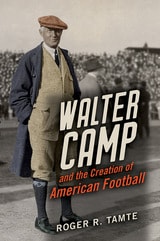
Walter Camp and the Creation of American Football
Roger R Tamte
University of Illinois Press, 2018
Roger R. Tamte tells the engrossing but forgotten life story of Walter Camp, the man contemporaries called "the father of American football." He charts Camp's leadership as American players moved away from rugby and for the first time tells the story behind the remarkably inventive rule change that, in Camp's own words, was "more important than all the rest of the legislation combined." Trials also emerged, as when disputes over forward passing, the ten-yard first down, and other rules became so public that President Theodore Roosevelt took sides. The resulting political process produced losses for Camp as well as successes, but soon a consensus grew that football needed no new major changes. American football was on its way, but as time passed, Camp's name and defining influence became lost to history.
Entertaining and exhaustively researched, Walter Camp and the Creation of American Football weaves the life story of an important sports pioneer with a long-overdue history of the dramatic events that produced the nation's most popular game.