Results by title
106 books match the query 'Western' and 9 start with w
White Innocence
Paradoxes of Colonialism and RaceGloria Wekker
Duke University Press, 2016

Wolfgang Amadeus Mozart
A BiographyPiero Melograni
University of Chicago Press, 2006
This year marks the 250th anniversary of the birth of Wolfgang Amadeus Mozart, one of the most enduringly popular and celebrated composers to have ever lived. His substantial oeuvre contains works that are considered to be among the most exquisite pieces of symphonic, chamber, and choral music ever written. His operas too cast a long shadow over those staged in their wake. And since his untimely death in 1791, he remains an enigmatic figure—the subject of fascination for aficionados and novices alike.
Piero Melograni here offers a wholly readable account of Mozart’s remarkable life and times. This masterful biography proceeds from the young Mozart’s earliest years as a Wunderkind—the child prodigy who traveled with his family to perform concerts throughout Europe—to his formative years in Vienna, where he fully absorbed the artistic and intellectual spirit of the Enlightenment, to his deathbed, his unfinished Requiem, and the mystery that still surrounds his burial. Melograni’s deft use of Mozart’s letters throughout confers authority and vitality to his recounting, and his expertise brings Mozart’s eighteenth-century milieu evocatively to life. Written with a gifted historian’s flair for narrative and unencumbered by specialized analyses of Mozart’s music, Melograni’s is the most vivid and enjoyable biography available.
At a time when music lovers around the world are paying honor to Mozart and his legacy, Wolfgang Amadeus Mozart will be welcomed by his enthusiasts—or anyone wishing to peer into the mind of one of the greatest composers ever known.
Women of the Twelfth Century, Volume 1
Eleanor of Aquitaine and Six OthersGeorges Duby
University of Chicago Press, 1997
The historical personages include Eleanor of Aquitaine whose several marriages brought her wealth and autonomy; the virtuous Héloïse; and the visionary recluse Juette. Duby also studies the literary figures of St. Marie-Madeleine, a composite figure who personified the essential female traits of frailty, ardent love, and evangelicalism; Iseut, literary beloved of Tristan; and two other emblematic figures, Dorée d'Amour and Phénix—women who became ladies through chivalrous love.
Provocative, informative, and entertaining, this book offers new insight on courtly love and the representations of women under medieval patriarchy.
Women of the Twelfth Century, Volume 2
Remembering the DeadGeorges Duby
University of Chicago Press, 1997
The first section outlines the ways in which the dead—in both memory and legend—served to bond noble society in the twelfth century. Drawing on the Gesta by Dudo of Saint Quentin, the second section reflects on the roles that wives, concubines, and other women played during times of war and in the great exchanges of power that established the grand lineages of the Middle Ages. The third section reconstructs women as wives, mothers, and widows through the work of Lambert, Priest of Ardres.
Women of the Twelfth Century, Volume 3
Eve and the ChurchGeorges Duby
University of Chicago Press, 1998
Drawing on these writings, Duby describes how women were thought to embody particular sins, such as sorcery, disobedience, and licentiousness. He evaluates Eve's role in man's fall from grace in the Garden of Eden and analyzes the reasoning behind the view that women are unstable, curious, frivolous creatures. He also notes that these charges are leveled against women, even as praise is heaped upon them for the conventional virtues they exhibit in their roles as wives and mothers.
As the final installment in Duby's three-volume study of French noblewomen of the twelfth century, Eve and the Church is the last work of this superb historian. It will be of interest to scholars of medieval history and women's history as well as to anyone interested in current debates about women and religion.
Georges Duby (1919-1996) was a member of the Académie française and for many years held the distinguished chair in medieval history at the Collège de France. His books include The Three Orders; The Age of Cathedrals; The Knight, the Lady, and the Priest; Love and Marriage in the Middle Ages; and History Continues, all published by the University of Chicago Press.
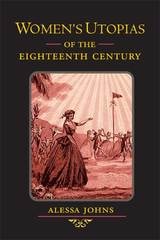
Women's Utopias of the Eighteenth Century
Alessa Johns
University of Illinois Press, 2003
The most studied utopias have been proposed by men, but during the eighteenth century a group of reform-oriented female novelists put forth a series of work that expressed their views of, and their reservations about, ideal societies. In Women's Utopias of the Eighteenth Century, Alessa Johns examines the utopian communities envisaged by Mary Astell, Sarah Fielding, Mary Hamilton, Sarah Scott, and other writers from Britain and continental Europe, uncovering the ways in which they resembled--and departed from--traditional utopias.
Johns demonstrates that while traditional visions tended to look back to absolutist models, women's utopias quickly incorporated emerging liberal ideas that allowed far more room for personal initiative and gave agency to groups that were not culturally dominant, such as the female writers themselves. Women's utopias, Johns argues, were reproductive in nature. They had the potential to reimagine and perpetuate themselves.
World in the Balance
Behind the Scenes of World War IIGerhard L. Weinberg
Brandeis University Press, 1981
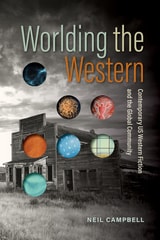
Worlding the Western
Contemporary US Western Fiction and the Global CommunityNeil Campbell
University of Nevada Press, 2022
Diversity, disparity, and opposition are central to the dynamic frictional fiction considered in this book. The American West provides a powerful test case in which these features are present and yet, historically, have often been masked or denied in the rush toward unanimity and nation building. Worlding is, therefore, a positive, critical concept through which to view the notion of a single world under pressure.
Worlding the Western
Contemporary US Western Fiction and the Global CommunityNeil Campbell
University of Nevada Press, 2022
Diversity, disparity, and opposition are central to the dynamic frictional fiction considered in this book. The American West provides a powerful test case in which these features are present and yet, historically, have often been masked or denied in the rush toward unanimity and nation building. Worlding is, therefore, a positive, critical concept through which to view the notion of a single world under pressure.