Results by title
18284 books match the query 'United States' and 882 start with w

Why Our Drug Laws Have Failed and What We Can Do About It
A Judicial Indictment of the War on DrugsJames Gray
Temple University Press, 2011
Our drug prohibition policy is hopeless, just as Prohibition, our alcohol prohibition policy, was before it. Today there are more drugs in our communities and at lower prices and higher strengths than ever before.
We have built large numbers of prisons, but they are overflowing with non-violent drug offenders. The huge profits made from drug sales are corrupting people and institutions here and abroad. And far from being protected by our drug prohibition policy, our children are being recruited by it to a lifestyle of drug use and drug selling.
Judge Gray’s book drives a stake through the heart of the War on Drugs. After documenting the wide-ranging harms caused by this failed policy, Judge Gray also gives us hope. We have viable options. The author evaluates these options, ranging from education and drug treatment to different strategies for taking the profit out of drug-dealing.
Many officials will not say publicly what they acknowledge privately about the failure of the War on Drugs. Politicians especially are afraid of not appearing "tough on drugs." But Judge Gray’s conclusions as a veteran trial judge and former federal prosecutor are reinforced by the testimonies of more than forty other judges nationwide.
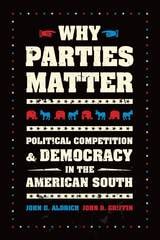
Why Parties Matter
Political Competition and Democracy in the American SouthJohn H. Aldrich and John D. Griffin
University of Chicago Press, 2017
With Why Parties Matter, John H. Aldrich and John D. Griffin make a compelling case that competition between political parties is an essential component of a democracy that is responsive to its citizens and thus able to address their concerns. Tracing the history of the parties through four eras—the Democratic-Whig party era that preceded the Civil War; the post-Reconstruction period; the Jim Crow era, when competition between the parties virtually disappeared; and the modern era—Aldrich and Griffin show how and when competition emerged between the parties and the conditions under which it succeeded and failed. In the modern era, as party competition in the South has come to be widely regarded as matching that of the North, the authors conclude by exploring the question of whether the South is poised to become a one-party system once again with the Republican party now dominant.
Why Parties?
A Second LookJohn H. Aldrich
University of Chicago Press, 2011
Since its first appearance fifteen years ago, Why Parties? has become essential reading for anyone wishing to understand the nature of American political parties. In the interim, the party system has undergone some radical changes. In this landmark book, now rewritten for the new millennium, John H. Aldrich goes beyond the clamor of arguments over whether American political parties are in resurgence or decline and undertakes a wholesale reexamination of the foundations of the American party system.
Surveying critical episodes in the development of American political parties—from their formation in the 1790s to the Civil War—Aldrich shows how they serve to combat three fundamental problems of democracy: how to regulate the number of people seeking public office, how to mobilize voters, and how to achieve and maintain the majorities needed to accomplish goals once in office. Aldrich brings this innovative account up to the present by looking at the profound changes in the character of political parties since World War II, especially in light of ongoing contemporary transformations, including the rise of the Republican Party in the South, and what those changes accomplish, such as the Obama Health Care plan. Finally, Why Parties? A Second Look offers a fuller consideration of party systems in general, especially the two-party system in the United States, and explains why this system is necessary for effective democracy.
Why Parties?
The Origin and Transformation of Political Parties in AmericaJohn H. Aldrich
University of Chicago Press, 1995
Surveying three critical episodes in the development of American political parties—from their formation in the 1790s to the Civil War—Aldrich shows how parties serve to combat three fundamental problems of democracy: how to regulate the number of people seeking public office; how to mobilize voters; and how to achieve and maintain the majorities needed to accomplish goals once in office. Overcoming these obstacles, argues Aldrich, is possible only with political parties.
Aldrich brings this innovative account up to date by looking at the profound changes in the character of political parties since World War II. In the 1960s, he shows, parties started to become candidate-centered organizations that are servants to their office seekers and officeholders. Aldrich argues that this development has revitalized parties, making them stronger, and more vital, with well-defined cleavages and highly effective governing ability.
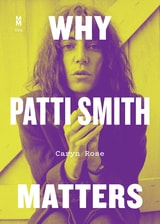
Why Patti Smith Matters
Caryn Rose
University of Texas Press, 2022
Patti Smith arrived in New York City at the end of the Age of Aquarius in search of work and purpose. What she found—what she fostered—was a cultural revolution. Through her poetry, her songs, her unapologetic vocal power, and her very presence as a woman fronting a rock band, she kicked open a door that countless others walked through. No other musician has better embodied the “nothing-to-hide” rawness of punk, nor has any other done more to nurture a place in society for misfits of every stripe.
Why Patti Smith Matters is the first book about the iconic artist written by a woman. The veteran music journalist Caryn Rose contextualizes Smith’s creative work, her influence, and her wide-ranging and still-evolving impact on rock and roll, visual art, and the written word. Rose goes deep into Smith’s oeuvre, from her first album, Horses, to acclaimed memoirs operating at a surprising remove from her music. The portrait of a ceaseless inventor, Why Patti Smith Matters rescues punk’s poet laureate from “strong woman” clichés. Of course Smith is strong. She is also a nuanced thinker. A maker of beautiful and challenging things. A transformative artist who has not simply entertained but also empowered millions.
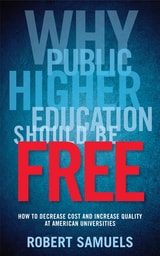
Why Public Higher Education Should Be Free
How to Decrease Cost and Increase Quality at American UniversitiesSamuels, Robert
Rutgers University Press, 2013
In Why Public Higher Education Should Be Free, Robert Samuels argues that many institutions of higher education squander funds and mislead the public about such things as average class size, faculty-to-student ratios, number of faculty with PhDs, and other indicators of educational quality. Parents and students seem to have little knowledge of how colleges and universities have been restructured over the past thirty years.
Samuels shows how research universities have begun to function as giant investment banks or hedge funds that spend money on athletics and administration while increasing tuition costs and actually lowering the quality of undergraduate education. In order to fight higher costs and lower quality, Samuels suggests, universities must reallocate these misused funds and concentrate on their core mission of instruction and related research.
Throughout the book, Samuels argues that the future of our economy and democracy rests on our ability to train students to be thoughtful participants in the production and analysis of knowledge. If leading universities serve only to grant credentials and prestige, our society will suffer irrevocable harm. Presenting the problem of how universities make and spend money, Samuels provides solutions to make these important institutions less expensive and more vital. By using current resources in a more effective manner, we could even, he contends, make all public higher education free.
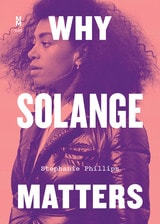
Why Solange Matters
By Stephanie Phillips
University of Texas Press, 2021
Growing up in the shadow of her superstar sister, Solange Knowles became a pivotal musician in her own right. Defying an industry that attempted to bend her to its rigid image of a Black woman, Solange continually experimented with her sound and embarked on a metamorphosis in her art that continues to this day.
In Why Solange Matters, Stephanie Phillips chronicles the creative journey of an artist who became a beloved voice for the Black Lives Matter generation. A Black feminist punk musician herself, Phillips addresses not only the unpredictable trajectory of Solange Knowles's career but also how she and other Black women see themselves through the musician's repertoire. First, she traces Solange’s progress through an inflexible industry, charting the artist’s development up to 2016, when the release of her third album, A Seat at the Table, redefined her career. Then, with A Seat at the Table and 2019’s When I Get Home, Phillips describes how Solange embraced activism, anger, Black womanhood, and intergenerational trauma to inform her remarkable art. Why Solange Matters not only cements the place of its subject in the pantheon of world-changing twenty-first century musicians, it introduces its writer as an important new voice.
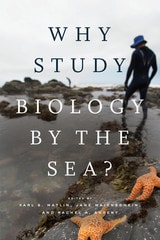
Why Study Biology by the Sea?
Edited by Karl S. Matlin, Jane Maienschein, and Rachel A. Ankeny
University of Chicago Press, 2020
From the Stazione Zoologica in Naples to the Marine Biological Laboratory in Woods Hole, the Amoy Station in China, or the Misaki Station in Japan, students and researchers at seaside research stations have long visited the ocean to investigate life at all stages of development and to convene discussions of biological discoveries. Exploring the history and current reasons for study by the sea, this book examines key people, institutions, research projects, organisms selected for study, and competing theories and interpretations of discoveries, and it considers different ways of understanding research, such as through research repertoires. A celebration of coastal marine research, Why Study Biology by the Sea? reveals why scientists have moved from the beach to the lab bench and back.
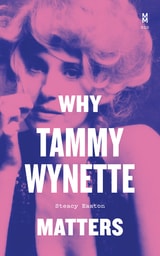
Why Tammy Wynette Matters
Steacy Easton
University of Texas Press, 2023
How Tammy Wynette channeled the conflicts of her life into her music and performance.
With hits such as “Stand By Your Man” and “Golden Ring,” Tammy Wynette was an icon of American domesticity and femininity. But there were other sides to the first lady of country. Steacy Easton places the complications of Wynette’s music and her biography in sharp-edged relief, exploring how she made her sometimes-tumultuous life into her work, a transformation that was itself art.
Wynette created a persona of high femininity to match the themes she sang about—fawning devotion, redemption in heterosexual romance, the heartbreak of loneliness. Behind the scenes, her life was marked by persistent class anxieties; despite wealth and fame, she kept her beautician’s license. Easton argues that the struggle to meet expectations of southernness, womanhood, and southern womanhood, finds subtle expression in Wynette’s performance of “Apartment #9”—and it’s because of these vocal subtleties that it came to be called the saddest song ever written. Wynette similarly took on elements of camp and political critique in her artistry, demonstrating an underappreciated genius. Why Tammy Wynette Matters reveals a musician who doubled back on herself, her façade of earnestness cracked by a melodrama that weaponized femininity and upended feminist expectations, while scoring twenty number-one hits.

Why Veterans Run
Military Service in American Presidential Elections, 1789-2016Jeremy M. Teigen
Temple University Press, 2017
The assumptions that military service helps candidates attract votes—while lacking it harms a candidate’s chances—has been an article of faith since the electoral coronation of George Washington in 1789. Perhaps the most compelling fact driving the perception that military service helps win votes is the large number of veterans who have held public office. Some candidates even exaggerate their military service to persuade voters. However, sufficient counter-examples undermine the idea that military veterans enjoy an advantage when seeking political office.
In Why Veterans Run, Jeremy Teigenexplains the tendency of parties to elevate those with armed forces experience to run for high office. He describes the veteran candidate phenomenon by examining the related factors and patterns, showing why different eras have more former generals running and why the number of veterans in election cycles varies. With both quantitative and qualitative analysis, Why Veterans Run investigates each postwar era in U.S. electoral history and elaborates why so many veterans run for office. Teigen also reveals how election outcomes with veteran candidates illuminate the relationship between the military and civilian spheres as well as the preferences of the American electorate.
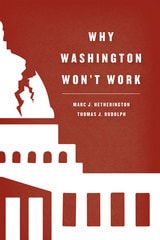
Why Washington Won't Work
Polarization, Political Trust, and the Governing CrisisMarc J. Hetherington and Thomas J. Rudolph
University of Chicago Press, 2015
In Why Washington Won’t Work, Marc J. Hetherington and Thomas J. Rudolph argue that a contemporary crisis of trust—people whose party is out of power have almost no trust in a government run by the other side—has deadlocked Congress. On most issues, party leaders can convince their own party to support their positions. In order to pass legislation, however, they must also create consensus by persuading some portion of the opposing party to trust in their vision for the future. Without trust, consensus fails to develop and compromise does not occur. Up until recently, such trust could still usually be found among the opposition, but not anymore. Political trust, the authors show, is far from a stable characteristic. It’s actually highly variable and contingent on a variety of factors, including whether one’s party is in control, which part of the government one is dealing with, and which policies or events are most salient at the moment.
Political trust increases, for example, when the public is concerned with foreign policy—as in times of war—and it decreases in periods of weak economic performance. Hetherington and Rudolph do offer some suggestions about steps politicians and the public might take to increase political trust. Ultimately, however, they conclude that it is unlikely levels of political trust will significantly increase unless foreign concerns come to dominate and the economy is consistently strong.
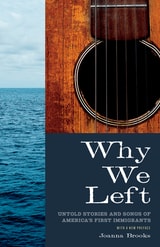
Why We Left
Untold Stories and Songs of America's First ImmigrantsJoanna Brooks
University of Minnesota Press, 2024
A grounded, tender, and mournful reckoning with the catastrophes that launched poor, white Anglos into their role as itinerant foot soldiers for modern imperialism—now in paperback with a new preface
Joanna Brooks’s ancestors were among the early waves of emigrants to leave England for North America. For generations, they lived hardscrabble lives, eking out subsistence in one place after another as they continually moved west in search of a better life. Why, Brooks wondered, did her people and countless other poor English subjects abandon their homeland for such unremitting hardship? The question leads her on a journey through an obscure dimension of American history.
Why We Left reveals the violence and dislocation that propelled seventeenth- and eighteenth-century working-class English emigration, presenting a powerful restorying of how we arrived at our present moment of precarity and rootlessness. Following American folk ballads back across the Atlantic to find histories of economic displacement, environmental destruction, and social betrayal at the heart of the early Anglo-American migrant experience, Brooks offers a scholarly and personal account of the intergenerational traumas that shape the history of white Anglos on Turtle Island.
She shares folk ballads such as “Edward,” which reveals the influence of deforestation on the dislocation of early Anglo-American peasant immigrants, and “The House Carpenter’s Wife,” which emphasizes the impact of economic instability and the colonial enterprise on women. From these ballads, tragic and heartrending, Brooks uncovers an archaeology of the worldviews of America’s earliest immigrants. This tenth-anniversary edition includes a new preface and develops a haunting historical perspective on the ancestors we thought we knew.
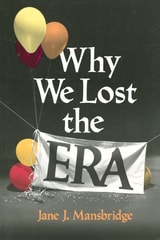
Why We Lost the ERA
Jane J. Mansbridge
University of Chicago Press, 1986
In March 1972 the Equal Rights Amendment to the United States Constitution-the ERA-passed the Senate of the United States with a vote of 84 to 8, seventeen votes more than the two-thirds required for constitutional amendments. In the ensuing ten years, a majority of Americans consistently told interviewers that they favored this amendment to the Constitution. Yet on June 30, 1982, the deadline for ratifying the amendment passed with only thirty-five of the required thirty-eight states having ratified.
How did this happen? In How We Lost the ERA, political scientist Jane J. Mansbridge tells the story of the ERA's rise and fall, revealing self-defeating, contradictory forces within the movement supporting the amendment and how those contributed to its demise. The surprising challenges Mansbridge uncovers here remain salient to political struggles and democratic theory today.
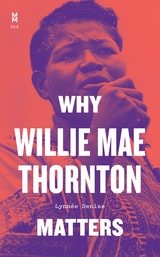
Why Willie Mae Thornton Matters
Lynnée Denise
University of Texas Press, 2023
Finalist, 2024 Lesbian Memoir/Biography, Lambda Literary Award for Arts and Culture
Winner — Walter & Lillian Lowenfels Criticism Award, 45th Annual American Book Awards, Before Columbus Foundation
A queer, Black “biography in essays” about the performer who gave us “Hound Dog,” “Ball and Chain,” and other songs that changed the course of American music.
Born in Alabama in 1926, raised in the church, appropriated by white performers, buried in an indigent’s grave—Willie Mae “Big Mama” Thornton's life events epitomize the blues—but Lynnée Denise pushes past the stereotypes to read Thornton’s life through a Black, queer, feminist lens and reveal an artist who was an innovator across her four-decade-long career.
Why Willie Mae Thornton Matters “samples” elements of Thornton’s art—and, occasionally, the author’s own story—to create “a biography in essays” that explores the life of its subject as a DJ might dig through a crate of records. Denise connects Thornton’s vaudevillesque performances in Sammy Green’s Hot Harlem Revue to the vocal improvisations that made “Hound Dog” a hit for Peacock Records (and later for Elvis Presley), injecting music criticism into what’s often framed as a cautionary tale of record-industry racism. She interprets Thornton’s performing in men’s suits as both a sly, Little Richard–like queering of the Chitlin Circuit and a simple preference for pants over dresses that didn’t have a pocket for her harmonica. Most radical of all, she refers to her subject by her given name rather than "Big Mama," a nickname bestowed upon her by a white man. It's a deliberate and crucial act of reclamation, because in the name of Willie Mae Thornton is the sound of Black musical resilience.

Why the American Century?
Olivier Zunz
University of Chicago Press, 1998
"It should certainly be the task of historians to explain the nation's triumphs as effectively as they have explained its failures, and Zunz in this intelligent, learned and ambitious book suggests a valuable new model for doing so."—Alan Brinkley, Times Literary Supplement
"Zunz is evenhanded in his judgments. . . . His thesis is both imaginative and well grounded in the appropriate sources."—David M. Oshinsky, New York Times Book Review
"Zunz is an innovative and perceptive social critic. He crosses disciplinary boundaries with ease and felicity, and is particularly adept at illustrating large themes with unusual but telling details."—Kent Blaser, American Studies
"An eye-opening introduction to the shaping of modern America."—Foreign Affairs
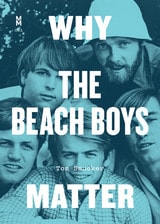
Why the Beach Boys Matter
By Tom Smucker
University of Texas Press, 2018
Of all the white American pop music groups that hit the charts before the Beatles, only the Beach Boys continued to thrive throughout the British Invasion to survive into the 1970s and beyond. The Beach Boys helped define both sides of the era we broadly call the sixties, split between their early surf, car, and summer pop and their later hippie, counterculture, and ambitious rock. No other group can claim the Ronettes and the Four Seasons as early 1960s rivals; the Mamas and the Papas and Crosby, Stills and Nash as later 1960s rivals; and the Beatles and the Temptations as decade-spanning counterparts.
This is the first book to take an honest look at the themes running through the Beach Boys’ art and career as a whole and to examine where they sit inside our culture and politics—and why they still grab our attention.
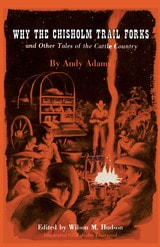
Why the Chisholm Trail Forks and Other Tales of the Cattle Country
By Andy Adams
University of Texas Press, 1956
This sparkling collection of tales told around Western campfires, written by the master chronicler of the range, is a literary find of great interest and genuine importance.
Andy Adams is remembered chiefly as the author of The Log of a Cowboy. Among the most charming features of the Log are the stories the cowhands told around the fires at night when the day's work was done. Similar and equally delightful stories are scattered throughout several other less successful novels, long out of print, while others that never saw publication were found by the editor among Adams' papers.
In the present book, Wilson M. Hudson has gathered together these tales of the trail and camp into one volume that surely will delight the hearts of all readers who are interested in the old West.
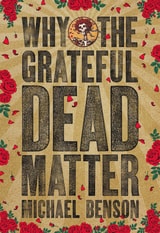
Why the Grateful Dead Matter
Michael Benson
University Press of New England, 2016
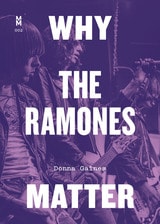
Why the Ramones Matter
By Donna Gaines
University of Texas Press, 2018
The central experience of the Ramones and their music is of being an outsider, an outcast, a person who’s somehow defective, and the revolt against shame and self-loathing. The fans, argues Donna Gaines, got it right away, from their own experience of alienation at home, at school, on the streets, and from themselves. This sense of estrangement and marginality permeates everything the Ramones still offer us as artists, and as people. Why the Ramones Matter compellingly makes the case that the Ramones gave us everything; they saved rock and roll, modeled DIY ethics, and addressed our deepest collective traumas, from the personal to the historical.
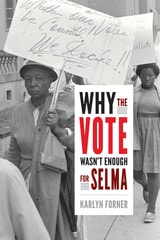
Why the Vote Wasn't Enough for Selma
Karyn Forner
Duke University Press, 2017
Wicked Takes the Witness Stand
A Tale of Murder and Twisted Deceit in Northern MichiganMardi Link
University of Michigan Press, 2015
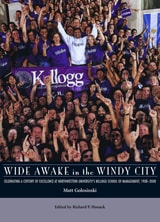
Wide Awake in the Windy City
Celebrating a Century of Excellence at Northwestern University's Kellogg School of ManagementMatt Golosinski
Northwestern University Press, 2008
In Wide Awake in the Windy City, Matt Golosinski traces the century-long ascent of the Kellogg School of Management, detailing its influence on marketing and its evolution as a globally renowned general management force. The story contextualizes the school's strategic decisions and brings to life some of its most important catalysts — deans, professors, students, and business practitioners.
The school historically turned disadvantage to opportunity, finding innovative ways to remain in the vanguard of management education. At every turn, this journey involved the vision of extraordinary people who, against the odds, created an enduring example of educational excellence.
Wide Branches, Deep Roots
How Appalachian Wisdom Can Help in the Fight for a Sustainable FutureJessica M Jones
West Virginia University Press, 2026
To be Appalachian is to define oneself in terms of a place. Where we’re from plays a tremendous role in who we are, through storytelling about our homeplaces and the people who have loved them. However, what goes largely unaddressed is how this love of place can contribute to sustainability within the region, which has notoriously faced on-going environmental threats from extraction industries. The reality is that our relationship with the environment is thorny and intertwined with our identities, histories, and economic realities. The authors in the collection get down among the thorns to explore what sustainability means in Appalachia and how we can utilize the power of traditional folkways to achieve it.
This collection of over thirty pieces explores the connections between Appalachia’s stories, traditions, and modern events and the pathway to regional sustainability. The contributors — writers and scholars — examine how our definitions of sustainability have been formed, the power of education to encourage or inhibit it, and what moves are being made toward efficacy in the future. They also offer specific actions readers can take to better understand and build sustainability where they live.
Contributors: Greg Bealer, Luc Biscan-White, David Blackmore, Aysha Bodenhamer, Ivy Brashear, Matthew Calloway, Nicole Drewitz-Crockett, Christina Fisanick, Deborah Fleming, Amanda V. Garner, Karie Gunter-Seymour, Richard Hague, Amanda E. Hayes, Lockie Hunter, Jessica M. Jones, Kristen LeFevers, Sarah Long, Meghan Moore-Hubbard, Barbara Marie Minney, Jessica Radicic, Elizabeth Emmerth Rexroad, Barbara Sabol, Larry Smith, Patrice Stank, Taylor Nasim Stone, Paul Thomas, Elizabeth Tussey, and Betsy Weems.
Widescreen Dreams
Growing Up Gay at the MoviesPatrick E. Horrigan
University of Wisconsin Press, 2001
Widows and Orphans First
The Family Economy and Social Welfare Policy, 1880-1939S. J. Kleinberg
University of Illinois Press, 2005
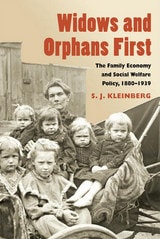
The experiences of widows and their children during the Progressive Era and the New Deal depended on differences in local economies and values. How did these widely varied experiences impact the origins of the welfare state?
S. J. Kleinberg delves into the question by comparing widows' lives in three industrial cities with differing economic, ethnic, and racial bases. Government in Fall River, Massachusetts, saw employment as a solution to widows' poverty and as a result drastically limited public charity. In Pittsburgh, widows received sympathetic treatment. Few jobs existed for them or their children; indeed, the jobs for men were concentrated in "widowmaking" industries like steel and railroading. With a large African American population and a diverse economy that relied on inexpensive child and female labor, Baltimore limited funds for public services. African Americans adapted by establishing their own charitable institutions.
A fascinating comparative study, Widows and Orphans First offers a one-of-a-kind look at social welfare policy for widows and the role of children in society during a pivotal time in American history.

Widows by the Thousand
The Civil War Correspondence of Theophilus and Harriet Perry, 1862–1864M. Jane Johansson
University of Arkansas Press, 2000
Wiijiwaaganag
More Than BrothersPeter Razor
Michigan State University Press, 2022
Wild Horse Annie
Velma Johnston and Her Fight to Save the MustangAlan J. Kania
University of Nevada Press, 2013
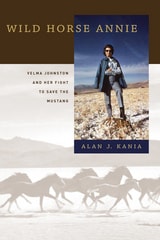
Wild horses have been a subject of bitter controversy in the West for decades. To some, they are symbols of the West’s wild, free heritage. To others, they are rapacious grazers that destroy habitat and compete with domestic livestock and indigenous wildlife for scanty food and water. For years, free-ranging horses and burros were rounded up and shipped to slaughterhouses to be killed and turned into pet food. This practice provided an income for the “mustangers” who trapped and sold them, but it also involved horrendous cruelty and abuse of the animals.
Velma Johnston, who became known as “Wild Horse Annie,” undertook to stop the removal of wild horses and burros from US public lands and protect them from the worst aspects of mustanging. Her campaign attracted nationwide attention, as it led her from her rural Nevada County to state offices and finally to Washington, DC. Author Alan J. Kania worked closely with Johnston for seven years, and his biography provides unique insight into Wild Horse Annie’s life and her efforts to save the West’s wild horse herds through the passage of protective legislation.
Wild Intelligence
Poets' Libraries and the Politics of Knowledge in Postwar AmericaM. C. Kinniburgh
University of Massachusetts Press, 2022
Information science was a burgeoning field in the early years of the Cold War, and while public and academic libraries acted as significant sites for the information boom, it is unsurprising that McCarthyism and censorship would shape what they granted readers access to and acquired. Wild Intelligence traces a different history of information management, examining the privately assembled collections of poets and their knowledge-building practices at midcentury.
Taking up case studies of four poets who began writing during the 1950s and 1960s, including Charles Olson (1910–1970), Diane di Prima (1934–2020), Gerrit Lansing (1928–2018), and Audre Lorde (1934–1992), M. C. Kinniburgh shows that the postwar American poet’s library should not just be understood according to individual books within their collection but rather as an archival resource that reveals how poets managed knowledge in a growing era of information overload. Exploring traditions and systems that had been overlooked, buried, occulted, or censored, these poets sought to recover a sense of history and chart a way forward.
Wild Nevada
Testimonies on Behalf of the DesertRoberta Moore
University of Nevada Press, 2005
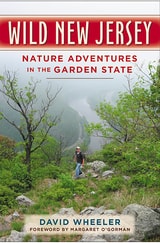
Wild New Jersey
Nature Adventures in the Garden StateDavid Wheeler
Rutgers University Press, 2011
Wild New Jersey invites readers along Wheeler’s whirlwind year-long tour of the most ecologically diverse state for its size in America. Along with the expert guidance of charismatic wildlife biologists and local conservationists, he explores mountains, valleys, beaches, pine barrens, caves, rivers, marshlands, and more—breathtaking landscapes and the state’s Noah’s Ark of fascinating creatures.
This isn’t your ordinary ride on the Jersey Turnpike. Fasten your seatbelts and join Wheeler as he . . .
- Kayaks through the Meadowlands under the watchful eye of the Empire State Building,
- Pans for cretaceous fossils in a hidden brook once home to mastodons and giant sloths,
- Rides a fishing boat in the frigid snows of winter on a high-seas quest for Atlantic puffins,
- Trudges through the eerie darkness of a bog on a mysterious night hike,
- Dogsleds across the windswept alpine slopes in the haunts of the porcupine and bobcat.
With Wheeler’s compelling narrative, in-depth background details, and eye for revealing the offbeat, you can count this as the first nature book to paint the extraordinary picture of New Jersey’s unlikely wilderness in all its glory. Come along for all the adventure and insight in Wild New Jersey!
Wild Plants of the Sierra Nevada
Ray S. Vizgirdas
University of Nevada Press, 2009
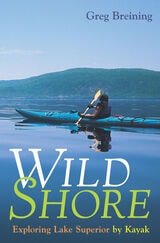
Wild Shore
Exploring Lake Superior By KayakGreg Breining
University of Minnesota Press, 2002
A real-life adventure and journey of discovery on the greatest of the Great Lakes
Over two years, Greg Breining set out to circle Lake Superior by kayak. Paddling more than one thousand miles, he camped on the lake’s islands and shorelines, visited its places of rare beauty and solitude, experienced its wildly varied moods, and explored remote historic sites and isolated communities. The result is Wild Shore, a tale of outdoor adventure, colorful characters, memorable stories, and personal discovery.
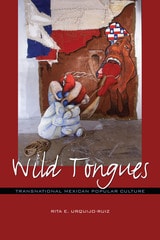
Wild Tongues
Transnational Mexican Popular CultureBy Rita E. Urquijo-Ruiz
University of Texas Press, 2012
Tracing the configuration of the slapstick, destitute Peladita/Peladito and the Pachuca/Pachuco (depicted in flashy zoot suits) from 1928 to 2004, Wild Tongues is an ambitious, extensive examination of social order in Mexican and Chicana/o cultural productions in literature, theater, film, music, and performance art.
From the use of the Peladita and the Peladito as stock characters who criticized various aspects of the Mexican government in the 1920s and 1930s to contemporary performance art by María Elena Gaitán and Dan Guerrero, which yields a feminist and queer-studies interpretation, Rita Urquijo-Ruiz emphasizes the transnational capitalism at play in these comic voices. Her study encompasses both sides of the border, including the use of the Pachuca and the Pachuco as anti-establishment, marginal figures in the United States. The result is a historically grounded, interdisciplinary approach that reimagines the limitations of nation-centered thinking and reading.
Beginning with Daniel Venegas’s 1928 novel, Las aventuras de don Chipote o Cuando los pericos mamen, Rita Urquijo-Ruiz’s Wild Tongues demonstrates early uses of the Peladito to call attention to the brutal physical demands placed on the undocumented Mexican laborer. It explores Teatro de Carpa (tent theater) in-depth as well, bringing to light the experience of Mexican Peladita Amelia Wilhelmy, whose “La Willy” was famous for portraying a cross-dressing male soldier who criticizes the failed Revolution. In numerous other explorations such as these, the political, economic, and social power of creativity continually takes center stage.

Wild West Shows
Paul Reddin
University of Illinois Press, 1999
Paul Reddin exposes the mythology of the American frontier as a carefully crafted product of the Wild West show. Focusing on such pivotal figures as George Catlin, Buffalo Bill Cody, and Tom Mix, Reddin traces the rise and fall of a popular entertainment shaped out of the "raw material of America."
Buffalo Bill and other entertainers capitalized on public fascination with the danger, heroism, and courage associated with the frontier by continually modifying their presentation of the West to suit their audiences. Thus the Wild West show, contrary to its own claims of accuracy and authenticity, was highly selective in its representations of the West as well as widely influential in shaping the public image of life on the Great Plains.
A uniquely American entertainment—colorful, energetic, unabashed, and, as Reddin demonstrates, self-made—the Wild West show exerted an appeal that was all but irresistible to a public hovering uncertainly between industrial progress and nostalgia for a romanticized past.
Wild Women in the Whirlwind
Afra-American Culture and the Contemporary Literary RenaissanceEdited by Joanne M. Braxton and Andree Nicola McLaughlin
Rutgers University Press, 1989
--New York Times Book Review
"The cultural and literary achievements of black American women are examined and celebrated in some 20 enjoyable, erudite essays by prominent scholars, critics, and activists."
--Publishers Weekly
This book is the first comprehensive collection of critical and theoretical essays to explore the literary and multi-cultural traditions of Black American women in many genres over a broad span of time. The essays explore cultural and literary experience in a wide context and offer a variety of critical theoretical constructs in which to view that experience. The editors have written excellent introductions providing both historical and comparative discussions of the contemporary literary renaissance. The book also includes a valuable bibliography of selected English-language works by Black women in the Americas from the 1970s to the present.
Wild about Harry
Everything You Have Ever Wanted to Know about the Truman ScholarshipSuzanne McCray
University of Arkansas Press, 2021
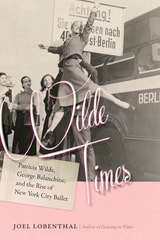
Wilde Times
Patricia Wilde, George Balanchine, and the Rise of New York City BalletJoel Lobenthal
University Press of New England, 2016
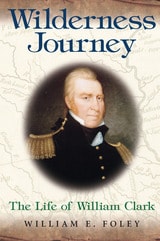
Wilderness Journey
The Life of William ClarkWilliam E. Foley
University of Missouri Press, 2005
Coinciding with the bicentennial in 2004 of the departure of Lewis and Clark’s famed Corps of Discovery, Wilderness Journey fills a major gap in scholarship. Intended for the general reader, as well as for specialists in the field, this fascinating book provides a well-balanced and thorough account of one of America’s most significant frontiersmen.
Wilderness Tapestry
An Eclectic Approach To PreservationVause Zeveloff
University of Nevada Press, 1992
To further understanding of the meanings and values of wilderness, this volume explores wilderness and its significance to humans from myriad viewpoints, based on a meeting of the North American Interdisciplinary Wilderness Conference.

Wilderness Within
The Life of Sigurd F. OlsonDavid Backes
University of Minnesota Press, 1999
The critically acclaimed biography of this venerable naturalist and writer.
The first biography of this venerable naturalist and writer.
Sigurd Olson (1899-1982) was acknowledged during his lifetime as a leader of the American environmental movement, an emblematic figure for an entire generation of activists. A Wilderness Within is the first biography of this writer, teacher, and activist who was a harbinger of the opening of America’s ecological consciousness.From opposing the building of roads in the wilderness to preserving America’s most treasured wild rivers, Olson was involved in fierce battles over the environment throughout his life. He testified before Congress, spoke at town meetings, and was once even hanged in effigy.But Olson is best known for his many essays that express the wonder, awe, and peace he found in the wilderness. The lyricism and evocative beauty of his prose became a model for nature writers like Barry Lopez and Annie Dillard. Olson’s popular books, including The Singing Wilderness, Listening Point, and Reflections from the North Country, are beloved by generations of readers, with over 300,000 copies sold. A Wilderness Within looks beyond the environmental battles and books to expose the inner forces that drove Sigurd Olson. He rejected his father’s path as a minister and agonized over his own spiritual life, struggled with school and work. Backes details Olson’s painful path to becoming a writer, and the physical and emotional tolls that his activism and writing took of him. For this biography, Backes conducted interviews with Olson’s family and had complete access to Olson’s papers, diaries, correspondence, and photographs. This research is what makes A Wilderness Within the authoritative portrait of one of the greatest environmentalists of the twentieth century.A stunning look at a man with a vision for the natural world and a vision for himself, A Wilderness Within will be essential reading for Olson fans, historians, and outdoors people around the country.David Backes is the author of Canoe Country: An Embattled Wilderness (1991) and The Wilderness Companion (1992).424 pages Translation Rights: University of Minnesota Press
Wilderness, Water, and Rust
A Journey toward Great Lakes ResilienceJane Elder
Michigan State University Press, 2024

Wildlife Sanctuaries and the Audubon Society
Places to Hide and SeekBy John M. "Frosty" Anderson
University of Texas Press, 2000
National Audubon Society sanctuaries across the United States preserve the unique combinations of plants, climates, soils, and water that endangered birds and other animals require to survive. Their success stories include the recovery of the common and snowy egrets, wood storks, Everglade kites, puffins, and sandhill cranes, to name only a few.
In this book, Frosty Anderson describes the development of fifteen NAS sanctuaries from Maine to California and from the Texas coast to North Dakota. Drawn from the newsletter "Places to Hide and Seek," which he edited during his tenure as Director/Vice President of the Wildlife Sanctuary Department of the NAS, these profiles offer a personal, often humorous look at the daily and longer-term activities involved in protecting bird habitats. Collectively, they record an era in conservation history in which ordinary people, without benefit of Ph.Ds, became stewards of the habitats in which they had lived all their lives. It's a story worth preserving, and it's entertainingly told here by the man who knows it best.

Wildlife as Property Owners
A New Conception of Animal RightsKaren Bradshaw
University of Chicago Press, 2020
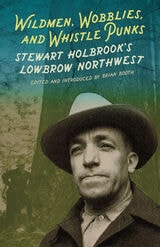
Wildmen, Wobblies, and Whistle Punks
Stewart Holbrook's Lowbrow NorthwestBrian Booth
Oregon State University Press, 0
Stewart Holbrook was a high school dropout who emerged from logging camps to become the author of three dozen books, the Pacific Northwest’s foremost storyteller, one of the nation’s most popular historians, and a satirical painter known as “Mr. Otis.”
Today readers are rediscovering Holbrook’s colorful and irreverent accounts of Pacific Northwest history. Wildmen, Wobblies, and Whistle Punks collects twenty-six of Holbrook’s best writings about the region. Combining solid scholarship with humor and a gift for celebrating the offbeat, Holbrook’s stories record a vibrant, often overlooked side of Northwest history. Here are forgotten scandals and murders; stories of forest fires, floods, and other calamities; tales of loggers and life in the logging camps; and profiles of various lowbrow characters—radicals, do-gooders, dreamers, schemers, and zealots.
Wildness
Relations of People and PlaceEdited by Gavin Van Horn and John Hausdoerffer
University of Chicago Press, 2017
This book charts a different path. Exploring how people can become attuned to the wild community of life and also contribute to the well-being of the wild places in which we live, work, and play, Wildness brings together esteemed authors from a variety of landscapes, cultures, and backgrounds to share their stories about the interdependence of everyday human lifeways and wildness. As they show, far from being an all or nothing proposition, wildness exists in variations and degrees that range from cultivated soils to multigenerational forests to sunflowers pushing through cracks in a city alley. Spanning diverse geographies, these essays celebrate the continuum of wildness, revealing the many ways in which human communities can nurture, adapt to, and thrive alongside their wild nonhuman kin.
From the contoured lands of Wisconsin’s Driftless region to remote Alaska, from the amazing adaptations of animals and plants living in the concrete jungle to indigenous lands and harvest ceremonies, from backyards to reclaimed urban industrial sites, from microcosms to bioregions and atmospheres, manifestations of wildness are everywhere. With this book, we gain insight into what wildness is and could be, as well as how it might be recovered in our lives—and with it, how we might unearth a more profound, wilder understanding of what it means to be human.
Wildness: Relations of People and Place is published in association with the Center for Humans and Nature, an organization that brings together some of the brightest minds to explore and promote human responsibilities to each other and the whole community of life. Visit the Center for Humans and Nature's Wildness website for upcoming events and a series of related short films.
Will Big League Baseball Survive?
Globalization, the End of Television, Youth Sports, and the Future of Major League BaseballLincoln A. Mitchell
Temple University Press, 2016
Major League Baseball is a beloved American institution that has been a product of the economic, social, and media structures that have evolved in the United States over the last century. In his shrewd analysis, Will Big League Baseball Survive?, Lincoln Mitchell asks whether the sport will continue in its current form as a huge, lucrative global business that offers a monopoly in North America—and whether those structures are sustainable.
Mitchell places baseball in the context of the larger, evolving American and global entertainment sector. He examines how both changes directly related to baseball—including youth sports and the increased globalization of the game—as well as broader societal trends such as developments in media consumption and celebrity culture will impact big league baseball over the next few decades.
His book ultimately proposes several possible scenarios for what big league baseball might look like. Will it become more global, smaller, or remain the same, or will it transform into some kind of hybrid of the three?
Will We Be Smart Enough?
A Cognitive Analysis of the Coming WorkforceEarl Hunt
Russell Sage Foundation, 1995
Willa Cather and Material Culture
Real-World Writing, Writing the Real WorldEdited by Janis P. Stout
University of Alabama Press, 2004
Willa Cather and Material Culture is a collection of 11 new essays that tap into a recent and resurgent interest among Cather scholars in addressing her work and her career through the lens of cultural studies. One of the volume's primary purposes is to demonstrate the extent to which Cather did participate in her culture and to correct the commonplace view of her as a literary connoisseur set apart from her times.
The contributors explore both the objects among which Cather lived and the objects that appear in her writings, as well as the commercial constraints of the publishing industry in which her art was made and marketed. Essays address her relationship to quilts both personally and as symbols in her work; her contributions to domestic magazines such as Home Monthly and Woman's Home Companion; the problematic nature of Hollywood productions of her work; and her efforts and successes as a businesswoman. By establishing the centrality of material matters to her writing, these essays contribute to the reclaiming of Cather as a modernist and highlight the significance of material culture, in general, to the study of American literature.
Willa Cather and Others
Jonathan Goldberg
Duke University Press, 2001
The “others” referred to in the title are women, for the most part Cather’s contemporaries, whose artistic projects allow for points of comparison with Cather. They include the Wagnerian diva Olive Fremstad, renowned for her category-defying voice; Blair Niles, an ethnographer and novelist of jazz-age Harlem and the prisons of New Guinea; Laura Gilpin, photographer of the American Southwest; and Pat Barker, whose Regeneration trilogy places World War I writers—and questions of sexuality and gender—at its center. In the process of studying these women and their work, Goldberg forms innovative new insights into a wide range of Cather’s celebrated works, from O Pioneers! and My Ántonia to her later books The Song of the Lark, One of Ours, The Professor’s House, Death Comes for the Archbishop, and Sapphira and the Slave Girl.
By applying his unique talent to the study of Cather’s literary genius, Jonathan Goldberg makes a significant and new contribution to the study of American literature and queer studies.