Results by title
18284 books match the query 'United States' and 882 start with w
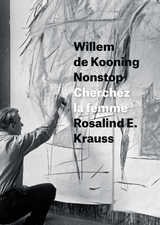
Willem de Kooning Nonstop
Cherchez la femmeRosalind E. Krauss
University of Chicago Press, 2016
Krauss demonstrates that contrary to popular conceptions of de Kooning as an artist who painted chaotically only to finish abruptly, he was in fact constantly reworking the same subject based on a compositional template. This template informed all of his art and included a three-part vertical structure; the projection of his male point of view into the painting or sculpture; and the near-universal inclusion of the female form, which was paired with her redoubled projection onto his work. Krauss identifies these elements throughout de Kooning’s oeuvre, even in his paintings of highways, boats, and landscapes: Woman is always there. A thought-provoking study by one of America’s greatest art critics, Willem de Kooning Nonstop revolutionizes our understanding of de Kooning and shows us what has always been hiding in plain sight in his work.
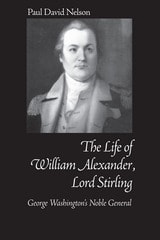
William Alexander Lord Stirling
George Washington's Noble GeneralPaul David Nelson
University of Alabama Press, 1987
At the beginning of the Revolutionary War Stirling was appointed a colonel in the New Jersey Continental Line and from there rose to the rank of Major General. A brave and loyal soldier, he greatly impressed General George Washington, who made him commander of one of the five divisions of the Continental Army. Serving in this capacity, Stirling made his reputation as a military man fighting in the battles of Long Island, White Plains, Trenton, Brandywine, Germantown, and Monmouth. He spent the winter of 1777-78 with Washington at Valley Forge. From time to time he carried out independent military operations, most notably a raid against Staten Island in January 1780. Stirling’s buoyant optimism and reckless enthusiasm for any task led one military comrade to state that his high birth and good humor provided him with many more opportunities in life than his skill and intelligence would have permitted. He died while in command of the Northern Department on January 15, 1783, full of military glory and, according to one cynic, “good liquor.”
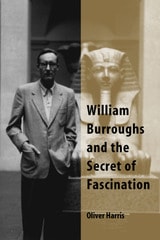
William Burroughs and the Secret of Fascination
Oliver Harris
Southern Illinois University Press, 2006
Unraveling the mysteries of Naked Lunch, exploring the allure of fascination
William Burroughs is both an object of widespread cultural fascination and one of America’s great writers. In this study, Oliver Harris elucidates the complex play of secrecy and revelation that defines the allure of fascination. Unraveling the mystifications of Burroughs the writer, Harris discovers what it means to be fascinated by a figure of major cultural influence and unearths a secret history behind the received story of one of America’s great original writers.
In William Burroughs and the Secret of Fascination, Harris examines the major works Burroughs produced in the 1950s—Junky, Queer, The Yage Letters, and Naked Lunch—to piece together an accurate, material record of his creative history during his germinal decade as a writer. Refuting the “junk paradigm” of addiction that has been used to categorize and characterize much of Burroughs’ oeuvre, Harris instead focuses on the significance of Burroughs’ letter writing and his remarkable and unsuspected use of the epistolary for his fiction. As Burroughs said to Allen Ginsberg about Naked Lunch, “the real novel is letters to you.” Drawing on rare access to manuscripts, the book suggests new ways of comprehending Burroughs’s unique politics and aesthetics and offers the first accurate account of the writing of Naked Lunch.
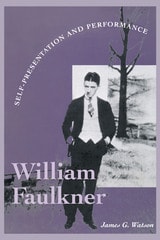
William Faulkner
Self-Presentation and PerformanceBy James G. Watson
University of Texas Press, 2000
In his life and writings, William Faulkner continually created and "performed" selves. Even in letters, he often played a part—gentleman dandy, soldier, farmer—while in his fictions these and other personae are counterpoised against one another to create a world of controlled chaos, made in Faulkner's own protean image and reflective of his own multiple sense of self.
In this groundbreaking book, James Watson draws on the entire Faulkner canon, including letters and photographs, to decipher the complicated ways in which Faulkner put himself forth as the artist he felt himself to be through written performances and displays based on the life he actually lived and the ones he imagined living. The topics Watson treats include the overtly performative aspects of The Sound and the Fury, self-presentation and performance in private records of Faulkner's life, the ways in which his complicated marriage and his relationships to male mentors underlie his fictions' recurring motifs of marriages and fatherhood, Faulkner's readings of Melville, Hawthorne, and Thoreau and the problematics of authorial sovereignty, his artist-as-God creation of a fictional cosmos, and the epistolary relationships with women that lie in the correspondence behind Requiem for a Nun.
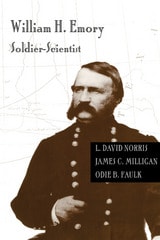
William H. Emory
Soldier-ScientistL. David Norris, James C. Milligan, and Odie B. Faulk
University of Arizona Press, 1998
Born in Maryland in 1811, Emory was a West Point graduate who resigned his commission to become a civil engineer and join the newly formed Corps of Topographical Engineers. After working along the Canadian boundary, he was selected to accompany Stephen Watts Kearny and the Army of the West in their trek to California in 1846, and his map from that expedition helped guide Forty-Niners bound for the goldfields.
Emory worked for nine years on the new border between the United States and Mexico after the Treaty of Guadalupe Hidalgo and the Gadsden Purchase and was responsible for the survey and marking of the boundary. When the Civil War broke out, Emory refused a commission in the Confederate Army, instead commanding a regiment defending Washington, D.C. Later he saw action at Manassas, in the Red River campaign, and in the Shenandoah Valley, where he served under Phil Sheridan.
This biography draws on Emory’s personal papers to reveal other significant episodes of his life. While commanding a cavalry unit in Indian Territory, he was the only officer to bring an entire command out of insurrectionary territory. In hostile action of a different kind, he was a major witness in the impeachment trial of Andrew Johnson and offered testimony that helped save the president.
William H. Emory: Soldier-Scientist is an important resource for scholars of western expansion and the Civil War. More than that, it is a rousing story of an unsung but distinguished hero of his time.
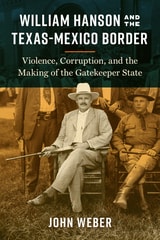
William Hanson and the Texas-Mexico Border
Violence, Corruption, and the Making of the Gatekeeper StateJohn Weber
University of Texas Press, 2024
An examination of the career of Texas Ranger and immigration official William Hanson illustrating the intersections of corruption, state-building, and racial violence in early twentieth century Texas.
At the Texas-Mexico border in the 1910s and 1920s, William Hanson was a witness to, and an active agent of, history. As a Texas Ranger captain and then a top official in the Immigration Service, he helped shape how US policymakers understood the border, its residents, and the movement of goods and people across the international boundary. An associate of powerful politicians and oil company executives, he also used his positions to further his and his patrons' personal interests, financial and political, often through threats and extralegal methods.
Hanson’s career illustrates the ways in which legal exclusion, white-supremacist violence, and official corruption overlapped and were essential building blocks of a growing state presence along the border in the early twentieth century. In this book, John Weber reveals Hanson’s cynical efforts to use state and federal power to proclaim the border region inherently dangerous and traces the origins of current nativist politics that seek to demonize the border population. In doing so, he provides insight into how a minor political appointee, motivated by his own ambitions, had lasting impacts on how the border was experienced by immigrants and seen by the nation.
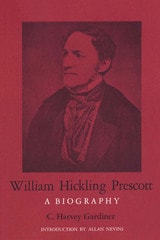
William Hickling Prescott
A BiographyBy C. Harvey Gardiner
University of Texas Press, 1969
This biography of a distinguished historian and man of letters is the first study of William Hickling Prescott (1796–1859) to be written by a historian who has worked with the very themes explored by Prescott. And it is the first to treat him not only as creative historian but also as family man, as traveler and clubman, as investor and humanitarian, and as private citizen with strong political preferences.
Prescott the socialite and Prescott the introvert writer emerge in the round as the magnificent amateur who helped establish canons that have enriched American historical scholarship ever since. Blending history and literature, his multivolume works won Prescott the first significant international reputation to be accorded to an American historian.
Working despite persistent obstacles of health and against a penchant for society and leisure that was always part of his personality, Prescott came to be considered the finest interpreter of the Hispanic world produced by the Anglo-Saxon world. His Conquest of Mexico and Conquest of Peru were pronounced classics.
C. Harvey Gardiner takes the reader back to the nineteenth century in style and in subject to present William Hickling Prescott, gentleman and scholar, firmly fixed in relationship to his community and his times. But Gardiner's Victorian stance and respect for nineteenth-century historiography do not prevent his presenting Prescott as a whole man, viewed in retrospect, stripped of myth, and evaluated for moderns.
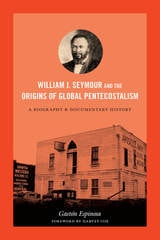
William J. Seymour and the Origins of Global Pentecostalism
A Biography and Documentary HistoryGastón Espinosa
Duke University Press, 2014
The 104 primary sources include all of Seymour's extant writings in full and without alteration and some of Parham's theological, social, and racial writings, which help explain why the two parted company. To capture the revival's diversity and global influence, this book includes Black, Latino, Swedish, and Irish testimonies, along with those of missionaries and leaders who spread Seymour's vision of Pentecostalism globally.
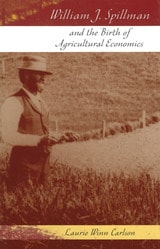
William J. Spillman and the Birth of Agricultural Economics
Laurie Winn Carlson
University of Missouri Press, 2005
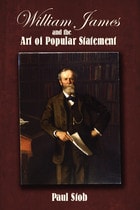
William James and the Art of Popular Statement
Paul Stob
Michigan State University Press, 2013
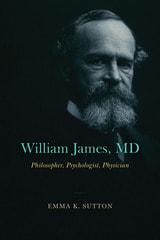
William James, MD
Philosopher, Psychologist, PhysicianEmma K. Sutton
University of Chicago Press, 2023
William James is known as a nineteenth-century philosopher, psychologist, and psychical researcher. Less well-known is how his interest in medicine influenced his life and work, driving his ambition to change the way American society conceived of itself in body, mind, and soul. William James, MD offers an account of the development and cultural significance of James’s ideas and works, and establishes, for the first time, the relevance of medical themes to his major lines of thought.
James lived at a time when old assumptions about faith and the moral and religious possibilities for human worth and redemption were increasingly displaced by a concern with the medically “normal” and the perfectibility of the body. Woven into treatises that warned against humanity’s decline, these ideas were part of the eugenics movement and reflected a growing social stigma attached to illness and invalidism, a disturbing intellectual current in which James felt personally implicated. Most chronicles of James’s life have portrayed a distressed young man, who then endured a psychological or spiritual crisis to emerge as a mature thinker who threw off his pallor of mental sickness for good. In contrast, Emma K. Sutton draws on his personal correspondence, unpublished notebooks, and diaries to show that James considered himself a genuine invalid to the end of his days. Sutton makes the compelling case that his philosophizing was not an abstract occupation but an impassioned response to his own life experiences and challenges. To ignore the medical James is to misread James altogether.
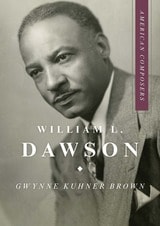
William L. Dawson
Gwynne Kuhner Brown
University of Illinois Press, 2024
Born in 1899, Dawson studied at the Tuskegee Institute in Alabama. He worked as a church, jazz, and orchestral musician in Kansas City and Chicago in the 1920s while continuing his education as a composer. He then joined the Tuskegee faculty, where for 25 years he led the Tuskegee Institute Choir to national prominence through performances of spirituals at the opening of Radio City Music Hall, on radio and television, and at the White House. The Philadelphia Orchestra conducted by Leopold Stokowski premiered Dawson’s Negro Folk Symphony in 1934.
Engaging and long overdue, William L. Dawson celebrates a pioneering Black composer whose contributions to African American music, history, and education inspire performers and audiences to this day.
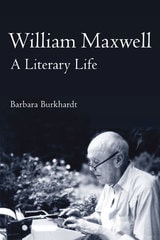
William Maxwell
A Literary LifeBarbara A. Burkhardt
University of Illinois Press, 2004
Known as a beloved, longtime fiction editor at The New Yorker, William Maxwell worked closely with such legendary writers as Vladimir Nabokov, John Updike, Mary McCarthy, and John Cheever. His own novels include They Came Like Swallows and the American Book Award-winning So Long, See You Tomorrow, and many consider him to be one of the twentieth century's most important writers. Barbara Burkhardt's William Maxwell: A Literary Life represents the first major critical study of this Illinois writer's life and work.
Writing with an economy and elegance befitting her subject, Burkhardt addresses Maxwell's highly autobiographical fiction by skillfully interweaving his biography with her own critical interpretations. She contextualizes his fiction in terms of events including his mother's early death from influenza, his marriage, and the role of his psychoanalysis under the guidance of Theodor Reik. Drawing on a wide range of previously unavailable material, Burkhardt includes letters Maxwell received from authors such as Eudora Welty and Louise Bogan, excerpts from his unpublished manuscripts and correspondence, and her own interviews with Maxwell and key figures from his life, including John Updike, Roger Angell, New Yorker fiction editor Robert Henderson, and Maxwell's family and friends.
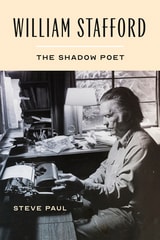
William Stafford
The Shadow PoetSteve Paul
Oregon State University Press, 2027
From the Kansas outdoors to Oregon classrooms, William Stafford (1914–1993) led a vibrantly original life navigated with ambition and mission. In poetry crafted in everyday language, a conversational tone, and richly accessible introspection, he invited readers to question and explore nature, humanity, and the American West. After he won the National Book Award in poetry and the Shelley Memorial Award from the Poetry Society of America and served as the Consultant in Poetry to the Library of Congress (a role known today as US Poet Laureate), his talent became recognized around the world. The accolades and achievements continued, including Stafford later spending fifteen years as the Poet Laureate of Oregon.
A character shaped by duty, adventure, a sharp sense of humor, and a strong moral compass, Stafford remains a beloved American poet. In William Stafford: The Shadow Poet, the first comprehensive biography, Steve Paul shares fascinating stories and frequently surprising accounts of Stafford’s life and work. The book traces Stafford from his humble origins through periods of social courage, the complications of his wartime alternative service, dedication to writing, and family tragedy. It explores how his pacifist world views and eco-consciousness continue to inspire those returning to his work or discovering it for the first time. Paul uncovers various layers of the poet’s life—through his philosophy, friends, family, teaching, and writing—and contemplates how Stafford’s metaphoric shadows, found frequently in his poems, figure into his life and career.
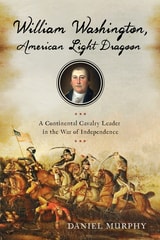
William Washington, American Light Dragoon
A Continental Cavalry Leader in the War of IndependenceDaniel Murphy
Westholme Publishing, 2014
William Washington began the war as a captain of Virginia Militia, was commissioned a junior officer in the Continental Infantry, and slowly rose to field command in the Continental Light Dragoons where he built one of the hardest hitting cavalry regiments to serve in the war. His chief adversary Lord Cornwallis commented, “There could be no more formidable antagonist in a charge, at the head of his cavalry, than Colonel William Washington.” Despite his connection to the commander-in-chief, he suffered his fair share of setbacks, and his relationships varied with not only his legendary cousin George, but many well-known figures of the Revolution including, Henry Lee, Casimir Pulaski, Nathanael Greene, and Daniel Morgan. Relying largely on firsthand accounts and period letters, in William Washington: American Light Dragoon: A Continental Cavalry Leader in the War of Independence, author and avid equestrian Daniel Murphy blends these primary sources with his own working knowledge of period drill, tactics, and terrain to deliver a more complete view of William Washington’s actions throughout the conflict. This perspective traces the often overlooked role of cavalry in the American Revolution and sheds new light on many pivotal battles in of the war, including Trenton, Cowpens, Guilford Courthouse, Hobkirk’s Hill, and William Washington’s final action at Eutaw Springs.
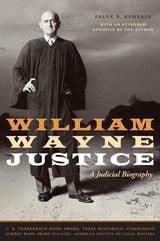
William Wayne Justice
A Judicial BiographyBy Frank Kemerer, with an extended epilogue by the author
University of Texas Press, 2008
In his forty years on the federal bench in Texas, William Wayne Justice has been a formidable force for change. His rulings have prompted significant institutional reforms in education, prisons, and racial relations, to name only a few areas of society in Texas and beyond that have been affected by Justice's work. For his labors, Judge Justice has received numerous awards, including the Outstanding Federal Trial Judge Award, the Thurgood Marshall Award from the Section on Individual Rights and Responsibilities of the American Bar Association, and the Morris Dees Justice Award from the University of Alabama School of Law.
This paperback reprint of William Wayne Justice chronicles his judicial career and the decisions he reached. It includes a new epilogue that describes Justice's move to Austin as a judge on senior status yet with a full caseload, tracks the long-running institutional reform cases to their conclusion, and examines the legacy of this remarkable and controversial jurist.

William Z. Foster and the Tragedy of American Radicalism
James R. Barrett
University of Illinois Press, 1999
A self-educated wage earner raised in the slums of a large industrial city, William Z. Foster became a brilliant union organizer who helped build the American Federation of Labor and, later, radical Trade Union Educational League. Embracing socialism, syndicalism, and communism in turn, Foster rose through the ranks of the American Communist Party to stand at the forefront of labor politics throughout the 1920s. Yet by the time he died in 1961, in a Moscow hospital far from the meat-packing plants and steel mills where he had built his reputation, Foster's political marginalism stood as a symbol for the isolation of American labor radicalism in the postwar era.
Integrating both the indigenous and the international factors that determined the fate of American communism, William Z. Foster and the Tragedy of American Radicalism provides a new understanding of the basis for radicalism among twentieth-century American workers.
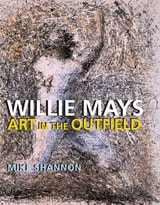
Willie Mays
Art in the OutfieldMike Shannon
University of Alabama Press, 2007
As much as any other sports figure, Willie Mays embodies the changes that racial integration brought to America’s game fields and its larger culture in the mid-20th century. Playing baseball with grace, skill, flair, and obvious delight, Willie Mays broke color barriers for more than just himself. He combined the ability to stroke majestic home runs while with an equal ability to outrun and catch what would have been home runs for opponents most famously when he turned Vic Wertz’s titantic blast into a long out in the 1954 World Series. As is often said of great players but never more true than in his case, Willie Mays could do it all.
Assembled in this work are 40 representations of how contemporary artists respond to and portray the skill, fame, and sheer love of the game that make Mays so remarkable and memorable. The art includes a broad range of styles and media from impressionistic graphite pencil drawings on paper through realistic Kodachrome photographic prints to expressionistic colored acrylics on canvas or glass. Mike Shannon offers a perceptive introductory essay on Mays’s long career and places the art in the context of his times. First curated as a traveling exhibit to honor Willie Mays’s 75th birthday, the exhibit opened at the Louisville Slugger Museum in Louisville, Kentucky, and is currently on tour.
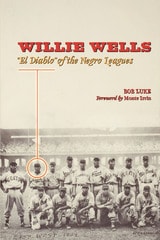
Willie Wells
El Diablo of the Negro LeaguesBy Bob Luke
University of Texas Press, 2007
2008 — Robert Peterson Recognition Award
Willie Wells was arguably the best shortstop of his generation. As Monte Irvin, a teammate and fellow Hall of Fame player, writes in his foreword, "Wells really could do it all. He was one of the slickest fielding shortstops ever to come along. He had speed on the bases. He hit with power and consistency. He was among the most durable players I've ever known." Yet few people have heard of the feisty ballplayer nicknamed "El Diablo." Willie Wells was black, and he played long before Jackie Robinson broke baseball's color barrier. Bob Luke has sifted through the spotty statistics, interviewed Negro League players and historians, and combed the yellowed letters and newspaper accounts of Wells's life to draw the most complete portrait yet of an important baseball player.
Wells's baseball career lasted thirty years and included seasons in Cuba, Puerto Rico, Mexico, and Canada. He played against white all-stars as well as Negro League greats Satchel Paige, Josh Gibson, and Buck O'Neill, among others. He was beaned so many times that he became the first modern player to wear a batting helmet.
As an older player and coach, he mentored some of the first black major leaguers, including Jackie Robinson and Don Newcombe. Willie Wells truly deserved his induction into the Baseball Hall of Fame, but Bob Luke details how the lingering effects of segregation hindered black players, including those better known than Wells, long after the policy officially ended. Fortunately, Willie Wells had the talent and tenacity to take on anything—from segregation to inside fastballs—life threw at him. No wonder he needed a helmet.
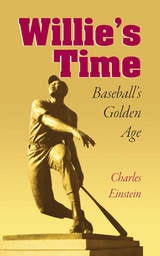
Willie's Time
Baseball's Golden AgeCharles Einstein
Southern Illinois University Press, 2004
To a generation of fans, Willie Mays was the greatest ballplayer they had ever seen. The prowess and speed of the Say Hey Kid were unmatched on the diamond before his time, prompting Joe DiMaggio to label him, “the closest you can come to perfection.” He was the first player to hit fifty home runs and steal twenty bases in a single season. Mays played for the New York Giants (1951–1957), San Francisco Giants (1958–1972), and New York Mets (1972–1973), and in his glory days with the Giants he not only set the major league mark for consecutive seasons by appearing in 150 games or more but by winning his two MVP awards a record twelve seasons apart. When Mays retired, he ranked third in career home runs (behind Aaron and Ruth), a record of 660 soon to be surpassed by Mays’s godson, Barry Bonds.
This twenty-fifth anniversary edition of the only ballplayer biography ever named a finalist for the Pulitzer Prize, Willie’s Time: Baseball’s Golden Age, restores to print Charles Einstein’s vivid biography of one of the game’s foremost legends. With a new preface from the author, this volume replays the most dramatic moments of the Say Hey Kid’s career—from the 1951 Miracle Giants to the Amazing Mets of 1973—and takes us inside the lives of Ruth, DiMaggio, Aaron, Durocher, and others along the way. Einstein offers a compelling and complete look at Mays: as a youth in racist Birmingham, a triumphant symbol of African American success, a sports hero lionized by fans, and yet all the while, still a very human figure destined to play for two decades amid baseball’s Golden Age.
Willing Warriors
A New History of the Education Culture WarsMark Hlavacik
University of Chicago Press, 2025
On August 9, 2022, the Denton Independent School District held a meeting to address complaints about its libraries. Like so many districts in Texas and across the country, Denton had been responding to accusations that children had access to inappropriate books at school. During the public comment session, a local man stood up to the podium and read a sexually explicit passage from a book that he wanted removed from Denton’s school libraries. But beguiled by the prospect of securing a political win, he had confused the title of the lurid psychological thriller he read aloud with a young adult fiction series about mermaids. While his attempt to ban a book that was never in Denton’s school libraries in the first place received a few laughs, it also reflects a deeply serious and troubling culture of conflict that has taken over the politics of education and now divides people so completely as to make public education as a shared endeavor seem impossible.
In Willing Warriors, Mark Hlavacik shows how the culture wars have redefined the politics of US schooling from the 1970s to the present through vivid accounts of public controversies featuring Allan Bloom, Oprah Winfrey, Lynne Cheney, Rush Limbaugh, Betsy DeVos, Nikole Hannah-Jones, and others. Beginning in the 1970s, Hlavacik shows, efforts at innovation in schooling have increasingly been met by attempts to discredit them through exposé. As the culture wars have accelerated and exploded, this cycle of innovation and exposé has embroiled public schools in increasingly heated debates. He explains the dynamics that make curriculum controversies so intractable and confronts the delicate question of whether raucous public arguments are bad for education.
With clarity and insight, Hlavacik reveals why bitter contests between educational ideologies not only add another burden for the schools, but also for the people—the willing warriors—who devote their lives to fighting for their betterment.

Willing and Unable
Doctors' Constraints in Abortion CareLori R. Freedman
Vanderbilt University Press, 2010
Structural barriers to the mainstream practice of abortion effectively institutionalize the buck-passing of abortion patients to abortion clinics. As the author notes, "Public-health-minded HMOs and physician practices could significantly change the world of abortion care if they stopped outsourcing it."
Drawing from forty in-depth interviews, the book presents a challenge to a commonly held assumption that physicians decide whether or not to provide abortion based on personal ideology. Physician narratives demonstrate how their choices around learning, doing, and even having abortions themselves disrupt the pro-choice/pro-life moral and political binary.
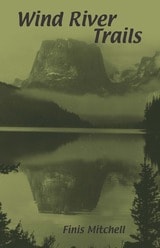
Wind River Trails
Finis Mitchell
University of Utah Press, 1999
Mitchell draws on decades of experience to describe the trails, routes, wildlife, glaciers, lakes, and streams in Wyoming's fabulous two-and-a-quarter million acre Wind River Range.
A short hike was the beginning of a long career in wilderness living for Finis Mitchell of Rock Springs, Wyoming. He has scaled 244 peaks, including four times to the trop of Gannett Peak, the highest mountain in the state. A vigorous supporter of wilderness, the mountain man pours out his philosophy at meetings and slide shows with amazing attention to detail. He has taken 105,345 pictures as a hobby and uses them in his slide shows to show people their own public lands.
He has drawn on his vast experience in the Wind Rivers to describe, in this guide book, the trails, routes, wildlife, glaciers, 4,000 lakes and 800 miles of streams in Wyoming’s fabulous two and a quarter million acre Wind River Range.
Winds of Will
Emily Dickinson and the Sovereignty of Democratic ThoughtPaul Crumbley
University of Alabama Press, 2010
A sophisticated literary analysis positioning Emily Dickinson’s poetry within the framework of democratic thought and individual sovereignty.
In this study, Paul Crumbley asserts that, contrary to popular opinion, Emily Dickinson consistently communicated political views through her poetry. Dickinson’s life of self-isolation—today her most notable personal characteristic—by no means extended into the political sphere, he argues. While she rarely addressed political issues directly and was curiously disengaged from the liberal causes and female reform movements of her time, Dickinson’s poems are deeply rooted both in matters of personal sovereignty and reader choice. The significant choices Dickinson extends to the reader underscore the democratic dimensions of reading her work, and of reading itself as a political act.
Crumbley employs close readings of Dickinson’s poems and letters, highlighting the many changing—and often contradictory—voices in her work, both throughout her oeuvre and in individual poems themselves. In Dickinson’s letters Crumbley finds just as many unique and conflicting voices; thus, both her personal correspondence and the poems make political demands by placing the burden of interpretation on the reader.
Rather than reflecting explicit political values, Dickinson’s work chronicles an ongoing decision-making process that magnifies the role of individual choice, not the advocacy of specific outcomes. In the end, Dickinson’s readers must either accept an isolated lyric subjectivity or invest that subjectivity with the substance necessary for engagement with the larger world.
Wine By Design
Santa Barbara's Quest for TerroirVictor W. Geraci
University of Nevada Press, 2020
As the American demand for premium wine grapes intensified in the late twentieth century, the Northern California wine industry rapidly grew its boutique and innovative local designer winemaking to increase profit to meet demand and compete on a global scale. Set in the context of the regional, national, and global wine community, this story illuminates a regional story of how the Santa Barbara wine industry found solutions to current market conditions while utilizing local traditions to develop a new version of local wine terroir. An accomplishment that allowed them to compete in the global marketplace yet develop highly specialized wine that is unique to the region.
By employing leading-edge technology and entrepreneurship, the California Central Coast region of Santa Barbara became a model for the American vision of agricultural innovation and an integral part of the international wine trade, developing a personalized version of local wine terroir.

Wineskin
Freakin’ Jesus in the ‘60s and ‘70sMichael Hicks
Signature Books, 2022
Michael Hicks’s story is a tale studded with awkward episodes of sex, drugs, and rock and roll (not necessarily in that order), along with alcohol, sci-fi, theft, radical politics, cartooning, halfway houses, and the musical avant-garde. The one constant is the brooding figure of Jesus Christ behind Hicks’s various personal reclamations and metamorphoses, often via methods admittedly off the books. While many readers know Hicks as a Mormon academic—thirty-five years a professor of music at Brigham Young University—Wineskin excavates the path, from boyhood to a PhD, that led him toward a faith that is both primitively Christian and highmindedly Mormon.
Wingbeats and Heartbeats
Essays on Game Birds, Gun Dogs, and Days AfieldDave Books; Illustrations by Christopher Smith
University of Wisconsin Press, 2013
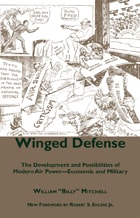
Winged Defense
The Development and Possibilities of Modern Air Power--Economic and MilitaryWilliam "Billy" Mitchell, with a new foreword by Robert S. Ehlers Jr.
University of Alabama Press, 2009
This book is the basis for airpower doctrine in the US, and demonstrates how forward looking Gen Mitchell was even though the technology for conducting air operations was in its infancy when it was written. It is essential reading for anyone concerned with airpower history or aerospace doctrine.
William Lendrum "Billy" Mitchell (December 28, 1879 – February 19, 1936) was an American Army general who is regarded as the father of the U.S. Air Force, and is one of the most famous and most controversial figures in the history of American airpower.
Mitchell served in France during the First World War and, by the conflict's end, commanded all American air combat units in that country. After the war, he was appointed deputy director of the Air Service and began to advocate increased investment in air power, claiming this would prove vital in future wars. He particularly stressed the ability of bombers to sink battleships and organized a series of dramatic bombing runs against stationary ships designed to test the idea that attracted wide notice from the public.
He antagonized many in both the Army and Navy with his arguments and criticism and, in 1925, was demoted to Colonel. Later that year, he was court-martialed for insubordination after accusing military chiefs of an "almost treasonable administration of the national defense." He resigned from the service shortly thereafter.
Mitchell received many honors following his death, including a commission by the President as a Major General. He is also the only individual after whom a type of American military aircraft is named: the B-25 "Mitchell."
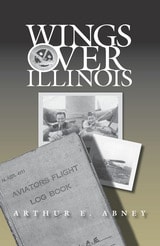
Wings Over Illinois
Arthur E. Abney
Southern Illinois University Press, 2007
Wings of Gold
An Account of Naval Aviation Training in World War II, The Correspondence of Aviation Cadet/Ensign Robert R. ReaWesley Phillips Newton
University of Alabama Press, 1987
Millions of Americans underwent military training during World War II, and contemporary historians and readers have begun to recognize the significance and value of primary sources related not only to combat but also to training and preparedness.
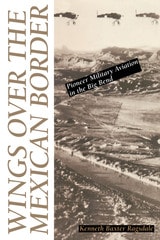
Wings over the Mexican Border
Pioneer Military Aviation in the Big BendBy Kenneth Baxter Ragsdale
University of Texas Press, 1997
Against a backdrop of revolution, border banditry, freewheeling aerial dramatics, and World War II comes this compelling look at the rise of U.S. combat aviation at an unlikely proving ground—a remote airfield in the rugged reaches of the southwestern Texas borderlands. Here, at Elmo Johnson's Big Bend ranch, hundreds of young Army Air Corps pilots demonstrated the U.S. military's reconnaissance and emergency response capabilities and, in so doing, dramatized the changing role of the airplane as an instrument of war and peace.
Kenneth Ragsdale's gripping account not only sets the United States squarely in the forefront of aerial development but also provides a reflective look at U.S.-Mexican relations of the 1920s, 1930s, and 1940s, particularly the tense days and aftermath of the Escobar Rebellion of 1929. He paints a vivid picture of the development of the U.S. aerial strike force; the character, ideals, and expectations of the men who would one day become combat leaders; and the high esteem in which U.S. citizens held the courageous pilots.
Particularly noteworthy is Ragsdale's portrait of Elmo Johnson, the Big Bend rancher, trader, and rural sage who emerges as the dominant figure at one of the most unusual facilities in the annals of the Air Corps. Wings over the Mexican Border tells a stirring story of the American frontier juxtaposed with the new age of aerial technology.

Winners and Losers
Social and Political Polarities in AmericaIrving Louis Horowitz
Duke University Press, 1984
Winning Elections and Influencing Politicians for Library Funding
Patrick “PC” Sweeney
American Library Association, 2017

Winning Grants
Stephanie K. Gerding
American Library Association, 2016
Newly revised and refreshed, this invaluable how-to manual will teach you the skills and strategies crucial for finding, applying for, and winning grants. Whether you're starting from scratch and don't know where to begin, or you're an experienced grant writer looking to tap into new funding sources, this resource offers a proven, easy-to-understand process for grant success. Loaded with a wide variety of forms, worksheets, and checklists to help you stay organized, this book:
- summarizes the grant process cycle and outlines a clear path to success;
- shares inspiring grant success stories in action from diverse libraries;
- offers guidance on gathering knowledge and conducting research, with updated resource lists and links to the various types of funders;
- covers every stage of planning, including how to cultivate community involvement, methods for needs assessment, advice on organizing the grant team, and exercises to help you write realistic goals and objectives;
- gives tips on writing the proposal, such as where to find the best statistics and census data to support your statement of needs;
- advises how to announce a successful grant to the community, and other first steps of implementation, including the basic principles of project management;
- provides guidance on what to do when you're turned down and how to conduct an effective review session that keeps the process moving forward;
- highlights ways to stay current through online discussion groups, blogs, networking groups, and more; and
- features sample RFPs, budget templates, grant partnership documents, and many other helpful tools.
Winning Library Grants
Herbert B. Landau
American Library Association, 2011
Winning Marriage
The Inside Story of How Same-Sex Couples Took on the Politicians and Pundits—and WonMarc Solomon
University Press of New England, 2015
Winning Their Place
Arizona Women in Politics, 1883-1950Heidi J. Osselaer
University of Arizona Press, 2009
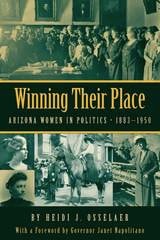
This landmark book chronicles for the first time the participation of Arizona women in the state’s early politics. Incorporating impressive original research, Winning Their Place traces the roots of the political participation of women from the territorial period to after World War II. Although women in Arizona first entered politics for traditional reasons—to reform society and protect women and children—they quickly realized that male politicians were uninterested in their demands. Most suffrage activists were working professional women, who understood that the work place discriminated against them. In Arizona they won the vote because they demanded rights as working women and aligned with labor unions and third parties that sympathized with their cause. After winning the vote, the victorious suffragists ran for office because they believed men could not and would not represent their interests.
Through this process, these Arizona women became excellent politicians. Unlike women in many other states, women in Arizona quickly carved out a place for themselves in local and state politics, even without the support of the reigning Democratic Party, and challenged men for county office, the state legislature, state office, Congress, and even for governor. This fascinating book reveals how they shattered traditional notions about “a woman’s place” and paved the way for future female politicians, including the “Fab Five” and countless others who have changed the course of Arizona history.
Winning the War for Democracy
The March on Washington Movement, 1941-1946David Lucander
University of Illinois Press, 2014
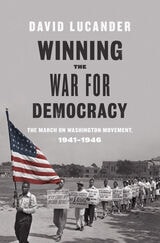
Winning the War for Democracy: The March on Washington Movement, 1941-1946 recalls that triumph, but also looks beyond Randolph and the MOWM's national leadership to focus on the organization's evolution and actions at the local level. Using the personal papers of previously unheralded MOWM members such as T.D. McNeal, internal government documents from the Roosevelt administration, and other primary sources, David Lucander highlights how local affiliates fighting for a double victory against fascism and racism helped the national MOWM accrue the political capital it needed to effect change.
Lucander details the efforts of grassroots organizers to implement MOWM's program of empowering African Americans via meetings and marches at defense plants and government buildings and, in particular, focuses on the contributions of women activists like Layle Lane, E. Pauline Myers, and Anna Arnold Hedgeman. Throughout he shows how local activities often diverged from policies laid out at MOWM's national office, and how grassroots participants on both sides ignored the rivalry between Randolph and the leadership of the NAACP to align with one another on the ground.
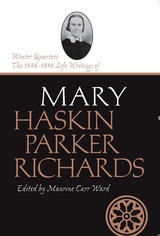
Winter Quarters
Maurine Ward
Utah State University Press, 2002
Volume 1, Life Writings of Frontier Women series, edited by Maureen Ursenbach Beecher
Mary Richard's journals and letters record a young woman's rare, but richly detailed view of life in the temporary Mormon pioneer communities in Iowa.

Winterthur Portfolio, Volume 11
Edited by Ian M. G. Quimby
University of Chicago Press, 1978
Winterthur Portfolio, Volume 3
Edited by Milo M. Naeve
University of Chicago Press, 1978
Winterthur Portfolio, Volume 4
Edited by Richard K. Doud
University of Chicago Press, 1978
Winterthur Portfolio, Volume 6
Edited by Ian M. G. Quimby
University of Chicago Press, 1978
Winterthur Portfolio, Volume 7
Edited by Ian M. G. Quimby
University of Chicago Press, 1978
Winterthur Portfolio, Volume 8
Edited by Ian M. G. Quimby
University of Chicago Press, 1978
Winterthur Portfolio, Volume 9
Edited by Ian M. G. Quimby
University of Chicago Press, 1978
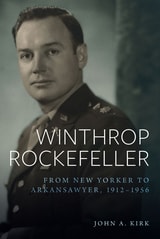
Winthrop Rockefeller
From New Yorker to Arkansawyer, 1912-1956John A. Kirk
University of Arkansas Press, 2022
Winner, 2024 J. G. Ragsdale Book Award, Arkansas Historical Association
Winner, 2024 Booker Worthen Literary Prize
Why did Winthrop Rockefeller, scion of one of the most powerful families in American history, leave New York for an Arkansas mountaintop in the 1950s? In this richly detailed biography of the former Arkansas governor, John A. Kirk delves into the historical record to fully unravel that mystery for the first time. Kirk pursues clues threaded throughout Rockefeller’s life, tracing his family background, childhood, and education; his rise in the oil industry from roustabout to junior executive; his military service in the Pacific during World War II, including his involvement in the battles of Guam, Leyte, and Okinawa; his postwar work in race relations, health, education, and philanthropy; his marriage to and divorce from Barbara “Bobo” Sears; and the birth of his only child, future Arkansas lieutenant governor Win Paul Rockefeller. This careful examination of Winthrop Rockefeller’s first forty-four years casts a powerful new light on his relationship with his adopted state, where his legacy continues to be felt more than half a century after his governorship.
Wiping the War Paint off the Lens
Native American Film and VideoBeverly R. Singer
University of Minnesota Press, 2001
Wired TV
Laboring Over an Interactive FutureMann, Denise
Rutgers University Press, 2014
This collection looks at the post–network television industry’s heady experiments with new forms of interactive storytelling—or wired TV—that took place from 2005 to 2010 as the networks responded to the introduction of broadband into the majority of homes and the proliferation of popular, participatory Web 2.0 companies like Facebook, YouTube, and Twitter.
Contributors address a wide range of issues, from the networks’ sporadic efforts to engage fans using transmedia storytelling to the production inefficiencies that continue to dog network television to the impact of multimedia convergence and multinational, corporate conglomeration on entrepreneurial creativity. With essays from such top scholars as Henry Jenkins, John T. Caldwell, and Jonathan Gray and from new and exciting voices emerging in this field, Wired TV elucidates the myriad new digital threats and the equal number of digital opportunities that have become part and parcel of today’s post-network era. Readers will quickly recognize the familiar television franchises on which the contributors focus— including Lost, The Office, Entourage, Battlestar Gallactica, The L Word, and Heroes—in order to reveal their impact on an industry in transition.
While it is not easy for vast bureaucracies to change course, executives from key network divisions engaged in an unprecedented period of innovation and collaboration with four important groups: members of the Hollywood creative community who wanted to expand television’s storytelling worlds and marketing capabilities by incorporating social media; members of the Silicon Valley tech community who were keen to rethink television distribution for the digital era; members of the Madison Avenue advertising community who were eager to rethink ad-supported content; and fans who were enthusiastic and willing to use social media story extensions to proselytize on behalf of a favorite network series.
In the aftermath of the lengthy Writers Guild of America strike of 2007/2008, the networks clamped down on such collaborations and began to reclaim control over their operations, locking themselves back into an aging system of interconnected bureaucracies, entrenched hierarchies, and traditional partners from the past. What’s next for the future of the television industry? Stay tuned—or at least online.
Contributors: Vincent Brook, Will Brooker, John T. Caldwell, M. J. Clarke, Jonathan Gray, Henry Jenkins, Derek Johnson, Robert V. Kozinets, Denise Mann, Katynka Z. Martínez, and Julie Levin Russo
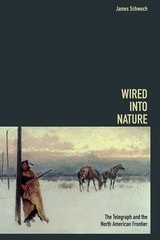
Wired into Nature
The Telegraph and the North American FrontierJames Schwoch
University of Illinois Press, 2018
Merging new research with bold interpretation, James Schwoch details the unexplored dimensions of the frontier telegraph and its impact. The westward spread of telegraphy entailed encounters with environments that challenged Americans to acquire knowledge of natural history, climate, and a host of other fields. Telegraph codes and ciphers, meanwhile, became important political, military, and economic secrets. Schwoch shows how the government's use of commercial networks drove a relationship between the two sectors that served increasingly expansionist aims. He also reveals the telegraph's role in securing high ground and encouraging surveillance. Both became vital aspects of the American effort to contain, and conquer, the West's indigenous peoples—and part of a historical arc of concerns about privacy, data gathering, and surveillance that remains pertinent today.
Entertaining and enlightening, Wired into Nature explores an unknown history of the West.