Results by title
28167 books match the query 'History' and 1118 start with w

Why Niebuhr Now?
John Patrick Diggins
University of Chicago Press, 2011
Barack Obama has called him “one of my favorite philosophers.” John McCain wrote that he is “a paragon of clarity about the costs of a good war.” Andrew Sullivan has said, “We need Niebuhr now more than ever.” For a theologian who died in 1971, Reinhold Niebuhr is maintaining a remarkably high profile in the twenty-first century.
In Why Niebuhr Now? acclaimed historian John Patrick Diggins tackles the complicated question of why, at a time of great uncertainty about America’s proper role in the world, leading politicians and thinkers are turning to Niebuhr for answers. Diggins begins by clearly and carefully working through Niebuhr’s theology, which focuses less on God’s presence than his absence—and the ways that absence abets the all-too-human sin of pride. He then shows how that theology informed Niebuhr’s worldview, leading him to be at the same time a strong opponent of fascism and communism and a leading advocate for humility and caution in foreign policy.
Turning to the present, Diggins highlights what he argues is a misuse of Niebuhr’s legacy on both the right and the left: while neoconservatives distort Niebuhr’s arguments to support their call for an endless war on terror in the name of stopping evil, many liberal interventionists conveniently ignore Niebuhr’s fundamental doubts about power. Ultimately, Niebuhr’s greatest lesson is that, while it is our duty to struggle for good, we must at the same time be wary of hubris, remembering the limits of our understanding.
The final work from a distinguished writer who spent his entire career reflecting on America’s history and promise, Why Niebuhr Now? is a compact and perceptive book that will be the starting point for all future discussions of Niebuhr.
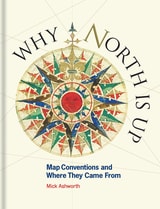
Why North Is Up
Map Conventions and Where They Came FromMick Ashworth
Bodleian Library Publishing, 2019
This book tells the story of how widely accepted mapping conventions originated and evolved—from map orientation, projections, typography, and scale, to the use of color, symbols, ways of representing relief, and the treatment of boundaries and place names. It charts the fascinating story of how conventions have changed in response to new technologies and ever-changing mapping requirements, how symbols can be a matter of life or death, why universal acceptance of conventions can be difficult to achieve, and how new mapping conventions are developing to meet the needs of modern cartography. Why North is Up offers an accessible and enlightening guide to the sometimes hidden techniques of map-making through the centuries.
Why Parties Matter
Political Competition and Democracy in the American SouthJohn H. Aldrich and John D. Griffin
University of Chicago Press, 2017
With Why Parties Matter, John H. Aldrich and John D. Griffin make a compelling case that competition between political parties is an essential component of a democracy that is responsive to its citizens and thus able to address their concerns. Tracing the history of the parties through four eras—the Democratic-Whig party era that preceded the Civil War; the post-Reconstruction period; the Jim Crow era, when competition between the parties virtually disappeared; and the modern era—Aldrich and Griffin show how and when competition emerged between the parties and the conditions under which it succeeded and failed. In the modern era, as party competition in the South has come to be widely regarded as matching that of the North, the authors conclude by exploring the question of whether the South is poised to become a one-party system once again with the Republican party now dominant.
Why Parties?
A Second LookJohn H. Aldrich
University of Chicago Press, 2011
Since its first appearance fifteen years ago, Why Parties? has become essential reading for anyone wishing to understand the nature of American political parties. In the interim, the party system has undergone some radical changes. In this landmark book, now rewritten for the new millennium, John H. Aldrich goes beyond the clamor of arguments over whether American political parties are in resurgence or decline and undertakes a wholesale reexamination of the foundations of the American party system.
Surveying critical episodes in the development of American political parties—from their formation in the 1790s to the Civil War—Aldrich shows how they serve to combat three fundamental problems of democracy: how to regulate the number of people seeking public office, how to mobilize voters, and how to achieve and maintain the majorities needed to accomplish goals once in office. Aldrich brings this innovative account up to the present by looking at the profound changes in the character of political parties since World War II, especially in light of ongoing contemporary transformations, including the rise of the Republican Party in the South, and what those changes accomplish, such as the Obama Health Care plan. Finally, Why Parties? A Second Look offers a fuller consideration of party systems in general, especially the two-party system in the United States, and explains why this system is necessary for effective democracy.
Why Parties?
The Origin and Transformation of Political Parties in AmericaJohn H. Aldrich
University of Chicago Press, 1995
Surveying three critical episodes in the development of American political parties—from their formation in the 1790s to the Civil War—Aldrich shows how parties serve to combat three fundamental problems of democracy: how to regulate the number of people seeking public office; how to mobilize voters; and how to achieve and maintain the majorities needed to accomplish goals once in office. Overcoming these obstacles, argues Aldrich, is possible only with political parties.
Aldrich brings this innovative account up to date by looking at the profound changes in the character of political parties since World War II. In the 1960s, he shows, parties started to become candidate-centered organizations that are servants to their office seekers and officeholders. Aldrich argues that this development has revitalized parties, making them stronger, and more vital, with well-defined cleavages and highly effective governing ability.
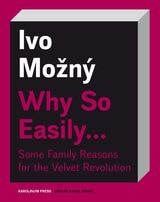
Why So Easily . . . Some Family Reasons for the Velvet Revolution
A Sociological EssayIvo Možný
Karolinum Press, 2023
Thirty-two years after its initial publication, this respected sociological essay, written in the history-making years of 1989 and 1990, is available for the first time in English. The essay tells the story of a despotic Socialist state expropriating the family (and with it the private sphere of life) only to be colonized by the very thing it expropriated forty years later. The essay plunges the reader into the pivotal time of the Velvet Revolution and provides valid explanations for the grassroots causes of the old regime’s downfall, examining the private aspirations and strategies of highly disparate groups of nameless social actors of the old regime that eventually sapped almost everyone of any interest in keeping the regime afloat.

Why Study Biology by the Sea?
Edited by Karl S. Matlin, Jane Maienschein, and Rachel A. Ankeny
University of Chicago Press, 2020
From the Stazione Zoologica in Naples to the Marine Biological Laboratory in Woods Hole, the Amoy Station in China, or the Misaki Station in Japan, students and researchers at seaside research stations have long visited the ocean to investigate life at all stages of development and to convene discussions of biological discoveries. Exploring the history and current reasons for study by the sea, this book examines key people, institutions, research projects, organisms selected for study, and competing theories and interpretations of discoveries, and it considers different ways of understanding research, such as through research repertoires. A celebration of coastal marine research, Why Study Biology by the Sea? reveals why scientists have moved from the beach to the lab bench and back.

Why They Die
Civilian Devastation in Violent ConflictDaniel Rothbart and Karina V. Korostelina
University of Michigan Press, 2013
Why do civilians suffer most during times of violent conflict? Why are civilian fatalities as much as eight times higher, calculated globally for current conflicts, than military fatalities? In Why They Die, Daniel Rothbart and Karina V. Korostelina address these questions through a systematic study of civilian devastation in violent conflicts. Pushing aside the simplistic definition of war as a guns-and-blood battle between two militant groups, the authors investigate the identity politics underlying conflicts of many types. During a conflict, all those on the opposite side are perceived as the enemy, with little distinction between soldiers and civilians. As a result, random atrocities and systematic violence against civilian populations become acceptable.
Rothbart and Korostelina devote the first half of the book to case studies: deportation of the Crimean Tatars from the Ukraine, genocide in Rwanda, the Lebanon War, and the war in Iraq. With the second half, they present new methodological tools for understanding different types of violent conflict and discuss the implications of these tools for conflict resolution.
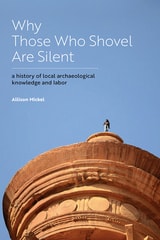
Why Those Who Shovel Are Silent
A History of Local Archaeological Knowledge and LaborAllison Mickel
University Press of Colorado, 2020
Why Those Who Shovel Are Silent is based on six years of in-depth ethnographic work with current and former site workers at two major Middle Eastern archaeological sites—Petra, Jordan, and Çatalhöyük, Turkey—combined with thorough archival research. Author Allison Mickel describes the nature of the knowledge that locally hired archaeological laborers exclusively possess about artifacts, excavation methods, and archaeological interpretation, showing that archaeological workers are experts about a wide range of topics in archaeology. At the same time, Mickel reveals a financial incentive for site workers to pretend to be less knowledgeable than they actually are, as they risk losing their jobs or demotion if they reveal their expertise.
Despite a recent proliferation of critical research examining the history and politics of archaeology, the topic of archaeological labor has not yet been substantially examined. Why Those Who Shovel Are Silent employs a range of advanced qualitative, quantitative, and visual approaches and offers recommendations for archaeologists to include more diverse expert perspectives and produce more nuanced knowledge about the past. It will appeal to archaeologists, science studies scholars, and anyone interested in challenging the concept of “unskilled” labor.
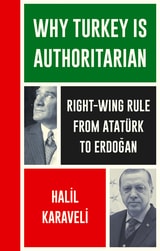
Why Turkey is Authoritarian
Right-Wing Rule from Atatürk to ErdoganHalil Karaveli
Pluto Press, 2018
This book goes beyond cultural categories that overshadow more complex realities when thinking about the 'Muslim world', while highlighting the ways in which these cultural prejudices have informed ideological positions. Karaveli argues that Turkey's culture and identity have disabled the Left, which has largely been unable to transcend these divisions.
This book asks the crucial question: why does democracy continue to elude Turkey? Ultimately, Karaveli argues that Turkish history is instructive for a left that faces the global challenge of a rising populist right, which succeeds in mobilising culture and identity to its own purposes.
Published in partnership with the Left Book Club.

Why Veterans Run
Military Service in American Presidential Elections, 1789-2016Jeremy M. Teigen
Temple University Press, 2017
The assumptions that military service helps candidates attract votes—while lacking it harms a candidate’s chances—has been an article of faith since the electoral coronation of George Washington in 1789. Perhaps the most compelling fact driving the perception that military service helps win votes is the large number of veterans who have held public office. Some candidates even exaggerate their military service to persuade voters. However, sufficient counter-examples undermine the idea that military veterans enjoy an advantage when seeking political office.
In Why Veterans Run, Jeremy Teigenexplains the tendency of parties to elevate those with armed forces experience to run for high office. He describes the veteran candidate phenomenon by examining the related factors and patterns, showing why different eras have more former generals running and why the number of veterans in election cycles varies. With both quantitative and qualitative analysis, Why Veterans Run investigates each postwar era in U.S. electoral history and elaborates why so many veterans run for office. Teigen also reveals how election outcomes with veteran candidates illuminate the relationship between the military and civilian spheres as well as the preferences of the American electorate.
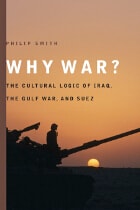
Why War?
The Cultural Logic of Iraq, the Gulf War, and SuezPhilip Smith
University of Chicago Press, 2005
Comprised of case studies of the War in Iraq, the Gulf War, and the Suez Crisis, Why War? decodes the cultural logic of the narratives that justify military action. Each nation, Smith argues, makes use of binary codes—good and evil, sacred and profane, rational and irrational, to name a few. These codes, in the hands of political leaders, activists, and the media, are deployed within four different types of narratives—mundane, tragic, romantic, or apocalyptic. With this cultural system, Smith is able to radically recast our "war stories" and show how nations can have vastly different understandings of crises as each identifies the relevant protagonists and antagonists, objects of struggle, and threats and dangers.
The large-scale sacrifice of human lives necessary in modern war, according to Smith, requires an apocalyptic vision of world events. In the case of the War in Iraq, for example, he argues that the United States and Britain replicated a narrative of impending global doom from the Gulf War. But in their apocalyptic account they mistakenly made the now seemingly toothless Saddam Hussein once again a symbol of evil by writing him into the story alongside al Qaeda, resulting in the war's contestation in the United States, Britain, and abroad.
Offering an innovative approach to understanding how major wars are packaged, sold, and understood, Why War? will be applauded by anyone with an interest in military history, political science, cultural studies, and communication.
Why We Left
Untold Stories and Songs of America's First ImmigrantsJoanna Brooks
University of Minnesota Press, 2024
A grounded, tender, and mournful reckoning with the catastrophes that launched poor, white Anglos into their role as itinerant foot soldiers for modern imperialism—now in paperback with a new preface
Joanna Brooks’s ancestors were among the early waves of emigrants to leave England for North America. For generations, they lived hardscrabble lives, eking out subsistence in one place after another as they continually moved west in search of a better life. Why, Brooks wondered, did her people and countless other poor English subjects abandon their homeland for such unremitting hardship? The question leads her on a journey through an obscure dimension of American history.
Why We Left reveals the violence and dislocation that propelled seventeenth- and eighteenth-century working-class English emigration, presenting a powerful restorying of how we arrived at our present moment of precarity and rootlessness. Following American folk ballads back across the Atlantic to find histories of economic displacement, environmental destruction, and social betrayal at the heart of the early Anglo-American migrant experience, Brooks offers a scholarly and personal account of the intergenerational traumas that shape the history of white Anglos on Turtle Island.
She shares folk ballads such as “Edward,” which reveals the influence of deforestation on the dislocation of early Anglo-American peasant immigrants, and “The House Carpenter’s Wife,” which emphasizes the impact of economic instability and the colonial enterprise on women. From these ballads, tragic and heartrending, Brooks uncovers an archaeology of the worldviews of America’s earliest immigrants. This tenth-anniversary edition includes a new preface and develops a haunting historical perspective on the ancestors we thought we knew.

Why We Lost the ERA
Jane J. Mansbridge
University of Chicago Press, 1986
In March 1972 the Equal Rights Amendment to the United States Constitution-the ERA-passed the Senate of the United States with a vote of 84 to 8, seventeen votes more than the two-thirds required for constitutional amendments. In the ensuing ten years, a majority of Americans consistently told interviewers that they favored this amendment to the Constitution. Yet on June 30, 1982, the deadline for ratifying the amendment passed with only thirty-five of the required thirty-eight states having ratified.
How did this happen? In How We Lost the ERA, political scientist Jane J. Mansbridge tells the story of the ERA's rise and fall, revealing self-defeating, contradictory forces within the movement supporting the amendment and how those contributed to its demise. The surprising challenges Mansbridge uncovers here remain salient to political struggles and democratic theory today.

Why the American Century?
Olivier Zunz
University of Chicago Press, 1998
"It should certainly be the task of historians to explain the nation's triumphs as effectively as they have explained its failures, and Zunz in this intelligent, learned and ambitious book suggests a valuable new model for doing so."—Alan Brinkley, Times Literary Supplement
"Zunz is evenhanded in his judgments. . . . His thesis is both imaginative and well grounded in the appropriate sources."—David M. Oshinsky, New York Times Book Review
"Zunz is an innovative and perceptive social critic. He crosses disciplinary boundaries with ease and felicity, and is particularly adept at illustrating large themes with unusual but telling details."—Kent Blaser, American Studies
"An eye-opening introduction to the shaping of modern America."—Foreign Affairs
Why the Chisholm Trail Forks and Other Tales of the Cattle Country
By Andy Adams
University of Texas Press, 1956
This sparkling collection of tales told around Western campfires, written by the master chronicler of the range, is a literary find of great interest and genuine importance.
Andy Adams is remembered chiefly as the author of The Log of a Cowboy. Among the most charming features of the Log are the stories the cowhands told around the fires at night when the day's work was done. Similar and equally delightful stories are scattered throughout several other less successful novels, long out of print, while others that never saw publication were found by the editor among Adams' papers.
In the present book, Wilson M. Hudson has gathered together these tales of the trail and camp into one volume that surely will delight the hearts of all readers who are interested in the old West.
Why the Vote Wasn't Enough for Selma
Karyn Forner
Duke University Press, 2017
Wicked Intelligence
Visual Art and the Science of Experiment in Restoration LondonMatthew C. Hunter
University of Chicago Press, 2013
Wicked Takes the Witness Stand
A Tale of Murder and Twisted Deceit in Northern MichiganMardi Link
University of Michigan Press, 2015
Wide Awake in the Windy City
Celebrating a Century of Excellence at Northwestern University's Kellogg School of ManagementMatt Golosinski
Northwestern University Press, 2008
In Wide Awake in the Windy City, Matt Golosinski traces the century-long ascent of the Kellogg School of Management, detailing its influence on marketing and its evolution as a globally renowned general management force. The story contextualizes the school's strategic decisions and brings to life some of its most important catalysts — deans, professors, students, and business practitioners.
The school historically turned disadvantage to opportunity, finding innovative ways to remain in the vanguard of management education. At every turn, this journey involved the vision of extraordinary people who, against the odds, created an enduring example of educational excellence.

Wide Rivers Crossed
The South Platte and the Illinois of the American PrairieEllen E. Wohl
University Press of Colorado, 2013
During the past two centuries, these rivers changed dramatically, mostly due to human interaction. Crops replaced native vegetation; excess snowmelt and rainfall carried fertilizers and pesticides into streams; and levees, dams, and drainage altered distribution. These changes cascaded through networks, starting in small headwater tributaries, and reduced the ability of rivers to supply the clean water, fertile soil, and natural habitats they had provided for centuries. Understanding how these rivers, and rivers in general, function and how these functions have been altered over time will allow us to find innovative approaches to restoring river ecosystems.
The environmental changes in the South Platte and the Illinois reflect the relentless efforts by humans to control the distribution of water: to enhance surface water in the arid western prairie and to limit the spread of floods and drain the wetlands along the rivers in the water-abundant east. Wide Rivers Crossed looks at these historical changes and discusses opportunities for much-needed protection and restoration for the future.
Widows and Orphans First
The Family Economy and Social Welfare Policy, 1880-1939S. J. Kleinberg
University of Illinois Press, 2005
The experiences of widows and their children during the Progressive Era and the New Deal depended on differences in local economies and values. How did these widely varied experiences impact the origins of the welfare state?
S. J. Kleinberg delves into the question by comparing widows' lives in three industrial cities with differing economic, ethnic, and racial bases. Government in Fall River, Massachusetts, saw employment as a solution to widows' poverty and as a result drastically limited public charity. In Pittsburgh, widows received sympathetic treatment. Few jobs existed for them or their children; indeed, the jobs for men were concentrated in "widowmaking" industries like steel and railroading. With a large African American population and a diverse economy that relied on inexpensive child and female labor, Baltimore limited funds for public services. African Americans adapted by establishing their own charitable institutions.
A fascinating comparative study, Widows and Orphans First offers a one-of-a-kind look at social welfare policy for widows and the role of children in society during a pivotal time in American history.

Widows by the Thousand
The Civil War Correspondence of Theophilus and Harriet Perry, 1862–1864M. Jane Johansson
University of Arkansas Press, 2000
Wielding the Ax
State Forestry and Social Conflict in Tanzania, 1820–2000Thaddeus Sunseri
Ohio University Press, 2009
Forests have been at the fault lines of contact between African peasant communities in the Tanzanian coastal hinterland and outsiders for almost two centuries. In recent decades, a global call for biodiversity preservation has been the main challenge to Tanzanians and their forests.
Thaddeus Sunseri uses the lens of forest history to explore some of the most profound transformations in Tanzania from the nineteenth century to the present. He explores anticolonial rebellions, the world wars, the depression, the Cold War, oil shocks, and nationalism through their intersections with and impacts on Tanzania’s coastal forests and woodlands. In Wielding the Ax, forest history becomes a microcosm of the origins, nature, and demise of colonial rule in East Africa and of the first fitful decades of independence.
Wielding the Ax is a story of changing constellations of power over forests, beginning with African chiefs and forest spirits, both known as “ax–wielders,” and ending with international conservation experts who wield scientific knowledge as a means to controlling forest access. The modern international concern over tropical deforestation cannot be understood without an awareness of the long–term history of these forest struggles.
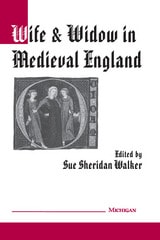
Wife and Widow in Medieval England
Sue Sheridan Walker, Editor
University of Michigan Press, 1993
Wiijiwaaganag
More Than BrothersPeter Razor
Michigan State University Press, 2022
Wikipedia and the Politics of Openness
Nathaniel Tkacz
University of Chicago Press, 2014
But what does openness mean, and what would a political theory of openness look like? With Wikipedia and the Politics of Openness, Nathaniel Tkacz uses Wikipedia, the most prominent product of open organization, to analyze the theory and politics of openness in practice—and to break its spell. Through discussions of edit wars, article deletion policies, user access levels, and more, Tkacz enables us to see how the key concepts of openness—including collaboration, ad-hocracy, and the splitting of contested projects through “forking”—play out in reality.
The resulting book is the richest critical analysis of openness to date, one that roots media theory in messy reality and thereby helps us move beyond the vaporware promises of digital utopians and take the first steps toward truly understanding what openness does, and does not, have to offer.
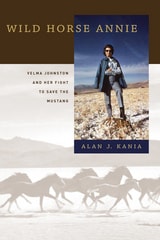
Wild Horse Annie
Velma Johnston and Her Fight to Save the MustangAlan J. Kania
University of Nevada Press, 2013
Wild horses have been a subject of bitter controversy in the West for decades. To some, they are symbols of the West’s wild, free heritage. To others, they are rapacious grazers that destroy habitat and compete with domestic livestock and indigenous wildlife for scanty food and water. For years, free-ranging horses and burros were rounded up and shipped to slaughterhouses to be killed and turned into pet food. This practice provided an income for the “mustangers” who trapped and sold them, but it also involved horrendous cruelty and abuse of the animals.
Velma Johnston, who became known as “Wild Horse Annie,” undertook to stop the removal of wild horses and burros from US public lands and protect them from the worst aspects of mustanging. Her campaign attracted nationwide attention, as it led her from her rural Nevada County to state offices and finally to Washington, DC. Author Alan J. Kania worked closely with Johnston for seven years, and his biography provides unique insight into Wild Horse Annie’s life and her efforts to save the West’s wild horse herds through the passage of protective legislation.
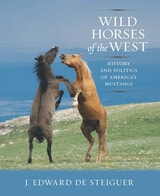
Wild Horses of the West
History and Politics of America's MustangsJ. Edward de Steiguer
University of Arizona Press, 2011
In Wild Horses of the West, J. Edward de Steiguer provides an entertaining and well-researched look at one of the most controversial animal welfare issues of our time—the protection of free-roaming horses on the West’s public lands. This is the first book in decades to include the entire story of these magnificent animals, from their evolution and biology to their historical integration into conquistador, Native American, and cowboy cultures. And the story isn’t over. De Steiguer goes on to address the modern issues— ecology, conservation, and land management—surrounding wild horses in the West today.
Featuring stunning color photographs of wild horses, this extremely thorough and engaging blend of history, science, and politics will appeal to students of the American West, conservation activists, and anyone interested in the beauty and power of these striking animals.
Wild Intelligence
Poets' Libraries and the Politics of Knowledge in Postwar AmericaM. C. Kinniburgh
University of Massachusetts Press, 2022
Information science was a burgeoning field in the early years of the Cold War, and while public and academic libraries acted as significant sites for the information boom, it is unsurprising that McCarthyism and censorship would shape what they granted readers access to and acquired. Wild Intelligence traces a different history of information management, examining the privately assembled collections of poets and their knowledge-building practices at midcentury.
Taking up case studies of four poets who began writing during the 1950s and 1960s, including Charles Olson (1910–1970), Diane di Prima (1934–2020), Gerrit Lansing (1928–2018), and Audre Lorde (1934–1992), M. C. Kinniburgh shows that the postwar American poet’s library should not just be understood according to individual books within their collection but rather as an archival resource that reveals how poets managed knowledge in a growing era of information overload. Exploring traditions and systems that had been overlooked, buried, occulted, or censored, these poets sought to recover a sense of history and chart a way forward.

Wild Mother Dancing
Maternal Narrative in Canadian LiteratureDi Brandt
University of Manitoba Press, 1993

Wild Plants of the Sierra Nevada
Ray S. Vizgirdas
University of Nevada Press, 2009
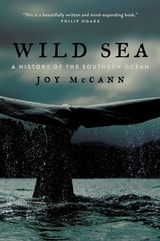
Wild Sea
A History of the Southern OceanJoy McCann
University of Chicago Press, 2019
So begins Joy McCann’s Wild Sea, the remarkable story of the world’s remote Southern, or Antarctic, Ocean. Unlike the Pacific, Atlantic, Indian, and Arctic Oceans with their long maritime histories, little is known about the Southern Ocean. This book takes readers beyond the familiar heroic narratives of polar exploration to explore the nature of this stormy circumpolar ocean and its place in Western and Indigenous histories. Drawing from a vast archive of charts and maps, sea captains’ journals, whalers’ log books, missionaries’ correspondence, voyagers’ letters, scientific reports, stories, myths, and her own experiences, McCann embarks on a voyage of discovery across its surfaces and into its depths, revealing its distinctive physical and biological processes as well as the people, species, events, and ideas that have shaped our perceptions of it. The result is both a global story of changing scientific knowledge about oceans and their vulnerability to human actions and a local one, showing how the Southern Ocean has defined and sustained southern environments and people over time.
Beautifully and powerfully written, Wild Sea will raise a broader awareness and appreciation of the natural and cultural history of this little-known ocean and its emerging importance as a barometer of planetary climate change.
Wild Tongues
Transnational Mexican Popular CultureBy Rita E. Urquijo-Ruiz
University of Texas Press, 2012
Tracing the configuration of the slapstick, destitute Peladita/Peladito and the Pachuca/Pachuco (depicted in flashy zoot suits) from 1928 to 2004, Wild Tongues is an ambitious, extensive examination of social order in Mexican and Chicana/o cultural productions in literature, theater, film, music, and performance art.
From the use of the Peladita and the Peladito as stock characters who criticized various aspects of the Mexican government in the 1920s and 1930s to contemporary performance art by María Elena Gaitán and Dan Guerrero, which yields a feminist and queer-studies interpretation, Rita Urquijo-Ruiz emphasizes the transnational capitalism at play in these comic voices. Her study encompasses both sides of the border, including the use of the Pachuca and the Pachuco as anti-establishment, marginal figures in the United States. The result is a historically grounded, interdisciplinary approach that reimagines the limitations of nation-centered thinking and reading.
Beginning with Daniel Venegas’s 1928 novel, Las aventuras de don Chipote o Cuando los pericos mamen, Rita Urquijo-Ruiz’s Wild Tongues demonstrates early uses of the Peladito to call attention to the brutal physical demands placed on the undocumented Mexican laborer. It explores Teatro de Carpa (tent theater) in-depth as well, bringing to light the experience of Mexican Peladita Amelia Wilhelmy, whose “La Willy” was famous for portraying a cross-dressing male soldier who criticizes the failed Revolution. In numerous other explorations such as these, the political, economic, and social power of creativity continually takes center stage.

Wild West Shows
Paul Reddin
University of Illinois Press, 1999
Paul Reddin exposes the mythology of the American frontier as a carefully crafted product of the Wild West show. Focusing on such pivotal figures as George Catlin, Buffalo Bill Cody, and Tom Mix, Reddin traces the rise and fall of a popular entertainment shaped out of the "raw material of America."
Buffalo Bill and other entertainers capitalized on public fascination with the danger, heroism, and courage associated with the frontier by continually modifying their presentation of the West to suit their audiences. Thus the Wild West show, contrary to its own claims of accuracy and authenticity, was highly selective in its representations of the West as well as widely influential in shaping the public image of life on the Great Plains.
A uniquely American entertainment—colorful, energetic, unabashed, and, as Reddin demonstrates, self-made—the Wild West show exerted an appeal that was all but irresistible to a public hovering uncertainly between industrial progress and nostalgia for a romanticized past.
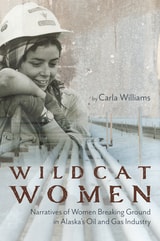
Wildcat Women
Narratives of Women Breaking Ground in Alaska's Oil and Gas IndustryCarla Williams
University of Alaska Press, 2018

Wilde Times
Patricia Wilde, George Balanchine, and the Rise of New York City BalletJoel Lobenthal
University Press of New England, 2016
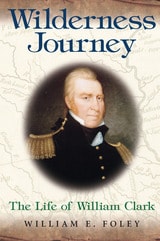
Wilderness Journey
The Life of William ClarkWilliam E. Foley
University of Missouri Press, 2005
Coinciding with the bicentennial in 2004 of the departure of Lewis and Clark’s famed Corps of Discovery, Wilderness Journey fills a major gap in scholarship. Intended for the general reader, as well as for specialists in the field, this fascinating book provides a well-balanced and thorough account of one of America’s most significant frontiersmen.
Wilderness Tapestry
An Eclectic Approach To PreservationVause Zeveloff
University of Nevada Press, 1992
To further understanding of the meanings and values of wilderness, this volume explores wilderness and its significance to humans from myriad viewpoints, based on a meeting of the North American Interdisciplinary Wilderness Conference.
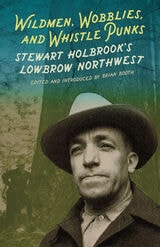
Wildmen, Wobblies, and Whistle Punks
Stewart Holbrook's Lowbrow NorthwestBrian Booth
Oregon State University Press, 0
Stewart Holbrook was a high school dropout who emerged from logging camps to become the author of three dozen books, the Pacific Northwest’s foremost storyteller, one of the nation’s most popular historians, and a satirical painter known as “Mr. Otis.”
Today readers are rediscovering Holbrook’s colorful and irreverent accounts of Pacific Northwest history. Wildmen, Wobblies, and Whistle Punks collects twenty-six of Holbrook’s best writings about the region. Combining solid scholarship with humor and a gift for celebrating the offbeat, Holbrook’s stories record a vibrant, often overlooked side of Northwest history. Here are forgotten scandals and murders; stories of forest fires, floods, and other calamities; tales of loggers and life in the logging camps; and profiles of various lowbrow characters—radicals, do-gooders, dreamers, schemers, and zealots.
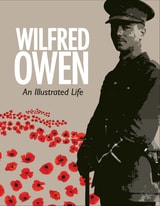
Wilfred Owen
An Illustrated LifeJane Potter
Bodleian Library Publishing, 2014
This generously illustrated book tells the story of Owen’s life and work, from his birth in 1893 to his tragic death just one week before the signing of the armistice that would end the war. The shocking realism of poems such as “Strange Meeting” and the angry disillusionment of “Anthem for Doomed Youth” reveal Owen’s transformation from a romantic youth steeped in the poetry of Keats to a mature soldier awakened to the horrors of the Western Front.
Drawing on numerous manuscripts, artifacts, and family photographs, this book gives a comprehensive view of the relationship between the poet’s lived experience and his writing that will appeal equally to both those well-versed in Owen’s work and those seeking a well-researched, accessible introduction.
Wilkie Collins and Copyright
Sundeep Bisla
The Ohio State University Press, 2013
Willa Cather and Others
Jonathan Goldberg
Duke University Press, 2001
The “others” referred to in the title are women, for the most part Cather’s contemporaries, whose artistic projects allow for points of comparison with Cather. They include the Wagnerian diva Olive Fremstad, renowned for her category-defying voice; Blair Niles, an ethnographer and novelist of jazz-age Harlem and the prisons of New Guinea; Laura Gilpin, photographer of the American Southwest; and Pat Barker, whose Regeneration trilogy places World War I writers—and questions of sexuality and gender—at its center. In the process of studying these women and their work, Goldberg forms innovative new insights into a wide range of Cather’s celebrated works, from O Pioneers! and My Ántonia to her later books The Song of the Lark, One of Ours, The Professor’s House, Death Comes for the Archbishop, and Sapphira and the Slave Girl.
By applying his unique talent to the study of Cather’s literary genius, Jonathan Goldberg makes a significant and new contribution to the study of American literature and queer studies.
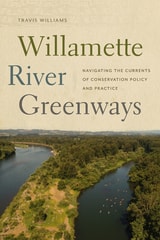
Willamette River Greenways
Navigating the Currents of Conservation Policy and PracticeTravis Williams
Oregon State University Press, 2021
Travis Williams, executive director of Willamette Riverkeeper, has spent countless hours paddling the Willamette, becoming familiar with its flora, fauna, and human neighbors. In Willamette River Greenways, he combines personal narrative about his experiences on the river with nuanced consideration of the controversies and challenges of the Greenway Program. Williams sheds light on current land stewardship practices, revealing the institutional and leadership failures that endanger the river’s water quality and habitat, and looks to the program’s future. He also takes readers with him onto the water, sharing what it’s like to travel the river by canoe, paying homage to the river’s natural beauty and the host of wildlife species that call it home.
Part policy analysis, part advocacy, and all love letter to one of Oregon’s great rivers, Willamette River Greenways offers valuable perspective to policymakers, land use managers, and recreational river users alike.
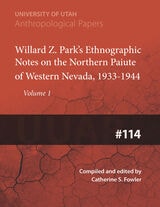
Willard Z. Park's Notes on the Northern Paiute of Western Nevada, 1933-1940
UUAP 114Catherine S. Fowler
University of Utah Press, 1989
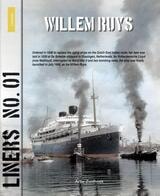
Willem Ruys
Arne Zuidhoek
Amsterdam University Press, 2014
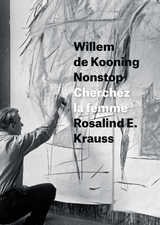
Willem de Kooning Nonstop
Cherchez la femmeRosalind E. Krauss
University of Chicago Press, 2016
Krauss demonstrates that contrary to popular conceptions of de Kooning as an artist who painted chaotically only to finish abruptly, he was in fact constantly reworking the same subject based on a compositional template. This template informed all of his art and included a three-part vertical structure; the projection of his male point of view into the painting or sculpture; and the near-universal inclusion of the female form, which was paired with her redoubled projection onto his work. Krauss identifies these elements throughout de Kooning’s oeuvre, even in his paintings of highways, boats, and landscapes: Woman is always there. A thought-provoking study by one of America’s greatest art critics, Willem de Kooning Nonstop revolutionizes our understanding of de Kooning and shows us what has always been hiding in plain sight in his work.
Willem de Rooij - Dirk Valkenburg
Karwan Fatah-Black
Amsterdam University Press, 2026
William Blake and the Impossible History of the 1790s
Saree Makdisi
University of Chicago Press, 2003

William Burroughs and the Secret of Fascination
Oliver Harris
Southern Illinois University Press, 2006
Unraveling the mysteries of Naked Lunch, exploring the allure of fascination
William Burroughs is both an object of widespread cultural fascination and one of America’s great writers. In this study, Oliver Harris elucidates the complex play of secrecy and revelation that defines the allure of fascination. Unraveling the mystifications of Burroughs the writer, Harris discovers what it means to be fascinated by a figure of major cultural influence and unearths a secret history behind the received story of one of America’s great original writers.
In William Burroughs and the Secret of Fascination, Harris examines the major works Burroughs produced in the 1950s—Junky, Queer, The Yage Letters, and Naked Lunch—to piece together an accurate, material record of his creative history during his germinal decade as a writer. Refuting the “junk paradigm” of addiction that has been used to categorize and characterize much of Burroughs’ oeuvre, Harris instead focuses on the significance of Burroughs’ letter writing and his remarkable and unsuspected use of the epistolary for his fiction. As Burroughs said to Allen Ginsberg about Naked Lunch, “the real novel is letters to you.” Drawing on rare access to manuscripts, the book suggests new ways of comprehending Burroughs’s unique politics and aesthetics and offers the first accurate account of the writing of Naked Lunch.