Results by title
18284 books match the query 'United States' and 882 start with w

Writing Successful Technology Grant Proposals
Pamela H. MacKellar
American Library Association, 2010
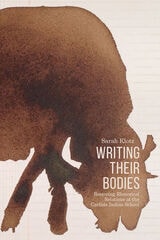
Writing Their Bodies
Restoring Rhetorical Relations at the Carlisle Indian SchoolSarah Klotz
Utah State University Press, 2020
This approach tracks the relationship between curriculum and resistance and enumerates an anti-assimilationist methodology for teachers and scholars of writing in contemporary classrooms. From the Carlisle archive emerges the concept of a rhetoric of relations, a set of Native American communicative practices that circulates in processes of intercultural interpretation and world-making. Klotz explores how embodied and material practices allowed Indigenous rhetors to maintain their cultural identities in the off-reservation boarding school system and critiques the settler fantasy of benevolence that propels assimilationist models of English education.
Writing Their Bodies moves beyond language and literacy education where educators standardize and limit their students’ means of communication and describes the extraordinary expressive repositories that Indigenous rhetors draw upon to survive, persist, and build futures in colonial institutions of education.
Writing Vietnam, Writing Life
Caputo, Heinemann, O'Brien, ButlerTobey C. Herzog
University of Iowa Press, 2008
Philip Caputo, Larry Heinemann, Tim O'Brien, and Robert Olen Butler: four young midwestern Americans coming of age during the 1960s who faced a difficult personal decision—whether or not to fight in Vietnam. Each chose to participate. After coming home, these four veterans became prizewinning authors telling the war stories and life stories of soldiers and civilians. The four extended conversations included in Writing Vietnam, Writing Life feature revealing personal stories alongside candid assessments of each author's distinct roles as son, soldier, writer, and teacher of creative writing.
As Tobey Herzog's thoughtful interviews reveal, these soldier-authors have diverse upbringings, values, interests, writing careers, life experiences, and literary voices. They hold wide-ranging views on, among other things, fatherhood, war, the military, religion, the creative process, the current state of the world, and the nature of both physical and moral courage. For each author, the conversation and richly annotated chronology provide an overview of the writer's life, the intersection of memory and imagination in his writing, and the path of his literary career. Together, these four life stories also offer mini-tableaux of the fascinating and troubling time of 1960s and 1970s America. Above all, the conversations reveal that each author is linked forever to the Vietnam War, the country of Vietnam, and its people.
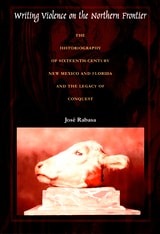
Writing Violence on the Northern Frontier
The Historiography of Sixteenth-Century New Mexico and Florida and the Legacy of ConquestJosé Rabasa
Duke University Press, 2000
To advance his argument Rabasa analyzes visual and verbal representations, colonialist programs, and the theories of colonization that informed the historiography of sixteenth-century New Mexico and Florida, which includes the territory from the Pacific coast to Kansas, and from present-day Florida to Tennessee and Arkansas. Using little-known materials from the northern borderlands of Spanish imperial expansion, Rabasa works to complicate notions of violence and their relationship to writing. Understood in juxtaposition with modern texts on postcolonial theory, his description of the dual function of these colonial texts—to represent material acts of violence and to act as violence itself—also emphasizes the lingering effects of this phenomenon in contemporary intellectual work and everyday life. In this way Writing Violence on the Northern Frontier serves not only as an explanation of what colonialist texts do but also instigates new ways of thinking about colonial discourse.
This book will interest scholars of colonial studies and early North American history, as well as a broader audience interested in interdisciplinary perspectives on the topic of racial, ethnic, and literary violences.
Writing Wars
Authorship and American War Fiction, WWI to PresentDavid F. Eisler
University of Iowa Press, 2022
2024 Senators Bob and Elizabeth Dole Biennial Award for Distinguished Book in Veterans Studies, winner
Who writes novels about war? For nearly a century after World War I, the answer was simple: soldiers who had been there. The assumption that a person must have experienced war in the flesh in order to write about it in fiction was taken for granted by writers, reviewers, critics, and even scholars.
Contemporary American fiction tells a different story. Less than half of the authors of contemporary war novels are veterans. And that’s hardly the only change. Today’s war novelists focus on the psychological and moral challenges of soldiers coming home rather than the physical danger of combat overseas. They also imagine the consequences of the wars from non-American perspectives in a way that defies the genre’s conventions. To understand why these changes have occurred, David Eisler argues that we must go back nearly fifty years, to the political decision to abolish the draft. The ramifications rippled into the field of cultural production, transforming the foundational characteristics— authorship, content, and form—of the American war fiction genre.
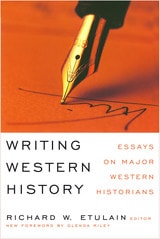
Writing Western History
Essays on Major Western HistoriansRichard W. Etulain
University of Nevada Press, 2002
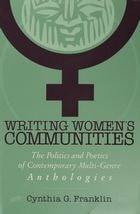
Writing Women's Communities
The Politics and Poetics of Contemporary Multi-Genre AnthologiesCynthia G. Franklin
University of Wisconsin Press, 1997
Beginning in the 1980s, a number of popular and influential anthologies organized around themes of shared identity—Nice Jewish Girls, This Bridge Called My Back, Home Girls, and others—have brought together women’s fiction and poetry with journal entries, personal narratives, and transcribed conversations. These groundbreaking multi-genre anthologies, Cynthia G. Franklin demonstrates, have played a crucial role in shaping current literary studies, in defining cultural and political movements, and in building connections between academic and other communities.
Exploring intersections and alliances across the often competing categories of race, class, gender, and sexuality, Writing Women’s Communities contributes to current public debates about multiculturalism, feminism, identity politics, the academy as a site of political activism, and the relationship between literature and politics.

Writing Wrongs
W.D. King
Temple University Press, 1997
Writing Wrongs: The Work of Wallace Shawn is a close and personal look into the life and literary work of the man whom Joseph Papp called "a dangerous writer." As the son of the late William Shawn, renowned editor of The New Yorker, Wallace Shawn was born into privilege and trained to thoroughly liberal values, but his plays relentlessly question the liberal faith in individualism and common decency. In an uncompromising way that is all his own, Shawn registers the shock of the new.
In works such as Aunt Dan and Lemon, My Dinner with Andre, and The Designated Mourner, he wrenches out of place all of the usual, comfortable mechanisms by which we operate as audiences. Perhaps our discomfort and struggle to understand a play might provoke some change in the way we see ourselves and behave in relation to others -- but Shawn offers little in the way of solace.
W.D. King's incisive critiques of the plays and inquiry into the life and times of their author develop a portrait of Shawn as a major figure in contemporary theater.
Writing Your Journal Article in Twelve Weeks, Second Edition
A Guide to Academic Publishing SuccessWendy Laura Belcher
University of Chicago Press, 2019
With this new edition, Belcher expands her advice to reach beginning scholars in even more disciplines. She builds on feedback from professors and graduate students who have successfully used the workbook to complete their articles. A new chapter addresses scholars who are writing from scratch. This edition also includes more targeted exercises and checklists, as well as the latest research on productivity and scholarly writing.
Writing Your Journal Article in Twelve Weeks is the only reference to combine expert guidance with a step-by-step workbook. Each week, readers learn a feature of strong articles and work on revising theirs accordingly. Every day is mapped out, taking the guesswork and worry out of writing. There are tasks, templates, and reminders. At the end of twelve weeks, graduate students, recent PhDs, postdoctoral fellows, adjunct instructors, junior faculty, and international faculty will feel confident they know that the rules of academic publishing and have the tools they need to succeed.
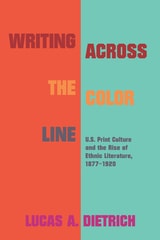
Writing across the Color Line
U.S. Print Culture and the Rise of Ethnic Literature, 1877-1920Lucas A. Dietrich
University of Massachusetts Press, 2020
Writing across the Color Line details how this body of literature was selected for publication, edited, manufactured, advertised, and distributed, even as it faced hostile criticism and frequent misinterpretation by white readers. Shedding light on the transformative potential of multiethnic literature and the tenacity of racist attitudes that dominated the literary marketplace, Dietrich proves that Native American, African American, Latinx, Asian American, and Irish American writers of the period relied on self-caricature, tricksterism, and the careful control of authorial personae to influence white audiences.
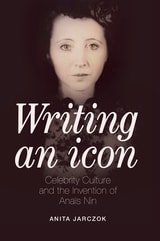
Writing an Icon
Celebrity Culture and the Invention of Anaïs NinAnita Jarczok
Ohio University Press, 2017
Anaïs Nin, the diarist, novelist, and provocateur, occupied a singular space in twentieth-century culture, not only as a literary figure and voice of female sexual liberation but as a celebrity and symbol of shifting social mores in postwar America. Before Madonna and her many imitators, there was Nin; yet, until now, there has been no major study of Nin as a celebrity figure.
In Writing an Icon, Anita Jarczok reveals how Nin carefully crafted her literary and public personae, which she rewrote and restyled to suit her needs and desires. When the first volume of her diary was published in 1966, Nin became a celebrity, notorious beyond the artistic and literary circles in which she previously had operated. Jarczok examines the ways in which the American media appropriated and deconstructed Nin and analyzes the influence of Nin’s guiding hand in their construction of her public persona.
The key to understanding Nin’s celebrity in its shifting forms, Jarczok contends, is the Diary itself, the principal vehicle through which her image has been mediated. Combining the perspectives of narrative and cultural studies, Jarczok traces the trajectory of Nin’s celebrity, the reception of her writings. The result is an innovative investigation of the dynamic relationships of Nin’s writing, identity, public image, and consumer culture.
Writing and School Reform
Writing Instruction in the Age of Common Core and Standardized TestingJoanne Addison
University Press of Colorado, 2017
Writing at the State U
Instruction and Administration at 106 Comprehensive UniversitiesEmily Isaacs
Utah State University Press, 2017
Writing at the State U presents a comprehensive, empirical examination of writing programs at 106 universities. Rather than using open survey calls and self-reporting, Emily Isaacs uses statistical analysis to show the extent to which established principles of writing instruction and administration have been implemented at state comprehensive universities, the ways in which writing at those institutions has differed from writing at other institutions over time, and how state institutions have responded to major scholarly debates concerning first-year composition and writing program administration.
Isaacs’s findings are surprising: state university writing programs give lip service to important principles of writing research, but many still emphasize grammar instruction and a skills-based approach, classes continue to be outsized, faculty development is optional, and orientation toward basic writing is generally remedial. As such, she considers where a closer match between writing research and writing instruction might help to expose and remedy these difficulties and identifies strategies and areas where faculty or writing program administrators are empowered to enact change.
Unique in its wide scope and methodology, Writing at the State U sheds much-needed light on the true state of the writing discipline at state universities and demonstrates the advantages of more frequent and rigorous quantitative studies of the field.
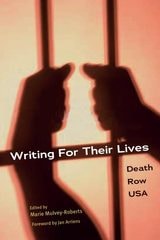
Writing for Their Lives
Death Row USAEdited by Marie Mulvey-Roberts. Foreword by Jan Arriens
University of Illinois Press, 2007
Exposing little-known facts about the five modes of execution practiced in the United States today, Writing for Their Lives documents the progress of life on death row from a capital trial to execution and beyond, through the testimony of the prisoners themselves as well as those who watch, listen, and write to them. What emerges are stories of the survival of the human spirit under even the most unimaginable circumstances, and the ways in which some prisoners find penitence and peace in the most unlikely surroundings. In spite of the uniformity of their prison life and its nearly inevitable conclusion, prisoners able to read and write letters are shown to retain and develop their individuality and humanity as their letters become poems and stories.
Writing for Their Lives serves ultimately as an affirmation of the value of life and provides bountiful evidence that when a state executes a prisoner, it takes a life that still had something to give.
This edition features an introduction by the editor as well as a foreword by Jan Arriens. Dr. Mulvey-Roberts will be donating her profits from the sale of this volume to the legal charity Amicus, which assists in capital defense in the United States."
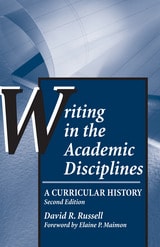
Writing in the Academic Disciplines, Second Edition
A Curricular HistoryDavid R. Russell. Foreword by Elaine P. Maimon
Southern Illinois University Press, 2002
“To understand the ways students learn to write, we must go beyond the small and all too often marginalized component of the curriculum that treats writing explicitly and look at the broader, though largely tacit traditions students encounter in the whole curriculum,” explains David R. Russell, in the introduction to this singular study. The updated edition provides a comprehensive history of writing instruction outside general composition courses in American secondary and higher education, from the founding public secondary schools and research universities in the 1870s, through the spread of the writing-across-the-curriculum movement in the 1980s, through the WAC efforts in contemporary curriculums.
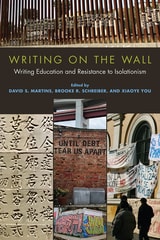
Writing on the Wall
Writing Education and Resistance to Isolationismedited by David S. Martins, Brooke R. Schreiber & Xiaoye You
Utah State University Press, 2022
The collection extends existing scholarship and research about the ways racist and colonial rhetorics impact writing education; the impact of translingual, transnational, and cosmopolitan ideologies on student learning and student writing; and the role international educational partnerships play in pushing back against isolationist ideologies. Established and early-career scholars who work in a broad range of institutional contexts highlight the historical connections among monolingualism, racism, and white nationalism and introduce community- and classroom-based practices that writing teachers use to resist isolationist beliefs and tendencies.
“Writing on the wall” serves as a metaphor for the creative, direct action writing education can provide and invokes border spaces as sites of identity expression, belonging, and resistance. The book connects transnational writing education with the fight for racial justice in the US and around the world and will be of significance to secondary and postsecondary writing teachers and graduate students in English, linguistics, composition, and literacy studies.
Contributors: Olga Aksakalova, Sara P. Alvarez, Brody Bluemel, Tuli Chatterji, Keith Gilyard, Joleen Hanson, Florianne Jimenez Perzan, Rebecca Lorimer Leonard, Layli Maria Miron, Tony D. Scott, Kate Vieira, Amy J. Wan
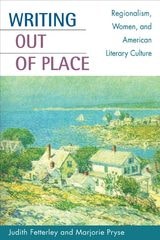
Writing out of Place
Regionalism, Women, and American Literary CultureJudith Fetterley and Marjorie Pryse
University of Illinois Press, 2002
Regionalist writers such as Alice Cary, Mary E. Wilkins Freeman, Sarah Orne Jewett, Grace King, Alice Dunbar–Nelson, Sui Sin Far, and Mary Austin present narrators who serve as cultural interpreters for persons often considered "out of place" by urban readers. Critiquing the approaches to regional subjects characteristic of local color, this book gives contemporary readers a vantage point from which to approach regions and regional people in the global economy of our own time.
Reclaiming the ground of "close" reading for texts that have been insufficiently read, Fetterley and Pryse situate textual analyses within larger questions such as the ideology of form, feminist standpoint epistemology, queer theory, intersections of race and class, and narrative empathy. In its combination of the critical and the visionary, Writing out of Place proposes regionalism as a model for narrative connection between texts and readers that has the potential to transform American literary culture. Arguing the need for other models for human development than those produced in heroic stories about men and boys, the authors offer regionalism as a source of unconventional and counterhegemonic fictions that should be passed on to future generations of readers.
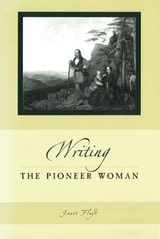
Writing the Pioneer Woman
Janet Floyd
University of Missouri Press, 2002
Focusing on a series of autobiographical texts, published and private, well known and obscure, Writing the Pioneer Woman examines the writing of domestic life on the nineteenth-century North American frontier. In an attempt to determine the meanings found in the pioneer woman's everyday writings—from records of recipes to descriptions of washing floors—Janet Floyd explores domestic details in the autobiographical writing of British and Anglo-American female emigrants.
Floyd argues that the figure of the pioneer housewife has been a significant one within general cultural debates about the home and the domestic life of women, on both sides of the Atlantic. She looks at the varied ideological work performed by this figure over the last 150 years and at what the pioneer woman signifies and has signified in national cultural debates concerning womanhood and home.
The autobiographies under discussion are not only of homemaking but also of emigration. Equally, these texts are about the enterprise of emigration, with several of them written to advise prospective emigrants. Using the insights of diaspora and migration theory, Floyd shows that these writings portray a far subtler role for the pioneer woman than is suggested by previous scholars, who often see her either as participating directly in the overall domestication of colonial space or as being strictly marginal to that process.
Written in response to the highly critical discussion of the attitudes and activities of female "civilizers" within "New" Western history and postcolonial studies, Writing the Pioneer Woman will be a valuable addition to the burgeoning discussion of the literature of domesticity.
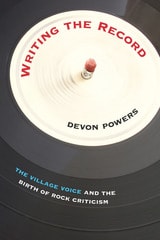
Writing the Record
The Village Voice and the Birth of Rock CriticismDevon Powers
University of Massachusetts Press, 2013
During the mid-1960s, a small group of young journalists made it their mission to write about popular music, especially rock, as something worthy of serious intellectual scrutiny. Their efforts not only transformed the perspective on the era's music but revolutionized how Americans have come to think, talk, and write about popular music ever since.
In Writing the Record, Devon Powers explores this shift by focusing on The Village Voice, a key publication in the rise of rock criticism. Revisiting the work of early pop critics such as Richard Goldstein and Robert Christgau, Powers shows how they stood at the front lines of the mass culture debates, challenging old assumptions and hierarchies and offering pioneering political and social critiques of the music. Part of a college-educated generation of journalists, Voice critics explored connections between rock and contemporary intellectual trends such as postmodernism, identity politics, and critical theory. In so doing, they became important forerunners of the academic study of popular culture that would emerge during the 1970s.
Drawing on archival materials, interviews, and insights from media and cultural studies, Powers not only narrates a story that has been long overlooked but also argues that pop music criticism has been an important channel for the expression of public intellectualism. This is a history that is particularly relevant today, given the challenges faced by criticism of all stripes in our current media environment. Powers makes the case for the value of well-informed cultural criticism in an age when it is often suggested that “everyone is a critic.”
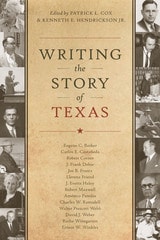
Writing the Story of Texas
Edited by Patrick L. Cox and Kenneth E. Hendrickson Jr.
University of Texas Press, 2013
The history of the Lone Star state is a narrative dominated by larger-than-life personalities and often-contentious legends, presenting interesting challenges for historians. Perhaps for this reason, Texas has produced a cadre of revered historians who have had a significant impact on the preservation (some would argue creation) of our state’s past. An anthology of biographical essays, Writing the Story of Texas pays tribute to the scholars who shaped our understanding of Texas’s past and, ultimately, the Texan identity.
Edited by esteemed historians Patrick Cox and Kenneth Hendrickson, this collection includes insightful, cross-generational examinations of pivotal individuals who interpreted our history. On these pages, the contributors chart the progression from Eugene C. Barker’s groundbreaking research to his public confrontations with Texas political leaders and his fellow historians. They look at Walter Prescott Webb’s fundamental, innovative vision as a promoter of the past and Ruthe Winegarten’s efforts to shine the spotlight on minorities and women who made history across the state. Other essayists explore Llerena Friend delving into an ambitious study of Sam Houston, Charles Ramsdell courageously addressing delicate issues such as racism and launching his controversial examination of Reconstruction in Texas, Robert Cotner—an Ohio-born product of the Ivy League—bringing a fresh perspective to the field, and Robert Maxwell engaged in early work in environmental history.
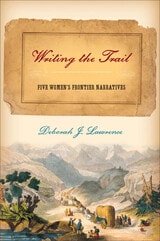
Writing the Trail
Five Women's Frontier NarrativesDeborah Lawrence
University of Iowa Press, 2006
Writing with Authority
Students' Roles as Writers In Cross-National PerspectiveDavid Foster
Southern Illinois University Press, 2006
Writing with Authority: Students’ Roles as Writers in Cross-National Perspective offers a comparison of student writers in two university cultures—one German and one American—as the students learn to connect their writing to academic content. David Foster demonstrates the effectiveness of using cross-cultural comparisons to assess differences in literacy activities and suggests teaching approaches that will help American students better develop their roles as writers in knowledge-based communities. He proposes that American universities make stronger efforts to nurture the autonomy of American undergraduates as learner-writers and to create apprenticeship experiences that more closely reflect the realities of working in the academic community.
This comparative analysis identifies crucial differences in the ways German and American students learn to become academic writers, emphasizing two significant issues: the importance of self-directed, long-term planning and goal setting in developing knowledge-based projects and the impact of time structures on students’ writing practices. Foster suggests that students learn to write as knowledge makers, using cumulative, recursive task development as reflexive writing practices. He argues for the full integration of extended, self-managed, knowledge-based writing tasks into the American undergraduate curriculum from the onset of college study.
A cross-national perspective offers important insights into the conditions that influence novice writers, Foster says, including secondary preparations and transitions to postsecondary study. Foster proposes that students be challenged to write transformatively—to master new forms of authorship and authority based on self-directed planning, researching, and writing in specific academic communities. The text also addresses contested issues of power relations in students’ roles as academic writers and their perception of personal authority and freedom as writers.
A course model incorporates significant, self-directed writing projects to help students build sustainable roles as transformative writers, outlines “change goals” to help teachers develop curricular structures that support cumulative writing projects across the undergraduate curriculum, and shows how teachers can develop self-directed writing projects in a variety of program environments.
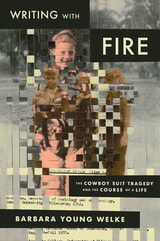
Writing with Fire
The Cowboy Suit Tragedy and the Course of a LifeBarbara Young Welke
University of Chicago Press, 2026
A cultural and legal history intertwined with a deeply emotional meditation on the course of life, memory, and the documents that define us.
During the 1940s and 1950s, an untold number of American children suffered devastating injuries when the fur-like fabric on the chaps of their Gene Autry–branded cowboy playsuits exploded into flame. Barbara Young Welke was researching this history when her teenage daughter unexpectedly died.
The shock of Welke’s loss transformed her understanding of the children and their families. Her experience also led her to question the norms of scholarship and of writing. Historians are trained to separate the personal from the intellectual, to be suspicious of emotion. These and other norms are embedded in and reinforced by the calling card of academics, the curriculum vitae. Welke wondered how that cold document—with its literal meaning, “the course of life”—had become a form that excludes so much of what gives life meaning. What impact did that have on what we know, how we know it, and how we understand ourselves? Similarly, Welke wondered, what might we see if we looked at the history of the cowboy suit tragedy as more than a matter of lawsuits brought by grieving families? Here, Welke traces the making, marketing, and selling of the cowboy suits; the lengths the defendants went to avoid and limit liability; and the meaning of the injuries, deaths, and legal settlements in the course of these children’s and families’ lives.
Writing with Fire interweaves the histories of the cowboy suit tragedy and the curriculum vitae. Grounded in archival and legal research, oral histories, and letters Welke wrote her daughter following her death, Welke offers an inimitable examination of trauma, law, autobiography, and identity. The result is revelatory and unforgettable: a provocative historical reflection on life and death, depression and war, markets and families, law, power, and precarity in modern America.
Writing-Enriched Curricula
Models of Faculty-Driven and Departmental Transformationedited by Chris M. Anson, and Pamela Flash
University Press of Colorado, 2022
Writings of Warner Mifflin
Forgotten Quaker Abolitionist of the Revolutionary EraGary B. Nash
University of Delaware Press, 2021
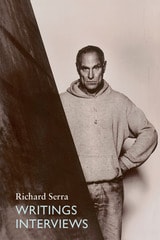
Writings/Interviews
Richard Serra
University of Chicago Press, 1994
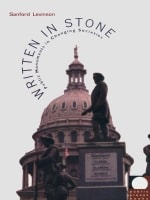
Written in Stone
Public Monuments in Changing SocietiesSanford Levinson
Duke University Press, 1998
In Written in Stone, legal scholar Sanford Levinson considers the tangled responses of ever-changing societies to the monuments and commemorations created by past regimes or outmoded cultural and political systems. Drawing on examples from Albania to Zimbabwe, from Moscow to Managua, and paying particular attention to examples throughout the American South, Levinson looks at social and legal arguments regarding the display, construction, modification, and destruction of public monuments. He asks what kinds of claims the past has on the present, particularly if the present is defined in dramatic opposition to its past values. In addition, he addresses the possibilities for responding to the use and abuse of public spaces and explores how a culture might memorialize its historical figures and events in ways that are beneficial to all its members.
Written in Stone is a meditation on how national cultures have been or may yet be defined through the deployment of public monuments. It adds a thoughtful and crucial voice into debates surrounding historical accuracy and representation, and will be welcomed by the many readers concerned with such issues.
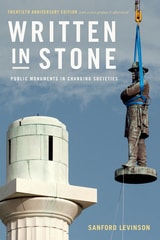
Written in Stone
Public Monuments in Changing SocietiesSanford Levinson
Duke University Press, 1998
From the removal of Confederate monuments in New Orleans in the spring of 2017 to the violent aftermath of the white nationalist march on the Robert E. Lee monument in Charlottesville later that summer, debates and conflicts over the memorialization of Confederate “heroes” have stormed to the forefront of popular American political and cultural discourse. In Written in Stone Sanford Levinson considers the tangled responses to controversial monuments and commemorations while examining how those with political power configure public spaces in ways that shape public memory and politics. Paying particular attention to the American South, though drawing examples as well from elsewhere in the United States and throughout the world, Levinson shows how the social and legal arguments regarding the display, construction, modification, and destruction of public monuments mark the seemingly endless confrontation over the symbolism attached to public space.
This twentieth anniversary edition of Written in Stone includes a new preface and an extensive afterword that takes account of recent events in cities, schools and universities, and public spaces throughout the United States and elsewhere. Twenty years on, Levinson's work is more timely and relevant than ever.
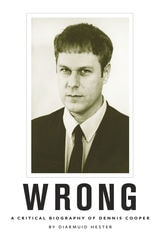
Wrong
A Critical Biography of Dennis CooperDiarmuid Hester
University of Iowa Press, 2020
Dennis Cooper is one of the most inventive and prolific artists of our time. Working in a variety of forms and media since he first exploded onto the scene in the early 1970s, he has been a punk poet, a queercore novelist, a transgressive blogger, an indie filmmaker—each successive incarnation more ingenious and surprising than the last. Cooper’s unflinching determination to probe the obscure, often violent recesses of the human psyche have seen him compared with literary outlaws like Rimbaud, Genet, and the Marquis de Sade.
In this, the first book-length study of Cooper’s life and work, Diarmuid Hester shows that such comparisons hardly scratch the surface. A lively retrospective appraisal of Cooper’s fifty-year career, Wrong tracks the emergence of Cooper’s singular style alongside his participation in a number of American subcultural movements like New York School poetry, punk rock, and radical queercore music and zines. Using extensive archival research, close readings of texts, and new interviews with Cooper and his contemporaries, Hester weaves a complex and often thrilling biographical narrative that attests to Cooper’s status as a leading figure of the American post–War avant-garde.
Wrongly Convicted
Perspectives on Failed JusticeWestervelt, Saundra D
Rutgers University Press, 2001
The American criminal justice system contains numerous safeguards to prevent the conviction of innocent persons. The Bill of Rights provides nineteen separate rights for the alleged criminal offender, including the right to effective legal representation and the right to be judged without regard to race or creed. Despite these safeguards, wrongful convictions persist, and the issue has reverberated in the national debate over capital punishment.
The essays in this volume are written from a cross-disciplinary perspective by some of the most eminent lawyers, criminologists, and social scientists in the field today. The articles are divided into four sections: the causes of wrongful convictions, the social characteristics of the wrongly convicted, case studies and personal histories, and suggestions for changes in the criminal justice system to prevent wrongful convictions. Contributors examine a broad range of issues, including the fallibility of eyewitness testimony, particularly in cross-racial identifications; the disadvantages faced by racial and ethnic minorities in the criminal justice system; and the impact of new technologies, especially DNA evidence, in freeing the innocent and bringing the guilty to justice. The book also asks such questions as: What legal characteristics do wrongful convictions share? What are the mechanisms that defendants and their attorneys use to overturn wrongful convictions? The book also provides case studies that offer specific examples of what can and does go wrong in the criminal justice system.
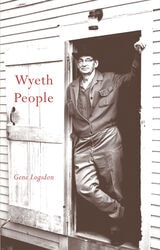
Wyeth People
Gene Logsdon
Ohio University Press, 2003
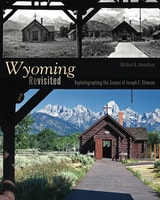
Wyoming Revisited
Rephotographing the Scenes of Joseph E. StimsonMichael A. Amundson
University Press of Colorado, 2014
The 117 locations feature street views of Wyoming towns and cities, as well as views from the state's famous natural landmarks like Yellowstone National Park, Grand Teton National Park, Devil's Tower National Monument, Hot Springs State Park, and Big Horn and Shoshone National Forests. In addition, Amundson provides six in-depth essays that explore the life of Joseph E. Stimson, the rephotographic process and how it has evolved, and how repeat photography can be used to understand history, landscape, historic preservation, and globalization.
Wyoming Revisited highlights the historic evolution of the American West over the past century and showcases the significant changes that have occurred over the past twenty-five years. This book will appeal to photographers, historians of the American West, and anyone interested in Wyoming's history or landscape.
The publication of this book is supported in part by the Wyoming Cultural Trust Fund.