Results by title
2728 books match the query 'Education' and 128 start with w

Who Should Pay?
Higher Education, Responsibility, and the PublicNatasha Quadlin
Russell Sage Foundation, 2022
Who Should Pay? draws on a decade’s worth of public opinion surveys analyzing public attitudes about whether parents, students, or the government should be primarily responsible for funding higher education. Quadlin and Powell find that between 2010 and 2019, public opinion has shifted dramatically in favor of more government funding. In 2010, Americans overwhelming believed that parents and students were responsible for the costs of higher education. Less than a decade later, the percentage of Americans who believed that federal or state/local government should be the primary financial contributor has more than doubled. The authors contend that the rapidity of this change may be due to the effects of the 2008 financial crisis and the growing awareness of the social and economic costs of high levels of student debt. Quadlin and Powell also find increased public endorsement of shared responsibility between individuals and the government in paying for higher education. The authors additionally examine attitudes on the accessibility of college for all, whether higher education at public universities should be free, and whether college is worth the costs.
Quadlin and Powell also explore why Americans hold these beliefs. They identify individualistic and collectivist world views that shape public perspectives on the questions of funding, accessibility, and worthiness of college. Those with more individualistic orientations believed parents and students should pay for college, and that if students want to attend college, then they should work hard and find ways to achieve their goals. Those with collectivist orientations believed in a model of shared responsibility – one in which the government takes a greater level of responsibility for funding education while acknowledging the social and economic barriers to obtaining a college degree for many students. The authors find that these belief systems differ among socio-demographic groups and that bias – sometimes unconscious and sometimes deliberate – regarding race and class affects responses from both individualistic and collectivist-oriented participants.
Public opinion is typically very slow to change. Yet Who Should Pay? provides an illuminating account of just how quickly public opinion has shifted regarding the responsibility of paying for a college education and its implications for future generations of students.
Whose Goals Whose Aspirations
Learning to Teach Underprepared Writers across the CurriculumStephen M. Fishman and Lucille McCarthy
Utah State University Press, 2002
Ever since Horace Mann promoted state supported schooling in the 1850s, the aims of U.S. public education have been the subject of heated national debate. Whose Goals? Whose Aspirations? joins this debate by exploring clashing educational aims in a discipline-based university classroom and the consequences of these clashes for "underprepared" writers.
In this close-up look at a White middle-class teacher and his ethnically diverse students, Fishman and McCarthy examine not only the role of Standard English in college writing instruction but also the underlying and highly charged issues of multiculturalism, race cognizance, and social class.
Whose School Is It?
Women, Children, Memory, and Practice in the CityBy Rhoda H. Halperin
University of Texas Press, 2006
Whose School Is It?: Women, Children, Memory, and Practice in the City is a success story with roadblocks, crashes, and detours. Rhoda Halperin uses feminist theorist and activist Gloria Anzaldúa's ideas about borderlands created by colliding cultures to deconstruct the creation and advancement of a public community charter school in a diverse, long-lived urban neighborhood on the Ohio River. Class, race, and gender mix with age, local knowledge, and place authenticity to create a page-turning story of grit, humor, and sheer stubbornness. The school has grown and flourished in the face of daunting market forces, class discrimination, and an increasingly unfavorable national climate for charter schools. Borderlands are tense spaces. The school is a microcosm of the global city.
Many theoretical strands converge in this book—feminist theory, ideas about globalization, class analysis, and accessible narrative writing—to present some new approaches in urban anthropology. The book is multi-voiced and nuanced in ways that provide authenticity and texture to the real circumstances of urban lives. At the same time, identities are threatened as community practices clash with rules and regulations imposed by outsiders.
Since it is based on fifteen years of ethnographic fieldwork in the community and the city, Whose School Is It? brings unique long-term perspectives on continuities and disjunctures in cities. Halperin's work as researcher and advocate also provides insider perspectives that are rare in the literature of urban anthropology.
Why Afterschool Matters
Nelson, Ingrid A.
Rutgers University Press, 2017
Why Afterschool Matters takes a different approach, closely following ten Mexican American students who attended the same extracurricular program in California, then chronicling its long-term effects on their lives, from eighth grade to early adulthood. Discovering that participation in the program was life-changing for some students, yet had only a minimal impact on others, sociologist Ingrid A. Nelson investigates the factors behind these very different outcomes. Her research reveals that while afterschool initiatives are important, they are only one component in a complex network of school, family, community, and peer interactions that influence the educational achievement of disadvantaged students.
Through its detailed case studies of individual students, this book brings to life the challenges marginalized youth en route to college face when navigating the intersections of various home, school, and community spheres. Why Afterschool Matters may focus on a single program, but its findings have major implications for education policy nationwide.
Why Are You Here and Not Somewhere Else
Selected EssaysHarry L. Davis
University of Chicago Press, 2013
On the occasion of the fiftieth anniversary of Davis’s arrival at the Booth School, Why Are You Here and Not Somewhere Else offers seven essays by Davis that offer new perspectives and contribute to a more well-rounded understanding of business education. Adapted from convocation addresses given by Davis at different points during his five-decade career, the essays encapsulate the spirit of business education at the Booth School, while at the same time providing encouraging, invaluable wisdom for those about to embark on business careers or take on leadership positions. Topics addressed range from the role of the university in the business world to the crucial role of intangible values in shaping one’s career.
Davis has been a formative influence on more executives and leaders than perhaps any other business educator living today, and Why Are You Here and Not Somewhere Else provides a unique and valuable perspective on how leaders in business and elsewhere can shape and define their careers in new ways.
Why Learn History (When It’s Already on Your Phone)
Sam Wineburg
University of Chicago Press, 2018
With the internet always at our fingertips, what’s a teacher of history to do? Sam Wineburg has answers, beginning with this: We definitely can’t stick to the same old read-the-chapter-answer-the-questions-at-the-back snoozefest we’ve subjected students to for decades. If we want to educate citizens who can sift through the mass of information around them and separate fact from fake, we have to explicitly work to give them the necessary critical thinking tools. Historical thinking, Wineburg shows us in Why Learn History (When It’s Already on Your Phone), has nothing to do with test prep–style ability to memorize facts. Instead, it’s an orientation to the world that we can cultivate, one that encourages reasoned skepticism, discourages haste, and counters our tendency to confirm our biases. Wineburg draws on surprising discoveries from an array of research and experiments—including surveys of students, recent attempts to update history curricula, and analyses of how historians, students, and even fact checkers approach online sources—to paint a picture of a dangerously mine-filled landscape, but one that, with care, attention, and awareness, we can all learn to navigate.
It’s easy to look around at the public consequences of historical ignorance and despair. Wineburg is here to tell us it doesn’t have to be that way. The future of the past may rest on our screens. But its fate rests in our hands.
Why Public Higher Education Should Be Free
How to Decrease Cost and Increase Quality at American UniversitiesSamuels, Robert
Rutgers University Press, 2013
In Why Public Higher Education Should Be Free, Robert Samuels argues that many institutions of higher education squander funds and mislead the public about such things as average class size, faculty-to-student ratios, number of faculty with PhDs, and other indicators of educational quality. Parents and students seem to have little knowledge of how colleges and universities have been restructured over the past thirty years.
Samuels shows how research universities have begun to function as giant investment banks or hedge funds that spend money on athletics and administration while increasing tuition costs and actually lowering the quality of undergraduate education. In order to fight higher costs and lower quality, Samuels suggests, universities must reallocate these misused funds and concentrate on their core mission of instruction and related research.
Throughout the book, Samuels argues that the future of our economy and democracy rests on our ability to train students to be thoughtful participants in the production and analysis of knowledge. If leading universities serve only to grant credentials and prestige, our society will suffer irrevocable harm. Presenting the problem of how universities make and spend money, Samuels provides solutions to make these important institutions less expensive and more vital. By using current resources in a more effective manner, we could even, he contends, make all public higher education free.

Why We Make Art
And Why it is TaughtRichard Hickman
Intellect Books, 2010
Governments around the world spend millions on art and cultural institutions, evidence of a basic human need for what the author refers to as “creating aesthetic significance.” Yet what function or purpose does art satisfy in today’s society? In this thorough and accessible text, Richard Hickman rejects the current vogue for social and cultural accounts of the nature of art-making in favor of a largely psychological approach aimed at addressing contemporary developmental issues in art education. Bringing to bear current ideas about evolutionary psychology, this second edition will be an important resource for anyone interested in arts education.
Wiki Writing
Collaborative Learning in the College ClassroomRobert E. Cummings and Matt Barton, Editors
University of Michigan Press, 2008
When most people think of wikis, the first---and usually the only---thing that comes to mind is Wikipedia. The editors of Wiki Writing: Collaborative Learning in the College Classroom, Robert E. Cummings and Matt Barton, have assembled a collection of essays that challenges this common misconception, providing an engaging and helpful array of perspectives on the many pressing theoretical and practical issues that wikis raise. Written in an engaging and accessible manner that will appeal to specialists and novices alike, Wiki Writing draws on a wealth of practical classroom experiences with wikis to offer a series of richly detailed and concrete suggestions to help educators realize the potential of these new writing environments.
Robert E. Cummings began work at Columbus State University in August 2006 as Assistant Professor of English and Director of First-Year Composition. Currently he also serves as the Writing Specialist for CSU's Quality Enhancement Plan, assisting teachers across campus in their efforts to maximize student writing in their curriculum. He recently concluded a three-year research study with the Inter/National Coalition for Electronic Portfolio Research and continues to research in the fields of computers and writing, writing across the curriculum, writing in the disciplines, and curricular reform in higher education.
Matt Barton is Assistant Professor, St. Cloud State University, Department of English-Rhetoric and Applied Writing Program. His research interests are rhetoric, new media, and computers and writing. He is the author of Dungeons and Desktops: A History of Computer Role-Playing Games and has published in the journals Text and Technology, Computers and Composition, Game Studies, and Kairos. He is currently serving as Associate Editor of Kairosnews and Managing Editor of Armchair Arcade.
"Wiki Writing will quickly become the standard resource for using wikis in the classroom."
---Jim Kalmbach, Illinois State University
digitalculturebooks is an imprint of the University of Michigan Press and the Scholarly Publishing Office of the University of Michigan Library dedicated to publishing innovative and accessible work exploring new media and their impact on society, culture, and scholarly communication. Visit the website at www.digitalculture.org.
Wild about Harry
Everything You Have Ever Wanted to Know about the Truman ScholarshipSuzanne McCray
University of Arkansas Press, 2021

Willard W. Waller on the Family, Education, and War
Willard W. Waller
University of Chicago Press, 1970
Waller's explorations of role behavior, especially in his writings on marriage and education, shocked academia and are still provocative today. In his direct, perceptive, often cynical style, he penetrated the facades of the most respected social institutions. He made use of the case study method; many of Waller's case studies were lifted directly from his own experiences, particularly from the agonies of his own divorce and from the disappointments of his initial teaching experience. He also drew fresh insights from the personal experiences of his colleagues and students, hardly a traditional procedure.
This volume is the first unified presentation of Waller's writings, covering in depth his work on family, education, and war. It also includes his shorter, but equally vivid, discussions on social problems such as crime and on the conflict between insight and scientific method.
Since Waller's private life was so intimately bound to his public work, an understanding of his personal history reveals much about the development and dilemma of sociologists in the United States. In their Introduction editors Goode, Mitchell, and Furstenberg reconstruct the life of this complex American thinker.
Willing Warriors
A New History of the Education Culture WarsMark Hlavacik
University of Chicago Press, 2025
On August 9, 2022, the Denton Independent School District held a meeting to address complaints about its libraries. Like so many districts in Texas and across the country, Denton had been responding to accusations that children had access to inappropriate books at school. During the public comment session, a local man stood up to the podium and read a sexually explicit passage from a book that he wanted removed from Denton’s school libraries. But beguiled by the prospect of securing a political win, he had confused the title of the lurid psychological thriller he read aloud with a young adult fiction series about mermaids. While his attempt to ban a book that was never in Denton’s school libraries in the first place received a few laughs, it also reflects a deeply serious and troubling culture of conflict that has taken over the politics of education and now divides people so completely as to make public education as a shared endeavor seem impossible.
In Willing Warriors, Mark Hlavacik shows how the culture wars have redefined the politics of US schooling from the 1970s to the present through vivid accounts of public controversies featuring Allan Bloom, Oprah Winfrey, Lynne Cheney, Rush Limbaugh, Betsy DeVos, Nikole Hannah-Jones, and others. Beginning in the 1970s, Hlavacik shows, efforts at innovation in schooling have increasingly been met by attempts to discredit them through exposé. As the culture wars have accelerated and exploded, this cycle of innovation and exposé has embroiled public schools in increasingly heated debates. He explains the dynamics that make curriculum controversies so intractable and confronts the delicate question of whether raucous public arguments are bad for education.
With clarity and insight, Hlavacik reveals why bitter contests between educational ideologies not only add another burden for the schools, but also for the people—the willing warriors—who devote their lives to fighting for their betterment.
Wisconsin Agriculture
A HistoryJerry Apps
Wisconsin Historical Society Press, 2015
"I'm embarrassed to say I thought I knew anything substantial about Wisconsin agriculture or its history before I read this book. 'Wisconsin Agriculture' should be required reading in history classes from high school to the collegiate level. It makes me thankful that Jerry Apps has such a sense of commitment to Wisconsin's agricultural heritage--and to getting the story right." --Pam Jahnke, Farm Director, Wisconsin Farm Report Radio
Wisconsin has been a farming state from its very beginnings. And though it's long been known as "the Dairy State," it produces much more than cows, milk, and cheese. In fact, Wisconsin is one of the most diverse agricultural states in the nation.
The story of farming in Wisconsin is rich and diverse as well, and the threads of that story are related and intertwined. In this long-awaited volume, celebrated rural historian Jerry Apps examines everything from the fundamental influences of landscape and weather to complex matters of ethnic and pioneer settlement patterns, changing technology, agricultural research and education, and government regulations and policies. Along with expected topics, such as the cranberry industry and artisan cheesemaking, "Wisconsin Agriculture" delves into beef cattle and dairy goats, fur farming and Christmas trees, maple syrup and honey, and other specialty crops, including ginseng, hemp, cherries, sugar beets, mint, sphagnum moss, flax, and hops. Apps also explores new and rediscovered farming endeavors, from aquaculture to urban farming to beekeeping, and discusses recent political developments, such as the 2014 Farm Bill and its ramifications. And he looks to the future of farming, contemplating questions of ethical growing practices, food safety, sustainability, and the potential effects of climate change.
Featuring first-person accounts from the settlement era to today, along with more than 200 captivating photographs, "Wisconsin Agriculture" breathes life into the facts and figures of 150 years of farming history and provides compelling insights into the state's agricultural past, present, and future.

Wisconsin
Our State CLASSROOM SET 1E eng w/SAG CDBobbie Malone
Wisconsin Historical Society Press, 2010
Wisconsin
Our State CLASSROOM SET 1E spanish (w/spnsh SAG)Bobbie Malone
Wisconsin Historical Society Press, 2016
Classroom set includes 25 copies of the Spanish textbook (978-0-87020-512-5) PLUS 1 copy of the Teacher's Edition in English (978-0-87020-379-4) and 1 copy of the Student Activity Guide DVD in Spanish (978-0-87020-688-7)
Wisconsin
Our State CLASSROOM SET 2E engBobbie Malone
Wisconsin Historical Society Press, 0
Wisconsin
Our State CLASSROOM SET 2E spanishBobbie Malone
Wisconsin Historical Society Press, 0
"Wisconsin: Our State, Our Story" brings history to life! Thinking Like a Historian questions in each chapter encourage critical thinking. Scores of artifacts and documents invite students to become eyewitnesses to the past.
Lively, classroom-tested text will engross students. The rich content aligns with relevant, cross-curricular Wisconsin Model Academic Standards. The specially designed Teacher's Edition and Student Activity Guide provide additional tools to reach all learners.
Classroom set includes:
25 Student Textbooks,
1 Teacher’s Edition, and
1 Student Activity Guide disc
Wisconsin
Our State SAG 1E eng: Student Activity GuideBobbie Malone
Wisconsin Historical Society Press, 2008
Wisconsin
Our State SAG 2E CD spanishBobbie Malone
Wisconsin Historical Society Press, 2017
"Wisconsin: Our State, Our Story" brings history to life! Thinking Like a Historian questions in each chapter encourage critical thinking. Scores of artifacts and documents invite students to become eyewitnesses to the past.
Lively, classroom-tested text will engross students. The rich content aligns with relevant, cross-curricular Wisconsin Model Academic Standards. The specially designed Teacher's Edition and Student Activity Guide provide additional tools to reach all learners.
Wisconsin
Our State SAG 2E engBobbie Malone
Wisconsin Historical Society Press, 2016
"Wisconsin: Our State, Our Story" brings history to life! Thinking Like a Historian questions in each chapter encourage critical thinking. Scores of artifacts and documents invite students to become eyewitnesses to the past.
Lively, classroom-tested text will engross students. The rich content aligns with relevant, cross-curricular Wisconsin Model Academic Standards. The specially designed Teacher's Edition and Student Activity Guide provide additional tools to reach all learners.
Wisconsin
Our State TE 1EBobbie Malone
Wisconsin Historical Society Press, 2008
The Teacher's Edition provides educators with the background, literacy, and other skill-building strategies to teach "Wisconsin: Our State, Our Story" in both social studies and literacy classes.
"Wisconsin: Our State, Our Story" textbook promotes content-focused reading to address both social studies and language arts standards for the state of Wisconsin.
The Teacher's Edition draws on the research-based pedagogy in both literacy developmnent and in historical inquiry to help reach the many different levels of learners in today's classrooms.
Wisconsin
Our State TE 2EBobbie Malone
Wisconsin Historical Society Press, 2016
The Teacher's Edition provides educators with the background, literacy, and other skill-building strategies to teach "Wisconsin: Our State, Our Story" in both social studies and literacy classes.
"Wisconsin: Our State, Our Story" textbook promotes content-focused reading to address both social studies and language arts standards for the state of Wisconsin.
The Teacher's Edition draws on the research-based pedagogy in both literacy development and in historical inquiry to help reach the many different levels of learners in today's classrooms.
- Differentiated Learning Approaches The Teacher's Edition draws together and charts a compendium of literacy strategies, historical thinking skills, and differentiated learning approaches in the introductory section.
- Supports Both Literacy and History Learning Each of the early chapters focuses on a different literacy skill. Students have the opportunity to practice and master each skill as they progress through the textbook. Though each chapter differs in length, they all have the same components, so that students can learn to make connections. Major, overarching questions drive the content of each chapter.
- An Inquiry-Based History Approach Each topic is inquiry-based. Students quickly learn that the historian plays the role of detective: asking questions and amassing enough clues to put together a "picture" of some historical event or personality and to weave these into a sufficiently broad understanding.
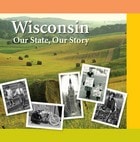
Wisconsin
Our State TEXTBOOK 1E eng: Student textbookBobbie Malone
Wisconsin Historical Society Press, 2008
"Wisconsin: Our State, Our Story" brings history to life! Thinking Like a Historian questions in each chapter encourage critical thinking. Scores of artifacts and documents invite students to become eyewitnesses to the past.
Lively, classroom-tested text will engross students. The rich content aligns with relevant, cross-curricular Wisconsin Model Academic Standards. The specially designed Teacher's Edition and Student Activity Guide provide additional tools to reach all learners.
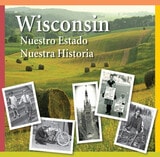
Wisconsin
Our State TEXTBOOK 1E spanishBobbie Malone
Wisconsin Historical Society Press, 2012
"Wisconsin: Our State, Our Story" brings history to life! Thinking Like a Historian questions in each chapter encourage critical thinking. Scores of artifacts and documents invite students to become eyewitnesses to the past.
Lively, classroom-tested text will engross students. The rich content aligns with relevant, cross-curricular Wisconsin Model Academic Standards. The specially designed Teacher's Edition and Student Activity Guide provide additional tools to reach all learners.
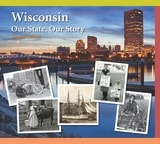
Wisconsin
Our State TEXTBOOK 2E engBobbie Malone
Wisconsin Historical Society Press, 2016
"Wisconsin: Our State, Our Story" brings history to life! Thinking Like a Historian questions in each chapter encourage critical thinking. Scores of artifacts and documents invite students to become eyewitnesses to the past.
Lively, classroom-tested text will engross students. The rich content aligns with relevant, cross-curricular Wisconsin Model Academic Standards. The specially designed Teacher's Edition and Student Activity Guide provide additional tools to reach all learners.
Wisconsin
Our State TEXTBOOK 2E spanishBobbie Malone
Wisconsin Historical Society Press, 2017
"Wisconsin: Our State, Our Story" brings history to life! Thinking Like a Historian questions in each chapter encourage critical thinking. Scores of artifacts and documents invite students to become eyewitnesses to the past.
Lively, classroom-tested text will engross students. The rich content aligns with relevant, cross-curricular Wisconsin Model Academic Standards. The specially designed Teacher's Edition and Student Activity Guide provide additional tools to reach all learners.
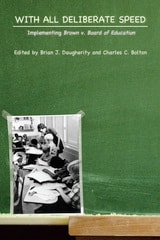
With All Deliberate Speed
Implementing Brown v. Board of EducationBrian J. Daugherity
University of Arkansas Press, 2008
Some of the common themes in these efforts were the importance of black activism, especially the crucial role played by the NAACP; entrenched white opposition to school integration, which wasn’t just a southern state issue, as is shown in Delaware, Wisconsin, and Indiana; and the role of the federal government, a sometimes inconstant and sometimes reluctant source of support for implementing Brown.
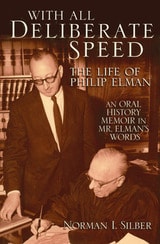
With All Deliberate Speed
The Life of Philip ElmanNorman I. Silber
University of Michigan Press, 2004
-Anthony Lewis, New York Times columnist, and Pulitzer Prize-winning
author of Gideon's Trumpet
"The fascinating, eloquent, and skillfully edited oral memoir of a distinguished public servant, who was at the epicenter of major legal controversies that his memoir illuminates. A major contribution to modern American legal history."
-Richard A. Posner
"With All Deliberate Speed provides an insider's rich account, spanning over thirty years, of the inner workings of the Supreme Court, the Solicitor General's Office and the Federal Trade Commission that anyone seriously interested in a frank behind-the-scenes view of the federal government should find exceptionally provocative and intriguing"
-Drew Days III, Alfred M. Rankin Professor of Law, Yale University, and former Solicitor General of the United States, 1993-96
From a modest childhood in Patterson, N. J., Philip Elman rose to become clerk for the great Supreme Court Justice Felix Frankfurter, and then to a position in the U.S. Solicitor General's Office. As a member of that office, Philip Elman had an exceptional vantage point on one of the most momentous cases in U.S. Supreme Court history: Brown v. Board of Education.
In this oral history memoir of Elman's life, With All Deliberate Speed, author Norman I. Silber reveals the maneuvering that led to the Court's overturning the doctrine of "separate but equal." Working behind the scenes, it was Justice Department attorney Elman who came up with the concept of gradual integration-an idea that worked its way into the final decision as the famous phrase "with all deliberate speed." Though this expression angered those pressing for immediate desegregation, Elman claims that it unified a divided Court, thus enabling them to stand together against the evil of segregation.
With All Deliberate Speed records a decisive moment in Supreme Court history, but it is also Philip Elman's unforgettable oral memoir-the story of his entire career in government service, including his work with Attorney General Robert F. Kennedy as commissioner of the FTC, and his role in founding the modern consumer protection movement, which includes the antismoking campaign that put the Surgeon General's warning on cigarette packs.
At once rich historical testimony and a gripping read, With All Deliberate Speed offers a rarely glimpsed insider's understanding of the politics of the American legal system.
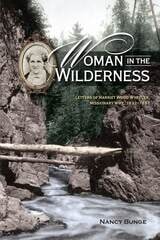
Woman in the Wilderness
Letters of Harriet Wood Wheeler, Missonary Wife, 1832-1892Nancy Bunge
Michigan State University Press, 2010
Harriet's letters reveal her experiences with actors and institutions that played pivotal roles in the history of American women: the nascent literate female work force at the mills in Lowell, Massachusetts; the Ipswich Female Seminary, which was one of the first schools for women teachers; women's associations, especially in churches; and the close and enduring ties that characterized women's relationships in the late nineteenth century.
Harriet's letters also provide an intimate view of the relationships between American Indians and Euro-Americans in the Great Lakes region, where she settled with her Christian missionary husband.
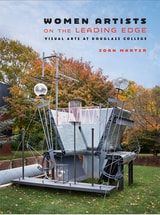
Women Artists on the Leading Edge
Visual Arts at Douglass CollegeJoan M. Marter
Rutgers University Press, 2020
How do students develop a personal style from their instruction in a visual arts program? Women Artists on the Leading Edge explores this question as it describes the emergence of an important group of young women artists from an innovative post-war visual arts program at Douglass College.
The women who studied with avant-garde artists at Douglas were among the first students in the nation to be introduced to performance art, conceptual art, Fluxus, and Pop Art. These young artists were among the first to experience new approaches to artmaking that rejected the predominant style of the 1950s: Abstract Expressionism. The New Art espoused by faculty including Robert Watts, Allan Kaprow, Roy Lichtenstein, Geoffrey Hendricks, and others advocated that art should be based on everyday life. The phrase “anything can be art” was frequently repeated in the creation of Happenings, multi-media installations, and video art. Experimental approaches to methods of creation using a remarkable range of materials were investigated by these young women. Interdisciplinary aspects of the Douglass curriculum became the basis for performances, videos, photography, and constructions. Sculpture was created using new technologies and industrial materials. The Douglass women artists included in this book were among the first to implement the message and direction of their instructors.
Ultimately, the artistic careers of these young women have reflected the successful interaction of students with a cutting-edge faculty. From this BA and MFA program in the Visual Arts emerged women such as Alice Aycock. Rita Myers, Joan Snyder, Mimi Smith, and Jackie Winsor, who went on to become lifelong innovators. Camaraderie was important among the Douglass art students, and many continue to be instructors within a close circle of associates from their college years. Even before the inception of the women’s art movement of the 1970s, these women students were encouraged to pursue professional careers, and to remain independent in their approach to making art. The message of the New Art was to relate one’s art production to life itself and to personal experiences. From these directions emerged a “proto-feminist” art of great originality identified with women’s issues. The legacy of these artists can be found in radical changes in art instruction since the 1950s, the promotion of non-hierarchical approaches to media, and acceptance of conceptual art as a viable art form.
Women in Academe
Progress and ProspectsMariam K. Chamberlain
Russell Sage Foundation, 1988
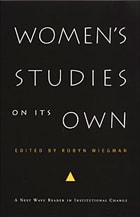
Women's Studies on Its Own
A Next Wave Reader in Institutional ChangeRobyn Wiegman, ed.
Duke University Press, 2002
Since the 1970s, Women's Studies has grown from a volunteerist political project to a full-scale academic enterprise. Women's Studies on Its Own assesses the present and future of the field, demonstrating how institutionalization has extended a vital, ongoing intellectual project for a new generation of scholars and students.
Women’s Studies on Its Own considers the history, pedagogy, and curricula of Women’s Studies programs, as well as the field’s relation to the managed university. Both theoretically and institutionally grounded, the essays examine the pedagogical implications of various divisions of knowledge—racial, sexual, disciplinary, geopolitical, and economic. They look at the institutional practices that challenge and enable Women’s Studies—including interdisciplinarity, governance, administration, faculty review, professionalism, corporatism, fiscal autonomy, and fiscal constraint. Whether thinking about issues of academic labor, the impact of postcolonialism on Women’s Studies curricula, or the relation between education and the state, the contributors bring insight and wit to their theoretical deliberations on the shape of a transforming field.
Contributors. Dale M. Bauer, Kathleen M. Blee, Gloria Bowles, Denise Cuthbert, Maryanne Dever, Anne Donadey, Laura Donaldson, Diane Elam, Susan Stanford Friedman, Judith Kegan Gardiner, Inderpal Grewal, Sneja Gunew, Miranda Joseph, Caren Kaplan, Rachel Lee, Devoney Looser, Jeanette McVicker, Minoo Moallem, Nancy A. Naples, Jane O. Newman, Lindsey Pollak, Jean C. Robinson, Sabina Sawhney, Jael Silliman, Sivagami Subbaraman, Robyn Warhol, Marcia Westkott, Robyn Wiegman, Bonnie Zimmerman
Women's Studies on the Edge
Joan Wallach Scott, ed.
Duke University Press, 2008
The contributors to Women’s Studies on the Edge embrace feminism not as a set of prescriptions but as a critical stance, one that seeks to interrogate and disrupt prevailing systems of gender. Refusing to perpetuate and protect orthodoxies, they ask tough questions about the impact of institutionalization on the once radical field of women’s studies; about the ongoing difficulties of articulating women’s studies with ethnic, queer, and race studies; and about the limits of liberal concepts of emancipation for understanding non-Western women. They also question the viability of continuing to ground women’s studies in identity politics authorized by personal experience. The multiple interpretations in Women’s Studies on the Edge sometimes overlap and sometimes stand in opposition to one another. The result is a collection that embodies the best aspects of critique: the intellectual and political stance that the contributors take to be feminism’s ethos and its aim.
Contributors
Wendy Brown
Beverly Guy-Sheftall
Evelynn M. Hammonds
Saba Mahmood
Biddy Martin
Afsaneh Najmabadi
Ellen Rooney
Gayle Salamon
Joan Wallach Scott
Robyn Wiegman
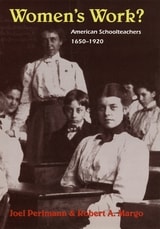
Women's Work?
American Schoolteachers, 1650-1920Joel Perlmann and Robert A. Margo
University of Chicago Press, 2001
In Women's Work the authors blend newly available quantitative evidence with historical narrative to show that distinctive regional school structures and related cultural patterns account for the initial regional difference, while a growing recognition that women could handle the work after they temporarily replaced men during the Civil War helps explain this widespread shift to female teachers later in the century. Yet despite this shift, a significant gender gap in pay and positions remained. This book offers an original and thought-provoking account of a remarkable historical transition.
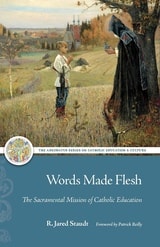
Words Made Flesh
The Sacramental Mission of Catholic EducationR. Jared Staudt
Catholic University of America Press, 2024
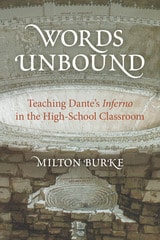
Words Unbound
Teaching Dante's Inferno in the High School ClassroomMilton Burke
University of Arkansas Press, 2017
Words Unbound draws on Milton Burke’s thirty years of teaching experience to help educators bring Inferno alive for today’s young reader. In a conversational, “colleague-to-colleague” style, Burke shares the interpretations, questions, and exercises he found effective in his high-school classroom, emphasizing group discussion to help students, no matter their religious or philosophical moorings, engage meaningfully with the notoriously difficult text.
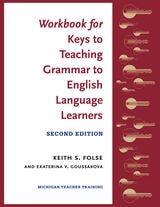
Workbook for Keys to Teaching Grammar to English Language Learners, Second Ed.
Keith S. Folse and Ekaterina V. Goussakova
University of Michigan Press, 2017
The Workbook has been updated to reflect new content in the Second Edition of the Handbook and once again features exercises that carefully follow the sequence of material in the Handbook. To facilitate use of the Workbook with the Handbook, each exercise is coded with the corresponding pages for the material in the Handbook. Reflecting the different learning styles in any given class, the exercises practice identifying grammatical features in a variety of different ways, including many charts, matching activities, and short answer questions. In addition, the Workbook has a variety of exercises consisting of sentences typical of English language learners so that teachers can become familiar with specific types of errors that ESL students make with certain grammar points.
The Workbook also features some action research projects to guide teachers in collecting small samples of data from their target student populations.
Workbook for The ESL Writer's Handbook, 3rd Edition
Janine Carlock, Maeve Eberhardt, Jaime Horst
University of Michigan Press, 2025
CEFR Levels: B1–C2
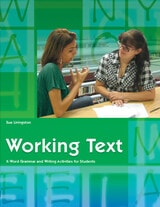
Working Text (Student Workbook)
X-Word Grammar and Writing Activities for StudentsSue Livingston
Gallaudet University Press, 2010
Working Test: X-Word Grammar and Writing Activities for Students features 86 X-Word Grammar reading and writing exercises divided into five parts of increasing complexity. Deaf, second-language, and other students experiencing difficulty with English composition can perform these exercises as homework or as in-class activities. Through these exercises, they can master English grammar, improve their facility with language constructions, and meet the challenges of becoming better writers.
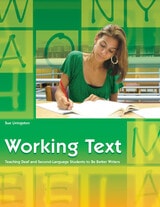
Working Text (Teacher's Guide)
Teaching Deaf and Second-Language Students to Be Better WritersSue Livingston
Gallaudet University Press, 2010
After teaching developmental writing to deaf students for may years, Sue Livingston found that students who can read and analyze written texts become better writers. They achieve their improvement by reading, then writing about what they have read. Livingston has embodied her successful approach in Working Text: Teaching Deaf and Second-Language Students to Be Better Writers.
In this straightforward instructional book, Livingston first explains what is involved and why her methods work with deaf students, second-language students, and other students who need to improve their writing ability. Upon this foundation, Working Text delineates how to teach students to write through reading and writing exercises. These exercises have been carefully crafted using the X-Word Grammar approach to help students discover common language constructions that they can apply to their own writing. As the students progress, their understanding of the elements of good writing will grow.
Working Text also includes all of the exercises and appendices featured in the Working Test: X-Word Grammar and Writing Activities for Students workbook, both in print and on on a special CD. The answers for the exercises are included as well, as are sample quizzes, and the CD can be used in the classroom for interactive lessons in conjunction with the student workbook. Working Text: Teaching Deaf and Second-Language Students to Be Better Writers, in concert with its companion student workbook, will help deaf, second-language, and other students develop into markedly better, more confident writers.
Working Together for Change
Collaborative Change Research, Evaluation, and Design, Volume 5Edited by Lisa M. Vaughn, Sara Neyer, and Kathie Maynard
University of Minnesota Press, 2023
Strategies for engaging key stakeholders—evaluators, researchers, and designers—to discuss frameworks for promoting collaborative change.
Collaborative Change Research, Evaluation, and Design (CCRED) is a framework and collection of participatory practices that engage people and the systems around them to drive community outcomes. This framework emerged out of the recognition that deep participation (or engagement) is frequently missing in collaborative impact approaches. When collaborative change is implemented effectively, community members are viewed as valuable owners and experts instead of being seen as disinterested or unqualified partners.
CCRED is a social action process with dual goals of collective empowerment and the deepening of social knowledge. Executed successfully, CCRED has the potential to increase the rigor, reach, and relevance of research, evaluation, and design translated to meaningful action. Written in an easily accessible, narrative style, Working Together for Change, the fourth volume in the Interdisciplinary Community Engaged Research for Health series edited by Farrah Jacquez and Lela Svedin brings together evaluators, researchers, and designers to describe collaborative change by describing their own work in the space.
Working Women in Jordan
Education, Migration, and AspirationFida J. Adely
University of Chicago Press, 2024
Jordan has witnessed tremendous societal transformation in its relatively short history. Today it has one of the most highly educated populations in the region, and women have outnumbered and outperformed their male counterparts for more than a decade. Yet, despite their education and professional status, many women still struggle to build a secure future and a life befitting of their aspirations.
In Working Women in Jordan anthropologist Fida J. Adely turns to college-educated women in Jordan who migrate from rural provinces to Amman for employment opportunities. Building on twelve years of ethnographic research and extensive interviews with dozens of women, as well as some of their family members, Adely analyzes the effects of developments such as expanded educational opportunities, urbanization, privatization, and the restructuring of the labor market on women’s life trajectories, gender roles, the institution of marriage, and kinship relations. Through these rich narrative accounts and the analysis of broader socio-economic shifts, Adely explains how educational structures can act as both facilitators and obstacles to workforce entry—along with cascading consequences for family and social life. Deeply thorough and compelling, Working Women in Jordan asks readers to think more critically about what counts as development, and for whom.
Working en comunidad
Service-Learning and Community Engagement with U.S. Latinas/os/esEdited by Elena Foulis, Stacey Alex, and Glenn Martínez
University of Arizona Press, 2024
The volume tackles three major themes: ethical approaches to working with Latina/o/e communities within language courses and beyond; preparing Latina/o/e students for working with their own communities in different environments; and ensuring equitable practices and building relationships that are mutually beneficial for students and community members. The editors forward two central arguments: (1) Equitable community engagement in higher education is a reflective and reciprocal process that develops empathy and personal and professional growth in students; and (2) service-learning is most transformative when it explicitly guides students and the community to build cultural humility and recognize Latina/o/e experiences and agency as foundational to the learning process.
Many of the contributors and editors are Latina/o/e-identified scholars, practitioners, and researchers, who lend a rich body of experience and a personal dedication to this work. They present distinct approaches and geographies, as well as range of institutions, to offer a wide scope of engaged work that builds on the concept of comunidad to advance a critical new conceptual framework of equitable education and racial justice.
Contributors
Stacey Alex
Elena Foulis
Christina García
Catherine Komisaruk
Kelly Lowther Pereira
Glenn Martínez
María Luisa Parra-Velasco
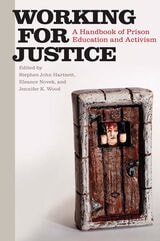
Working for Justice
A Handbook of Prison Education and ActivismEdited by Stephen John Hartnett, Eleanor Novek, and Jennifer K. Wood
University of Illinois Press, 2013
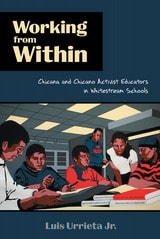
Working from Within
Chicana and Chicano Activist Educators in Whitestream SchoolsLuis Urrieta Jr.
University of Arizona Press, 2009
Working from Within is one of the first books to show how identity is linked to agency—individually and collectively—for Chicanas and Chicanos in education. Urrieta set out to answer linked questions: How do Chicanas and Chicanos negotiate identity, ideology, and activism within educational institutions that are often socially, culturally, linguistically, emotionally, and psychologically alienating? Analyzing in-depth interviews with twenty-four educators, Urrieta offers vivid narratives that show how activist identities are culturally produced through daily negotiations.
Urrieta’s work details the struggles of activist Chicana and Chicano educators to raise consciousness in a wide range of educational settings, from elementary schools to colleges. Overall, Urrieta addresses important questions about what it means to work for social justice from within institutions, and he explores the dialogic spaces between the alternatives of reproduction and resistance. In doing so, he highlights the continuity of Chicana and Chicano social movement, the relevance of gender, and the importance of autochthonous frameworks in understanding contemporary activism. Finally, he shows that it is possible for minority activist educators to thrive in a variety of institutional settings while maintaining strong ties to their communities.
Working with Faculty Writers
Anne Ellen Geller and Michele Eodice
Utah State University Press, 2013
Contributors from a variety of institution types and perspectives consider who faculty writers are and who they may be in the future, reveal the range of locations and models of support for faculty writers, explore the ways these might be delivered and assessed, and consider the theoretical, philosophical, political, and pedagogical approaches to faculty writing support, as well as its relationship to student writing support.
With the pressure on faculty to be productive researchers and writers greater than ever, this is a must-read volume for administrators, faculty, and others involved in developing and assessing models of faculty writing support.
Working with Water TG
Wisconsin WaterwaysBobbie Malone and Anika Fajardo
Wisconsin Historical Society Press, 2001
The companion to Working with Water engages students in hands-on exploration. It highlights historical processes and encourages multiple learning styles.
Working with Water
Wisconsin WaterwaysBobbie Malone and Jefferson J. Gray
Wisconsin Historical Society Press, 2001
"Water, water, everywhere . . ." Working with Water, the latest in the popular New Badger History series, teaches young readers about the many ways water has shaped Wisconsin’s history, from glaciers to stewardship. It touches on geography and hydrography; transportation networks of Indians and fur traders; the Erie Canal; shipwrecks, lighthouses, shipping, and shipbuilding; fishing, ricing, "pearling" (clamming), and cranberry cultivation; lumbering, milling, and papermaking; recreation, resorts, tourism, and environmentalism.
The companion Teacher’s Guide and Student Materials engages students in hands-on exploration. It highlights historical processes and encourages multiple learning styles.
Working-Class Women in the Academy
Laborers in the Knowledge FactoryMichelle M. Tokarczyk
University of Massachusetts Press, 1993
The voices of 20 women from working-class backgrounds are heard in this collection of essays. Each of the women has lived through the process of academic socialization—as both student and teacher—and each has thought long and deeply about her experiences from an explicitly feminist perspective.
Workplace Justice
Organizing Multi-Identity MovementsSharon Kurtz
University of Minnesota Press, 2002
An unheralded union battle offers new insight into identity politics.
In 1991, Columbia University’s one thousand clerical workers launched a successful campaign for justice in their workplace. This diverse union-two-thirds black and Latina, three-fourths women-was committed to creating an inclusive movement organization and to fighting for all kinds of justice. How could they address the many race and gender injustices members faced, avoid schism, and maintain the unity needed to win? Sharon Kurtz, an experienced union activist and former clerical worker herself, was welcomed into the union and pursued these questions. Using this case study and secondary studies of sister clerical unions at Yale and Harvard, she examines the challenges and potential of identity politics in labor movements.
With the Columbia strike as a point of departure, Kurtz argues that identity politics are valuable for mobilizing groups, but often exclude members and their experiences of oppression. However, Kurtz believes that identity politics should not be abandoned as a component in building movements, but should be reframed-as multi-identity politics. In the end she shows an approach to organizing with great potential impact not only for labor unions but for any social movement.