Results by title
2817 books match the query 'Nature' and 163 start with w
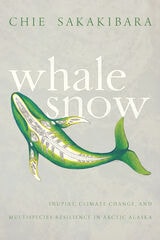
Whale Snow
Iñupiat, Climate Change, and Multispecies Resilience in Arctic AlaskaChie Sakakibara
University of Arizona Press, 2014
Using multispecies ethnography, Whale Snow explores how everyday the relatedness of the Iñupiat of Arctic Alaska and the bowhead whale forms and transforms “the human” through their encounters with modernity. Whale Snow shows how the people live in the world that intersects with other beings, how these connections came into being, and, most importantly, how such intimate and intense relations help humans survive the social challenges incurred by climate change. In this time of ecological transition, exploring multispecies relatedness is crucial as it keeps social capacities to adapt relational, elastic, and resilient.
In the Arctic, climate, culture, and human resilience are connected through bowhead whaling. In Whale Snow we see how climate change disrupts this ancient practice and, in the process, affects a vital expression of Indigenous sovereignty. Ultimately, though, this book offers a story of hope grounded in multispecies resilience.
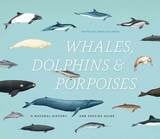
Whales, Dolphins, and Porpoises
A Natural History and Species GuideEdited by Annalisa Berta
University of Chicago Press, 2015
Opening with an accessible rundown of cetacean biology—including the most recent science on feeding, mating, and communication—Whales, Dolphins, and Porpoises then presents species-specific natural history on a range of topics, from anatomy and diet to distribution and conservation status. Each entry also includes original drawings of the species and its key identifiers, such as fin shape and color, tooth shape, and characteristic markings as they would appear both above and below water—a feature unique to this book.
Figures of myth and—as the debate over hunting rages on—figures of conflict since long before the days of Moby-Dick, whales, dolphins, and porpoises are also ecologically important and, in many cases, threatened. Written for general enthusiasts, emergent cetacean fans, and biologists alike, this stunning, urgently needed book will serve as the definitive guide for years to come.
What Have Plants Ever Done for Us?
Western Civilization in Fifty PlantsStephen Harris
Bodleian Library Publishing, 2015
With What Have Plants Ever Done for Us?, Stephen Harris takes readers step by chronological step through the role of plants in the rise of the Western world, with sojourns through the history of trade, travel, politics, chemistry, and medicine. Plants are our most important food source. Some, such as barley, have been staples since the earliest times. Others, like the oil palm, are relative newcomers to the Western world. Over time, the ways we use some plants has also dramatically changed: Beets, a familiar sight on the dinner plate, were once thought to be an effective treatment for leprosy and now show significant promise as a sustainable biofuel. What, one wonders, might the future thus hold for the mandrake or woad? Plants have also held potent cures to some of our most prevalent diseases. An extract from the bark of the yew tree, for instance, is commonly used in the treatment of cancer.
Wide-ranging and thoroughly engaging, What Have Plants Ever Done for Us? will help readers cultivate a deeper appreciation for our branched and rooted friends who ask little in return for their vast contributions save for a little care and water.
What Is Archaeology?
An Essay on the Nature of Archaeological ResearchPaul Courbin
University of Chicago Press, 1988
Courbin examines this movement, its latent philosophy, its methods and their application, its theories, and its results. He declares that the record shows a devastating failure. The New Archeologists, he contends, may have developed scientific hypotheses, but in most cases they failed to carry out what is necessary to test their theories, thus contradicting the very goals they had set for the discipline.
Reevaluating the field as a whole, Courbin asks, What is archaeology? He distinguishes it from such related fields as history and anthropology, emphatically arguing that the primary task of archaeology is what the archaeologist alone can accomplish: the establishment of facts—stratigraphies, time sequences, and identification tools, bones, potsherds, and so on. When archaeological findings lead to historical or anthropological conclusions, as they very often do, archaeologists must be aware that this involves a specific change in their work; they are no longer archaeologists proper. The archaeologist's work, Courbin stresses, is not a humble auxiliary of anthropology or history, but the foundation upon which historians and anthropologists of ancient civilizations will build and without which their theories cannot but collapse. What Is Archaeology? was originally published in French in 1982.
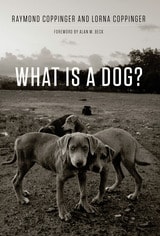
What Is a Dog?
Raymond Coppinger and Lorna Coppinger
University of Chicago Press, 2016
Exploring the natural history of these animals, the Coppingers explain how the village dogs of Vietnam, India, Africa, and Mexico are strikingly similar. These feral dogs, argue the Coppingers, are in fact the truly archetypal dogs, nearly uniform in size and shape and incredibly self-sufficient. Drawing on nearly five decades of research, they show how dogs actually domesticated themselves in order to become such efficient scavengers of human refuse. The Coppingers also examine the behavioral characteristics that enable dogs to live successfully and to reproduce, unconstrained by humans, in environments that we ordinarily do not think of as dog friendly.
Providing a fascinating exploration of what it actually means—genetically and behaviorally—to be a dog, What Is a Dog? will undoubtedly change the way any beagle or bulldog owner will reflect on their four-legged friend.
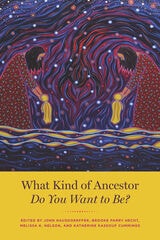
What Kind of Ancestor Do You Want to Be?
Edited by John Hausdoerffer, Brooke Parry Hecht, Melissa K. Nelson, and Katherine Kassouf Cummings
University of Chicago Press, 2021
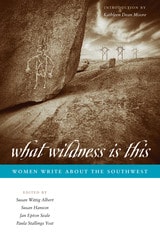
What Wildness Is This
Women Write about the SouthwestEdited by Susan Wittig Albert, Susan Hanson, Jan Epton Seale, and Paula Stallings Yost
University of Texas Press, 2007
Winner, WILLA Literary Award for Creative Nonfiction, 2008
How do women experience the vast, arid, rugged land of the American Southwest? The Story Circle Network, a national organization dedicated to helping women write about their lives, posed this question, and nearly three hundred women responded with original pieces of writing that told true and meaningful stories of their personal experiences of the land. From this deep reservoir of writing—as well as from previously published work by writers including Joy Harjo, Denise Chávez, Diane Ackerman, Naomi Shihab Nye, Leslie Marmon Silko, Gloria Anzaldua, Terry Tempest Williams, and Barbara Kingsolver—the editors of this book have drawn nearly a hundred pieces that witness both to the ever-changing, ever-mysterious life of the natural world and to the vivid, creative, evolving lives of women interacting with it.
Through prose, poetry, creative nonfiction, and memoir, the women in this anthology explore both the outer landscape of the Southwest and their own inner landscapes as women living on the land—the congruence of where they are and who they are. The editors have grouped the writings around eight evocative themes:
- The way we live on the land
- Our journeys through the land
- Nature in cities
- Nature at risk
- Nature that sustains us
- Our memories of the land
- Our kinship with the animal world
- What we leave on the land when we are gone
From the Gulf Coast of Texas to the Pacific Coast of California, and from the southern borderlands to the Great Plains and the Rocky Mountains, these intimate portraits of women's lives on the land powerfully demonstrate that nature writing is no longer the exclusive domain of men, that women bring unique and transformative perspectives to this genre.
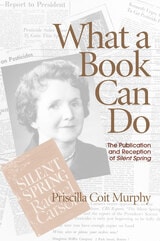
What a Book Can Do
The Publication and Reception of "Silent Spring"Priscilla Coit Murphy
University of Massachusetts Press, 2005
Murphy reviews the publishing history of the Houghton Mifflin edition and the prior New Yorker serialization, describing Carson's approach to her project as well as the views and expectations of her editors. She also documents the response of opponents to Carson's message, notably the powerful chemical industry, including efforts to undermine, delay, or stop publication altogether.
Murphy then investigates the media's role, showing that it went well beyond providing a forum for debate. In addition, she analyzes the perceptions and expectations of the public at large regarding the book, the debate, and the media. By probing all of these perspectives, Murphy sheds new light on the dynamic between newsmaking books, the media, and the public. In the process, she addresses a host of broader questions about the place of books in American culture, past, present, and future.
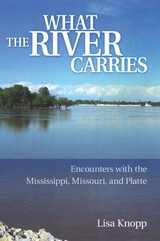
What the River Carries
Encounters with the Mississippi, Missouri, and PlatteLisa Knopp
University of Missouri Press, 2012
Because Knopp was born and raised just a few blocks away, she considers the Mississippi from the perspective of a native resident, a “dweller in the land.” She revisits places she has long known: Nauvoo, Illinois, the site of two nineteenth-century utopias, one Mormon, one Icarian; Muscatine, Iowa, once the world’s largest manufacturer of pearl (mussel shell) buttons; and the mysterious prehistoric bird- and bear-shaped effigy mounds of northeastern Iowa. On a downriver trip between the Twin Cities and St. Louis, she meditates on what can be found in Mississippi river water—state lines, dissolved oxygen, smallmouth bass, corpses, family history, wrecked steamboats, mayfly nymphs, toxic perfluorinated chemicals, philosophies.
Knopp first encountered the Missouri as a tourist and became acquainted with it through literary and historical documents, as well as stories told by longtime residents. Her journey includes stops at Fort Bellefontaine, where Lewis and Clark first slept on their sojourn to the Pacific; Little Dixie, Missouri’s slaveholding, hemp-growing region, as revealed through the life of Jesse James’s mother; Fort Randall Dam and Lake Francis Case, the construction of which destroyed White Swan on the Yankton Sioux Reservation; and places that produced unique musical responses to the river, including Native American courting flutes, indie rock, Missouri River valley fiddling, Prohibition-era jazz jam sessions, and German folk music.
Knopp’s relationship with the Platte is marked by intentionality: she settled nearby and chose to develop deep and lasting connections over twenty years’ residence. On this adventure, she ponders the half-million sandhill cranes that pass through Nebraska each spring, the ancient varieties of Pawnee corn growing at the Great Platte River Road Archway Monument, a never-broken tract of tallgrass prairie, the sugar beet industry, and the changes in the river brought about by the demands of irrigation.
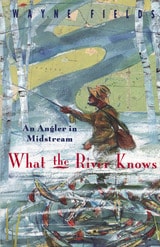
What the River Knows
An Angler in MidstreamWayne Fields
University of Chicago Press, 1996
What's Nature Worth
Terre Satterfield
University of Utah Press, 2004
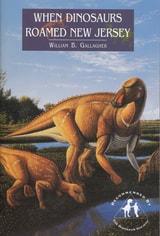
When Dinosaurs Roamed New Jersey
William B. Gallagher
Rutgers University Press, 1997
Did you know that Benjamin Franklin examined the first dinosaur bone in America from Woodbury, Gloucester County, in 1787--decades before the word dinosaur was even coined? Or that when the first reasonably complete dinosaur skeleton in the world was unearthed in Haddonfield, Camden County, in 1858, it was a major scientific breakthrough which forced paleontologists to completely revise their picture of dinosaur anatomy? Few people know that New Jersey is the nursery of American vertebrate paleontology!
When Dinosaurs Roamed New Jersey provides a succinct and readable history of the geology and paleontology of New Jersey from the time the region was covered by Cambrian seas, 543 million years ago, to the Pleistocene Ice Age only 10-15,000 years ago. William Gallagher tells the stories of professional and amateur fossil hunters, their discoveries, and their impact on the history of paleontological thought. He points out places in New Jersey and nearby where specimens characteristic of each era were found. He shows how fossil evidence found in the state is helping paleontologists uncover the ecological interactions and behavior of dinosaurs, and discusses such ongoing scientific controversies as the reason for the extinction of the dinosaurs.
From tracking dinosaur footprints across the Newark basin, to digging for the last dinosaurs in the greensands of South Jersey, to finding a mushroom in ancient amber in East Brunswick, this book is the ideal introduction to the Garden State's fossils and prehistory.

When the Ocean Holds the Stage
Moby-Dick and Archipelagic WorldsMaurya Wickstrom
University of Michigan Press, 2027
When the Ocean Holds the Stage is a work in which Moby-Dick and Melville’s ocean dramaturgy is the deep thru-current and archipelagic structure, forming his brilliant watery excavation of the forces of containment and continentalization, capitalization, racialization, enslavement, species destruction, and white Christian supremacism. As such, it is an original and challenging political and aesthetic engagement with Melville and Moby-Dick. Melville’s Benito Cereno, Homer’s The Odyssey, and Dereck Walcott’s Omeros are also central studies. Wickstrom argues that the ocean and the ship emerge in these texts as new kinds of performance stages on which there is a unique freedom to bring critical thought to bear on many harmful systems, and to offer visions of ways to live differently. Introducing new practices in academic writing, Wickstrom works against the constraints of linear argumentation and toward archipelagic and poetic openness. Gatherings replace chapters and, in addition to the main texts, bring many artists, historical situations, contemporary crises, and political proposals into loose, archipelagic correspondences. Finally, the book is an important contribution from Theatre and Performance Studies to the vital and broad coalition of scholars, artists, and activists whose focus is on water.
When the Rains Come
A Naturalist’s Year in the Sonoran DesertJohn Alcock
University of Arizona Press, 2009
John Alcock knows the Sonoran Desert better than just about anyone else, and in this book he tracks the changes he observes in plant and animal life over the course of a drought year. Combining scientific knowledge with years of exploring the desert, he describes the variety of ways in which the wait for rain takes place—and what happens when it finally comes.
The desert is a land of five seasons, featuring two summers—hot, dry months followed by monsoon—and Alcock looks at the changes that take place in an entire desert community over the course of all five. He describes what he finds on hikes in the Usery Mountains near Phoenix, where he has studied desert life over three decades and where frequent visits have enabled him to notice effects of seasonal variation that might escape a casual glance.
Blending a personal perspective with field observation, Alcock shows how desert ecology depends entirely on rainfall. He touches on a wide range of topics concerning the desert’s natural history, noting the response of saguaro flowers to heat and the habits of predators, whether soaring red-tailed hawk or tiny horned lizard. He also describes unusual aspects of insects that few desert hikers will have noticed, such as the disruptive color pattern of certain grasshoppers that is more effective than most camouflage.
When the Rains Come is brimming with new insights into the desert, from the mating behaviors of insects to urban sprawl, and features photographs that document changes in the landscape as drought years come and go. It brings us the desert in the harshest of times—and shows that it is still teeming with life.
When the White Pine Was King
A History of Lumberjacks, Log Drives, and Sawdust Cities in WisconsinJerry Apps
Wisconsin Historical Society Press, 2020
For more than half a century, logging, lumber production, and affiliated enterprises in Wisconsin’s Northwoods provided jobs for tens of thousands of Wisconsinites and wealth for many individuals. The industry cut through the lives of nearly every Wisconsin citizen, from an immigrant lumberjack or camp cook in the Chippewa Valley to a Suamico sawmill operator, an Oshkosh factory worker to a Milwaukee banker.
When the White Pine Was King tells the stories of the heyday of logging: of lumberjacks and camp cooks, of river drives and deadly log jams, of sawmills and lumber towns and the echo of the ax ringing through the Northwoods as yet another white pine crashed to the ground. He explores the aftermath of the logging era, including efforts to farm the cutover (most of them doomed to fail), successful reforestation work, and the legacy of the lumber and wood products industries, which continue to fuel the state’s economy.
Enhanced with dozens of historic photos, When the White Pine Was King transports readers to the lumber boom era and reveals how the lessons learned in the vast northern forestlands continue to shape the region today.
Where No Gods Came
Sheila O'Connor
University of Michigan Press, 2010
Where No Gods Came is a powerful look at assimilation and resilience and the sacrifices we all make to adapt. It's a potent reminder, too, of the tenacity and courage required of fragile families who endure on the edge. Faina McCoy triumphs as an unlikely—and unforgettable—heroine, a stubborn child who will survive to tell the tale.
Where The Sky Began
Land of the Tallgrass PrairieJohn Madson
University of Iowa Press, 2004
Originally published in 1982, Where the Sky Began, John Madson’s landmark publication, introduced readers across the nation to the wonders of the tallgrass prairie, sparking the current interest in prairie restoration. Now back in print, this classic tome will serve as inspiration to those just learning about the heartland’s native landscape and rekindle the passion of long-time prairie enthusiasts.
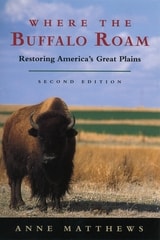
Where the Buffalo Roam
Restoring America's Great PlainsAnne Matthews
University of Chicago Press, 2002
This edition includes a new foreword by environmental historian Donald Worster. Matthews's new afterword describes how with growing support from Native Americans and private groups like the Nature Conservancy, the Poppers' dream of a Buffalo Commons is becoming a reality.
"An admirably crafted book, as poignant and entertaining as it is informative."—Seattle Times
"A priceless piece of Americana."—The Boston Globe
"Matthew's delightful account of the Poppers, their proposal and the controversy surrounding it does focus new attention on the region and its problems."—The Philadelphia Inquirer
"Bright, active, effective journalism. . . . An extremely savvy overlook of the dilemmas of the Great Plains."—Wallace Stegner
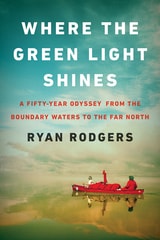
Where the Green Light Shines
A Fifty-Year Odyssey from the Boundary Waters to the Far NorthRyan Rodgers
University of Minnesota Press, 2026
A unique glimpse into the world of arctic canoeing through the travels of one of North America’s most renowned paddlers
A centuries-long story of adventure runs through the Boundary Waters. Stretching from northern Minnesota into the Canadian Shield, this lake-dappled expanse—long an Indigenous homeland and later also a fur trading hub—is the most visited designated wilderness in North America, with more than 200,000 people dipping their paddles into its ancient waterways each year. Bridging the legendary arctic expeditions of the nineteenth century and the making of today’s recreational paddling tradition, Where the Green Light Shines is a fascinating chronicle of canoe exploration, told through the journeys of a true master of the craft, Bob O’Hara.
O’Hara first launched his canoe as a Boy Scout in the 1950s, and he spent every summer for the next sixty-five years venturing further north into the Canadian barrens, a region rarely seen by paddlers. Mentored by a generation of adventurers and by the Inuit who long paddled the northern tundra rivers, O’Hara would become a guiding light for many young canoeists. Passionate yet guarded, O’Hara dedicated his life to the thrill of paddling, and his extraordinary journeys here become a touchstone as Ryan Rodgers tells the story of a nascent canoeing scene that continues to thrive today.
A vivid depiction of the northern wilds traversed by an eclectic roster of paddlers, bush pilots, and historic characters, Where the Green Light Shines illuminates a lost world of arctic canoeing remade in our time. It is bound to transport anyone interested in outdoor adventure—from wilderness canoeists to armchair travelers—and to bring home the eternal allure of the far north.
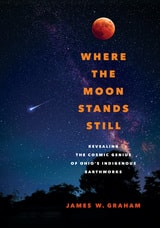
Where the Moon Stands Still
Revealing the Cosmic Genius of Ohio’s Indigenous EarthworksJames W. Graham
The Ohio State University Press, 2026
How did people two millennia ago achieve the stunning architectural and scientific accomplishment that in 2023 became Ohio’s only UNESCO World Heritage Site? In Where the Moon Stands Still, James W. Graham recounts the inspiring true story of two small-town college professors who, without funds or training in archaeology, helped unlock secrets behind an ancient monumental work of land art—the Hopewell Ceremonial Earthworks—all but hidden in plain sight on a local golf course. Ever since the arrival of Europeans, thousands of Native earthworks east of the Mississippi were neglected, vandalized, bulldozed, and plundered. Their origins and purposes baffled scholars. How did ancient people build monuments of such grand scale and geometric sophistication? Why? Crucial answers emerged in the 1980s when philosopher Bob Horn and astronomer Ray Hively, driven by curiosity and a tireless devotion to truth-seeking, made a decades-long effort to conquer the skepticism of experts and unmask the ??astronomical genius behind the Indigenous earthworks. As he recounts Hively and Horn’s investigation, Graham refutes exploitative mythical interpretations and explains the history around these earthworks and of US treatment of its Indigenous people, including the long quest for tribes to regain authority over stories, ancestors, and places. Where the Moon Stands Still signals a global reawakening to the greatness of Indigenous achievement in America’s heartland.
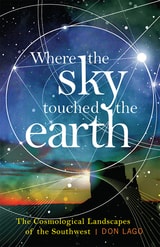
Where the Sky Touched the Earth
The Cosmological Landscapes of the SouthwestDon Lago
University of Nevada Press, 2017
Nowhere else in the world is the link between earth and sky so powerful. Lago witnesses a solar eclipse over the Grand Canyon, climbs primeval volcanos, and sees the universe in tree rings. Through ageless Native American ceremonies, modern telescopes, and even dreams of flying saucers, Lago, who is not only a poet but a true philosopher of science, strives to find order and meaning in the world and brings out the Southwest’s beauty and mystery.
Where the Wild Books Are
A Field Guide to EcofictionJim Dwyer
University of Nevada Press, 2010
As interest in environmental issues grows, many writers of fiction have embraced themes that explore the connections between humans and the natural world. Ecologically themed fiction ranges from profound philosophical meditations to action-packed entertainments. Where the Wild Books Are offers an overview of nearly 2,000 works of nature-oriented fiction. The author includes a discussion of the precursors and history of the genre, and of its expansion since the 1970s. He also considers its forms and themes, as well as the subgenres into which it has evolved, such as speculative fiction, ecodefense, animal stories, mysteries, ecofeminist novels, cautionary tales, and others. A brief summary and critical commentary of each title is included. Dwyer’s scope is broad and covers fiction by Native American writers as well as ecofiction from writers around the world. Far more than a mere listing of books, Where the Wild Books Are is a lively introduction to a vast universe of engaging, provocative writing. It can be used to develop book collections or curricula. It also serves as an introduction to one of the most fertile areas of contemporary fiction, presenting books that will offer enjoyable reading and new insights into the vexing environmental questions of our time.
Where the Wind Dreams of Staying
Searching for Purpose and Place in the WestEric Dieterle
Oregon State University Press, 2016
Dieterle’s journey leads from the plateau of eastern Washington through the landscapes of seven states, ending in the shadow of the San Francisco peaks in northern Arizona. Readers will find rich, detailed explorations of western landscapes balanced with stories of personal reflection, determination, doubt, and fulfillment.
Whispers and Shadows
A Naturalist’s MemoirJerry Apps
Wisconsin Historical Society Press, 2015
Combining his signature lively storytelling and careful observations of nature, Apps draws on a lifetime of experiences, from his earliest years growing up on a central Wisconsin farm to his current ventures as gardener, tree farmer, and steward of wetlands, prairies, and endangered Karner blue butterflies. He also takes inspiration from the writings of Aldo Leopold, Annie Dillard, Henry David Thoreau, Sigurd Olson, Ralph Waldo Emerson, John Muir, Barbara Kingsolver, Wendell Berry, Richard Louv, and Rachel Carson. With these eloquent essays, Jerry Apps reminds us to slow down, turn off technology, and allow our senses to reconnect us to the natural world. For it is there, he writes, that “I am able to return to a feeling I had when I was a child, a feeling of having room to stretch my arms without interfering with another person, a feeling of being a small part of something much larger than I was, and I marvel at the idea.”
Whispers in the Pines
A Naturalist in the NortheastBurger, Joanna
Rutgers University Press, 2006
In this book, naturalist Joanna Burger takes us on a series of delightful trips through the Pine Barrens. From the Albany Pine Bush, the Long Island Barrens, and the New Jersey Pine Barrens in the Northeast, to the pinelands of South Carolina and Florida, Burger describes in lively detail how these habitats have come to harbor such a unique assemblage of species.
She introduces us to amphibians and reptiles, neotropical migrants and other birds, and a range of common and unusual mammals. Burger also traces the regions’ historic and geologic backgrounds, and the impact of human occupation from the time of the paleo-Indians to the present. She revisits the tension between development and preservation, reminding us that a healthy pine barren region requires uninterrupted land and rejuvenating fires, both of which are increasingly jeopardized.
Whispers in the Pines is essential reading for everyone concerned with the history and preservation of these unique landscapes and their wildlife.
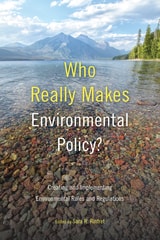
Who Really Makes Environmental Policy?
Creating and Implementing Environmental Rules and RegulationsEdited by Sara R. Rinfret
Temple University Press, 2021
The United States Congress appears to be in perpetual gridlock on environmental policy, notes Sara Rinfret, editor of the significant collection, Who Really Makes Environmental Policy? As she and her contributors explain, however, most environmental policy is not made in the halls of Congress. Instead, it is created by agency experts in federal environmental agencies and it is implemented at the state level. These individuals have been delegated the authority to interpret vague congressional legislation and write rules—and these rules carry the same weight as congressional law.
Who Really Makes Environmental Policy? brings together top scholars to provide an explanation of rulemaking processes and regulatory policy, and to show why this context is important for U.S. environmental policy. Illustrative case studies about oil and gas regulations in Colorado and the regulation of coal ash disposal in southeastern states apply theory to practice. Ultimately, the essays in this volume advance our understanding of how U.S. environmental policy is made and why understanding regulatory policy matters for its future.
Whose Dog Are You?
The Technology of Dog Breeds and The Aesthetics of Modern Human-Canine RelationsMartin Wallen
Michigan State University Press, 2017
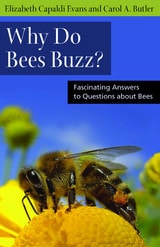
Why Do Bees Buzz?
Fascinating Answers to Questions about BeesElizabeth Capaldi Evans and Carol A. Butler
Rutgers University Press, 2010
Why Do Bees Buzz? reports on the mysterious "colony collapse disorder" that has affected honey bee populations, as well as other captivating topics, such as their complex, highly social lives, and how other species of bees are unique and different from honey bees. Organized in chapters that cover everything from these provocative pollinators' basic biology to the aggressive nature of killer bees, this insightful question and answer guide provides a honeycomb of compelling facts.
With clarity and depth, bee biologist Elizabeth Capaldi Evans and coauthor Carol A. Butler examine the lives of honey bees, as well as other species such as orchid bees, bumblebees, and stingless bees. Accessible to readers on every level, and including the latest research and theory for the more sophisticated reader, the authors reveal more than one hundred critical answers to questions about the lives of bees.
Concepts about speciation, evolutionary adaptation and pollination, as well as historical details about topics such as Mayan beekeeping and the appearance of bees in rock art, are arranged in easy-to-follow sidebars that highlight the text. Color and black and white photographs and drawings enhance the beauty and usefulness of Why Do Bees Buzz?
Why Ecology Matters
Charles J. Krebs
University of Chicago Press, 2016
Highlighting key principles in ecology—from species extinction to the sun’s role in powering ecosystems—each chapter introduces a general question, illustrates that question with real-world examples, and links it to pressing ecological issues in which humans play a central role, such as the spread of invasive species, climate change, overfishing, and biodiversity conservation. While other introductions to ecology are rooted in complex theory, math, or practice and relegate discussions of human environmental impacts and their societal implications to sidebars and appendices, Why Ecology Matters interweaves these important discussions throughout. It is a book rooted in our contemporary world, delving into ecological issues that are perennial, timeless, but could not be more timely.
Wide Branches, Deep Roots
How Appalachian Wisdom Can Help in the Fight for a Sustainable FutureJessica M Jones
West Virginia University Press, 2026
To be Appalachian is to define oneself in terms of a place. Where we’re from plays a tremendous role in who we are, through storytelling about our homeplaces and the people who have loved them. However, what goes largely unaddressed is how this love of place can contribute to sustainability within the region, which has notoriously faced on-going environmental threats from extraction industries. The reality is that our relationship with the environment is thorny and intertwined with our identities, histories, and economic realities. The authors in the collection get down among the thorns to explore what sustainability means in Appalachia and how we can utilize the power of traditional folkways to achieve it.
This collection of over thirty pieces explores the connections between Appalachia’s stories, traditions, and modern events and the pathway to regional sustainability. The contributors — writers and scholars — examine how our definitions of sustainability have been formed, the power of education to encourage or inhibit it, and what moves are being made toward efficacy in the future. They also offer specific actions readers can take to better understand and build sustainability where they live.
Contributors: Greg Bealer, Luc Biscan-White, David Blackmore, Aysha Bodenhamer, Ivy Brashear, Matthew Calloway, Nicole Drewitz-Crockett, Christina Fisanick, Deborah Fleming, Amanda V. Garner, Karie Gunter-Seymour, Richard Hague, Amanda E. Hayes, Lockie Hunter, Jessica M. Jones, Kristen LeFevers, Sarah Long, Meghan Moore-Hubbard, Barbara Marie Minney, Jessica Radicic, Elizabeth Emmerth Rexroad, Barbara Sabol, Larry Smith, Patrice Stank, Taylor Nasim Stone, Paul Thomas, Elizabeth Tussey, and Betsy Weems.
Wide Rivers Crossed
The South Platte and the Illinois of the American PrairieEllen E. Wohl
University Press of Colorado, 2013
During the past two centuries, these rivers changed dramatically, mostly due to human interaction. Crops replaced native vegetation; excess snowmelt and rainfall carried fertilizers and pesticides into streams; and levees, dams, and drainage altered distribution. These changes cascaded through networks, starting in small headwater tributaries, and reduced the ability of rivers to supply the clean water, fertile soil, and natural habitats they had provided for centuries. Understanding how these rivers, and rivers in general, function and how these functions have been altered over time will allow us to find innovative approaches to restoring river ecosystems.
The environmental changes in the South Platte and the Illinois reflect the relentless efforts by humans to control the distribution of water: to enhance surface water in the arid western prairie and to limit the spread of floods and drain the wetlands along the rivers in the water-abundant east. Wide Rivers Crossed looks at these historical changes and discusses opportunities for much-needed protection and restoration for the future.
Wielding the Ax
State Forestry and Social Conflict in Tanzania, 1820–2000Thaddeus Sunseri
Ohio University Press, 2009
Forests have been at the fault lines of contact between African peasant communities in the Tanzanian coastal hinterland and outsiders for almost two centuries. In recent decades, a global call for biodiversity preservation has been the main challenge to Tanzanians and their forests.
Thaddeus Sunseri uses the lens of forest history to explore some of the most profound transformations in Tanzania from the nineteenth century to the present. He explores anticolonial rebellions, the world wars, the depression, the Cold War, oil shocks, and nationalism through their intersections with and impacts on Tanzania’s coastal forests and woodlands. In Wielding the Ax, forest history becomes a microcosm of the origins, nature, and demise of colonial rule in East Africa and of the first fitful decades of independence.
Wielding the Ax is a story of changing constellations of power over forests, beginning with African chiefs and forest spirits, both known as “ax–wielders,” and ending with international conservation experts who wield scientific knowledge as a means to controlling forest access. The modern international concern over tropical deforestation cannot be understood without an awareness of the long–term history of these forest struggles.
Wild Animal Story
edited by Ralph H. Lutts
Temple University Press, 2001
At the beginning of the twentieth century, the wild animal story emerged in Canadian literature as a distinct genre, in which animals pursue their own interests—survival for themselves, their offspring, and perhaps a mate, or the pure pleasure of their wildness.
Bringing together some of the most celebrated wild animal stories, Ralph H. Lutts places them firmly in the context of heated controversies about animal intelligence and purposeful behavior. Widely regarded as entertaining and educational, the early stories—by Charles G. D. Roberts, Ernest Thompson Seton, John Muir, Jack London and others—had an avid readership among adults and children. But some naturalists and at least one hunter—Theodore Roosevelt—discredited these writers as "nature fakers," accusing them of falsely portraying animal behavior.
The stories and commentaries collected here span the twentieth century. As present day animal behaviorists, psychologists, and the public attempt to sort out the meaning of what animals do and our obligations to them, Ralph Lutts maps some of the prominent features of our cultural landscape.
•
•
•
Other selections include essays by Theodore Roosevelt, John Burroughs, Margaret Atwood, and Ralph H. Lutts.
postamble();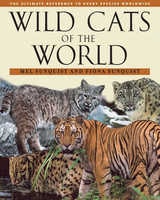
Wild Cats of the World
Mel Sunquist and Fiona Sunquist
University of Chicago Press, 2002
Wild Cats of the World is a treasure trove of answers to questions like these, and many others, for anyone who's interested in learning more about the world's felids, including the ones with whom we share our homes. Mel and Fiona Sunquist have spent more than a decade gathering information about cats from every available source, many of them quite difficult to find, including scientific papers, descriptions of hunts, archeological findings, observations by naturalists and travelers, reports from government agencies, and newsletters from a wide variety of organizations. Weaving information from these sources together with their own experiences observing wild cats around the world, the Sunquists have created the most comprehensive reference on felids available. Each of their accounts of the 36 species of cat contains a description of the cat, including human interactions with it, as well as detailed data on its distribution, ecology and behavior, status in the wild, and efforts to conserve it. Numerous photographs, including more than 40 in full color, illustrate these accounts.
Ranging from the two-pound black-footed cat to the five-hundred-pound tiger, and from the African serval with its satellite-dish ears to the web-footed fishing cat of Asia, Wild Cats of the World will fascinate and educate felid fans of any stripe (or spot).
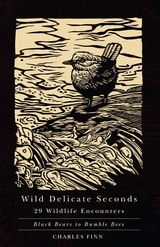
Wild Delicate Seconds
29 Wildlife EncountersCharles Finn
Oregon State University Press, 2012
In Wild Delicate Seconds, Charles Finn captures twenty-nine chance encounters with the everyday—and not so everyday—animals, birds, and insects of North America.
Wild Fictions
Essays on Literature, Empire, and the EnvironmentAmitav Ghosh
University of Chicago Press, 2025
A collection of essays on themes central to Ghosh’s work: imperialism and decolonization, climate change, and the stories of ordinary people making lives amid these historical forces.
Wild Fictions brings together Amitav Ghosh’s extraordinary writings on subjects that have obsessed him over the last twenty-five years: literature and language; climate change and the environment; and human lives, travel, and discoveries. Threaded throughout the collection are his reflections on the spaces that we inhabit and how we occupy them. From the significance of the commodification of the clove to the diversity of the mangrove forests in Bengal and the radical fluidity of multilingualism, Wild Fictions is a powerful refutation of imperial violence, a fascinating exploration of the fictions we weave to absorb history, and a reminder of the importance of sensitivity and empathy.
With the combination of moral passion, intellectual curiosity, and literary elegance that defines his writing, Ghosh makes readers understand the world in new and urgent ways. Together, the pieces in Wild Fictions chart a course that allows us to heal our relationships and restore the delicate balance with the volatile landscapes to which we all belong.
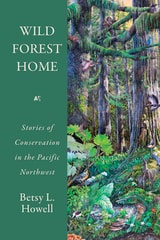
Wild Forest Home
Stories of Conservation in the Pacific NorthwestBetsy L. Howell
University of Utah Press, 2024
The twenty-five essays in Wild Forest Home chronicle Howell’s career and personal experiences studying the wildlife of the Pacific Northwest during the litigious listing of the northern spotted owl and marbled murrelet under the Endangered Species Act and the Clinton administration’s adoption of the seminal 1994 Northwest Forest Plan. Meanwhile, Howell toiled on fire crews, searched for rare species, helped to monitor fishers reintroduced to the Olympic Peninsula, tested amphibians for deadly diseases, became a writer, and mourned the deaths of her parents. This captivating memoir seamlessly blends story and science to reveal a unique portrait of the struggles and joys of one wildlife biologist.
Wild Hope
On the Front Lines of Conservation SuccessAndrew Balmford
University of Chicago Press, 2012
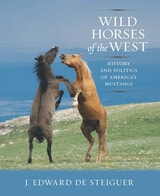
Wild Horses of the West
History and Politics of America's MustangsJ. Edward de Steiguer
University of Arizona Press, 2011
In Wild Horses of the West, J. Edward de Steiguer provides an entertaining and well-researched look at one of the most controversial animal welfare issues of our time—the protection of free-roaming horses on the West’s public lands. This is the first book in decades to include the entire story of these magnificent animals, from their evolution and biology to their historical integration into conquistador, Native American, and cowboy cultures. And the story isn’t over. De Steiguer goes on to address the modern issues— ecology, conservation, and land management—surrounding wild horses in the West today.
Featuring stunning color photographs of wild horses, this extremely thorough and engaging blend of history, science, and politics will appeal to students of the American West, conservation activists, and anyone interested in the beauty and power of these striking animals.
Wild Ideas
David Rothenberg
University of Minnesota Press, 1995
A new view of what’s “wild,” and a new path for environmentalism.
At the very heart of American respect for nature, historically and philosophically, is the notion of the wild. This notion comes under scrutiny in Wild Ideas, a collection of essays that bring a fresh and refreshing perspective to the wilderness paradoxically at the center of our civilization.
Blending well-known and new voices, the volume surveys classical and romantic concepts of wilderness, from the scary to the sublime, and shows why neither serves us anymore. Instead, the authors argue for a “wild culture,” in which nature is not opposed to humanity, a mere matter of resources and consumers. A cogent reassessment of the ideas that drive the conservation movement, Wild Ideas points out a new direction for future environmentalism.Among the topics discussed are the confluence of wilderness, empire, and race in the United States; the way the ecology movement uses language; gendered views of the wilderness; maps and topology, and how they affect our view of the wild; healing by the wilderness experience; and the idea of an urban wilderness. Contributors: David Abram; Douglas Buege, U of Wisconsin; Denis Cosgrove, U of London; Robert Greenway, Sonoma State U; Ed Grumbine, Sierra Institute; Marvin Henberg, Linfield College; Irene Klaver, Montana State U; Andrew Light, U of Alberta; Lois Lorentzen, U of San Francisco; Max Oelschlaeger, U of North Texas; R. Murray Schafer; Tom Wolf.
Wild Mammals in Captivity
Principles and Techniques for Zoo Management, Second EditionEdited by Devra G. Kleiman, Katerina V. Thompson, and Charlotte Kirk Baer
University of Chicago Press, 2010
Zoos, aquaria, and wildlife parks are vital centers of animal conservation and management. For nearly fifteen years, these institutions have relied on Wild Mammals in Captivity as the essential reference for their work. Now the book reemerges in a completely updated second edition. Wild Mammals in Captivity presents the most current thinking and practice in the care and management of wild mammals in zoos and other institutions. In one comprehensive volume, the editors have gathered the most current information from studies of animal behavior; advances in captive breeding; research in physiology, genetics, and nutrition; and new thinking in animal management and welfare.
In this edition, more than three-quarters of the text is new, and information from more than seventy-five contributors is thoroughly updated. The standard text for all courses in zoo biology, Wild Mammals in Captivity will, in its new incarnation, continue to be used by zoo managers, animal caretakers, researchers, and anyone with an interest in how to manage animals in captive conditions.
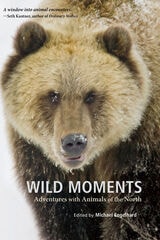
Wild Moments
Adventures with Animals of the NorthEdited by Michael Engelhard
University of Alaska Press, 2009
It is nearly impossible to live in Alaska without being influenced by its natural environment. Residents have no choice but to coexist with the Alaska wilderness and its animal inhabitants, and this extraordinary experience—along with the stunning landscape—is what often draws people to Alaska. Wild Moments offers a fascinating range of creative nonfiction essays that describe the chance meetings that bring Alaska residents face to face with their animal neighbors. These imaginative accounts speak to the ability of nature to transform the human experience, and the authors urge us through their works to protect these often threatened creatures who share our planet.
The contributors to this collection include some of Alaska’s most prestigious nature writers, such as Peggy Shumaker, Ned Rozell, Nick Jans, Debbie S. Miller, Craig Childs, Richard Nelson, and Drew Pogge. Wild Moments presents some of the best and most innovative nonfiction writing in an environmental context, and it will be of interest to all readers with a passion and concern for the natural world.
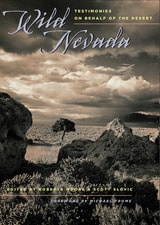
Wild Nevada
Testimonies on Behalf of the DesertRoberta Moore
University of Nevada Press, 2005
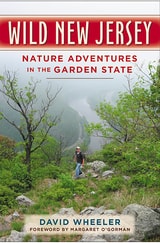
Wild New Jersey
Nature Adventures in the Garden StateDavid Wheeler
Rutgers University Press, 2011
Wild New Jersey invites readers along Wheeler’s whirlwind year-long tour of the most ecologically diverse state for its size in America. Along with the expert guidance of charismatic wildlife biologists and local conservationists, he explores mountains, valleys, beaches, pine barrens, caves, rivers, marshlands, and more—breathtaking landscapes and the state’s Noah’s Ark of fascinating creatures.
This isn’t your ordinary ride on the Jersey Turnpike. Fasten your seatbelts and join Wheeler as he . . .
- Kayaks through the Meadowlands under the watchful eye of the Empire State Building,
- Pans for cretaceous fossils in a hidden brook once home to mastodons and giant sloths,
- Rides a fishing boat in the frigid snows of winter on a high-seas quest for Atlantic puffins,
- Trudges through the eerie darkness of a bog on a mysterious night hike,
- Dogsleds across the windswept alpine slopes in the haunts of the porcupine and bobcat.
With Wheeler’s compelling narrative, in-depth background details, and eye for revealing the offbeat, you can count this as the first nature book to paint the extraordinary picture of New Jersey’s unlikely wilderness in all its glory. Come along for all the adventure and insight in Wild New Jersey!
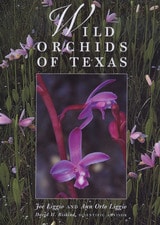
Wild Orchids of Texas
By Joe Liggio and Ann Orto Liggio
University of Texas Press, 1999
Best of Show Award, Society for Technical Communication International
From the East Texas swamps and forests to the Edwards Plateau canyons and the Trans-Pecos mountains, Texas hosts a surprising number of native orchids. Their exquisite beauty endears them to everyone from wildflower lovers to professional botanists and conservationists.
This beautifully illustrated book presents all 54 wild orchids of Texas. The species descriptions that accompany Joe Liggio's lovely color photos discuss the plant's flowers, blooming season, pollinators, typical habitats, and range (also shown by map), including its distribution within and beyond Texas. The species are grouped by genus and also listed by color, county, and habitat for easy reference.
In addition to the species accounts, the authors offer a general natural history of Texas orchids that discusses such topics as pollination and reproduction, special growing requirements, and threats to orchids from loss of habitats and careless collecting. They also describe the many orchid habitats in Texas and the species that grow in each. This wide variety of information, which has never before been collected in one volume for a general readership, makes this book the essential guide to Texas' wild orchids.
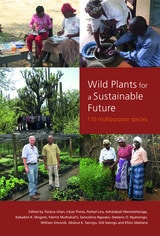
Wild Plants for a Sustainable Future
Edited by Tiziana Ulian, César Flores, Rafael Lira, Avhatakali Mamatsharaga, Kebadire K. Mogotsi, Patrick Muthoka, Samodimo Ngwako, Desterio O. Nyamongo, William Omondi, Abdoul K. Sanogo, Sidi Sanogo, and Efisio Mattana
Royal Botanic Gardens, Kew, 2018
The publication forms one of the main dissemination achievements of The MGU–Useful Plants Project, developed under Kew’s Millennium Seed Bank partnership, to conserve and use sustainably wild plants important for rural communities in Botswana, Kenya, Mali, South Africa, and Mexico. Institutional partners led the project in each country, involving rural communities, local authorities, and schools. A scientific approach was applied throughout.
The core of this book presents detailed species profiles of 110 plants selected for their importance to communities and livelihoods. The profiles are structured in a clear and consistent format, providing information on taxonomy and nomenclature, plant descriptions, fruit and seed structures, distribution, habitat, uses, known hazards and safety, conservation status, seed conservation, propagation, and trading, along with key references from the literature.
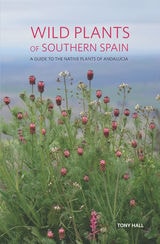
Wild Plants of Southern Spain
A Guide to the Native Plants of AndaluciaTony Hall
Royal Botanic Gardens, Kew, 2017
Drawing on more than fifteen years of fieldwork in the region, Tony Hall details over five hundred different species in this volume, presenting all essential botanical information alongside more than six hundred photographs and distribution maps. No one interested in the plants of this region will be able to forego this book.
Wild Plants of the Sierra Nevada
Ray S. Vizgirdas
University of Nevada Press, 2009
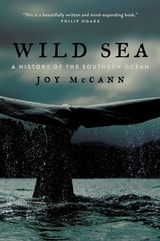
Wild Sea
A History of the Southern OceanJoy McCann
University of Chicago Press, 2019
So begins Joy McCann’s Wild Sea, the remarkable story of the world’s remote Southern, or Antarctic, Ocean. Unlike the Pacific, Atlantic, Indian, and Arctic Oceans with their long maritime histories, little is known about the Southern Ocean. This book takes readers beyond the familiar heroic narratives of polar exploration to explore the nature of this stormy circumpolar ocean and its place in Western and Indigenous histories. Drawing from a vast archive of charts and maps, sea captains’ journals, whalers’ log books, missionaries’ correspondence, voyagers’ letters, scientific reports, stories, myths, and her own experiences, McCann embarks on a voyage of discovery across its surfaces and into its depths, revealing its distinctive physical and biological processes as well as the people, species, events, and ideas that have shaped our perceptions of it. The result is both a global story of changing scientific knowledge about oceans and their vulnerability to human actions and a local one, showing how the Southern Ocean has defined and sustained southern environments and people over time.
Beautifully and powerfully written, Wild Sea will raise a broader awareness and appreciation of the natural and cultural history of this little-known ocean and its emerging importance as a barometer of planetary climate change.
Wild Sea
Eco-Wars and Surf Stories from the Coast of the CaliforniasSerge Dedina
University of Arizona Press, 2011
Dedina grew up in Imperial Beach, California, just north of the Mexican border, and he feels equally at home in Mexico and the States. An expert on gray whales, he eloquently describes the fight he helped to lead against the Mitsubishi Corporation, whose plan to build a salt-processing plant in the San Ignacio Lagoon in Baja California would have destroyed the world’s last undeveloped gray whale lagoon. With similar fervor, Dedina describes helping to construct the unlikely coalition that succeeded in defeating a proposed toll road that would have decimated a legendary California surf spot.
In between, he writes about the first surfers in Baja, the Great Baja Land Rush of the 1990s, Tijuana’s punk music scene, the pop-culture wrestling phenomenon lucha libre, the reasons why ocean pollution must be stopped, and the way HBO took over his hometown. Anyone interested in what’s happening to our natural places or just yearning to read about someone really making a difference in the world will find this a book worth sinking their teeth into.