Results by title
1761 books match the query 'Public Policy' and 85 start with w

Who Rules the Waves?
Piracy, Overfishing and Mining the OceansDenise Russell
Pluto Press, 2010
With piracy raging in the Indian Ocean, international disputes over undersea oil and gas, and chronic overfishing, the oceans have rarely been subject to such varied and environmentally damaging conflict outside a world war. In Who Rules the Waves? Denise Russell gives us a rare insight into these issues and how they could be resolved.
International law states that a coastal country has territorial rights for 12 miles into the sea beyond its coastline, and economic rights for 200 miles, but in practice many countries have virtually no control over their own waters, and there is no international agency powerful enough to settle disputes. Russell provides a thorough examination of the politics of the sea, showing that without a radical change in ocean governance, accelerating climate change and overuse of the sea's resources is likely to have catastrophic effects.
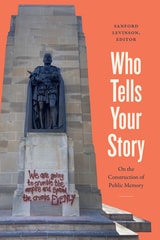
Who Tells Your Story
On the Construction of Public MemorySanford Levinson, editor
Duke University Press, 2026
Contributors: Zachary Bray, Deborah R. Gerhardt, Emily Bradley Greenfield, Randall Kennedy, Aleksandra Kuczyńska-Zonik, Larysa Kurylas, Sanford Levinson, Kimberly Probolus, Kermit Roosevelt III, Anna Saunders, Bruce Scates, Richard C. Schragger, and Agata Tatarenko

Whose America?
U.S. Immigration Policy since 1980Edited by Maria Cristina Garcia and Maddalena Marinari
University of Illinois Press, 2023
Up-to-date yet rooted in history, Whose America? provides a sophisticated account of recent immigration policy while mapping the ideological struggle to answer an essential question: which people have the right to make America their home or refuge?
Contributors: Leisy Abrego, Carl Bon Tempo, Julio Capó, Jr., Carly Goodman, Julia Rose Kraut, Monique Laney, Carl Lindskoog, Yael Schacher, and Elliott Young

Why Americans Hate Welfare
Race, Media, and the Politics of Antipoverty PolicyMartin Gilens
University of Chicago Press, 1999
"With one out of five children currently living in poverty and more than 100,000 families with children now homeless, Gilens's book is must reading if you want to understand how the mainstream media have helped justify, and even produce, this state of affairs." —Susan Douglas, The Progressive
"Gilens's well-written and logically developed argument deserves to be taken seriously." —Choice
"A provocative analysis of American attitudes towards 'welfare.'. . . [Gilens] shows how racial stereotypes, not white self-interest or anti-statism, lie at the root of opposition to welfare programs." -Library Journal
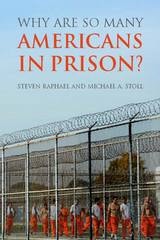
Why Are So Many Americans in Prison?
Steven Raphael
Russell Sage Foundation, 2013
Why Welfare States Persist
The Importance of Public Opinion in DemocraciesClem Brooks and Jeff Manza
University of Chicago Press, 2007
The world’s richer democracies all provide such public benefits as pensions and health care, but why are some far more generous than others? And why, in the face of globalization and fiscal pressures, has the welfare state not been replaced by another model? Reconsidering the myriad issues raised by such pressing questions, Clem Brooks and Jeff Manza contend here that public opinion has been an important, yet neglected, factor in shaping welfare states in recent decades.
Analyzing data on sixteen countries, Brooks and Manza find that the preferences of citizens profoundly influence the welfare policies of their governments and the behavior of politicians in office. Shaped by slow-moving forces such as social institutions and collective memories, these preferences have counteracted global pressures that many commentators assumed would lead to the welfare state’s demise. Moreover, Brooks and Manza show that cross-national differences in popular support help explain why Scandinavian social democracies offer so much more than liberal democracies such as the United States and the United Kingdom.
Significantly expanding our understanding of both public opinion and social policy in the world’s most developed countries, this landmark study will be essential reading for scholars of political economy, public opinion, and democratic theory.
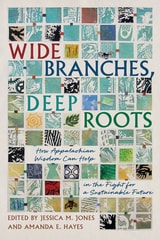
Wide Branches, Deep Roots
How Appalachian Wisdom Can Help in the Fight for a Sustainable FutureJessica M Jones
West Virginia University Press, 2026
To be Appalachian is to define oneself in terms of a place. Where we’re from plays a tremendous role in who we are, through storytelling about our homeplaces and the people who have loved them. However, what goes largely unaddressed is how this love of place can contribute to sustainability within the region, which has notoriously faced on-going environmental threats from extraction industries. The reality is that our relationship with the environment is thorny and intertwined with our identities, histories, and economic realities. The authors in the collection get down among the thorns to explore what sustainability means in Appalachia and how we can utilize the power of traditional folkways to achieve it.
This collection of over thirty pieces explores the connections between Appalachia’s stories, traditions, and modern events and the pathway to regional sustainability. The contributors — writers and scholars — examine how our definitions of sustainability have been formed, the power of education to encourage or inhibit it, and what moves are being made toward efficacy in the future. They also offer specific actions readers can take to better understand and build sustainability where they live.
Contributors: Greg Bealer, Luc Biscan-White, David Blackmore, Aysha Bodenhamer, Ivy Brashear, Matthew Calloway, Nicole Drewitz-Crockett, Christina Fisanick, Deborah Fleming, Amanda V. Garner, Karie Gunter-Seymour, Richard Hague, Amanda E. Hayes, Lockie Hunter, Jessica M. Jones, Kristen LeFevers, Sarah Long, Meghan Moore-Hubbard, Barbara Marie Minney, Jessica Radicic, Elizabeth Emmerth Rexroad, Barbara Sabol, Larry Smith, Patrice Stank, Taylor Nasim Stone, Paul Thomas, Elizabeth Tussey, and Betsy Weems.
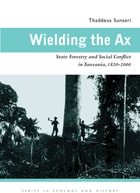
Wielding the Ax
State Forestry and Social Conflict in Tanzania, 1820–2000Thaddeus Sunseri
Ohio University Press, 2009
Forests have been at the fault lines of contact between African peasant communities in the Tanzanian coastal hinterland and outsiders for almost two centuries. In recent decades, a global call for biodiversity preservation has been the main challenge to Tanzanians and their forests.
Thaddeus Sunseri uses the lens of forest history to explore some of the most profound transformations in Tanzania from the nineteenth century to the present. He explores anticolonial rebellions, the world wars, the depression, the Cold War, oil shocks, and nationalism through their intersections with and impacts on Tanzania’s coastal forests and woodlands. In Wielding the Ax, forest history becomes a microcosm of the origins, nature, and demise of colonial rule in East Africa and of the first fitful decades of independence.
Wielding the Ax is a story of changing constellations of power over forests, beginning with African chiefs and forest spirits, both known as “ax–wielders,” and ending with international conservation experts who wield scientific knowledge as a means to controlling forest access. The modern international concern over tropical deforestation cannot be understood without an awareness of the long–term history of these forest struggles.
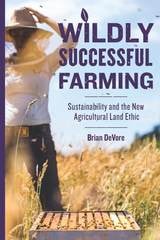
Wildly Successful Farming
Sustainability and the New Agricultural Land EthicBrian DeVore
University of Wisconsin Press, 2020
Written by agricultural journalist Brian DeVore, the book is based on interviews he has conducted at farms, wildlife refuges, laboratories, test plots, and gardens over the past twenty-five years. He documents innovations in cover cropping, managed rotational grazing, perennial polyculture, and integrated pest management. His accounts provide insight into the impacts regenerative farming methods can have on wildlife, water, landscape, soils, and rural communities and suggest ways all of us can support wildly successful farmers.

Willing and Unable
Doctors' Constraints in Abortion CareLori R. Freedman
Vanderbilt University Press, 2010
Structural barriers to the mainstream practice of abortion effectively institutionalize the buck-passing of abortion patients to abortion clinics. As the author notes, "Public-health-minded HMOs and physician practices could significantly change the world of abortion care if they stopped outsourcing it."
Drawing from forty in-depth interviews, the book presents a challenge to a commonly held assumption that physicians decide whether or not to provide abortion based on personal ideology. Physician narratives demonstrate how their choices around learning, doing, and even having abortions themselves disrupt the pro-choice/pro-life moral and political binary.

Windows into the Soul
Surveillance and Society in an Age of High TechnologyGary T. Marx
University of Chicago Press, 2016
In this landmark book, Marx sums up a lifetime of work on issues of surveillance and social control by disentangling and parsing the empirical richness of watching and being watched. Using fictional narratives as well as the findings of social science, Marx draws on decades of studies of covert policing, computer profiling, location and work monitoring, drug testing, caller identification, and much more, Marx gives us a conceptual language to understand the new realities and his work clearly emphasizes the paradoxes, trade-offs, and confusion enveloping the field. Windows into the Soul shows how surveillance can penetrate our social and personal lives in profound, and sometimes harrowing, ways. Ultimately, Marx argues, recognizing complexity and asking the right questions is essential to bringing light and accountability to the darker, more iniquitous corners of our emerging surveillance society.
For more information, please see www.garymarx.net.

Wine By Design
Santa Barbara's Quest for TerroirVictor W. Geraci
University of Nevada Press, 2020
As the American demand for premium wine grapes intensified in the late twentieth century, the Northern California wine industry rapidly grew its boutique and innovative local designer winemaking to increase profit to meet demand and compete on a global scale. Set in the context of the regional, national, and global wine community, this story illuminates a regional story of how the Santa Barbara wine industry found solutions to current market conditions while utilizing local traditions to develop a new version of local wine terroir. An accomplishment that allowed them to compete in the global marketplace yet develop highly specialized wine that is unique to the region.
By employing leading-edge technology and entrepreneurship, the California Central Coast region of Santa Barbara became a model for the American vision of agricultural innovation and an integral part of the international wine trade, developing a personalized version of local wine terroir.
Winters of Discontent
The Winter Olympics and a Half Century of Protest and ResistanceEdited by Russell Field
University of Illinois Press, 2025
The essays collectively explore the shifting dynamics and power relations between the civic coalitions that pursue the Winter Olympics and the social movements that oppose their efforts. The contributors look at specific Games impacted by dissent and probe the issues that swirled around failed and withdrawn bids. In addition, contributions on the contemporary Olympics describe current or future bids while delving into the campaigns demanding host nations pay attention to economic, social, humanitarian, and environmental concerns.
A first-of-its-kind collection, Winters of Discontent profiles the wide range of activists and social movements that have organized against the Winter Olympics.
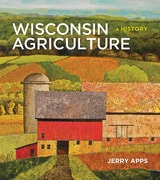
Wisconsin Agriculture
A HistoryJerry Apps
Wisconsin Historical Society Press, 2015
"I'm embarrassed to say I thought I knew anything substantial about Wisconsin agriculture or its history before I read this book. 'Wisconsin Agriculture' should be required reading in history classes from high school to the collegiate level. It makes me thankful that Jerry Apps has such a sense of commitment to Wisconsin's agricultural heritage--and to getting the story right." --Pam Jahnke, Farm Director, Wisconsin Farm Report Radio
Wisconsin has been a farming state from its very beginnings. And though it's long been known as "the Dairy State," it produces much more than cows, milk, and cheese. In fact, Wisconsin is one of the most diverse agricultural states in the nation.
The story of farming in Wisconsin is rich and diverse as well, and the threads of that story are related and intertwined. In this long-awaited volume, celebrated rural historian Jerry Apps examines everything from the fundamental influences of landscape and weather to complex matters of ethnic and pioneer settlement patterns, changing technology, agricultural research and education, and government regulations and policies. Along with expected topics, such as the cranberry industry and artisan cheesemaking, "Wisconsin Agriculture" delves into beef cattle and dairy goats, fur farming and Christmas trees, maple syrup and honey, and other specialty crops, including ginseng, hemp, cherries, sugar beets, mint, sphagnum moss, flax, and hops. Apps also explores new and rediscovered farming endeavors, from aquaculture to urban farming to beekeeping, and discusses recent political developments, such as the 2014 Farm Bill and its ramifications. And he looks to the future of farming, contemplating questions of ethical growing practices, food safety, sustainability, and the potential effects of climate change.
Featuring first-person accounts from the settlement era to today, along with more than 200 captivating photographs, "Wisconsin Agriculture" breathes life into the facts and figures of 150 years of farming history and provides compelling insights into the state's agricultural past, present, and future.

Wisconsin and the Shaping of American Law
Joseph A. Ranney
University of Wisconsin Press, 2017
Organized around periods of social need and turmoil, the book considers the role of states as legal laboratories in establishing American authority west of the Appalachians, in both implementing and limiting Jacksonian reforms and in navigating legal crises before and during the Civil War—including Wisconsin's invocation of sovereignty to defy federal fugitive slave laws. Ranney also surveys judicial revolts, the reforms of the Progressive era, and legislative responses to struggles for civil rights by immigrants, women, Native Americans, and minorities in the nineteenth and twentieth centuries. Since the 1960s, battles have been fought at the state level over such issues as school vouchers, voting, and abortion rights.
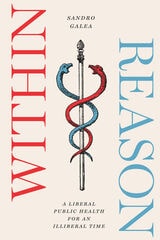
Within Reason
A Liberal Public Health for an Illiberal TimeSandro Galea
University of Chicago Press, 2023
A provocative chronicle of how US public health has strayed from its liberal roots.
The Covid-19 response was a crucible of politics and public health—a volatile combination that produced predictably bad results. As scientific expertise became entangled with political motivations, the public-health establishment found itself mired in political encampment.
It was, as Sandro Galea argues, a crisis of liberalism: a retreat from the principles of free speech, open debate, and the pursuit of knowledge through reasoned inquiry that should inform the work of public health.
Across fifty essays, Within Reason chronicles how public health became enmeshed in the insidious social trends that accelerated under Covid-19. Galea challenges this intellectual drift towards intolerance and absolutism while showing how similar regressions from reason undermined social progress during earlier eras. Within Reason builds an incisive case for a return to critical, open inquiry as a guiding principle for the future public health we want—and a future we must work to protect.
Women Of Japan & Korea
Continuity and Changeedited by Joyce Gelb and Marian Lief Palley
Temple University Press, 1994

Women and Stepfamilies
Voices of Anger and Loveedited by Nan Bauer Maglin and Nancy Schniedewind
Temple University Press, 1990
Women and Welfare
Theory and Practice in the United States and EuropeHirschmann, Nancy J
Rutgers University Press, 2001
The social welfare state is believed by many to be one of the great achievements of Western democracy in the twentieth century. It institutionalized for the first time a collective commitment to improving individual life chances and social well-being. However, as we move into a new century, the social welfare state everywhere has come under increasing pressure, raising serious doubts about its survival.
Featuring essays by experts from a variety of fields, including law, comparative politics, sociology, economics, cultural studies, philosophy, and political theory, Women and Welfare represents an interdisciplinary, multimethodological and multicultural feminist approach to recent changes in the welfare system of Western industrialized nations. The broad perspective, from the philosophical to the quantitative, provides an excellent overview of the subject and the most recent scholarly literature. The volume offers a crosscultural analysis of welfare “reform” in the 1990s, visions of what a “woman-friendly” welfare state requires, and an examination of theoretical and policy questions feminists and concerned others should be asking.

Women in 1900
Gateway to the Political Economy of the 20th CenturyChristine E. Bose
Temple University Press, 2001
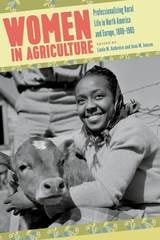
Women in Agriculture
Professionalizing Rural Life in North America and Europe, 1880-1965Linda M. Ambrose and Joan M. Jensen
University of Iowa Press, 2017
The contributors to Women in Agriculture examine how rural women’s expertise was disseminated and how it was received. Through these essays, readers meet subversively lunching ladies in Ontario and African American home demonstration agents in Arkansas. The rural sociologist Emily Hoag made a place for women at the US Department of Agriculture as well as in agricultural research. Canadian rural reformer Madge Watt, British radio broadcaster Mabel Webb, and US ethnobotanists Mary Warren English and Frances Densmore developed new ways to share and preserve rural women’s knowledge. These and the other women profiled here updated and expanded rural women’s roles in shaping their communities and the broader society. Their stories broaden and complicate the history of agriculture in North America and Western Europe.
Contributors:
Linda M. Ambrose, Maggie Andrews, Cherisse Branch-Jones, Joan M. Jensen, Amy McKinney, Anne Moore, Karen Sayer, Margreet van der Burg, Nicola Verdon
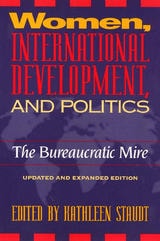
Women, International Development
And Politicsedited by Kathleen Staudt
Temple University Press, 1997
At the same time, non-governmental organizations have continued to expand a policy agenda with a concern for women, thanks to the Fourth World Congress on Women and a series of United Nations-affiliated meetings leading up to the one on population and development in Cairo in 1994 and, most important, the Beijing Conference in December 1995, attended by 50,000 people.
Two new essays and a new conclusion reflect the upsurge of interest in women and development since 1990. An introductory essay by Sally Baden and Anne Marie Goetz focuses on the conflict over the term "gender" at the Beijing Conference and the continuing divisions between conservative women and feminists and also between representatives of the North and South.
Work Without End
Abandoning Shorter Hours for the Right to WorkBenjamin Kline Hunnicutt
Temple University Press, 1990
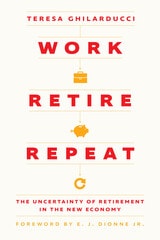
Work, Retire, Repeat
The Uncertainty of Retirement in the New EconomyTeresa Ghilarducci
University of Chicago Press, 2024
A damning portrait of the dire realities of retirement in the United States—and how we can fix it.
While the French went on strike in 2023 to protest the increase in the national retirement age, workers in the United States have all but given up on the notion of dignified retirement for all. Instead, Americans—whose elders face the highest risk of poverty compared to workers in peer nations—are fed feel-good stories about Walmart clerks who can finally retire because a customer raised the necessary funds through a GoFundMe campaign.
Many argue that the solution to the financial straits of American retirement is simple: people need to just work longer. Yet this call to work longer is misleading in a multitude of ways, including its endangering of the health of workers and its discrimination against people who work in lower-wage occupations. In Work, Retire, Repeat, Teresa Ghilarducci tells the stories of elders locked into jobs—not because they love to work but because they must.
But this doesn’t need to be the reality. Work, Retire, Repeat shows how relatively low-cost changes to how we finance and manage retirement will allow people to truly choose how they spend their golden years.
Work, Retire, Repeat
The Uncertainty of Retirement in the New EconomyTeresa Ghilarducci
University of Chicago Press, 2024
A damning portrait of the dire realities of retirement in the United States—and how we can fix it.
While the French went on strike in 2023 to protest the increase in the national retirement age, workers in the United States have all but given up on the notion of dignified retirement for all. Instead, Americans—whose elders face the highest risk of poverty compared to workers in peer nations—are fed feel-good stories about Walmart clerks who can finally retire because a customer raised the necessary funds through a GoFundMe campaign.
Many argue that the solution to the financial straits of American retirement is simple: people need to just work longer. Yet this call to work longer is misleading in a multitude of ways, including its endangering of the health of workers and its discrimination against people who work in lower-wage occupations. In Work, Retire, Repeat, Teresa Ghilarducci tells the stories of elders locked into jobs—not because they love to work but because they must.
But this doesn’t need to be the reality. Work, Retire, Repeat shows how relatively low-cost changes to how we finance and manage retirement will allow people to truly choose how they spend their golden years.
Workforce Development Politics
Civic Capacity And Performanceedited by Robert P. Giloth, Published in association with the Annie E. Casey Foundation.
Temple University Press, 2004
Workforce Intermediaries
For The 21St Centuryedited by Robert P. Giloth, Published in association with The American Assembly, Columbia University
Temple University Press, 2003
Working Under Different Rules
Richard B. Freeman
Russell Sage Foundation, 1994

World Crisis Effects on Social Security in Latin America and the Caribbean
Lessons and PoliciesCarmelo Mesa-Lago
University of London Press, 2010
World Development
An IntroductionProdromos Panayiotopoulos
Pluto Press, 2001
World Development offers answers to these questions. A comprehensive introductory guide for students, teachers, volunteers and NGO workers in development, World Development examines the substantive issues surrounding development, industrialisation and globalization and places them within a historic context. It outlines the historical development of the world economy and assesses the current prospects for developing countries. The book contains in-depth analyses of how particular industries operate at local and global levels, drawing from case studies on textiles, tourism and copper. There are also case studies of specific countries, including South Korea, Cyprus, Mexico, China and Spain.
Worst Cases
Terror and Catastrophe in the Popular ImaginationLee Clarke
University of Chicago Press, 2005
We consider the few who live in fear of such scenarios to be alarmist or even paranoid. But Worst Cases shows that such individuals—like Cassandra foreseeing the fall of Troy—are more reasonable and prescient than you might think. In this book, Lee Clarke surveys the full range of possible catastrophes that animate and dominate the popular imagination, from toxic spills and terrorism to plane crashes and pandemics. Along the way, he explores how the ubiquity of worst cases in everyday life has rendered them ordinary and mundane. Fear and dread, Clarke argues, have actually become too rare: only when the public has more substantial information and more credible warnings will it take worst cases as seriously as it should.
A timely and necessary look into how we think about the unthinkable, Worst Cases will be must reading for anyone attuned to our current climate of threat and fear.

Worst Cases
Terror and Catastrophe in the Popular ImaginationLee Clarke
University of Chicago Press, 2005
Al Qaeda detonates a nuclear weapon in Times Square during rush hour, wiping out half of Manhattan and killing 500,000 people. A virulent strain of bird flu jumps to humans in Thailand, sweeps across Asia, and claims more than fifty million lives. A single freight car of chlorine derails on the outskirts of Los Angeles, spilling its contents and killing seven million. An asteroid ten kilometers wide slams into the Atlantic Ocean, unleashing a tsunami that renders life on the planet as we know it extinct.
We consider the few who live in fear of such scenarios to be alarmist or even paranoid. But Worst Cases shows that such individuals—like Cassandra foreseeing the fall of Troy—are more reasonable and prescient than you might think. In this book, Lee Clarke surveys the full range of possible catastrophes that animate and dominate the popular imagination, from toxic spills and terrorism to plane crashes and pandemics. Along the way, he explores how the ubiquity of worst cases in everyday life has rendered them ordinary and mundane. Fear and dread, Clarke argues, have actually become too rare: only when the public has more substantial information and more credible warnings will it take worst cases as seriously as it should.
A timely and necessary look into how we think about the unthinkable, Worst Cases will be must reading for anyone attuned to our current climate of threat and fear.
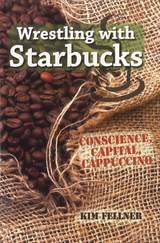
Wrestling with Starbucks
Conscience, Capital, CappuccinoFellner, Kim
Rutgers University Press, 2008
Armed with an open mind and a sense of humor, Fellner takes readers on an expedition into the muscle and soul of the coffee company. She finds a corporation filled with contradictions: between employee-friendly processes and anti-union practices; between an internationalist vision and a longing for global dominance; between community individuality and cultural hegemony. On a daily basis Starbucks walks a fine line. It must be profitable enough to please Wall Street and principled enough to please social justice advocates. Although observers might argue that the company has done well at achieving a balance, Starbucks's leaders run the risk of satisfying neither constituency and must constantly justify themselves to both.
Through the voices of Central American coffee farmers, officers at corporate headquarters, independent café owners, unionists, baristas, traders, global justice activists, and consumers, Fellner explores the forces that affect Starbucks's worth and worthiness. Along the way, she subjects her own unabashedly progressive perspective to scrutiny and emerges with a compelling and unexpected look at Starbucks, the global economy, our economic convictions, and the values behind our morning cup of joe.

Writing the Ghetto
Class, Authorship, and the Asian American Ethnic EnclaveChang, Yoonmee
Rutgers University Press, 2010
Yoonmee Chang examines the class structure of Chinatowns, Koreatowns, Little Tokyos, and Little Indias, arguing that ghettoization in these spaces is disguised. She maintains that Asian American literature both contributes to and challenges this masking through its marginalization by what she calls the "ethnographic imperative." Chang discusses texts from the late nineteenth century to the present, including those of Sui Sin Far, Winnifred Eaton, Monica Sone, Fae Myenne Ng, Chang-rae Lee, S. Mitra Kalita, and Nam Le. These texts are situated in the contexts of the Chinese Exclusion Era, Japanese American internment during World War II, the globalization of Chinatown in the late twentieth century, the Vietnam War, the 1992 Los Angeles riots, and the contemporary emergence of the "ethnoburb."
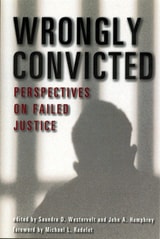
Wrongly Convicted
Perspectives on Failed JusticeWestervelt, Saundra D
Rutgers University Press, 2001
The American criminal justice system contains numerous safeguards to prevent the conviction of innocent persons. The Bill of Rights provides nineteen separate rights for the alleged criminal offender, including the right to effective legal representation and the right to be judged without regard to race or creed. Despite these safeguards, wrongful convictions persist, and the issue has reverberated in the national debate over capital punishment.
The essays in this volume are written from a cross-disciplinary perspective by some of the most eminent lawyers, criminologists, and social scientists in the field today. The articles are divided into four sections: the causes of wrongful convictions, the social characteristics of the wrongly convicted, case studies and personal histories, and suggestions for changes in the criminal justice system to prevent wrongful convictions. Contributors examine a broad range of issues, including the fallibility of eyewitness testimony, particularly in cross-racial identifications; the disadvantages faced by racial and ethnic minorities in the criminal justice system; and the impact of new technologies, especially DNA evidence, in freeing the innocent and bringing the guilty to justice. The book also asks such questions as: What legal characteristics do wrongful convictions share? What are the mechanisms that defendants and their attorneys use to overturn wrongful convictions? The book also provides case studies that offer specific examples of what can and does go wrong in the criminal justice system.