Results by title
3027 books match the query 'Sociology' and 115 start with w

When the Hills Are Gone
Frac Sand Mining and the Struggle for CommunityThomas W. Pearson
University of Minnesota Press, 2017
Fracking is one of the most controversial methods of fossil fuel extraction in the United States, but a great deal about it remains out of the public eye. In Wisconsin it has ignited an unprecedented explosion in the state’s sand mining operations, an essential ingredient in hydraulic fracturing that has shaken local communities to the core.
In When the Hills Are Gone, Thomas W. Pearson reveals the jolting impact of sand mining on Wisconsin’s environment and politics. A source of extraordinary wealth for a lucky few, and the cause of despoiled land for many others, sand mining has raised alarm over air quality, water purity, noise, blasting, depressed tourism, and damage to the local way of life. It has also spurred a backlash in a grassroots effort that has grown into a mature political movement battling a powerful mining industry.
When the Hills Are Gone tells the story of Wisconsin’s sand mining wars. Providing on-the-ground accounts from both the mining industry and the concerned citizens who fought back, Pearson blends social theory, ethnography, stirring journalism, and his own passionate point of view to offer an essential chapter of Wisconsin’s history and an important episode in the national environmental movement. Digging deep into the struggles over place, community, and local democracy that are occurring across the United States, When the Hills Are Gone gives vital insight into America’s environmental battles along the unexpected frontlines of energy development.
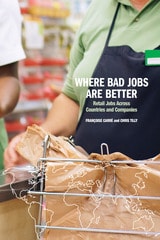
Where Bad Jobs Are Better
Retail Jobs Across Countries and CompaniesFrancoise Carre
Russell Sage Foundation, 2017
In surveying retail work across the United States, Carré and Tilly find that the majority of retail workers receive low pay and nearly half work part-time, which contributes to high turnover and low productivity. Jobs staffed predominantly by women, such as grocery store cashiers, pay even less than retail jobs in male-dominated fields, such as consumer electronics. Yet, when comparing these jobs to similar positions in Western Europe, Carré and Tilly find surprising differences. In France, though supermarket cashiers perform essentially the same work as cashiers in the United States, they receive higher pay, are mostly full-time, and experience lower turnover and higher productivity. And unlike the United States, where many retail employees are subject to unpredictable schedules, in Germany, retailers are required by law to provide their employees notice of work schedules six months in advance.
The authors show that disparities in job quality are largely the result of differing social norms and national institutions. For instance, weak labor regulations and the decline of unions in the United States have enabled retailers to cut labor costs aggressively in ways that depress wages and discourage full-time work. On the other hand, higher minimum wages, greater government regulation of work schedules, and stronger collective bargaining through unions and works councils have improved the quality of retail jobs in Europe.
As retail and service work continue to expand, American employers and policymakers will have to decide the extent to which these jobs will be good or bad. Where Bad Jobs Are Better shows how stronger rules and regulations can improve the lives of retail workers and boost the quality of low-wage jobs across the board.

Where the North Sea Touches Alabama
Allen C. Shelton
University of Chicago Press, 2013
A few years later, 180 miles away from Keim’s grave, a bulldozer operator uncovered a pine coffin in an old beaver swamp down the road from Allen C. Shelton’s farm. He quickly reburied it, but Shelton, a friend of Keim’s who had a suitcase of his unfinished projects, became convinced that his friend wasn’t dead and fixed in the ground, but moving between this world and the next in a traveling coffin in search of his incomplete work.
In Where the North Sea Touches Alabama, Shelton ushers us into realms of fantasy, revelation, and reflection, paced with a slow unfurling of magical correspondences. Though he is trained as a sociologist, this is a genre-crossing work of literature, a two-sided ethnography: one from the world of the living and the other from the world of the dead.
What follows isn’t a ghost story but an exciting and extraordinary kind of narrative. The psycho-sociological landscape that Shelton constructs for his reader is as evocative of Kafka, Bataille, and Benjamin as it is of Weber, Foucault, and Marx. Where the North Sea Touches Alabama is a work of sociological fictocriticism that explores not only the author’s relationship to the artist but his physical, historical, and social relationship to northeastern Alabama, in rare style.

White Enclosures
Racial Capitalism and Coloniality along the Balkan RoutePiro Rexhepi
Duke University Press, 2022

Whiteness Interrupted
White Teachers and Racial Identity in Predominantly Black SchoolsMarcus Bell
Duke University Press, 2021

Who Can Stop the Drums?
Urban Social Movements in Chávez's VenezuelaSujatha Fernandes
Duke University Press, 2010
Fernandes portrays everyday life and politics in the shantytowns of Caracas through accounts of community-based radio, barrio assemblies, and popular fiestas, and the many interviews she conducted with activists and government officials. Most of the barrio activists she presents are Chávez supporters. They see the leftist president as someone who understands their precarious lives and has made important changes to the state system to redistribute resources. Yet they must balance receiving state resources, which are necessary to fund their community-based projects, with their desire to retain a sense of agency. Fernandes locates the struggles of the urban poor within Venezuela’s transition from neoliberalism to what she calls “post-neoliberalism.” She contends that in contemporary Venezuela we find a hybrid state; while Chávez is actively challenging neoliberalism, the state remains subject to the constraints and logics of global capital.

Who Cares About Parents?
Temporary Alliances, Exclusionary Practices, and the Strategic Possibilities of Parenting GroupsKim Price-Glynn
Rutgers University Press, 2026
Who cares for parental caregivers? The short answer is, parenting groups do. Who Cares for Parents examines how parenting groups collectively build and contribute significant resources to form a broader care infrastructure for adult family caregivers with children. This book looks at the content of care parenting groups provide for parents, through comparative research including mothers, fathers, and nonbinary parents. Cases include some of the most recognizable parenting groups in the United States, some with vast networks of parent members numbering in the thousands or even millions, like the Parent Teacher Association, La Leche League, and MOMS Club International. The book also examines newer and, perhaps, less well known groups like the City Dads Group, the Upper East Side (UES) Mommas, as well as smaller sets of local dads’ groups and a babysitting co-op.
Can parents in the contemporary United States secure some of the necessary resources to provide care, not only for their children but also for themselves, through parenting groups? The evidence from this research suggests they can. Parenting groups have a long history of organizing membership, meetings, education, material resources, and advocacy to provide for parents’ needs. Parenting groups’ ideologies and practices often seek broad goals, and sometimes include far reaching advocacy, innovative solutions, and possibilities for what Price-Glynn calls strategic parenting and social change. Alongside their successes, however, parenting groups also face challenges of producing narrow and temporary alliances, exclusion, and exacerbating inequalities. Despite their many challenges, Price-Glynn remains hopeful about the possibilities for non-familial and collective care infrastructure like that performed by parent groups.
Who Cares? Women, Care, and Culture
Julia T. Wood
Southern Illinois University Press, 1994
At a time when studies suggest the average American woman spends seventeen years caring for children and eighteen years caring for aging parents, Julia T. Wood examines how culture creates and sustains our definitions of caring, determines who cares along gender lines, and assigns the diminished value that caring has in our society.
Wood argues that America’s expanding need for caring is currently being met at an unacceptably high cost to caregivers. It is time, she believes, to examine caregiving roles and the personal, political, and social issues that surround the question of who cares. Caring must be recognized and promoted as an activity that commands the respect and participation of all members of our society—men and women alike.
Only by implementing changes in the basic fabric of American culture, affecting both the structure and the policies of our society and government, can we, Wood concludes, carve out a system of caring that will recognize caring as everyone’s responsibility.

Who Cleans the Park?
Public Work and Urban Governance in New York CityJohn Krinsky and Maud Simonet
University of Chicago Press, 2017
In Who Cleans the Park? John Krinsky and Maud Simonet explain that the work of maintaining parks has intersected with broader trends in welfare reform, civic engagement, criminal justice, and the rise of public-private partnerships. Welfare-to-work trainees, volunteers, unionized city workers (sometimes working outside their official job descriptions), staff of nonprofit park “conservancies,” and people sentenced to community service are just a few of the groups who routinely maintain parks. With public services no longer being provided primarily by public workers, Krinsky and Simonet argue, the nature of public work must be reevaluated. Based on four years of fieldwork in New York City, Who Cleans the Park? looks at the transformation of public parks from the ground up. Beginning with studying changes in the workplace, progressing through the public-private partnerships that help maintain the parks, and culminating in an investigation of a park’s contribution to urban real-estate values, the book unearths a new urban order based on nonprofit partnerships and a rhetoric of responsible citizenship, which at the same time promotes unpaid work, reinforces workers’ domination at the workplace, and increases the value of park-side property. Who Cleans the Park? asks difficult questions about who benefits from public work, ultimately forcing us to think anew about the way we govern ourselves, with implications well beyond the five boroughs.

Who Should Pay?
Higher Education, Responsibility, and the PublicNatasha Quadlin
Russell Sage Foundation, 2022
Who Should Pay? draws on a decade’s worth of public opinion surveys analyzing public attitudes about whether parents, students, or the government should be primarily responsible for funding higher education. Quadlin and Powell find that between 2010 and 2019, public opinion has shifted dramatically in favor of more government funding. In 2010, Americans overwhelming believed that parents and students were responsible for the costs of higher education. Less than a decade later, the percentage of Americans who believed that federal or state/local government should be the primary financial contributor has more than doubled. The authors contend that the rapidity of this change may be due to the effects of the 2008 financial crisis and the growing awareness of the social and economic costs of high levels of student debt. Quadlin and Powell also find increased public endorsement of shared responsibility between individuals and the government in paying for higher education. The authors additionally examine attitudes on the accessibility of college for all, whether higher education at public universities should be free, and whether college is worth the costs.
Quadlin and Powell also explore why Americans hold these beliefs. They identify individualistic and collectivist world views that shape public perspectives on the questions of funding, accessibility, and worthiness of college. Those with more individualistic orientations believed parents and students should pay for college, and that if students want to attend college, then they should work hard and find ways to achieve their goals. Those with collectivist orientations believed in a model of shared responsibility – one in which the government takes a greater level of responsibility for funding education while acknowledging the social and economic barriers to obtaining a college degree for many students. The authors find that these belief systems differ among socio-demographic groups and that bias – sometimes unconscious and sometimes deliberate – regarding race and class affects responses from both individualistic and collectivist-oriented participants.
Public opinion is typically very slow to change. Yet Who Should Pay? provides an illuminating account of just how quickly public opinion has shifted regarding the responsibility of paying for a college education and its implications for future generations of students.

Whom Can We Trust?
How Groups, Networks, and Institutions Make Trust PossibleKaren S. Cook
Russell Sage Foundation, 2009

Whose Liberty is it Anyway?
Europe at the CrossroadsStefan Auer
Seagull Books, 2012
Europe's turn of fortune is humbling, humiliating and, perhaps, irreversible. What went wrong, and when? Europe's most audacious moment occurred sometime between 1989 and 1991, a brief period that encapsulated both the demise of communism in Central and Eastern Europe and the bold steps forward on the path towards an 'ever-closer union' in Western Europe. Twenty years later, the dramatic failures of economic and political integration have forced Europeans to re-consider the underpinnings of their project. The economic crisis of 2010-11 also manifested itself as a crisis of European democracy. Old questions acquired new meaning: Is it possible to maintain conditions for self-government while undermining the nation-state? What are the limits of solidarity? Can Europe be truly united through its common history, or its common currency? Is further unity in Europe even desirable?
In Whose Liberty Is It Anyway? Stefan Auer exposes the limits of the current European project by interrogating some of its many incongruities, particularly when it comes to its commitment to freedom. The author argues that the calls for more European solidarity are not convincing when Europe's poor are asked to pay for the mistakes of those who are more fortunate. Europe's unity, Auer asserts, can only be maintained by accepting its limitations and by beginning to fulfill some of its many promises.

Why Afterschool Matters
Nelson, Ingrid A.
Rutgers University Press, 2017
Why Afterschool Matters takes a different approach, closely following ten Mexican American students who attended the same extracurricular program in California, then chronicling its long-term effects on their lives, from eighth grade to early adulthood. Discovering that participation in the program was life-changing for some students, yet had only a minimal impact on others, sociologist Ingrid A. Nelson investigates the factors behind these very different outcomes. Her research reveals that while afterschool initiatives are important, they are only one component in a complex network of school, family, community, and peer interactions that influence the educational achievement of disadvantaged students.
Through its detailed case studies of individual students, this book brings to life the challenges marginalized youth en route to college face when navigating the intersections of various home, school, and community spheres. Why Afterschool Matters may focus on a single program, but its findings have major implications for education policy nationwide.

Why War?
The Cultural Logic of Iraq, the Gulf War, and SuezPhilip Smith
University of Chicago Press, 2005
Comprised of case studies of the War in Iraq, the Gulf War, and the Suez Crisis, Why War? decodes the cultural logic of the narratives that justify military action. Each nation, Smith argues, makes use of binary codes—good and evil, sacred and profane, rational and irrational, to name a few. These codes, in the hands of political leaders, activists, and the media, are deployed within four different types of narratives—mundane, tragic, romantic, or apocalyptic. With this cultural system, Smith is able to radically recast our "war stories" and show how nations can have vastly different understandings of crises as each identifies the relevant protagonists and antagonists, objects of struggle, and threats and dangers.
The large-scale sacrifice of human lives necessary in modern war, according to Smith, requires an apocalyptic vision of world events. In the case of the War in Iraq, for example, he argues that the United States and Britain replicated a narrative of impending global doom from the Gulf War. But in their apocalyptic account they mistakenly made the now seemingly toothless Saddam Hussein once again a symbol of evil by writing him into the story alongside al Qaeda, resulting in the war's contestation in the United States, Britain, and abroad.
Offering an innovative approach to understanding how major wars are packaged, sold, and understood, Why War? will be applauded by anyone with an interest in military history, political science, cultural studies, and communication.
Why Welfare States Persist
The Importance of Public Opinion in DemocraciesClem Brooks and Jeff Manza
University of Chicago Press, 2007
The world’s richer democracies all provide such public benefits as pensions and health care, but why are some far more generous than others? And why, in the face of globalization and fiscal pressures, has the welfare state not been replaced by another model? Reconsidering the myriad issues raised by such pressing questions, Clem Brooks and Jeff Manza contend here that public opinion has been an important, yet neglected, factor in shaping welfare states in recent decades.
Analyzing data on sixteen countries, Brooks and Manza find that the preferences of citizens profoundly influence the welfare policies of their governments and the behavior of politicians in office. Shaped by slow-moving forces such as social institutions and collective memories, these preferences have counteracted global pressures that many commentators assumed would lead to the welfare state’s demise. Moreover, Brooks and Manza show that cross-national differences in popular support help explain why Scandinavian social democracies offer so much more than liberal democracies such as the United States and the United Kingdom.
Significantly expanding our understanding of both public opinion and social policy in the world’s most developed countries, this landmark study will be essential reading for scholars of political economy, public opinion, and democratic theory.

Widows
Vol. I: The Middle East, Asia, and the PacificHelena Znaniecka Lopata, ed.
Duke University Press, 1987

Widows
Vol. II: North AmericaHelena Znaniecka Lopata, ed.
Duke University Press, 1987

Widows
Vol. II: North AmericaHelena Znaniecka Lopata, ed.
Duke University Press, 0

Wildlife as Property Owners
A New Conception of Animal RightsKaren Bradshaw
University of Chicago Press, 2020

Willard W. Waller on the Family, Education, and War
Willard W. Waller
University of Chicago Press, 1970
Waller's explorations of role behavior, especially in his writings on marriage and education, shocked academia and are still provocative today. In his direct, perceptive, often cynical style, he penetrated the facades of the most respected social institutions. He made use of the case study method; many of Waller's case studies were lifted directly from his own experiences, particularly from the agonies of his own divorce and from the disappointments of his initial teaching experience. He also drew fresh insights from the personal experiences of his colleagues and students, hardly a traditional procedure.
This volume is the first unified presentation of Waller's writings, covering in depth his work on family, education, and war. It also includes his shorter, but equally vivid, discussions on social problems such as crime and on the conflict between insight and scientific method.
Since Waller's private life was so intimately bound to his public work, an understanding of his personal history reveals much about the development and dilemma of sociologists in the United States. In their Introduction editors Goode, Mitchell, and Furstenberg reconstruct the life of this complex American thinker.

William James and the Art of Popular Statement
Paul Stob
Michigan State University Press, 2013

Windows into the Soul
Surveillance and Society in an Age of High TechnologyGary T. Marx
University of Chicago Press, 2016
In this landmark book, Marx sums up a lifetime of work on issues of surveillance and social control by disentangling and parsing the empirical richness of watching and being watched. Using fictional narratives as well as the findings of social science, Marx draws on decades of studies of covert policing, computer profiling, location and work monitoring, drug testing, caller identification, and much more, Marx gives us a conceptual language to understand the new realities and his work clearly emphasizes the paradoxes, trade-offs, and confusion enveloping the field. Windows into the Soul shows how surveillance can penetrate our social and personal lives in profound, and sometimes harrowing, ways. Ultimately, Marx argues, recognizing complexity and asking the right questions is essential to bringing light and accountability to the darker, more iniquitous corners of our emerging surveillance society.
For more information, please see www.garymarx.net.
Winners and Losers
Social and Political Polarities in AmericaIrving Louis Horowitz
Duke University Press, 1984

Wisconsin Agriculture
A HistoryJerry Apps
Wisconsin Historical Society Press, 2015
"I'm embarrassed to say I thought I knew anything substantial about Wisconsin agriculture or its history before I read this book. 'Wisconsin Agriculture' should be required reading in history classes from high school to the collegiate level. It makes me thankful that Jerry Apps has such a sense of commitment to Wisconsin's agricultural heritage--and to getting the story right." --Pam Jahnke, Farm Director, Wisconsin Farm Report Radio
Wisconsin has been a farming state from its very beginnings. And though it's long been known as "the Dairy State," it produces much more than cows, milk, and cheese. In fact, Wisconsin is one of the most diverse agricultural states in the nation.
The story of farming in Wisconsin is rich and diverse as well, and the threads of that story are related and intertwined. In this long-awaited volume, celebrated rural historian Jerry Apps examines everything from the fundamental influences of landscape and weather to complex matters of ethnic and pioneer settlement patterns, changing technology, agricultural research and education, and government regulations and policies. Along with expected topics, such as the cranberry industry and artisan cheesemaking, "Wisconsin Agriculture" delves into beef cattle and dairy goats, fur farming and Christmas trees, maple syrup and honey, and other specialty crops, including ginseng, hemp, cherries, sugar beets, mint, sphagnum moss, flax, and hops. Apps also explores new and rediscovered farming endeavors, from aquaculture to urban farming to beekeeping, and discusses recent political developments, such as the 2014 Farm Bill and its ramifications. And he looks to the future of farming, contemplating questions of ethical growing practices, food safety, sustainability, and the potential effects of climate change.
Featuring first-person accounts from the settlement era to today, along with more than 200 captivating photographs, "Wisconsin Agriculture" breathes life into the facts and figures of 150 years of farming history and provides compelling insights into the state's agricultural past, present, and future.

Witchcraft Dialogues
Anthropological and Philosophical ExchangesGeorge Clement Bond
Ohio University Press, 2001
While many Africanist scholars shun the analysis of witchcraft as an appropriate domain of investigation, the experiences, thoughts, activities, and powers that witchcraft encompasses have become increasingly the source of interest and debate. Concepts of witchcraft and the phenomena to which they are applied express something fundamental to the human condition and have their equation in the logic of other human practices such as racism and its various crafts. Thus, the focus on witchcraft is not just a concern with the occult, but a manifestation of the convergence of interest in mediating and transcending disciplinary domains.
The contributors to this volume embrace the challenge of exploring witchcraft as a mode of experiencing and explaining human circumstances as well as confronting the limitations of their own intellectual traditions and paradigms. The range of their explorations takes us in new directions, making use not only of their academic training but also of their personal experiences, to reframe the conceptual terrain of the occult and the epistemological orientations of their various academic fields of inquiry.

With Distance in His Eyes
The Environmental Life and Legacy of Stewart UdallScott Raymond Einberger
University of Nevada Press, 2018
What can we learn from this farsighted individual?
In a day and age of partisan politics, poor congressional approval ratings, and global warming and climate change, this captivating biography offers a profound and historical record into Udall’s life-long devotion to environmental issues he cared about most deeply—issues more relevant today than they were then. Intimate moments include Udall’s learning of the Kennedy assassination, his push for civil rights for African Americans, his meeting in the U.S.S.R. with Nikita Khrushchev—the first Kennedy cabinet member to do so—and his warnings about global warming 50 years prior to Al Gore’s Nobel Prize-winning film.

With the Boys
Little League Baseball and Preadolescent CultureGary Alan Fine
University of Chicago Press, 1987

Without Masters
Autogestión, Anarchist Ethics, and Mexico City PunkLivia K. Stone
Duke University Press, 2026

Witness Of Combines
Kent Meyers
University of Minnesota Press, 1998

Women and the Animal Rights Movement
Emily Gaarder
Rutgers University Press, 2011
Animal rights is one of the fastest growing social movements today. Women greatly outnumber men as activists, yet surprisingly, little has been written about the importance and impact of gender on the movement. Women and the Animal Rights Movement combats stereotypes of women activists as mere sentimentalists by exploring the political and moral character of their advocacy on behalf of animals.
Emily Gaarder analyzes the politics of gender in the movement, incorporating in-depth interviews with women and participant observation of animal rights organizations, conferences, and protests to describe struggles over divisions of labor and leadership. Controversies over PETA advertising campaigns that rely on women's sexuality to "sell" animal rights illustrate how female crusaders are asked to prioritize the cause of animals above all else. Gaarder underscores the importance of a paradigm shift in the animal liberation movement, one that seeks a more integrated vision of animal rights that connects universally to other issues--gender, race, economics, and the environment--highlighting that many women activists recognize and are motivated by the connection between the oppression of animals and other social injustices.

Women and the Everyday City
Public Space in San Francisco, 1890–1915Jessica Ellen Sewell
University of Minnesota Press, 2011
Focusing on women's everyday use of streetcars, shops, restaurants, and theaters, Sewell reveals the impact of women on these public places-what women did there, which women went there, and how these places were changed in response to women's presence. Using the diaries of three women in San Francisco-Annie Haskell, Ella Lees Leigh, and Mary Eugenia Pierce, who wrote extensively on their everyday experiences-Sewell studies their accounts of day trips to the city and combines them with memoirs, newspapers, maps, photographs, and her own observations of the buildings that exist today to build a sense of life in San Francisco at this pivotal point in history.

Women of the New Right
Rebecca E. Klatch
Temple University Press, 1988
Although an array of commentary and analyses focus on the New Right, little has been done to tell us who the women are on this side of the political spectrum. Are they social conservatives who call for the reassertion of traditional family values as promulgated by the federal government? Or do they align themselves with laissez-faire conservatives who abhor government intervention yet, like social conservatives, favor increased defense spending, and condemn communism and secular humanism. Rebecca E. Klatch provides the first coherent picture of who joins such movements and how they think.
This book draws upon a rich data source which includes in-depth interviews and field research at right-wing conferences and meetings. Rather than the image of right-wing women as a monolithic group of angry housewives who oppose feminism, the author finds a fundamental division among women of the New Right, with one constituency of women actually supporting part of the feminist vision. Analyzing varying perceptions of women of the New Right, the book examines their beliefs and values, their vision of America, their interpretations of Communism, big government, and feminism, as well as their view of themselves as women and as political actors.
In the series Women in the Political Economy, edited by Ronnie J. Steinberg.
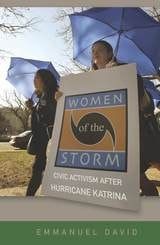
Women of the Storm
Civic Activism after Hurricane KatrinaEmmanuel David
University of Illinois Press, 2017

Women on Ice
Methamphetamine Use among Suburban WomenMiriam Boeri
Rutgers University Press, 2013
2013 Choice Outstanding Academic Title
Methamphetamine (ice, speed, crystal, shard) has been called epidemic in the United States. Yet few communities were ready for increased use of methamphetamine by suburban women. Women on Ice is the first book to study exclusively the lives of women who use the drug and its effects on their families.
In-depth interviews with women in the suburban counties of one of the largest metropolitan areas in the U.S. chronicle the details of their initiation into methamphetamine, the turning points into problematic drug use, and for a few, their escape from lives veering out of control. Their life course and drug careers are analyzed in relation to the intersecting influences of social roles, relationships, social/political structures, and political trends. Examining the effects of punitive drug policy, inadequate social services, and looming public health risks, including HIV/AIDS and hepatitis C, the book gives voice to women silenced by shame.
Boeri introduces new and developing concepts in the field of addiction studies and proposes policy changes to more broadly implement initiatives that address the problems these women face. She asserts that if we are concerned that the war on drugs is a war on drug users, this book will alert us that it is also a war on suburban families.
Women on the Polish Labor Market
Henryk Domanski
Central European University Press, 2001

Won't You be My Neighbor
Race, Class, and Residence in Los AngelesCamille Zubrinksy Charles
Russell Sage Foundation, 2006

Wood Quay
The Clash over Dublin's Viking PastBy Thomas F. Heffernan
University of Texas Press, 1988
An urban archaeologist working anywhere in the world can imagine this scenario: armed with a small digging tool and a soft brush, the archaeologist stands at a freshly cut trench facing off a construction crew driving bulldozers. At stake is the past—the discovery and preservation of our history. Across the gap is the future—progress and new buildings for a modern world. A battle ensues. It happened in Dublin in the early 1960s.
While investigating and salvage-excavating the site for a new municipal office complex, archaeologists made one of the most important and exciting discoveries in Ireland’s history. Buried beneath the present-day city of Dublin was the original Viking settlement from the ninth or tenth century, in an extraordinary state of preservation: houses, undecayed wood, domestic furniture, jewelry, toys, tools, works of art, coins, plots, paths, a veritable map of the medieval town. Because of its impressive size and state of preservation, the site known as Wood Quay was not an “ordinary” kind of archaeological discovery, nor was the battle that followed typical.
What made Wood Quay unique was that its defender was not the archaeological authority—the National Museum of Ireland—as is usually the case, but rather a spontaneously formed movement of thousands of Dubliners. While the museum was ready to turn the site over to the city’s developers after routine salvage work had been done, a group of prominent literary and political figures seized Wood Quay, holding it for almost a month and preventing bulldozers from moving in. Realizing the significance of the find, the people of Dublin took charge and kept the builders at bay for eight years. At the same time, they were able to press the museum to return to its archaeological work there. Archaeologists ultimately were able to complete good maps of a large portion of the site and recover between one and two million artifacts.
Today, the completed Dublin civic office complex stands on the Wood Quay site, fully landscaped and without a trace of the archaeological gold mine that once lay buried below. What does remain, however, is the memory of the powerful impact the citizens of Dublin had in demanding and establishing the connection through Wood Quay to their medieval roots.
Of interest to archaeologists, historic preservationists, and city planners alike, this fascinating and beautifully written account will also engage the general reader.

Work Of Cities
Susan E. Clarke
University of Minnesota Press, 1998
Examines the new role of cities in a global economy.
Are cities obsolete relics of an earlier era? In this pathbreaking book, Susan E. Clarke and Gary L. Gaile contend that contrary to this conventional wisdom, cities are growing in importance. Far from irrelevant, local governments are vital political arenas for the new work of cities-empowering their citizens to adapt and serve as catalysts for the global economy.
Using Robert Reich’s The Work of Nations as a point of departure, the authors argue that globalism, coupled with increasing disparities of wealth and power, changes not only the work of nations but also the role of communities. Clarke and Gaile begin by detailing the transformation of the United States to a postindustrial economy situated in a “global web.” They then examine the emergence of local entrepreneurial policy choices in the context of economic and political restructuring and in the absence of federal resources. Using empirical data to test assumptions about what leads cities to choose new policies, Clarke and Gaile explore local context through four case studies: Cleveland, Tacoma, Syracuse, and Jacksonville. They discuss human capital as the linchpin of globalization, arguing that analytical ability, information skills, and the capacity to innovate are all key to wealth creation. In conclusion, they contend that inattention to the decline in human and social capital will ultimately undermine any local development efforts-unless local policymakers craft responses to globalization that integrate rather than isolate citizens.The Work of Cities is both bold and nuanced, pragmatic yet compassionate in its recommendations. It is essential reading for anyone who cares about the fate of our metropolitan communities and the people who live there. 0-8166-2892-0 Cloth $47.95xx0-8166-2893-9 Paper $18.95240 pages 9 tables, 2 figures 5 7/8 x 9 July Globalization and Community Series, volume 1Translation inquiries: University of Minnesota Press
Work and Family in the United States
A Critical Review and Agenda for Research and PolicyRosabeth Moss Kanter
Russell Sage Foundation, 1977
Work, Retire, Repeat
The Uncertainty of Retirement in the New EconomyTeresa Ghilarducci
University of Chicago Press, 2024
A damning portrait of the dire realities of retirement in the United States—and how we can fix it.
While the French went on strike in 2023 to protest the increase in the national retirement age, workers in the United States have all but given up on the notion of dignified retirement for all. Instead, Americans—whose elders face the highest risk of poverty compared to workers in peer nations—are fed feel-good stories about Walmart clerks who can finally retire because a customer raised the necessary funds through a GoFundMe campaign.
Many argue that the solution to the financial straits of American retirement is simple: people need to just work longer. Yet this call to work longer is misleading in a multitude of ways, including its endangering of the health of workers and its discrimination against people who work in lower-wage occupations. In Work, Retire, Repeat, Teresa Ghilarducci tells the stories of elders locked into jobs—not because they love to work but because they must.
But this doesn’t need to be the reality. Work, Retire, Repeat shows how relatively low-cost changes to how we finance and manage retirement will allow people to truly choose how they spend their golden years.

Workers Like All the Rest of Them
Domestic Service and the Rights of Labor in Twentieth-Century ChileElizabeth Quay Hutchison
Duke University Press, 2022
Working Knowledge
Skill and Community in a Small ShopDouglas Harper
University of Chicago Press, 1987

Working Law
Courts, Corporations, and Symbolic Civil RightsLauren B. Edelman
University of Chicago Press, 2016
One reason for the limited success of antidiscrimination policies, argues Lauren B. Edelman, is that the law regulating companies is broad and ambiguous, and managers therefore play a critical role in shaping what it means in daily practice. Often, what results are policies and procedures that are largely symbolic and fail to dispel long-standing patterns of discrimination. Even more troubling, these meanings of the law that evolve within companies tend to eventually make their way back into the legal domain, inconspicuously influencing lawyers for both plaintiffs and defendants and even judges. When courts look to the presence of antidiscrimination policies and personnel manuals to infer fair practices and to the presence of diversity training programs without examining whether these policies are effective in combating discrimination and achieving racial and gender diversity, they wind up condoning practices that deviate considerably from the legal ideals.

Working Women in Mexico City
Public Discourses and Material Conditions, 1879-1931Susie S. Porter
University of Arizona Press, 2003

Working in Music on the Semiperiphery
Local Cultural Production and Global CapitalismEmília Barna
Central European University Press, 2025
This book embraces the widest possible range of workers in the music industry. It deals with all music genres from high-flying to commercial and observes various workers in the production chain beyond musicians. Niche segments of the sector, such as YouTube-based commercial hip hop, are given special treatment. Using a variety of empirical research methods, the study examines the trends as workers are pushed towards digital entrepreneurship and platform work, on the one hand, and live performance, on the other. The focus on domestic work and informality offers a feminist analysis of work in music. This approach sheds light on gendered divisions of labor and forms of (self-)exploitation that usually remain invisible. The book proposes a new model of cultural autonomy that takes account of the semiperipheral relationship of music industry workers and institutions to both the market and the state.

Working in a 24/7 Economy
Challenges for American FamiliesHarriet B. Presser
Russell Sage Foundation, 2003
Working the Difference
Science, Spirit, and the Spread of Motivational InterviewingE. Summerson Carr
University of Chicago Press, 2023
Motivational interviewing (MI) is a professional practice, a behavioral therapy, and a self-professed conversation style that encourages clients to talk themselves into change. Originally developed to treat alcoholics, MI quickly spread into a variety of professional fields including corrections, medicine, and sanitation. In Working the Difference, E. Summerson Carr focuses on the training and dissemination of MI to explore how cultural forms—and particularly forms of expertise—emerge and spread. The result is a compelling analysis of the American preoccupations at MI’s core, from democratic autonomy and freedom of speech to Protestant ethics and American pragmatism.
Working, Shirking, and Sabotage
Bureaucratic Response to a Democratic PublicJohn Brehm and Scott Gates
University of Michigan Press, 1999
World Patterns in Modern Urban Change
Essays in Honor of Chauncey D. HarrisEdited by Michael P. Conzen
University of Chicago Press, 1986

World War and World Peace in the Age of Digital Capitalism
By Christian Fuchs
University of Westminster Press, 2025
In World War and World Peace in the Age of Digital Capitalism, Christian Fuchs asks: how do violence and war manifest themselves in global digital capitalism? How do digital capitalism and digital technologies manifest themselves in violence and warfare? What are the prospects for world peace today?
To prevent world war and advance world peace we need a better understanding of war and violence and their contexts and causes. We need to ask what war is, what violence is, what war and peace look like today and how they have changed in the 21st century. This book addresses these urgent questions and provides possible answers.