Results by title
18284 books match the query 'United States' and 882 start with w
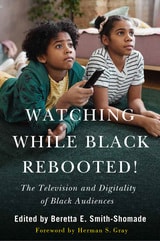
Watching While Black Rebooted!
The Television and Digitality of Black AudiencesBeretta E. Smith-Shomade
Rutgers University Press, 2024
Chapters rethink such historically significant programs as Roots and Underground, such seemingly innocuous programs as Soul Food, and such contemporary and culturally complicated programs as Being Mary Jane and Atlanta. The book makes a case for the centrality of these programs while always recognizing the racial dynamics that continue to shape Black representation on the small screen. Painting a decidedly introspective portrait across forty years of Black television, Watching While Black Rebooted sheds much-needed light on under examined demographics, broadens common audience considerations, and gives deference to the preferences of audiences and producers of Black-targeted programming.
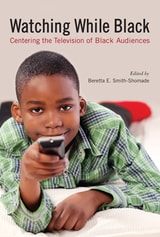
Watching While Black
Centering the Television of Black AudiencesSmith-Shomade, Beretta E
Rutgers University Press, 2013
2013 Choice Outstanding Academic Title
Television scholarship has substantially ignored programming aimed at Black audiences despite a few sweeping histories and critiques. In this volume, the first of its kind, contributors examine the televisual diversity, complexity, and cultural imperatives manifest in programming directed at a Black and marginalized audience.
Watching While Black considers its subject from an entirely new angle in an attempt to understand the lives, motivations, distinctions, kindred lines, and individuality of various Black groups and suggest what television might be like if such diversity permeated beyond specialized enclaves. It looks at the macro structures of ownership, producing, casting, and advertising that all inform production, and then delves into television programming crafted to appeal to black audiences—historic and contemporary, domestic and worldwide.
Chapters rethink such historically significant programs as Roots and Black Journal, such seemingly innocuous programs as Fat Albert and bro’Town, and such contemporary and culturally complicated programs as Noah’s Arc, Treme, and The Boondocks. The book makes a case for the centrality of these programs while always recognizing the racial dynamics that continue to shape Black representation on the small screen. Painting a decidedly introspective portrait across forty years of Black television, Watching While Black sheds much-needed light on under-examined demographics, broadens common audience considerations, and gives deference to the the preferences of audiences and producers of Black-targeted programming.
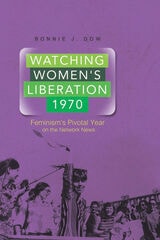
Watching Women's Liberation, 1970
Feminism's Pivotal Year on the Network NewsBonnie J. Dow
University of Illinois Press, 2014
In Watching Women's Liberation, 1970: Feminism's Pivotal Year on the Network News, Bonnie J. Dow uses case studies of key media events to delve into the ways national TV news mediated the emergence of feminism's second wave. First legitimized as a big story by print media, the feminist movement gained broadcast attention as the networks’ eagerness to get in on the action was accompanied by feminists’ efforts to use national media for their own purposes. Dow chronicles the conditions that precipitated feminism's new visibility and analyzes the verbal and visual strategies of broadcast news discourses that tried to make sense of the movement.
Groundbreaking and packed with detail, Watching Women's Liberation, 1970 shows how feminism went mainstream--and what it gained and lost on the way.
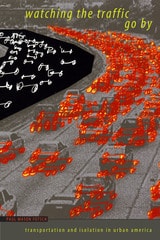
Watching the Traffic Go By
Transportation and Isolation in Urban AmericaBy Paul Mason Fotsch
University of Texas Press, 2007
2007 — Jane Jacobs Urban Communication Publication Award – Urban Communication Foundation
As twentieth-century city planners invested in new transportation systems to deal with urban growth, they ensured that the automobile rather than mass transit would dominate transportation. Combining an exploration of planning documents, sociological studies, and popular culture, Paul Fotsch shows how our urban infrastructure developed and how it has shaped American culture ever since.
Watching the Traffic Go By emphasizes the narratives underlying our perceptions of innovations in transportation by looking at the stories we have built around these innovations. Fotsch finds such stories in the General Motors "Futurama" exhibit at the 1939 World's Fair, debates in Munsey's magazine, films such as Double Indemnity, and even in footage of the O. J. Simpson chase along Los Angeles freeways.
Juxtaposed with contemporaneous critiques by Lewis Mumford, Theodor Adorno, and Max Horkheimer, Fotsch argues that these narratives celebrated new technologies that fostered stability for business and the white middle class. At the same time, transportation became another system of excluding women and the poor, especially African Americans, by isolating them in homes and urban ghettos.
A timely, interdisciplinary analysis, Watching the Traffic Go By exposes the ugly side of transportation politics through the seldom-used lens of popular culture.
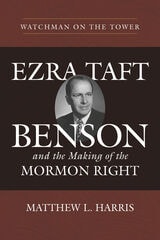
Watchman on the Tower
Ezra Taft Benson and the Making of the Mormon RightMatthew L. Harris
University of Utah Press, 2020
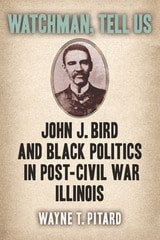
Watchman, Tell Us
John J. Bird and Black Politics in Post-Civil War IllinoisWayne T. Pitard
Southern Illinois University Press, 2024
The most influential Black leader in 19th century southern Illinois
This key biography of John J. Bird unveils the forgotten story of a remarkable Black political figure in post-Civil War Illinois. Emerging as a leader in Cairo, the city with Illinois’ second-largest Black community, Bird played a pivotal role in advancing civil rights within the state, also becoming Illinois’ first Black elected judge and first Black trustee of the University of Illinois. Watchman, Tell Us deftly examines Bird’s lifetime of service and advocacy for a vulnerable community and the ways in which he successfully advocated for and protected voting rights, educational opportunity, and public access for the Black residents of southern Illinois.
Bird arrived in Cairo at age twenty during the Civil War to aid the 2,000 Black refugees from the South living there. By 1870, he had established the city’s substantial Black Republican wing, providing the Black community with unprecedented political influence in this hostile, majority white, Democratic town. Under Bird’s leadership, the Black Republicans pressed for policies that improved the well-being of the African American population, including the early establishment of a Black public school, the rise of an integrated judicial system, and the ability to access public and private businesses. Bird became influential across Illinois as a judge and university trustee, a leader in the Black convention movement, and a significant newspaper editor in Cairo and Springfield. When Bird died in 1912, the nation he loved had once again betrayed its Black citizens, and it appeared that most of the achievements he had fought for had collapsed. But the work of Bird and the other civil rights workers of the nineteenth century created the foundation upon which the movements of the twentieth century could stand.

Water Panthers, Bears, and Thunderbirds
Exploring Wisconsin's Effigy MoundsBobbie Malone and Amy Rosebrough
Wisconsin Historical Society Press, 2003
Based on recent archaeological interpretation, this standards-based resource enriches material covered in Native People of Wisconsin. Water Panthers, Bears, and Thunderbirds introduces young readers to effigy mound sites in five southern Wisconsin counties. Suggested activities encourage students to graph, compare, contrast, and analyze the ways these mound groups vary from county to county.
Water Politics in Northern Nevada
A Century of Struggle, Second EditionLeah J. Wilds
University of Nevada Press, 2014
Water Politics in Northern Nevada examines the Newlands Project, its unintended consequences, and decades of litigation over the abatement of these problems and fair allocation of water. Negotiations and federal legislation brought about the Truckee River Operating Agreement in 2008. This revised edition brings the reader up to date on the implementation of the agreement, including ongoing efforts to preserve and enhance Pyramid Lake. The second edition now also includes a discussion of the Walker River basin, following a major project undertaken to address concerns about the health and viability of Walker Lake. The approaches taken to save these two desert treasures, Pyramid Lake and Walker Lake, are offered as models for resolving similar water-resource conflicts in the West.
Leah J. Wilds’s study is crucial reading for students and scholars of water politics and environmental issues, not just in Nevada but throughout the western United States.
Water Witching U.S.A.
Evon Z. Vogt and Ray Hyman
University of Chicago Press, 2000

Water and Agriculture in Colorado and the American West
First in Line for the Rio GrandeDavid Stiller
University of Nevada Press, 2021
David Stiller’s thoughtful study focuses on the history of agricultural water use of the Rio Grande in Colorado’s San Luis Valley. After surveying the practices of early farmers in the region, he focuses on the impacts of Euro-American settlement and the ways these new agrarians endeavored to control the river. Using the Rio Grande as a case study, Stiller offers an informed and accessible history of the development of practices and technologies to store, distribute, and exploit water in Colorado and other western states, as well as an account of the creation of water rights and laws that govern this essential commodity throughout the West to this day. Stiller’s work ranges from meticulously monitored fields of irrigated alfalfa and potatoes to the local and state water agencies and halls of Congress. He also includes perceptive comments on the future of western water as these arid states become increasingly urbanized during a period of worsening drought and climate change.
An excellent read for anyone curious about important issues in the West, Water and Agriculture in Colorado and the American West offers a succinct summary and analysis of Colorado’s use of water by agricultural interests, in addition to a valuable discussion of the past, present, and future of struggles over this necessary and endangered resource.
Water in the Hispanic Southwest
A Social and Legal History, 1550-1850Michael C. Meyer
University of Arizona Press, 1984
Waterfront Porch
Reclaiming Detroit's Industrial Waterfront as a Gathering Place for AllJohn H. Hartig
Michigan State University Press, 2019

Waterfront Workers of New Orleans
Race, Class, and Politics, 1863-1923Eric Arnesen
University of Illinois Press, 1991
Winner of the John H. Dunning Prize in United States History
During the nineteenth century, American and foreign travelers often found New Orleans a delightful, exotic stop on their journeys. Few failed to marvel at the riverfront, the center of the city's economic activity. But historical memory overlooks the immigrants and Black migrants who served in the riverfront's army of laborers and provided the essential human power that kept the cotton, sugar, and other goods flowing. Eric Arnesen examines the diverse group of 10,000 to 15,000 cotton screwmen, longshoremen, cotton and round freight teamsters, cotton yardmen, railroad freight handlers, and Mississippi River roustabouts that formed the backbone of the Crescent City's trade and economic life.
Waterfront Workers
New Perspectives on Race and ClassEdited by Calvin Winslow
University of Illinois Press, 1998
Watergate Prosecutor
William H. Merrill
Michigan State University Press, 2008
DC. Both of these crimes were eventually traced back to the "plumbers unit," which was directed by John Ehrlichman, President Nixon's top domestic aide. As he convincingly recounts, Merrill sought the job as Assistant Special Prosecutor for one reason: to bring these criminals to justice. In addition, as this revelatory account makes clear, he pursued that goal tenaciously.
Watergate's Legacy and the Press
The Investigative ImpulseJon Marshall
Northwestern University Press, 2011
Bob Woodward and Carl Bernstein symbolize an era when investigative reporters were seen as courageous fighters of corruption and injustice. Although many mainstream news outlets no longer have the resources to support expensive investigative reporters on staff, journalists have found other ways to support themselves Marshall’s discussion of the opportunities they have found in blogs, crowd-sourcing, and nonprofit institutions offers hope for the future of investigative journalism.
Waves of Decolonization
Discourses of Race and Hemispheric Citizenship in Cuba, Mexico, and the United StatesDavid Luis-Brown
Duke University Press, 2008
Luis-Brown traces unfolding narratives of decolonization across a broad range of texts. He explores how Martí and Du Bois, known as the founders of Cuban and black nationalisms, came to develop anticolonial discourses that cut across racial and national divides. He illuminates how cross-fertilizations among the Harlem Renaissance, Mexican indigenismo, and Cuban negrismo in the 1920s contributed to broader efforts to keep pace with transformations unleashed by ongoing conflicts over imperialism, and he considers how those transformations were explored in novels by McKay of Jamaica, Jesús Masdeu of Cuba, and Miguel Ángel Menéndez of Mexico. Focusing on ethnography’s uneven contributions to decolonization, he investigates how Manuel Gamio, a Mexican anthropologist, and Zora Neale Hurston each adapted metropolitan social science for use by writers from the racialized periphery.
Waves of Discontent
Electoral Volatility, Public Policymaking, and the Health of American DemocracyJacob F.H. Smith
University of Michigan Press, 2025
Conducting statistical analyses of a wide array of surveys, Smith found that these feelings of displeasure translate to lower turnout among voters from the president’s party and a higher percentage of independents voting for the other party. Subsequently, he conducted a content analysis of New York Times articles to look at the connection between unrest in American society and seat swings in congressional elections, even before the existence of polling. Examining the consequences of volatility in congressional elections reveals that political amateurs are more likely to win in wave years than in normal years. Based on this data, Smith presents a new theory about the policy process—the policy doom loop—in which frustration among voters at both the inability of Congress to pass policy and anger at policies that actually do pass results in even more churn in congressional elections. Waves of Discontent offers some suggestions to promote constructive policymaking efforts in Washington to reduce frustration in the electorate.

Waves of Opposition
Labor and the Struggle for Democratic RadioElizabeth Fones-Wolf
University of Illinois Press, 2006
Radio sparked the massive upsurge of organized labor during the Great Depression. The powerful new medium became an important weapon in the ideological war between labor and business. Corporations used radio to sing the praises of individualism and consumerism, while unions emphasized equal rights, industrial democracy, and social justice.
Elizabeth Fones-Wolf analyzes the battle to utilize, and control, the airwaves in radio's early era. Working chronologically, she explores the advent of local labor radio stations such as WCFL and WEVD, labor's campaigns against corporate censorship, and union experiments with early FM broadcasting. Using union archives and broadcast industry records, Fones-Wolf demonstrates radio's key role in organized labor's efforts to fight business's domination of political discourse throughout the 1930s, 1940s, and 1950s. She concludes with a look at how labor's virtual disappearance from today's media helps explain why unions have become so marginalized, and offers important historical lessons for revitalizing organized labor.
Wayne Aspinall and the Shaping of the American West
Steven C. Schulte
University Press of Colorado, 2002
In Wayne Aspinall and the Shaping of the American West, Steven C. Schulte details a political career that encompassed some of the most crucial years in the development of the twentieth-century West. As chairman of the House Interior and Insular Affairs Committee from 1959 to 1973, Aspinall shaped the nation's reclamation, land, wilderness, and natural resource policies. His crusty and dtermined personality was at the enter of some of the key environmental battles of the twentieth century, including the Echo Park Dam fight, the struggle for the Wilderness Act, and the long controversy over the Central Arizona Project.
Ways to the West
How Getting Out of Our Cars Is Reclaiming America's FrontierTim Sullivan
Utah State University Press, 2015
In Ways to the West, Tim Sullivan embarks on a car-less road trip through the Intermountain West, exploring how the region is taking on what may be its greatest challenge: sustainable transportation. Combining personal travel narrative, historical research, and his professional expertise in urban planning, Sullivan takes a critical yet optimistic and often humorous look at how contemporary Western cities are making themselves more hospitable to a life less centered on the personal vehicle.
The modern West was built by the automobile, but so much driving has jeopardized the West’s mystic hold on the American future. At first, automobility heightened the things that made the West great, but love became dependence, and dependence became addiction. Via his travels by bicycle, bus, and train through Las Vegas, Phoenix, Denver, Boise, Salt Lake City, and Portland, Sullivan captures the modern transportation evolution taking place across the region and the resulting ways in which contemporary Western communities are reinterpreting classic American values like mobility, opportunity, adventure, and freedom.
Finding a West created, lost, and reclaimed, Ways to the West will be of great interest to anyone curious about sustainable transportation and the history, geography, and culture of the American West.
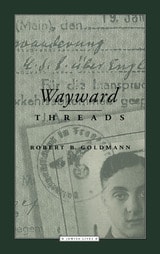
Wayward Threads
Robert Goldmann
Northwestern University Press, 1998
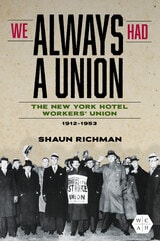
We Always Had a Union
The New York Hotel Workers' Union, 1912-1953Shaun Richman
University of Illinois Press, 2025
From the start, New York’s organized hotel workers experimented with and adapted how they organized and governed members and related to other labor unions. Richman follows union fortunes from early IWW activity through the Communist-led affiliates of the American Federation of Labor in the 1920s and 1930s, the shaping of breakthrough negotiating strategies, and the postwar era. As Richman shows, workers adopted a radicalism and militancy seldom associated with an AFL organization while openly negotiating the Communist Party’s power and influence within the union, until the Party’s eclipse in the 1950s.
An inspiring story of action and perseverance, We Always Had a Union profiles a foundational American labor union and offers lessons for today’s workers and organizers.
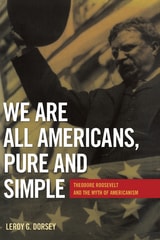
We Are All Americans, Pure and Simple
Theodore Roosevelt and the Myth of AmericanismLeroy G. Dorsey
University of Alabama Press, 2008
Redefining American identity through Roosevelt’s words.
The turn of the 20th century represented one of the most chaotic periods in the nation's history, as immigrants, Native Americans, and African Americans struggled with their roles as Americans while white America feared their encroachments on national identity. This book examines Theodore Roosevelt’s public rhetoric—speeches, essays, and narrative histories—as he attempted to craft one people out of many. Leroy G. Dorsey observes that Roosevelt's solution to the problem appeared straightforward: everyone could become "Americans, pure and simple" if they embraced his notion of "Americanism." Roosevelt grounded his idea of Americanism in myth, particularly the frontier myth—a heroic combination of individual strength and character. When nonwhites and immigrants demonstrated these traits, they would become true Americans, earning an exalted status that they had heretofore been denied.
Dorsey’s analysis illuminates how Roosevelt's rhetoric achieved a number of delicate, if problematic, balancing acts. Roosevelt gave his audiences the opportunity to accept a national identity that allowed "some" room for immigrants and nonwhites, while reinforcing their status as others, thereby reassuring white Americans of their superior place in the nation. Roosevelt’s belief in an ordered and unified nation did not overwhelm his private racist attitudes, Dorsey argues, but certainly competed with them. Despite his private sentiments, he recognized that racist beliefs and rhetoric were divisive and bad for the nation’s progress. The resulting message he chose to propagate was thus one of a rhetorical, if not literal, melting pot.
By focusing on Roosevelt’s rhetorical constructions of national identity, as opposed to his personal exploits or his role as a policy maker, We Are All Americans offers new insights into Roosevelt’s use of public discourse to bind the nation together during one of the most polarized periods in its history.
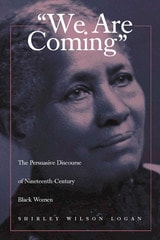
We Are Coming
The Persuasive Discourse of Nineteenth-Century Black WomenShirley Wilson Logan
Southern Illinois University Press, 1999
Shirley Wilson Logan analyzes the distinctive rhetorical features in the persuasive discourse of nineteenth-century black women, concentrating on the public discourse of club and church women from 1880 until 1900.
Logan develops each chapter in this illustrated study around a feature of public address as best exemplified in the oratory of a particular woman speaker of the era. She analyzes not only speeches but also editorials, essays, and letters.
Logan first focuses on the prophetic oratory of Maria Stewart, the first American-born black woman to speak publicly. Turning to Frances Harper, she considers speeches that argue for common interests between divergent communities. And she demonstrates that central to the antilynching rhetoric of Ida Wells is the concept of "presence," or the tactic of enhancing certain selected elements of the presentation.
In her discussion of Fannie Barrier Williams and Anna Cooper, Logan shows that when speaking to white club women and black clergymen, both Williams and Cooper employ what Kenneth Burke called identification. To analyze the rhetoric of Victoria Matthews, she applies Carolyn Miller's modification of Lloyd Bitzer's concept of the rhetorical situation.
Logan also examines the discourse of women associated with the black Baptist women's movement and those participating in college-affiliated conferences.
The book includes an appendix with little-known speeches and essays by Anna Julia Cooper, Selena Sloan Butler, Lucy Wilmot Smith, Mary V. Cook, Adella Hunt Logan, Victoria Earle Matthews, Lucy C. Laney, and Georgia Swift King.
We Are Having This Conversation Now
The Times of AIDS Cultural ProductionAlexandra Juhasz and Theodore Kerr
Duke University Press, 2022
We Are Left without a Father Here
Masculinity, Domesticity, and Migration in Postwar Puerto RicoEileen J. Suárez Findlay
Duke University Press, 2015
We Are Meant to Rise
Voices for Justice from Minneapolis to the WorldCarolyn Holbrook
University of Minnesota Press, 2021
A brilliant and rich gathering of voices on the American experience of this past year and beyond, from Indigenous writers and writers of color from Minnesota
In this significant collection, Indigenous writers and writers of color bear witness to one of the most unsettling years in the history of the United States. Essays and poems vividly reflect and comment on the traumas we endured in 2020, beginning with the arrival of the COVID-19 pandemic crisis, deepened by the blatant murder of George Floyd by Minneapolis police officers and the uprisings that immersed our city into the epicenter of passionate, worldwide demands for justice. In inspired and incisive writing these contributors speak unvarnished truths not only to the original and pernicious racism threaded through the American experience but also to the deeply personal, in essays about family, loss, food culture, economic security, and mental health. Their call and response is united here to rise and be heard.
We Are Meant to Rise lifts up the astonishing variety of BIPOC writers in Minnesota. From authors with international reputations to newly emerging voices, it features people from many cultures, including Indigenous Dakota and Anishinaabe, African American, Hmong, Somali, Afghani, Lebanese, Korean, Vietnamese, Japanese, Puerto Rican, Colombian, Mexican, transracial adoptees, mixed race, and LGBTQ+ perspectives. Most of the contributors have participated in More Than a Single Story, a popular and insightful conversation series in Minneapolis that features Indigenous and people of color speaking on what most concerns their communities.
We Are Meant to Rise meets the events of the day, the year, the centuries before, again and again, with powerful testament to the intrinsic and unique value of the human voice.
Contributors: Suleiman Adan, Mary Moore Easter, Louise Erdrich, Anika Fajardo, Safy-Hallan Farah, Said Farah, Sherrie Fernandez-Williams, Pamela R. Fletcher Bush, Shannon Gibney, Kathryn Haddad, Tish Jones, Ezekiel Joubert III, Douglas Kearney, Ed Bok Lee, Ricardo Levins Morales, Arleta Little, Resmaa Menakem, Tess Montgomery, Ahmad Qais Munhazim, Melissa Olson, Alexs Pate, Bao Phi, Mona Susan Power, Samantha Sencer-Mura, Said Shaiye, Erin Sharkey, Sun Yung Shin, Michael Torres, Diane Wilson, Kao Kalia Yang, and Kevin Yang.

We Are Not Dreamers
Undocumented Scholars Theorize Undocumented Life in the United StatesLeisy J. Abrego and Genevieve Negrón-Gonzales, editors
Duke University Press, 2020
Contributors. Leisy J. Abrego, Gabrielle Cabrera, Gabriela Garcia Cruz, Lucía León, Katy Joseline Maldonado Dominguez, Grecia Mondragón, Gabriela Monico, Genevieve Negrón-Gonzales, Maria Liliana Ramirez, Joel Sati, Audrey Silvestre, Carolina Valdivia
We Are What We Drink
The Temperance Battle in MinnesotaSabine N. Meyer
University of Illinois Press, 2015
Meyer examines the ever-shifting ways that ethnicity, gender, class, religion, and place interacted with each other during the long temperance battle in Minnesota. Her deconstruction of Irish and German ethnic positioning with respect to temperance activism provides a rare interethnic history of the movement. At the same time, she shows how women engaged in temperance work as a way to form public identities and reforges the largely neglected, yet vital link between female temperance and suffrage activism. Relatedly, Meyer reflects on the continuities and changes between how the movement functioned to construct identity in the heartland versus the movement's more often studied roles in the East. She also gives a nuanced portrait of the culture clash between a comparatively reform-minded Minneapolis and dynamic anti-temperance forces in whiskey-soaked St. Paul--forces supported by government, community, and business institutions heavily invested in keeping the city wet.
We Are What We Drink
The Temperance Battle in MinnesotaSabine N Meyer
University of Illinois Press, 2018
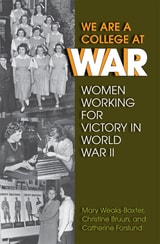
We Are a College at War
Women Working for Victory in World War IIMary Weaks-Baxter, Christine Bruun, and Catherine Forslund
Southern Illinois University Press, 2010
We Are a College at War weaves together the individual World War II experiences of students and faculty at the all-female Rockford College (now Rockford University) in Rockford, Illinois, to draw a broader picture of the role American women and college students played during this defining period in U.S. history. It uses the Rockford community’s letters, speeches, newspaper stories, and personal recollections to demonstrate how American women during the Second World War claimed the right to be everywhere—in factories and other traditionally male workplaces, and even on the front lines—and links their efforts to the rise of feminism and the fight for women’s rights in the 1960s and 1970s.
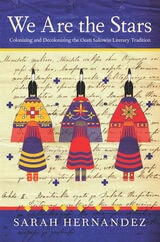
We Are the Stars
Colonizing and Decolonizing the Oceti Sakowin Literary TraditionSarah Hernandez
University of Arizona Press, 2023
Women and land form the core themes of the book, which brings tribal and settler colonial narratives into comparative analysis. Divided into two parts, the first section of the work explores how settler colonizers used the printing press and boarding schools to displace Oceti Sakowin women as traditional culture keepers and culture bearers with the goal of internally and externally colonizing the Dakota, Nakota, and Lakota nations. The second section focuses on decolonization and explores how contemporary Oceti Sakowin writers and scholars have started to reclaim Dakota, Nakota, and Lakota literatures to decolonize and heal their families, communities, and nations.
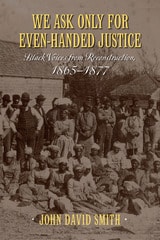
We Ask Only for Even-Handed Justice
Black Voices from Reconstruction, 1865-1877John David Smith
University of Massachusetts Press, 2014
The years following Appomattox offered the freed people numerous opportunities and challenges. Ex-slaves reconnected with relatives dispersed by the domestic slave trade and the vicissitudes of civil war. They sought their own farms and homesteads, education for their children, and legal protection from whites hostile to their new status. They negotiated labor contracts, established local communities, and, following the 1867 Reconstruction Acts, entered local, state, and national politics.
Though aided by Freedmen's Bureau agents and sympathetic whites, former slaves nevertheless faced daunting odds. Ku Klux Klansmen and others terrorized blacks who asserted themselves, many northerners lost interest in their plight, and federal officials gradually left them to their own resources. As a result, former Confederates regained control of the southern state governments following the 1876 presidential election.
We Ask Only for Even-Handed Justice is a substantially revised and expanded edition of a book originally published under the title Black Voices from Reconstruction, 1865–1877.
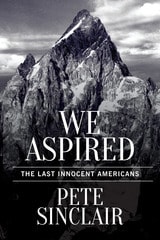
We Aspired
The Last Innocent AmericansPete Sinclair
University of Utah Press, 2017
Imbued with a sense of place, Pete Sinclair climbed mountains and rescued others trying the same. He thrived on the risky business of ascending sheer rock, of moving from one adrenaline-boosting moment to another. In this book he recounts his mountain-climbing and park ranger days from 1959 to 1970, a time some people call a golden era of climbing in America, a time when climbers knew one another and frequently gathered in Grand Teton National Park. There, Sinclair was the ranger in charge of mountain rescue, a job that, especially when it involved the North Face of Grand Teton, drew on all his young team’s climbing skills. Mixing adventure with personal reflection, Sinclair recounts expeditions taken with friends to scale mountains in Alaska, Mexico, and other parts of North America, as well as his work rescuing injured climbers in the Tetons. The book serves as a history of a past era in mountaineering as well as a meditation on what it all meant. Throughout the book, he challenges readers to consider their relationship with the western landscape. Originally published in 1993, We Aspired was a finalist for the Boardman-Tasker Award for Mountain Literature. The account of one famous rescue on the North Face of the Grand Teton is retold in The Grand Rescue, a film by independent Utah producer Jenny Wilson.
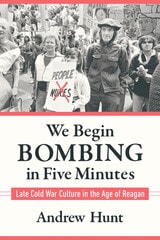
We Begin Bombing in Five Minutes
Late Cold War Culture in the Age of ReaganAndrew Hunt
University of Massachusetts Press, 2021
We Begin Bombing in Five Minutes focuses on a striking array of protest movements that took up issues such as the nuclear arms race, U.S. intervention in Central America, and American investments in South Africa. Hunt's new history of the eighties investigates how film, television, and other facets of popular culture critiqued Washington's Cold War policies and reveals that activists and cultural rebels alike posed a more meaningful challenge to the Cold War's excesses than their predecessors in the McCarthy era.
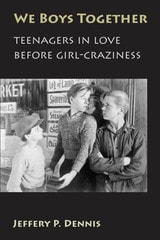
We Boys Together
Teenagers in Love Before Girl-CrazinessJeffery P. Dennis
Vanderbilt University Press, 2007
This book explores romantic relationships between teenage boys as they were portrayed before, during, and immediately after World War II. The author takes the reader through a rich landscape of media -- sci fi pulps, comics, adventure stories, tales of teen sleuths, boys' serial novels, wartime bestsellers, and movies populated by many types of male adolescents: Boys Next Door, Adventure Boys, Jungle Boys, and Lost Boys. In Hollywood movies, Boys Next Door like Jackie Cooper, Ronald Sinclair, and Jimmy Lydon were constantly falling in love, but not with girls. In serial novels, Jungle Boys like Bomba, Sorak, and Og Son of Fire swung through the trees to rescue teenage boys, not teenage girls. In comic strips and on the radio, Adventure Boys like Don Study, Jack Armstrong, and Tim Tyler formed lasting romantic partnerships with other boys or men. Lost Boys like Frankie Darro, Leo Gorcey, and Billy Halop starred in dozens of movies about pairs of poor urban teenagers sticking together, with never a girl in sight.
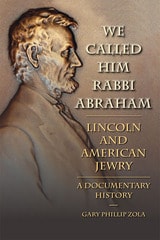
We Called Him Rabbi Abraham
Lincoln and American Jewry, a Documentary HistoryGary Phillip Zola
Southern Illinois University Press, 2014
Over the course of American history, Jews have held many American leaders in high esteem, but they maintain a unique emotional bond with Abraham Lincoln. From the time of his presidency to the present day, American Jews have persistently viewed Lincoln as one of their own, casting him as a Jewish sojourner and, in certain respects, a Jewish role model. This pioneering compendium— The first volume of annotated documents to focus on the history of Lincoln’s image, influence, and reputation among American Jews— considers how Lincoln acquired his exceptional status and how, over the past century and a half, this fascinating relationship has evolved.
Organized into twelve chronological and thematic chapters, these little-known primary source documents—many never before published and some translated into English for the first time—consist of newspaper clippings, journal articles, letters, poems, and sermons, and provide insight into a wide variety of issues relating to Lincoln’s Jewish connection. Topics include Lincoln’s early encounters with Central European Jewish immigrants living in the Old Northwest; Lincoln’s Jewish political allies; his encounters with Jews and the Jewish community as President; Lincoln’s response to the Jewish chaplain controversy; General U. S. Grant’s General Orders No. 11 expelling “Jews, as a class” from the Military Department of Tennessee; the question of amending the U.S. Constitution to legislate the country’s so-called Christian national character; and Jewish eulogies after Lincoln’s assassination. Other chapters consider the crisis of conscience that arose when President Andrew Johnson proclaimed a national day of mourning for Lincoln on the festival of Shavuot (the Feast of Weeks), a day when Jewish law enjoins Jews to rejoice and not to mourn; Lincoln’s Jewish detractors contrasted to his boosters; how American Jews have intentionally “Judaized” Lincoln ever since his death; the leading role that American Jews have played in in crafting Lincoln’s image and in preserving his memory for the American nation; American Jewish reflections on the question “What Would Lincoln Do?”; and how Lincoln, for America’s Jewish citizenry, became the avatar of America’s highest moral aspirations.
With thoughtful chapter introductions that provide readers with a context for the annotated documents that follow, this volume provides a fascinating chronicle of American Jewry’s unfolding historical encounter with the life and symbolic image of Abraham Lincoln, shedding light on how the cultural interchange between American ideals and Jewish traditions influences the dynamics of the American Jewish experience.
Finalist, 2014 National Jewish Book Award
Finalist, 2015 Ohioana Book Award
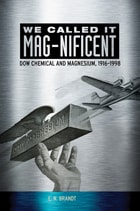
We Called it MAG-nificent
Dow Chemical and Magnesium, 1916-1998E. N. Brandt
Michigan State University Press, 2013

We Came Naked and Barefoot
The Journey of Cabeza de Vaca across North AmericaBy Alex D. Krieger
University of Texas Press, 2002
Second place, Presidio La Bahia Award, Sons of the Republic of Texas, 2003
Perhaps no one has ever been such a survivor as álvar Núñez Cabeza de Vaca. Member of a 600-man expedition sent out from Spain to colonize "La Florida" in 1527, he survived a failed exploration of the west coast of Florida, an open-boat crossing of the Gulf of Mexico, shipwreck on the Texas coast, six years of captivity among native peoples, and an arduous, overland journey in which he and the three other remaining survivors of the original expedition walked some 1,500 miles from the central Texas coast to the Gulf of California, then another 1,300 miles to Mexico City.
The story of Cabeza de Vaca has been told many times, beginning with his own account, Relación de los naufragios, which was included and amplified in Gonzalo Fernando de Oviedo y Váldez's Historia general de las Indias. Yet the route taken by Cabeza de Vaca and his companions remains the subject of enduring controversy. In this book, Alex D. Krieger correlates the accounts in these two primary sources with his own extensive knowledge of the geography, archaeology, and anthropology of southern Texas and northern Mexico to plot out stage by stage the most probable route of the 2,800-mile journey of Cabeza de Vaca.
This book consists of several parts, foremost of which is the original English version of Alex Krieger's dissertation (edited by Margery Krieger), in which he traces the route of Cabeza de Vaca and his companions from the coast of Texas to Spanish settlements in western Mexico. This document is rich in information about the native groups, vegetation, geography, and material culture that the companions encountered. Thomas R. Hester's foreword and afterword set the 1955 dissertation in the context of more recent scholarship and archaeological discoveries, some of which have supported Krieger's plot of the journey. Margery Krieger's preface explains how she prepared her late husband's work for publication. Alex Krieger's original translations of the Cabeza de Vaca and Oviedo accounts round out the volume.
We Cannot Escape History
Lincoln and the Last Best Hope of EarthEdited by James M. McPherson
University of Illinois Press, 1995
A who's who of Lincoln scholars explores why Lincoln considered the Union the "last best hope of earth" and how his words and deeds have continued to shape the nation through modern times. Focusing on Lincoln's view of American history and his legacy for the United States and the world, this volume demonstrates the complexity of the problems Lincoln faced and the genius of his leadership in preserving the nation while purging it of slavery.
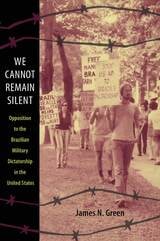
We Cannot Remain Silent
Opposition to the Brazilian Military Dictatorship in the United StatesJames N. Green
Duke University Press, 2010
Green interviewed many of the activists who educated journalists, government officials, and the public about the abuses taking place under the Brazilian dictatorship. Drawing on those interviews and archival research from Brazil and the United States, he describes the creation of a network of activists with international connections, the documentation of systematic torture and repression, and the cultivation of Congressional allies and the press. Those efforts helped to expose the terror of the dictatorship and undermine U.S. support for the regime. Against the background of the political and social changes of the 1960s and 1970s, Green tells the story of a decentralized, international grassroots movement that effectively challenged U.S. foreign policy.
We Carry Smoke and Paper
Essays on the Grief and Hope of ConversionMelody S. Gee
University of Iowa Press, 2024
In essays that explore the parallels between conversion and language acquisition, isolated liturgies, cultural inheritances, stalled initiations, disrupted storytelling, and adoption, Gee examines conversion’s grief and hope, losses and gains, hauntings and promises. We Carry Smoke and Paper is a memoir about what we owe to those who sacrifice everything for us, and it is about the many conversions in a lifetime that turn our heads via whispers and shouts, calling us to ourselves.
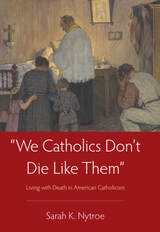
We Catholics Don't Die Like Them
Living with Death Before Vatican IISarah Nytroe
Catholic University of America Press, 2026
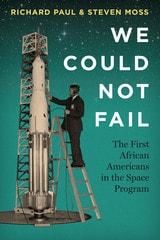
We Could Not Fail
The First African Americans in the Space ProgramBy Richard Paul and Steven Moss
University of Texas Press, 2015
The Space Age began just as the struggle for civil rights forced Americans to confront the long and bitter legacy of slavery, discrimination, and violence against African Americans. Presidents John F. Kennedy and Lyndon Johnson utilized the space program as an agent for social change, using federal equal employment opportunity laws to open workplaces at NASA and NASA contractors to African Americans while creating thousands of research and technology jobs in the Deep South to ameliorate poverty. We Could Not Fail tells the inspiring, largely unknown story of how shooting for the stars helped to overcome segregation on earth.
Richard Paul and Steven Moss profile ten pioneer African American space workers whose stories illustrate the role NASA and the space program played in promoting civil rights. They recount how these technicians, mathematicians, engineers, and an astronaut candidate surmounted barriers to move, in some cases literally, from the cotton fields to the launching pad. The authors vividly describe what it was like to be the sole African American in a NASA work group and how these brave and determined men also helped to transform Southern society by integrating colleges, patenting new inventions, holding elective office, and reviving and governing defunct towns. Adding new names to the roster of civil rights heroes and a new chapter to the story of space exploration, We Could Not Fail demonstrates how African Americans broke the color barrier by competing successfully at the highest level of American intellectual and technological achievement.
We Gon’ Be Alright
Resistance and Healing in Black Movement Spaces, 2012–2021Stephanie M. Crumpton
University of Arizona Press, 2025
Drawing on oral histories and personal narratives, Crumpton provides an intimate look at the lived experiences of thirty-seven full-time community organizers. These activists and organizers share their strategies for maintaining an ethic of care that sustains them while fighting against both external oppression and internal community struggles. The book highlights how contemporary Black resisters have leveraged a growing understanding of trauma and healing to enhance their activism. This blend of historical knowledge and modern therapeutic practices has equipped them with a broader array of tools to support their communities.
Rooted in womanist practical theology, We Gon’ Be Alright emphasizes the interconnectedness of white supremacy with other forms of oppression such as sexism, homophobia, and classism. Crumpton’s work underscores the necessity of “deep, deep healing” to address these multifaceted threats to Black life. This book is an essential resource for scholars, activists, and anyone interested in understanding the dynamics of Black resistance and healing in contemporary America. Through its detailed examination of the past decade, it offers valuable insights into the ongoing struggle for Black humanity, dignity, and a thriving future.
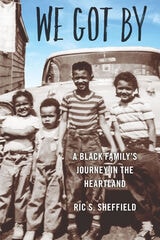
We Got By
A Black Family’s Journey in the HeartlandRic S. Sheffield
The Ohio State University Press, 2022
Spanning four generations and assessing the legacies of traumatic events (arrests, murders, suicide) that are inextricable from the racial dynamics of the small community his family called home, this gripping memoir is a heartfelt, clear-eyed, and rare chronicle of Black life in the rural Midwest. Experiencing the burden of racism among people who refused to accept that such a thing existed only made the isolation feel that much worse to Sheffield and his relatives. And yet, they overcame the obstacles and managed to persist: they got by.
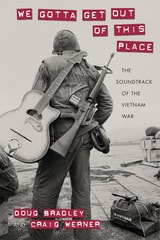
We Gotta Get Out of This Place
The Soundtrack of the Vietnam WarDoug Bradley
University of Massachusetts Press, 2015
Rolling Stone's #1 Music Book of 2015
For a Kentucky rifleman who spent his tour trudging through Vietnam's Central Highlands, it was Nancy Sinatra's “These Boots Are Made for Walkin'.” For a “tunnel rat” who blew smoke into the Viet Cong's underground tunnels, it was Jimi Hendrix's “Purple Haze.” For a Black Marine distraught over the assassination of Martin Luther King Jr., it was Aretha Franklin's “Chain of Fools.” And for countless other Vietnam vets, it was “I Feel Like I'm Fixin' to Die,” “Who'll Stop the Rain,” or the song that gives this book its title.
In We Gotta Get Out of This Place, Doug Bradley and Craig Werner place popular music at the heart of the American experience in Vietnam. They explore how and why U.S. troops turned to music as a way of connecting to each other and the World back home and of coping with the complexities of the war they had been sent to fight. They also demonstrate that music was important for every group of Vietnam veterans—black and white, Latino and Native American, men and women, officers and “grunts”—whose personal reflections drive the book's narrative. Many of the voices are those of ordinary soldiers, airmen, seamen, and marines. But there are also “solo” pieces by veterans whose writings have shaped our understanding of the war—Karl Marlantes, Alfredo Vea, Yusef Komunyakaa, Bill Ehrhart, Arthur Flowers—as well as songwriters and performers whose music influenced soldiers' lives, including Eric Burdon, James Brown, Bruce Springsteen, Country Joe McDonald, and John Fogerty. Together their testimony taps into memories—individual and cultural—that capture a central if often overlooked component of the American war in Vietnam.
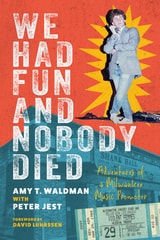
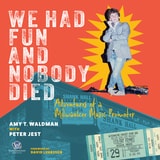
We Had Fun and Nobody Died
Adventures of a Milwaukee Music PromoterAmy T. Waldman
Wisconsin Historical Society Press, 2024
The entertaining and inspiring story of a stubbornly independent promoter and club owner
This irreverent biography provides a rare window into the music industry from a promoter’s perspective. From a young age, Peter Jest was determined to make a career in live music, and despite naysayers and obstacles, he did just that, bringing national acts to his college campus at UW–Milwaukee, booking thousands of concerts across Wisconsin and the Midwest, and opening Shank Hall, the beloved Milwaukee venue named after a club in the cult film This Is Spinal Tap.
This funny, nostalgia-inducing book details the lasting friendships Jest established over the years with John Prine, Arlo Guthrie, and Milwaukee’s own Violent Femmes, among others. It also shines a light into the seldom-seen world of music promotion, as Jest attempts to manage a turbulent band on the road, negotiates with agents, deals with fires (both real and metaphorical), struggles through a pandemic, and takes pleasure in presenting music of all kinds—from world-famous acts to up-and-coming local bands. In addition to photos of celebrated musicians, the book includes concert posters, tickets, and backstage passes documenting decades of rock, folk, and alternative shows that helped put Milwaukee on the live music map.
As the music industry has become dominated by profit-driven corporations, We Had Fun and Nobody Died chronicles the career of a one-of-a-kind independent promoter whose hardheadedness and love of music have helped him keep it real and make it in the music business for more than forty years.
"[An] adventure-filled biography of music promoter Peter Jest. . . . Reflecting decades of changes to the music business, We Had Fun and Nobody Died is a fascinating biography of a passionate promoter’s work to transform Milwaukee’s music scene."
—Foreword Reviews
“Amy Waldman and Peter Jest weave a thrilling tale of fanhood gone pro. Dreams followed, dragons slain, and the roof of a venerable venue repeatedly blown sky-high. We’re proud to have provided the name [for Shank Hall]; it took men and women of sterner stuff to do the heavy lifting.”
—Michael McKean, actor and comedian, This Is Spinal Tap
“We Had Fun and Nobody Died is a fantastic journey of a Midwest boy, his love of music, and his excitement to be part of it all.”
—Kevn Kinney, lead singer and guitarist of Drivin N Cryin
“Peter Jest’s story is one that conveys a winning combination of friendship, determination, and entrepreneurial insights that led him to a lifelong career in support of the live music industry and the community that comes together in common appreciation of it.”
—Shana Morrison, singer-songwriter
We Had Fun and Nobody Died
Adventures of a Milwaukee Music PromoterAmy T. Waldman
Wisconsin Historical Society Press, 2025
The entertaining and inspiring story of a stubbornly independent promoter and club owner
This irreverent biography provides a rare window into the music industry from a promoter’s perspective. From a young age, Peter Jest was determined to make a career in live music, and despite naysayers and obstacles, he did just that, bringing national acts to his college campus at UW–Milwaukee, booking thousands of concerts across Wisconsin and the Midwest, and opening Shank Hall, the beloved Milwaukee venue named after a club in the cult film This Is Spinal Tap.
This funny, nostalgia-inducing book details the lasting friendships Jest established over the years with John Prine, Arlo Guthrie, and Milwaukee’s own Violent Femmes, among others. It also shines a light into the seldom-seen world of music promotion, as Jest attempts to manage a turbulent band on the road, negotiates with agents, deals with fires (both real and metaphorical), struggles through a pandemic, and takes pleasure in presenting music of all kinds—from world-famous acts to up-and-coming local bands.
As the music industry has become dominated by profit-driven corporations, We Had Fun and Nobody Died chronicles the career of a one-of-a-kind independent promoter whose hardheadedness and love of music have helped him keep it real and make it in the music business for more than forty years.
"[An] adventure-filled biography of music promoter Peter Jest. . . . Reflecting decades of changes to the music business, We Had Fun and Nobody Died is a fascinating biography of a passionate promoter’s work to transform Milwaukee’s music scene."
—Foreword Reviews
“Amy Waldman and Peter Jest weave a thrilling tale of fanhood gone pro. Dreams followed, dragons slain, and the roof of a venerable venue repeatedly blown sky-high. We’re proud to have provided the name [for Shank Hall]; it took men and women of sterner stuff to do the heavy lifting.”
—Michael McKean, actor and comedian, This Is Spinal Tap
“We Had Fun and Nobody Died is a fantastic journey of a Midwest boy, his love of music, and his excitement to be part of it all.”
—Kevn Kinney, lead singer and guitarist of Drivin N Cryin
“Peter Jest’s story is one that conveys a winning combination of friendship, determination, and entrepreneurial insights that led him to a lifelong career in support of the live music industry and the community that comes together in common appreciation of it.”
—Shana Morrison, singer-songwriter