Results by title
991 books match the query 'Writing' and 149 start with w
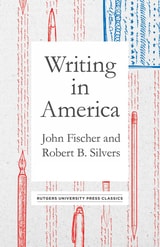
Writing in America
Fischer, John
Rutgers University Press, 2018
In this newly reissued volume in the Rutgers University Press Classics Imprint, Writing in America proves to be as stimulating as it was in 1960. Here, writers including Robert Brustein, Stanley Kunitz, and C.P. Snow examine the state of writing in American novels, films, and television candidly and critically. The result is a collection of essays that showcase a first-rate and highly entertaining piece of reporting on the American literary scene that resonate in 2017.
Writing in Dante's Cult of Truth
From Borges to BocaccioMaría Rosa Menocal
Duke University Press, 1991
Beginning with a reading of La vita nuova and the Commedia, this literary history of poetic literary histories explores the Dantean poetic experience as it has been limited and rewritten by later poets, particularly Petrarch, Boccaccio, Borges, Pound, Eliot, and the all but forgotten Silvio Pellico, author of Le mie prigioni. By blending discussions of Dante’s own marriage of literature and literary history with those investigations into the imitative qualities of later works, Writing in Dante’s Cult of Truth presents an intertextual literary history, one which seeks to maintain the uncanniness of literature, while imagining history to be neither linear nor clearly distinguishable from literature itself.

Writing in Disguise
Academic Life in SubordinationTerry Caesar
Ohio University Press, 1998
All of these texts have in common the imperative of disguise, represented as the most crucial consequence of dominant discourse, within which subordination might speak only by knowing its place, and write only by producing hidden transcripts.
Caustic, pointed, satiric, Writing in Disguise is an engaging critique of aspects of academia involving the misuse, misappropriation, and misappreciation of verbal communication in its many guises.
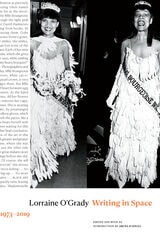
Writing in Space, 1973–2019
Lorraine O'Grady
Duke University Press, 2020
Writing in Time
Emily Dickinson's Master HoursMarta L. Werner
Amherst College Press, 2021
For more than half a century, the story of Emily Dickinson’s “Master” documents has been the largely biographical tale of three letters to an unidentified individual. Writing in Time seeks to tell a different story—the story of the documents themselves. Rather than presenting the “Master” documents as quarantined from Dickinson’s larger scene of textual production, Marta Werner’s innovative new edition proposes reading them next to Dickinson’s other major textual experiment in the years between ca. 1858–1861: the Fascicles. In both, Dickinson can be seen testing the limits of address and genre in order to escape bibliographical determination and the very coordinates of “mastery” itself. A major event in Dickinson scholarship, Writing in Time: Emily Dickinson’s Master Hours proposes new constellations of Dickinson’s work as well as exciting new methodologies for textual scholarship as an act of “intimate editorial investigation.”
Writing in and about the Performing and Visual Arts
Creating, Performing, and TeachingSteven J. Corbett
University Press of Colorado, 2020
Writing in the Academic Disciplines, Second Edition
A Curricular HistoryDavid R. Russell. Foreword by Elaine P. Maimon
Southern Illinois University Press, 2002
“To understand the ways students learn to write, we must go beyond the small and all too often marginalized component of the curriculum that treats writing explicitly and look at the broader, though largely tacit traditions students encounter in the whole curriculum,” explains David R. Russell, in the introduction to this singular study. The updated edition provides a comprehensive history of writing instruction outside general composition courses in American secondary and higher education, from the founding public secondary schools and research universities in the 1870s, through the spread of the writing-across-the-curriculum movement in the 1980s, through the WAC efforts in contemporary curriculums.
Writing in the Air
Heterogeneity and the Persistence of Oral Tradition in Andean LiteraturesAntonio Cornejo Polar
Duke University Press, 2013
Writing in the Devil's Tongue
A History of English Composition in ChinaXiaoye You
Southern Illinois University Press, 2010
Winner, CCCC Outstanding Book Award
Until recently, American composition scholars have studied writing instruction mainly within the borders of their own nation, rarely considering English composition in the global context in which writing in English is increasingly taught. Writing in the Devil’s Tongue challenges this anachronistic approach by examining the history of English composition instruction in an East Asian country. Author Xiaoye You offers scholars a chance to observe how a nation changed from monolingual writing practices to bilingual writing instruction in a school setting.
You makes extensive use of archival sources to help trace bilingual writing instruction in China back to 1862, when English was first taught in government schools. Treating the Chinese pursuit of modernity as the overarching theme, he explores how the entry of Anglo-American rhetoric and composition challenged and altered the traditional monolithic practice of teaching Chinese writing in the Confucian spirit. The author focuses on four aspects of this history: the Chinese negotiation with Anglo-American rhetoric, their search for innovative approaches to instruction, students’ situated use of English writing, and local scholarship in English composition.
Unlike previous composition histories, which have tended to focus on institutional, disciplinary, and pedagogical issues, Writing in the Devil’s Tongue brings students back to center stage by featuring several passages written by them in each chapter. These passages not only showcase rhetorical and linguistic features of their writings but also serve as representative anecdotes that reveal the complex ways in which students, responding to their situations, performed multivalent, intercultural discourses. In addition, You moves out of the classroom and into the historical, cultural, and political contexts that shaped both Chinese writing and composing practices and the pedagogies that were adopted to teach English to Chinese in China. Teachers, students, and scholars reading this book will learn a great deal about the political and cultural impact that teaching English composition has had in China and about the ways in which Chinese writing and composition continues to be shaped by rich and diverse cultural traditions and political discourses.
In showcasing the Chinese struggle with teaching and practicing bilingual composition, Writing in the Devil’s Tongue alerts American writing scholars and teachers to an outdated English monolingual mentality and urges them to modify their rhetorical assumptions, pedagogical approaches, and writing practices in the age of globalization.

Writing in the Feminine
Feminism and Experimental Writing in QuebecKaren Gould
Southern Illinois University Press, 1990
Here is a celebration and an analysis of four Québécois feminist rebels whose self-conscious revolt against language has put them at the forefront of experimental writing in Quebec. These women—Nicole Brossard, Madeleine Gagnon, Louky Bersianik, and France Theoret—are attempting to explode male-dominated language and to construct a new language and literature of women.
In this first major study of their work in English, Karen Gould examines in depth these women’s literary visions and the new ways in which they communicate those visions. Gould broadens her book’s appeal by showing how these four women’s works, in modern forms of experimental literature, are shaped not only by Quebec feminism, politics, and culture but by American and French influences as well.
Writing in the Margins
The Ethics of Expatriation from Lawrence to OndaatjeMarilyn Adler Papayanis
Vanderbilt University Press, 2005
Writing in the Workplace
New Research PerspectivesEdited by Rachel Spilka
Southern Illinois University Press, 1998
Rachel Spilka brings together nineteen previously unpublished essays concerned with ways in which recent research on workplace writing can contribute to the future direction of the discipline of technical and professional writing. Hers is the first anthology on the social perspective in professional writing to feature focused discussions of research advances and future research directions.
The workplace as defined by this volume is a widely diverse area that encompasses small companies and large corporations, public agencies and private firms, and a varied population of writers—engineers, managers, nurses, social workers, government employees, and others. Because much research has been conducted on the relationship between workplace writing and social contexts since the ground~breaking 1985 publication of Odell and Goswami’s Writing in Nonacademic Settings, Spilka contends that this is an appropriate time for the professional writing community to consider what it has learned to date and where it should be heading next in light of these recent discoveries. She argues that now professional writers should try to ask better questions and to define new directions.
Spilka breaks the anthology into two parts. Part 1 is a collection of ten essays presenting textual and qualitative studies conducted by the authors in the late l980s on workplace writing. Spilka has chosen these studies as representative of the finest research being conducted in professional writing that can serve as models for current and future researchers in the field. Barbara Couture, Jone Rymer, and Barbara Mirel report on surveys they conducted relying on the social perspective both to design survey instruments and to analyze survey data. Jamie MacKinnon assesses a qualitative study describing what workplace professionals might need to learn about social contexts and workplace writing. Susan Kleimann and editor Rachel Spilka discuss multiple case studies they conducted that help explain the value during the composing process of social interaction among the participants of a rhetorical situation. Judy Z. Segal explores the negotiation between the character of Western medicine and the nature of its professional discourse. Jennie Dautermann describes a qualitative study in which a group of nurses "claimed the authority to restructure their own procedural information system." Anthony Paré finds in a case study of social workers that writing can be constrained heavily by socially imposed limitations and restrictions. Graham Smart describes a study of discourse conventions in a financial institution. Geoffrey A. Cross reports on a case study of the interrelation of genre, context, and process in the group production of an executive letter and report.

Writing on Drawing
Essays on Drawing Practice and ResearchEdited by Steve Garner
Intellect Books, 2008
Increased public and academic interest in drawing and sketching, both traditional and digital, has allowed drawing research to emerge recently as a discipline in its own right. In light of this development, Writing on Drawing presents a collection of essays that reveal a provocative agenda for the field, analyzing the latest work on creativity, education, and thinking from a variety of perspectives. Bringing together contributions by leading artists and researchers, this volume offers consolidation, discussion, and guidance for a previously fragmented discipline. Available for the first time in paperback, it will be an essential resource for artists, scientists, designers, and engineers.
Writing on Water
The Sounds of Jewish PrayerJudit Niran Frigyesi
Central European University Press, 2018
Writing on Water grasps the phenomenon of sound in prayer, that is, a meaning in sounds and soundscapes, and a musical essence in the act of praying.
The impetus for the book arose from the author’s fieldwork among traditional Jews during the era of communism in Budapest and Prague. In that period the Jewish religion and Jewishness in general were supressed and rituals became semi-secret and turned inward. The book is a witness to these communities and their rituals, but it goes beyond documentation. The uniqueness of the sounds of the rituals compelled the author to try to comprehend how melodies and soundscapes became the sustaining/protective environment, as well as the vehicle, for the expression of a world-orientation—in a situation where open discourse was inconceivable.
The book is based on extensive interviews, musical recordings, photographs and scholarly analyses. It is unique in its choice of communities, its wealth of original documents, and its novel interpretation of sound.
Writing on Water is creative non-fiction. The presentation is evocative and poetic, but at the same time it transmits knowledge. The book can aid research and serve in courses in philosophy, religion, music, ethnomusicology, anthropology, aesthetics, Jewish studies, folklore, oral history, and performance studies. It is also a work of art and literature.
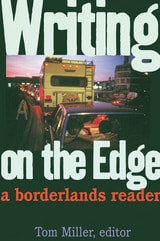
Writing on the Edge
A Borderlands ReaderEdited by Tom Miller
University of Arizona Press, 2003
This wide-ranging anthology—gathering short stories and essays, song lyrics and poems—offers readers a new appreciation of the border and its literature. Residents of the region may be startled to learn how many passers-by have been struck by this unruly slice of North America, while those living in other parts of the country may be surprised to find it more than a dateline for reports of smuggling and illegal immigration.
Collected here are both celebrated and underappreciated gems of American and Mexican literature depicting a region that for some writers represents an exotic land, for others home. Writing on the Edge juxtaposes passages by New Jersey poet William Carlos Williams and native songwriter Flaco Jiménez, British novelist Graham Greene and American poet Demetria Martínez, to show us the border from both sides and from a distance. In all of the selections, La Frontera looms larger than life—an energizing force that frames the lives of the characters living within its boundaries. Included in the book is a literary map of the border highlighting the sites with which each author is identified.
As editor Tom Miller observes, the very notion of literature in a region considered an "irrelevant nuisance" allows for more free-ranging creative output." Writing on the Edge sparkles with such creativity and invites readers to enjoy the best of two worlds—and of the world they share.
Print a literary map of the borderlands here!
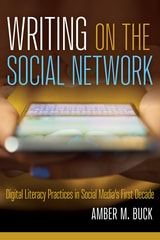
Writing on the Social Network
Digital Literacy Practices in Social Media's First DecadeAmber M. Buck
Utah State University Press, 2023
Through qualitative case study research, Buck explores how literate activities on social network sites coalesced around three areas crucial for writing in digital environments: (1) a heightened awareness of audience and an ability to tailor messages to specific audiences; (2) an understanding of how personal data is collected and circulated in online spaces; and (3) a means through which to use the first two skills for self-promotion and self-presentation in both personal and professional settings. She identifies several distinct literacy practices and strategies used by participants to communicate effectively and addresses how these strategies can help writing researchers and internet scholars understand the impact of social media’s first decade and can inform the ways they will research and understand social media’s second decade.
Social media platforms represent important locations where the different influences on writing become visible. Writing on the Social Network is a close study of the rich literate practices individuals have engaged in on social network sites over the last ten years that allows for a better understanding of the role social media plays in shaping digital literacy.
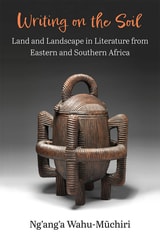
Writing on the Soil
Land and Landscape in Literature from Eastern and Southern AfricaNg’ang’a Wahu-Muchiri
University of Michigan Press, 2023
Across contiguous nation-states in Eastern Africa, the geographic proximity disguises an ideological complexity. Land has meant something fundamental in the sociocultural history of each country. Those concerns, however, have manifested into varied political events, and the range of struggles over land has spawned a multiplicity of literary interventions. While Kenya and Uganda were both British colonies, Kenya's experience of settler land alienation made for a much more violent response against efforts at political independence. Uganda's relatively calm unyoking from the colonial burden, however, led to a tumultuous post-independence. Tanzania, too, like Kenya and Uganda, resisted British colonial administration—after Germany's defeat in World War 1.
In Writing on the Soil, author Ng’ang’a Wahu-Mũchiriargues that representations of land and landscape perform significant metaphorical labor in African literatures, and this argument evolves across several geographical spaces. Each chapter's analysis is grounded in a particular locale: western Kenya, colonial Tanganyika, post-independence Tanzania, Zimbabwe, Nairobi, Dar es Salaam, Anam Ka'alakol (Lake Turkana), Kampala, and Kitgum in Northern Uganda. Moreover, each section contributes to a deeper understanding of the aesthetic choices that authors make when deploying tropes revolving around land, landscape, and the environment. Mũchiri disentangles the numerous connections between geography and geopolitical space on the one hand, and ideology and cultural analysis on the other. This book embodies a multi-layered argument in the sphere of African critical scholarship, while adding to the growing field of African land rights scholarship—an approach that foregrounds the close reading of Africa’s literary canon.
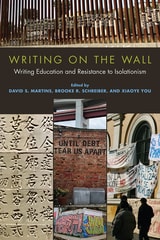
Writing on the Wall
Writing Education and Resistance to Isolationismedited by David S. Martins, Brooke R. Schreiber & Xiaoye You
Utah State University Press, 2022
The collection extends existing scholarship and research about the ways racist and colonial rhetorics impact writing education; the impact of translingual, transnational, and cosmopolitan ideologies on student learning and student writing; and the role international educational partnerships play in pushing back against isolationist ideologies. Established and early-career scholars who work in a broad range of institutional contexts highlight the historical connections among monolingualism, racism, and white nationalism and introduce community- and classroom-based practices that writing teachers use to resist isolationist beliefs and tendencies.
“Writing on the wall” serves as a metaphor for the creative, direct action writing education can provide and invokes border spaces as sites of identity expression, belonging, and resistance. The book connects transnational writing education with the fight for racial justice in the US and around the world and will be of significance to secondary and postsecondary writing teachers and graduate students in English, linguistics, composition, and literacy studies.
Contributors: Olga Aksakalova, Sara P. Alvarez, Brody Bluemel, Tuli Chatterji, Keith Gilyard, Joleen Hanson, Florianne Jimenez Perzan, Rebecca Lorimer Leonard, Layli Maria Miron, Tony D. Scott, Kate Vieira, Amy J. Wan
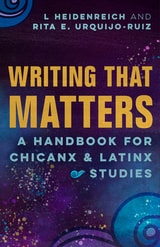
Writing that Matters
A Handbook for Chicanx and Latinx StudiesL Heidenreich and Rita E. Urquijo-Ruiz
University of Arizona Press, 2024
While it includes a brief history of the roots of the fields of Chicanx literature and history, Writing that Matters emphasizes practice: how to research and write a Chicanx or Latinx history paper; how to research and write a Chicanx or Latinx literature or cultural studies essay; and how to conduct interviews, frame pláticas, and conduct oral histories. It also includes a brief chapter on nomenclature and a grammar guide. Each chapter includes questions for discussion, and all examples from across the subfields are from noted Chicanx and Latinx scholars. Women’s and queer scholarship and methods are not addressed in a separate chapter but are instead integral to the work.
For years Professors Heidenreich and Urquijo-Ruiz waited for a writing and research manual that was rooted in critical Chicanx and Latinx studies. Now, they have crafted one.
Writing the Australian Crawl
William Stafford
University of Michigan Press, 1978
Writing the Black Diasporic City in the Age of Globalization
Carol Bailey
Rutgers University Press, 2023
Writing the Caribbean in Magazine Time
Katerina Gonzalez Seligmann
Rutgers University Press, 2021
Writing the Classroom
Pedagogical Documents as Rhetorical Genresedited by Stephen E. Neaderhiser
Utah State University Press, 2022
The contributors to this unique collection employ a wide range of methodological frameworks to demonstrate how pedagogical genres—even ones as seemingly straightforward as the class syllabus—have lives extending well beyond the classroom as they become part of how college teachers represent their own academic identities, advocate for pedagogical values, and negotiate the many external forces that influence the act of teaching. Writing the Classroom shines a light on genres that are often treated as two-dimensional, with purely functional purposes, arguing instead that genres like assignment prompts, course proposals, teaching statements, and policy documents play a fundamental role in constructing the classroom and the broader pedagogical enterprise within academia.
Writing the Classroom calls on experienced teachers and faculty administrators to critically consider their own engagement with pedagogical genres and offers graduate students and newer faculty insight into the genres that they may only now be learning to inhabit as they seek to establish their personal teacherly identities. It showcases the rhetorical complexity of the genres written in the service of pedagogy not only for students but also for the many other audiences within academia that have a role in shaping the experience of teaching.
Contributors: Michael Albright, Lora Arduser, Lesley Erin Bartlett, Logan Bearden, Lindsay Clark, Dana Comi, Zack K. De Piero, Matt Dowell, Amy Ferdinandt Stolley, Mark A. Hannah, Megan Knight, Laura R. Micciche, Cindy Mooty, Dustin Morris, Kate Navickas, Kate Nesbit, Jim Nugent, Lori A. Ostergaard, Cynthia Pengilly, Jessica Rivera-Mueller, Christina Saidy, Megan Schoen, Virginia Schwarz, Christopher Toth
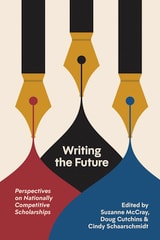
Writing the Future
Perspectives on Nationally Competitive ScholarshipsSuzanne McCray
University of Arkansas Press, 2025
Writing the Future: Perspectives on Nationally Competitive Scholarships offers a timely and nuanced exploration of fellowships advising. This volume brings together experienced practitioners, scholars, and scholarship foundation representatives to reflect on a rapidly evolving landscape—one shaped by shifting student demographics, emergent technologies, and renewed commitments to student success across a broad spectrum.
The essays in this collection engage deeply with the developmental, rhetorical, and institutional dimensions of nationally competitive awards advising. Topics include appreciative advising, writing strategies, and the complexities of guiding students as they envision and articulate aspirational futures. Contributors examine how fellowship applications serve as tools for student growth, knowledge transfer, and reflection. They also explore how advisors can navigate the tensions between authenticity, institutional representation, and the demands of prestige-based selection processes. Several chapters offer practical guidance on writing effective nomination letters, engaging in selection processes as external reviewers, and cultivating advising practices that are both ethical and empowering. A concluding chapter on NAFA’s history situates these contributions within a broader narrative of professionalization and purpose in the field.
Ideal for new and seasoned advisors alike—as well as faculty, administrators, and foundation partners—this volume affirms the transformative potential of a fellowships advising process that centers on student agency, fosters critical reflection, and reimagines what access to competitive awards can and should mean.
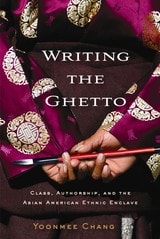
Writing the Ghetto
Class, Authorship, and the Asian American Ethnic EnclaveChang, Yoonmee
Rutgers University Press, 2010
Yoonmee Chang examines the class structure of Chinatowns, Koreatowns, Little Tokyos, and Little Indias, arguing that ghettoization in these spaces is disguised. She maintains that Asian American literature both contributes to and challenges this masking through its marginalization by what she calls the "ethnographic imperative." Chang discusses texts from the late nineteenth century to the present, including those of Sui Sin Far, Winnifred Eaton, Monica Sone, Fae Myenne Ng, Chang-rae Lee, S. Mitra Kalita, and Nam Le. These texts are situated in the contexts of the Chinese Exclusion Era, Japanese American internment during World War II, the globalization of Chinatown in the late twentieth century, the Vietnam War, the 1992 Los Angeles riots, and the contemporary emergence of the "ethnoburb."
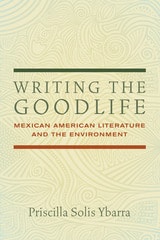
Writing the Goodlife
Mexican American Literature and the EnvironmentPriscilla Solis Ybarra
University of Arizona Press, 2016
Goodlife writing has existed for at least the past century, Ybarra contends, but Chicana/o literary history’s emphasis on justice and civil rights eclipsed this tradition and hidden it from the general public’s view. Likewise, in ecocriticism, the voices of people of color most often appear in deliberations about environmental justice. The quiet power of goodlife writing certainly challenges injustice, to be sure, but it also brings to light the decolonial environmentalism heretofore obscured in both Chicana/o literary history and environmental literary studies.
Ybarra’s book takes on two of today’s most discussed topics—the worsening environmental crisis and the rising Latino population in the United States—and puts them in literary-historical context from the U.S.-Mexico War up to today’s controversial policies regarding climate change, immigration, and ethnic studies. This book uncovers 150 years’ worth of Mexican American and Chicana/o knowledge and practices that inspire hope in the face of some of today’s biggest challenges.
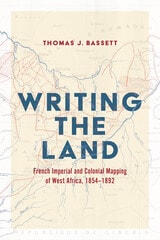
Writing the Land
French Imperial and Colonial Mapping of West Africa, 1854–1892Thomas J. Bassett
University of Chicago Press, 2027
Reveals the intertwined nature of imperial mapping and map history through the making of the colony of French Soudan in nineteenth-century West Africa.
Thomas J. Bassett’s Writing the Land argues that mapping played a key role in France’s territorial conquest of Africa, and that the process of imperial expansion and colonization shaped map history by influencing how maps were constructed, circulated, and used. Analyzing military and surveying campaigns over half a century in an area that became the colony of French Soudan, Bassett focuses on the social and spatial problems that surveyors and mapmakers tried to solve in the process of territorial conquest, as well as the conflicts that arose as they pursued their goals.
In their efforts to obtain this territory, French military leaders, cartographers, and expedition members came into continual contact with local Africans, with whom they negotiated and clashed. Often, imperial officers relied on intermediaries to navigate West African geography, drawing on the knowledge of political authorities, interpreters, guides, and long-distance traders; the maps they produced are inextricable from these interactions. Ultimately, Bassett claims, examining the processes of mapping in the context of these encounters leads us to understand these maps anew as Euro-African constructions, ones that emerge from a complex process of exchange and domination.
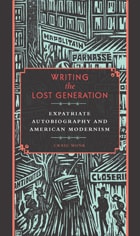
Writing the Lost Generation
Expatriate Autobiography and American ModernismCraig Monk
University of Iowa Press, 2008
Much of what we know about these iconic literary figures comes from their own published letters and essays, revealing how adroitly they developed their own reputations by controlling the reception of their work. Surprisingly the literary world has paid less attention to their autobiographies.
In Writing the Lost Generation, Craig Monk unlocks a series of neglected texts while reinvigorating our reading of more familiar ones. Well-known autobiographies by Malcolm Cowley, Ernest Hemingway, and Gertrude Stein are joined here by works from a variety of lesser-known—but still important—expatriate American writers, including Sylvia Beach, Alfred Kreymborg, Samuel Putnam, and Harold Stearns. By bringing together the self-reflective works of the Lost Generation and probing the ways the writers portrayed themselves, Monk provides an exciting and comprehensive overview of modernist expatriates from the United States.

Writing the Love of Boys
Origins of Bishonen Culture in Modernist Japanese LiteratureJeffrey Angles
University of Minnesota Press, 2010
Jeffrey Angles focuses on key writers, examining how they experimented with new language, genres, and ideas to find fresh ways to represent love and desire between men. He traces the personal and literary relationships between contemporaries such as the poet Murayama Kaita, the mystery writers Edogawa Ranpo and Hamao Shiro, the anthropologist Iwata Jun’ichi, and the avant-garde innovator Inagaki Taruho.
Writing the Love of Boys shows how these authors interjected the subject of male–male desire into discussions of modern art, aesthetics, and perversity. It also explores the impact of their efforts on contemporary Japanese culture, including the development of the tropes of male homoeroticism that recur so often in Japanese girls’ manga about bishonen love.
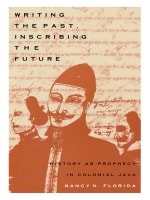
Writing the Past, Inscribing the Future
History as Prophecy in Colonial JavaNancy K. Florida
Duke University Press, 1995
Babad Jaka Tingkir, the historical prophecy that Writing the Past, Inscribing the Future translates and reads, is uniquely suited for such a study. Composing an engaging history of the emergence of Islamic power in central Java around the turn of the sixteenth century, Babad Jaka Tingkir was written from the vantage of colonial exile to contest the more dominant dynastic historical traditions of nineteenth-century court literature. Florida reveals how this history’s episodic form and focus on characters at the margins of the social order work to disrupt the genealogical claims of conventional royal historiography—thus prophetically to open the possibility of an alternative future.
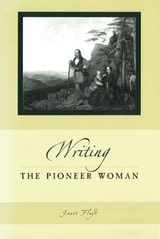
Writing the Pioneer Woman
Janet Floyd
University of Missouri Press, 2002
Focusing on a series of autobiographical texts, published and private, well known and obscure, Writing the Pioneer Woman examines the writing of domestic life on the nineteenth-century North American frontier. In an attempt to determine the meanings found in the pioneer woman's everyday writings—from records of recipes to descriptions of washing floors—Janet Floyd explores domestic details in the autobiographical writing of British and Anglo-American female emigrants.
Floyd argues that the figure of the pioneer housewife has been a significant one within general cultural debates about the home and the domestic life of women, on both sides of the Atlantic. She looks at the varied ideological work performed by this figure over the last 150 years and at what the pioneer woman signifies and has signified in national cultural debates concerning womanhood and home.
The autobiographies under discussion are not only of homemaking but also of emigration. Equally, these texts are about the enterprise of emigration, with several of them written to advise prospective emigrants. Using the insights of diaspora and migration theory, Floyd shows that these writings portray a far subtler role for the pioneer woman than is suggested by previous scholars, who often see her either as participating directly in the overall domestication of colonial space or as being strictly marginal to that process.
Written in response to the highly critical discussion of the attitudes and activities of female "civilizers" within "New" Western history and postcolonial studies, Writing the Pioneer Woman will be a valuable addition to the burgeoning discussion of the literature of domesticity.
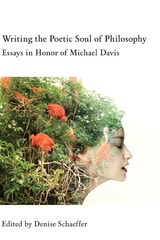
Writing the Poetic Soul of Philosophy
Essays in Honor of Michael DavisDenise Schaeffer
St. Augustine's Press, 2017
What is it about the nature of “soul” that makes it so difficult to adequately capture its complexity in a strictly discursive account? Why do some of the most profound human experiences elude our attempts to theorize them? How can a written document do justice to the dynamic activity of thinking, as opposed to merely presenting a collection of thoughts-as-artifacts? Finally, what can we learn about the activity of philosophizing, and about the human soul, by reflecting on the possibilities and limitations of writing?
These concerns, in various forms and in different registers, have preoccupied Michael Davis throughout his distinguished career. This volume is in honor of, and in dialogue with, Davis’s work, which spans ancient philosophy and literature, continental philosophy and political philosophy. It includes original essays by numerous distinguished scholars in the fields of philosophy and political science. The remarkable range and caliber of the contributions attest to the breadth and depth of Davis’s influence.
The essays in Part I of the volume explore the nature of soul through the lens of tragedy. Part II consists of three essays that explore the human longing for perfect knowledge and completion—and the obstacles to the fulfilment of that longing—in relation to the divine. In Part III, the essays address the distinctive challenges of the political sphere and philosophy’s relation to it. And while the relationship between philosophy and poetry is an implicit theme throughout the volume, the essays in Part IV focus directly on philosophy’s aestheticizing tendencies. Many different philosophical and literary works are discussed throughout these chapters, including ancient works such as Plato’s Republic, Euthydemus and Laws, Homer’s Iliad, and Euripides’ Trojan Women, as well as works by modern philosophers such as Rousseau, Kant, Hegel, Kierkegaard and Nietzsche. In addition, three essays analyze some of Shakespeare’s plays in relation to the thought of Plato and Machiavelli. All of the essays are thematically linked by a common thread as they attend to the poetic dimension of philosophical thinking.
Michael Davis is Professor of Philosophy at Sarah Lawrence College, where he has taught since 1977 and has been the Sarah Yates Exley Chair in Teaching Excellence (2003-2005). He has also taught on the graduate faculty at Fordham University and the New School for Social Research. He is the author of numerous articles and books, which include: Ancient Tragedy and the Origins of Modern Science; The Poetry of Philosophy: On Aristotle’s Poetics; The Politics of Philosophy: A Commentary on Aristotle’s Politics; The Autobiography of Philosophy; Rousseau’s The Reveries of the Solitary Walker; Wonderlust: Ruminations on Liberal Education; and The Soul of the Greeks: An Inquiry. He is also co-translator (with Seth Benardete) of Aristotle’s On Poetics.
Contributors include: Abraham Anderson, Jonathan Badger, Robert Berman, Ronna Burger, Kenneth DeLuca, Gwenda-lin Grewal, Scott Hemmenway, Paul Kirkland, Mary Nichols, Denise Schaeffer, Paul Stern, Richard Velkley, Lisa Pace Vetter, Ann Ward, Lee Ward, Catherine Zuckert and Michael Zuckert.
About the Editor: Denise Schaeffer is Professor of Political Science at the College of the Holy Cross. She is the author of Rousseau on Education, Freedom and Judgment and contributing co-editor (with Christopher Dustin) of Socratic Philosophy and Its Others. She is co-editor (with Gregory McBrayer and Mary P. Nichols) of the Focus Philosophical Library edition of Plato’s Euthydemus, for which she authored the Introduction and co-authored the Interpretive Essay.
Writing the Polish American Woman in Postwar Ethnic Fiction
Grazyna J. Kozaczka
Ohio University Press, 2019
Winner of the 2019 Oskar Halecki Prize (Polish American Historical Association)
Though often unnoticed by scholars of literature and history, Polish American women have for decades been fighting back against the patriarchy they encountered in America and the patriarchy that followed them from Poland. Through close readings of several Polish American and Polish Canadian novels and short stories published over the last seven decades, Writing the Polish American Woman in Postwar Ethnic Fiction traces the evolution of this struggle and women’s efforts to construct gendered and classed ethnicity.
Focusing predominantly on work by North American born and immigrant authors that represents the Polish American Catholic tradition, Grażyna J. Kozaczka puts texts in conversation with other American ethnic literatures. She positions ethnic gender construction and performance at an intersection of social class, race, and sex. She explores the marginalization of ethnic female characters in terms of migration studies, theories of whiteness, and the history of feminist discourse. Writing the Polish American Woman in Postwar Ethnic Fiction tells the complex story of how Polish American women writers have shown a strong awareness of their oppression and sought empowerment through resistive and transgressive behaviors.
Writing the Record
The Village Voice and the Birth of Rock CriticismDevon Powers
University of Massachusetts Press, 2013
During the mid-1960s, a small group of young journalists made it their mission to write about popular music, especially rock, as something worthy of serious intellectual scrutiny. Their efforts not only transformed the perspective on the era's music but revolutionized how Americans have come to think, talk, and write about popular music ever since.
In Writing the Record, Devon Powers explores this shift by focusing on The Village Voice, a key publication in the rise of rock criticism. Revisiting the work of early pop critics such as Richard Goldstein and Robert Christgau, Powers shows how they stood at the front lines of the mass culture debates, challenging old assumptions and hierarchies and offering pioneering political and social critiques of the music. Part of a college-educated generation of journalists, Voice critics explored connections between rock and contemporary intellectual trends such as postmodernism, identity politics, and critical theory. In so doing, they became important forerunners of the academic study of popular culture that would emerge during the 1970s.
Drawing on archival materials, interviews, and insights from media and cultural studies, Powers not only narrates a story that has been long overlooked but also argues that pop music criticism has been an important channel for the expression of public intellectualism. This is a history that is particularly relevant today, given the challenges faced by criticism of all stripes in our current media environment. Powers makes the case for the value of well-informed cultural criticism in an age when it is often suggested that “everyone is a critic.”
Writing the Self-Elegy
The Past Is Not Disappearing InkEdited by Kara Dorris
Southern Illinois University Press, 2023
Honest, aching, and intimate, self-elegies are unique poems focusing on loss rather than death, mourning versions of the self that are forgotten or that never existed. Within their lyrical frame, multiple selves can coexist—wise and naïve, angry and resigned—along with multiple timelines, each possible path stemming from one small choice that both creates new selves and negates potential selves. Giving voice to pain while complicating personal truths, self-elegies are an ideal poetic form for our time, compelling us to question our close-minded certainties, heal divides, and rethink our relation to others.
In Writing the Self-Elegy, poet Kara Dorris introduces us to this prismatic tradition and its potential to forge new worlds. The self-elegies she includes in this anthology mix autobiography and poetics, blending craft with race, gender, sexuality, ability and disability, and place—all of the private and public elements that build individual and social identity. These poems reflect our complicated present while connecting us to our past, acting as lenses for understanding, and defining the self while facilitating reinvention. The twenty-eight poets included in this volume each practice self-elegy differently, realizing the full range of the form. In addition to a short essay that encapsulates the core value of the genre and its structural power, each poet’s contribution concludes with writing prompts that will be an inspiration inside the classroom and out. This is an anthology readers will keep close and share, exemplifying a style of writing that is as playful as it is interrogative and that restores the self in its confrontation with grief.
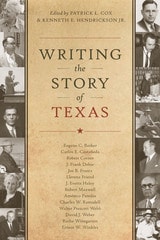
Writing the Story of Texas
Edited by Patrick L. Cox and Kenneth E. Hendrickson Jr.
University of Texas Press, 2013
The history of the Lone Star state is a narrative dominated by larger-than-life personalities and often-contentious legends, presenting interesting challenges for historians. Perhaps for this reason, Texas has produced a cadre of revered historians who have had a significant impact on the preservation (some would argue creation) of our state’s past. An anthology of biographical essays, Writing the Story of Texas pays tribute to the scholars who shaped our understanding of Texas’s past and, ultimately, the Texan identity.
Edited by esteemed historians Patrick Cox and Kenneth Hendrickson, this collection includes insightful, cross-generational examinations of pivotal individuals who interpreted our history. On these pages, the contributors chart the progression from Eugene C. Barker’s groundbreaking research to his public confrontations with Texas political leaders and his fellow historians. They look at Walter Prescott Webb’s fundamental, innovative vision as a promoter of the past and Ruthe Winegarten’s efforts to shine the spotlight on minorities and women who made history across the state. Other essayists explore Llerena Friend delving into an ambitious study of Sam Houston, Charles Ramsdell courageously addressing delicate issues such as racism and launching his controversial examination of Reconstruction in Texas, Robert Cotner—an Ohio-born product of the Ivy League—bringing a fresh perspective to the field, and Robert Maxwell engaged in early work in environmental history.
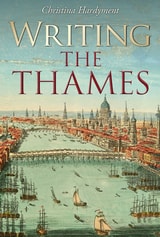
Writing the Thames
Christina Hardyment
Bodleian Library Publishing, 2016
Beautifully illustrated with seventy full-color illustrations, this book tells the river’s remarkable story through art, poetry, and prose, while celebrating the writers who helped form its enduring legacy.
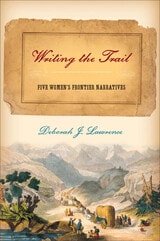
Writing the Trail
Five Women's Frontier NarrativesDeborah Lawrence
University of Iowa Press, 2006
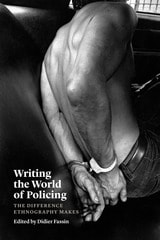
Writing the World of Policing
The Difference Ethnography MakesEdited by Didier Fassin
University of Chicago Press, 2017

Writing the World
Understanding William StaffordJudith Kitchen
Oregon State University Press, 1999
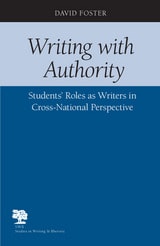
Writing with Authority
Students' Roles as Writers In Cross-National PerspectiveDavid Foster
Southern Illinois University Press, 2006
Writing with Authority: Students’ Roles as Writers in Cross-National Perspective offers a comparison of student writers in two university cultures—one German and one American—as the students learn to connect their writing to academic content. David Foster demonstrates the effectiveness of using cross-cultural comparisons to assess differences in literacy activities and suggests teaching approaches that will help American students better develop their roles as writers in knowledge-based communities. He proposes that American universities make stronger efforts to nurture the autonomy of American undergraduates as learner-writers and to create apprenticeship experiences that more closely reflect the realities of working in the academic community.
This comparative analysis identifies crucial differences in the ways German and American students learn to become academic writers, emphasizing two significant issues: the importance of self-directed, long-term planning and goal setting in developing knowledge-based projects and the impact of time structures on students’ writing practices. Foster suggests that students learn to write as knowledge makers, using cumulative, recursive task development as reflexive writing practices. He argues for the full integration of extended, self-managed, knowledge-based writing tasks into the American undergraduate curriculum from the onset of college study.
A cross-national perspective offers important insights into the conditions that influence novice writers, Foster says, including secondary preparations and transitions to postsecondary study. Foster proposes that students be challenged to write transformatively—to master new forms of authorship and authority based on self-directed planning, researching, and writing in specific academic communities. The text also addresses contested issues of power relations in students’ roles as academic writers and their perception of personal authority and freedom as writers.
A course model incorporates significant, self-directed writing projects to help students build sustainable roles as transformative writers, outlines “change goals” to help teachers develop curricular structures that support cumulative writing projects across the undergraduate curriculum, and shows how teachers can develop self-directed writing projects in a variety of program environments.
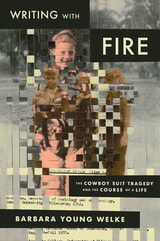
Writing with Fire
The Cowboy Suit Tragedy and the Course of a LifeBarbara Young Welke
University of Chicago Press, 2026
A cultural and legal history intertwined with a deeply emotional meditation on the course of life, memory, and the documents that define us.
During the 1940s and 1950s, an untold number of American children suffered devastating injuries when the fur-like fabric on the chaps of their Gene Autry–branded cowboy playsuits exploded into flame. Barbara Young Welke was researching this history when her teenage daughter unexpectedly died.
The shock of Welke’s loss transformed her understanding of the children and their families. Her experience also led her to question the norms of scholarship and of writing. Historians are trained to separate the personal from the intellectual, to be suspicious of emotion. These and other norms are embedded in and reinforced by the calling card of academics, the curriculum vitae. Welke wondered how that cold document—with its literal meaning, “the course of life”—had become a form that excludes so much of what gives life meaning. What impact did that have on what we know, how we know it, and how we understand ourselves? Similarly, Welke wondered, what might we see if we looked at the history of the cowboy suit tragedy as more than a matter of lawsuits brought by grieving families? Here, Welke traces the making, marketing, and selling of the cowboy suits; the lengths the defendants went to avoid and limit liability; and the meaning of the injuries, deaths, and legal settlements in the course of these children’s and families’ lives.
Writing with Fire interweaves the histories of the cowboy suit tragedy and the curriculum vitae. Grounded in archival and legal research, oral histories, and letters Welke wrote her daughter following her death, Welke offers an inimitable examination of trauma, law, autobiography, and identity. The result is revelatory and unforgettable: a provocative historical reflection on life and death, depression and war, markets and families, law, power, and precarity in modern America.
Writing, Directing, and Producing Documentary Films and Digital Videos
Alan Rosenthal and Ned Eckhardt
Southern Illinois University Press, 2016
All twenty-four chapters of the volume have been revised to reflect the latest advances in documentary filmmaking. Rosenthal and Eckhardt discuss the myriad ways in which technological changes have impacted the creation process of documentary films, including how these evolving technologies both complicate and enrich filmmaking today. The book provides crucial insights for the filmmaker from the film’s conception to distribution of the finished film. Topics include creating dynamic proposals, writing narration, and navigating the murky world of contracts. Also included are many practical tips for first-time filmmakers. To provide context and to illustrate techniques, Rosenthal and Eckhardt reference more than one hundred documentaries in detail.
A new appendix, “Using the Web and Social Media to Prepare for Your Career,” guides filmmakers through the process of leveraging social media and crowdsourcing for success in filmmaking, fund-raising, and promotion. A day-to-day field manual packed with invaluable lessons, this volume is essential reading for both novice and experienced documentary filmmakers.
Writing, Directing, and Producing Documentary Films and Videos, Fourth Edition
Alan Rosenthal
Southern Illinois University Press, 2007
In response to technological advances and the growth of the documentary hybrid in the past five years, Rosenthal reconsiders how one approaches documentary filmmaking in the twenty-first century. Simply and clearly, he explains how to tackle day-to-day problems, from initial concept through distribution. He demonstrates his ideas throughout the book with examples from key filmmakers’ work.
New aspects of this fourth edition include a vital new chapter titled "Making Your First Film," and a considerable enlargement of the section for producers, "Staying Alive," which includes an extensive discussion of financing, marketing, festivals, and distribution. This new edition offers a revised chapter on nonlinear editing, more examples of precise and exacting proposals, and the addition of a complex budget example with explanation of the budgeting process. Discussion of documentary hybrids, with suggestions for mastering changes and challenges, has also been expanded, while the “Family Films” chapter includes updated information that addresses rapid expansion in this genre.
Writing, Law, and Kingship in Old Babylonian Mesopotamia
Dominique Charpin
University of Chicago Press, 2010
Ancient Mesopotamia, the fertile crescent between the Tigris and Euphrates rivers in what is now western Iraq and eastern Syria, is considered to be the cradle of civilization—home of the Babylonian and Assyrian empires, as well as the great Code of Hammurabi. The Code was only part of a rich juridical culture from 2200–1600 BCE that saw the invention of writing and the development of its relationship to law, among other remarkable firsts.
Though ancient history offers inexhaustible riches, Dominique Charpin focuses here on the legal systems of Old Babylonian Mesopotamia and offers considerable insight into how writing and the law evolved together to forge the principles of authority, precedent, and documentation that dominate us to this day. As legal codes throughout the region evolved through advances in cuneiform writing, kings and governments were able to stabilize their control over distant realms and impose a common language—which gave rise to complex social systems overseen by magistrates, judges, and scribes that eventually became the vast empires of history books. Sure to attract any reader with an interest in the ancient Near East, as well as rhetoric, legal history, and classical studies, this book is an innovative account of the intertwined histories of law and language.
Writing-Enriched Curricula
Models of Faculty-Driven and Departmental Transformationedited by Chris M. Anson, and Pamela Flash
University Press of Colorado, 2022
Writing-Intensive
Becoming W-Faculty in a New Writing CurriculumWendy Strachan
Utah State University Press, 2008
Wendy Strachan documents this campus cultural transformation, exploring successes and impasses with equal interest. The study identifies factors to be considered to avoid isolating the teaching of writing in writing-intensive courses; to engender a university-wide culture that naturalizes writing as a vital part of learning across all disciplines; and to keep the teaching of writing organic and reflected upon in a scholarly manner across campus.
A valuable case history for scholars in writing studies, WAC/WID, and curricular change studies.
Writing
The Political TestClaude Lefort
Duke University Press, 2000
In Writing: The Political Test, France’s leading political philosopher, Claude Lefort, illuminates the process by which writers negotiate difficult path to free themselves from the ideological and contextual traps that would doom their attempts to articulate a new vision. Lefort examines writers whose works provide special insights into this problem of risk, both literary artists and political philosophers. Among them are Salman Rushdie, Sade, Tocqueville,m Machiavelli, Leo Strauss, Orwell, Kant, Robespierre, Guizot, and Pierre Clastres. In Tocqueville, for example, Lefort finds that the author’s improvisatory and open-ended expression represents the character of the democratic experience. Orwell’s work on totalitarianism shows up the totalitarian subject’s complicity in this political regime. And Rushdie is remarkable for his solid attack on relativism. With the character and fate of the political forms of modernity, democracy, and totalitarianism a central theme, Lefort concludes with some reflections on the collapse of the Soviet Union.
This intriguing and accessible exploration of literature’s political aspects and political philosophy’s literary ones will be welcomed by those who have been stymied by current efforts to bridge these two fields. Taken together, the essays in this volume also stand as an intellectual autobiography of Lefort, making it an excellent introduction to his work for less experience students of political theory or philosophy.
Written on Bamboo and Silk
The Beginnings of Chinese Books and Inscriptions, Second EditionTsuen-Hsuin Tsien
University of Chicago Press, 2004