Results by title
8113 books match the query 'Literary Criticism' and 363 start with w
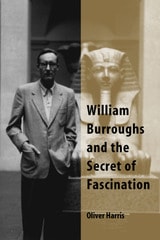
William Burroughs and the Secret of Fascination
Oliver Harris
Southern Illinois University Press, 2006
Unraveling the mysteries of Naked Lunch, exploring the allure of fascination
William Burroughs is both an object of widespread cultural fascination and one of America’s great writers. In this study, Oliver Harris elucidates the complex play of secrecy and revelation that defines the allure of fascination. Unraveling the mystifications of Burroughs the writer, Harris discovers what it means to be fascinated by a figure of major cultural influence and unearths a secret history behind the received story of one of America’s great original writers.
In William Burroughs and the Secret of Fascination, Harris examines the major works Burroughs produced in the 1950s—Junky, Queer, The Yage Letters, and Naked Lunch—to piece together an accurate, material record of his creative history during his germinal decade as a writer. Refuting the “junk paradigm” of addiction that has been used to categorize and characterize much of Burroughs’ oeuvre, Harris instead focuses on the significance of Burroughs’ letter writing and his remarkable and unsuspected use of the epistolary for his fiction. As Burroughs said to Allen Ginsberg about Naked Lunch, “the real novel is letters to you.” Drawing on rare access to manuscripts, the book suggests new ways of comprehending Burroughs’s unique politics and aesthetics and offers the first accurate account of the writing of Naked Lunch.

William Collins and Eighteenth-Century English Poetry
Richard Wendorf
University of Minnesota Press, 1981
William Collins and Eighteenth-Century English Poetry was first published in 1981. Minnesota Archive Editions uses digital technology to make long-unavailable books once again accessible, and are published unaltered from the original University of Minnesota Press editions.
William Collins (1721–1759) is one of several eighteenth-century poets who have received more attention for what they are said to have anticipated—the full-blooded Romanticism of Wordsworth and Coleridge—than for what they have achieved. Collins's career as a poet was brief, but the handful of major poems that he wrote in the mid -1740s has stirred interest among critics intrigued by the complexity and obscurity of his work and by the illness and possible madness that prematurely ended his life. Combining historical scholarship with close readings of all Collins's poems, Richard Wendorf provides the most comprehensive and detailed study to be devoted to the work of this enigmatic figure and to the forces that shaped his literary career. In doing so, he places Collins within an eighteenth-century poetic context and shows that his gift for myth-making makes him a vital link between the mythic poetry of Shakespeare and Spenser and that of the Romantics.
Wendorf's opening and closing chapters examine the relationship between Collins's life and his work, providing an authoritative discussion of his supposed madness and of the myths of insanity that clouded his reputation in the eighteenth and nineteenth centuries. Wendorf argues that Collins's madness is problematical at best, and that much recent criticism is a distortion of his major work, which explores the transcendent powers of the irrational forces within us but is not necessarily the product of madness itself. The book's central chapters trace Collins's development as a poet and offer fresh approaches to his major odes. In these mature poems he turned from his early interest in Augustan poetry to very different sources of inspiration and came to reject the ordered and unified natural world of Pope and Thompson.
William Faulkner, Letters & Fictions
By James G. Watson
University of Texas Press, 1989
Besides the groundbreaking novels and stories that brought him fame, William Faulkner throughout his life wrote letters—to his publisher, his lovers, his family, and his friends. In this first major study of epistolarity in Faulkner's work, James G. Watson examines Faulkner's personal correspondence as a unique second canon of writing, separate from his literary canon with its many fictional letters but developing along parallel lines. By describing the similarity of forms and conventions in Faulkner's personal and fictional correspondence, Watson clearly demonstrates that Faulkner's personal experience as a writer of letters significantly shaped his imaginative work early and late.
Letters are always about themselves; they re-create a world between the sender and the receiver. In this illuminating study, Faulkner's personal letters are treated as a form of reflexive writing: first-person narratives in which Sender self-consciously portrays Self to a specific Receiver, likewise portrayed in the letter-text. This duality of actual experience and imaginative re-creation measures the personal distances between the life of the writer and the written self-image. It reveals that letters are at once fragments of autobiography and fictions of self.
Such "laws of letters" apply equally to the letters that appear throughout Faulkner's novels and stories. The twenty-one letters and telegrams in The Sound and the Fury, for example, portray character, propel plot, and convey important themes of failed communication and broken identity. From Soldiers' Pay to his last work, Faulkner's carefully lettered canon of fiction is dramatic evidence of his understanding of epistolarity and of the extent to which he adapted letters, including some of his own, to shape his fictional world.
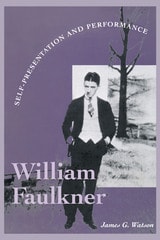
William Faulkner
Self-Presentation and PerformanceBy James G. Watson
University of Texas Press, 2000
In his life and writings, William Faulkner continually created and "performed" selves. Even in letters, he often played a part—gentleman dandy, soldier, farmer—while in his fictions these and other personae are counterpoised against one another to create a world of controlled chaos, made in Faulkner's own protean image and reflective of his own multiple sense of self.
In this groundbreaking book, James Watson draws on the entire Faulkner canon, including letters and photographs, to decipher the complicated ways in which Faulkner put himself forth as the artist he felt himself to be through written performances and displays based on the life he actually lived and the ones he imagined living. The topics Watson treats include the overtly performative aspects of The Sound and the Fury, self-presentation and performance in private records of Faulkner's life, the ways in which his complicated marriage and his relationships to male mentors underlie his fictions' recurring motifs of marriages and fatherhood, Faulkner's readings of Melville, Hawthorne, and Thoreau and the problematics of authorial sovereignty, his artist-as-God creation of a fictional cosmos, and the epistolary relationships with women that lie in the correspondence behind Requiem for a Nun.
William Faulkner
Six Decades of CriticismLinda Wagner-Martin
Michigan State University Press, 2002
Few twentieth-century writers are as revered as William Faulkner. This collection brings together the best literary criticism on Faulkner from the last six decades, detailing the imaginative and passionate responses to his still-controversial novels. By focusing on the criticism rather than the works, Linda Wagner-Martin shows the primary directions in Faulkner’s influence on critics, writers, and students of American literature today. This invaluable volume reveals the patterns of change in literary criticism over time, while exploring the various critical streams—language theory, feminism, deconstruction, and psychoanalysis—that have elevated Faulkner’s work to the highest rank of the American literary pantheon.
William Gibson
Gary Westfahl
University of Illinois Press, 2013
William Gibson and the Future of Contemporary Culture
Mitch R. Murray and Mathias Nilges
University of Iowa Press, 2021
In the 1970s and 80s, Gibson, the “Godfather of Cyberpunk,” rejuvenated science fiction. In groundbreaking works such as Neuromancer, which changed science fiction as we knew it, Gibson provided us with a language and imaginary through which it became possible to make sense of the newly emerging world of globalization and the digital and media age. Ever since, Gibson’s reformulation of science fiction has provided us not just with radically innovative visions of the future but indeed with trenchant analyses of our historical present and of the emergence and exhaustion of possible futures.
Contributors: Maria Alberto, Andrew M. Butler, Amy J. Elias, Christian Haines, Kylie Korsnack, Mathias Nilges, Malka Older, Aron Pease, Lisa Swanstrom, Takayuki Tatsumi, Sherryl Vint, Phillip E. Wegner, Roger Whitson, Charles Yu
William Goyen
Selected Letters from a Writer’s LifeBy William Goyen
University of Texas Press, 1995
Proclaimed "one of the great American writers of short fiction" by the New York Times Book Review, William Goyen (1915-1983) had a quintessentially American literary career, in which national recognition came only after years of struggle to find his authentic voice, his audience, and an artistic milieu in which to create. These letters, which span the years 1937 to 1983, offer a compelling testament to what it means to be a writer in America.
A prolific correspondent, Goyen wrote regularly to friends, family, editors, and other writers. Among the letters selected here are those to such major literary figures as W. H. Auden, Archibald MacLeish, Joyce Carol Oates, William Inge, Elia Kazan, Elizabeth Spencer, and Katherine Anne Porter.
These letters constitute a virtual autobiography, as well as a fascinating introduction to Goyen's work. They add an important chapter to the study of American and Texas literature of the twentieth century.
William March
An Annotated ChecklistRoy S. Simmonds
University of Alabama Press, 1988
This deeply researched reference includes both primary materials, an exhaustive checklist of the forms and editions of each of March’s works, and secondary materials, which include plays and films adapted from March’s writing, biographical and critical articles, doctoral dissertations, and contemporary reviews of March’s work.
The reissue in 2015 of the novels in his Pearl County series—Come in at the Door, The Tallons, and The Looking-Glass—is part of a fresh wave of interest in March, one of the most influential American writers from the mid-1930s until his death in 1954.

William Maxwell
A Literary LifeBarbara A. Burkhardt
University of Illinois Press, 2004
Known as a beloved, longtime fiction editor at The New Yorker, William Maxwell worked closely with such legendary writers as Vladimir Nabokov, John Updike, Mary McCarthy, and John Cheever. His own novels include They Came Like Swallows and the American Book Award-winning So Long, See You Tomorrow, and many consider him to be one of the twentieth century's most important writers. Barbara Burkhardt's William Maxwell: A Literary Life represents the first major critical study of this Illinois writer's life and work.
Writing with an economy and elegance befitting her subject, Burkhardt addresses Maxwell's highly autobiographical fiction by skillfully interweaving his biography with her own critical interpretations. She contextualizes his fiction in terms of events including his mother's early death from influenza, his marriage, and the role of his psychoanalysis under the guidance of Theodor Reik. Drawing on a wide range of previously unavailable material, Burkhardt includes letters Maxwell received from authors such as Eudora Welty and Louise Bogan, excerpts from his unpublished manuscripts and correspondence, and her own interviews with Maxwell and key figures from his life, including John Updike, Roger Angell, New Yorker fiction editor Robert Henderson, and Maxwell's family and friends.
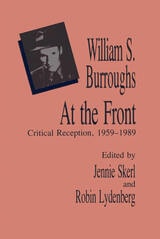
William S. Burroughs At the Front
Critical Reception, 1959 - 1989Jennie Skerl
Southern Illinois University Press, 1991
Jennie Skerl and Robin Lydenberg have selected twenty-five critical essays on Burroughs that reflect the historical reception of his work, both positive and negative, decade by decade, and that represent the best essays written about him.
The essays cover Burroughs’ major novels—including the cut-up and new trilogies—the censorship issue, and his work in film and painting. The chronological organization brings into critical focus the shift from moral questions raised by the novels’ content, through examinations of Burroughs’ relationship to humanism and modernism, and finally to more focused literary and linguistic issues. In their introduction, the editors survey the progress of Burroughs’ critical reception and examine the reasons for the varied and intense responses to the work and the theoretical assumptions behind those responses.
The reviewers include prominent figures such as Mary McCarthy and Marshall McLuhan as well as major academic critics such as Cary Nelson, Tony Tanner, and Ihab Hassan.
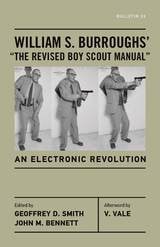
William S. Burroughs' "The Revised Boy Scout Manual"
An Electronic RevolutionEdited by Geoffrey D. Smith & John M. Bennett with an afterword by V. Vale
The Ohio State University Press, 2018
The Revised Boy Scout Manual was a work Burroughs revisited many times, but which has never before been published in its complete form. Based primarily on recordings of a performance of the complete piece found in the archives at the OSU libraries, as well as various incomplete versions of the typescript found at Arizona State University and the New York Public Library archives, this lost masterpiece of satiric subversion is finally available in its entirety.
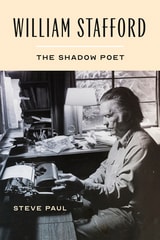
William Stafford
The Shadow PoetSteve Paul
Oregon State University Press, 2027
From the Kansas outdoors to Oregon classrooms, William Stafford (1914–1993) led a vibrantly original life navigated with ambition and mission. In poetry crafted in everyday language, a conversational tone, and richly accessible introspection, he invited readers to question and explore nature, humanity, and the American West. After he won the National Book Award in poetry and the Shelley Memorial Award from the Poetry Society of America and served as the Consultant in Poetry to the Library of Congress (a role known today as US Poet Laureate), his talent became recognized around the world. The accolades and achievements continued, including Stafford later spending fifteen years as the Poet Laureate of Oregon.
A character shaped by duty, adventure, a sharp sense of humor, and a strong moral compass, Stafford remains a beloved American poet. In William Stafford: The Shadow Poet, the first comprehensive biography, Steve Paul shares fascinating stories and frequently surprising accounts of Stafford’s life and work. The book traces Stafford from his humble origins through periods of social courage, the complications of his wartime alternative service, dedication to writing, and family tragedy. It explores how his pacifist world views and eco-consciousness continue to inspire those returning to his work or discovering it for the first time. Paul uncovers various layers of the poet’s life—through his philosophy, friends, family, teaching, and writing—and contemplates how Stafford’s metaphoric shadows, found frequently in his poems, figure into his life and career.

William Styron
Melvin J. Friedman
University of Wisconsin Press, 1974
William Troy
Selected EssaysStanley E. Hyman
Rutgers University Press, 1999
William Warner's Syrinx
or, A Sevenfold HistoryWilliam Warner, edited with introduction and notes by Wallace A. Bacon
Northwestern University Press, 1950
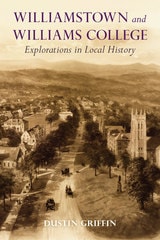
Williamstown and Williams College
Explorations in Local HistoryDustin Griffin
University of Massachusetts Press, 2018
Well researched and written in an accessible style, Williamstown and Williams College is a must-have resource for anyone connected with Williams College—from students and parents to alumni—as well as visitors who want to understand what makes this town unique.
Willing to Know God
Dreamers and Visionaries in the Later Middle AgesJessica Barr
The Ohio State University Press, 2010
Although authors of mystical treatises and dream visions shared a core set of assumptions about how visions are able to impart transcendent truths to their recipients, the modern divide between “religious” and “secular” has led scholars to study these genres in isolation. Willing to Know God addresses the simultaneous flowering of mystical and literary vision texts in the Middle Ages by questioning how the vision was thought to work. What preconditions must be met in these texts for the vision to transform the visionary? And when, as in poems such as Pearl, this change does not occur, what exactly has gone wrong?
Windows and Doors
A Poet Reads Literary TheoryNatasha Saje
University of Michigan Press, 2014
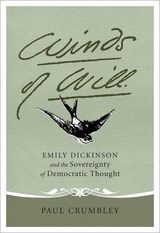
Winds of Will
Emily Dickinson and the Sovereignty of Democratic ThoughtPaul Crumbley
University of Alabama Press, 2010
A sophisticated literary analysis positioning Emily Dickinson’s poetry within the framework of democratic thought and individual sovereignty.
In this study, Paul Crumbley asserts that, contrary to popular opinion, Emily Dickinson consistently communicated political views through her poetry. Dickinson’s life of self-isolation—today her most notable personal characteristic—by no means extended into the political sphere, he argues. While she rarely addressed political issues directly and was curiously disengaged from the liberal causes and female reform movements of her time, Dickinson’s poems are deeply rooted both in matters of personal sovereignty and reader choice. The significant choices Dickinson extends to the reader underscore the democratic dimensions of reading her work, and of reading itself as a political act.
Crumbley employs close readings of Dickinson’s poems and letters, highlighting the many changing—and often contradictory—voices in her work, both throughout her oeuvre and in individual poems themselves. In Dickinson’s letters Crumbley finds just as many unique and conflicting voices; thus, both her personal correspondence and the poems make political demands by placing the burden of interpretation on the reader.
Rather than reflecting explicit political values, Dickinson’s work chronicles an ongoing decision-making process that magnifies the role of individual choice, not the advocacy of specific outcomes. In the end, Dickinson’s readers must either accept an isolated lyric subjectivity or invest that subjectivity with the substance necessary for engagement with the larger world.
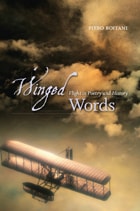
Winged Words
Flight in Poetry and HistoryPiero Boitani
University of Chicago Press, 2007
Flight has always fascinated human minds, but until a century ago it remained a dream—the exclusive domain of birds, gods, and mythological heroes. From the myths of the ancients to the poetry of Pindar and Yeats, Winged Words traces the imprint of the human impulse to fly from premodern times to the age of terrorism in both literature and history.
Piero Boitani begins his analysis with an account of the way the myths of Pegasus and Icarus have persisted from classical to twentieth-century politics and literature. He then takes up the figure of Hermes; the roles of halcyons and eagles in classical, biblical, and later literatures; and literary response to Pieter Brueghel’s The Fall of Icarus. Honing in on modern figures and concerns, Boitani also offers a fascinating discussion of author-pilot Antoine de Saint-Exupéry and concludes with a meditation on the flight of the hijacked airliners on 9/11. Throughout, Winged Word brings a remarkable range of men of action, politicians, theologians, writers, and artists into dialogue with each other: Shakespeare with T. S. Eliot, Horace with Ovid, Leonardo with Milton, Leopardi with Mallarmé, Saint-Exupéry with Faulkner and Rilke, and the Ulysses of Homer with the Ulysses of Dante. Ultimately, by showing how writers and fliers have looked to the ancients for inspiration, Boitani testifies to the modern relevance of poetry and the classics.
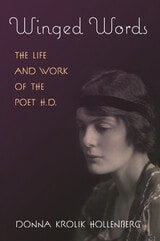
Winged Words
The Life and Work of the Poet H.D.Donna Krolik Hollenberg
University of Michigan Press, 2022
H.D.’s friends and lovers were a veritable Who’s Who of Modernism, and Hollenberg gives us a glimpse into H.D.’s relationships with them. With rich detail, the biography follows H.D. from her early years in America with her family, to her later years in England during both world wars, to Switzerland, which would eventually become H.D.’s home base. It explores her love affairs with both men and women; her long friendship with Bryher; the birth of her daughter, Perdita, and her imaginative bond with her; and her marriage to (and later divorce from) fellow poet Richard Aldington. Additionally, the book includes scenes from her relationships with Ezra Pound, Marianne Moore, William Carlos Williams, and D.H. Lawrence; H.D.’s fascination with spiritualism and the occult; and H.D.’s psychoanalysis with Sigmund Freud. The first new biography of H.D. to be published in over four decades, Winged Words is a must-read resource for anyone conducting research on H.D.
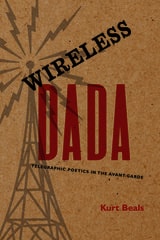
Wireless Dada
Telegraphic Poetics in the Avant-GardeKurt Beals
Northwestern University Press, 2020
Wireless Dada: Telegraphic Poetics in the Avant-Garde demonstrates that the poetics of the Dada movement was profoundly influenced by the telegraph and the technological and social transformations that it brought about in the nineteenth and early twentieth centuries. While telegraphy’s impact on Italian Futurism and German Expressionism is widely acknowledged, its formative role in Dada poetics has been largely neglected. Drawing on media history and theory, avant-garde studies, and German literary studies, Kurt Beals shows how the telegraph and the cultural discourses that surrounded it shaped the radical works of this seminal avant-garde movement. The “nonsense” strain in Dada is frequently seen as a response to the senseless violence of the First World War. Beals argues that it was not just the war that turned Dada poetry into a jumble of senseless signals—it was also the wireless.
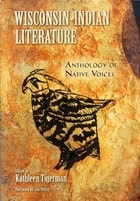
Wisconsin Indian Literature
Anthology of Native VoicesEdited by Kathleen Tigerman; Foreward by Jim Ottery
University of Wisconsin Press, 2006
Literature of the Indian Nations of Wisconsin is a unique anthology that presents the oral traditions, legends, speeches, myths, histories, literature, and historically significant documents of the current twelve independent bands and Indian Nations of Wisconsin. Kathleen Tigerman sought input from tribe elders and educators to provide an accurate chronological portrait of each nation, including the Siouan Ho-Chunk; the Algonquian Menominee, Ojibwe, and Potawatomi; and three groups originally from what is now New York State: the Iroquoian Oneida, the Stockbridge-Munsee band of the Mohican Nations, and the Brothertown Nation.
Some of these works feature a cultural hero or refer to very ancient times—more than six thousand years ago—and others are contemporary. These pieces focus on issues of Wisconsin Native communities by sharing Native knowledge and dialogue about sovereignty, decolonization, cultural genocide, forced removals, assimilation, and other concerns.
This anthology introduces us to a vivid and unforgettable group of voices, enhanced by many maps, photographs, and chronologies. Literature of the Indian Nations of Wisconsin fosters cross-cultural understanding among non-Native readers and the people of the First Nations.
Wisdom from the Late Bronze Age
Yoram Cohen
SBL Press, 2013
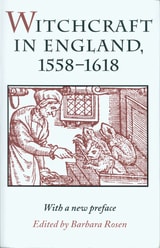
Witchcraft in England, 1558-1618
Barbara Rosen
University of Massachusetts Press, 1991
Anyone interested in manifestations of witchcraft in Elizabethan and Jacobean England will find this book an invaluable source. Barbara Rosen has gathered and edited a rare collection of documents—pamphlets, reports, trial accounts, and other material—that describes the experience, interpretation, and punishment of witchcraft in the late sixteenth and early seventeenth centuries.
In her introduction, Rosen explores the full range of practices and beliefs associated with witchcraft and situates these phenomena in historical context. She explains how ignorance of science and medicine combined with social circumstance and religious ideology to shape popular perceptions and superstitions. Distinguishing between English and Continental forms of witchcraft, she also examines the legal definitions, disciplines, and punishments applied to wizards, witches, wise women, and conjures in the Elizabethan age.
The pamphlets and other original texts have been modernized in certain respects to make them more accessible to general readers. But the book retains its value for scholars: omissions are detailed in the notes and additions marked; obsolete words and grammar are explained in the glossary.
Originally published in England in 1970 under the title Witchcraft, this book appears now for the first time in paperback and includes a new preface by the editor.
Witches, Goddesses, and Angry Spirits
The Politics of Spiritual Liberation in African Diaspora Women's FictionMaha Marouan
The Ohio State University Press, 2013
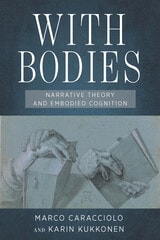
With Bodies
Narrative Theory and Embodied CognitionMarco Caracciolo and Karin Kukkonen
The Ohio State University Press, 2021
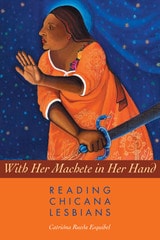
With Her Machete in Her Hand
Reading Chicana LesbiansBy Catrióna Rueda Esquibel
University of Texas Press, 2006
With the 1981 publication of the groundbreaking anthology This Bridge Called My Back: Writings by Radical Women of Color, Cherríe Moraga and Gloria Anzaldúa ushered in an era of Chicana lesbian writing. But while these two writers have achieved iconic status, observers of the Chicana/o experience have been slow to perceive the existence of a whole community—lesbian and straight, male as well as female—who write about the Chicana lesbian experience. To create a first full map of that community, this book explores a wide range of plays, novels, and short stories by Chicana/o authors that depict lesbian characters or lesbian desire.
Catrióna Rueda Esquibel starts from the premise that Chicana/o communities, theories, and feminisms cannot be fully understood without taking account of the perspectives and experiences of Chicana lesbians. To open up these perspectives, she engages in close readings of works centered around the following themes: La Llorona, the Aztec Princess, Sor Juana Inés de la Cruz, girlhood friendships, rural communities and history, and Chicana activism. Her investigation broadens the community of Chicana lesbian writers well beyond Moraga and Anzaldúa, while it also demonstrates that the histories of Chicana lesbians have had to be written in works of fiction because these women have been marginalized and excluded in canonical writings on Chicano life and experience.
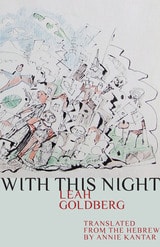
With This Night
By Leah Goldberg
University of Texas Press, 2011
When she arrived in Palestine in 1935 at the age of twenty-four, Leah Goldberg was already known as a significant emerging poet in contemporary Hebrew literature. Today, mention of her name is apt to evoke a nostalgic sigh among Israelis who have grown up hearing her poems read, quoted, recollected, and—having been set to some four hundred melodies—sung on the radio. In the wake of overwhelming new attention on Goldberg's work in Israel, With This Night makes available for the first time in English the final collection of poetry that Goldberg published during her lifetime.
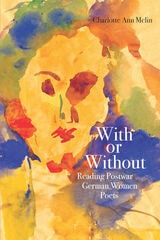
With or Without
Reading Postwar German Women PoetsCharlotte Ann Melin
Northwestern University Press, 2013
With or Without explores the role of German women’s poetry in the contemporary literary discourse of the latter half of the twentieth century. Melin highlights the significant role that women played in the shaping of postwar German poetry as a whole and also their deep engagement with the broader issues of modernism, postmodernism, and related discourses about the relationship between individual experience, communal ideals, and interpersonal expression. Melin shows that for German writers poetry became the genre that had the capacity to project subjectivity, voice, and authenticity.
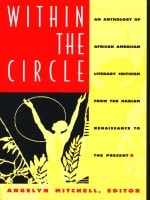
Within the Circle
An Anthology of African American Literary Criticism from the Harlem Renaissance to the PresentAngelyn Mitchell
Duke University Press, 1994
The essays in this collection—many of which are not widely available today—either initiated or gave critical definition to specific periods or movements of African American literature. They address issues such as integration, separatism, political action, black nationalism, Afrocentricity, black feminism, as well as the role of art, the artist, the critic, and the audience. With selections from Langston Hughes, Sterling Brown, W. E. B. DuBois, Zora Neale Hurston, Richard Wright, James Baldwin, Toni Morrison, Barbara Smith, Alice Walker, Henry Louis Gates, Jr., and many others, this definitive collection provides a dynamic model of the cultural, ideological, historical, and aesthetic considerations in African American literature and literary criticism.
A major contribution to the study of African American literature, this volume will serve as a foundation for future work by students and scholars. Its importance will be recognized by all those interested in modern literary theory as well as general readers concerned with the African American experience.
Selections by (partial list): Houston A. Baker, Jr., James Baldwin, Sterling Brown, Barbara Christian, W. E. B. DuBois, Ralph Ellison, LeRoi Jones, Sarah Webster Fabio, Henry Louis Gates, Jr., W. Lawrence Hogue, Langston Hughes, Zora Neale Hurston, Alain Locke, Deborah E. McDowell, Toni Morrison, J. Saunders Redding, George Schuyler, Barbara Smith, Valerie Smith, Hortense J. Spillers, Robert B. Stepto, Alice Walker, Margaret Walker, Mary Helen Washington, Richard Wright
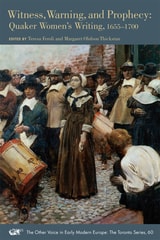
Witness, Warning, and Prophecy
Quaker Women's Writing, 1655-1700Edited by Teresa Feroli and Margaret Olofson Thickstun
Iter Press, 2018
The Other Voice in Early Modern Europe - The Toronto Series: Volume 60
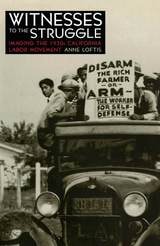
Witnesses to the Struggle
Imaging the 1930s California Labor MovementAnne Loftis
University of Nevada Press, 2014
In this groundbreaking interdisciplinary study, Loftis examines the artists who put a human face on the farmworkers’ plight in California during the Great Depression, focusing on writer John Steinbeck, photographer Dorothea Lange, sociologist and author Paul Taylor, and journalist Carey McWilliams. Loftis probes the interplay between journalism and art in the 1930s, when both academics and artists felt an urgent need to be relevant in the face of enormous misery. The power of their work grew out of their personal involvement in both the labor struggles and the hardships endured by workers and their families. Steinbeck, Lange, and the other artists and intellectuals in their circles created the public images of their times. Works such as The Grapes of Wrath or Lange’s Migrant Mother actually helped mold public opinion and form government policies. Even today these works remain icons in our shared perception of that era. Loftis helps us understand why this art still seems the truest representation of those desperate times, three-quarters of a century later.
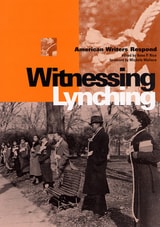
Witnessing Lynching
American Writers RespondEdited by Anne P. Rice
Rutgers University Press, 2003
Witnessing Lynching: American Writers Respond is the first anthology to gather poetry, essays, drama, and fiction from the height of the lynching era (1889–1935). During this time, the torture of a black person drew thousands of local onlookers and was replayed throughout the nation in lurid newspaper reports. The selections gathered here represent the courageous efforts of American writers to witness the trauma of lynching and to expose the truth about this uniquely American atrocity. Included are well-known authors and activists such as Frederick Douglass, W.E.B. Du Bois, Langston Hughes, Ida B. Wells, and Theodore Dreiser, as well as many others. These writers respond to lynching in many different ways, using literature to protest and educate, to create a space of mourning in which to commemorate and rehumanize the dead, and as a cathartic release for personal and collective trauma. Their words provide today’s reader with a chance to witness lynching and better understand the current state of race relations in America.
An introduction by Anne P. Rice offers a broad historical and thematic framework to ground the selections.
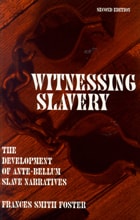
Witnessing Slavery
The Development Of Ante-Bellum Slave NarrativesFrances Smith Foster
University of Wisconsin Press, 1994
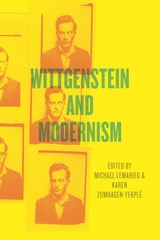
Wittgenstein and Modernism
Edited by Michael LeMahieu and Karen Zumhagen-Yekplé
University of Chicago Press, 2016
Michael LeMahieu Karen Zumhagen-Yekplé bring together scholars in both twentieth-century philosophy and modern literary studies to put Wittgenstein into dialogue with some of modernism’s most iconic figures, including Samuel Beckett, Saul Bellow, Walter Benjamin, Henry James, James Joyce, Franz Kafka, Adolf Loos, Robert Musil, Wallace Stevens, and Virginia Woolf. The contributors touch on two important aspects of Wittgenstein’s work and modernism itself: form and medium. They discuss issues ranging from Wittgenstein and poetics to his use of numbered propositions in the Tractatus as a virtuoso performance of modernist form; from Wittgenstein’s persistence metaphoric use of religion, music, and photography to an exploration of how he and Henry James both negotiated the relationship between the aesthetic and the ethical.
Covering many other fascinating intersections of the philosopher and the arts, this book offers an important bridge across the disciplinary divides that have kept us from a fuller picture of both Wittgenstein and the larger intellectual and cultural movement of which he was a part.
Wittgenstein's Ladder
Poetic Language and the Strangeness of the OrdinaryMarjorie Perloff
University of Chicago Press, 1996
"This book has the lucidity and the intelligence we have come to expect from Marjorie Perloff.—Linda Munk, American Literature
"[Perloff] has brilliantly adapted Wittgenstein's conception of meaning and use to an analysis of contemporary language poetry."—Linda Voris, Boston Review
"Wittgenstein's Ladder offers significant insights into the current state of poetry, literature, and literary study. Perloff emphasizes the vitality of reading and thinking about poetry, and the absolute necessity of pushing against the boundaries that define and limit our worlds."—David Clippinger, Chicago Review
"Majorie Perloff has done more to illuminate our understanding of twentieth century poetic language than perhaps any other critic. . . . Entertaining, witty, and above all highly original."—Willard Bohn, Sub-Stance
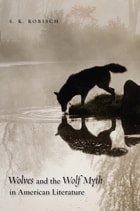
Wolves and the Wolf Myth in American Literature
S.K. Robisch
University of Nevada Press, 2009
The wolf is one of the most widely distributed canid species, historically ranging throughout most of the Northern Hemisphere. For millennia, it has also been one of the most pervasive images in human mythology, art, and psychology. Wolves and the Wolf Myth in American Literature examines the wolf’s importance as a figure in literature from the perspectives of both the animal’s physical reality and the ways in which writers imagine and portray it. Author S. K. Robisch examines more than two hundred texts written in North America about wolves or including them as central figures. From this foundation, he demonstrates the wolf’s role as an archetype in the collective unconscious, its importance in our national culture, and its ecological value. Robisch takes a multidisciplinary approach to his study, employing a broad range of sources: myths and legends from around the world; symbology; classic and popular literature; films; the work of scientists in a number of disciplines; human psychology; and field work conducted by himself and others. By combining the fundamentals of scientific study with close readings of wide-ranging literary texts, Robisch astutely analyzes the correlation between actual, living wolves and their representation on the page and in the human mind. He also considers the relationship between literary art and the natural world, and argues for a new approach to literary study, an ecocriticism that moves beyond anthropocentrism to examine the complicated relationship between humans and nature.
Woman's Fiction
A Guide to Novels by and about Women in America, 1820-70Nina Baym. With a New Introduction and Supplementary Bibliography
University of Illinois Press, 1993
This reissue of the pioneering and standard book on antebellum women's domestic novels contains a new introduction situating the book in the context of important recent developments in the study of women's writing. Nina Baym considers 130 novels by 48 women, focusing on the works of a dozen especially productive and successful writers.
Woman's Fiction is a major-work in nineteenth-century literature, reexamining changes in the literary canon and the meaning of sentimentalism, while responding to current critical discussions of 'the body' in literary texts.
Woman's Legacy
Essays on Race, Sex, and Class in American HistoryBettina Aptheker
University of Massachusetts Press, 1982
Woman's Legacy: Essays on Race, Sex, and Class in American History is a groundbreaking collection of essays by prominent feminist scholar and historian Bettina Aptheker. Emerging from her dissertation research, this work examines the interconnected systems of racial, sexual, and class oppression that have shaped the experiences of women in American history. Through careful historical analysis and feminist scholarship, Aptheker explores how race, sex, and class work together to form complex systems of domination and resistance in the American historical context. The essays investigate women's community roles, activism, and agency while centering the lived experiences of women, particularly Black women, across different historical periods. This seminal work contributes to African American women's history and feminist historiography, bridging women's studies with critical analysis of historical structures and social movements. An essential text for those interested in intersectional approaches to American history and women's studies.
Womanist Interpretations of the Bible
Expanding the DiscourseGay L. Byron
SBL Press, 2016
Expand the discourse and open the spheres of engagement to include new voices of scholars and bold, innovative interpretive approaches
This edited volume brings together cross-generational and cross-cultural readings of the Bible and other sacred sources by including scholars from the Caribbean, India, and Africa who have not traditionally fit into the narrow U.S., African American paradigm for understanding womanist biblical interpretation. The volume engages the reader in a wide range of interdisciplinary methods and perspectives, such as gender and feminist criticism, social-scientific methods, post-colonial and psychoanalytical theory that emphasize the inherently intersectional dynamics of race, ethnicity, and class at work in womanist thought and analysis.
Features
- Topics include the Black Lives Matter movement, domestic violence, and AIDS, while at the same time uncovering the roles of children, women, and other marginalized persons in biblical narratives
- Coverage of Hebrew Bible and New Testament texts, as well as Ifa spiritual narratives, Hindu scripture, and Ethiopic texts
- Responses from four respected womanist and feminist critics: Katherine Doob Sakenfeld, Emilie Townes, Layli (Phillips) Maparyan, and Sarojini Nadar
Womb Fantasies
Subjective Architectures in Postmodern Literature, Cinema, and ArtCaroline Rupprecht
Northwestern University Press, 2013
Women Playwrights of Early Modern Spain
Feliciana Enríquez de Guzmán, Ana Caro Mallén, and Sor Marcela de San Félix
Iter Press, 2016
This volume presents ten plays by three leading women playwrights of Spain’s Golden Age. Included are four bawdy and outrageous comic interludes; a full-length comedy involving sorcery, chivalry, and dramatic stage effects; and five short religious plays satirizing daily life in the convent. A critical introduction to the volume positions these women and their works in the world of seventeenth-century Spain.

Women Poets of Spain, 1860-1990
TOWARD A GYNOCENTRIC VISIONJohn C. Wilcox
University of Illinois Press, 1997
Women Poets on Mentorship
Efforts and AffectionsArielle Greenberg
University of Iowa Press, 2008
The poets in this collection describe a new kind of influence, one less hierarchical, less patriarchal, and less anxious than forms of mentorship in the past. Vivid and intelligent, these twenty-four essays explore the complicated nature of the mentoring relationship, with all its joys and difficulties, and show how this new sense of writing out of female experience and within a community of writers has fundamentally changed women’s poetry.
Includes:
Jenny Factor on Marilyn Hacker
Beth Ann Fennelly on Denise Duhamel
Miranda Field on Fanny Howe
Katie Ford on Jorie Graham
Joy Katz on Sharon Olds
Valerie Martínez on Joy Harjo
Erika Meitner on Rita Dove
Aimee Nezhukumatathil on Naomi Shihab Nye
Eleni Sikelianos on Alice Notley
Tracy K. Smith on Lucie Brock-Broido
Crystal Williams on Lucille Clifton
Rebecca Wolff on Molly Peacock

Women Political Prisoners in Germany
Narratives of Self and Captivity, 1915-91Kim Richmond
University of London Press, 2016

Women Rethinking Genres in Early Modern Europe
Simona Lorenzini
University of Delaware Press, 2027
Women Rethinking Genres in Early Modern Europe brings together research rooted in both gender and genre as categories of analysis to illustrate how the two frameworks are inextricably linked in how we understand the experiences of European women who wrote between the fifteenth and seventeenth centuries. Rather than considering genres as prescriptive, in this collection we emphasize that genres can take different forms and are central to the ways in which authors and readers understand and perceive the world. Together, these essays in this volume demonstrate that women authors not only experimented with genres in different ways but also contributed significantly to the development and circulation of ideas in early modern Europe. This volume includes a variety of case studies from different geographical areas within Western Europe that explore the role of gender in the dissemination of genres such as dialogue, poetry, pastoral, novellas, devotional literature, epic poems, account books, scientific treatises, and fictional romances. In doing so, the essays here contribute to scholarship on marginalized and less studied aspects of early modern female culture.

Women Together/Women Apart
Portraits of Lesbian ParisLatimer, Tirza True
Rutgers University Press, 2005
What does it mean to look like a lesbian? Though it remains impossible to conjure a definitive image that captures the breadth of this highly nuanced term, today at least we are able to consider an array of visual representations that have been put into circulation by lesbians themselves over the last six or seven decades. In the early twentieth century, though, no notion of lesbianism as a coherent social or cultural identity yet existed.
In Women Together/Women Apart, Tirza True Latimer explores the revolutionary period between World War I and World War II when lesbian artists working in Paris began to shape the first visual models that gave lesbians a collective sense of identity and allowed them to recognize each other. Flocking to Paris from around the world, artists and performers such as Romaine Brooks, Claude Cahun, Marcel Moore, and Suzy Solidor used portraiture to theorize and visualize a "new breed" of feminine subject. The book focuses on problems of feminine and lesbian self-representation at a time and place where the rights of women to political, professional, economic, domestic, and sexual autonomy had yet to be acknowledged by the law. Under such circumstances, same-sex solidarity and relative independence from men held important political implications.
Combining gender theory with visual, cultural, and historical analysis, Latimer draws a vivid picture of the impact of sexual politics on the cultural life of Paris during this key period. The book also illuminates the far-reaching consequences of lesbian portraiture on contemporary constructions of lesbian identity.
Women Warriors in Early Modern Spain
A Tribute to Barbara MujicaSusan L. Fischer
University of Delaware Press, 2019
Published by University of Delaware Press. Distributed worldwide by Rutgers University Press.