Results by title
22279 books match the query 'Social Science' and 963 start with w
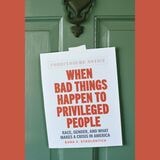
When Bad Things Happen to Privileged People
Race, Gender, and What Makes a Crisis in AmericaDara Z. Strolovitch
University of Chicago Press, 2023
A deep and thought-provoking examination of crisis politics and their implications for power and marginalization in the United States.
From the climate crisis to the opioid crisis to the Coronavirus crisis, the language of crisis is everywhere around us and ubiquitous in contemporary American politics and policymaking. But for every problem that political actors describe as a crisis, there are myriad other equally serious ones that are not described in this way. Why has the term crisis been associated with some problems but not others? What has crisis come to mean, and what work does it do?
In When Bad Things Happen to Privileged People, Dara Z. Strolovitch brings a critical eye to the taken-for-granted political vernacular of crisis. Using systematic analyses to trace the evolution of the use of the term crisis by both political elites and outsiders, Strolovitch unpacks the idea of “crisis” in contemporary politics and demonstrates that crisis is itself an operation of politics. She shows that racial justice activists innovated the language of crisis in an effort to transform racism from something understood as natural and intractable and to cast it instead as a policy problem that could be remedied. Dominant political actors later seized on the language of crisis to compel the use of state power, but often in ways that compounded rather than alleviated inequality and injustice. In this eye-opening and important book, Strolovitch demonstrates that understanding crisis politics is key to understanding the politics of racial, gender, and class inequalities in the early twenty-first century.
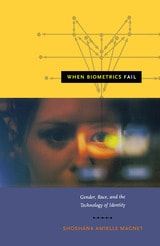
When Biometrics Fail
Gender, Race, and the Technology of IdentityShoshana Amielle Magnet
Duke University Press, 2011

When Boys Become Parents
Adolescent Fatherhood in AmericaMark S. Kiselica
Rutgers University Press, 2011
In this informative book, Mark S. Kiselica draws on his many years of counseling teenage fathers to offer a compassionate look at the difficult life circumstances and the complicated hardships these young men experience. He dispels many of the myths surrounding teenage fatherhood and shows that, contrary to popular belief, these young men are often emotionally and physically involved in relationships with their partner and their child. But without support and guidance from adults, these relationships often deteriorate in the first year of the child-'s life. Kiselica offers advice for how professionals and policy makers can assist these young men and improve services for them.
When Boys Become Parents provides a moving portrait of teenage fathers to any reader who wants to understand and help these young men to become more competent and loving parents during their journey to adulthood.
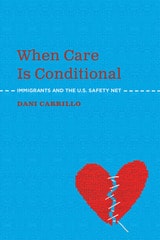
When Care is Conditional
Immigrants and the U.S. Safety NetDani Carrillo
Russell Sage Foundation, 2024
Through in-depth interviews with Latinx immigrants in northern California, Carrillo examines three circumstances—place, gender, and immigration status—that intersect to influence an individual’s access to health care, food assistance, and other benefits. She demonstrates that place of residence affects undocumented immigrants’ ability to get care since more services are available in urban areas, where many immigrants cannot afford to live, than suburban areas, where public transportation is limited. She also shows that while both men and women who are undocumented have difficulty obtaining care, men often confront more challenges. Undocumented women who are pregnant or mothers are eligible for some government safety net programs and rely on informal coethnic networks or a “guiding figure”—a relative, friend, neighbor, or coworker—who explains how to get care and makes them feel confident in accessing it. Most undocumented men, in contrast, are not eligible for public programs except in a medical emergency and often lack someone to guide them directly to care. Men sometimes steer one another to jobs through worker centers—where they may learn about various services and take advantage of those that increase their employability, like English or computer classes—but a culture of masculinity leads them to downplay medical problems and seek health care only in a crisis.
As undocumented immigrants navigate this exclusionary system, Carrillo finds that they resist the rhetoric stigmatizing them as lawbreakers. Dismissing the importance of “papers” and highlighting their work ethic, they question the fairness of U.S. immigration policies and challenge ideas about who deserves care.
Carrillo offers concrete recommendations, such as improving labor conditions and reexamining benefit eligibility, to increase access to care for not only undocumented immigrants but also people who have been excluded because of their race, criminal record, gender identity, sexual orientation, or disability. She argues that working with and across populations creates a powerful form of solidarity in advocating for inclusive care.
When Care Is Conditional provides compelling insights into how safety net and immigration policies intersect to affect people’s everyday lives and calls for a cultural shift so that the United States can provide unconditional care for all.
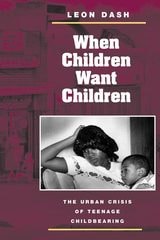
When Children Want Children
THE URBAN CRISIS OF TEENAGE CHILDBEARINGLeon Dash
University of Illinois Press, 2003
Pulitzer Prize-winning author and former Washington Post reporter Leon Dash spent a year living in one of the poorest ghettos in Washington, D.C., and a total of seventeen months conducting interviews examining the causes and effects of the ever-lowering age of teenage parents among poor black youths.
Dash had expected to find inadequate sex education and lack of birth control to be the root cause of the growing trend toward early motherhood, but his conversations with the mothers themselves revealed the truth to be more complex.
A riveting account of the human stories behind the statistics, When Children Want Children allows readers to hear the voices of young adults struggling with poverty and parenthood and gets to the heart of teenage parents’ cultural values and motivations.

When Colombia Bled
A History of the Violencia in TolimaJames David Henderson
University of Alabama Press, 1985
A definitive account of the conflict that transformed twentieth-century Colombia.0false18 pt18 pt00falsefalsefalse
When Colombia Bled: A History of the Violencia in Tolima by James D. Henderson is a compelling and deeply researched examination of one of the most traumatic periods in modern Colombian history. Focusing on the department of Tolima, the book chronicles La Violencia, the undeclared civil war between Colombia's Liberal and Conservative parties that engulfed the nation from the late 1940s through the early 1960s. Through a richly detailed narrative, Henderson traces the political tensions, social divisions, and local rivalries that transformed regional disputes into a devastating cycle of violence affecting countless rural communities.
Drawing on extensive archival research, government records, contemporary accounts, and regional sources, Henderson reveals how national political struggles intersected with local circumstances to create a uniquely destructive conflict. The book explores the experiences of political leaders, campesinos, community activists, and ordinary citizens whose lives were shaped by insecurity, displacement, and armed confrontation. By focusing on Tolima, one of the regions most deeply affected by the conflict, Henderson offers a nuanced perspective on the broader forces that influenced Colombia's political development and social transformation.
Both an authoritative regional study and a major contribution to Latin American history, When Colombia Bled provides essential insight into the historical roots of political violence in Colombia and the enduring legacy of a conflict that helped shape the nation's modern identity.
When Cowboys Come Home
Veterans, Authenticity, and Manhood in Post–World War II AmericaAaron George
Rutgers University Press, 2024
When Culture and Biology Collide
Why We are Stressed, Depressed, and Self-ObsessedE. O. Smith
Rutgers University Press, 2002
Why do we do things that we know are bad for us? Why do we line up to buy greasy fast food that is terrible for our bodies? Why do we take the potentially lethal risk of cosmetic surgery to have a smaller nose, bigger lips, or a less wrinkled face? Why do we risk life and limb in a fit of road rage to seek revenge against someone who merely cut us off in traffic? If these life choices are simply responses to cultural norms and pressures, then why did these particularly self-destructive patterns evolve in place of more sensible ones?
In When Culture and Biology Collide, E. O. Smith explores various aspects of behavior that are endemic to contemporary Western society, and proposes new ways of understanding and addressing these problems. Our physiology and behavior are the products of thousands of generations of evolutionary history. Every day we play out behaviors that have been part of the human experience for a very long time, yet these behaviors are played out in an arena that is far different from that in which they evolved. Smith argues that this discordance between behavior and environment sets up conditions in which there can be real conflict between our evolved psychological predispositions and the dictates of culture.
Topics such as drug abuse, depression, beauty and self-image, obesity and dieting, stress and violence, ethnic diversity, and welfare are all used as sample case studies. As with all of his case studies, Smith emphasizes the importance of not using an evolutionary explanation as an excuse for a particular pattern of behavior. Instead, he seeks to offer a perspective that will help us see ourselves more clearly and that may be useful in developing intelligent solutions to seemingly intractable problems. Smith provides ways of developing strategies for minimizing our self-destructive tendencies.
When Death Falls Apart
Making and Unmaking the Necromaterial Traditions of Contemporary JapanHannah Gould
University of Chicago Press, 2023
Deep in the Fukuyama mountainside, “the grave of the graves” (o-haka no haka) houses acres of unwanted headstones—the material remains of Japan’s discarded death rites. In the past, the Japanese dead became venerated ancestors through sustained ritual offerings at graves and at butsudan, Buddhist altars installed inside the home. But in twenty-first-century Japan, this intergenerational system of care is rapidly collapsing.
In noisy carpentry studios, flashy funeral-goods showrooms, neglected cemeteries, and cramped kitchens where women prepare memorial feasts, Hannah Gould analyzes the lifecycle of butsudan, illuminating how they are made, circulate through religious and funerary economies, mediate intimate exchanges between the living and the dead, and—as the population ages, families disperse, and fewer homes have space for large lacquer cabinets—eventually fall into disuse. What happens, she asks, when a funerary technology becomes obsolete? And what will take its place? Gould examines new products better suited to urban apartments: miniature urns and sleek altars inspired by Scandinavian design, even reliquary jewelry. She visits an automated columbarium and considers new ritual practices that embrace impermanence. At an industry expo, she takes on the role of “demonstration corpse.” Throughout, Gould invites us to rethink memorialization and describes a distinct form of Japanese necrosociality, one based on material exchanges that seek to both nurture the dead and disentangle them from the world of the living.
When Death Is on the Horizon
Temporality, Finitude, and Care Toward Life’s EndAnnemarie Samuels
Rutgers University Press, 2026
The urge to engage with finitude is increasingly central in our present apocalyptic time of political and ecological turmoil. Aging populations and the rapid development of advanced, but expensive, technologies to ever further postpone death pose significant healthcare challenges for societies around the world. In these times, how do people care when the end of life is near? How do they orient toward death? Do they see death as an absolute end, and if not, what sort of horizon does death present? Questioning taken for granted assumptions about end-of-life care, When Death Is on the Horizon analyzes how people approach death in a wide variety of geographical locations and social contexts. Through in-depth ethnographic case studies, it shows how people orient toward, beyond, and away from death, and how they do so within a world marked by historic and ongoing socio-political and structural inequalities.
This book is also freely available online as an open access digital edition.
When Dinosaurs Roamed New Jersey
William B. Gallagher
Rutgers University Press, 1997
Did you know that Benjamin Franklin examined the first dinosaur bone in America from Woodbury, Gloucester County, in 1787--decades before the word dinosaur was even coined? Or that when the first reasonably complete dinosaur skeleton in the world was unearthed in Haddonfield, Camden County, in 1858, it was a major scientific breakthrough which forced paleontologists to completely revise their picture of dinosaur anatomy? Few people know that New Jersey is the nursery of American vertebrate paleontology!
When Dinosaurs Roamed New Jersey provides a succinct and readable history of the geology and paleontology of New Jersey from the time the region was covered by Cambrian seas, 543 million years ago, to the Pleistocene Ice Age only 10-15,000 years ago. William Gallagher tells the stories of professional and amateur fossil hunters, their discoveries, and their impact on the history of paleontological thought. He points out places in New Jersey and nearby where specimens characteristic of each era were found. He shows how fossil evidence found in the state is helping paleontologists uncover the ecological interactions and behavior of dinosaurs, and discusses such ongoing scientific controversies as the reason for the extinction of the dinosaurs.
From tracking dinosaur footprints across the Newark basin, to digging for the last dinosaurs in the greensands of South Jersey, to finding a mushroom in ancient amber in East Brunswick, this book is the ideal introduction to the Garden State's fossils and prehistory.
When Diversity Drops
Race, Religion, and Affirmative Action in Higher EducationPark, Julie J.
Rutgers University Press, 2013
The story documents IVCF’s evolution from a predominantly white group that rarely addressed race to the most racially diverse campus fellowship at the university. However, its ability to maintain its multiethnic membership was severely hampered by the drop in black enrollment at California University following the passage of Proposition 209, a statewide affirmative action ban.
Park demonstrates how the friendships that students have—or do not have—across racial lines are not just a matter of personal preference or choice; they take place in the contexts that are inevitably shaped by the demographic conditions of the university. She contends that a strong organizational commitment to diversity, while essential, cannot sustain racially diverse student subcultures. Her work makes a critical contribution to our understanding of race and inequality in collegiate life and is a valuable resource for educators and researchers interested in the influence of racial politics on students’ lives.
When Egypt Ruled the East
George Steindorff and Keith C. Steele
University of Chicago Press, 1963

When Forests Run Amok
War and Its Afterlives in Indigenous and Afro-Colombian TerritoriesDaniel Ruiz-Serna
Duke University Press, 2023
When Formality Works
Authority and Abstraction in Law and OrganizationsArthur L. Stinchcombe
University of Chicago Press, 2001
We have come to assume that governing our social activities by advance planning—by creating abstract descriptions of what ought to happen and adjusting these descriptions as situations change—is not as efficient and responsive as dealing directly with the real substance of the situation at hand. Stinchcombe argues the opposite. When a plan is designed to correct itself and keep up with the reality it is meant to govern, it can be remarkably successful. He points out a wide range of examples where this is the case, including architectural blueprints, immigration law, the construction of common law by appeals courts, Fannie Mae's secondary mortgage market, and scientific paradigms and programs.
Arguing that formality has been misconceived as consisting mainly of its defects, Stinchcombe shows how formality, at its best, can serve us much better than ritual obedience to poorly laid plans or a romantic appeal to "real life."
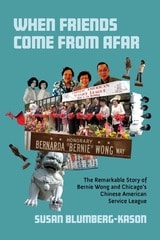
When Friends Come From Afar
The Remarkable Story of Bernie Wong and Chicago's Chinese American Service LeagueSusan Blumberg-Kason
University of Illinois Press, 2024
At once intimate and broad in scope, When Friends Come from Afar uses one woman’s life to illuminate a bedrock Chicago institution.
When Good Jobs Go Bad
Globalization, De-unionization, and Declining Job Quality in the North American Auto IndustryRothstein, Jeffrey S
Rutgers University Press, 2016

When Home Is a Photograph
Blackness and Belonging in the WorldLeigh Raiford
Duke University Press, 2026

When I Am Dead
The Writings of George M. TeegardenRaymond Luczak
Gallaudet University Press, 2007
The Sixth Volume in the Gallaudet Classics in Deaf Studies Series
George M. Teegarden (1852-1936) taught at the Western Pennsylvania School for the Deaf for 48 years, established the printing department, and also served as the first editor of the school’s magazine. Despite these significant contributions, his greatest gift to deaf people was his skill as a writer and poet who was deaf, as readers will discover in When I Am Dead: The Writings of George M. Teegarden.
Editor Raymond Luczak selected Teegarden’s prose in When I Am Dead from several books, including Raindrop, and Stories, Old and New. Noting that these stories were never written for hearing readers, Luczak marvels at Teegarden’s ability to write English prose that the ASL-familiar reader would find incredibly easy to transliterate. By employing a rich blend of original stories and revisions of fables and myths, Teegarden taught his students the importance of improving their reading and writing skills to outfit them “for the battle of life.” He produced a body of work that Luczak characterizes as “a breath of fresh air: quick, painless, and usually told with a sense of wonder.”
Luczak’s choice of poems came from Teegarden’s self-published volume Vagrant Verses, a summation of his affection for Gallaudet College, the Deaf community, and all deaf people. The eponymous poem “When I Am Dead” articulates concisely the beliefs that directed Teegarden’s life of service:
“When I am dead, I hope to be
Remembered—this is true—
Not for my wit or vanities
But what I did for you.”
When I Look into the Mirror and See You
Women, Terror, and ResistanceMargaret Randall
Rutgers University Press, 2002
In the early 1980s, in the midst of Central America’s decades of dirty wars, Nora Miselem of Honduras and Maria Suárez Toro of Costa Rica were kidnapped and subjected to rape and other tortures. Of the nearly two hundred disappeared persons in Honduras in those years, they are, remarkably, two of only five survivors. Fourteen years after their ordeal, Suárez and Miselem’s chance meeting at a conference on human rights was witnessed by and is now retold in Margaret Randall’s When I Look into the Mirror andSee You.
Through direct testimony, vivid prose, and evocative photographs, Randall recounts the terror, resistance, and survival of Suárez and Miselem. The book details the abuses suffered by them, the ruses they used to foil their captors, the support that they gave each other while imprisoned, the means they used to escape, and their attempts to reconstruct their lives. For the first time, Suárez and Miselem explore the pain and trauma of their past and Randall has done the service of adding these remarkable voices to the global campaign to bring the world’s attention to women’s human rights.
When Is a Kiva?
And Other Questions About Southwestern ArchaeologyWatson Smith; Edited by Raymond H. Thompson
University of Arizona Press, 1990
Contents:
The Vitality of the Hopi Way: Mural Decorations from Ancient Hopi Kivas
Pit House and Kiva Pitfalls: When Is a Kiva?
D-Shaped Features: The Kiva at Site 4
The Kiva Beneath the Altar: Room 788
"Ethnology Itself Carried Back": Extent of Ethnographic Studies Among the Pueblos
Birds of a Feather: Feathers
Pots on the Kiva Wall: Ceremonial Bowls
The Potsherd Paradigm: Analysis of Hooks, Scrolls, and Keys
A School for Cracked Pots: Schools, Pots, and Potters; The Jeddito School
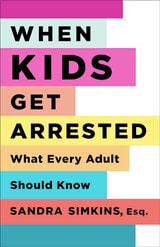
When Kids Get Arrested
What Every Adult Should KnowSandra Simkins, Esq.
Rutgers University Press, 2009
Sandra Simkins provides straight answers to common questions such as:
- Should I let my child talk to the police without a lawyer?
- How can I help my child succeed on probation?
- Should my child admit to the charges or take the case to trial?
- How will this case impact my child's future? Will it prevent him from getting a job or going into the army?
- My child has mental health issues. Can the juvenile justice system help?
- My daughter is out of control. Should I call the police?
- My son got arrested at school and is now suspended. What should I do next?
Simkins takes complicated legal concepts and breaks them down into easy-to-understand guidelines. She includes information on topics such as police interrogation, detention hearings, and bail, along with state-by-state specifics. When Kids Get Arrested is a perfect resource for parents, social workers, guidance counselors, teachers, principals, coaches, and anyone else who works with children.
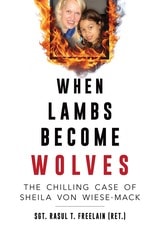
When Lambs Become Wolves
The Chilling Case of Sheila von Wiese-MackSgt. Rasul T. Freelain (Ret.)
Southern Illinois University Press, 2026
A bold firsthand account of the circumstances surrounding the notorious Bali “Suitcase Murder” and the human cost of overlooking child-to-parent violence and abuse
On August 12, 2014, the body of 62-year-old Sheila von Wiese-Mack—the wealthy Oak Park, Illinois, widow of famed composer James L. Mack—was found stuffed inside a suitcase in the trunk of a taxi in Bali. Back in the Midwest, listening to the radio, Sgt. Rasul Freelain of the Oak Park Police Department pulled his car over to absorb the unthinkable news. Amid his shock, one coherent thought surfaced: “Heather did this.”
Freelain had met the Macks more than three years earlier, when Sheila first reached out to the police for help with her increasingly volatile daughter. Although Heather Mack was just a teenager, she had already displayed a disturbing pattern of escalating violence. Freelain did everything he could to intervene. But as the abuse worsened, he found himself sidelined by a justice system unprepared to deal with child-to-parent violence and abuse (CPVA).
In this gripping and empathetic memoir, Freelain traces the Mack family’s descent from privilege to tragedy, bringing overdue attention to CPVA as a critical yet overlooked public health crisis. He recounts the glamorous but troubled world of the Macks—the parties, the talent, the dysfunction—and his efforts to support both mother and daughter. With rare insight into the web of trauma, race, wealth, and grief that surrounded them, he shows how the system failed them both—and how, even after Sheila’s death, he remained committed to seeking justice and change.
When Lambs Become Wolves moves beyond sensational headlines to examine the roots of one of America’s most hidden forms of domestic violence. While media coverage fixated on the exotic setting and shocking brutality of the crime, along with the growing notoriety of the teenage killer, Freelain urges readers—and institutions in law enforcement, child welfare, and mental health—to focus instead on those harmed. Sheila was more than a victim; she was a sharp, compassionate, creative woman who loved her daughter to the very end. Through meticulous research and raw personal reflection, Freelain explores how abuse cycles form, how institutions look away, and what it means to try—and fail—to protect someone in crisis.
This memoir, with a foreword by Sheila’s brother William Wiese, is a call to action, offering a rare blend of true crime, compassion, and advocacy. This deeply human account of a police officer caught in an impossible situation shows the price of ignoring the violence that starts at home.
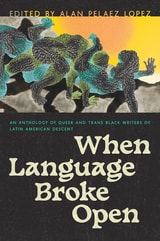
When Language Broke Open
An Anthology of Queer and Trans Black Writers of Latin American DescentEdited by Alan Pelaez Lopez
University of Arizona Press, 2023
By exploring themes of memory, care, and futurity, these contributions expand understandings of Blackness in Latin America, the Caribbean, and their U.S.-based diasporas. The volume offers up three central questions: How do queer and/or trans Black writers of Latin American descent address memory? What are the textures of caring, being cared for, and accepting care as Black queer and/or trans people of Latin American descent? And how do queer and trans embodiments help us understand and/or question the past and the present, and construct a Black, queer, and trans future?
The works collected in this anthology encompass a multitude of genres—including poetry, autobiography, short stories, diaries, visual art, and a graphic memoir—and feature the voices of established writers alongside emerging voices. Together, the contributors challenge everything we think we know about gender, sexuality, race, and what it means to experience a livable life.
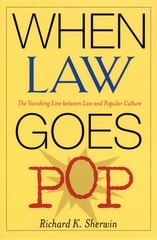
When Law Goes Pop
The Vanishing Line between Law and Popular CultureRichard K. Sherwin
University of Chicago Press, 2000
"Sherwin offers insightful, intriguing analyses of movies and other cultural products. His examination of legal discourse and popular culture will inform, enlighten, and even entertain."—William Halton, The Law and Politics Book Review
"[Sherwin's] knowledge of how media culture affects the courtroom is valuable, as is his rigorous examination. Can we prevent America's legal system from going 'pop'—losing its legitimacy by becoming just another part of popular culture? Given America's courtroom obsession . . . it's about time someone did some explaining."—Julie Scelfo, Brill's Content
"[A] brilliant analysis of the jury system in our media-saturated age. . . . [D]iscerning readers will see a truly integrative intelligence at work, proposing possible solutions rather than simply bemoaning problems."—Publishers Weekly
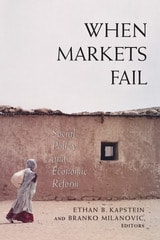
When Markets Fail
Social Policy and Economic ReformEthan B. Kapstein
Russell Sage Foundation, 2002
When Media Are New
Understanding the Dynamics of New Media Adoption and UseJohn Carey and Martin C. J. Elton
University of Michigan Press, 2010
"John Carey and Martin Elton are among the most skilled and insightful researchers studying the dynamic changes in technology and the impacts on consumer attitudes and behaviors. Their comprehensive and actionable observations make this a must read for anyone interested in understanding the current (and future) media environment."
---Alan Wurtzel, President, Research and Media Development, NBC Universal
"When Media Are New should be read by every media manager faced with disruptive change brought on by new technology. The book transcends the fashionable topics and themes that are here today and gone tomorrow and instead places emphasis on those areas of research and implementation where fatal mistakes are made. They capture something universal, and therefore highly useful, by stripping away the hype and focusing relentlessly on consumers and the ways they adopt or fail to adopt new media products and technologies into their lives."
---Martin Nisenholtz, Senior Vice President, Digital Operations, The New York Times Company
"The burgeoning development of the Internet has deflected attention from a wider history of new media innovations that has shaped its success. John Carey and Martin Elton demonstrate that earlier initiatives to launch videophones, two-way interactive cable systems, videotext and other media innovations can teach us much about the present state and future course of information and communication technologies. This is a key reference on the new media, and must reading for students of the Internet---the platform for continuing the new media revolution."
---Professor William H. Dutton, Director, Oxford Internet Institute, University of Oxford
The world of communication media has undergone massive changes since the mid-1980s. Along with the extraordinary progress in technological capability, it has experienced stunning decreases in costs; a revolutionary opening up of markets (a phenomenon exemplified by but not limited to the rise of the Internet); the advent of new business models; and a striking acceleration in the rate of change. These technological, regulatory, and economic changes have attracted the attention of a large number of researchers, from industry and academe, and given rise to a substantial body of research and data. Significantly less attention has been paid to the actual and intended users of new media. When Media Are New addresses this research and publishing gap by investigating the human side of the technological changes of the last 50 years and the implications for current and future media. It will find a broad audience ranging from media scholars to policymakers to industry professionals.
John Carey is Professor of Communications and Media Management at Fordham Business School and has extensive experience in conducting research about new media for companies such as AT&T, Cablevision, NBC Universal, and the New York Times (among many others) as well as foundations and government agencies. His extensive publications have focused on user adoption of new media and how consumers actually use new technologies.
Martin C. J. Elton was Director of the Communication Studies Group in the UK, which pioneered in the study of user behavior with new media technologies, and founded the Interactive Telecommunication Program at New York University. He has published widely on user research, forecasting, and public policy and has conducted extensive research for many prominent foundations, companies, and government agencies in the USA and Europe.
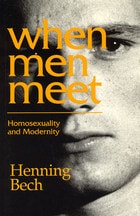
When Men Meet
Homosexuality and ModernityHenning Bech
University of Chicago Press, 1997
Gay society has persevered, even flourished, in this highly charged urban environment, aestheticizing and sexualizing the spaces, both public and private, where men meet. With profound insight and honesty, Bech details this world, candidly reflecting on sex, friendship, love, and life as manifest in the homosexual form of existence. He convincingly demonstrates that, in the face of modern alienation, successful coping strategies developed by gay men are gradually being adopted by mainstream heterosexual society.
These adaptations are often masked by what Bech calls an "absent homosexuality, " in which sublimated themes of homosexuality and masculine love surface, only to be disavowed in expressions of social anxiety. This "absent homosexuality" acts as a kind of cultural filter, allowing key traits of gay life to be absorbed by the mainstream, while shielding heterosexual males from their own homophobic anxieties. Ultimately, Bech foresees, a postmodern convergence of hetero- and homosexual forms of exisce emergent from this urban landscape and, with it, a new masculine synthesis.
Certain to ignite immediate controversy, When Men Meet offers both a penetrating scholarly analysis of the modern homosexual condition and an unflinching cultural vision of the masculine in transition.

When Mexicans Could Play Ball
Basketball, Race, and Identity in San Antonio, 1928–1945By Ignacio M. García
University of Texas Press, 2014
Winner, Al Lowman Memorial Prize, Texas State Historical Association, 2014
In 1939, a team of short, scrappy kids from a vocational school established specifically for Mexican Americans became the high school basketball champions of San Antonio, Texas. Their win, and the ensuing riot it caused, took place against a backdrop of shifting and conflicted attitudes toward Mexican Americans and American nationalism in the WWII era. “Only when the Mexicans went from perennial runners-up to champs,” García writes, “did the emotions boil over.”
The first sports book to look at Mexican American basketball specifically, When Mexicans Could Play Ball is also a revealing study of racism and cultural identity formation in Texas. Using personal interviews, newspaper articles, and game statistics to create a compelling narrative, as well as drawing on his experience as a sports writer, García takes us into the world of San Antonio’s Sidney Lanier High School basketball team, the Voks, which became a two-time state championship team under head coach William Carson “Nemo” Herrera. An alumnus of the school himself, García investigates the school administrators’ project to Americanize the students, Herrera’s skillful coaching, and the team’s rise to victory despite discrimination and violence from other teams and the world outside of the school. Ultimately, García argues, through their participation and success in basketball at Lanier, the Voks players not only learned how to be American but also taught their white counterparts to question long-held assumptions about Mexican Americans.
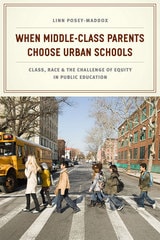
When Middle-Class Parents Choose Urban Schools
Class, Race, and the Challenge of Equity in Public EducationLinn Posey-Maddox
University of Chicago Press, 2014
Drawing on in-depth research at an urban elementary school, Posey-Maddox examines parents’ efforts to support the school through their outreach, marketing, and volunteerism. She shows that when middle-class parents engage in urban school communities, they can bring a host of positive benefits, including new educational opportunities and greater diversity. But their involvement can also unintentionally marginalize less-affluent parents and diminish low-income students’ access to the improving schools. In response, Posey-Maddox argues that school reform efforts, which usually equate improvement with rising test scores and increased enrollment, need to have more equity-focused policies in place to ensure that low-income families also benefit from—and participate in—school change.
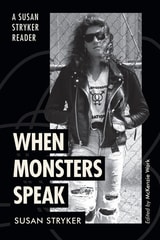
When Monsters Speak
A Susan Stryker ReaderSusan Stryker. Edited by McKenzie Wark
Duke University Press, 2024
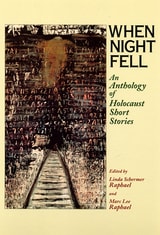
When Night Fell
An Anthology of Holocaust Short StoriesLinda Schermer Raphael and Marc Lee Raphael
Rutgers University Press, 1999
Both survivors of the Holocaust and those who were not there agree that it is impossible to tell what happened as the Nazi Final Solution was put into effect. No writing can adequately imagine the concentration camps, ghettos, and death camps. And that is precisely why writers must tell-and retell-what happened there.
In When Night Fell: An Anthology of Holocaust Short Stories, Linda Schermer Raphael and Marc Lee Raphael have collected twenty-six short stories that tell of the human toll of the Holocaust on those who survived its horrors, as well as later generations touched by its memory. The stories are framed by discussion of the current debate about who owns the Holocaust and who is entitled to speak about it.
Some of the stories included here are by internationally acclaimed authors. Others may be new to many readers. When Night Fell is a fitting memorial to this genocidal horror, putting eloquent voice to human endurance that is-almost-beyond words.
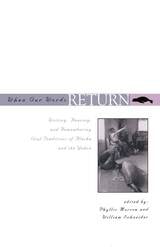
When Our Words Return
Writing, Hearing, and Remembering Oral Traditions from Alasak and the Yukonedited by Phyllis Morrow & William Schneider
Utah State University Press, 1995
The title to this interdisciplinary collection draws on the Yupik Eskimo belief that seals, fish, and other game are precious gifts that, when treated with respect and care, will return to be hunted again. Just so, if oral traditions are told faithfully and respectfully, they will return to benefit future generations. The contributors to this volume are concerned with the interpretation and representation of oral narrative and how it is shaped by its audience and the time, place, and cultural context of the narration. Thus, oral traditions are understood as a series of dialogues between tradition bearers and their listeners, including those who record, write, and interpret.

When Pain Strikes
Bill Burns, Cathy Busby, and Kim Sawchuk, Editors
University of Minnesota Press, 1998
When Pain Strikes was first published in 1998. Minnesota Archive Editions uses digital technology to make long-unavailable books once again accessible, and are published unaltered from the original University of Minnesota Press editions.
When pain strikes, do you raid the medicine cabinet? Read a self-help manual? Hit the roof? How we in North America respond to pain-what we think about it, what we say, and what we do-is the subject of this collection of writings and images.
The book's five sections contain a myriad of complex reactions to the occurrence of pain: "Measure It" discusses biomedical responses; "Scream and Yell" explores therapeutic solutions; "Cut It Open" takes up surgical interventions; "Take a Pill" looks at pharmacology; and "Intensify It" examines positions that embrace pain. Each section comprises original artwork, scholarly analyses, poetic and literary texts, and discussions by activists. Hailing from the university, the gallery, and the community organization, the authors—as TV watchers, recreational drug users, recipients of medical attention, caregivers, midwives, or the HIV positive—inhabit and reconfigure our contemporary painscape, offering a new approach to the puzzle of pain.
Contributors: Charles R. Acland; Barbara McGill Balfour; Isabelle Brabant; Stephen Busby; Millie Chen; Michael Fernandes; Bob Flanagan; Thyrza Nichols Goodeve; Marie-Paule Macdonald; Ronald Melzack; Margaret Morse; Celeste Olalquiaga; John O'Neill; Gerard Päs; Elsie Petch; D. L. Pughe; Julia Scher; Cathy Sisler; Johanne Sloan; Jana Sterbak; Fred Tomaselli; Patrick D. Wall; Theodore Wan; Gregory Whitehead; Fred Wilson.
When Pain Strikes is published in collaboration with the Banff Centre for the Arts.
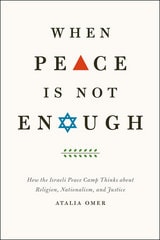
When Peace Is Not Enough
How the Israeli Peace Camp Thinks about Religion, Nationalism, and JusticeAtalia Omer
University of Chicago Press, 2013

When Pigs Could Fly and Bears Could Dance
A History of the Soviet CircusMiriam Neirick
University of Wisconsin Press, 2012
For more than seven decades the circuses enjoyed tremendous popularity in the Soviet Union. How did the circus—an institution that dethroned figures of authority and refused any orderly narrative structure—become such a cultural mainstay in a state known for blunt and didactic messages? Miriam Neirick argues that the variety, flexibility, and indeterminacy of the modern circus accounted for its appeal not only to diverse viewers but also to the Soviet state. In a society where government-legitimating myths underwent periodic revision, the circus proved a supple medium of communication.
Between 1919 and 1991, it variously displayed the triumph of the Bolshevik revolution, the beauty of the new Soviet man and woman, the vulnerability of the enemy during World War II, the prosperity of the postwar Soviet household, and the Soviet mission of international peace—all while entertaining the public with the acrobats, elephants, and clowns. With its unique ability to meet and reconcile the demands of both state and society, the Soviet circus became the unlikely darling of Soviet culture and an entertainment whose usefulness and popularity stemmed from its ambiguity.
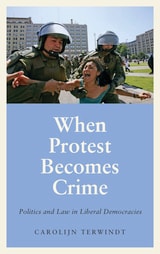
When Protest Becomes Crime
Politics and Law in Liberal DemocraciesCarolijn Terwindt
Pluto Press, 2019
When Protest Makes Policy
How Social Movements Represent Disadvantaged GroupsS. Laurel Weldon
University of Michigan Press, 2012
"A must-read for scholars across a broad sweep of disciplines. Laurel Weldon weaves together skillfully the theoretical strands of gender equality policy, intersectionality, social movements, and representation in a multimethod/level comparative study that unequivocally places women's movements at the center of our understanding of democracy and social change."
---Amy G. Mazur, Washington State University
"Laurel Weldon's When Protest Makes Policy expands and enriches our understanding of representation by stressing social movements as a primary avenue for the representation of marginalized groups. With powerful theory backed by persuasive analysis, it is a must-read for anyone interested in democracy and the representation of marginalized groups."
---Pamela Paxton, University of Texas at Austin
"This is a bold and exciting book. There are many fine scholars who look at women's movements, political theorists who make claims about democracy, and policy analysts who do longitudinal treatments or cross-sectional evaluations of various policies. I know of no one, aside from Weldon, who is comfortable with all three of these roles."
---David Meyer, University of California, Irvine
What role do social movements play in a democracy? Political theorist S. Laurel Weldon demonstrates that social movements provide a hitherto unrecognized form of democratic representation, and thus offer a significant potential for deepening democracy and overcoming social conflict.
Through a series of case studies of movements conducted by women, women of color, and workers in the United States and other member nations of the Organisation for Economic Co-operation and Development (OECD), Weldon examines processes of representation at the local, state, and national levels. She concludes that, for systematically disadvantaged groups, social movements can be as important---sometimes more important---for the effective articulation of a group perspective as political parties, interest groups, or the physical presence of group members in legislatures.
When Protest Makes Policy contributes to the emerging scholarship on civil society as well as the traditional scholarship on representation. It will be of interest to anyone concerned with advancing social cohesion and deepening democracy and inclusion as well as those concerned with advancing equality for women, ethnic and racial minorities, the working class, and poor people.
S. Laurel Weldon is Professor of Political Science at Purdue University.
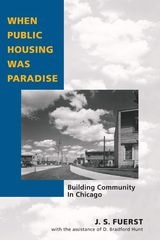
When Public Housing Was Paradise
BUILDING COMMUNITY IN CHICAGOJ. S. Fuerst, with the assistance of D. Bradford Hunt
University of Illinois Press, 2003
J. S. Fuerst has been involved with public housing in Chicago for more than half a century. He retired from Loyola University, where he was a professor of social welfare policy. He was the editor of Public Housing in Europe and America. D. Bradford Hunt is an assistant professor of social science at Roosevelt University. John Hope Franklin is James B. Duke Professor Emeritus of History at Duke University. He has served as president of the Organization of American Historians, the American Historical Association, and many more.
When Race Becomes Real
Black and White Writers Confront Their Personal HistoriesEdited by Bernestine Singley
Southern Illinois University Press, 2002
When Race Becomes Real is a critically acclaimed collection that pushes the boundaries of current discussions about race. In these personal and evocative essays, thirty contemporary black and white writers describe their own intimate experiences with race and discrimination, taking an unflinching look at both society and themselves. The result is an incisive and powerful anthology that rethinks what it means to be black—and white—in the modern world.
Only through frank and tough conversation, Singley tells us, can America hope to realize its goals of justice and racial equality. This collection opens that much needed honest dialogue, exploring a wide range of racial experiences in relation to a myriad of topics: from crime and religion to humor, history, and desire. Readers will find within these pages examinations of the roots of racial beliefs and the origins of the language and rules that have heretofore governed discussion; analysis of the reasons behind our reticence to discuss the subject openly; and suggestions for solutions to the problems that plague open racial discourse. The writers of When Race Becomes Real demonstrate the progress that can be made when our ingrained wariness on the subject of race is abandoned, and we instead confront the issue openly and personally. Included are contributions by a variety of authors, from Pulitzer Prize winners such as Robert Coles, Leonard Pitts, and Natalie Angier to popular writers and emerging voices. In each essay the author sweeps aside the cautious rules that often dominate racial discussions to address what race really means in the twenty-first century.
When Race Becomes Real directly tackles one of our most taboo subjects with bravery, wit, and emotion. Sometimes shocking, sometimes amusing but always honest, this collection encourages readers to move beyond the ineffective reluctance and objectivity that hinder contemporary conversations and in doing so forge a new path in racial consciousness.
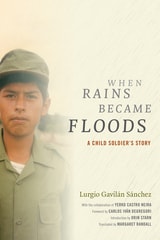
When Rains Became Floods
A Child Soldier's StoryLurgio Gavilán Sánchez
Duke University Press, 2015
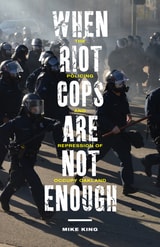
When Riot Cops Are Not Enough
The Policing and Repression of Occupy OaklandKing, Mike
Rutgers University Press, 2017
Drawn from King’s intensive field work, the book focuses on the physical, legal, political, and ideological dimensions of repression—in the streets, in courtrooms, in the media, in city hall, and within the movement itself—When Riot Cops Are Not Enough highlights the central role of political legitimacy, both for mass movements seeking to create social change, as well as for governmental forces seeking to control such movements. Although Occupy Oakland was different from other Occupy sites in many respects, King shows how the contradictions it illuminated within both social movement and police strategies provide deep insights into the nature of protest policing generally, and a clear map to understanding the full range of social control techniques used in North America in the twenty-first century.
When Roe Fell
How Barriers, Inequities, and Systemic Failures of Justice in Abortion Became VisibleKatrina Kimport
Rutgers University Press, 2026
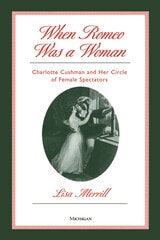
When Romeo Was a Woman
Charlotte Cushman and Her Circle of Female SpectatorsLisa Merrill
University of Michigan Press, 2000
Lisa Merrill examines Cushman's personal correspondence to shed new light on the actress's relationships and in turn on our understandings of the nature of women's "romantic friendships." She demonstrates how Cushman's androgynous presence served as a symbol to many of her contemporaries, and revealed their multiple and often contradictory attitudes toward female performers, women, and the unspeakable possibilities of same-sex desire.
The biography draws upon unpublished archival material as well as on current critical work to view Cushman's career, relationships, and posthumous reception. When Romeo Was a Woman examines as autobiographical performance Cushman's own narratives, the stories she authorized others to write, and the letters she wrote to intimates. The book is richly illustrated with many previously unpublished portraits of Cushman in her various stage roles, including Romeo and Lady Macbeth, and other revealing photographs of her family, lovers and friends.
When Romeo Was a Woman will find an appreciative audience among general readers as well as specialists in gay/lesbian history, women's history, theater and performance, popular culture, Victorian studies, and American studies.
"A fascinating story, and a major contribution to our understanding of lesbian history. . . . The work done on archival resources is both impressive in its extent and wholly convincing in its effect." --Jacky Bratton, University of London
Lisa Merrill is Associate Professor of Communication and Performance Studies, Hofstra University. She is the coauthor of The Power to Communicate: Gender Differences as Barriers, and the author of Untying the Tongue: Power, Gender, and the Word, forthcoming.
When Sex Changed
Birth Control Politics and Literature between the World WarsLayne Parish Craig
Rutgers University Press, 2013
In When Sex Changed, Layne Parish Craig analyzes the ways literary texts responded to the political, economic, sexual, and social values put forward by the birth control movements of the 1910s to the 1930s in the United States and Great Britain.
Discussion of contraception and related topics (including feminism, religion, and eugenics) changed the way that writers depicted women, marriage, and family life. Tracing this shift, Craig compares disparate responses to the birth control controversy, from early skepticism by mainstream feminists, reflected in Charlotte Perkins Gilman’s Herland, to concern about the movement’s race and class implications suggested in Nella Larsen’s Quicksand, to enthusiastic speculation about contraception’s political implications, as in Virginia Woolf’s Three Guineas.
While these texts emphasized birth control’s potential to transform marriage and family life and emancipate women from the “slavery” of constant childbearing, birth control advocates also used less-than-liberatory language that excluded the poor, the mentally ill, non-whites, and others. Ultimately, Craig argues, the debates that began in these early political and literary texts—texts that document both the birth control movement’s idealism and its exclusionary rhetoric—helped shape the complex legacy of family planning and women’s rights with which the United States and the United Kingdom still struggle.
When Sex Threatened the State
Illicit Sexuality, Nationalism, and Politics in Colonial Nigeria, 1900-1958Saheed Aderinto
University of Illinois Press, 2015
As Saheed Aderinto shows, British colonizers saw prostitution as an African form of sexual primitivity and a problem to be solved as part of imperialism's "civilizing mission". He details the Nigerian response to imported sexuality laws and the contradictory ways both African and British reformers advocated for prohibition or regulation of prostitution. Tracing the tensions within diverse groups of colonizers and the colonized, he reveals how wrangling over prostitution camouflaged the negotiating of separate issues that threatened the social, political, and sexual ideologies of Africans and Europeans alike.
The first book-length project on sexuality in early twentieth century Nigeria, When Sex Threatened the State combines the study of a colonial demimonde with an urban history of Lagos and a look at government policy to reappraise the history of Nigerian public life.
When Sugar Ruled
Economy and Society in Northwestern Argentina, Tucumán, 1876–1916Patricia Juarez-Dappe
Ohio University Press, 2010
Two tropical commodities—coffee and sugar—dominated Latin American export economies in the nineteenth and early twentieth centuries. When Sugar Ruled: Economy and Society in Northwestern Argentina, Tucumán, 1876–1916 presents a distinctive case that does not quite fit into the pattern of many Latin American sugar economies.
During the last quarter of the nineteenth century, the province of Tucumán emerged as Argentina’s main sugar producer, its industry catering almost exclusively to the needs of the national market and financed mostly by domestic capital. The expansion of the sugar industry provoked profound changes in Tucumán’s economy as sugar specialization replaced the province’s diversified productive structure. Since ingenios relied on outside growers for the supply of a large share of the sugarcane, sugar production did not produce massive land dispossession and resulted in the emergence of a heterogeneous planter group. The arrival of thousands of workers from neighboring provinces during the harvest season transformed rural society dramatically. As the most dynamic sector in Tucumán’s economy, revenues from sugar enabled the provincial government to participate in the modernizing movement sweeping turn-of-the-century Argentina.
Patricia Juarez-Dappe uncovers the unique features that characterized sugar production in Tucumán as well as the changes experienced by the province’s economy and society between 1876 and 1916, the period of most dramatic sugar expansion. When Sugar Ruled is an important addition to the literature on sugar economies in Latin America and Argentina.
When Sunday Comes
Gospel Music in the Soul and Hip-Hop ErasClaudrena N. Harold
University of Illinois Press, 2020
Weaving insightful analysis into a collective biography of gospel icons, When Sunday Comes explores the music's essential place as an outlet for African Americans to express their spiritual and cultural selves.
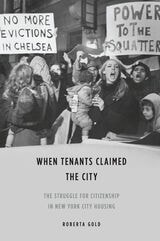
When Tenants Claimed the City
The Struggle for Citizenship in New York City HousingRoberta Gold
University of Illinois Press, 2014
In postwar America, not everyone wanted to move out of the city and into the suburbs. For decades before World War II, New York's tenants had organized to secure renters' rights. After the war, tenant activists raised the stakes by challenging the newly-dominant ideal of homeownership in racially segregated suburbs. They insisted that renters as well as owners had rights to stable, well-maintained homes, and they proposed that racially diverse urban communities held a right to remain in place--a right that outweighed owners' rights to raise rents, redevelop properties, or exclude tenants of color. Further, the activists asserted that women could participate fully in the political arenas where these matters were decided.
Grounded in archival research and oral history, When Tenants Claimed the City: The Struggle for Citizenship in New York City Housing shows that New York City's tenant movement made a significant claim to citizenship rights that came to accrue, both ideologically and legally, to homeownership in postwar America. Roberta Gold emphasizes the centrality of housing to the racial and class reorganization of the city after the war; the prominent role of women within the tenant movement; and their fostering of a concept of "community rights" grounded in their experience of living together in heterogeneous urban neighborhoods.
When Time Warps
The Lived Experience of Gender, Race, and Sexual ViolenceMegan Burke
University of Minnesota Press, 2019
An inquiry into the phenomenology of “woman” based in the relationship between lived time and sexual violence
Feminist phenomenologists have long understood a woman’s life as inhibited, confined, and constrained by sexual violence. In this important inquiry, author Megan Burke both builds and expands on this legacy by examining the production of normative womanhood through racist tropes and colonial domination. Ultimately, Burke charts a new feminist phenomenology based in the relationship between lived time and sexual violence.
By focusing on time instead of space, When Time Warps places sexualized racism at the center of the way “woman” is lived. Burke transports questions of time and gender outside the realm of the historical, making provocative new insights into how gendered individuals live time, and how their temporal existence is changed through particular experiences.
Providing a potent reexamination of the theory of Simone de Beauvoir—while also bringing to the fore important women of color theorists and engaging in the temporal aspects of #MeToo—When Time Warps makes a necessary, lasting contribution to our understanding of gender, race, and sexual violence.