Results by title
4154 books match the query 'State & Local' and 12 start with y
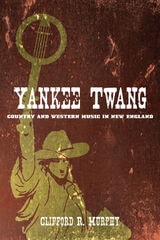
Yankee Twang
Country and Western Music in New EnglandClifford R. Murphy
University of Illinois Press, 2014
As Murphy shows, an extraordinary multiculturalism sets New England country and western music apart from other regional and national forms. Once segregated at work and worship, members of different ethnic groups used the country and western popularized on the radio and by barnstorming artists to come together at social events, united by a love of the music. Musicians, meanwhile, drew from the wide variety of ethnic musical traditions to create the New England style.
But the music also gave--and gives--voice to working-class feeling. Murphy explores how the Yankee love of country and western emphasizes the western, reflecting the longing of many blue collar workers for the mythical cowboy's life of rugged but fulfilling individualism. Indeed, many New Englanders use country and western to comment on economic disenfranchisement and express their resentment of a mass media, government, and Nashville music establishment that they believe neither reflects their experiences nor considers them equal participants in American life.
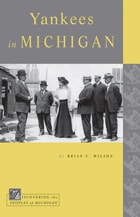
Yankees in Michigan
Brian C. Wilson
Michigan State University Press, 2008
As Brian C. Wilson describes them in this highly readable and entertaining book, Yankees—defined by their shared culture and sense of identity—had a number of distinctive traits and sought to impose their ideas across the state of Michigan.
After the ethnic label of "Yankee" fell out of use, the offspring of Yankees appropriated the term "Midwesterner." So fused did the identities of Yankee and Midwesterner become that understanding the larger story of America's Midwestern regional identity begins with the Yankees in Michigan.
Ye That Are Men Now Serve Him
Radical Holiness Theology and Gender in the SouthColin B. Chapell
University of Alabama Press, 2016
Examines how religious belief reshaped concepts of gender during the New South period that took place from 1877 to 1915 in ways that continue to manifest today
Modernity remade much of the world in the late nineteenth and early twentieth centuries and was nowhere more transformational than in the American South. In the wake of the Civil War, the region not only formed new legal, financial, and social structures, but citizens of the South also faced disorienting uncertainty about personal identity and even gender itself. Ye That Are Men Now Serve Him traces the changes in southern gender roles during the New South period of 1877–1915 and demonstrates that religion is the key to perceiving how constructions of gender changed.
The Civil War cleaved southerners from the culture they had developed organically during antebellum decades, raising questions that went to the very heart of selfhood: What does it mean to be a man? How does a good woman behave? Unmoored from traditional anchors of gender, family, and race, southerners sought guidance from familiar sources: scripture and their churches. In Ye That Are Men Now Serve Him, Colin Chapell traces how concepts of gender evolved within the majority Baptist and Methodist denominations as compared to the more fluid and innovative Holiness movement.
Grounded in expansive research into the archives of the Southern Baptist Convention; Methodist Episcopal Church, South; and the Holiness movement, Chapell’s writing is also enlivened by a rich trove of primary sources: diaries, sermons, personal correspondence, published works, and unpublished memoirs. Chapell artfully contrasts the majority Baptist and Methodist view of gender with the relatively radical approaches of the emerging Holiness movement, thereby bringing into focus how subtle differences in belief gave rise to significantly different ideas of gender roles.
Scholars have explored class, race, and politics as factors that contributed to contemporary southern identity, and Chapell restores theology to its intuitive place at the center of southern identity. Probing and illuminating, Ye That Are Men Now Serve Him offers much of interest to scholars and readers of the South, southern history, and religion.

Yellowstone National Park
Through the Lens of TimeBradly J. Boner
University Press of Colorado, 2017
Pioneer photographer William Henry Jackson’s photographs from the 1871 Hayden Survey were instrumental in persuading Congress to designate Yellowstone as a national park—America’s first and greatest experiment in the preservation of an extraordinary landscape. Yellowstone National Park: Through the Lens of Time is an extended visual essay presenting Jackson’s images paired with breathtaking color rephotographs of each view from photojournalist Bradly J. Boner. These contemporary comparisons to Jackson’s originals reveal just how well that experiment has stood the test of time.
Yellowstone is always changing. The Grand Canyon is getting deeper and wider as the Yellowstone River carves a chasm into the earth. The flows of the great hot springs at Mammoth are creating new layers of delicate, colorful cascades and leaving the old terraces to crumble in decay. Roads, bridges, and pathways wind through the park, and there are restaurants, campgrounds, and hotels. Yet even with the impact of humanity, Yellowstone remains remarkably intact, evidence that the effort to preserve and sustain the park for future generations has been a success.
Combining more than 100 gorgeous “then and now” sets of photographs—the first complete published collection of Jackson’s images from the 1871 Hayden Survey and a result of Boner's three years of work rephotographing them—with history, extensive notes, and personal tales, Yellowstone National Park: Through the Lens of Time pays homage to the park’s early history and its present state, and offers a glimpse into the future. The great experiment of Yellowstone—which captivates millions of visitors from all corners of the globe each year—has transcended generations and should be maintained for generations to come.
The University Press of Colorado and the author gratefully acknowledge the generous contributions of the many donors to the Kickstarter campaign supporting the publication of this book.
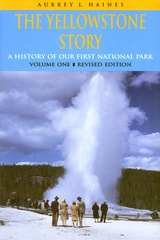
Yellowstone Story, Revised Edition, Volume I
A History of Our First National ParkAubrey L. Haines
University Press of Colorado, 1996
The Yellowstone Park Act
Approved March 1, 1872
Be it enacted by the Senate and House of Representatives of the United States of America in Congress assembled, That the tract of land in the Territories of Montana and Wyoming, lying near the headwaters of the Yellowstone river . . . is hereby reserved and withdrawn from settlement, occupancy, or sale under the laws of the United States, and dedicated and set apart as a public park or pleasuring-ground for the benefit and enjoyment of the people.
Yellowstone Story, Revised Edition, Volume II
A History of Our First National ParkAubrey L. Haines
University Press of Colorado, 1996
Yesterday Today
Life in the OzarksCatherine S. Barker
University of Arkansas Press, 2020
Catherine S. Barker's 1941 book Yesterday Today: Life in the Ozarks sought to illuminate another side of these “remnants of eighteenth-century life and culture”: poverty and despair. Drawing on her encounters and experiences as a federal social worker in the backwoods of the Ozarks in the 1930s, Barker described the mountaineers as “lovable and pathetic and needy and self-satisfied and valiant,” declaring that the virtuous and independent people of the hills deserved a better way and a more abundant life. Barker was also convinced that there were just as many contemptible facets of life in the Ozarks that needed to be replaced as there were virtues that needed to be preserved.
This reprinting of Yesterday Today—edited and introduced by historian J. Blake Perkins—situates this account among the Great Depression-era chronicles of the Ozarks.
Yooper Talk
Dialect as Identity in Michigan's Upper PeninsulaKathryn A. Remlinger
University of Wisconsin Press, 2019
Drawing on sixteen years of fieldwork, including interviews with seventy-five lifelong residents of the UP, Kathryn Remlinger examines how the idea of a unique Yooper dialect emerged. Considering UP English in relation to other regional dialects and their speakers, she looks at local identity, literacy practices, media representations, language attitudes, notions of authenticity, economic factors, tourism, and contact with immigrant and Native American languages. The book also explores how a dialect becomes a recognizable and valuable commodity: Yooper talk (or "Yoopanese") is emblazoned on t-shirts, flags, postcards, coffee mugs, and bumper stickers.
Yooper Talk explains linguistic concepts with entertaining examples for general readers and also contributes to interdisciplinary discussions of dialect and identity in sociolinguistics, anthropology, dialectology, and folklore.
You Had a Job for Life
Story of a Company TownJamie Sayen
University Press of New England, 2017
You Had a Job for Life
Story of a Company TownJamie Sayen
Brandeis University Press, 2023
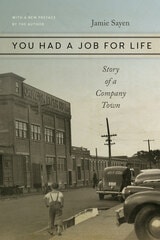
Absentee owners. Single-minded concern for the bottom line. Friction between workers and management. Hostile takeovers at the hands of avaricious and unaccountable multinational interests. The story of America’s industrial decline is all too familiar—and yet, somehow, still hard to fathom. Jamie Sayen spent years interviewing residents of Groveton, New Hampshire, about the century-long saga of their company town. The community’s paper mill had been its economic engine since the early twentieth century. Purchased and revived by local owners in the postwar decades, the mill merged with Diamond International in 1968. It fell victim to Anglo-French financier James Goldsmith’s hostile takeover in 1982, then suffered through a series of owners with no roots in the community until its eventual demise in 2007. Drawing on conversations with scores of former mill workers, Sayen reconstructs the mill’s human history: the smells of pulp and wood, the injuries and deaths, the struggles of women for equal pay and fair treatment, and the devastating impact of global capitalism on a small New England town. This is a heartbreaking story of the decimation of industrial America.
You Need a Schoolhouse
Booker T. Washington, Julius Rosenwald, and the Building of Schools for the Segregated SouthStephanie Deutsch
Northwestern University Press, 2011
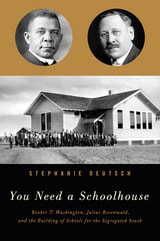
Washington, though widely admired, had weathered severe crises both public and private in his fifty-six years. He had dined with President Theodore Roosevelt and drunk tea with Queen Victoria, but he had also been assaulted on a street in New York City. He had suffered personal heartbreak, years of overwork, and the discouraging knowledge that, despite his optimism and considerable success, conditions for African Americans were not improving as he had assumed they would. From within his own community, Washington faced the bitter charge of accommodationism that haunts his legacy to this day. Despite their differences, the two men would work together well and their collaboration would lead to the building of five thousand schoolhouses. By the time segregation ended, the “Rosenwald Schools” that sprang from this unlikely partnership were educating one third of the South’s African American children. These schoolhouses represent a significant step in the ongoing endeavor to bring high quality education to every child in the United States—an ideal that remains to be realized even today.
Young Men and Fire
Twenty-fifth Anniversary EditionNorman Maclean
University of Chicago Press, 2017
Alongside Maclean’s now-canonical A River Runs through It and Other Stories, Young Men and Fire is recognized today as a classic of the American West. This twenty-fifth anniversary edition of Maclean’s later triumph—the last book he would write—includes a powerful new foreword by Timothy Egan, author of The Big Burn and The Worst Hard Time. As moving and profound as when it was first published, Young Men and Fire honors the literary legacy of a man who gave voice to an essential corner of the American soul.